
Is Vietnam Safe to Travel Alone? Safety Tips for Solo & Female Travelers
Vietnam is considered one of Southeast Asia’s most welcoming destinations for solo travelers, including women exploring the country independently. This guide covers personal safety, transportation, accommodation, scams to avoid, cultural etiquette, and practical advice for traveling confidently across Vietnam. Whether you are backpacking through the mountains, visiting vibrant cities, or relaxing on tropical islands, understanding local customs and basic safety tips can help you enjoy a smooth and memorable journey. Go Visit Vietnam helps you travel independently with confidence.
On this page
The question lands in every travel forum, every Facebook group, every DM thread: Is Vietnam actually safe for solo travel? And it deserves a straight answer — not a tourism board reassurance, and not a fear-mongering horror story.
Here it is: Vietnam is one of the safest countries in Southeast Asia for solo travelers, including solo women. Vietnam consistently ranks in the upper tier of the Global Peace Index among Asian nations. Violent crime against tourists is genuinely rare — not "rare by regional standards," but rare by any international benchmark. The more grounded risk profile looks like this: opportunistic petty crime, aggressive vendors, chaotic traffic, and a handful of well-documented scams that are predictable once you know what to look for.
The travelers who have difficult experiences in Vietnam almost universally share one thing in common: they weren't prepared for the specific mechanics of how risk operates here. This guide fixes that. Whether you're asking is Vietnam safe to travel alone as a first-time backpacker or a seasoned solo female traveler, what follows is the unfiltered, experience-backed playbook for navigating Vietnam confidently and safely.
The Honest Truth About Solo Travel Safety in Vietnam
Violent Crime vs. Petty Theft
Let's start with the data point that matters most: muggings, assaults, and violent robbery targeting tourists in Vietnam are exceptionally uncommon. In years of solo travel across the country — from Hanoi's Old Quarter to the back roads of Ha Giang, from HCMC's District 1 to the fishing villages of Phu Quoc — violent confrontations between tourists and locals are genuinely rare incidents, not a statistical pattern.
What does exist is opportunistic petty crime, primarily in the form of phone snatching, bag grabbing from motorbikes, and scam-based overcharging. These are incidents of speed and opportunity, not aggression or threat. The distinction matters for how you prepare: the goal isn't to travel defensively, it's to remove the obvious opportunity.
Solo Female Safety Culture
Vietnamese society is broadly conservative, community-oriented, and — critically for solo female travelers — respectful toward women navigating public space. Solo dining in Vietnam carries none of the awkwardness it does in some other Asian cultures. Sitting alone at a street food stall and ordering a bowl of phở is completely unremarkable. Walking through most urban neighborhoods after dark is a normal activity for local women, and that normalization extends to foreign women too.
The cultural attitude toward solo female travelers is best described as curious rather than predatory. Questions about your age, your marital status, and whether you're lonely traveling alone are common — they come from genuine cultural interest, not ill intent. Staring happens. It is rarely threatening.
That said, Bui Vien Street in HCMC and Ta Hien Street in Hanoi — both heavy backpacker nightlife corridors — attract the full spectrum of humanity and require the same vigilance you'd apply to any concentrated party district anywhere in the world.
The Solo Nomad Community
One of Vietnam's most underrated safety advantages is its mature, well-established solo travel infrastructure. Hanoi, Da Nang, Hoi An, and Ho Chi Minh City all have thriving hostel ecosystems where meeting fellow travelers takes approximately one meal in a communal dining space. The Facebook groups "Expats in Vietnam (Ho Chi Minh City)" and "Hanoi Massive" have hundreds of thousands of members and serve as real-time community resources for safety alerts, accommodation recommendations, and meetups. Digital nomad co-working hubs like Toong and Toàn Thịnh in HCMC run regular community events. You are never as alone as you fear.

6 Common Tourist Scams in Vietnam & How to Evade Them
Scam 1: The Unmetered / Fake Taxi Trap
This is Vietnam's most financially damaging tourist scam by volume. Counterfeit taxis mimic the logos, color schemes, and even vehicle models of reputable brands — particularly Mai Linh (green) and Vinasun (white with red stripe). The mimicry is close: "Vina Sun" instead of "Vinasun," a slightly different shade of green, a logo font that's almost right.
The ride starts with a meter that either runs at 5–10x normal speed or isn't turned on at all — and the final demand is 10–20x the correct fare.
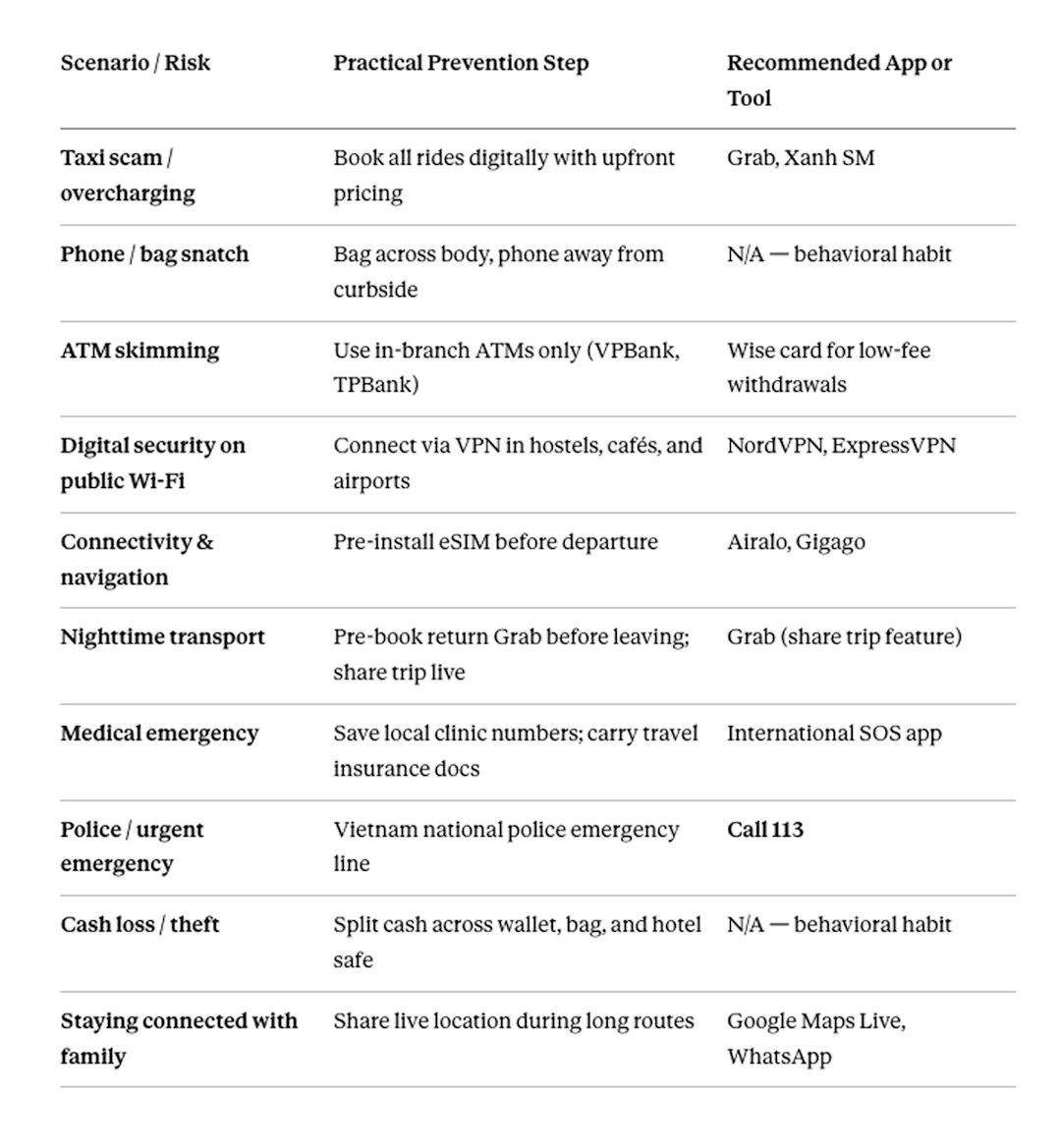
Do this instead: Use Grab or Xanh SM exclusively for all point-to-point journeys. Both apps show upfront pricing, track your route in real time, register your driver's identity, and allow in-app payment. Never accept a taxi hailed from the street outside airports, tourist sites, or restaurants. At airports, proceed to official taxi ranks with ground staff present.
If you're already in a suspicious taxi: Screenshot the driver's details, call someone and speak your location aloud, and insist on stopping at a landmark with other people present.
Scam 2: The Phone & Bag Snatch (The Drive-By)
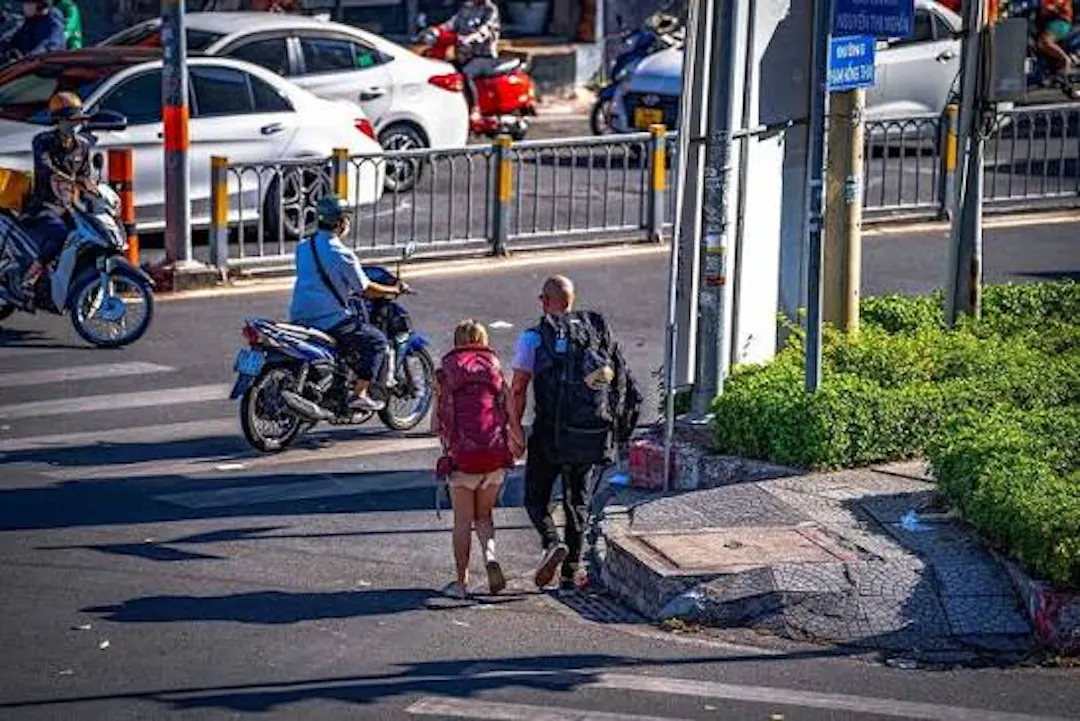
This is the scam with the most physical risk, and it operates almost entirely in Ho Chi Minh City — particularly in District 1, around Bui Vien, Nguyen Hue Boulevard, and Ben Thanh Market. A motorbike with one or two riders passes close to the curb; the passenger grabs a phone, handbag, or camera strap and accelerates into traffic before a response is possible. The entire event takes under two seconds.
Do this instead: Never hold your phone at arm's length while walking near the road. Keep bags on the shoulder furthest from traffic or worn across the body with the clasp facing inward. Cameras should be worn with straps across the body, not hanging from one hand. When stopping to use your phone, step back from the curb and stand against a wall or inside a shop doorway.
If it happens: Do not chase. File a police report at the nearest station for insurance purposes (bring a Vietnamese-speaking helper if possible; the 113 emergency number connects to police).
Scam 3: The Street Vendor / Shoe Shine Aggression
This scam runs in two variations. In the fruit basket version (most common around Hoan Kiem Lake in Hanoi and in major tourist markets), a vendor places a bamboo shoulder pole with fruit baskets onto your shoulders for "a photo" before you've agreed to anything — then demands $10–$30 for the privilege once the photo is taken.
The shoe shine version involves an unsolicited cleaner beginning work on your shoes while you're distracted, then presenting a bill for $20–$50.
Do this instead: The moment someone reaches toward you with an object, step back clearly and say "Không, cảm ơn" (No, thank you). Physical assertiveness is not rude here — it's the functional response. If a shoe shiner starts without permission, stand up immediately and walk away before they finish. Paying even a reduced amount rewards the scam and sustains it for the next traveler.
If you're already in the situation: Stay calm, offer 20,000–50,000 VND maximum (the actual market price), and walk away. Do not engage with escalating emotional pressure.
Scam 4: Rigged ATMs & Market Overcharging
ATM skimming devices exist in Vietnam, predominantly on standalone street-booth machines in high-tourist areas. Card data is cloned and used within hours. At markets — particularly Ben Thanh in HCMC and Dong Xuan in Hanoi — prices quoted to obvious tourists can run 3–10x the local rate, with aggressive pressure to commit before you've processed the number.
Do this instead: Use ATMs inside bank branches only (VPBank and TPBank are recommended for low fees and higher limits). At markets, watch what locals pay for the same item first, open with 30–40% of the first quoted price, and be genuinely willing to walk away — the price will drop immediately. Never withdraw cash from branded kiosks or ATMs in hotel lobbies that aren't affiliated with a major Vietnamese bank.
Navigating Vietnam's Chaotic Traffic Safely
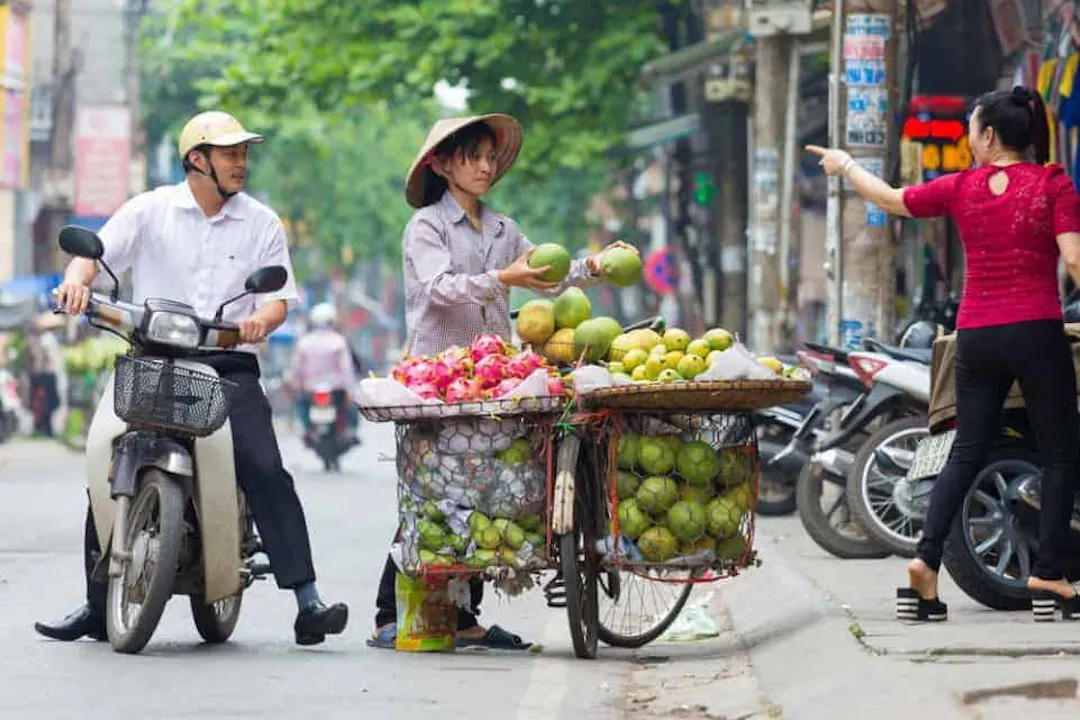
If the statistics are honest, traffic is a significantly larger safety risk for tourists in Vietnam than crime. Road accidents are among the leading causes of injury for foreign visitors. The roads are not dangerous because of reckless intent — they operate on a logic that is simply different from Western traffic systems.
How to Cross the Road
The cardinal rule: move slowly, steadily, and predictably. Do not run. Do not stop abruptly. Do not look down at your phone. Do not hesitate once you've stepped off the curb.
Motorbikes will navigate around you in real time — but only if your path is predictable. A slow, unwavering walk at a constant pace gives riders the data they need to adjust. The moment you hesitate or change direction unpredictably, you become a collision risk. Watch local pedestrians and cross with them when possible; let the first few waves of traffic pass before stepping out at uncontrolled intersections.
Renting Motorbikes: The Real Risk Assessment
Motorbike rental is popular, culturally embedded in Vietnam's travel culture, and — for experienced riders — genuinely one of the best ways to explore rural areas.
The critical facts:
- A Vietnamese driver's license or a valid International Driving Permit (IDP) endorsed for motorbikes is legally required
- Without these documents, your travel insurance is almost universally void in the event of an accident
- The Ha Giang Loop — Vietnam's most celebrated motorbike route — involves mountain passes with sheer drops, unpaved sections, and fast-moving local trucks. It is not appropriate for riders who have never operated a motorbike before
If you are a beginner, hire a local driver on a "xe ôm Easy Rider" tour instead. You get the same scenery, zero legal liability, and someone who has ridden that road hundreds of times.
Tailored Safety Guide for Solo Female Travelers
Cultural Attire Nuances
Vietnam's dress norms vary significantly by location, and respecting them both protects you from unwanted attention and avoids genuine cultural offense.
At temples, pagodas, and religious sites throughout the country, shoulders and knees must be covered. Many sites provide wraps at the entrance — carry a lightweight scarf regardless. In beach towns like Hoi An, Da Nang, Mui Ne, and Phu Quoc, Western beach attire is completely normal on the sand but should be covered with a sarong or shorts when walking into town, markets, or restaurants.
In conservative rural communities — particularly in the northern highlands where ethnic minority villages receive tourists — modest dress signals respect and significantly improves interactions with local women and elders.
Nightlife Safety
Bui Vien in HCMC and Ta Hien in Hanoi are dense, loud, crowd-driven backpacker streets that are energetic rather than inherently dangerous. Apply the same logic you would in any busy nightlife district:
- Stay with people you've just met rather than isolating with someone you've known for 20 minutes
- Pre-book your return transport before leaving your accommodation — never negotiate with unmetered taxis after midnight
- Use Grab for all nighttime journeys; share your trip details to a contact in real time via the app's safety feature
- Keep drinks in sight at all times — drink spiking has been reported on Bui Vien, though it is not common
Handling Unwanted Attention
The most effective tool for managing persistent vendors, unwanted conversation, or overly personal questions is a calm, firm demeanor — not aggressive confrontation. "Không cảm ơn" (No, thank you) delivered flatly and without eye contact is more effective than an engaged refusal.
For questions about whether you're married or traveling alone, a universally useful response: "My husband is meeting me nearby." It's a social exit that works across all ages and contexts. You owe no one your actual travel plans.

The Ultimate Solo Travel Safety Checklist
Final Verdict: Vietnam Rewards the Prepared Solo Traveler
So — is Vietnam safe to travel alone? The honest, experience-backed answer is yes, decisively and enthusiastically — with one condition. The condition isn't bravery. It isn't a travel companion. It's preparation.
The scams are predictable and avoidable once you know them. The traffic has a learnable logic. The culture is welcoming to solo travelers, and particularly kind to women who navigate it with cultural awareness and confident body language. Vietnam's solo travel community is vast, warm, and highly accessible from day one.
Pack your common sense alongside your sunscreen, and Vietnam will reward you with one of the most exhilarating, affordable, and genuinely memorable solo travel experiences in the world.
Heading to Vietnam solo? Drop your itinerary, travel dates, and any specific safety questions in the comments below — especially solo female travelers planning northern trekking routes or longer city circuits. Share your concerns and we'll give you personalized, honest, ground-level guidance before you board.

By Roy Trinh
Editor
Roy Trinh is a travel writer and destination expert at Go Visit Vietnam, dedicated to helping travelers discover the beauty, culture, and diversity of Vietnam. Through well-researched travel guides, practical itineraries, local insights, and authentic recommendations, Roy shares valuable information to inspire memorable journeys across the country. From vibrant cities and breathtaking landscapes to regional cuisine and cultural heritage, every guide is created to help visitors experience Vietnam with confidence and curiosity.
Frequently Asked Questions About Solo Travel Safety in Vietnam
Is Vietnam safe for solo travelers?
Yes. Vietnam is generally considered a safe destination for solo travelers. Violent crime against tourists is uncommon, and most visitors enjoy trouble-free trips by following basic travel precautions and staying aware of their surroundings.
Is Vietnam safe for female travelers?
Yes. Many women travel independently throughout Vietnam every year. Choosing reputable accommodation, using trusted transportation services, avoiding isolated areas late at night, and respecting local customs can help ensure a comfortable and safe experience.
What are the most common scams tourists should avoid in Vietnam?
Common scams include taxi overcharging, unofficial tour operators, inflated prices at some tourist locations, and fake goods. Using licensed transportation, confirming prices in advance, and booking through reputable providers can help avoid these situations.
Is public transportation safe in Vietnam?
Yes. Domestic flights, trains, buses, and ride-hailing services are widely used by both locals and tourists. For convenience and transparency, many travelers choose trusted taxi companies or ride-hailing apps in major cities.
How can I stay safe while traveling alone in Vietnam?
Keep valuables secure, avoid displaying large amounts of cash, share your itinerary with family or friends, stay connected with a mobile data plan, and remain aware of your surroundings. Using reputable accommodations and transportation providers also contributes to a safer travel experience.
Advertising box