
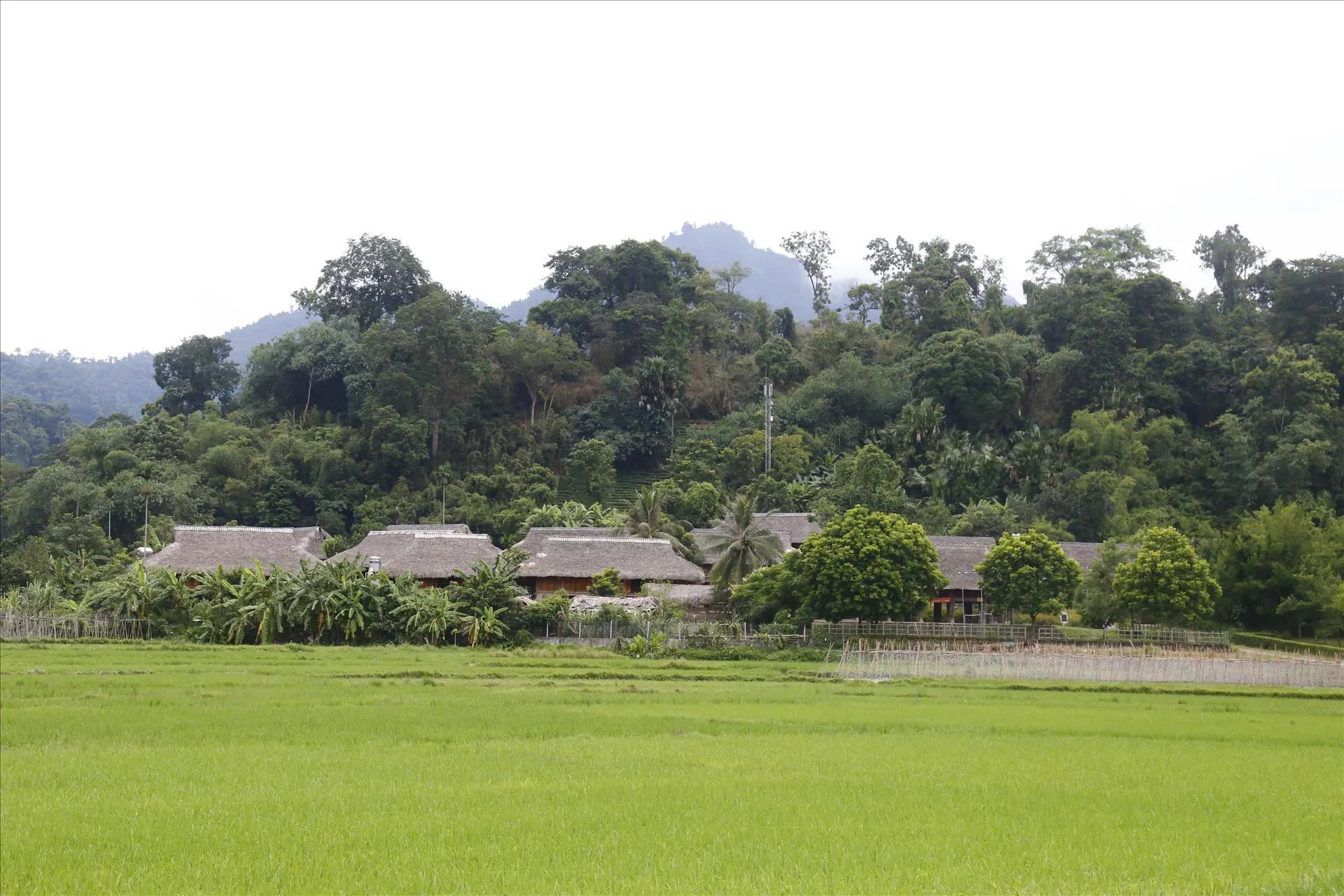
Tan Trao Historical Relic Area
Tan Trao Historical Relic Area in Tuyen Quang is one of Vietnam's most important revolutionary heritage sites, closely associated with the August Revolution of 1945. Set among forested mountains and traditional villages, the area preserves landmarks including Na Lua Shack, Tan Trao Communal House, and the historic Tan Trao Banyan Tree. Visitors can explore the places connected with Ho Chi Minh and the Viet Minh while learning about the events that helped shape modern Vietnam and the country's path toward independence.
About Tan Trao Historical Relic Area
The Tan Trao Historical Relic Area is one of the most important revolutionary heritage destinations in northern Vietnam, located in Tuyen Quang Province. Set among green forests, mountains, valleys, and traditional villages, Tan Trao is closely associated with the final preparations for the August Revolution of 1945, which led to the establishment of the Democratic Republic of Vietnam.
For travelers interested in Vietnamese history and revolutionary heritage, Tan Trao offers a chance to explore the places where important decisions were made and where key events unfolded before Vietnam's declaration of independence.
What Is Tan Trao Historical Relic Area?
Tan Trao is a protected historical area containing numerous sites connected with the Vietnamese revolutionary movement during the 1940s.
The area became an important base for the Viet Minh during the final stages of the struggle against Japanese occupation and French colonial rule.
Several important meetings and political events took place here in August 1945, making Tan Trao an important part of Vietnam's modern history.
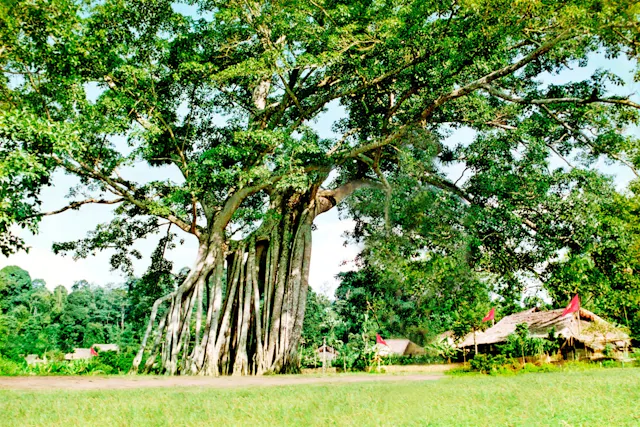
Tan Trao Banyan Tree
The Tan Trao Banyan Tree is one of the most recognizable landmarks in the area.
According to historical accounts, Ho Chi Minh addressed Vietnamese liberation forces near the banyan tree before they departed for major revolutionary activities in August 1945.
The large tree has become a symbolic landmark associated with the beginning of the August Revolution.
Visitors can walk around the site and learn about its historical significance while enjoying the surrounding forest landscape.
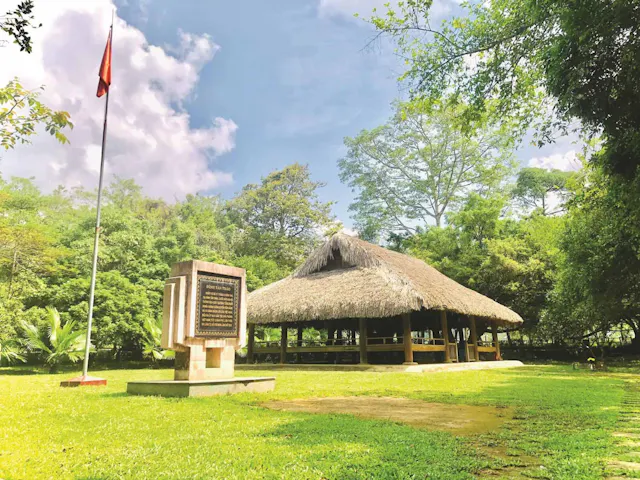
Tan Trao Communal House
Tan Trao Communal House is another important historical site.
The traditional wooden communal house was associated with local community life before becoming an important location during the revolutionary period.
In August 1945, the National Congress of the Viet Minh was held in the Tan Trao area.
The site therefore represents both traditional Vietnamese village culture and an important moment in the country's modern political history.
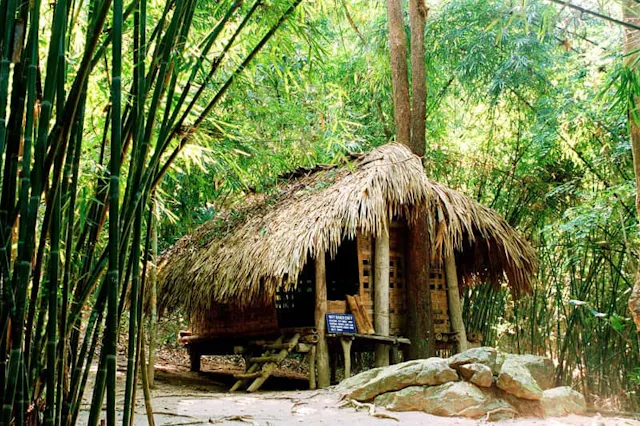
Ho Chi Minh's Shack
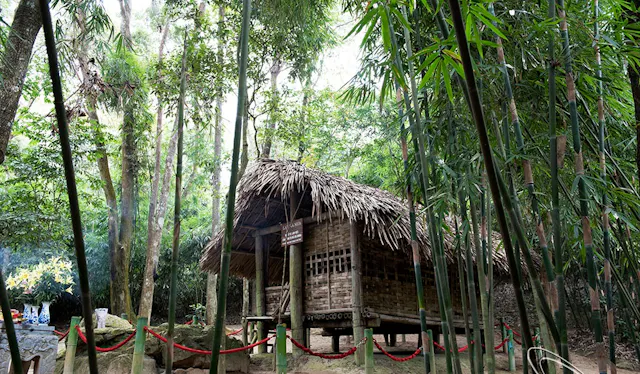
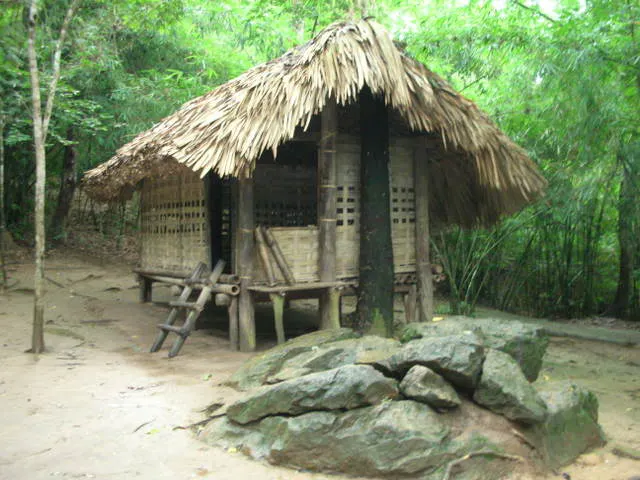
A simple wooden shelter associated with Ho Chi Minh is preserved within the relic area.
The modest structure reflects the conditions under which revolutionary leaders lived and worked while operating in the mountainous region.
Visitors can see the simple surroundings and imagine the environment in which important political decisions were being made.
Na Lua Shack
The Na Lua Shack is one of the most significant historical sites in Tan Trao.
Ho Chi Minh stayed and worked here during the period leading up to the August Revolution.
The small wooden structure is located in a peaceful forest setting and is surrounded by trees and natural scenery.
Its simplicity provides a contrast with the historical importance of the events connected with the site.
Tan Trao National Congress
The Tan Trao area hosted an important National Congress of the Viet Minh in August 1945.
The meeting discussed the revolutionary situation and preparations for the uprising.
The events that followed contributed to the August Revolution, which resulted in the transfer of political power in many parts of Vietnam.
Connection to Vietnamese Independence
Tan Trao is closely connected with the events that led to the declaration of Vietnamese independence.
Following the success of the August Revolution, Ho Chi Minh traveled to Hanoi, where he read the Declaration of Independence on September 2, 1945.
Although the declaration itself took place in Hanoi, Tan Trao played an important role in the political and military preparations that preceded it.
Traditional Mountain Landscape
Beyond its historical significance, Tan Trao is surrounded by the natural scenery of northern Vietnam.
Forested hills, rice fields, streams, and traditional villages create a peaceful environment for visitors.
The landscape also provides opportunities to learn about the lives and traditions of local ethnic communities.
Local Ethnic Culture
The Tan Trao region is home to several ethnic communities, including the Tay and Dao peoples.
Travelers may encounter traditional stilt houses, local handicrafts, agricultural practices, music, and regional cuisine.
Experiencing the local communities adds cultural context to a visit and demonstrates how revolutionary history developed within the everyday landscape of rural northern Vietnam.
Best Time to Visit Tan Trao
The area can be visited throughout the year, but the dry and cooler months from October to April are generally comfortable for exploring the outdoor historical sites.
The landscape is particularly green during the wetter months, although rain can make rural roads and walking paths less convenient.
Visitors should allow several hours to explore the main relics and surrounding area.
How to Get to Tan Trao
Tan Trao is located in Son Duong District, Tuyen Quang Province, approximately several hours from Hanoi by road.
The most convenient options are private car, taxi, or organized tour.
Travelers can combine Tan Trao with other attractions in Tuyen Quang, creating a broader itinerary focused on history, nature, and ethnic culture.
Why Visit Tan Trao Historical Relic Area?
Tan Trao Historical Relic Area offers a meaningful opportunity to explore the history of Vietnam's August Revolution and the country's path toward independence.
From the Tan Trao Banyan Tree and communal house to Na Lua Shack and the surrounding mountain villages, the site connects major historical events with the landscapes and communities of northern Vietnam.
For travelers interested in Vietnamese history, culture, and revolutionary heritage, Tan Trao provides a quieter and more immersive experience than many of the country's major urban historical attractions.
Tan Trao Historical Relic Area Photo Gallery
Browse images of Tan Trao Historical Relic Area and discover Vietnam’s revolutionary heritage. Explore the Tan Trao Banyan Tree, Communal House, Pac Mo Stream, and beautiful landscapes of Tuyen Quang through a curated visual collection.
How to Get to and Around Tan Trao Historical Relic Area
Bus and coach
Regular buses and limousine services run from Hanoi to Tuyen Quang City, with a travel time of about 2.5–4 hours. From Tuyen Quang City, visitors can continue by local bus, taxi, or private car for approximately 40–50 kilometers to reach Tan Trao.
Train
There is no direct train route to Tan Trao. Travelers can take a train from Hanoi to nearby stations such as Thai Nguyen or Viet Tri, then continue the journey by bus or car to Tuyen Quang Province and onward to Tan Trao.
Driving
Driving from Hanoi is one of the most convenient options, taking around 2.5–3.5 hours depending on traffic. The route passes through scenic northern countryside roads, and parking is available near the main entrance of the relic area.
Flying
The nearest airport is Noi Bai International Airport in Hanoi, located about 130 kilometers away. After landing, visitors can travel by taxi, private transfer, or bus to Tuyen Quang City and then continue to Tan Trao by road.
Frequently Asked Questions About Tan Trao Historical Relic Area
What is Tan Trao Historical Relic Area famous for?
Tan Trao is famous as the birthplace of the August Revolution of 1945. It was where key revolutionary decisions were made under the leadership of President Ho Chi Minh, including the National People’s Congress that paved the way for Vietnam’s independence.
Where is Tan Trao Historical Relic Area located?
The site is located in Tan Trao Commune, Son Duong District, Tuyen Quang Province in northern Vietnam. It is surrounded by mountains, forests, and traditional villages.
Is there an entrance fee to visit Tan Trao?
Entry to Tan Trao Historical Relic Area is generally free. However, some services such as guided tours, shuttle transport, or parking may incur small fees depending on the season.
How much time should I spend at Tan Trao?
Most visitors spend about 2 to 4 hours exploring key attractions such as the Tan Trao Banyan Tree, Communal House, and nearby historical sites. A half-day visit is usually enough for a complete experience.
What are the main attractions in Tan Trao?
The main attractions include the Tan Trao Banyan Tree, Tan Trao Communal House, Pac Mo Stream, Hong Thai Village, and several revolutionary relic sites connected to Vietnam’s independence movement.
Advertising box