Mid-Autumn Festival in Vietnam: Tet Trung Thu Traditions & Travel Guide
The Mid-Autumn Festival in Vietnam, known as Tet Trung Thu, is a colorful celebration of family, children, lanterns, mooncakes, and lion dances. Held on the 15th day of the eighth lunar month, the festival brings streets and neighborhoods to life with traditional performances and festive activities. Discover the history and customs of Trung Thu, learn about Vietnamese mooncakes and lanterns, and find the best places to experience the festival in Hanoi, Hoi An, and Ho Chi Minh City as a traveler.
On this page
- What Is the Mid-Autumn Festival in Vietnam?
- When Is the Mid-Autumn Festival in Vietnam?
- Why Do Vietnamese People Celebrate Tet Trung Thu?
- Mid-Autumn Festival Traditions in Vietnam
- Vietnamese Mid-Autumn Festival Food
- Vietnamese Mid-Autumn Festival Lanterns
- Where to Celebrate the Mid-Autumn Festival in Vietnam
- What Is It Like to Travel During Tet Trung Thu?
- Tips for Experiencing Tet Trung Thu as a Traveler
- Experience Tet Trung Thu in Vietnam
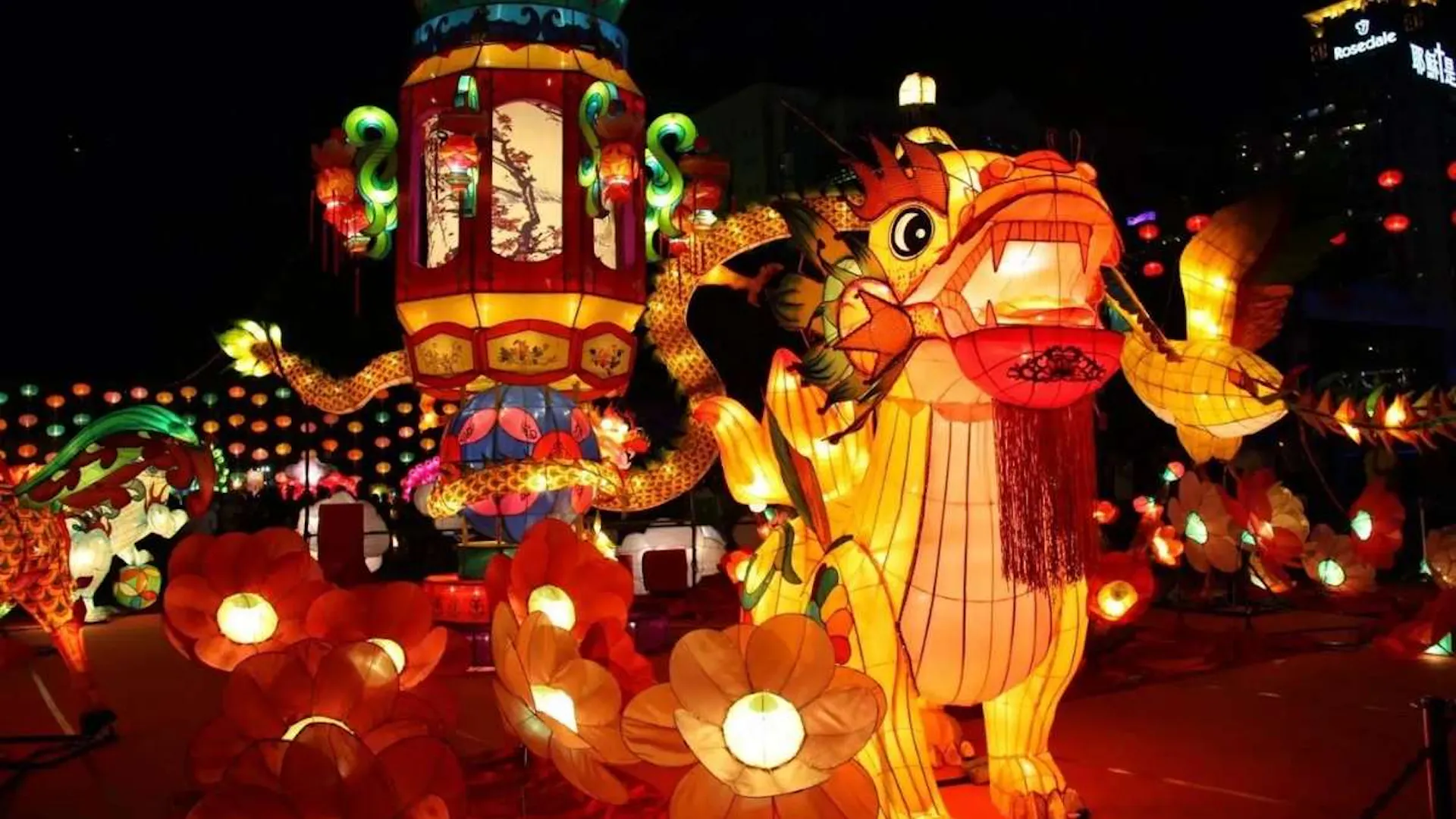
The Mid-Autumn Festival in Vietnam, known as Tết Trung Thu, is one of the country's most colorful traditional celebrations. Held on the 15th day of the eighth month of the lunar calendar, the festival is associated with the full moon, children, family gatherings, colorful lanterns, mooncakes, and lively lion dances.
For travelers, Tet Trung Thu in Vietnam offers a chance to experience local culture beyond temples, beaches, historic landmarks, and famous food. In the weeks around the festival, streets fill with lanterns and traditional toys, bakeries sell beautifully decorated mooncakes, and evening celebrations bring families and children into public spaces.
While Trung Thu is celebrated throughout Vietnam, Hanoi, Hoi An, and Ho Chi Minh City offer particularly interesting experiences for visitors.
In this guide, discover what Tet Trung Thu is, when it takes place, its traditions and foods, and where to experience the Mid-Autumn Festival in Vietnam.
What Is the Mid-Autumn Festival in Vietnam?
Tet Trung Thu is the Vietnamese name for the Mid-Autumn Festival. It takes place on the 15th day of the eighth month of the Vietnamese lunar calendar, when the moon is traditionally associated with being full and bright.
The festival has connections to the agricultural calendar and the harvest season, but Vietnamese celebrations have developed a strong focus on children, family, community, and togetherness.
For Vietnamese families, Trung Thu is a time to spend an evening together, enjoy mooncakes and tea, prepare fruit offerings, give children lanterns, and watch lion dance performances.
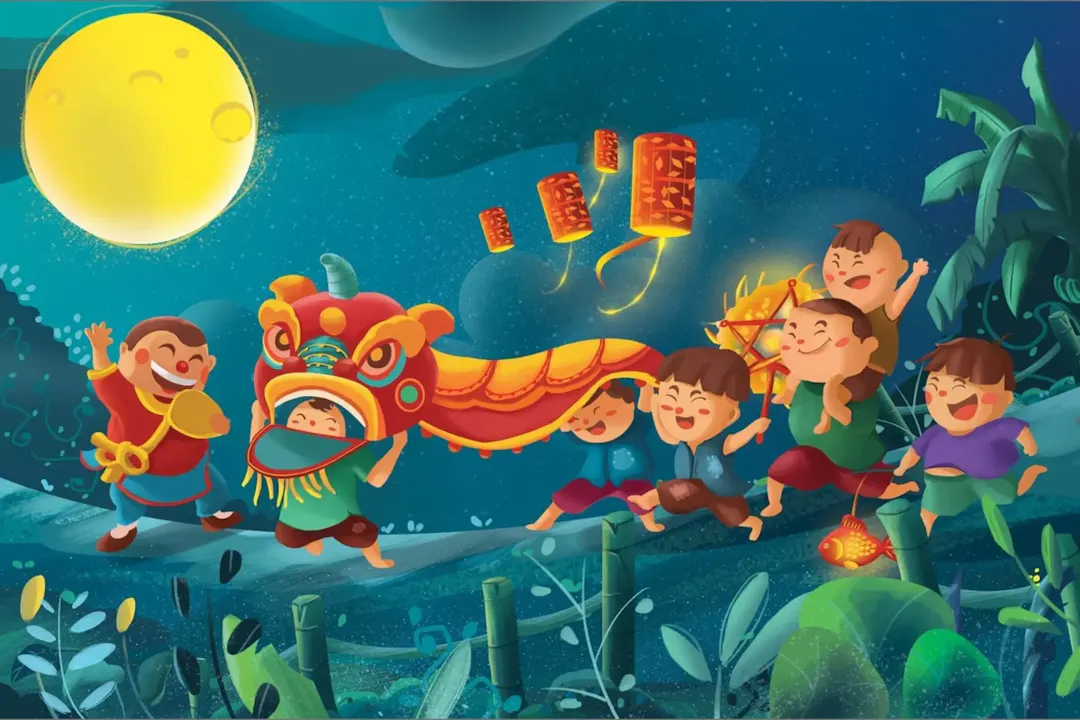
Children are particularly important during the festival. They may carry lanterns through their neighborhoods, join processions, play with traditional toys, and watch múa lân performances accompanied by drums.
Today, Tet Trung Thu combines traditional customs with modern celebrations. Shopping streets, schools, cultural centers, restaurants, hotels, and local communities may organize their own activities.
When Is the Mid-Autumn Festival in Vietnam?
The Mid-Autumn Festival falls on the 15th day of the eighth lunar month, so its date changes each year on the Gregorian calendar.
This means travelers should check the festival date before planning a trip around Trung Thu.
In 2026, the Mid-Autumn Festival falls on September 25.
Celebrations often begin several days or even weeks before the full moon. Mooncakes appear in shops, lanterns are sold in markets, and streets begin to take on a festive atmosphere before the main evening.
For travelers, the days immediately surrounding the festival can be more interesting than visiting only on the exact date because many cultural activities take place throughout the festival period.
Why Do Vietnamese People Celebrate Tet Trung Thu?
The Mid-Autumn Festival has traditionally been associated with the harvest, the full moon, family reunion, and gratitude.
Vietnam's agricultural heritage helped shape many seasonal celebrations. After periods of intensive agricultural work, families could gather and enjoy a period of celebration and rest.
Over time, Tet Trung Thu became especially associated with children.
Parents and grandparents give children lanterns and traditional toys, prepare special foods, and take them to watch performances. The festival therefore represents not only the changing seasons but also family affection and hopes for children's happiness and well-being.
The full moon is another important symbol. Families traditionally gather together under the moon, share food, and enjoy an evening of conversation and celebration.
Mid-Autumn Festival Traditions in Vietnam
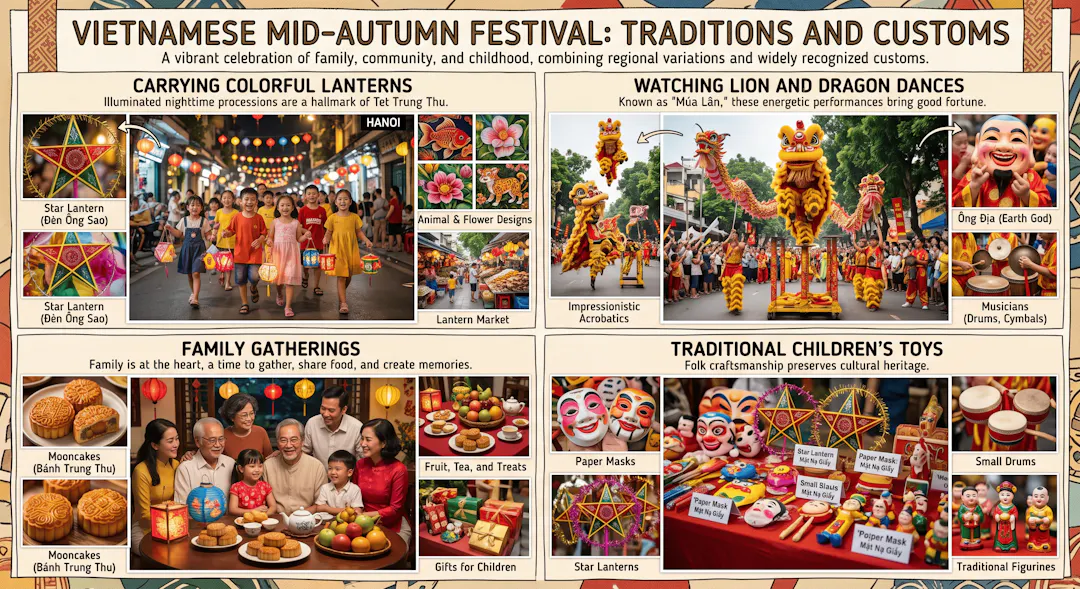
Tet Trung Thu traditions vary between regions and families, but several customs are widely recognized throughout Vietnam.
Carrying Colorful Lanterns
Lanterns are one of the most recognizable symbols of Vietnamese Mid-Autumn Festival celebrations. Children traditionally carry lanterns during evening processions or neighborhood walks. The lanterns come in many shapes, colors, and designs, ranging from simple handmade creations to modern battery-powered versions.
One of the most recognizable traditional designs is the star lantern, or đèn ông sao. It is usually made with a bamboo frame covered with colorful transparent paper.
Other traditional lantern designs can include animals, flowers, fish, and other familiar shapes.
For travelers, lantern markets and decorated streets can be some of the most photogenic places to experience Trung Thu.
Watching Lion and Dragon Dances
Lion dance, known as múa lân, is another major part of Tet Trung Thu. Performers wearing colorful lion costumes move to the rhythm of drums and cymbals. Some performances include impressive acrobatic movements, while others take place at street events, schools, temples, shops, or community gatherings.
The lion is traditionally associated with good fortune, prosperity, and protection. A character known as Ông Địa, the Earth God, often appears alongside the lion. With his large smiling mask and playful movements, Ông Địa adds a humorous element to the performance.
For children, the combination of drums, colorful costumes, acrobatics, and dancing is one of the highlights of the festival.
Family Gatherings
Family is at the heart of Tet Trung Thu. Families may prepare fruit, mooncakes, tea, and other treats before gathering together in the evening. Children receive lanterns and gifts, while adults use the occasion to spend time with relatives.
The festival is therefore less about a single formal ceremony and more about sharing time and food with family and community.
Traditional Children's Toys
Traditional toys are closely connected with Trung Thu, especially in northern Vietnam.
During the weeks before the festival, markets and specialty streets may sell:
- Paper masks
- Star lanterns
- Small drums
- Paper toys
- Animal-shaped lanterns
- Traditional figurines
These toys give the festival a distinctive visual character and preserve elements of Vietnamese folk craftsmanship.
Vietnamese Mid-Autumn Festival Food
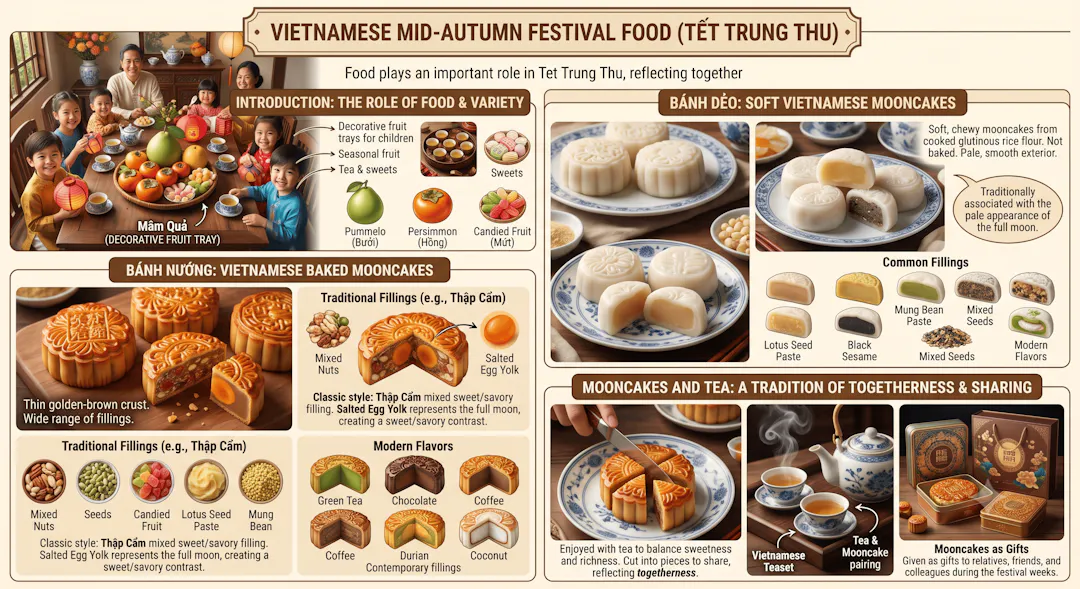
Food plays an important role in Tet Trung Thu, with Vietnamese mooncakes being the most recognizable festival food. Families may also prepare seasonal fruit, tea, sweets, and decorative fruit trays for children and guests.
Bánh Nướng: Vietnamese Baked Mooncakes
Bánh nướng are traditional Vietnamese baked mooncakes. They have a thin golden-brown crust and can contain a wide range of fillings. Traditional versions may include lotus seed paste, mung bean, mixed nuts, seeds, candied fruit, or salted egg yolks.
One of the classic styles is thập cẩm, a mixed filling combining sweet and savory ingredients. The salted egg yolk found in some mooncakes represents the full moon and creates a contrast with the sweet filling.
Modern Vietnamese bakeries also produce mooncakes with flavors such as green tea, chocolate, coffee, coconut, durian, and other contemporary fillings.
Bánh Dẻo: Soft Vietnamese Mooncakes
Bánh dẻo are soft, chewy mooncakes made from cooked glutinous rice flour. Unlike bánh nướng, they are not baked. Their pale, smooth exterior gives them a distinctive appearance and soft texture.
Common fillings include:
- Lotus seed paste
- Mung bean paste
- Black sesame
- Mixed seeds
- Modern flavored fillings
Bánh dẻo are traditionally associated with the pale appearance of the full moon.
Mooncakes and Tea
Mooncakes are often enjoyed with tea, which helps balance their sweetness and richness. Families may cut a mooncake into smaller pieces so that everyone can share it. This simple act reflects one of the central ideas of Tet Trung Thu: togetherness.
Mooncakes are also commonly given as gifts to relatives, friends, business partners, and colleagues during the weeks surrounding the festival.
Vietnamese Mid-Autumn Festival Lanterns
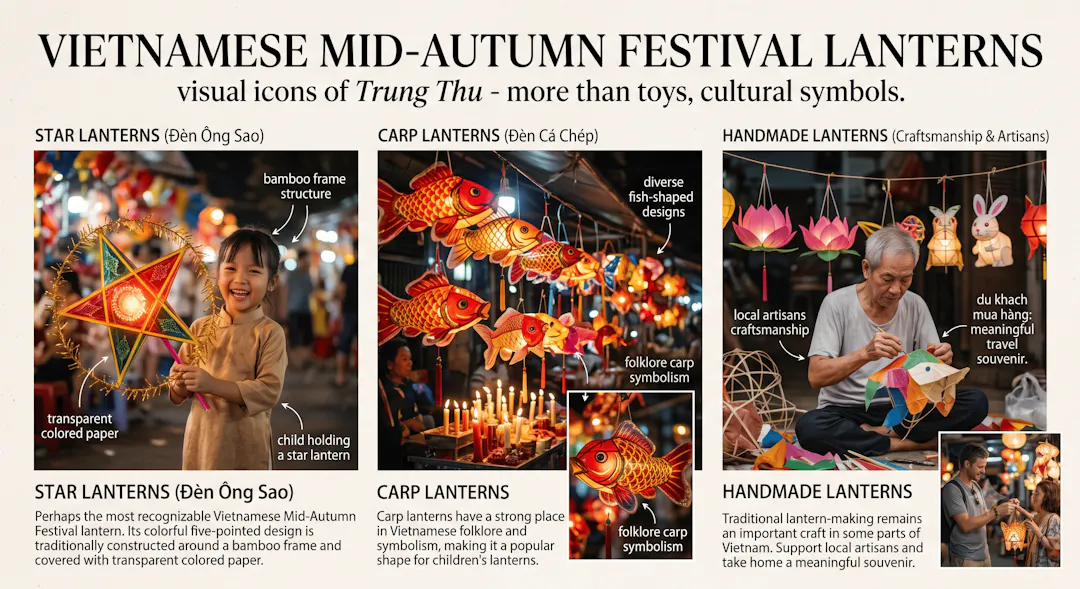
Lanterns are more than children's toys; they are an important part of the visual culture of Trung Thu.
Star Lanterns
The đèn ông sao, or star lantern, is perhaps the most recognizable Vietnamese Mid-Autumn Festival lantern. Its colorful five-pointed design is traditionally constructed around a bamboo frame and covered with transparent colored paper.
Carp Lanterns
Carp lanterns, or đèn cá chép, are another traditional design. The carp has a strong place in Vietnamese folklore and symbolism, making it a popular shape for children's lanterns.
Handmade Lanterns
In some parts of Vietnam, traditional lantern-making remains an important craft. For travelers interested in Vietnamese culture, buying a handmade lantern can be a simple way to support local artisans while taking home a meaningful souvenir.
Where to Celebrate the Mid-Autumn Festival in Vietnam
Tet Trung Thu takes place throughout Vietnam, but some destinations offer particularly memorable experiences for visitors.
Mid-Autumn Festival in Hanoi
Hanoi offers one of the best settings for experiencing the traditional side of Trung Thu. In the weeks leading up to the festival, Hàng Mã Street in the Old Quarter becomes particularly colorful. Shops and stalls display lanterns, masks, drums, toys, decorations, and other seasonal products.
The surrounding Old Quarter also provides an opportunity to see how traditional Vietnamese festival culture fits into a historic urban environment.
For travelers, visiting Hàng Mã before the main festival evening can be a good way to browse the decorations before the streets become especially crowded. The area is particularly attractive for photography, shopping, and experiencing the atmosphere of a traditional Vietnamese festival.
Mid-Autumn Festival in Hoi An
Hoi An is another popular destination for experiencing lantern-filled evenings. The historic Old Town is already famous for its colorful lanterns, but festival periods can make the atmosphere even more distinctive.
Visitors may encounter:
- Lantern displays
- Traditional performances
- Children's activities
- Folk music
- Cultural events
- Crowded evening streets
The combination of historic architecture, lanterns, the Hoai River, and traditional performances makes Hoi An particularly attractive for travelers interested in photography and cultural experiences. Because activities can change from year to year, travelers should check the local event schedule before visiting.
Mid-Autumn Festival in Ho Chi Minh City
In Ho Chi Minh City, many celebrations are concentrated around Chợ Lớn, the city's historic Chinatown. Lương Nhữ Học Street is particularly well known for its lantern shops and colorful seasonal displays.
During the festival period, the area becomes a lively destination for families, photographers, food lovers, and visitors interested in the city's Vietnamese-Chinese cultural heritage.
Lion and dragon dance performances are also an important part of the atmosphere. For travelers staying in Ho Chi Minh City, Chợ Lớn provides a different perspective on Tet Trung Thu from the more traditional atmosphere found in Hanoi or the lantern-filled setting of Hoi An.
What Is It Like to Travel During Tet Trung Thu?
Traveling during the Mid-Autumn Festival can be an enjoyable cultural experience, but visitors should expect some changes to normal routines.
Expect Crowded Festival Areas
Popular streets and cultural districts can become extremely busy during the evening. Hàng Mã in Hanoi, Hoi An Old Town, and Lương Nhữ Học Street in Ho Chi Minh City can attract large crowds. If you want to take photographs or explore the area more comfortably, consider arriving before the main evening celebrations.
Check Local Event Schedules
Tet Trung Thu activities are not identical across Vietnam. Some events are organized by local communities, schools, cultural centers, hotels, shopping districts, or businesses. Check local announcements before traveling if you want to see a specific lion dance, lantern procession, or cultural performance.
Book Accommodation in Popular Destinations
If you plan to visit Hoi An, Hanoi, or another major tourist destination around the festival, booking accommodation in advance is sensible. This is particularly important if the festival coincides with a busy travel period.
Be Respectful When Taking Photos
The festival is especially popular with children, making photography tempting for visitors. When photographing individual children or families, ask for permission when appropriate. At organized public performances, follow local rules and avoid blocking performers or other spectators.
Tips for Experiencing Tet Trung Thu as a Traveler
To make the most of the festival, consider these simple tips:
- Visit before sunset. You can explore lantern markets and decorations before the evening crowds arrive.
- Stay into the evening. Many of the most atmospheric activities take place after dark when lanterns are illuminated.
- Try a Vietnamese mooncake. Even if traditional fillings are unfamiliar, tasting bánh nướng or bánh dẻo is an easy way to experience the festival's food culture.
- Watch a lion dance. The drums, costumes, and acrobatics are among the most memorable parts of Trung Thu.
- Explore local markets. Markets provide a more everyday view of how Vietnamese families prepare for the festival.
- Buy a traditional lantern. A handmade lantern can be a memorable cultural souvenir.
- Respect local celebrations. Remember that Tet Trung Thu is primarily a family and children's festival rather than a tourist event.
Experience Tet Trung Thu in Vietnam
The Mid-Autumn Festival in Vietnam is much more than a festival of lanterns and mooncakes. It brings together Vietnamese traditions of family, community, children's celebrations, food, craftsmanship, and seasonal culture.
From the colorful toy streets of Hanoi to the lantern-lit atmosphere of Hoi An and the energetic celebrations of Chợ Lớn in Ho Chi Minh City, each destination offers a different way to experience Tet Trung Thu.
For travelers, the best approach is simple: arrive before the evening crowds, explore the local decorations and markets, try a traditional mooncake, watch a lion dance, and take time to observe how Vietnamese families celebrate together.
If your trip coincides with the 15th day of the eighth lunar month, Tet Trung Thu can be one of the most memorable cultural experiences to add to a Vietnam itinerary.

By Roy Trinh
Editor
Roy Trinh is a travel writer and destination expert at Go Visit Vietnam, dedicated to helping travelers discover the beauty, culture, and diversity of Vietnam. Through well-researched travel guides, practical itineraries, local insights, and authentic recommendations, Roy shares valuable information to inspire memorable journeys across the country. From vibrant cities and breathtaking landscapes to regional cuisine and cultural heritage, every guide is created to help visitors experience Vietnam with confidence and curiosity.
Mid-Autumn Festival in Vietnam FAQ
When is the Mid-Autumn Festival in Vietnam?
The Mid-Autumn Festival takes place on the 15th day of the eighth month of the Vietnamese lunar calendar. Its Gregorian calendar date changes each year. In 2026, it falls on September 25.
What is Tet Trung Thu?
Tet Trung Thu is Vietnam's traditional Mid-Autumn Festival. It is celebrated with family gatherings, lanterns, mooncakes, lion dances, children's activities, and seasonal foods.
Why do Vietnamese people celebrate the Mid-Autumn Festival?
The festival has connections to the harvest and lunar calendar and has evolved into a celebration strongly associated with family, children, community, and togetherness.
What do Vietnamese people eat during Tet Trung Thu?
The most famous festival food is Vietnamese mooncake, particularly bánh nướng and bánh dẻo. Families may also enjoy fruit, tea, and other traditional sweets.
What do children do during Tet Trung Thu?
Children may carry lanterns, join processions, watch lion dances, receive gifts, play with traditional toys, and participate in community celebrations.
Where is the best place to experience Tet Trung Thu in Vietnam?
Hanoi, Hoi An, and Ho Chi Minh City are among the most interesting destinations for travelers. Hanoi is known for traditional decorations around Hàng Mã, Hoi An for its lantern-filled historic setting, and Ho Chi Minh City for the lively celebrations in Chợ Lớn.
Is Hoi An good for the Mid-Autumn Festival?
Yes. Hoi An's historic architecture and famous lantern culture create an atmospheric setting for experiencing Trung Thu. However, the Old Town can become very crowded during major festival evenings.
Can tourists participate in Tet Trung Thu celebrations?
Yes. Visitors can generally enjoy public activities such as lantern displays, markets, cultural performances, and lion dances. Travelers should remember that the festival is primarily a local family and children's celebration and should respect local customs.
Advertising box
Related Events in Vietnam
Discover more of Vietnam's traditional festivals, cultural celebrations, religious events, and seasonal experiences. Explore major events across the country to learn about local traditions, history, food, music, and the unique cultural heritage of each destination.
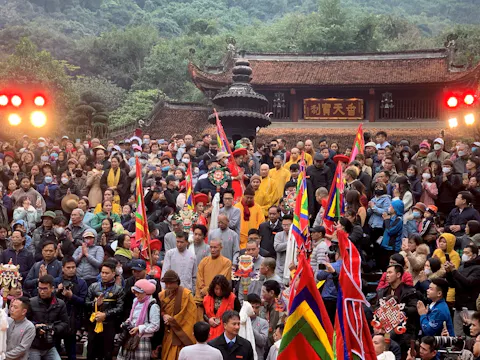
Huong Pagoda Festival Vietnam: Dates, Traditions & Travel Guide
The Huong Pagoda Festival is one of Vietnam’s most important Buddhist pilgrimages, attracting visitors to the scenic Huong Son mountains southwest of Hanoi each spring. Also known as the Perfume Pagoda Festival, it combines Buddhist ceremonies, traditional worship, boat rides along the Yen Stream, mountain temples, and the sacred Huong Tich Cave. This guide covers the festival’s history, traditions, 2026 dates, main attractions, cultural etiquette, transportation, and practical travel tips to help international visitors experience this unique Vietnamese cultural celebration.
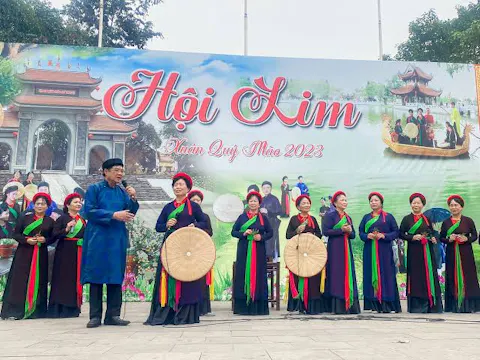
Lim Festival Vietnam: Experience Quan Ho Folk Singing in Bac Ninh
Discover Lim Festival Vietnam, one of northern Vietnam’s most distinctive cultural celebrations. Held in Bac Ninh during the first lunar month, the festival brings Quan Ho folk singing, traditional costumes, temple ceremonies, dragon boat performances, folk games, and local traditions together. Learn about the history of Lim Festival, the meaning of Quan Ho, where to experience the celebrations, what to expect as a traveler, and practical tips for visiting Bac Ninh during this colorful Vietnamese cultural festival.
Hung Kings Festival in Vietnam: History, Traditions & Travel Guide
The Hung Kings Festival, or Giỗ Tổ Hùng Vương, is one of Vietnam’s most important cultural celebrations, honoring the legendary Hung Kings and the country’s ancestral heritage. Held annually on the 10th day of the third lunar month, the main ceremonies take place at Hung Kings Temple in Phu Tho. Discover the festival’s history, traditional rituals, bánh chưng and bánh giầy offerings, Hát Xoan performances, and practical travel tips for visiting this sacred cultural site from Hanoi and beyond.
Tet in Vietnam: Vietnamese Lunar New Year Traditions, Food & Travel Guide
Tet, or Tết Nguyên Đán, is Vietnam’s most important annual celebration and marks the beginning of the Vietnamese Lunar New Year. From colorful flower markets and family reunions to ancestral rituals, lucky money, traditional foods, and lively temple visits, Tet offers travelers a unique look at Vietnamese culture. This guide explains when Tet takes place, its most important traditions and foods, what happens across Vietnam, and what travelers should know about transportation, business closures, etiquette, and visiting Vietnam during the holiday.