
Hung Kings Festival in Vietnam: History, Traditions & Travel Guide
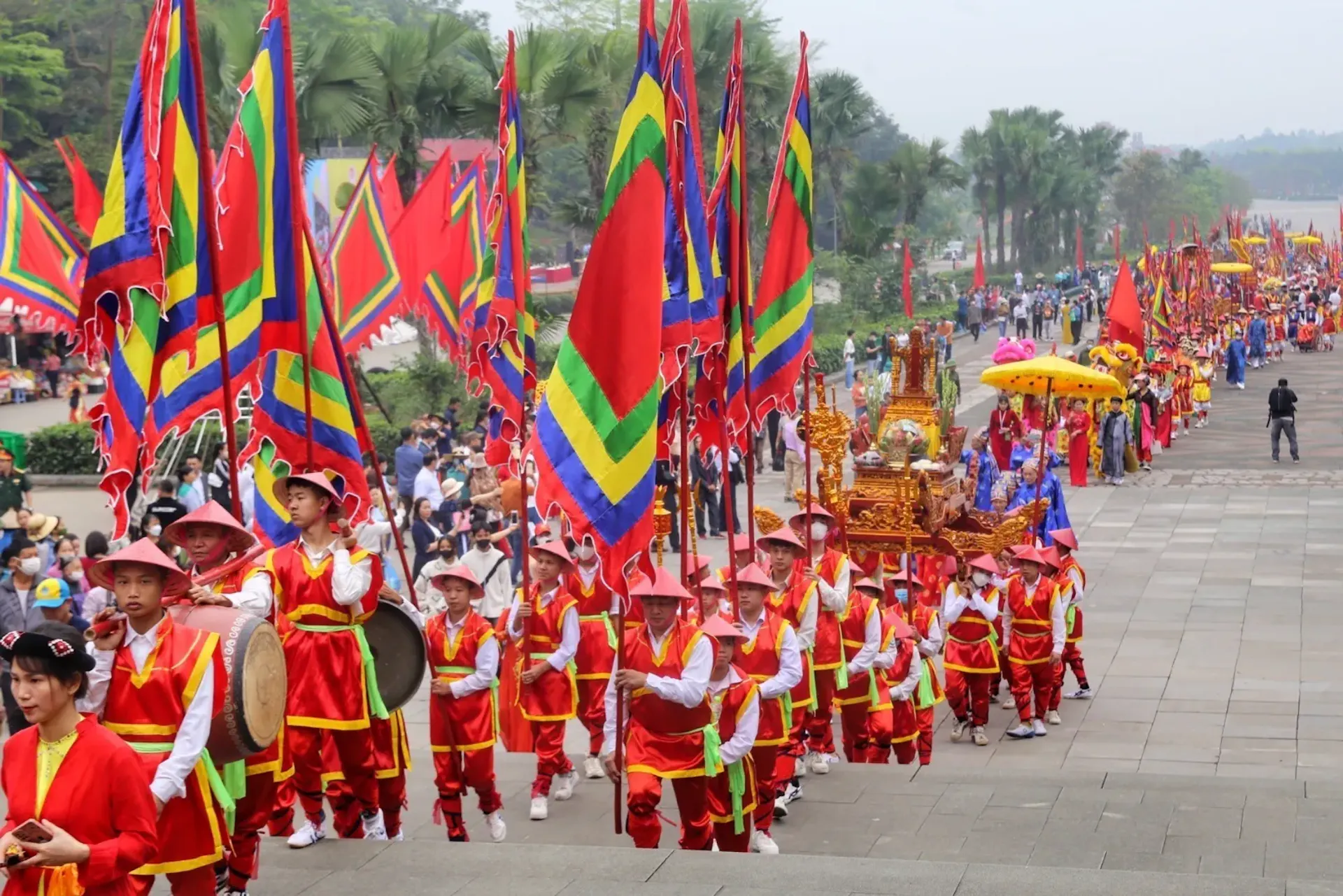
The Hung Kings Festival, or Giỗ Tổ Hùng Vương, is one of Vietnam’s most important cultural celebrations, honoring the legendary Hung Kings and the country’s ancestral heritage. Held annually on the 10th day of the third lunar month, the main ceremonies take place at Hung Kings Temple in Phu Tho. Discover the festival’s history, traditional rituals, bánh chưng and bánh giầy offerings, Hát Xoan performances, and practical travel tips for visiting this sacred cultural site from Hanoi and beyond.
On this page
- What Is the Hung Kings Festival?
- When Is Hung Kings Festival in Vietnam?
- Why Is the Hung Kings Festival Important?
- The Legend of Lạc Long Quân and Âu Cơ
- Where Is the Hung Kings Festival Celebrated?
- Exploring the Hung Kings Temple Complex
- Hung Kings Festival Traditions
- The Story of Bánh Chưng and Bánh Giầy
- Hát Xoan: Traditional Music of Phú Thọ
- How Hung Kings Festival Is Celebrated Across Vietnam
- Hung Kings Day as a Public Holiday
- When Should You Visit Phú Thọ?
- How to Get to Hung Kings Temple
- Where to Stay
- What to Wear and How to Behave at the Temples
- Is Hung Kings Festival Worth Visiting?
- Final Thoughts
The Hung Kings Festival in Vietnam, known as Giỗ Tổ Hùng Vương, is one of the country's most important cultural observances. Held annually on the 10th day of the third lunar month, the festival honors the legendary Hung Kings, traditionally regarded as the founders of the first Vietnamese kingdom, Văn Lang.
The main ceremonies take place at the Hung Kings Temple on Nghĩa Lĩnh Mountain in Phú Thọ. Pilgrims gather to offer incense, pay respects to their ancestors, watch traditional performances, and take part in cultural activities.
For travelers, the festival offers a unique opportunity to understand an important part of Vietnamese history and culture. From sacred temples and ancestral rituals to bánh chưng, bánh giầy, and hát Xoan performances, Hung Kings Festival connects mythology, family traditions, and national identity.
What Is the Hung Kings Festival?
The Hung Kings Festival is an annual Vietnamese festival dedicated to honoring the Hung Kings, or Vua Hùng, who are traditionally believed to have ruled the ancient kingdom of Văn Lang.
The festival is officially called Giỗ Tổ Hùng Vương, meaning the death anniversary or commemoration of the Hung Kings. Although the historical existence and chronology of the early Hung Kings belong largely to Vietnamese mythology and traditional history, their story remains deeply important to Vietnamese cultural identity.
The festival's central message is often expressed through the Vietnamese concept "uống nước nhớ nguồn", meaning to remember the source when drinking water. In this context, honoring the Hung Kings represents gratitude toward one's ancestors and predecessors.
The main pilgrimage takes place at the Hung Kings Temple Historical Complex in Phú Thọ, where ceremonies combine religious practices, traditional performances, cultural activities, and community gatherings.
When Is Hung Kings Festival in Vietnam?
Hung Kings Festival takes place on the 10th day of the third lunar month every year.
Because Vietnam uses the lunar calendar alongside the Gregorian calendar, the exact date changes annually.
The festival period at Phú Thọ is broader than the main ceremony day. Cultural events and traditional activities can take place during the days leading up to the main commemoration.
For travelers, it is worth checking the official festival schedule before planning a visit because individual events, performances, traffic arrangements, and ceremonial programs can vary from year to year.
Why Is the Hung Kings Festival Important?
The festival is much more than a religious ceremony. It represents a shared sense of ancestry and national identity.
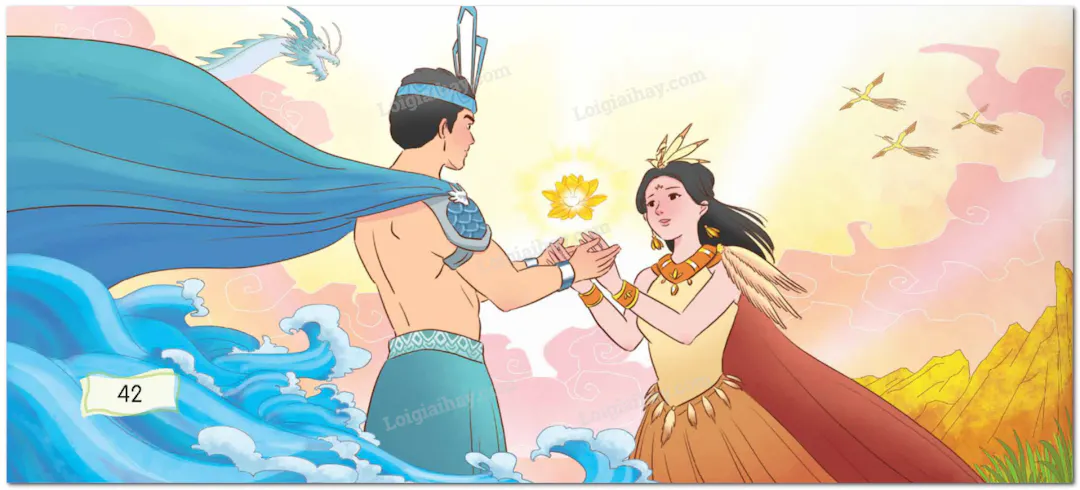
According to Vietnamese tradition, the Hung Kings descend from the legendary couple Lạc Long Quân and Âu Cơ. Their story tells of 100 children born from a hundred eggs. Fifty children followed Lạc Long Quân toward the sea, while fifty followed Âu Cơ into the mountains.
The story gives rise to the expression đồng bào, commonly understood as people sharing the same ancestral origins.
This idea of common ancestry is central to the meaning of the festival. Vietnamese people from different regions and backgrounds can participate in the same national act of remembrance.
The Legend of Lạc Long Quân and Âu Cơ
Vietnamese traditional history traces the origins of the Hung Kings to the legendary union of Lạc Long Quân, associated with the sea and dragon lineage, and Âu Cơ, associated with the mountains and fairy lineage.
Their 100 children are said to have become the ancestors of the Vietnamese people.
Their eldest son is traditionally identified as the first Hung King. He established the kingdom of Văn Lang, which is generally placed in the area of northern and north-central Vietnam in traditional accounts.
The legend is not simply an origin story. It also explains an enduring cultural idea: although Vietnamese communities live across mountains, plains, coastlines, and cities, they are connected through a shared ancestral heritage.
Where Is the Hung Kings Festival Celebrated?
The heart of the festival is Phú Thọ Province in northern Vietnam.
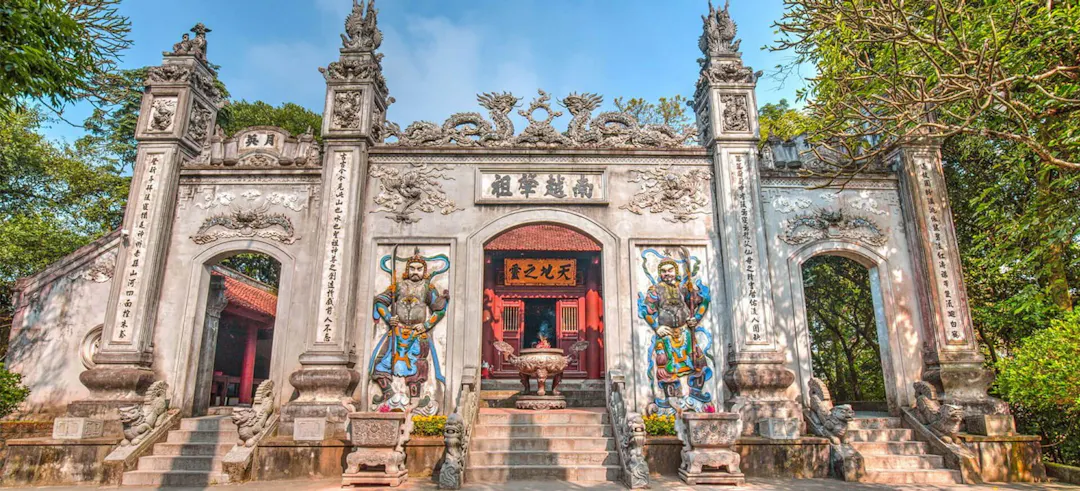
The most important site is the Hung Kings Temple Historical Complex, located on Nghĩa Lĩnh Mountain near Việt Trì.
The complex includes several temples and historic sites connected with the Hung Kings. Visitors climb through a wooded landscape toward the higher temples, following a route that turns a temple visit into a form of pilgrimage.
Phú Thọ is therefore the best destination for travelers who want to experience the festival at its cultural center.
However, Hung Kings commemorations are also held elsewhere in Vietnam. Communities, temples, and Vietnamese organizations in other cities may organize ceremonies and cultural activities during the same period.
Exploring the Hung Kings Temple Complex
The Hung Kings Temple complex is built across the slopes of Nghĩa Lĩnh Mountain.
The pilgrimage route traditionally includes several important locations.
Đền Hạ – Lower Temple
The Lower Temple, or Đền Hạ, is one of the first major stops on the route up the mountain.
According to local tradition, this area is associated with Âu Cơ and the birth of her 100 children.
Visitors can stop here to observe worshippers making offerings and burning incense before continuing toward the higher temples.
Đền Trung – Middle Temple
Further up the mountain is Đền Trung, or the Middle Temple.
Traditional stories associate this location with the Hung Kings and their court.
The area also connects with the legend of Lang Liêu, the prince traditionally credited with creating bánh chưng and bánh giầy.
Đền Thượng – Upper Temple
At the higher part of the pilgrimage route stands Đền Thượng, or Upper Temple.
This is one of the most important sacred areas of the complex.
Visitors should expect crowds during the festival and follow instructions from local authorities and temple staff, particularly around ceremonial areas.
The Hung Kings' Tomb
Near the upper temple is a traditional tomb associated with a Hung King.
The site adds another layer to the pilgrimage, connecting the physical landscape of Nghĩa Lĩnh Mountain with the legendary royal ancestry commemorated during the festival.
Hung Kings Festival Traditions
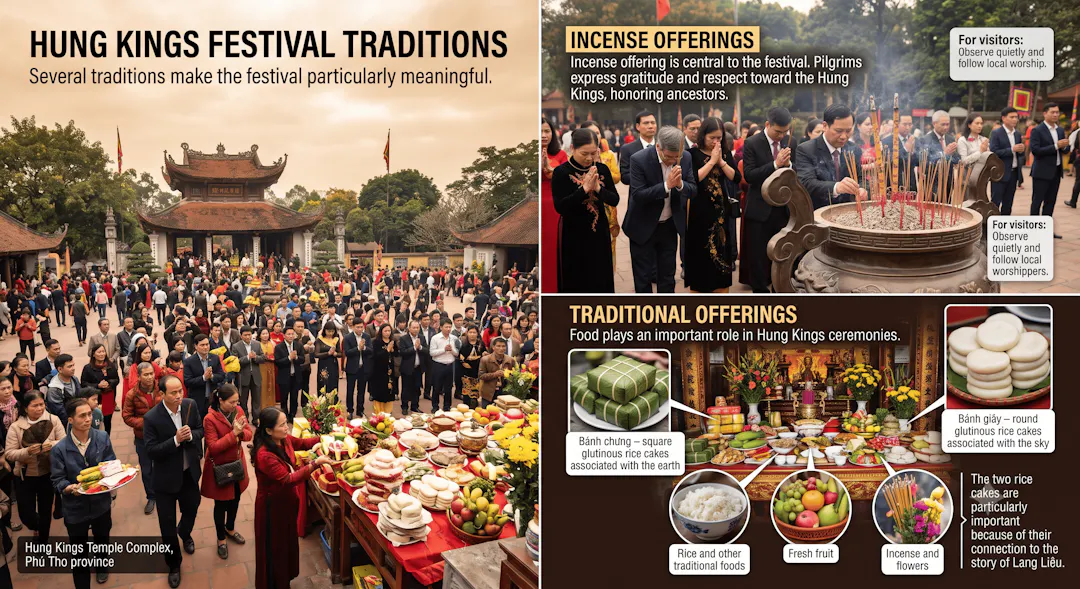
Several traditions make the festival particularly meaningful.
Incense Offerings
Incense offering is central to the festival.
Pilgrims visit the temples to express gratitude and respect toward the Hung Kings. The ritual reflects a broader Vietnamese tradition of honoring ancestors and remembering previous generations.
For visitors, the most important thing is to observe quietly and follow the behavior of local worshippers.
Traditional Offerings
Food plays an important role in Hung Kings ceremonies.
Among the most recognizable offerings are:
- Bánh chưng – square glutinous rice cakes associated with the earth
- Bánh giầy – round glutinous rice cakes associated with the sky
- Rice and other traditional foods
- Fresh fruit
- Incense and flowers
The two rice cakes are particularly important because of their connection to the story of Lang Liêu.
The Story of Bánh Chưng and Bánh Giầy
According to legend, the sixth Hung King wanted to choose a successor and asked his sons to bring him special foods.
While other princes searched for rare ingredients, Lang Liêu created two simple cakes using rice and other agricultural products.
He made bánh chưng square and bánh giầy round.
The square cake represented the earth, while the round cake represented the sky.
The story highlights the importance of rice agriculture in ancient Vietnamese society and explains why these two cakes became powerful symbols of Vietnamese heritage.
Today, bánh chưng and bánh giầy remain closely associated with important Vietnamese cultural ceremonies, including Hung Kings commemorations.
Hát Xoan: Traditional Music of Phú Thọ
One of the most distinctive cultural traditions associated with the region is hát Xoan, a form of Vietnamese ritual singing traditionally performed in Phú Thọ.
Hát Xoan combines:
- Singing
- Traditional percussion
- Dance
- Ritual performances
- Agricultural themes
- Community interaction
Historically, performances were connected with spring rituals, village communities, and prayers for favorable conditions and prosperity.
UNESCO recognizes Xoan singing of Phú Thọ as an important element of Vietnam's intangible cultural heritage.
If you visit Phú Thọ during the Hung Kings Festival, experiencing a hát Xoan performance can add considerable cultural depth to the trip.
How Hung Kings Festival Is Celebrated Across Vietnam
Although Phú Thọ is the spiritual center of the festival, the commemoration extends throughout Vietnam.
In cities and provinces across the country, local communities may organize:
- Incense ceremonies
- Traditional performances
- Cultural exhibitions
- Historical activities
- Food events
- Community gatherings
This nationwide participation is important because the festival is not simply a local celebration in Phú Thọ. It represents a broader Vietnamese tradition of remembering common ancestors.
Hung Kings Day as a Public Holiday
The 10th day of the third lunar month is recognized as a national public holiday in Vietnam.
This means many Vietnamese people have time away from work to visit relatives, participate in ceremonies, travel, or attend local cultural events.
For international travelers, this also means transportation and popular attractions can become considerably busier around the holiday period.
When Should You Visit Phú Thọ?
The main ceremony day provides the most intense cultural experience, but it is also likely to be the busiest.
Travelers who prefer a more relaxed experience may consider visiting during the broader festival period rather than arriving only on the main day.
Earlier visits can provide opportunities to explore:
- Hung Kings Temple
- Việt Trì
- Local cultural sites
- Hát Xoan performances
- Traditional markets
- Regional food
If your primary goal is to witness the major ceremonial activities, however, visiting around the 10th day of the third lunar month offers the strongest connection to the festival itself.
How to Get to Hung Kings Temple
The Hung Kings Temple complex is near Việt Trì, the capital of Phú Thọ Province.
From Hanoi, travelers can reach the area by road or train.
Driving is generally convenient because Phú Thọ is relatively close to Hanoi. During the festival, however, traffic can become significantly heavier, particularly around the main pilgrimage day.
A practical approach is to stay in Việt Trì if you want to explore Phú Thọ over several days.
Alternatively, travelers staying in Hanoi can make a day trip, although an early departure is advisable during the festival.
Where to Stay
For a festival visit, Việt Trì is the most convenient base because it puts you closer to the Hung Kings Temple complex.
Staying in Việt Trì also allows travelers to explore Phú Thọ beyond the main festival site.
Hanoi is another option for travelers who are already including the capital in their Vietnam itinerary. However, traveling from Hanoi on the busiest festival day requires more planning.
Book accommodation early if your trip coincides with the main festival period.
What to Wear and How to Behave at the Temples
The Hung Kings Temple complex is a sacred place, so visitors should dress respectfully.
Consider wearing:
- Clothing that covers the shoulders
- Longer trousers or skirts
- Comfortable walking shoes
- Light clothing suitable for climbing stairs
Inside temple areas, keep your voice low and follow local instructions.
Avoid blocking worshippers while taking photographs, and ask permission before photographing people when appropriate.
During particularly crowded ceremonies, follow the movement of the pilgrimage rather than stopping in narrow areas.
Is Hung Kings Festival Worth Visiting?
For travelers interested in Vietnamese history, culture, traditions, and heritage, the Hung Kings Festival can be one of the most meaningful cultural experiences in northern Vietnam.
The festival combines mythology, ancestral worship, traditional food, music, architecture, and community participation in one event.
More importantly, it provides context for understanding how Vietnamese concepts of family and ancestry extend beyond the household to a much larger idea of shared national origins.
Visiting Phú Thọ during the festival therefore offers more than sightseeing. It allows travelers to witness a living tradition that continues to connect contemporary Vietnam with its legendary past.
Final Thoughts
The Hung Kings Festival in Vietnam is a powerful expression of Vietnamese ancestral culture.
From the legendary story of Lạc Long Quân and Âu Cơ to the sacred temples of Nghĩa Lĩnh Mountain, the festival connects mythology, history, food, music, and spiritual traditions.
The most meaningful experiences come from slowing down, observing local rituals, and understanding the cultural ideas behind them.
If you are planning a cultural journey through northern Vietnam, consider adding Phú Thọ and the Hung Kings Temple to your itinerary during the third lunar month. It offers a rare opportunity to experience one of Vietnam's most enduring traditions at its spiritual center.
By Roy Trinh
Editor
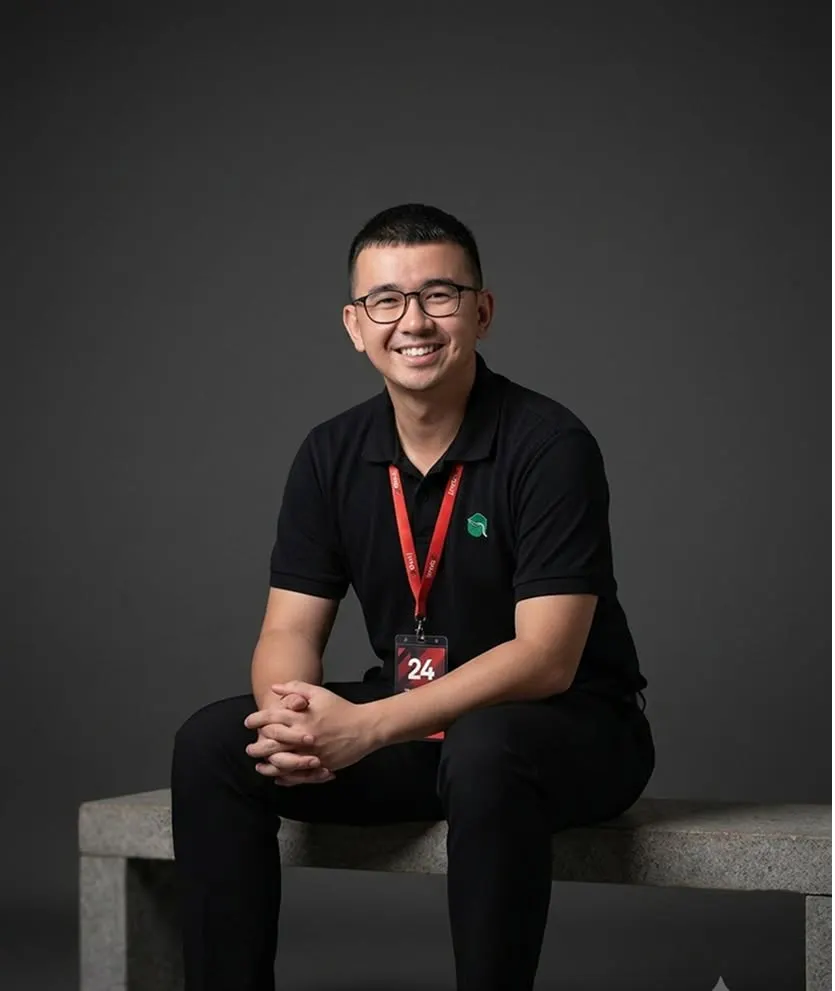
Roy Trinh is a travel writer and destination expert at Go Visit Vietnam, dedicated to helping travelers discover the beauty, culture, and diversity of Vietnam. Through well-researched travel guides, practical itineraries, local insights, and authentic recommendations, Roy shares valuable information to inspire memorable journeys across the country. From vibrant cities and breathtaking landscapes to regional cuisine and cultural heritage, every guide is created to help visitors experience Vietnam with confidence and curiosity.
FAQs About the Hung Kings Festival in Vietnam
What is the Hung Kings Festival in Vietnam?
The Hung Kings Festival, known as Giỗ Tổ Hùng Vương, is an annual Vietnamese cultural and ancestral commemoration honoring the legendary Hung Kings, traditionally regarded as the founders of Văn Lang. The main ceremony takes place at the Hung Kings Temple in Phú Thọ.
When is the Hung Kings Festival celebrated?
The festival is held on the 10th day of the third lunar month each year. The corresponding date on the Gregorian calendar changes annually. Cultural activities in Phú Thọ may take place over a longer period around the main ceremony.
Where is the Hung Kings Festival held?
The main celebration takes place at the Hung Kings Temple Historical Complex on Nghĩa Lĩnh Mountain in Phú Thọ Province, near Việt Trì. Smaller commemorative ceremonies are also held in other parts of Vietnam.
Why is the Hung Kings Festival important to Vietnamese people?
The festival represents gratitude toward Vietnam's legendary ancestors and reflects the cultural principle of uống nước nhớ nguồn, or remembering one's origins. It also reinforces the idea that Vietnamese people share a common ancestral heritage.
Who were the Hung Kings?
The Hung Kings, or Vua Hùng, are legendary rulers traditionally associated with the ancient kingdom of Văn Lang. Vietnamese tradition describes a succession of 18 Hung Kings, beginning with the descendants of Lạc Long Quân and Âu Cơ.
What happens during the Hung Kings Festival?
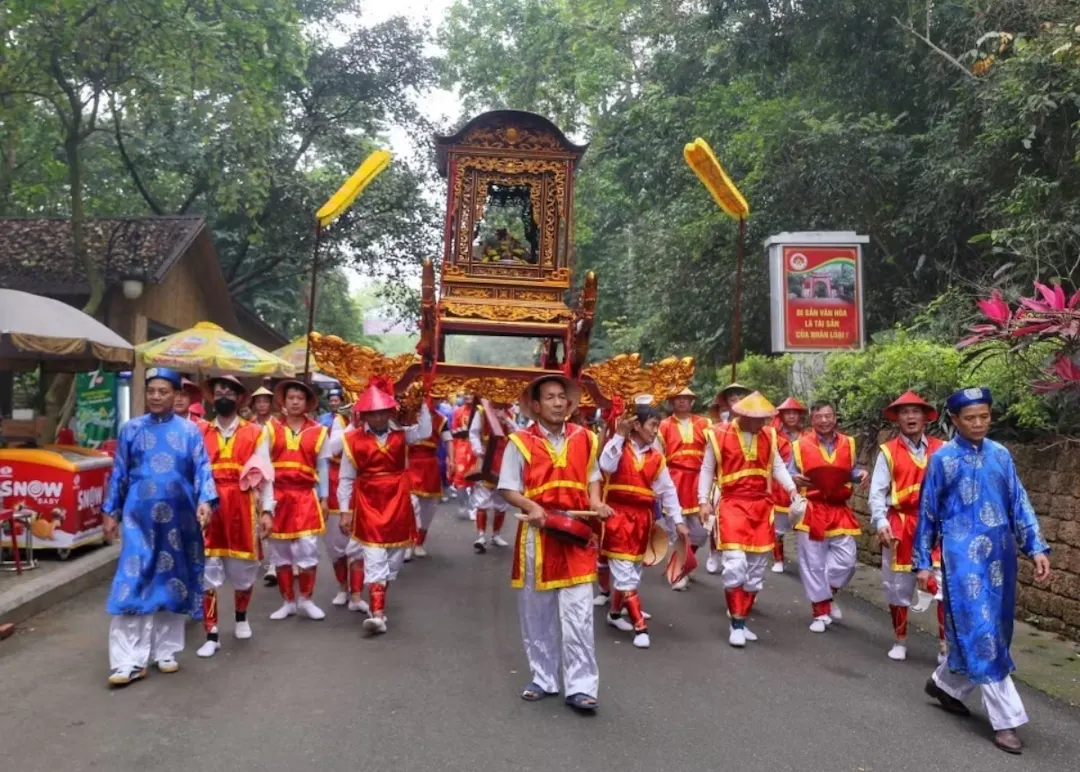
Festival activities can include incense-offering ceremonies, ancestral rituals, traditional music, folk performances, cultural exhibitions, processions, and community events. The main ceremonies take place at the Hung Kings Temple complex in Phú Thọ.
What is the Hung Kings Temple?
The Hung Kings Temple is a historic temple complex on Nghĩa Lĩnh Mountain in Phú Thọ. It contains several important temples and sacred sites associated with the traditional history and legends of the Hung Kings.
What foods are associated with the Hung Kings Festival?
The most important traditional foods are bánh chưng and bánh giầy. According to legend, Prince Lang Liêu created the two rice cakes for a Hung King. Bánh chưng is square and associated with the earth, while bánh giầy is round and associated with the sky.
Advertising box
Related Events in Vietnam
Discover more of Vietnam's traditional festivals, cultural celebrations, religious events, and seasonal experiences. Explore major events across the country to learn about local traditions, history, food, music, and the unique cultural heritage of each destination.
Huong Pagoda Festival Vietnam: Dates, Traditions & Travel Guide
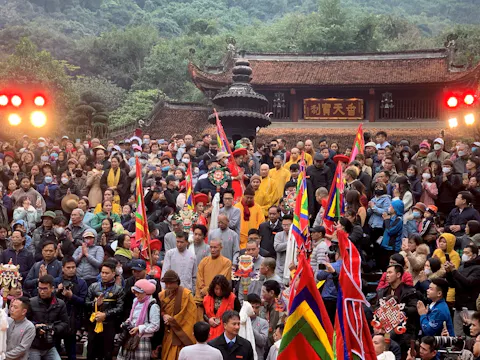
The Huong Pagoda Festival is one of Vietnam’s most important Buddhist pilgrimages, attracting visitors to the scenic Huong Son mountains southwest of Hanoi each spring. Also known as the Perfume Pagoda Festival, it combines Buddhist ceremonies, traditional worship, boat rides along the Yen Stream, mountain temples, and the sacred Huong Tich Cave. This guide covers the festival’s history, traditions, 2026 dates, main attractions, cultural etiquette, transportation, and practical travel tips to help international visitors experience this unique Vietnamese cultural celebration.
Lim Festival Vietnam: Experience Quan Ho Folk Singing in Bac Ninh
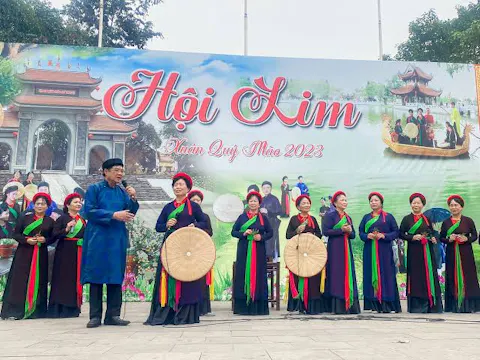
Discover Lim Festival Vietnam, one of northern Vietnam’s most distinctive cultural celebrations. Held in Bac Ninh during the first lunar month, the festival brings Quan Ho folk singing, traditional costumes, temple ceremonies, dragon boat performances, folk games, and local traditions together. Learn about the history of Lim Festival, the meaning of Quan Ho, where to experience the celebrations, what to expect as a traveler, and practical tips for visiting Bac Ninh during this colorful Vietnamese cultural festival.
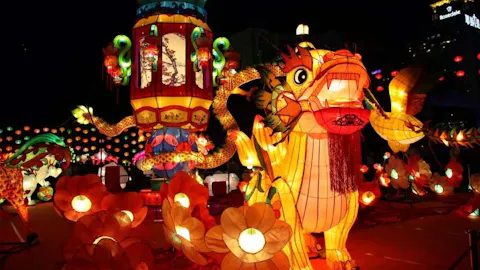
Mid-Autumn Festival in Vietnam: Tet Trung Thu Traditions & Travel Guide
The Mid-Autumn Festival in Vietnam, known as Tet Trung Thu, is a colorful celebration of family, children, lanterns, mooncakes, and lion dances. Held on the 15th day of the eighth lunar month, the festival brings streets and neighborhoods to life with traditional performances and festive activities. Discover the history and customs of Trung Thu, learn about Vietnamese mooncakes and lanterns, and find the best places to experience the festival in Hanoi, Hoi An, and Ho Chi Minh City as a traveler.
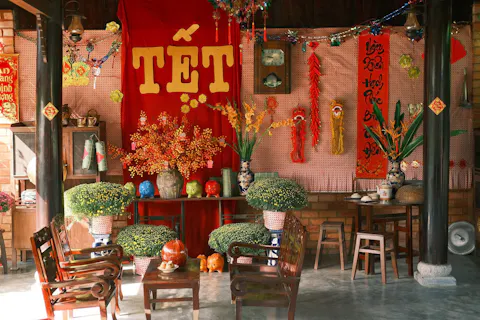
Tet in Vietnam: Vietnamese Lunar New Year Traditions, Food & Travel Guide
Tet, or Tết Nguyên Đán, is Vietnam’s most important annual celebration and marks the beginning of the Vietnamese Lunar New Year. From colorful flower markets and family reunions to ancestral rituals, lucky money, traditional foods, and lively temple visits, Tet offers travelers a unique look at Vietnamese culture. This guide explains when Tet takes place, its most important traditions and foods, what happens across Vietnam, and what travelers should know about transportation, business closures, etiquette, and visiting Vietnam during the holiday.