
Huong Pagoda Festival Vietnam: Dates, Traditions & Travel Guide
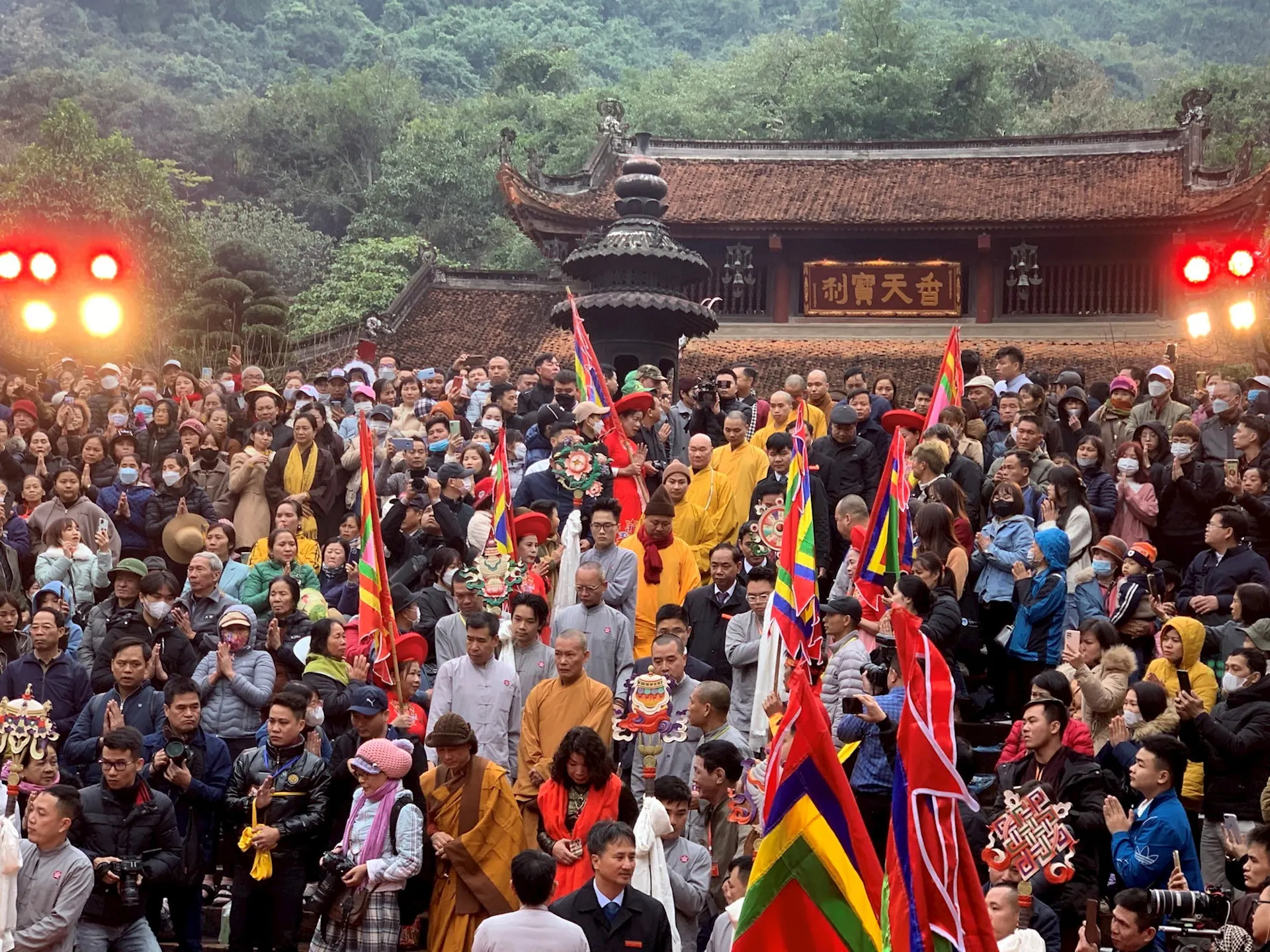
The Huong Pagoda Festival is one of Vietnam’s most important Buddhist pilgrimages, attracting visitors to the scenic Huong Son mountains southwest of Hanoi each spring. Also known as the Perfume Pagoda Festival, it combines Buddhist ceremonies, traditional worship, boat rides along the Yen Stream, mountain temples, and the sacred Huong Tich Cave. This guide covers the festival’s history, traditions, 2026 dates, main attractions, cultural etiquette, transportation, and practical travel tips to help international visitors experience this unique Vietnamese cultural celebration.
On this page
- Huong Pagoda Festival at a Glance
- What Is the Huong Pagoda Festival?
- When Is the Huong Pagoda Festival?
- History and Spiritual Origins of Huong Pagoda
- The Legend of Quan Am at Huong Tich Cave
- The Yen Stream Boat Ride
- Exploring the Huong Pagoda Complex
- Visiting Huong Tich Cave
- Hiking or Taking the Cable Car?
- Buddhist Traditions and Festival Activities
- What Do People Pray for at Huong Pagoda?
- When Is the Best Time to Visit Huong Pagoda?
- How to Get to Huong Pagoda from Hanoi
- How Long Do You Need at Huong Pagoda?
- What to Wear at Huong Pagoda
- Cultural Etiquette at Huong Pagoda
- What to Eat Near Huong Pagoda
- Is Huong Pagoda Festival Worth Visiting?
- Suggested Huong Pagoda Day Trip
- Tips for Visiting Huong Pagoda Festival
- Why Visit Huong Pagoda Festival?
The Huong Pagoda Festival is one of Vietnam’s most important spring Buddhist pilgrimages, held in the scenic Huong Son mountains southwest of Hanoi. Also known as the Perfume Pagoda Festival, it combines Buddhist worship, traditional Vietnamese beliefs, mountain landscapes, temple visits, and a peaceful boat journey along the Yen Stream.
During the festival season, pilgrims and travelers visit temples and shrines, offer incense and prayers, explore limestone caves, and travel by boat through the Huong Son landscape. The journey eventually leads to Huong Tich Cave, one of the most important spiritual sites in the complex.
For international travelers, the festival offers more than a religious experience. It is an opportunity to see how Buddhism, local traditions, nature, and community life come together in northern Vietnam.
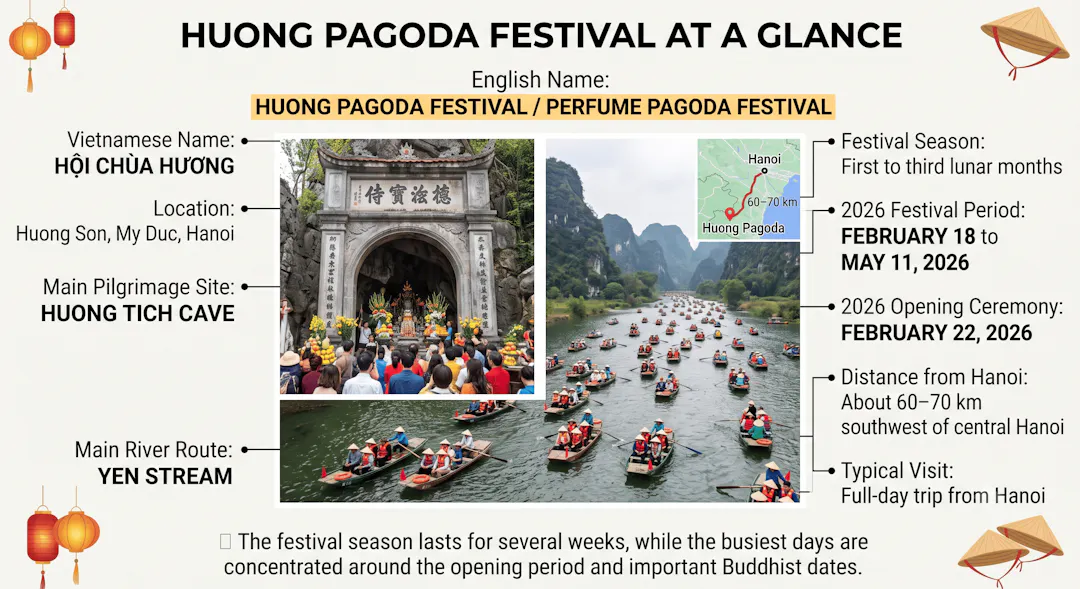
Huong Pagoda Festival at a Glance
- Vietnamese name: Hội Chùa Hương
- English name: Huong Pagoda Festival / Perfume Pagoda Festival
- Location: Huong Son, My Duc, Hanoi
- Main pilgrimage site: Huong Tich Cave
- Main river route: Yen Stream
- Festival season: First to third lunar months
- 2026 festival period: February 18 to May 11, 2026
- 2026 opening ceremony: February 22, 2026
- Distance from Hanoi: About 60–70 km southwest of central Hanoi
- Typical visit: Full-day trip from Hanoi
The festival season lasts for several weeks, while the busiest days are concentrated around the opening period and important Buddhist dates.
What Is the Huong Pagoda Festival?
The Huong Pagoda Festival is an annual pilgrimage centered on the Huong Son scenic complex in My Duc, Hanoi. The area contains a network of Buddhist pagodas, temples, shrines, caves, and natural landscapes spread across the limestone mountains.
For Vietnamese pilgrims, visiting Huong Pagoda is traditionally a time to pray for health, peace, prosperity, family well-being, and good fortune.
The journey itself is an important part of the experience. Visitors normally travel by boat along the Yen Stream, pass through the mountain landscape, visit temples and pagodas, and then continue toward Huong Tich Cave.
Unlike a festival centered on one performance or parade, Huong Pagoda is best understood as a pilgrimage journey.
When Is the Huong Pagoda Festival?
The festival follows the Vietnamese lunar calendar, so the dates change every year.
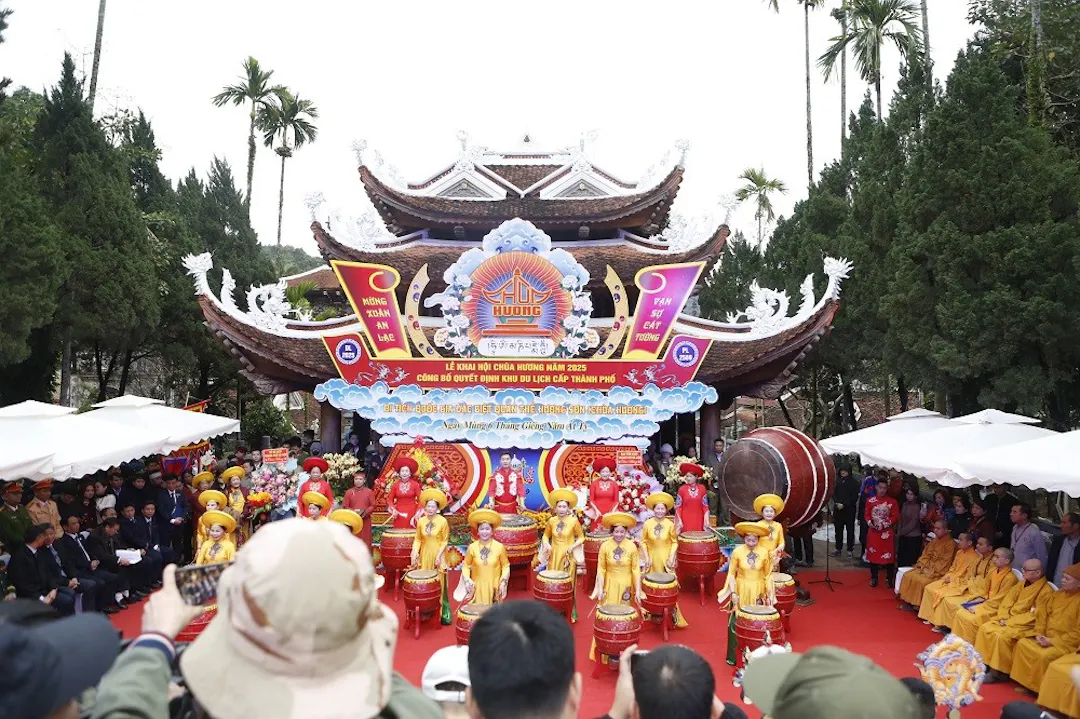
Huong Pagoda Festival 2026
In 2026, the Huong Pagoda Tourism Festival runs from February 18 to May 11, 2026, with the official opening ceremony taking place on February 22, the sixth day of the first lunar month.
The wider festival season provides opportunities to experience religious ceremonies, cultural activities, local food, and the surrounding mountain scenery.
If you want to experience the festival at its busiest, visit around the opening period. If you prefer a more relaxed trip, visiting later in the season or arriving early in the morning can help you avoid the largest crowds.
History and Spiritual Origins of Huong Pagoda
The history of Huong Pagoda is closely connected with Buddhism, Vietnamese folk beliefs, and the natural landscape of the Huong Son mountains.
The complex developed over several centuries and became an important religious destination in northern Vietnam. Buddhist traditions gradually became integrated with local beliefs surrounding mountains, caves, spirits, ancestors, and sacred landscapes.
The setting itself contributes to the spiritual character of the pilgrimage. Instead of approaching a temple directly from a city street, visitors travel through waterways and mountains before reaching the main sanctuaries.
This gradual journey gives Huong Pagoda a distinctive character among religious sites near Hanoi.
The Legend of Quan Am at Huong Tich Cave
One of the most important spiritual traditions associated with Huong Pagoda concerns Quan Am, the Vietnamese form of the Bodhisattva of Compassion, Avalokitesvara.
Local legends connect Quan Am with Huong Tich Cave and the surrounding mountains. The cave became associated with meditation, compassion, and spiritual devotion.
For pilgrims, visiting the cave is therefore more than sightseeing. Many come to offer incense, pray, and ask for blessings for themselves and their families.
The combination of religious traditions and dramatic limestone scenery has made Huong Tich Cave the spiritual centerpiece of the Huong Pagoda pilgrimage.
The Yen Stream Boat Ride
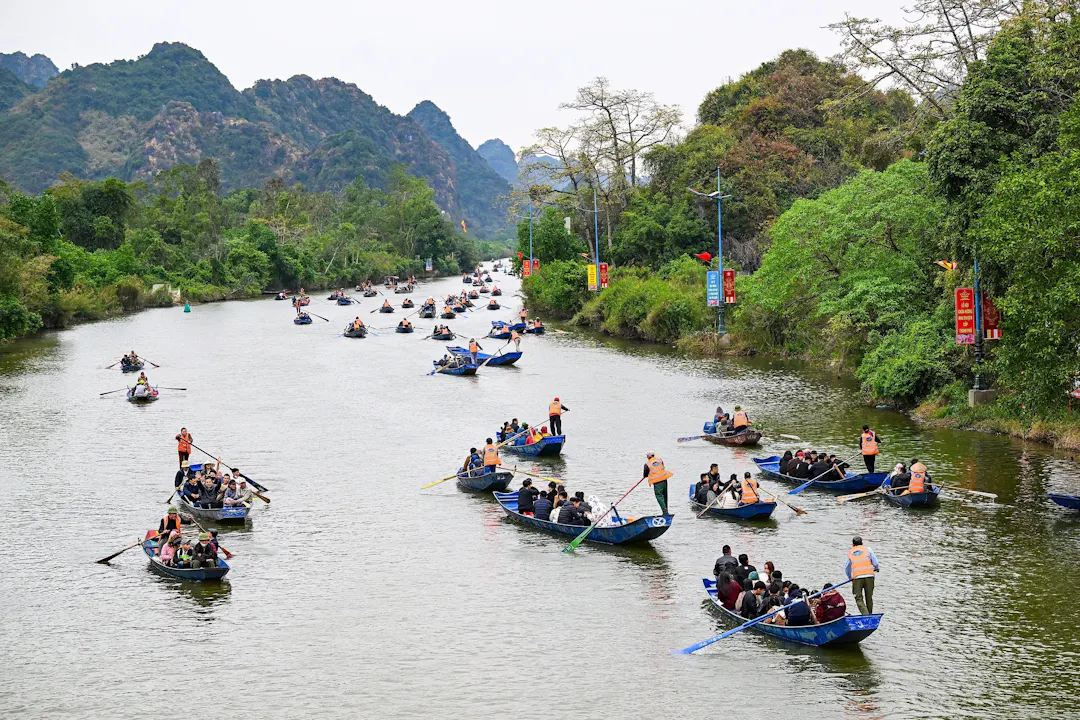
One of the most memorable parts of visiting Huong Pagoda is the boat journey along the Yen Stream (Suoi Yen).
Visitors usually begin their journey at the Yến Vĩ area, where local boats carry passengers along the waterway toward the Huong Son mountain complex.
The ride takes visitors through a landscape of:
- Limestone mountains
- Green vegetation
- Rice fields
- Small temples and shrines
- Seasonal flowers
- Quiet rural villages
During spring, the landscape can be particularly atmospheric, with mist often hanging over the mountains in the early morning.
Why the Boat Ride Matters
The boat ride is not simply transportation.
Traditionally, the slow journey across the water provides a transition from everyday life into the spiritual landscape of the pilgrimage.
Instead of rushing directly to the temple, visitors gradually move deeper into the mountains.
For travelers, it is also one of the most scenic parts of the trip.
Exploring the Huong Pagoda Complex
Huong Pagoda is not a single building. It is a large religious and scenic complex containing numerous temples, pagodas, shrines, caves, and mountain paths.
Some of the most important places to visit include Trinh Temple, Thien Tru Pagoda, and Huong Tich Cave.
Trinh Temple
Trinh Temple (Den Trinh) is traditionally one of the first spiritual stops on the pilgrimage route.
Pilgrims visit the temple to present offerings and prayers before continuing into the Huong Son complex.
The stop forms an important symbolic transition between the journey from the outside world and the sacred mountain landscape.
Thien Tru Pagoda
Thien Tru Pagoda (Chua Thien Tru) is one of the best-known pagodas in the Huong Son complex.
It serves as an important religious and cultural center during the festival.
Visitors can explore the temple grounds, observe Buddhist worship, and take a break before continuing toward the mountain route.
During the festival season, the surrounding area becomes particularly lively, with pilgrims, food stalls, local vendors, and cultural activities.
Visiting Huong Tich Cave
For many visitors, Huong Tich Cave (Dong Huong Tich) is the highlight of the entire pilgrimage.
The cave is located higher in the Huong Son mountains and can be reached by hiking or using the cable car for part of the journey.
The entrance is dramatic, with a natural rock formation that resembles the mouth of a dragon.
Inside the cave, visitors encounter:
- Limestone stalactites
- Stalagmites
- Buddhist statues
- Natural rock formations
- Incense-filled altars
- Religious inscriptions
Many of the natural formations have traditional names associated with wishes for health, prosperity, family, and fertility.
The cave combines natural beauty with religious significance, making it one of the most distinctive attractions in the area.
Hiking or Taking the Cable Car?
Travelers generally have two ways to reach the higher parts of the Huong Son complex.
Hiking
The traditional route involves climbing stone steps through the mountain landscape.
Advantages:
- More traditional pilgrimage experience
- Scenic mountain views
- Opportunity to explore small shrines along the route
- No need to follow a fixed cable-car schedule
Disadvantages:
- Physically demanding
- Can be crowded during the festival
- Slippery conditions are possible during wet weather
Cable Car
The cable car provides a much easier way to reach the upper mountain area.
It is particularly useful for:
- Older travelers
- Families
- Visitors with limited hiking experience
- Travelers trying to save time
A popular strategy is to hike one direction and use the cable car in the other direction, depending on weather, crowd levels, and energy.
Buddhist Traditions and Festival Activities
The religious aspect is at the heart of the Huong Pagoda Festival.
During the festival, pilgrims commonly:
- Burn incense
- Pray at Buddhist temples
- Make offerings
- Visit sacred caves
- Participate in religious ceremonies
- Ask for blessings
- Spend time in quiet reflection
The festival also includes cultural and community activities that make the area much more lively than it is outside the festival season.
The result is a combination of religious pilgrimage, cultural festival, local commerce, and nature tourism.
What Do People Pray for at Huong Pagoda?
Different visitors come with different wishes, but common prayers include:
- Family health
- Peace and happiness
- Good fortune
- Successful business
- Academic success
- Marriage
- Children
- Prosperity
These beliefs are part of Vietnamese religious and folk traditions rather than guarantees of specific outcomes.
For international visitors, the best approach is to observe respectfully and understand the practices as part of Vietnamese cultural life.
When Is the Best Time to Visit Huong Pagoda?
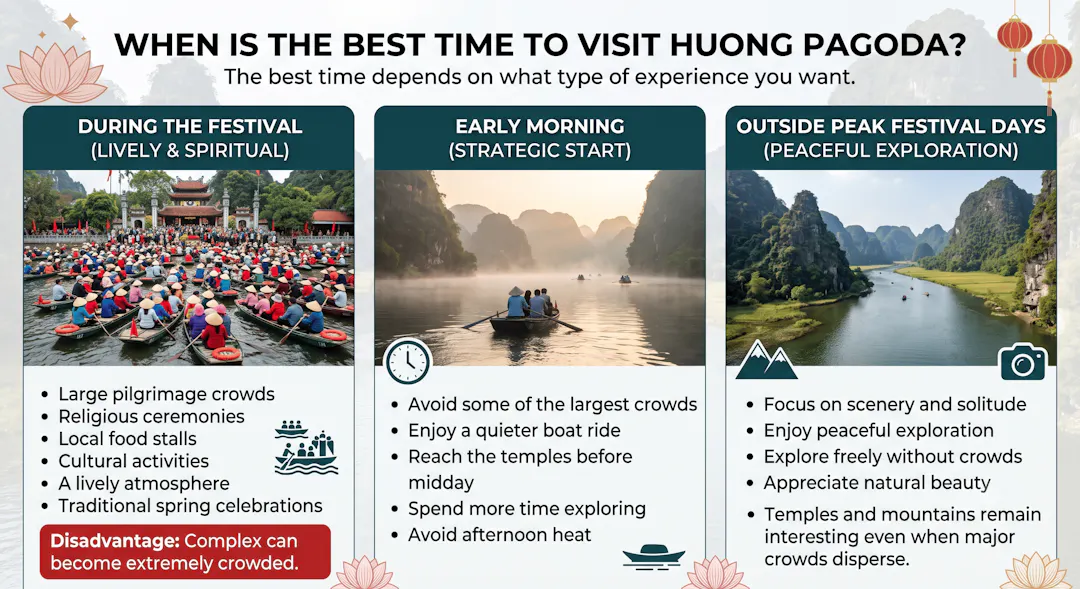
The best time depends on what type of experience you want.
During the Festival
Visit during the festival if you want to experience:
- Large pilgrimage crowds
- Religious ceremonies
- Local food stalls
- Cultural activities
- A lively atmosphere
- Traditional spring celebrations
The disadvantage is that the complex can become extremely crowded.
Early Morning
Arriving early is one of the best strategies during the busy season.
An early start allows you to:
- Avoid some of the largest crowds
- Enjoy a quieter boat ride
- Reach the temples before midday
- Spend more time exploring
- Avoid the strongest afternoon heat
Outside Peak Festival Days
If your priority is scenery and peaceful exploration rather than the festival atmosphere, consider visiting outside the busiest days.
The temples and mountains remain interesting even when the major festival crowds have dispersed.
How to Get to Huong Pagoda from Hanoi
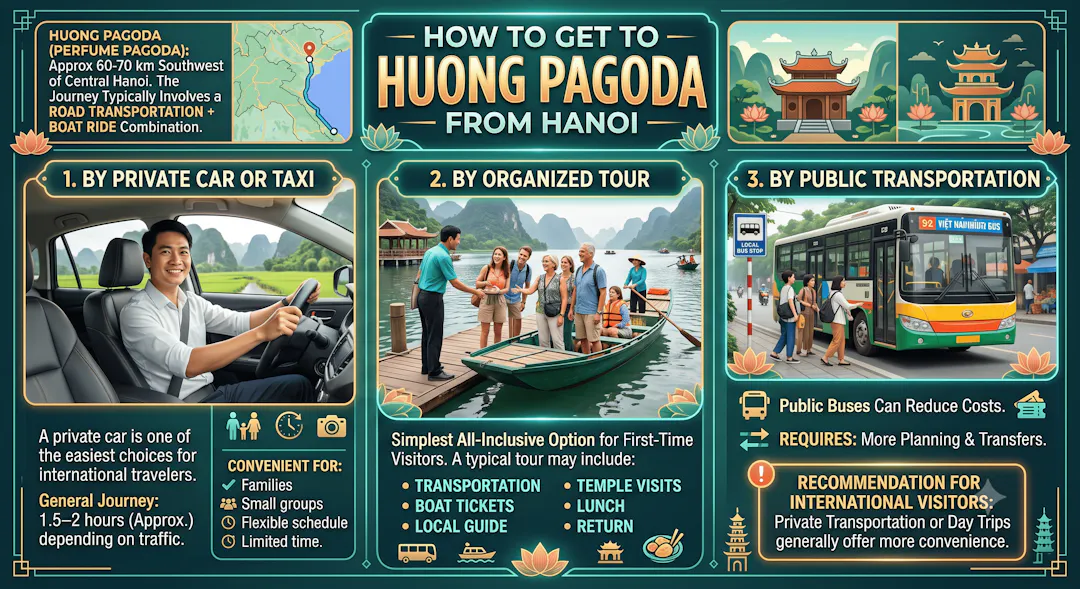
Huong Pagoda is located approximately 60–70 km southwest of central Hanoi.
The journey usually involves road transportation followed by a boat ride.
By Private Car or Taxi
A private car is one of the easiest choices for international travelers.
The journey from central Hanoi generally takes around 1.5–2 hours, depending on traffic and the starting point.
This option is convenient for:
- Families
- Small groups
- Travelers with limited time
- Visitors who want flexible departure times
By Organized Tour
Day tours from Hanoi are also popular.
A typical tour may include:
- Transportation from Hanoi
- Boat tickets
- Local guide
- Temple visits
- Lunch
- Return transportation
This is often the simplest option for first-time visitors who do not want to organize the individual parts of the journey themselves.
By Public Transportation
Public buses and local transportation can reduce costs, but the journey requires more planning and transfers.
For most international visitors, private transportation or an organized day trip is more convenient.
How Long Do You Need at Huong Pagoda?
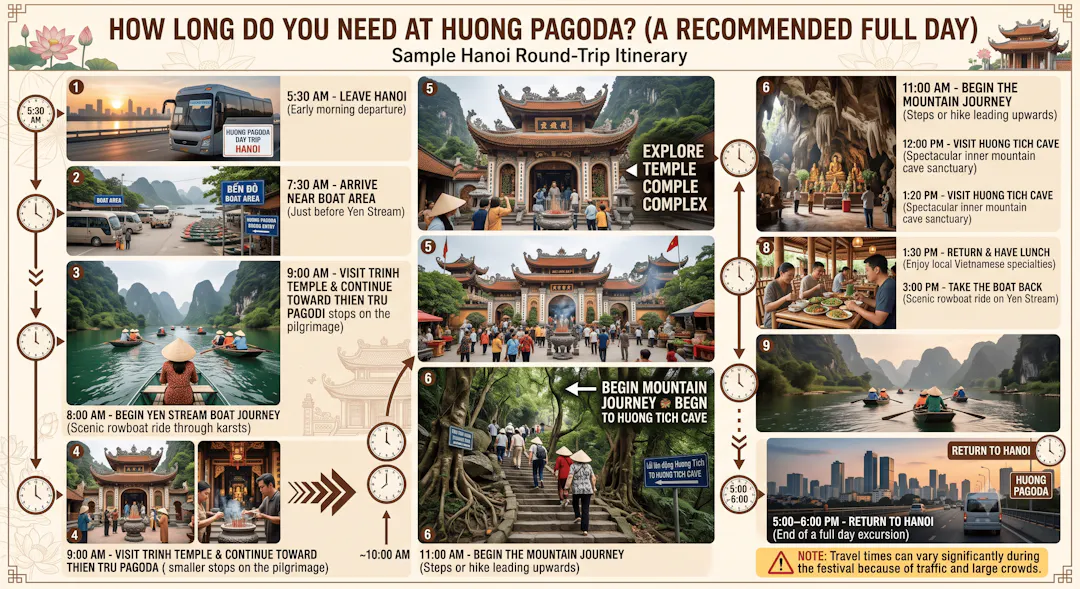
A full day is recommended when visiting from Hanoi.
A typical schedule could look like this:
5:30 AM
Leave Hanoi.
7:30 AM
Arrive near the boat departure area.
8:00 AM
Begin the Yen Stream boat journey.
9:00 AM
Visit Trinh Temple and continue toward Thien Tru Pagoda.
10:00 AM
Explore the temple complex.
11:00 AM
Begin the mountain journey toward Huong Tich Cave.
12:00 PM
Visit Huong Tich Cave.
1:30 PM
Return toward the lower complex and have lunch.
3:00 PM
Take the boat back along the Yen Stream.
5:00–6:00 PM
Return to Hanoi.
Travel times can vary significantly during the festival because of traffic and large crowds.
What to Wear at Huong Pagoda
Huong Pagoda is an important religious destination, so visitors should dress respectfully.
Recommended clothing includes:
- Shoulders covered
- Knees covered
- Comfortable walking shoes
- Lightweight clothing in warm weather
- A light jacket during cooler mornings
- Rain protection during wet weather
Comfortable footwear is especially important if you plan to hike to Huong Tich Cave.
The mountain paths can become slippery after rain.
Cultural Etiquette at Huong Pagoda
International visitors are welcome, but the complex remains an active religious site.
A few simple rules make the experience more respectful.
Dress Conservatively
Avoid revealing clothing when entering temples and shrines.
Keep Quiet Inside Religious Spaces
Avoid loud conversations, especially while people are praying or ceremonies are taking place.
Ask Before Photographing People
This is particularly important when photographing monks, elderly pilgrims, or people participating in religious rituals.
Follow Local Incense Rules
Use designated incense areas and avoid burning excessive incense inside enclosed spaces.
Do Not Block Worshippers
When people are praying or making offerings, step aside rather than standing directly in front of them for photographs.
Respect Religious Offerings
Do not touch food, flowers, statues, or offerings placed on religious altars.
What to Eat Near Huong Pagoda
Food is another part of the festival experience.
During the pilgrimage season, restaurants and food stalls serve visitors around the main routes.
You can find:
- Vegetarian dishes
- Rice and noodle dishes
- Local vegetables
- Tofu
- Sticky rice
- Grilled foods
- Tea
- Seasonal snacks
Vegetarian food is particularly common around Buddhist pilgrimage sites.
However, travelers should remember that food served around the festival can become busy and crowded during peak hours.
If you have dietary restrictions, bringing some snacks and water is a good idea.
Is Huong Pagoda Festival Worth Visiting?
Yes, especially if you want to experience a different side of Vietnam beyond Hanoi's historic center.
The festival combines several experiences in one journey:
- Buddhist culture
- Vietnamese folk beliefs
- Mountain scenery
- Limestone caves
- Traditional boats
- Temple architecture
- Local food
- Spring festivals
The biggest disadvantage is the crowd.
If you dislike busy religious festivals, the peak festival days may feel overwhelming. In that case, consider visiting outside the busiest period or arriving very early in the morning.
For travelers interested in Vietnamese culture and traditional life, however, the Huong Pagoda pilgrimage can be one of the most memorable day trips from Hanoi.
Suggested Huong Pagoda Day Trip
For first-time visitors, this route provides a good balance between sightseeing and cultural experience:
Hanoi → Yến Vĩ → Yen Stream → Trinh Temple → Thien Tru Pagoda → Huong Tich Cave → return to Thien Tru → Yen Stream → Hanoi
If you want a more active experience, hike toward Huong Tich Cave.
If you prefer convenience, use the cable car for the mountain section.
Starting early is strongly recommended during the festival.
Tips for Visiting Huong Pagoda Festival
Keep these tips in mind when planning your trip:
- Start early to avoid the heaviest crowds.
- Check the lunar-calendar dates before planning your trip.
- Wear comfortable shoes if you plan to hike.
- Bring water during warmer months.
- Carry some cash for local services and food.
- Dress respectfully at temples and shrines.
- Allow extra travel time during peak festival days.
- Keep your belongings secure in crowded areas.
- Follow local instructions around religious ceremonies.
- Avoid rushing—the boat ride and mountain journey are part of the experience.
Why Visit Huong Pagoda Festival?
The Huong Pagoda Festival offers a rare combination of spirituality, nature, and Vietnamese cultural traditions.
The journey begins on the quiet waters of the Yen Stream and continues through mountain temples before reaching the dramatic Huong Tich Cave. Along the way, travelers encounter pilgrims making offerings, families visiting sacred sites, local food vendors, and springtime landscapes around the Huong Son mountains.
For visitors based in Hanoi, it is also one of the most accessible opportunities to experience a major Vietnamese pilgrimage without traveling far from the capital.
Whether you come for Buddhism, photography, Vietnamese culture, hiking, or simply the experience of traveling through a beautiful mountain landscape, Huong Pagoda is one of the most distinctive cultural destinations near Hanoi.

By Roy Trinh
Editor
Roy Trinh is a travel writer and destination expert at Go Visit Vietnam, dedicated to helping travelers discover the beauty, culture, and diversity of Vietnam. Through well-researched travel guides, practical itineraries, local insights, and authentic recommendations, Roy shares valuable information to inspire memorable journeys across the country. From vibrant cities and breathtaking landscapes to regional cuisine and cultural heritage, every guide is created to help visitors experience Vietnam with confidence and curiosity.
Frequently Asked Questions
What is the Huong Pagoda Festival?
The Huong Pagoda Festival is an annual Buddhist pilgrimage held at the Huong Son scenic complex in My Duc, Hanoi. It combines Buddhist ceremonies, traditional worship, boat trips, temple visits, and cultural activities.
When is the Huong Pagoda Festival?
The festival takes place during the first three lunar months of the Vietnamese calendar. The exact Gregorian dates change every year.
When is Huong Pagoda Festival 2026?
The 2026 festival season runs from February 18 to May 11, 2026, with the official opening ceremony on February 22, 2026.
Where is Huong Pagoda?
Huong Pagoda is in the Huong Son area of My Duc, southwest of Hanoi, approximately 60–70 km from central Hanoi.
How do I get to Huong Pagoda from Hanoi?
Most visitors travel by car, taxi, organized tour, or bus to the Huong Son area and then take a traditional boat along the Yen Stream before continuing to the temples and mountain sites.
How long does a Huong Pagoda trip take?
A full-day trip from Hanoi is recommended. Allow approximately 8–10 hours for transportation, the boat journey, temple visits, hiking or cable-car travel, and the return trip.
Do I need to take a boat to Huong Pagoda?
The traditional pilgrimage route includes a boat journey along the Yen Stream. The boat ride is one of the most distinctive parts of the Huong Pagoda experience.
Advertising box
Related Events in Vietnam
Discover more of Vietnam's traditional festivals, cultural celebrations, religious events, and seasonal experiences. Explore major events across the country to learn about local traditions, history, food, music, and the unique cultural heritage of each destination.
Lim Festival Vietnam: Experience Quan Ho Folk Singing in Bac Ninh
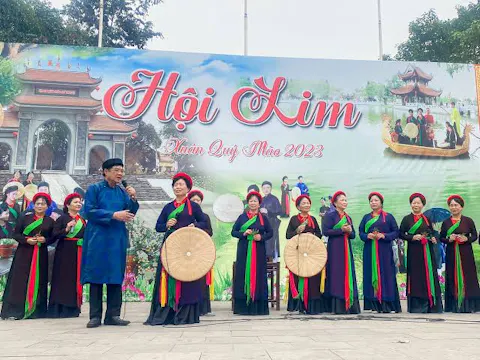
Discover Lim Festival Vietnam, one of northern Vietnam’s most distinctive cultural celebrations. Held in Bac Ninh during the first lunar month, the festival brings Quan Ho folk singing, traditional costumes, temple ceremonies, dragon boat performances, folk games, and local traditions together. Learn about the history of Lim Festival, the meaning of Quan Ho, where to experience the celebrations, what to expect as a traveler, and practical tips for visiting Bac Ninh during this colorful Vietnamese cultural festival.
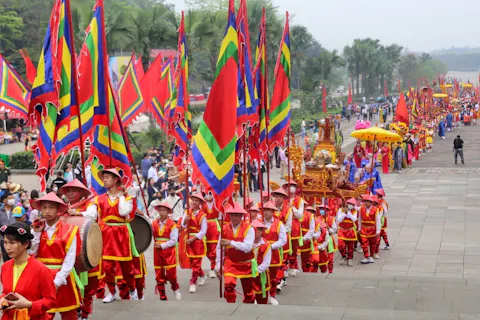
Hung Kings Festival in Vietnam: History, Traditions & Travel Guide
The Hung Kings Festival, or Giỗ Tổ Hùng Vương, is one of Vietnam’s most important cultural celebrations, honoring the legendary Hung Kings and the country’s ancestral heritage. Held annually on the 10th day of the third lunar month, the main ceremonies take place at Hung Kings Temple in Phu Tho. Discover the festival’s history, traditional rituals, bánh chưng and bánh giầy offerings, Hát Xoan performances, and practical travel tips for visiting this sacred cultural site from Hanoi and beyond.
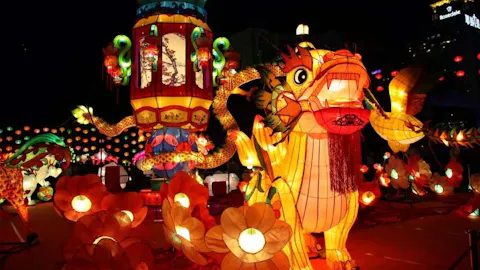
Mid-Autumn Festival in Vietnam: Tet Trung Thu Traditions & Travel Guide
The Mid-Autumn Festival in Vietnam, known as Tet Trung Thu, is a colorful celebration of family, children, lanterns, mooncakes, and lion dances. Held on the 15th day of the eighth lunar month, the festival brings streets and neighborhoods to life with traditional performances and festive activities. Discover the history and customs of Trung Thu, learn about Vietnamese mooncakes and lanterns, and find the best places to experience the festival in Hanoi, Hoi An, and Ho Chi Minh City as a traveler.
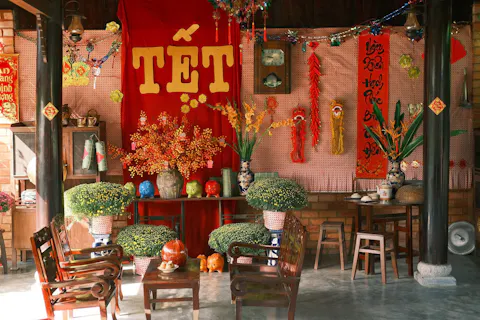
Tet in Vietnam: Vietnamese Lunar New Year Traditions, Food & Travel Guide
Tet, or Tết Nguyên Đán, is Vietnam’s most important annual celebration and marks the beginning of the Vietnamese Lunar New Year. From colorful flower markets and family reunions to ancestral rituals, lucky money, traditional foods, and lively temple visits, Tet offers travelers a unique look at Vietnamese culture. This guide explains when Tet takes place, its most important traditions and foods, what happens across Vietnam, and what travelers should know about transportation, business closures, etiquette, and visiting Vietnam during the holiday.