
Vinh Long Food Guide
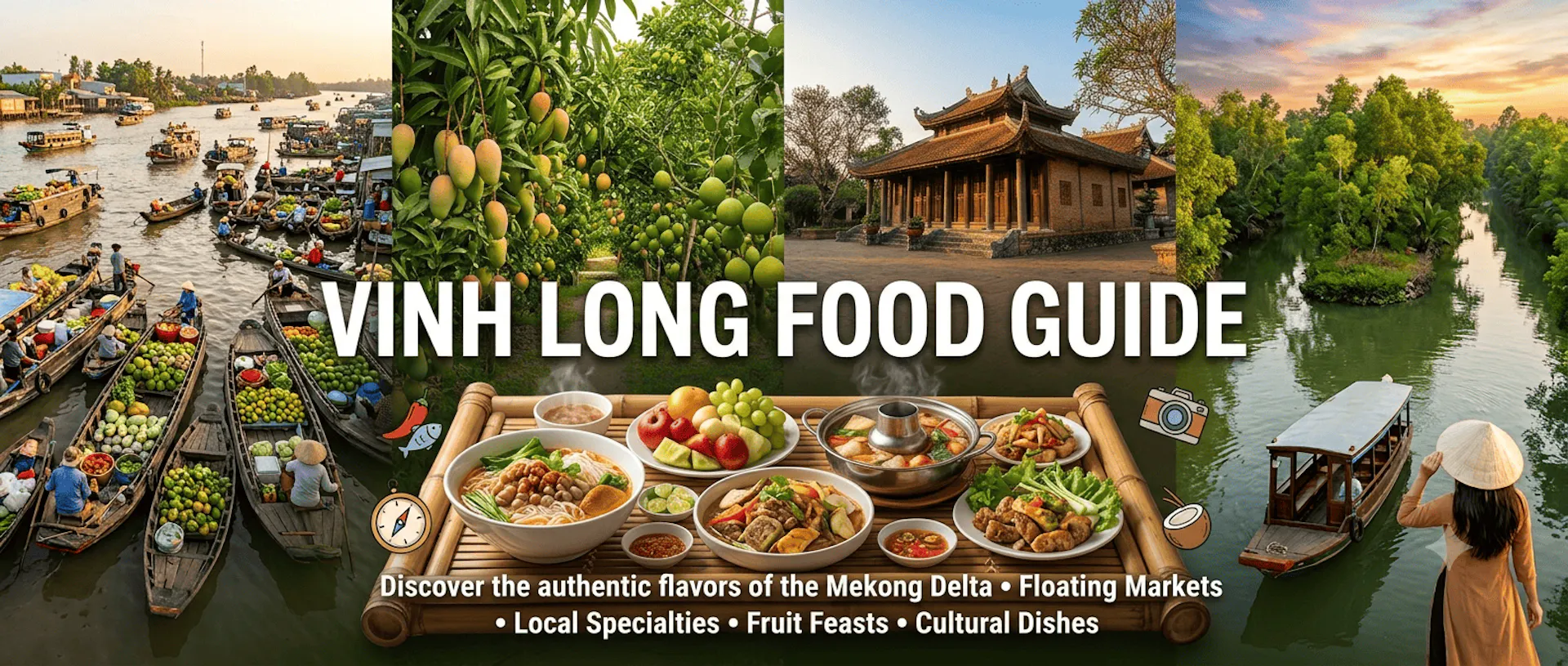
Vinh Long is a culinary paradise in the Mekong Delta, offering fresh river fish, tropical fruits, traditional Vietnamese dishes, and authentic countryside flavors. Visitors can enjoy local specialties prepared with fresh ingredients sourced directly from orchards, rivers, and nearby farms. From family-run eateries and floating restaurants to bustling local markets, the province provides unforgettable dining experiences for every traveler. This Vinh Long Food Guide introduces the must-try dishes, regional specialties, and unique flavors that define the rich culinary heritage of the Mekong Delta.
On this page
- The Essence of the River: Iconic Seafood and Fish Dishes in Our Vinh Long Food Guide
- The Islet Culinary Culture: A Core Pillar of the Vinh Long Food Guide
- Street Food and Village Kitchens: The Beating Heart of the Vinh Long Food Guide
- Practical Culinary Logistics and Etiquette for the Vinh Long Food Guide
- Conclusion: Finalizing Your Vinh Long Food Guide Experience
To truly comprehend the cultural landscape of the Mekong Delta, one must first surrender to the chaotic, intoxicating sensory atmosphere of a provincial morning market as dawn breaks over the alluvial plains. Long before the sun burns off the thick river mist, the air in this specific province grows heavy with the sharp, earthy aroma of fresh turmeric being pounded in stone mortars, the aggressive, rhythmic hiss of hot oil expanding rapidly across wide cast-iron skillets, and the lingering, deeply floral sweetness of freshly plucked tropical fruits bleeding into the humid equatorial air. For the discerning culinary anthropologist and the dedicated traveler, navigating this complex gastronomic terrain requires more than a passing curiosity; it demands a comprehensive, expertly curated vinh long food guide. This is a destination where food is far more than mere daily sustenance; it is a refined, deeply historical tradition born directly from the fertile, nutrient-dense alluvial soil of the Mekong River. When asking what to eat in Vinh Long, you are essentially asking how to consume the ecosystem itself. The local culinary philosophy rejects the artificiality of modern commercial kitchens, instead favoring a raw, honest approach that transforms the aggressive, muddy vitality of the riverine environment into plates of unparalleled complexity. This exhaustive masterwork will serve as your definitive roadmap to understanding this hyper-local gastronomy, guiding you past the sterile tourist buffets and deep into the authentic, smoke-filled village kitchens where the true soul of the delta resides.
The Essence of the River: Iconic Seafood and Fish Dishes in Our Vinh Long Food Guide
The geographical reality of the province—a territory violently dissected by the massive Co Chien and Tien rivers—dictates a culinary ecosystem heavily biased toward freshwater aquatic life. The inhabitants here do not fight the river; they harvest its unpredictable bounty with masterful precision, resulting in a distinct category of Vinh Long specialties that stand as the absolute pinnacle of authentic Mekong Delta food.
The Mastery of Cá Tai Tượng (Elephant Ear Fish)
There is no culinary experience more profoundly iconic in this region than sitting deep within the shaded canopy of a riverside orchard garden to consume Cá tai tượng chiên xù (deep-fried elephant ear fish). The preparation of this massive, flat, freshwater species is a theatrical display of localized culinary physics. Rather than scaling or filleting the catch, local chefs score the flesh and plunge the entire, intact fish vertically into a deep vat of violently boiling oil. The intense, immediate thermal shock causes the large scales to instantly stand upright and shatter into a perfectly crisp, golden armor, while the internal flesh remains remarkably tender, insulated by the flash-fried exterior. However, the mastery of this dish lies not just in the cooking, but in the highly participatory act of eating. Diners are expected to meticulously peel away the crispy, heavily textured skin and the steaming white meat, placing it onto a sheer sheet of moistened rice paper. This is then aggressively layered with a massive, fragrant handful of astringent local herbs—including sharp fish mint, purple perilla, and bitter starfruit—before being rolled into a tight cylinder. The final, essential step involves plunging the roll into a bowl of fermented tamarind dipping sauce spiked with crushed bird's eye chilies, resulting in an explosive, perfectly balanced bite of fat, acid, crunch, and herbaceous heat that defines Vinh Long river cuisine.
The Magic of Bánh Xèo Hến (Clam Pancake)
While the sizzling Vietnamese crepe is a staple across the southern half of the country, the local iteration known as Bánh xèo hến is a highly specific, terroir-driven masterpiece that immediately elevates any vinh long food guide. In major metropolitan centers, these massive, turmeric-tinted rice flour crepes are traditionally stuffed with fatty pork belly and farmed shrimp. Here, however, the chefs turn to the muddy, sandy beds of the local river channels to harvest tiny, incredibly labor-intensive freshwater baby clams (hến). The incorporation of these miniature bivalves entirely alters the flavor profile of the dish. The clams impart a deeply earthy, sweet, and highly concentrated briny minerality that perfectly offsets the rich, coconut-milk-laced batter. When the liquid batter hits the blazing hot, wood-fired skillet, it rapidly spreads into a paper-thin, aggressively crispy, and slightly charred shell. Folded over a massive pile of the sautéed clams, crisp bean sprouts, and wild riverbank greens, the resulting pancake is a textural marvel. Eating it requires breaking off shattered, steaming shards of the crepe, wrapping them in massive mustard leaves, and dipping them into a sweet and sour garlic fish sauce, creating a deeply savory, complex experience that honors the grueling labor of local clam foragers.
Fermented Fish Specialties
To achieve a complete understanding of the regional palate, one must confront the intense, deeply pungent world of umami-rich fermentation, a preservation necessity born from the delta's harsh historical cycles of monsoonal flooding and severe dry seasons. When the floodwaters historically receded, the massive surplus of trapped river fish had to be preserved, giving rise to an array of fermented fish pastes that form the absolute backbone of local flavor. This historical survival technique is most triumphantly displayed in Lẩu mắm (fermented fish hotpot) and Mắm kho (braised fermented fish). The broth for these dishes is an intimidating, dark, murky liquid that immediately overwhelms the senses with a highly aggressive, funky aroma. Yet, upon tasting, the broth reveals a staggering depth of savory, salty complexity that is entirely addictive. This intense, boiling cauldron is then used to quickly blanch an armada of freshly forged, hyper-seasonal wetland vegetables, such as porous water lily stems, bitter melon, and shredded banana blossoms, which act as perfect sponges to absorb the heavy, complex broth. It is a dish that commands profound respect, separating the casual tourist from the dedicated culinary explorer.
The Islet Culinary Culture: A Core Pillar of the Vinh Long Food Guide
To physically distance yourself from the mainland is to step back in time. The massive, fertile landmasses floating in the center of the river, specifically the deeply revered Cù lao (islets) like An Binh, operate as isolated, self-sustaining agricultural ecosystems. The culinary culture on these islands represents the purest, most undiluted form of farm-to-table dining currently available in Southeast Asia, providing a crucial chapter in our exploration of the province.
Orchard-to-Table Dining
The concept of orchard-to-table dining in the Miệt vườn (traditional Southern fruit orchards) is not a modern, manufactured culinary trend; it is the absolute, unyielding reality of daily islet life. The geographical isolation of the Cù lao means that importing external, commercial ingredients is both logistically frustrating and economically unviable. Consequently, the local families who operate the small, informal garden eateries rely entirely on the immediate, surrounding environment. When you sit down at a heavy wooden table beneath the dense shade of a jackfruit tree, you are consuming a hyper-local micro-economy. The free-range chickens scratching in the dirt just meters away will become the base of a slow-simmered, herbaceous porridge by late afternoon. The massive, prehistoric-looking snakehead fish swimming lazily in the adjacent irrigation ditch will be caught by hand, skewered on a fresh bamboo stalk, and packed in thick river mud before being thrown directly into a bonfire of dried coconut husks—a primitive, highly effective cooking method that steams the flesh perfectly within its earthen shell. This immediacy of sourcing ensures that every single ingredient on the plate possesses a vibrant, living energy and an unparalleled freshness that no urban restaurant, regardless of its budget, can possibly replicate.
Seasonal Fruit Gastronomy
The staggering agricultural output of these islets is heavily dominated by fruit cultivation, but treating this bounty solely as a post-meal dessert is a severe misunderstanding of local gastronomy. In Vĩnh Long, the seasonal harvest of tropical fruit is deeply integrated into savory, complex cooking. The undisputed king of the local orchards is the bưởi Năm Roi (Nam Roi pomelo), a massive, pear-shaped citrus fruit renowned for its aggressively sharp, sweet-tart flavor profile and complete lack of lingering bitterness. While delightful when eaten raw, local village chefs masterfully deploy the thick, juicy vesicles of the pomelo as the acidic backbone for vibrant, highly textural salads (gỏi). The fruit is meticulously separated and tossed with dried, sun-cured river shrimp, intensely fragrant toasted peanuts, thinly sliced pork ear for cartilaginous crunch, and a heavy downpour of chili-infused fish sauce. Similarly, the overwhelming, honey-like sweetness of freshly harvested longans is frequently utilized to naturally sweeten long-simmered bone broths, replacing the need for refined industrial sugars and infusing the deeply savory liquids with a subtle, haunting floral note that perfectly balances the heavy salinity of the delta's ubiquitous fermented pastes.
Street Food and Village Kitchens: The Beating Heart of the Vinh Long Food Guide
While the isolated orchard gardens offer profound serenity, the frenetic, smoke-filled environment of the mainland urban centers provides an entirely different, equally vital culinary education. To truly engage with Vinh Long street food, one must adapt to the early, demanding rhythms of the local working class and seek out the humble, intergenerational village kitchens that line the narrow, chaotic alleys branching off from the central markets.
The Morning Market Ritual
The gastronomic day in this province begins long before sunrise, making the morning market ritual an absolutely mandatory component of any serious itinerary. Navigating the damp, bustling corridors of the central market at 5:30 AM is a masterclass in sensory overload. The air is thick with the competing aromas of strong, slow-dripped robusta coffee cutting through the heavy humidity and the rich, vaporous steam rising from dozens of massive, bubbling aluminum stockpots. The definitive local breakfast required to fuel a day of grueling river navigation is a steaming, restorative bowl of Bún cá (fish noodle soup). Unlike the heavily spiced, aggressively oily broths found in other regions, the Vĩnh Long interpretation of this dish relies on a stunningly clear, deeply fragrant broth simmered meticulously with the bones of freshwater snakehead fish and a massive volume of crushed lemongrass and fresh turmeric. The resulting soup, ladled over slippery, fermented rice vermicelli and topped with thick, meaty fillets of river fish and a towering mountain of shaved banana blossom, offers a clean, bright, and intensely refreshing flavor profile designed to awaken the palate without inducing lethargy. Similarly, thick, chewy strands of tapioca noodles suspended in a rich, gelatinous pork knuckle broth known as Bánh canh provide a heavier, highly caloric alternative, beloved by the dockworkers and boatmen preparing for a day of intense physical labor on the river.
The Art of Rural Preparation
The true magic of the local street food and village kitchen scene lies not just in the complex recipes, but in the archaic, uncompromising methods of physical preparation. In an era dominated by convenient, temperature-controlled gas and induction stoves, the master cooks of Vĩnh Long fiercely protect their reliance on open-fire cooking. When you observe a genuine local kitchen, you will immediately notice the prevalence of heavy, soot-stained clay pots (nồi đất) perched precariously over blazing, snapping fires fueled entirely by dried coconut shells, heavily aged melaleuca wood, and discarded rice husks. This method is incredibly labor-intensive, requiring the cook to constantly monitor and manually adjust the fuel to maintain specific rolling boils or gentle, hours-long simmers. However, the culinary payoff is undeniable. The porous nature of the ancient clay pots, combined with the billowing smoke of the organic wood fires, imparts a deeply specific, irreplaceable charcoal-infused broth profile to everything prepared within them. When a simple dish of caramelized pork belly and hard-boiled eggs (thịt kho tàu) is subjected to this slow, smoky, earthen cooking method for twelve consecutive hours, the meat physically breaks down into a gelatinous, melt-in-the-mouth consistency, while the sauce reduces into a thick, sticky, mahogany-colored glaze that tastes of history, patience, and the very wood of the delta itself.
Practical Culinary Logistics and Etiquette for the Vinh Long Food Guide
Executing a flawless, deeply authentic culinary expedition into the heart of the Mekong Delta requires stripping away the expectations of standard Western hospitality and embracing a highly observational, culturally sensitive approach to dining. Understanding the subtle logistics of finding exceptional food and respecting the unwritten rules of rural engagement will instantly elevate your experience from a superficial tasting tour to a profound ethnographic immersion.
When attempting to identify the absolute best, most authentic stalls in the chaotic urban markets or along the dusty provincial highways, visual aesthetics mean absolutely nothing. Discard any reliance on modern signage, English menus, or comfortable, air-conditioned seating. Instead, you must become an astute observer of local human traffic. The ultimate indicator of superior culinary quality is the presence of a "high-turnover" stall heavily patronized by the local working class. If you see a dilapidated, unmarked awning sheltering dozens of motorbikes and a dense crowd of local residents aggressively hunched over tiny, primary-colored plastic stools, you have found the epicenter of regional flavor. These high-turnover environments guarantee that the volatile, highly perishable river ingredients are constantly rotating and inherently fresh, completely eliminating the risk of consuming stagnant, potentially dangerous seafood often found in empty, highly polished tourist-trap restaurants.
Furthermore, when you transition from the intense street stalls to the quiet, family-run orchard gardens of the islets, you must radically shift your understanding of dining etiquette. The concept of "fast food" or demanding rapid service is deeply offensive in this environment. You are not entering a commercial restaurant; you are being granted access to a private, multi-generational family compound. The preparation of these complex, highly traditional dishes requires immense physical labor and an abundance of time. Embrace the philosophy of slow food. While the matriarch of the family slaughters the chicken or meticulously scales the river fish, utilize this forced pause to walk the shaded orchards, observe the intricate agricultural irrigation systems, and appreciate the intense quiet of the islet. When the food is finally presented, it is absolutely vital to express genuine, visible gratitude to the host families before taking your first bite, acknowledging the immense effort required to bring the raw ecosystem of the river directly to your table.
Conclusion: Finalizing Your Vinh Long Food Guide Experience
Vinh Long unquestionably offers the most fiercely authentic, unvarnished culinary landscape in the entire Mekong Delta, actively resisting the commercial homogenization that plagues more accessible tourist circuits. By prioritizing a slow, deliberate immersion into its highly specific agrarian and riverine rhythms—from the smoky, chaotic morning markets to the serene, isolated orchard kitchens of the islets—travelers are rewarded with a profoundly beautiful, incredibly delicious truth about life on the river. As you finalize your itinerary utilizing this definitive vinh long food guide, the ultimate decision reflects your personal culinary courage. Are you drawn more to the intense, fiery spectacle of tearing into a massive, perfectly fried elephant ear fish, or are you prepared to plunge your palate into the deep, uncompromising, and historic umami funk of a boiling fermented river fish hotpot?
Read more: Vinh Long Travel Guide

By Roy Trinh
Editor
Roy Trinh is a travel writer and destination expert at Go Visit Vietnam, dedicated to helping travelers discover the beauty, culture, and diversity of Vietnam. Through well-researched travel guides, practical itineraries, local insights, and authentic recommendations, Roy shares valuable information to inspire memorable journeys across the country. From vibrant cities and breathtaking landscapes to regional cuisine and cultural heritage, every guide is created to help visitors experience Vietnam with confidence and curiosity.
Frequently Asked Questions About Vinh Long Food Guide
What food is Vinh Long famous for?
Vinh Long is famous for its fresh tropical fruits, river fish dishes, grilled specialties, hotpots, rice paper products, and traditional Mekong Delta cuisine. Seasonal fruits such as rambutan, longan, pomelo, and durian are also local highlights.
Where can I try authentic local food in Vinh Long?
Visitors can enjoy authentic meals at riverside restaurants, local markets, family-run eateries, and homestays on islands such as An Binh. These places serve traditional dishes prepared with fresh ingredients from nearby farms and rivers.
What fruits should I try in Vinh Long?
Vinh Long is known for its abundant fruit orchards. Depending on the season, visitors can enjoy rambutan, mangosteen, durian, longan, pomelo, mango, dragon fruit, and many other tropical fruits harvested directly from local gardens.
Is Vinh Long a good destination for food lovers?
Absolutely. Vinh Long offers a rich culinary experience featuring fresh local produce, traditional family recipes, authentic Mekong Delta specialties, and delicious street food. It is an excellent destination for travelers who enjoy exploring regional Vietnamese cuisine.
Can I join a food experience or cooking class in Vinh Long?
Yes. Many local homestays and eco-tourism farms offer cooking classes where visitors can prepare traditional Mekong Delta dishes using fresh ingredients from nearby gardens. These hands-on experiences provide a deeper understanding of local culture and cuisine.
Advertising box