
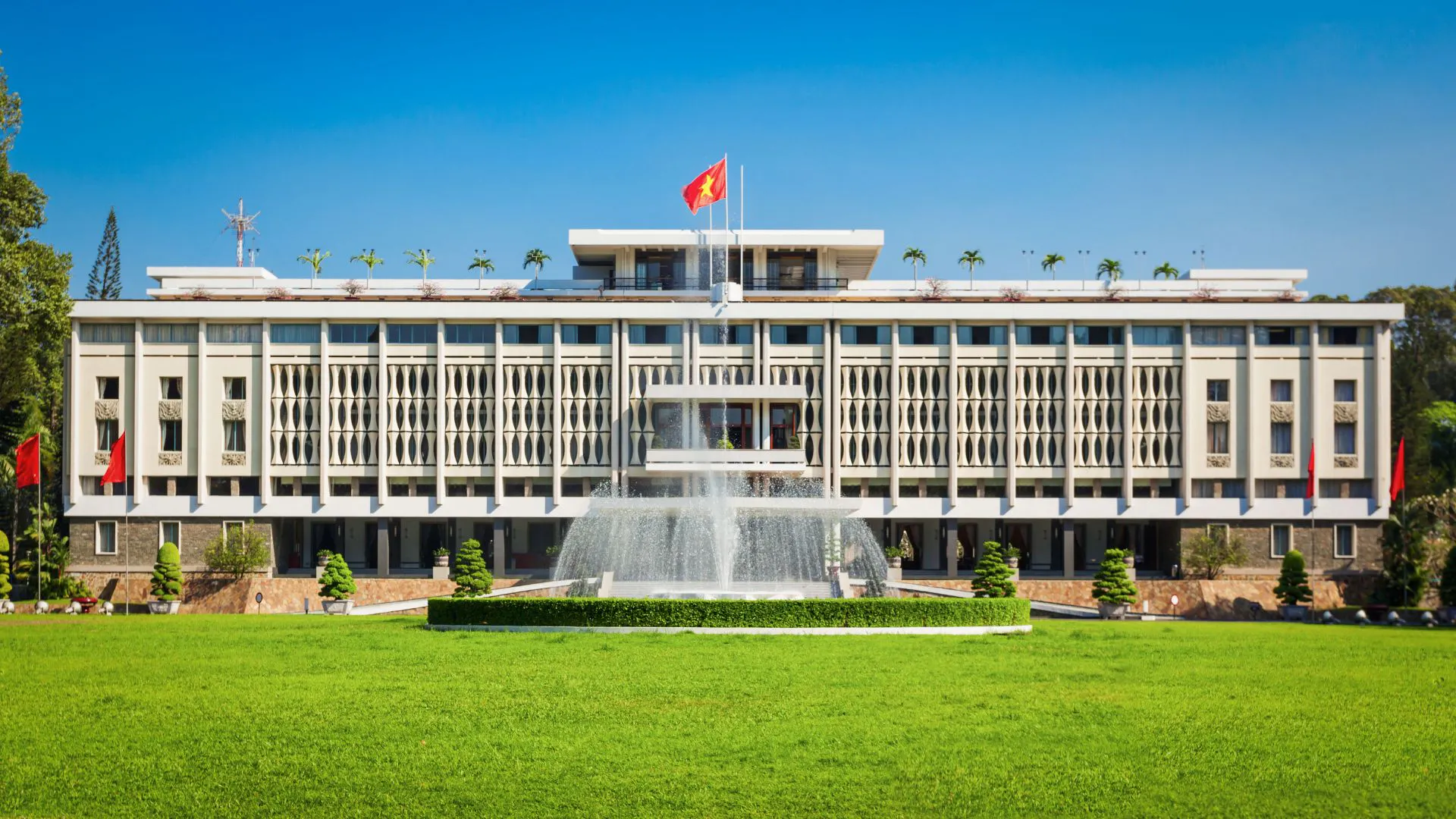
Independence Palace
Discover the Independence Palace, one of Vietnam's most significant historical landmarks. Explore its striking architecture, preserved state rooms, underground command bunker, and the events that shaped modern Vietnamese history.
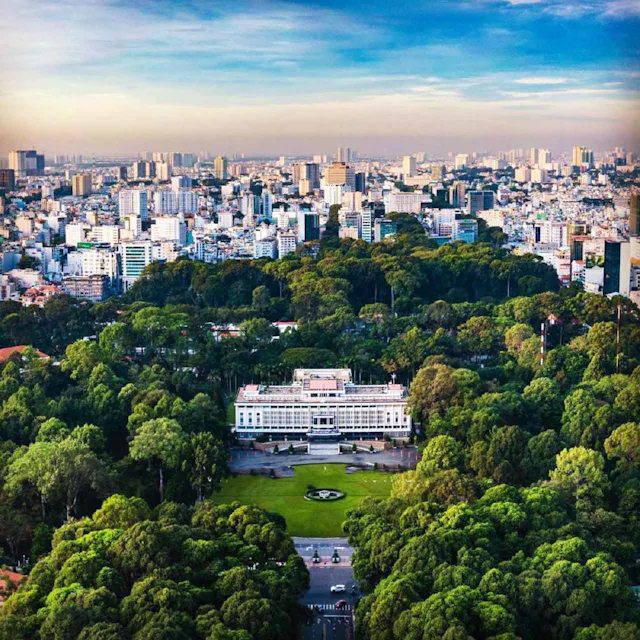
About Independence Palace
Independence Palace, also known as Reunification Palace, is one of Vietnam's most important historical landmarks and a symbol of the country's modern history. Located in the heart of Ho Chi Minh City, the palace served as the residence and workplace of the President of South Vietnam during the Vietnam War and played a pivotal role in the events leading to the reunification of the country in 1975.
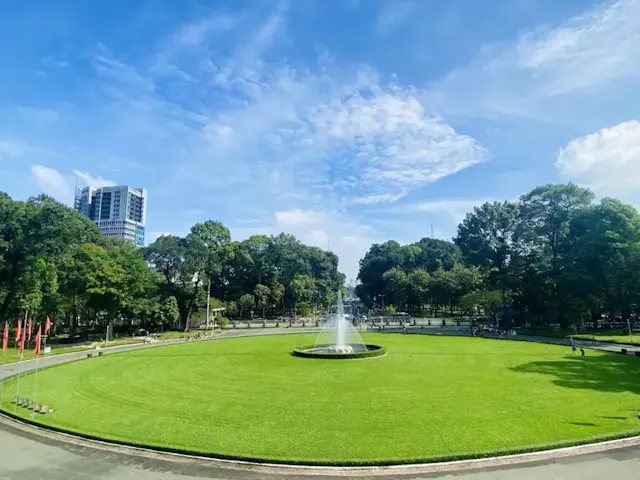
The current building was designed by Vietnamese architect Ngo Viet Thu and completed in 1966. Its modernist architecture combines contemporary design with traditional Vietnamese elements, creating a unique structure that remains one of the city's most recognizable landmarks. Surrounded by spacious gardens and tree-lined grounds, the palace offers a peaceful retreat amid the bustling urban landscape of Ho Chi Minh City.
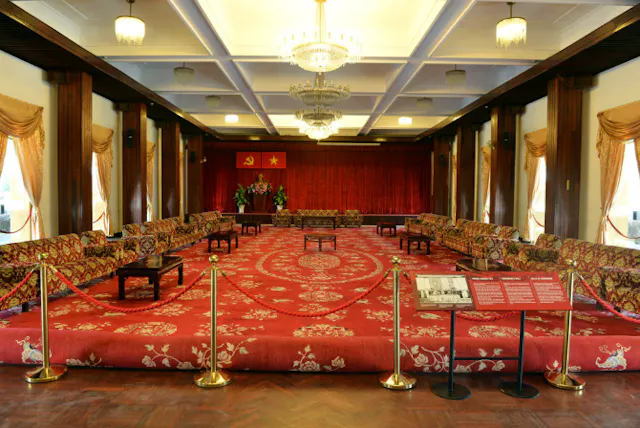
Visitors can explore a wide range of preserved rooms, including reception halls, conference rooms, private living quarters, and state offices that remain largely unchanged since the 1970s. One of the most fascinating areas is the underground command bunker, which contains communication equipment, strategic maps, and wartime facilities that provide insight into a significant period of Vietnamese history.
The palace is best known internationally for the events of April 30, 1975, when a North Vietnamese tank entered its gates, marking the end of the Vietnam War and the reunification of Vietnam. Today, the site serves as a museum and educational attraction, welcoming visitors from around the world who wish to learn more about the country's history, politics, and cultural heritage.
Whether you're interested in history, architecture, photography, or cultural exploration, Independence Palace offers a fascinating journey through one of the most significant chapters in Vietnam's story and remains a must-visit attraction in Ho Chi Minh City.
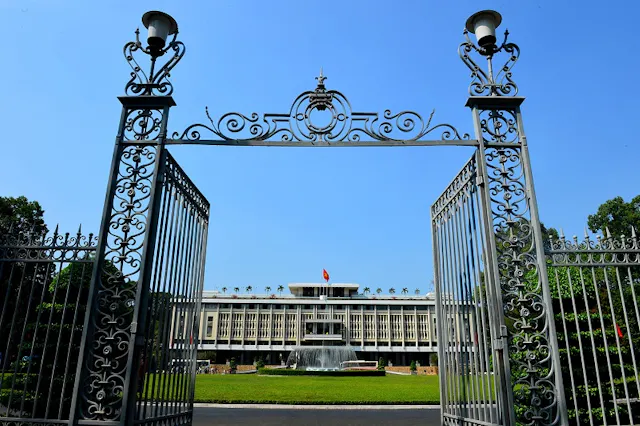
Independence Palace Photo Gallery
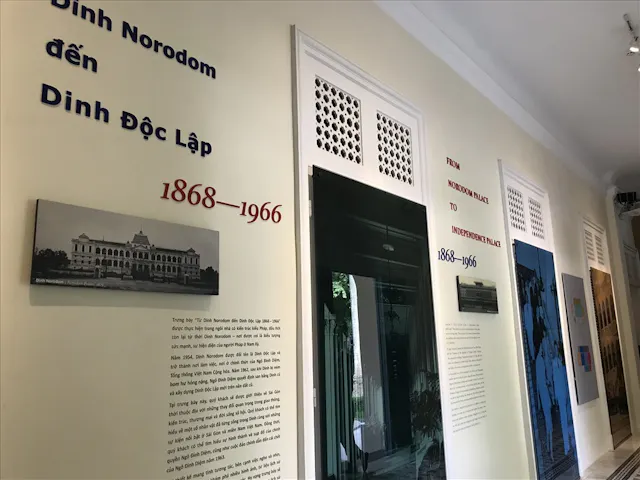
Explore a collection of captivating images showcasing Independence Palace, one of Vietnam's most significant historical landmarks. From its striking modernist architecture and grand reception halls to preserved state rooms, underground command bunker, and beautifully landscaped grounds, these photos offer a glimpse into the history, culture, and legacy of this iconic Ho Chi Minh City attraction.
How to Get to and Around Independence Palace
Several public bus routes serve the District 1 area, with stops located within walking distance of Independence Palace. Buses provide an affordable way to reach the attraction from different parts of Ho Chi Minh City.
Visitors arriving at Saigon Railway Station can reach Independence Palace in approximately 10 to 15 minutes by taxi, ride-hailing service, or public transportation. The palace is located a short distance from the city's main train station.
The palace is easily accessible by car via major roads in central Ho Chi Minh City. Parking facilities are available nearby, although traffic in District 1 can be busy during peak hours.
Travelers arriving at Tan Son Nhat International Airport can reach Independence Palace in around 20 to 30 minutes by taxi or private transfer, depending on traffic conditions. The palace is one of the closest major tourist attractions to the airport.
Frequently Asked Questions About Independence Palace
Independence Palace is famous for its role in modern Vietnamese history, particularly the events of April 30, 1975, which marked the end of the Vietnam War and the reunification of Vietnam. Today, it stands as one of the country's most significant historical landmarks.
Yes. Independence Palace and Reunification Palace refer to the same landmark. The building was originally known as Independence Palace and later became widely known as Reunification Palace following Vietnam's reunification in 1975.
Visitors can explore preserved reception halls, conference rooms, presidential offices, private living quarters, ceremonial spaces, and the underground command bunker. Many rooms remain largely unchanged, offering a fascinating glimpse into Vietnam's political history.
Most visitors spend between one and two hours exploring the palace grounds, exhibition areas, historic rooms, and underground facilities. History enthusiasts may choose to spend longer learning about the site's significance.
Absolutely. Independence Palace is one of Ho Chi Minh City's most important attractions, combining historical significance, unique architecture, and well-preserved interiors. It offers valuable insights into Vietnam's modern history and is a must-visit destination for culture and history lovers.
Advertising box
Help Us Stay Free
By checking out our sponsors and partners above, you are helping us keep this site alive and free. Every single click counts — thank you for being an amazing reader!