
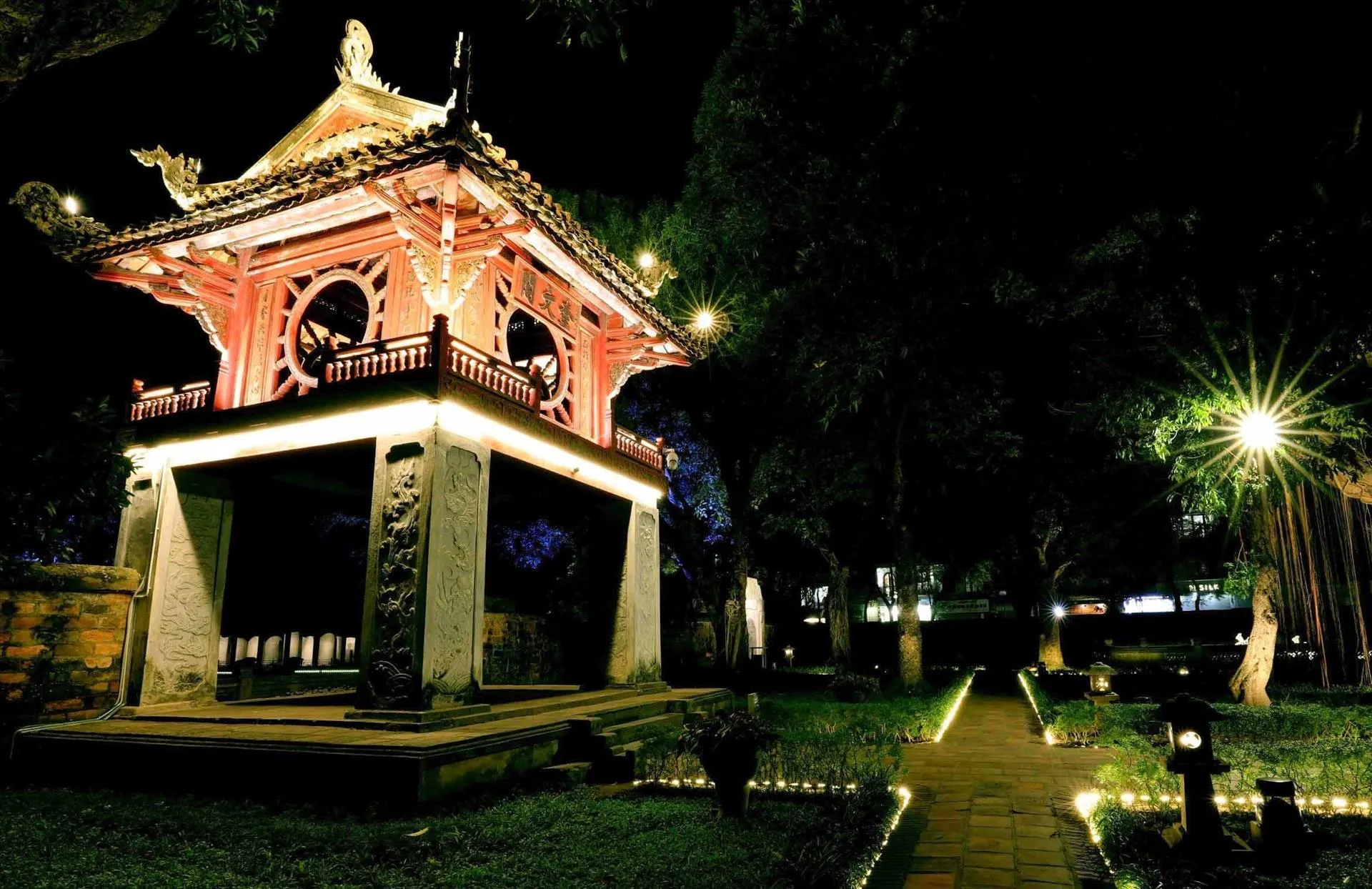
Temple of Literature (Van Mieu Quoc Tu Giam)
The Temple of Literature, known as Van Mieu Quoc Tu Giam in Vietnamese, is one of Hanoi's most important historical and cultural landmarks. Founded in 1070, the complex is closely associated with Confucian education and Vietnam's early scholarly tradition. Visitors can explore traditional courtyards, ancient gates, gardens, pavilions, and stone steles honoring successful scholars from historic royal examinations. Located in central Hanoi, the Temple of Literature offers travelers a peaceful introduction to Vietnam's history, architecture, education, and Confucian cultural heritage.
About the Temple of Literature
The Temple of Literature (Van Mieu Quoc Tu Giam) is one of Hanoi's most important historical and cultural landmarks. Founded in 1070 during the reign of Emperor Ly Thanh Tong, the complex is closely associated with Confucianism, traditional education, and Vietnam's long scholarly tradition.
Located in central Hanoi, the site combines historic temples, courtyards, gardens, pavilions, stone steles, and traditional Vietnamese architecture. For travelers interested in history, culture, architecture, and education, the Temple of Literature provides a fascinating look at how knowledge and scholarship were valued in imperial Vietnam.
What Is the Temple of Literature?
The Temple of Literature was originally established as a place dedicated to Confucius and Confucian scholars.
A few years after its establishment, the complex became associated with the development of higher education in Vietnam through Quoc Tu Giam, traditionally regarded as Vietnam's first national university.
The institution was originally intended to educate members of the royal family and aristocracy before becoming more broadly connected with the education of talented scholars.
Van Mieu and Quoc Tu Giam
The Vietnamese name Van Mieu Quoc Tu Giam combines two related institutions.
"Van Mieu" refers to the Temple of Literature, while "Quoc Tu Giam" refers to the national academy associated with education and scholarship.
Together, they represent an important chapter in Vietnam's intellectual and educational history.
The complex became a center where Confucian teachings, literature, philosophy, and classical Chinese learning were studied.
Confucian Education in Vietnam
Confucianism played an important role in Vietnam's traditional political and educational systems for centuries.
Students studied classical texts and prepared for imperial examinations that could lead to government positions.
Academic achievement was highly valued, and successful scholars could gain important social status through the examination system.
The Temple of Literature preserves this history through its architecture, stone inscriptions, and ceremonial spaces.
Five Courtyards
The complex is traditionally organized into five courtyards, each connected by gates and landscaped pathways.
Visitors move through a sequence of spaces that gradually become more secluded and ceremonial.
The courtyards include gardens, ponds, pavilions, temples, and traditional architectural structures.
This carefully organized layout creates a peaceful atmosphere despite the site's location in the center of Hanoi.
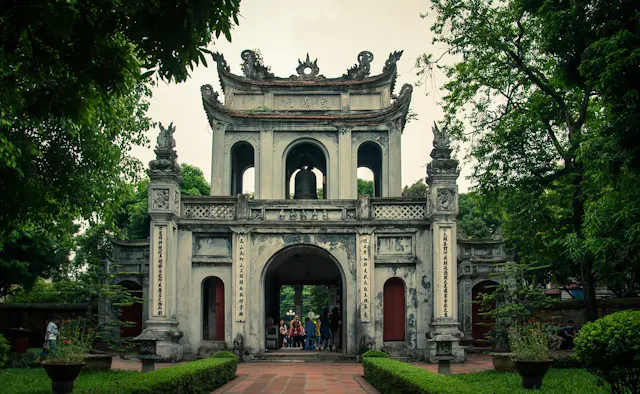
Van Mieu Gate
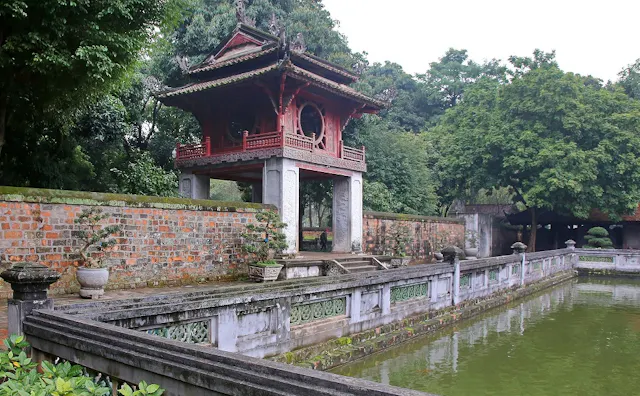
The entrance to the complex is marked by the impressive Van Mieu Gate.
The traditional gate features tiled roofs and classical Vietnamese architectural details.
Passing through the gate begins the journey through the historic courtyards and provides an immediate sense of the site's traditional character.
Well of Heavenly Clarity
One of the best-known features of the Temple of Literature is the Well of Heavenly Clarity, or Thien Quang Tinh.
The square-shaped pond is located in the center of the complex and contributes to the peaceful atmosphere of the surrounding courtyards.
The pond is particularly recognizable because of the stone steles positioned around it.
Stone Steles of Doctors
The 82 stone steles are among the most important historical objects at the Temple of Literature.
Each stele records the names and achievements of scholars who successfully passed royal examinations during the Ly, Mac, Le, and Nguyen periods.
The steles stand on the backs of stone turtles, which traditionally symbolize longevity and knowledge.
In 2010, the stone steles were recognized by UNESCO's Memory of the World Programme.
Traditional Vietnamese Architecture
The architecture of the Temple of Literature reflects traditional Vietnamese design.
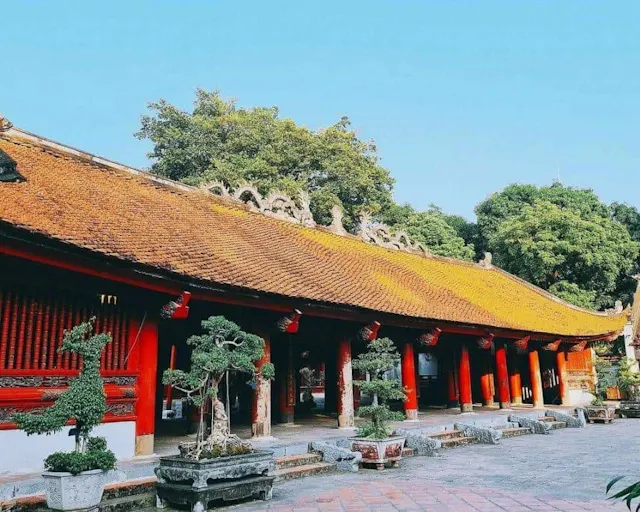
Visitors can see wooden structures, curved tiled roofs, decorative gates, courtyards, altars, and carefully maintained gardens.
The use of symmetry and ceremonial spaces reflects the importance of order and harmony in Confucian thought.
The complex has been restored several times throughout its history while retaining its traditional character.
House of Ceremonies and Dai Thanh Gate
The inner part of the complex contains important ceremonial structures associated with Confucian worship.
Dai Thanh Gate leads toward the central ceremonial area, where visitors can see traditional architectural details and religious spaces.
The combination of gates, courtyards, and temples creates a clear progression from public areas toward more sacred spaces.
The Temple of Confucius
At the heart of the complex is a temple dedicated to Confucius and other important Confucian figures.
Visitors can observe traditional altars, statues, incense, and decorative elements associated with Confucian worship.
The temple reflects the intellectual and spiritual foundations of the educational institution that once operated here.
Cultural Significance
The Temple of Literature remains an important symbol of learning, education, and scholarship in Vietnam.
Vietnamese students and families sometimes visit the site before important examinations or academic milestones, reflecting the continuing cultural association between the temple and educational success.
The complex therefore remains relevant beyond its historical significance.
Best Time to Visit
The Temple of Literature can be visited throughout the year.
The cooler months from October to April are generally comfortable for walking around the outdoor courtyards.
Early morning is often a good time to enjoy the complex before larger crowds arrive.
Spring can be especially interesting because Hanoi's traditional festivals and cultural activities bring additional atmosphere to the city.
How to Get to the Temple of Literature
The Temple of Literature is centrally located in Dong Da District, Hanoi, making it easy to reach from the Old Quarter and other central neighborhoods.
Visitors can travel by taxi, ride-hailing service, public bus, bicycle, or private vehicle.
It can easily be combined with nearby attractions such as the Ho Chi Minh Mausoleum, Ho Chi Minh Museum, Imperial Citadel of Thang Long, and One Pillar Pagoda.
Why Visit the Temple of Literature?
The Temple of Literature offers travelers a unique opportunity to explore the history of Vietnamese education, Confucian culture, scholarship, and traditional architecture.
From its historic courtyards and peaceful gardens to the famous stone steles and ancient temples, every part of the complex reflects the importance that Vietnamese society placed on learning and academic achievement.
For anyone exploring Hanoi, Van Mieu Quoc Tu Giam is an essential cultural attraction and a meaningful place to understand an important part of Vietnam's intellectual and historical heritage.
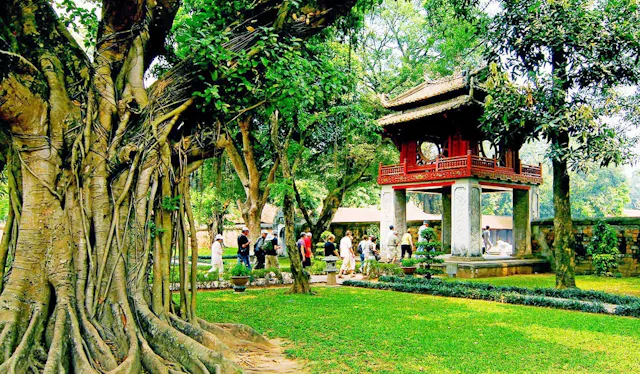
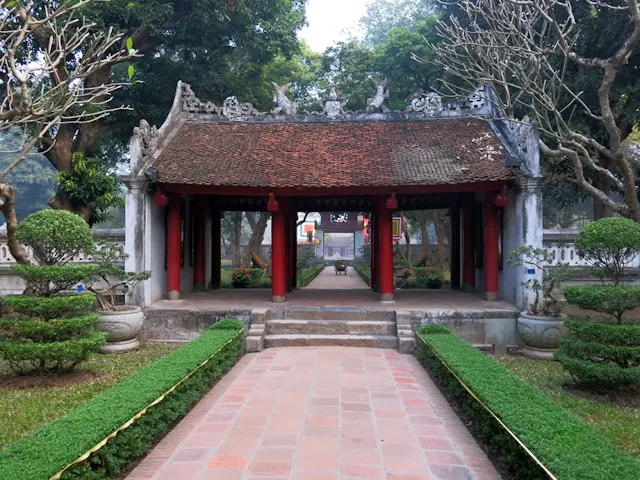
Temple of Literature Photo Gallery
Explore a stunning collection of images showcasing the Temple of Literature, Vietnam's first national university and one of Hanoi's most treasured cultural landmarks. Discover traditional Vietnamese architecture, historic courtyards, ancient pavilions, stone stelae of doctoral laureates, peaceful gardens, and centuries of educational heritage preserved within this iconic complex.
How to Get to and Around the Temple of Literature
Bus and coach
Several public bus routes stop near the Temple of Literature, providing affordable and convenient access from different parts of Hanoi. Bus stops are located within a short walking distance of the attraction.
Train
Visitors arriving at Hanoi Railway Station can reach the Temple of Literature in approximately 5 to 10 minutes by taxi, ride-hailing service, or a short walk. Its location makes it one of the easiest historical attractions to visit from the station.
Driving
The Temple of Literature is accessible by car via major roads in central Hanoi. Parking facilities are available nearby, though traffic can become busy during peak hours and holiday periods.
Flying
Travelers arriving at Noi Bai International Airport can reach the Temple of Literature in approximately 40 to 50 minutes by taxi, airport shuttle, or private transfer, depending on traffic conditions.
Frequently Asked Questions About the Temple of Literature
Why is the Temple of Literature famous?
The Temple of Literature is famous as Vietnam's first national university and one of the country's most important cultural and historical landmarks. Established in the 11th century, it symbolizes Vietnam's long-standing respect for education, scholarship, and Confucian values.
What is the difference between the Temple of Literature and Quoc Tu Giam?
The Temple of Literature was originally built to honor Confucius and scholars, while Quoc Tu Giam was established shortly afterward as Vietnam's first national university. Today, both are part of the same historic complex and are commonly referred to together as Van Mieu – Quoc Tu Giam.
What can visitors see at the Temple of Literature?
Visitors can explore historic courtyards, traditional gates, ancient pavilions, peaceful gardens, ceremonial halls, and the famous stone stelae mounted on turtle statues that commemorate successful doctoral graduates from royal examinations.
How much time should I spend at the Temple of Literature?
Most visitors spend one to two hours exploring the complex. Those interested in Vietnamese history, architecture, and education may choose to spend additional time discovering the site's exhibits and cultural significance.
Is the Temple of Literature worth visiting?
Absolutely. The Temple of Literature offers a unique blend of history, culture, architecture, and educational heritage. It is one of Hanoi's most iconic attractions and an essential destination for anyone interested in understanding Vietnam's intellectual and cultural traditions.
Advertising box