
Complete Vietnam Travel Guide: Everything First-Timers Need to Know
Planning your first trip to Vietnam? This complete travel guide covers everything you need to know before you go, including visa requirements, the best time to visit, transportation, currency, local customs, safety tips, food, accommodation, and suggested itineraries. Whether you want to explore vibrant cities, breathtaking landscapes, tropical beaches, or cultural heritage sites, this guide helps you prepare for a smooth and unforgettable journey. Go Visit Vietnam provides practical advice and travel inspiration for first-time visitors exploring Vietnam.
On this page
First-time Vietnam planning follows a predictable arc. It starts with excitement — cave systems, rice terraces, lantern-lit ancient towns, extraordinary street food. Then the tab count in your browser hits thirty, the itinerary grows to eleven cities in ten days, and the excitement quietly curdles into overwhelm.
This Vietnam travel guide exists to stop that spiral early. It consolidates a decade of in-country experience into a single, logical planning sequence — covering the only visa process that's legitimate, the climate truths that most booking sites obscure, the itinerary mistake that burns out more first-timers than anything else, and the apps and customs that separate a smooth trip from a frustrating one.
By the end of this guide, you'll have a clear pre-departure checklist, a realistic picture of where to go based on your trip length, and the cultural context to move through Vietnam with confidence rather than anxiety. No gimmicks, no affiliate padding — just the information a seasoned destination manager would give you before your first flight lands at Noi Bai or Tan Son Nhat.
Pre-Departure Logistics: Visa, eSIM & Currency
Get these three fundamentals right before anything else. They determine whether you clear immigration smoothly, whether you have connectivity from the moment you land, and whether your first afternoon in Vietnam involves an ATM queue or a street food bowl.
Visa: 90-Day E-Visa & the Scam Warning
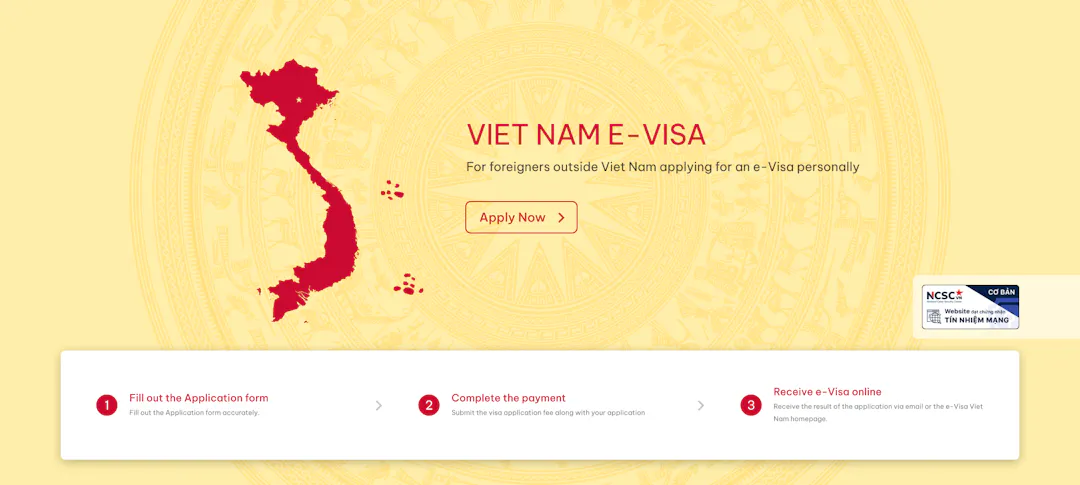
Vietnam's e-visa grants up to 90 days of entry on either a single or multiple-entry basis, and citizens of all countries and territories worldwide are eligible. The application is entirely online and takes 15–20 minutes when your documents are prepared.
The only two legitimate government portals are:
Official fees: $25 USD for single entry, $50 USD for multiple entry — both non-refundable.
Dozens of third-party agency websites mimic the government portal's design and charge $80–$300+ in fabricated "service fees." They appear prominently in paid search results. The rule is simple: if the URL is not one of the two above, close the tab. Apply at least 10–14 days before departure to buffer against processing backlogs during peak travel seasons.
> Read more: How to Apply for a Vietnam E-Visa
Connectivity: eSIM Before You Land
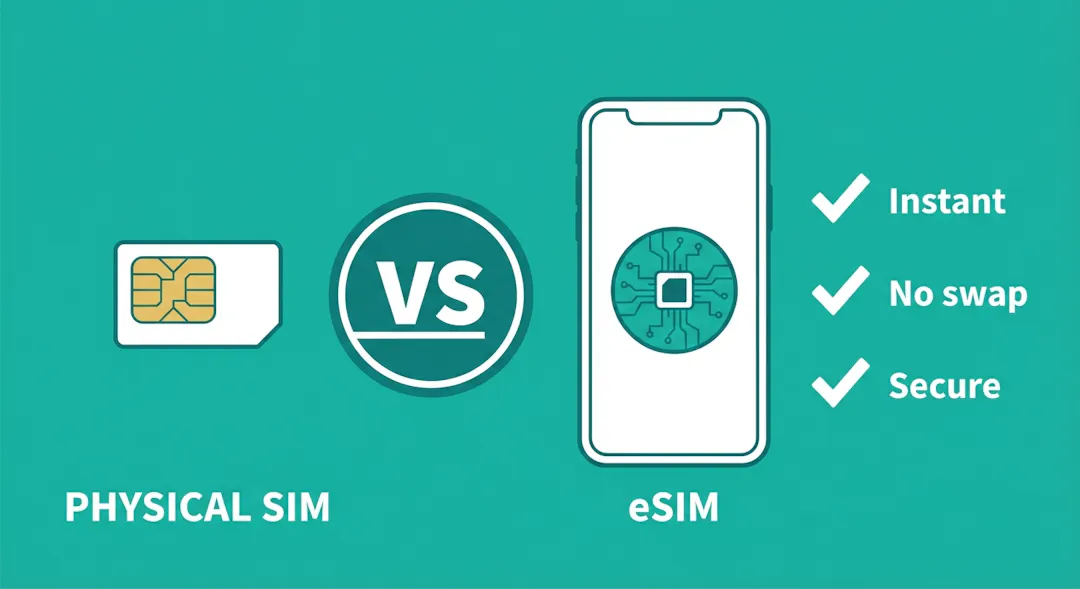
Arriving in Vietnam without mobile data means navigating airport taxi queues without Grab, searching for your hotel address without Maps, and being functionally blind in a new city for your first critical hours. Fix this before departure.
Purchase a travel eSIM from providers like Airalo, Gigago, or Saily — all of which partner with Vietnam's major local carriers (Viettel for rural and highland coverage; Vinaphone for urban data speeds). Install the eSIM profile before your flight, activate it the moment the plane lands, and enable Data Roaming on that line in your phone settings. Total setup time from purchase to live connection: under five minutes.
> Read more: Best eSIM for Tourists in Vietnam
Currency: VND Cash is Non-Negotiable
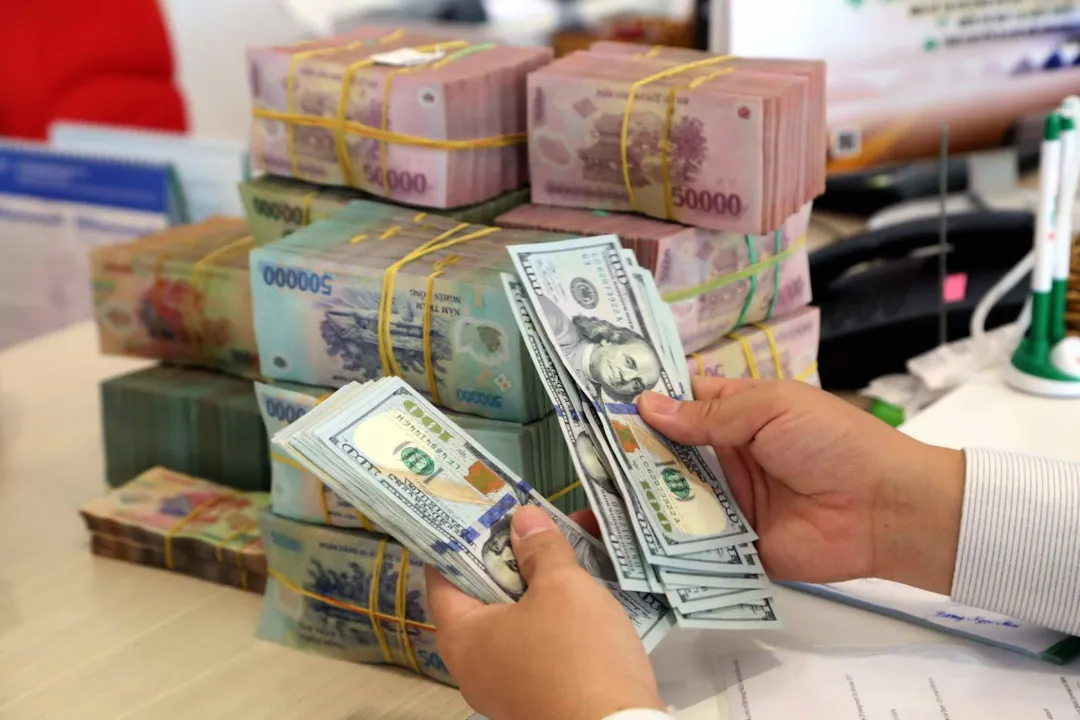
Vietnam runs a predominantly cash economy outside of upscale hotels, supermarkets, and ride-hailing apps. Street food stalls, local markets, sleeper bus tickets, temple entry fees, and rural homestays operate entirely in Vietnamese Dong (VND). Cards work where modernity has arrived; they fail everywhere else — which is still a large percentage of the places worth visiting.
Use ATMs inside bank branches (TPBank and VPBank offer the best limits and lowest fees for international cards). Withdraw larger amounts less frequently to minimize transaction fees. Always select "charge in VND" when prompted by the ATM — the "charge in home currency" option (Dynamic Currency Conversion) silently costs you 3–5% per transaction.
One note that separates informed travelers from first-timers: the 20,000 VND note (blue) and the 500,000 VND note (blue-green) look dangerously similar in low light. The 500,000 VND is worth 25x more. Sort your wallet by denomination after every withdrawal and count change deliberately until the note families feel instinctive.
> Read more: How Much Cash to Bring to Vietnam
Deciding When to Go & Where to Go
Climate Reality: No Single Perfect Month
Vietnam is not a monolithic tropical destination. At 1,650 kilometers long, it spans three fundamentally different climate systems — and what's optimal in one region can be genuinely miserable in another at the same time.
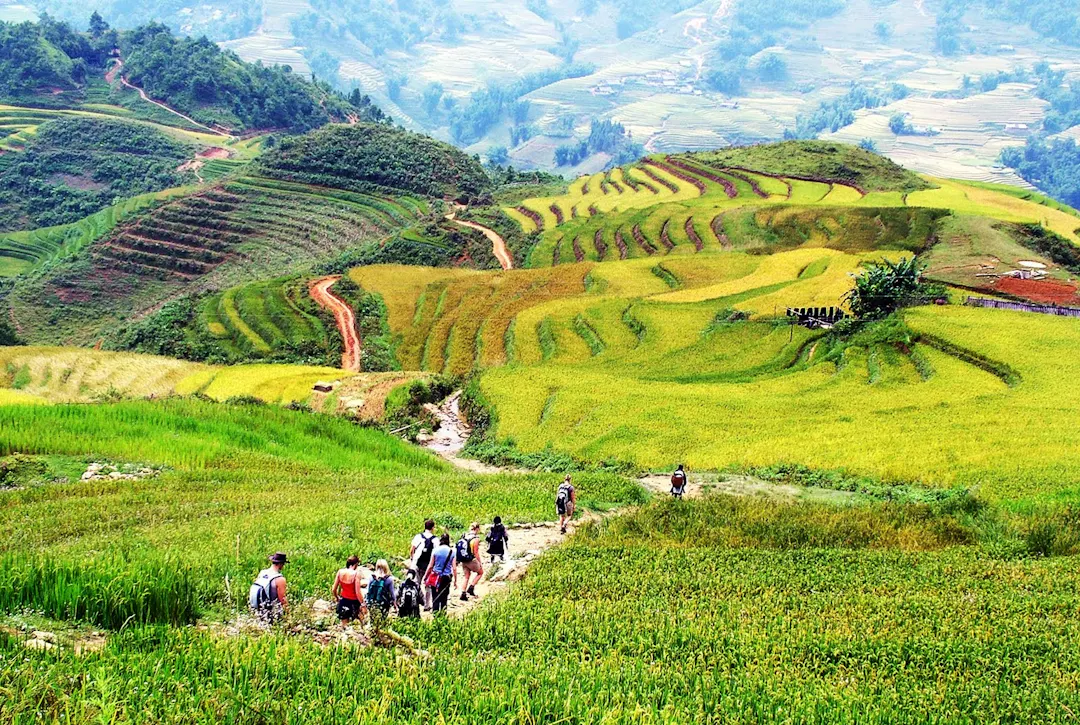
- Northern Vietnam (Hanoi, Halong Bay, Sapa, Ha Giang): Four distinct seasons. Summers are hot and monsoon-drenched; winters are genuinely cold (Hanoi averages 15–18°C in January; Sapa can drop to near-freezing with heavy fog). Autumn (September–November) is the north's most spectacular window — golden rice terraces and clear skies.
- Central Vietnam (Hue, Da Nang, Hoi An, Nha Trang, Phong Nha): Runs a counter-cyclical rainy season. When the rest of Vietnam bakes in summer monsoons, the central coast is at its sunniest (February–August). September through November brings typhoon risk and regular flooding, particularly in low-lying Hoi An.
- Southern Vietnam (Ho Chi Minh City, Mekong Delta, Phu Quoc): Classic two-season tropics. Dry season November–April; predictable afternoon downpours May–October. Simple, manageable, and warm year-round.
The full-country compromise windows: March–April and October–November offer the strongest statistical spread of good weather across all three regions simultaneously. If your dates are fixed outside these windows, build your itinerary to prioritize the regions in their optimal season rather than chasing the entire country at the wrong time.
Regional Highlights: Three Digestible Buckets
The North — Culture, History & Dramatic Landscapes Hanoi's Old Quarter, the karst archipelagos of Halong and Lan Ha Bay, Sapa's rice-terrace trekking, Ha Giang's motorbike loop through limestone mountains. This is where Vietnam's cultural density and geographic drama are highest. Slower-paced, intellectually rich, best appreciated over 5–7 days minimum.
The Center — Heritage, Beaches & Cave Systems The imperial city of Hue, the UNESCO-listed ancient town of Hoi An, the modern beach resort of Da Nang, the world-record cave systems of Phong Nha-Ke Bang. Central Vietnam rewards travelers who want both heritage immersion and beach access in close proximity.
The South — Energy, History & River Life Ho Chi Minh City's relentless pace, the war history of the Cu Chi Tunnels and War Remnants Museum, the floating markets and flooded rice paddies of the Mekong Delta, and the pristine beaches of Phu Quoc island. The south is Vietnam at its most modern and its most ecologically raw simultaneously.
Smart Itinerary Planning for First-Timers
The single most common first-timer mistake is trying to see the entire country in 7–10 days. The result — known among travel professionals as First-Timer Burnout — looks like this: four domestic flights, two overnight buses, seven different hotels, and an exhausted traveler who spent more time in transit than in any one place long enough to actually feel it.
Vietnam rewards depth. Two weeks in three regions done slowly is immeasurably better than ten cities done in a sprint.
Option A: The 10–14 Day Classic North to South
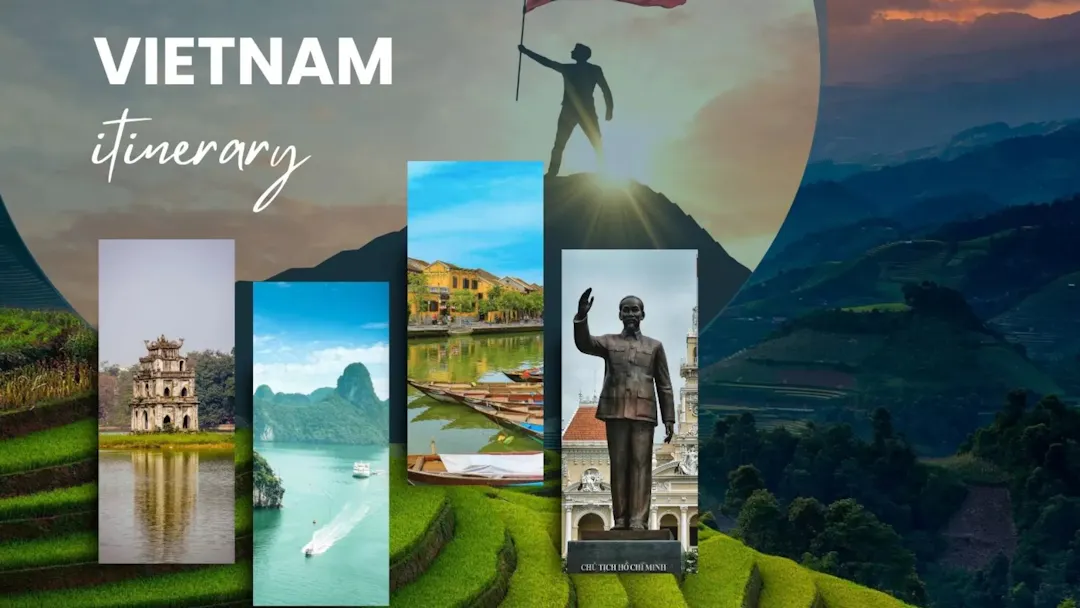
Hanoi (3 nights) → Halong/Lan Ha Bay cruise (2 nights) → Da Nang/Hoi An (3–4 nights) → Ho Chi Minh City (3 nights)
This is the most logical first-timer route, moving with Vietnam's geographic spine from north to south and hitting the country's four most iconic destination clusters without requiring the kind of daily relocation that kills trip enjoyment.
Transit logic: Fly Hanoi to Da Nang (55 minutes, VietJet/Vietnam Airlines, frequent departures under $40 when booked in advance). From Hoi An to HCMC, fly again from Da Nang airport (90 minutes). The Hanoi–Da Nang leg can alternatively be done on the Reunification Express train overnight — a legitimate experience in itself, arriving in Da Nang rested and with zero internal flight cost.
Option B: The 7-Day Regional Deep-Dive
For shorter trips or travelers who resist the tyranny of check-in queues, commit to one region and do it properly.
North 7-Day: Hanoi (2 nights) → Halong Bay cruise (2 nights) → Ninh Binh (1 night) → return to Hanoi. South/Central 7-Day: HCMC (2 nights) → Hoi An (3 nights) → Da Nang (1 night) → fly home from Da Nang.
Itinerary Planning Summary
- Read more: Vietnam 3 Day Itinerary
- Read more: Vietnam 5 Day Itinerary
- Read more: Vietnam 7 Day Itinerary
Getting Around: Safe Transport & Essential Apps
Download Before You Land
Grab and Xanh SM are Vietnam's two dominant ride-hailing platforms and are the most important apps on your phone from the minute you clear customs. Both show upfront fixed pricing, register your driver's identity, track your route in real time, and eliminate the taxi scam ecosystem entirely. Fake taxi operators — including vehicles that closely mimic reputable brands like Mai Linh and Vinasun with near-identical logos — are a documented issue at every major airport and tourist district. The rule is absolute: use the apps, not the street.
Intercity Travel: Flights vs. Sleeper Options
For distances over 400km, domestic flights are almost always the right call. Vietnam Airlines, VietJet, and Bamboo Airways connect all major cities with frequent, affordable flights. Book 4–6 weeks in advance for fares under $40 on most routes.
For shorter intercity legs (Hanoi–Ninh Binh, Da Nang–Hue, HCMC–Mui Ne), limousine sleeper vans offer a comfortable, affordable middle ground — reclining seats, air conditioning, door-to-door pickup. Traditional open-tour sleeper buses are functional but significantly rougher.
Motorbike Rental: The Legal Reality
Renting a motorbike is culturally embedded in Vietnam travel, and for experienced riders it remains one of the best ways to explore rural areas. For first-timers, the legal context matters: riding without a valid International Driving Permit (IDP) endorsed for motorbikes voids virtually all travel insurance policies in the event of an accident. The Ha Giang Loop — Vietnam's most dramatic motorbike route — involves steep mountain passes, unpaved sections, and truck traffic. It is not appropriate for riders without genuine prior experience. Hire a local Easy Rider guide if the route is non-negotiable.
> Read more: How To Travel Around Vietnam
Cultural Etiquette & Local Customs
Temple & Pagoda Rules
Vietnam's religious sites — Buddhist pagodas, Taoist temples, Confucian halls like Hanoi's Temple of Literature, and village communal houses — require shoulders and knees covered for entry. This applies to all genders. Most sites keep cloth wraps available at the gate, but carrying a lightweight scarf eliminates the dependency. Remove shoes when entering temple halls; follow signage or observe what locals do at the threshold.
Avoid loud conversations inside prayer halls, and never touch or move religious objects or offerings. Photography is generally permitted in courtyards but not during active worship.
Bargaining: Expected, Not Aggressive
Price negotiation is standard practice at tourist markets — Ben Thanh in HCMC, Dong Xuan in Hanoi, the Night Market in Hoi An. The unwritten rules: open with approximately 40–50% of the first quoted price, negotiate with a smile rather than indignation, and be genuinely willing to walk away. A vendor who lets you leave has set their floor; one who calls you back has given you the real price. Bargaining at restaurants, supermarkets, or with set-price operators is not appropriate and creates friction rather than savings.
Tipping Culture
Tipping carries no cultural mandate in Vietnam — it will never be expected or demanded. However, it is genuinely appreciated and increasingly normalized in tourism-facing roles. Practical reference points:
- Local tour guides: 100,000–200,000 VND per day per person (~$4–$8)
- Private drivers: 50,000–100,000 VND per day
- Spa and massage therapists: 50,000–100,000 VND per session
- Hotel porters and housekeeping: 20,000–50,000 VND
Your Vietnam First-Timer Checklist: Final Summary
This Vietnam travel guide has covered every pillar a first-time visitor needs to execute a smooth, rewarding trip: legitimate e-visa application, eSIM setup before landing, VND cash management, climate-zone planning, itinerary structure that prevents transit fatigue, app-based transport safety, and the cultural literacy that earns genuine warmth from locals.
The through-line across all of it: Vietnam rewards preparation and punishes improvisation. The logistics are navigable; the culture is welcoming; the experiences are extraordinary. Go slow, stay longer in fewer places, and let the country reveal itself at street level rather than from a bus window.
Planning your first Vietnam trip? Drop your proposed travel dates, trip length, and the two or three destinations you're most drawn to in the comments below. We'll give you an honest itinerary assessment — including whether your timeline is realistic and which regions are in optimal season during your window.

By Roy Trinh
Editor
Roy Trinh is a travel writer and destination expert at Go Visit Vietnam, dedicated to helping travelers discover the beauty, culture, and diversity of Vietnam. Through well-researched travel guides, practical itineraries, local insights, and authentic recommendations, Roy shares valuable information to inspire memorable journeys across the country. From vibrant cities and breathtaking landscapes to regional cuisine and cultural heritage, every guide is created to help visitors experience Vietnam with confidence and curiosity.
Frequently Asked Questions for First-Time Travelers to Vietnam
Do I need a visa to travel to Vietnam?
Visa requirements depend on your nationality. Many travelers can apply for a Vietnam E-Visa online, while some countries enjoy visa exemptions for short stays. Always check the latest entry requirements before your trip.
What is the best time to visit Vietnam?
Vietnam can be visited year-round, but the best time depends on your destination. Spring (March–April) and autumn (October–November) generally offer pleasant weather across many regions, while beaches and mountain areas have their own ideal seasons.
What currency is used in Vietnam?
Vietnam uses the Vietnamese Dong (VND). Cash is widely accepted, especially in local markets and small businesses, while credit cards are commonly accepted in hotels, shopping centers, and many restaurants in major cities.
Is Vietnam easy to travel around?
Yes. Vietnam has an extensive transportation network, including domestic flights, trains, long-distance buses, ferries, taxis, and ride-hailing services. Traveling between major cities and tourist destinations is generally convenient and affordable.
What should first-time visitors know before traveling to Vietnam?
Pack according to the season, keep some cash for small purchases, respect local customs, stay hydrated, try regional Vietnamese cuisine, and book transportation or accommodation in advance during peak travel periods. Learning a few basic Vietnamese greetings can also enhance your travel experience.
Advertising box
Vietnam Planning Guide Articles
Explore expert travel guides, practical tips, and step-by-step advice to help you plan the perfect trip to Vietnam. From visas and transportation to budgeting, itineraries, packing lists, and seasonal travel recommendations, these articles make preparing for your Vietnam adventure simple, stress-free, and unforgettable.

How Much Does a Trip to Vietnam Cost in 2026?
How much does a trip to Vietnam cost in 2026? Vietnam remains an affordable destination, with daily expenses varying by travel style. Budget travelers can spend around $35–60 per day, while mid-range trips typically cost $90–180 per person. Luxury travel can exceed $300 daily. This guide breaks down Vietnam travel costs for accommodation, food, transportation, activities, and different trip lengths, including 5, 7, 10, 14, and 21 days. Use these practical estimates to build a realistic Vietnam travel budget before your trip.

How Many Days Do You Need in Vietnam?
How many days do you need in Vietnam? For a short trip, 5–7 days is best spent exploring one region, while 10 days allows you to experience Vietnam’s major highlights. Two weeks is ideal for a first north-to-south journey, and 21 days or more gives you time for mountain adventures, national parks, beaches, and slower travel. This guide compares 5, 7, 10, 14, and 21-day Vietnam itineraries, explains what you can realistically see, and helps you choose the right trip length for your travel style.

How to Plan a Trip to Vietnam: Complete Travel Guide
Planning a trip to Vietnam is easier when you understand the country’s regional climate, transportation, entry requirements, and diverse destinations. This complete Vietnam travel guide walks you through everything you need to organize your journey, from choosing the best time to visit and creating a realistic itinerary to booking accommodation, getting around, managing money, and understanding local customs. Whether you have one week, two weeks, or longer, these practical Vietnam travel tips will help you build a smoother and more rewarding trip.

How to Plan a 2-Week Trip to Vietnam: The Best Itineraries for Every Traveler
Two weeks is the ideal amount of time to experience Vietnam's incredible diversity. From the vibrant streets of Hanoi and the stunning limestone landscapes of Ha Long Bay to the historic charm of Hoi An, the beaches of Da Nang, and the lively energy of Ho Chi Minh City, this guide presents the best 14-day Vietnam itineraries for every type of traveler. Discover practical planning tips, transportation advice, budgeting suggestions, and flexible routes to create your perfect Vietnam adventure.