
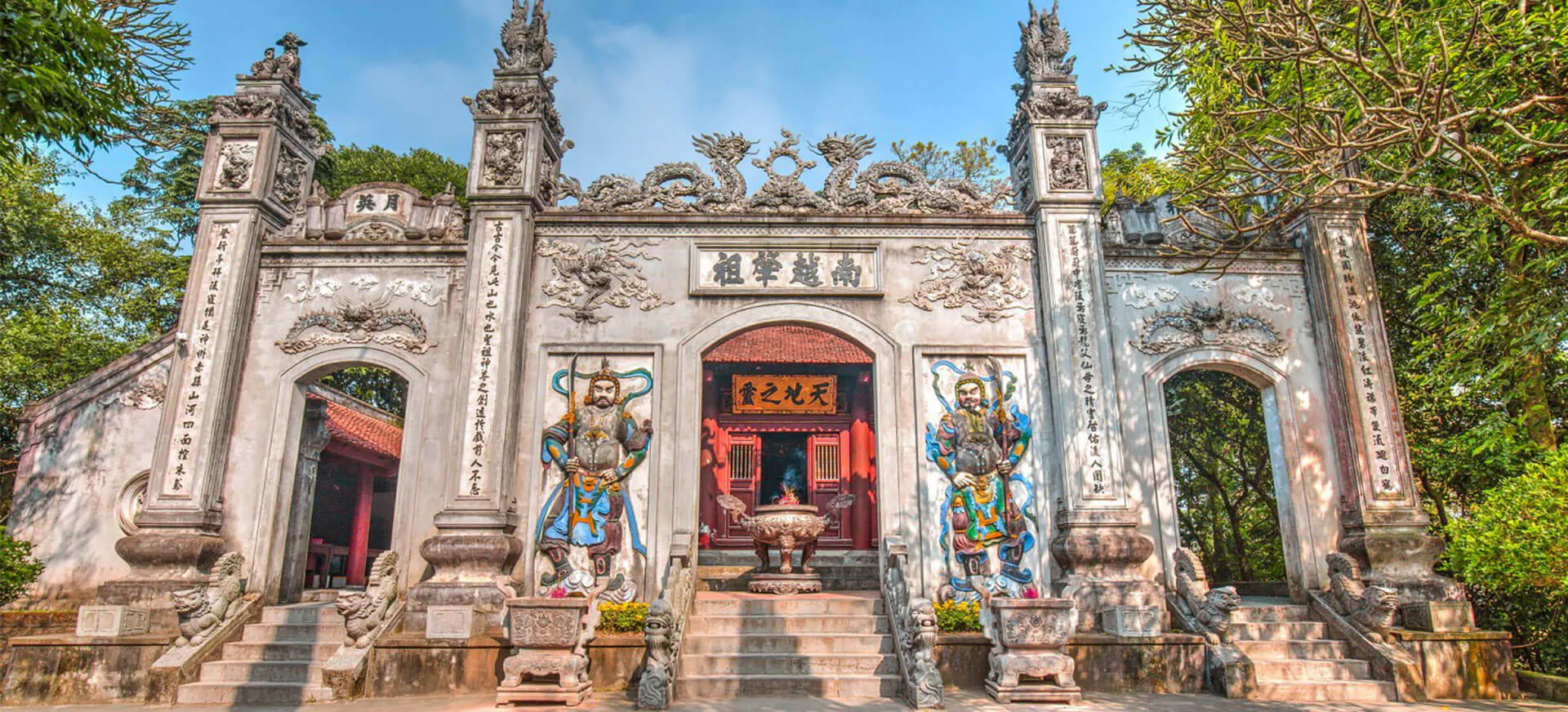
Hung Kings' Temple Relic Complex
The Hung Kings' Temple Relic Complex in Phu Tho is one of Vietnam's most important cultural and historical sites, dedicated to the legendary Hung Kings, traditionally regarded as the founders of the Vietnamese nation. Set on Nghia Linh Mountain, the complex includes ancient temples, shrines, gates, and monuments surrounded by forested hills. Visitors can explore the site's royal legends, traditional worship practices, and connections to Vietnamese identity while experiencing one of the country's most significant ancestral heritage destinations.
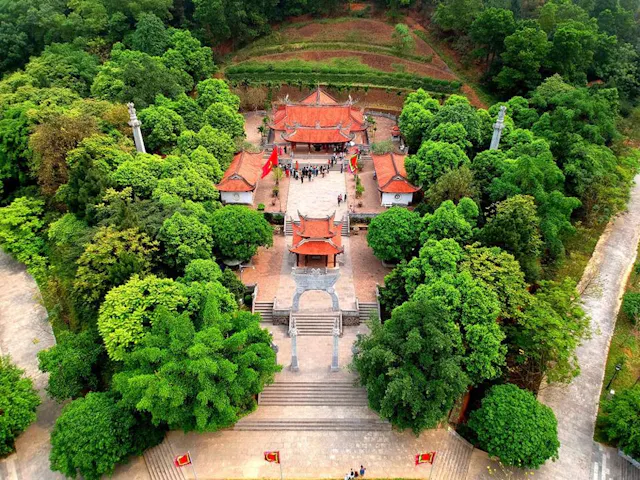
About Hung Kings' Temple Relic Complex
The Hung Kings' Temple Relic Complex is one of Vietnam's most important cultural and historical heritage sites, located on Nghia Linh Mountain in Phu Tho Province in northern Vietnam. The complex is dedicated to the Hung Kings, legendary rulers traditionally regarded as the founders of the Vietnamese nation and the first kings of the Van Lang state.
Surrounded by forested hills and peaceful countryside, the site is an important destination for understanding Vietnamese history, ancestral traditions, and national identity. It is also the center of the annual Hung Kings' Festival, one of Vietnam's most significant traditional commemorations.
What Is the Hung Kings' Temple Relic Complex?
The Hung Kings' Temple Relic Complex is a collection of temples, shrines, gates, monuments, and sacred sites built around Nghia Linh Mountain.
According to Vietnamese tradition, the Hung Kings ruled the ancient kingdom of Van Lang thousands of years ago. Although the historical details surrounding the early kings are intertwined with legend, their stories have become an important part of Vietnamese cultural identity.
The complex serves as a place where visitors can learn about these traditions and observe the continuing practice of ancestor worship.
Hung Kings and Vietnamese Origins
Vietnamese tradition traces the country's earliest royal lineage to the Hung Kings.
The legendary rulers are associated with the founding of Van Lang, an ancient state traditionally considered an early predecessor of Vietnam.
Stories about the Hung Kings are closely connected with the legend of Lac Long Quan and Au Co, who are said to have had one hundred children. According to the legend, their descendants became the ancestors of the Vietnamese people.
These stories continue to play an important role in Vietnamese culture.
Nghia Linh Mountain
The temple complex is located on Nghia Linh Mountain, a forested hill surrounded by the landscape of Phu Tho.
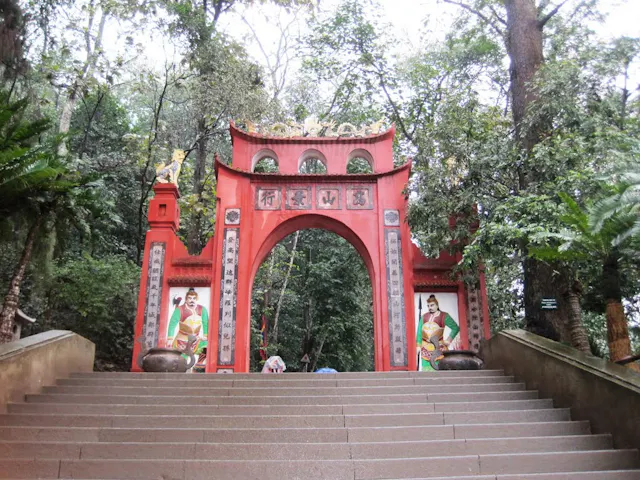
Visitors climb a series of paths and steps through the complex, passing several historic structures along the way.
The elevated location creates a peaceful atmosphere and provides views toward the surrounding countryside.
The mountain itself is considered sacred and is central to the religious significance of the complex.
Den Ha Temple
Ha Temple is one of the important temples within the complex.
According to tradition, it is associated with the early Hung Kings and their descendants.
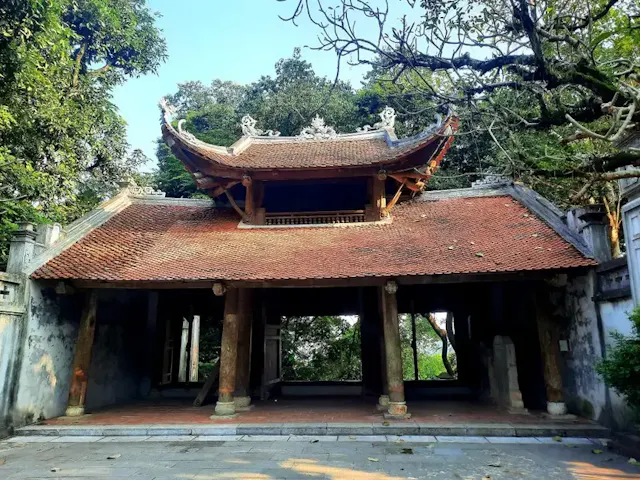
The temple's architecture reflects traditional Vietnamese religious design, with tiled roofs, wooden structures, courtyards, and decorative elements.
Visitors often stop here while following the pilgrimage route through the complex.
Den Trung Temple
Trung Temple is located higher on Nghia Linh Mountain.
According to local tradition, the Hung Kings used this area as a place for ceremonies and important activities.
The temple provides another opportunity to experience the traditional architecture and spiritual atmosphere of the site.
Thuong Temple
Thuong Temple is located near the summit of Nghia Linh Mountain and is one of the most important structures in the complex.
The temple is traditionally associated with worship of the Hung Kings and has long been a destination for pilgrims.
Its elevated location makes the surrounding landscape particularly impressive, especially on clear days.
Gieng Temple
Gieng Temple, or Well Temple, is associated with traditional legends concerning the Hung Kings.
The temple takes its name from a historic well located nearby.
According to local tradition, Princesses Tien Dung and Ngoc Hoa, daughters of the Hung King, used the well while living in the area.
The site adds another layer of mythology to the complex.
Hung Kings' Festival
The Hung Kings' Festival is held annually on the 10th day of the third lunar month.
The festival is an important occasion for Vietnamese people to honor their legendary ancestors.
Ceremonies may include traditional offerings, processions, music, performances, cultural activities, and other forms of commemoration.
The festival attracts large numbers of visitors and pilgrims from across Vietnam.
Ancestral Worship in Vietnam
The Hung Kings' Temple Complex reflects the importance of ancestor worship in Vietnamese culture.
Respect for ancestors is deeply embedded in many Vietnamese families and communities.
The Hung Kings represent a shared ancestral figure whose commemoration extends beyond individual families and connects people with a broader sense of national heritage.
Traditional Architecture
The temples feature characteristic elements of traditional Vietnamese architecture, including curved tiled roofs, wooden beams, carved decorations, courtyards, altars, and ceremonial gates.
Decorative motifs may include dragons, clouds, flowers, and other symbolic elements commonly found in Vietnamese religious architecture.
The combination of architecture, forest, and mountain landscape contributes to the sacred character of the site.
Best Time to Visit
The complex can be visited throughout the year.
For a quieter experience, travelers may prefer to visit outside the main festival period.
The spring months are particularly significant because the Hung Kings' Festival takes place during this season, but the area can become very crowded around the festival dates.
Early morning is generally a good time for walking through the temple complex.
How to Get to Hung Kings' Temple
The complex is located in Viet Tri City, Phu Tho Province, making it relatively accessible from Hanoi.
Travelers can reach the area by private car, taxi, bus, or organized tour.
Phu Tho can also be combined with other northern Vietnam destinations, including Hanoi, Tam Dao, and the mountainous provinces farther north.
Why Visit the Hung Kings' Temple Relic Complex?
The Hung Kings' Temple Relic Complex offers a unique opportunity to explore Vietnamese ancestral traditions, legends, religious practices, and national identity.
The temples on Nghia Linh Mountain are not simply historical buildings; they remain active places of worship where Vietnamese visitors continue to honor the Hung Kings.
For travelers interested in understanding the cultural foundations of Vietnam, a visit to this sacred complex provides valuable insight into how history, mythology, spirituality, and national identity are connected in Vietnamese culture.
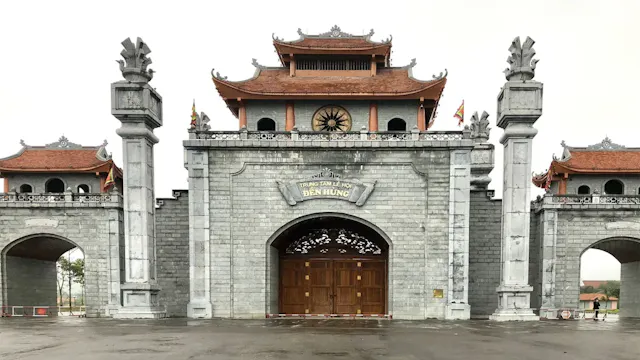
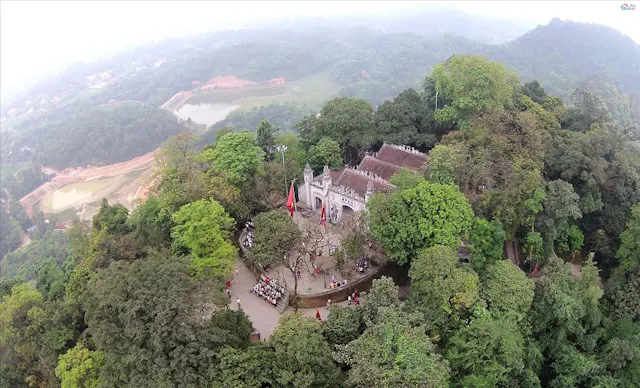
Hung Kings' Temple Relic Complex Photo Gallery
Browse stunning images of the Hung Kings' Temple Relic Complex and experience Vietnam’s most sacred ancestral site. Explore ancient temples, mountain landscapes, traditional ceremonies, and the cultural heritage of the Hung Kings through a curated photo collection.
How to Get to and Around Hung Kings' Temple Relic Complex
Bus and coach
Regular buses and limousine services operate between Hanoi and Viet Tri City, Phu Tho Province. The journey typically takes 1.5–2.5 hours. From Viet Tri, visitors can take a taxi or local transport to reach the temple complex, which is located about 10–15 kilometers away.
Train
Travelers can take a train from Hanoi Railway Station to Viet Tri Railway Station. The trip usually takes around 2–2.5 hours. From the station, taxis or motorbikes are available to reach the Hung Kings' Temple area on Nghia Linh Mountain.
Driving
Driving from Hanoi is one of the most convenient options. The route via National Highway 2 or expressways takes approximately 1.5–2 hours depending on traffic. Parking areas are available near the base of the temple complex.
Flying
The nearest major airport is Noi Bai International Airport in Hanoi, located about 90 kilometers away. After landing, visitors can continue by private car, taxi, or bus to Viet Tri City and then proceed to the temple complex.
Frequently Asked Questions About Hung Kings' Temple Relic Complex
What is the Hung Kings' Temple Relic Complex?
The Hung Kings' Temple Relic Complex is a group of temples located on Nghia Linh Mountain in Phu Tho Province. It is dedicated to the Hung Kings, the legendary founders of Vietnam, and is considered one of the most sacred cultural and historical sites in the country.
Is there an entrance fee to visit the Hung Kings' Temple Relic Complex?
Entry to the Hung Kings' Temple Relic Complex is generally free for visitors. However, some services such as parking or shuttle transport during festival seasons may require a small fee.
When is the best time to visit the Hung Kings' Temple Relic Complex?
The best time to visit is from February to April, especially during the Hung Kings’ Commemoration Festival held on the 10th day of the third lunar month. This period features cultural events, rituals, and large pilgrimages.
How long does it take to explore the Hung Kings' Temple Relic Complex?
Most visitors spend between 2 and 4 hours exploring the main temples, including Ha Temple, Trung Temple, and Thuong Temple. More time may be needed during festival seasons due to larger crowds and events.
Is the Hung Kings' Temple Relic Complex suitable for all visitors?
Yes, but visitors should be prepared for a moderate climb up stone steps and uneven terrain. Comfortable footwear and respectful clothing are recommended, especially since this is a sacred religious site.
Advertising box