
Tra Su Cajuput Forest
Tra Su Cajuput Forest is one of the Mekong Delta's most spectacular ecotourism destinations, located in An Giang Province near the Cambodian border. Famous for its emerald waterways, dense cajuput forests, rich birdlife, and peaceful natural scenery, the reserve offers unforgettable boat journeys through one of Vietnam's most beautiful wetlands. Visitors can observe rare wildlife, enjoy panoramic observation towers, and experience the tranquil atmosphere of this unique flooded forest. This guide covers everything you need to know before visiting Tra Su Cajuput Forest.
About Tra Su Cajuput Forest
Tra Su Cajuput Forest is one of the most beautiful wetland destinations in An Giang Province, southern Vietnam. Located near the town of Tinh Bien in the Mekong Delta, the forest is famous for its peaceful waterways, dense cajuput trees, floating vegetation, and rich ecosystem.
Covering a large wetland area, Tra Su provides an opportunity to experience a different side of the Mekong Delta beyond floating markets and agricultural landscapes. Visitors can travel by boat through narrow canals surrounded by greenery, observe birds and other wildlife, and enjoy the tranquil atmosphere of one of southern Vietnam's most distinctive natural attractions.
What Is Tra Su Cajuput Forest?
Tra Su Cajuput Forest is a protected wetland ecosystem dominated by cajuput trees, locally known as tràm.
The forest was developed as an important ecological area and has become one of An Giang's best-known nature attractions.
Its network of canals allows visitors to explore the wetland by boat.
The combination of waterways, trees, floating plants, and wildlife creates a landscape that feels very different from the surrounding rice fields and towns.
The Cajuput Trees
Cajuput trees are the defining feature of the forest.
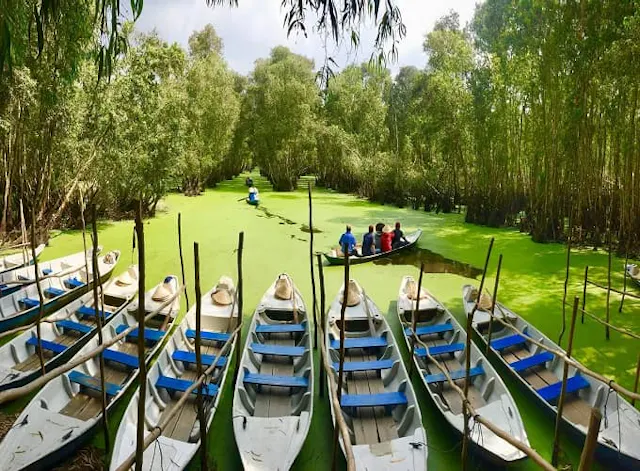
They grow densely along the waterways, forming a green canopy over many parts of the wetland.
The trees are well adapted to the region's wet conditions and contribute to the ecological character of the area.
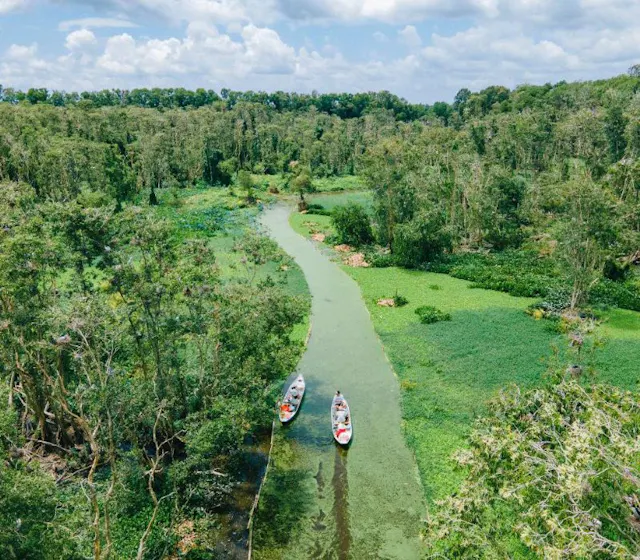
Traveling through the forest by boat allows visitors to see the trees from water level, creating a peaceful and immersive experience.
Exploring the Forest by Boat
A boat ride is the best way to experience Tra Su.
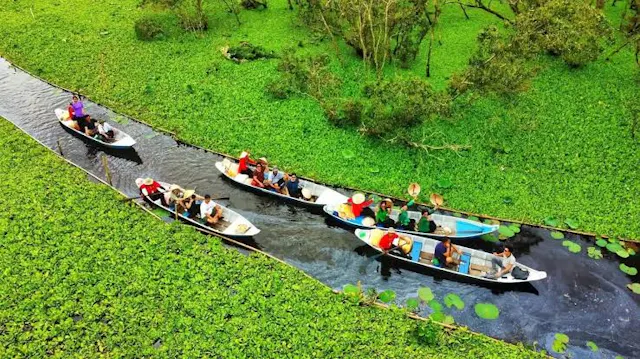
Visitors typically travel through narrow canals surrounded by cajuput trees and aquatic vegetation.
The slow pace allows travelers to appreciate the sounds and scenery of the wetland.
Small rowing boats are particularly atmospheric because they can move quietly through narrow waterways, while larger boats may be used for some sections of organized tours.
The exact experience can vary depending on water levels and seasonal conditions.
Floating Green Vegetation
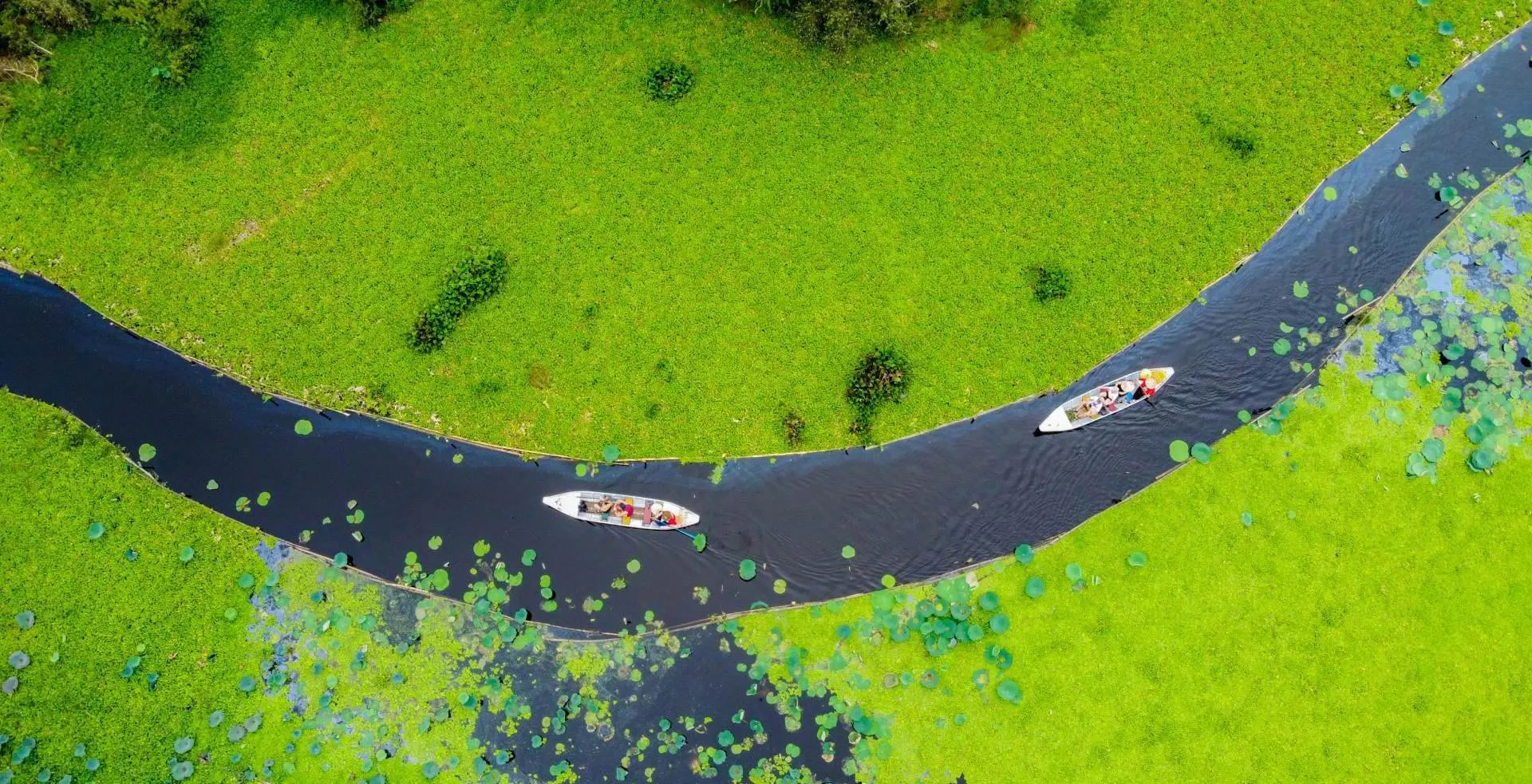
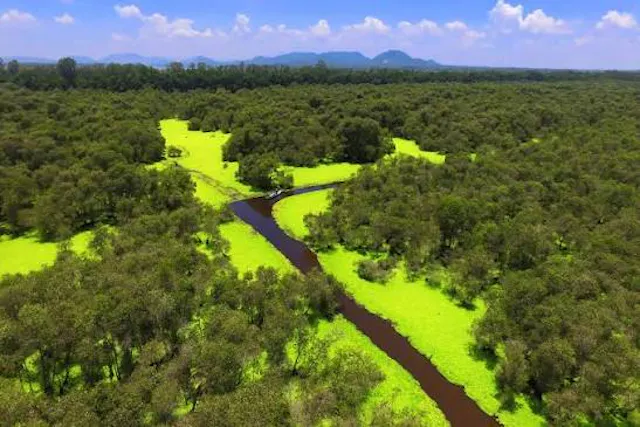
One of Tra Su's most recognizable features is the layer of green aquatic vegetation covering parts of the water surface.
When conditions are suitable, the canals can appear almost completely green, creating striking photographic views.
The contrast between the dark waterways, bright vegetation, and tall cajuput trees makes the forest one of the most visually distinctive wetlands in southern Vietnam.
Visitors should avoid disturbing the plants or wildlife while exploring the waterways.
Wildlife and Birdlife
Tra Su provides habitat for a variety of wetland species.
Birds are among the most noticeable wildlife in the forest, and visitors may see different species moving through the trees and waterways.
The wetland also supports fish, insects, reptiles, and other aquatic organisms.
Early morning is generally a good time for wildlife observation because the environment is quieter and temperatures are more comfortable.
However, wildlife sightings are never guaranteed and can vary by season.
The Observation Tower
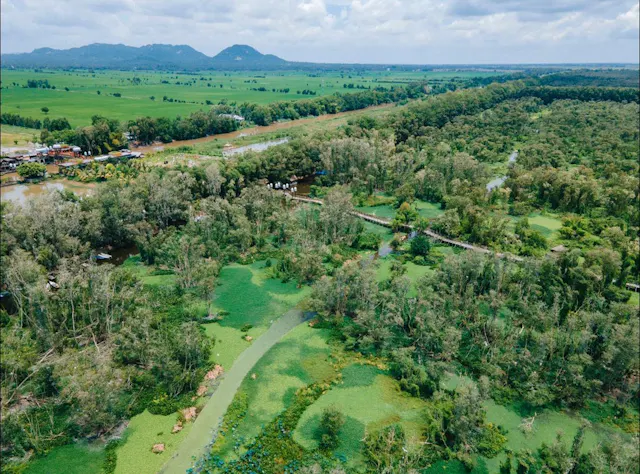
An observation tower provides visitors with a panoramic perspective over the forest.
From above, the dense green canopy stretches across the wetland, with waterways and surrounding agricultural landscapes visible in the distance.
The elevated view helps travelers appreciate the scale of the forest and provides excellent opportunities for landscape photography.
The Mekong Delta Wetland Environment
Tra Su represents an important type of wetland environment within the Mekong Delta.
The region contains an extensive network of rivers, canals, flooded areas, and agricultural land.
Wetlands such as Tra Su provide habitat for wildlife and contribute to the ecological diversity of the delta.
For travelers, visiting the forest offers a chance to understand that the Mekong Delta is not only a landscape of farms and floating markets but also a region of valuable natural ecosystems.
Best Time to Visit Tra Su
Tra Su can be visited throughout the year, but the landscape changes according to water levels and seasons.
The period when water levels are suitable for boat tours can provide particularly attractive conditions for exploring the canals.
The cooler hours of the morning are generally best for avoiding intense heat and observing wildlife.
Visitors should check current local conditions before traveling because water levels and access can change seasonally.
How to Get to Tra Su Cajuput Forest
Tra Su Cajuput Forest is located in Tinh Bien, An Giang Province, near the Cambodian border.
Travelers can reach the forest by road from Chau Doc, which is one of the main bases for exploring western An Giang.
The journey can be made by private car, motorcycle, taxi, or organized tour.
Because the forest is outside major urban centers, travelers should plan transportation in advance.
Things to Do at Tra Su
The main activity is exploring the forest by boat.
Visitors can also walk along designated paths, photograph the wetlands, climb the observation tower, and observe birds and other wildlife.
Some tours include opportunities to try local food or learn about the area's ecology and traditional way of life.
The destination is particularly suitable for travelers who enjoy nature, photography, and peaceful outdoor experiences.
Nearby Attractions
Tra Su can be combined with other attractions in An Giang and the Seven Mountains region.
Visitors can explore Sam Mountain, Ba Chua Xu Temple, Ta Pa Rice Fields, Ta Pa Pagoda, and the Khmer cultural sites around Tri Ton and Tinh Bien.
Combining these destinations creates an itinerary that includes wetlands, rice fields, mountains, temples, and local communities.
Why Visit Tra Su Cajuput Forest?
Tra Su Cajuput Forest offers travelers a peaceful introduction to the wetland ecosystems and natural landscapes of the Mekong Delta.
Its narrow waterways, cajuput trees, floating vegetation, birdlife, and elevated viewpoints create a memorable experience that is very different from Vietnam's busy cities and coastal resorts.
For travelers exploring An Giang, Tra Su is an excellent destination for nature, photography, wildlife observation, and experiencing the quieter side of southern Vietnam.
Tra Su Cajuput Forest Photo Gallery
Explore our gallery of Tra Su Cajuput Forest and discover the breathtaking beauty of one of the Mekong Delta's most iconic wetlands. Admire peaceful emerald waterways, lush cajuput forests, colorful birdlife, traditional rowing boats, panoramic observation towers, and the serene natural landscapes that make Tra Su an unforgettable ecotourism destination in southern Vietnam.
How To Get There Tra Su Cajuput Forest
Bus and coach
Regular coaches operate from Ho Chi Minh City to Chau Doc and Long Xuyen in An Giang Province. From Chau Doc, Tra Su Cajuput Forest is approximately 25 km away and can be reached by taxi, motorbike, or local transport in around 30–40 minutes.
Train
There is no railway service to An Giang Province. Travelers arriving by train can travel to Ho Chi Minh City first, then continue by coach or private vehicle to Chau Doc before heading to Tra Su.
Driving
Driving is a convenient option for visitors exploring the Mekong Delta. From Ho Chi Minh City, follow the expressways and National Highway 91 toward Chau Doc, then continue to Tinh Bien Town and Tra Su Cajuput Forest. The journey takes approximately 5–6 hours.
Flying
The nearest airports are Can Tho International Airport and Phu Quoc International Airport. From Can Tho Airport, travelers can continue by car or coach to Chau Doc before reaching Tra Su Cajuput Forest.
Frequently Asked Questions About Tra Su Cajuput Forest
What is Tra Su Cajuput Forest famous for?
Tra Su is famous for its emerald waterways covered with duckweed, dense cajuput (melaleuca) forests, rich birdlife, and peaceful boat journeys through one of Vietnam's most beautiful wetland ecosystems.
What activities can I do at Tra Su Cajuput Forest?
Visitors can take motorboat and rowing boat tours, climb the observation tower, go birdwatching, photograph wildlife, walk along forest boardwalks, and enjoy the tranquil scenery of the flooded forest.
When is the best time to visit Tra Su Cajuput Forest?
The best time to visit is during the flooding season from September to November, when water levels are high, bird activity is at its peak, and the forest becomes especially lush and photogenic.
How do I get to Tra Su Cajuput Forest?
Most travelers reach the forest from Chau Doc, which is about 30–40 minutes away by car or taxi. Chau Doc is accessible from Ho Chi Minh City by coach or private vehicle.
Is Tra Su Cajuput Forest suitable for families?
Yes. The boat rides are gentle and suitable for families, while the observation tower and walking areas are easy to access. Children, photographers, and nature lovers of all ages can enjoy the experience.
Advertising box