
Best Places to Visit in Can Tho
Can Tho is the vibrant heart of the Mekong Delta, offering lively floating markets, scenic rivers, lush fruit orchards, and rich cultural heritage. Visitors can experience the famous Cai Rang Floating Market, cruise along peaceful canals, explore ancient houses and pagodas, and discover authentic riverside communities. Whether you're interested in local culture, photography, eco-tourism, or unforgettable boat trips, this guide highlights the best places to visit in Can Tho for an authentic journey through Southern Vietnam's largest Mekong Delta city. Select 19 more words to run Humanizer.
On this page
To arrive in Cần Thơ is to enter the pulsating, aquatic circulatory system of the Mekong Delta. Positioned along the banks of the Sông Hậu—the largest distributary of the mighty Mekong—this city functions not merely as a regional transit hub, but as the enduring, historical epicenter of Southern Vietnamese riverine life. The atmosphere here is defined by an insistent, sensory layering: the early morning hum of thousands of long-tail boat engines, the sharp, pungent scent of fermented fish pastes drying in the heat, and the lush, vibrant emerald canopy of orchard-lined canals that carve through the city’s periphery. For the seasoned traveler, the ethnographic researcher, and the adventure journalist, identifying the best places to visit in can tho requires an intentional move away from the sterilized, high-speed tourist circuits and a deep dive into the authentic, slow-paced reality of the delta. Cần Thơ serves as the essential gateway for anyone who wishes to comprehend the complex interplay between ancient river traditions and the modern, developmental ambitions of a thriving delta economy. This guide navigates you through the quintessential experiences of the region, offering a curated exploration for those who prioritize cultural depth, historical authenticity, and a genuine, unvarnished connection to the river. By immersing yourself in the dawn rituals of its floating commerce and the quiet, shaded tranquility of its colonial-era heritage sites, you will discover that the true pulse of the Mekong beats loudest in the muddy, fertile waters of this extraordinary city.
The Iconic River Life: Water-Based Explorations
The geographical soul of Cần Thơ is undeniably its water. The city’s identity has been forged by its relationship with the river, and any serious exploration of the region must begin at the waterline. While the city itself offers a dense urban core, the true essence of the best places to visit in can tho is found on the Hau River, where traditional commerce persists in a form that has remained largely unchanged for generations.
The Cai Rang Floating Market Ritual
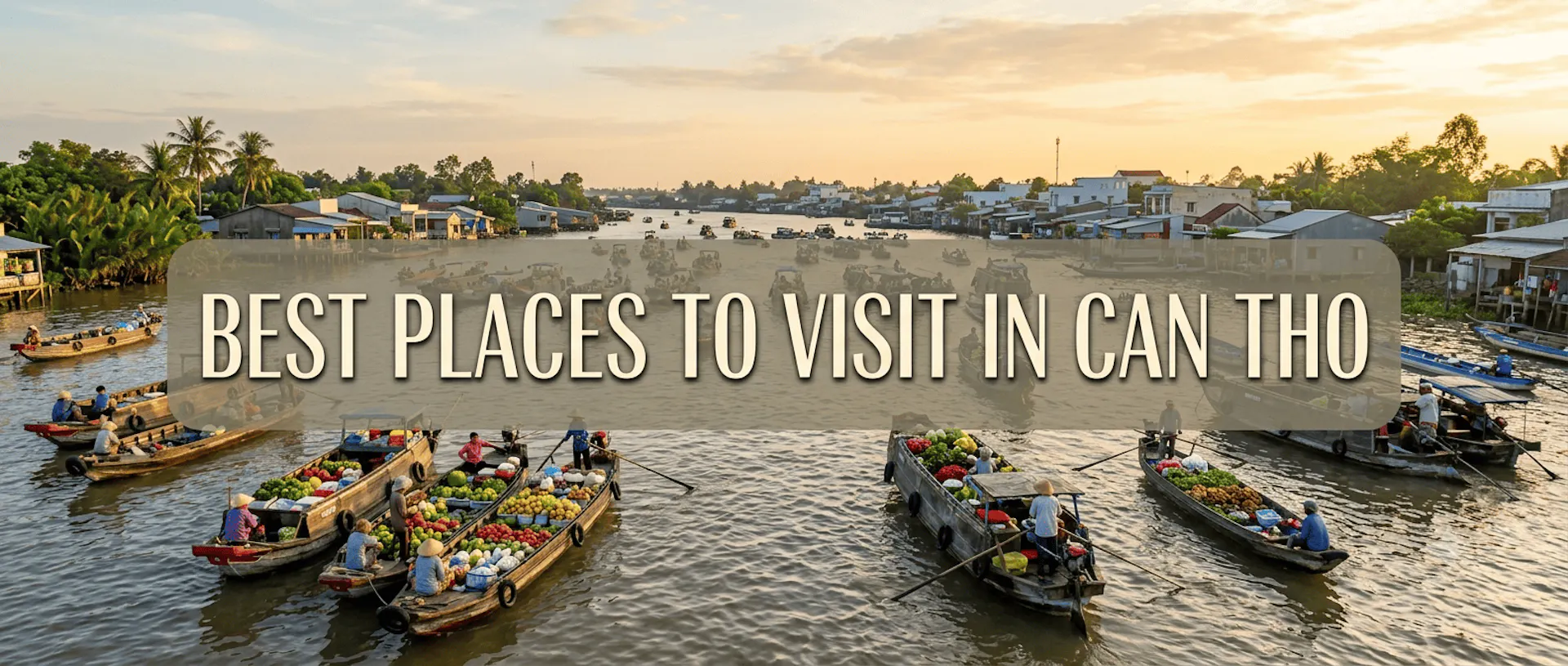
The Chợ nổi Cái Răng (Cai Rang Floating Market) is a living, breathing testament to the logistical brilliance of the Mekong Delta. To experience the market correctly, you must abandon the comfort of a late start and arrive at the riverfront well before the first light of dawn. This is not a static tourist attraction; it is a vital, high-volume logistics hub where massive, heavily laden boats arrive from the surrounding provinces, stacked high with mountains of pineapples, watermelons, pumpkins, and sweet potatoes. The most compelling aspect of the market is the cây bẹo, a long, slender bamboo pole hoisted at the bow of each boat, serving as a primitive but highly effective billboard to display the vessel’s produce. By observing the cây bẹo, you can decode the market's social and economic hierarchy: if a boat displays a specific fruit on its pole, that is what is for sale. The chaos is organized, relentless, and profoundly authentic. As the sun rises, the river becomes a swirling, vibrant mosaic of activity, with smaller, nimble boats weaving through the larger vessels to sell steaming bowls of bún riêu or hot, bitter coffee to the weary traders. This is the ultimate river-based logistical performance, and viewing it from the deck of a smaller, locally operated vessel provides the necessary perspective to appreciate how this market has served as the backbone of the delta's trade for centuries.
Navigating the Small Canals
After absorbing the high-velocity commerce of the main river, transitioning into the intimate canal network offers a stark, meditative contrast. Leaving the broad, turbulent currents of the Hau River and entering the narrow, shaded irrigation arteries that lead into the rural hinterland is a vital part of the Cần Thơ experience. This transition allows you to witness the "hidden" side of the delta, where the scale of human interaction shifts from massive, bulk-commodity trade to the quiet, daily maintenance of the family orchard. Hiring a local boatman to navigate these restricted, palm-lined waterways reveals a landscape of stilted, thatched-roof orchard homes, where life is governed by the rise and fall of the tide. As you glide silently past, you see the local farmers carefully pruning their fruit trees or tending to small, family-owned vegetable plots that feed the local markets. The transition from the cacophony of the floating market to the profound, rustling silence of the orchard canals is the essential duality of Cần Thơ; it is a city that thrives on both the aggressive, public expansion of river trade and the private, shielded cultivation of its fertile banks.
Architectural Heritage and Spiritual Depth
While the river serves as the province's circulatory system, its architectural and spiritual landmarks provide the fixed points of its historical identity. Cần Thơ’s built environment reflects the complex convergence of indigenous Southern Vietnamese traditions, the aesthetic influence of French colonial expansion, and the diverse spiritual lineages of the immigrant communities that helped construct the early infrastructure of the city.
The Binh Thuy Ancient House
The Nhà cổ Bình Thủy (Binh Thuy Ancient House) stands as the undisputed crown jewel of the city’s historical architecture. This site is far more than a colonial relic; it is an architectural masterpiece of fusion, representing the era when the landed elite of the Delta began to adopt Western design philosophies while remaining fiercely loyal to the ancestral, spiritual imperatives of their Southern Vietnamese heritage. The house is a breathtaking display of structural ingenuity, featuring a sprawling, ornate facade that utilizes arched porticos and high-ceilinged galleries typical of French design, yet the interior remains a pristine, intricately carved repository of traditional wood-carving, mother-of-pearl inlay, and feng-shui-oriented spatial planning. Stepping into the house is a temporal transition; you are enveloped by the cool, shadowed air of the central halls, where the original, intricately painted floor tiles and the imposing, hand-carved timber trusses remain in pristine condition. Visiting this house provides an essential perspective on the historical stratification of the delta, revealing the life of the wealthy landowners who once mediated the immense trade and agricultural output of the region.
The Spiritual Mosaic of Can Tho
The spiritual landscape of Cần Thơ is as diverse as the river’s tributaries. To explore the city’s religious heritage is to witness a profound cultural melting pot that has been actively cultivated over several centuries. The presence of ornate, fiercely vibrant Khmer pagodas serves as a reminder of the indigenous populations who have stewarded these lands long before the arrival of modern state structures. These pagodas are defined by their sharp, multi-tiered spires, deep ochre and crimson color palettes, and the intricate, menacing sculptures of nagas and yakshas that guard the entrance stairs. These structures offer a quiet, meditative space where one can witness the enduring, hypnotic Pali chanting of the monks, which provides a stark, spiritual contrast to the noisy, commercial bustle of the nearby urban markets. Coupled with these are the smaller, highly detailed Chinese temples, often dedicated to deities of the sea and trade, which highlight the immense contribution of the Chinese immigrant community to the early mercantile architecture of the city. Together, these sites form a spiritual mosaic that defines the inclusivity and historical depth of Cần Thơ, illustrating that the city’s character is not tied to a single, monolithic tradition, but to the constant, fluid convergence of many.
Immersion: Eco-Tourism and Local Crafts
Beyond the historical center, the province offers profound opportunities for immersive eco-tourism that prioritizes environmental responsibility and direct support for local agricultural families. Engaging with the delta’s "miệt vườn" culture is a requirement for those who wish to move beyond the superficial and participate in the actual life-sustaining activities of the region.
Orchard-to-Table Immersion
Visiting a miệt vườn (fruit orchard) in Cần Thơ is an exercise in appreciating the intensity of Southern horticulture. The most authentic way to experience this is to bypass the organized, large-scale tour complexes and instead seek out the smaller, family-run orchards that operate on the fringes of the canal network. Here, the experience is dictated by the season. Depending on your arrival, you may find yourself walking through vast, shaded groves of rambutan, longan, or the famously pungent durian, learning about the highly specific grafting and irrigation techniques that farmers have utilized to coax such immense productivity from the alluvial soil. This immersion offers a "farm-to-table" experience in the most literal sense; you are frequently invited to pluck the fruit directly from the branch and taste the difference that local sun and nutrient-dense river water make. This form of responsible eco-tourism ensures that your travel expenditure directly supports the small-scale orchard owners, who are currently struggling to maintain their traditional landholdings against the pressure of industrial modernization. It is a slow, tactile, and deeply rewarding experience that connects the visitor to the fundamental agrarian reality of the Delta.
Traditional Craft Workshops
The tactile heritage of the region is equally preserved in its local craft workshops. Watching the production of staples like bánh tráng (rice paper) is an enlightening experience in traditional, high-effort logistical planning. In small, communal workshops, you can observe the grueling, highly skilled process of steaming thin rice batter over massive, cloth-covered vats, carefully peeling the delicate sheets, and then spreading them onto bamboo lattices to dry in the equatorial heat. This process is intensely labor-intensive, requiring a physical synchronization between the artisan and the material that has been perfected over generations. Similarly, exploring the traditional bamboo weaving workshops provides insight into how the delta’s geography dictates its material culture. Bamboo is not merely a plant; it is the fundamental building block of life here, used to construct everything from the structure of the stilted homes to the fish traps and the baskets used for market commerce. Engaging with these artisans, who continue to utilize ancient tools and techniques, offers a profound appreciation for the ingenuity of the delta’s workforce and the historical necessity of utilizing the immediate, natural environment to build a sustainable, functional society.
Practical Field Logistics and Field Etiquette
Executing a seamless expedition through Cần Thơ requires a shift in expectation from the highly streamlined, professionalized tourism of the north to the more organic, family-oriented logistics of the deep south. Travel planning here is best managed with a degree of flexibility. When choosing a boat operator for the floating market or the orchard tours, prioritize identifying independent, locally managed boats rather than the high-capacity, multi-decked cruisers that are increasingly common. These larger vessels cause significant erosion along the riverbanks and are generally designed to insulate the traveler from the environment. An independent boatman, often operating a smaller, more maneuverable craft, will have the necessary expertise to navigate into the narrower, more secluded canals that the larger cruisers cannot reach, allowing you a much more authentic, intimate view of the delta life.
Regarding seasonal timing, the most productive months for visiting coincide with the peak fruit harvest. While the delta is lush year-round, timing your visit for the summer months—when the orchards are heavy with fruit and the river is in its state of maximum agricultural activity—is essential for truly appreciating the orchard culture. Cần Thơ can be incredibly humid, so planning your activities for the early morning and late afternoon hours, while reserving the midday heat for indoor historical sites or shade-covered orchard lounging, is a logistical necessity for a productive trip.
Finally, navigating the "Delta Way" requires a commitment to cultural etiquette that prioritizes respect for the privacy and the livelihoods of those who live along the waterways. The residents of the canal-side homes are engaged in a constant, delicate balance of commercial and private activity. When you visit these areas, approach with humility, keep your voice at a moderate level, and always request permission before capturing close-range photographs of local residents or their private property. Supporting local markets directly, rather than relying on tourist-targeted souvenir stalls, is the most direct way to participate in the local economy. By showing genuine interest in their agricultural practices and respecting the sanctity of their river-based homes, you transform your presence from a transient visitor into a guest, ensuring that the delta’s hospitable spirit remains intact for generations of travelers to come.
Conclusion: Finalizing the Best Places to Visit in Can Tho
Cần Thơ remains the most vital, authentic, and historically dense destination for those who wish to understand the true pulse of the Mekong Delta. By moving beyond the high-speed transit hubs and prioritizing the slow, deliberate pace of the river—from the dawn rituals of the floating market to the shaded tranquility of the ancient colonial estates—travelers are rewarded with a profoundly beautiful truth about the resilience and the ingenuity of Southern riverine life. As you synthesize this guide to finalize your itinerary, ask yourself where your true interests lie. Are you more drawn to the raw, high-velocity commerce of the river-based logistical hubs, or does the architectural majesty and historical silence of the land-based heritage sites provide the primary motivation for your journey into the vibrant heart of the Mekong?
> Read more: Can Tho Travel Guide

By Roy Trinh
Editor
Roy Trinh is a travel writer and destination expert at Go Visit Vietnam, dedicated to helping travelers discover the beauty, culture, and diversity of Vietnam. Through well-researched travel guides, practical itineraries, local insights, and authentic recommendations, Roy shares valuable information to inspire memorable journeys across the country. From vibrant cities and breathtaking landscapes to regional cuisine and cultural heritage, every guide is created to help visitors experience Vietnam with confidence and curiosity.
Frequently Asked Questions About the Best Places to Visit in Can Tho
What are the best places to visit in Can Tho?
The city's top attractions include Cai Rang Floating Market, Ninh Kieu Wharf, Binh Thuy Ancient House, Can Tho Museum, Ong Pagoda, lush fruit orchards, and scenic canals that showcase the unique culture of the Mekong Delta.
What is Can Tho famous for?
Can Tho is best known for the famous Cai Rang Floating Market, vibrant river life, fresh tropical fruit orchards, authentic Mekong Delta cuisine, and its role as the largest city in the Mekong Delta region
How many days should I spend in Can Tho?
A two to three-day stay is ideal for exploring the floating market, taking river cruises, visiting fruit orchards, enjoying local cuisine, and discovering the city's cultural and historical attractions.
Is Cai Rang Floating Market worth visiting?
Absolutely. Cai Rang Floating Market is one of Vietnam's largest and most famous floating markets. Visiting early in the morning allows travelers to experience lively trading activities, local breakfast boats, and authentic Mekong Delta river culture.
Can I visit Can Tho year-round?
Yes. Can Tho is a year-round destination. The dry season offers comfortable weather for sightseeing, while the rainy season brings lush landscapes, abundant tropical fruits, and vibrant river scenery that make the Mekong Delta especially beautiful.
Advertising box