
Best Places to Visit in Dong Nai
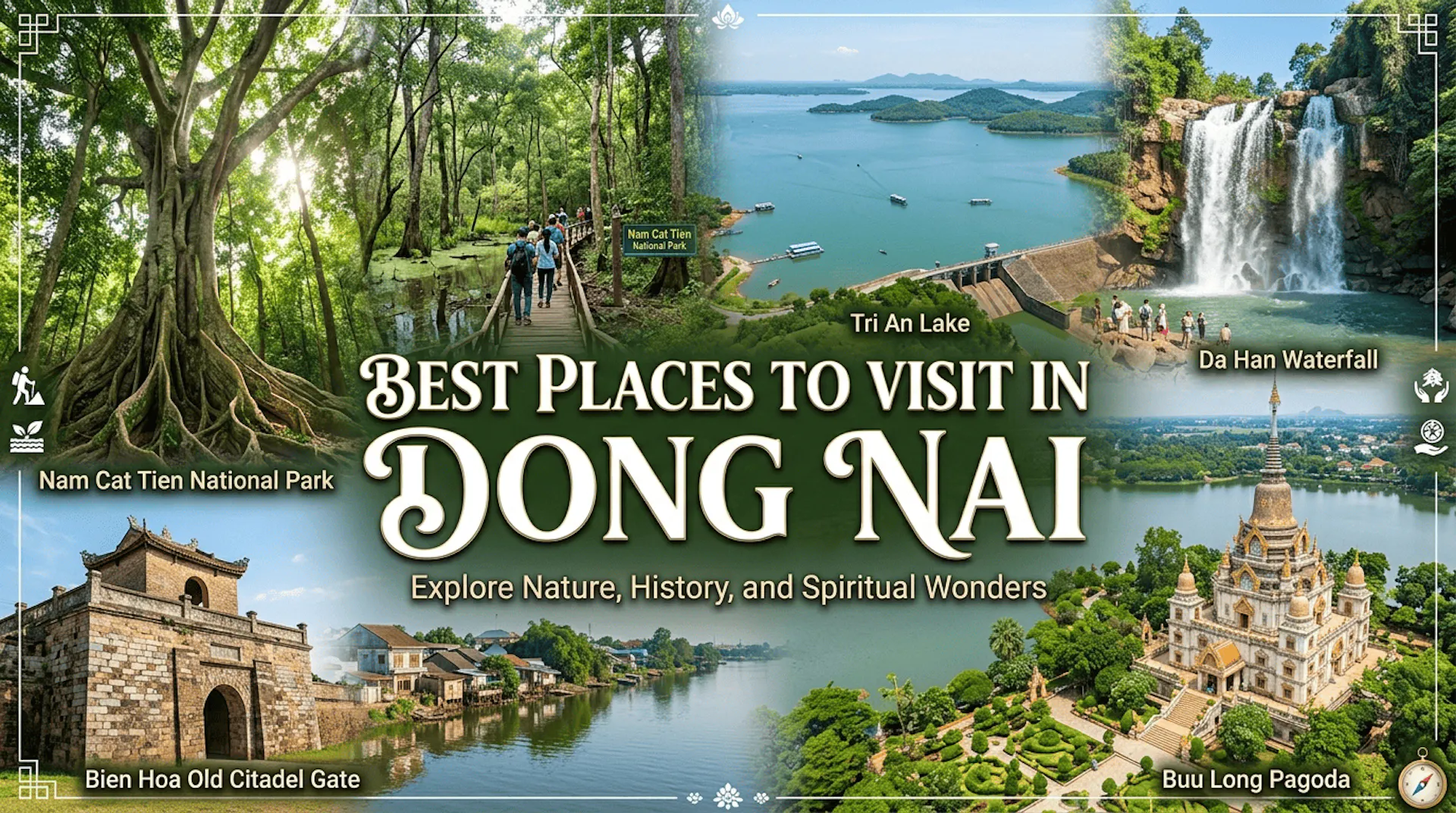
Dong Nai is a diverse destination where pristine forests, scenic lakes, waterfalls, and cultural attractions come together just a short distance from Ho Chi Minh City. Visitors can explore the rich biodiversity of Cat Tien National Park, relax at Tri An Lake, discover peaceful fruit orchards, visit historic temples, and experience authentic countryside life. Whether you're looking for outdoor adventures, wildlife encounters, eco-tourism, or relaxing weekend escapes, this guide highlights the best places to visit in Dong Nai for an unforgettable journey.
On this page
To venture eastward from the frantic, high-density urban sprawl of Ho Chi Minh City into the province of Đồng Nai is to witness a profound, almost jarring geographical transition. Here, the low-lying urban congestion abruptly yields to a sprawling, undulating landscape dominated by ancient primeval rainforests, vast hydroelectric reservoirs, and dramatic granite topographies that hint at the proximity of the Southern Highlands. For the discerning traveler, the seasoned ecological researcher, and the journalist documenting the fading frontiers of Southern Vietnam, identifying the best places to visit in dong thap—or rather, the neighboring powerhouse province of Đồng Nai—requires a departure from the typical tourist circuits. This province is frequently underestimated, often relegated to the status of a mere industrial corridor, yet beneath its surface lies a complex, highly resilient ecological landscape. Đồng Nai serves as the vital gateway between the southern riverine plains and the rugged, forested interior, offering a rare, authentic encounter with the region’s original, untamed identity. Whether you are seeking the absolute silence of a UNESCO biosphere reserve or the meditative, water-bound tranquility of a massive, man-made lake, this province provides a rigorous and deeply rewarding escape. By delving into its multifaceted terrain, you will discover that Đồng Nai is not merely a transit point, but a primary destination for those who prioritize the raw, unvarnished integrity of the natural world over the manufactured comforts of mainstream leisure tourism.
The Wild Heart: Nam Cát Tiên National Park
The undisputed jewel of the province, and indeed one of the most critical conservation zones in all of Southeast Asia, is the Vườn quốc gia Nam Cát Tiên (Nam Cát Tiên National Park). Spanning a colossal area across Đồng Nai and its neighboring provinces, this site is a designated UNESCO World Biosphere Reserve that protects some of the last remaining lowland tropical rainforests in the country. To enter this domain is to submit to the overwhelming, multi-layered sensory experience of a living, breathing ecosystem that has existed in various forms for millennia.
Entering the Rainforest
The act of entering the rainforest is an immersive, highly technical endeavor that requires a departure from standard, passive sightseeing. The forest floor here is a dense, intricate world of rotting leaf litter, ancient buttress roots, and persistent, opportunistic climbing vines that thrive in the shadow of giants. For the serious nature enthusiast, this is the premier destination in the south for authentic wildlife tracking. The expertise required to successfully interpret the forest’s signs—the claw marks on tree trunks, the subtle disturbance of ground vegetation, and the distant, territorial vocalizations of primates—is best facilitated by a professional, site-specific guide. These experts possess the intimate, generational knowledge necessary to navigate the forest’s internal geography, turning what would otherwise be a chaotic, overwhelming wall of green into a coherent, deeply understandable biological landscape.
The Crocodile Lake Expedition
A central component of any rigorous exploration of the park is the trek to Bàu Sấu (Crocodile Lake). This journey is far more than a simple hike; it is a pilgrimage into one of the most vital wetland habitats in the region. The trail winds through dense, towering secondary and primary forest, eventually breaking out into a vast, open wetland complex that serves as a sanctuary for the critically endangered Siamese crocodile. The raw, untamed beauty of the lake, particularly when the sunlight reflects off the dark, stagnant water and highlights the prehistoric, submerged limbs of ancient, petrified trees, is a visceral reminder of a world untouched by human industry. Conservation efforts here have been monumental, and standing on the viewing platform, watching the surface of the lake for the telltale ripple of a predator, provides a profound connection to the ongoing, highly precarious struggle for ecological survival in the modern era.
Night Safari Insights
Perhaps the most iconic, highly authoritative activity in Nam Cát Tiên is the night safari, which demands a heightened sense of patience and respect for the nocturnal environment. Utilizing a high-clearance, open-air vehicle, you traverse the grasslands and the forest fringes where nocturnal wildlife emerges from the depths. This is not a guaranteed sighting experience; rather, it is an exercise in ecological observation. With the aid of a powerful, focused spotlight, you scan the high canopy for the reflective, amber glow of animal eyes—perhaps a sambar deer, a nocturnal civet, or a prowling leopard cat. The success of this experience is entirely predicated on your ability to remain absolutely silent and observant, allowing the forest to slowly reveal its secrets rather than attempting to force a dramatic encounter. It is a humble, deeply respectful engagement with the rhythm of a world that operates entirely independent of human activity.
Water-Bound Serenity: Trị An Lake and Bửu Long
While the rainforest represents the province's wild, untamed spirit, its hydrological landscapes, specifically the massive Hồ Trị An (Trị An Lake), provide a stark, serene counterpoint. Created by the damming of the Đồng Nai River, this man-made reservoir has transformed into a tranquil, water-bound oasis that offers an entirely different, reflective perspective on the region’s geography.
Trị An Lake: The Water Oasis
Trị An Lake is a testament to the region’s massive hydrological scale. Spanning across a vast, shimmering expanse, the reservoir is dotted with dozens of small, quiet islands that have become increasingly popular for those seeking a "slow-travel" experience. Camping on these islets, particularly during the cool, dry months, allows you to immerse yourself in the local fishing culture. As night falls, the surface of the water is illuminated by the distant, bobbing lights of local fishermen casting nets from their traditional long-tail boats. This is a landscape where time seems to expand; there are no rapid transit schedules here, only the gentle, rhythmic lapping of water against the shoreline and the distant, haunting sounds of the delta's aquatic life. It is the perfect venue for those who wish to disconnect, prioritize meditative observation, and participate in the quiet, simple rhythms of the fishing communities that call the reservoir’s perimeter their home.
Bửu Long: The Ha Long Bay on Land
In close proximity to the urban center of Biên Hòa lies the Bửu Long area, a geological anomaly frequently characterized as a "Ha Long Bay on land." This site is defined by its dramatic granite topography, where steep, weathered cliffs rise sharply from the surface of calm, artificial lakes created by centuries of local stone quarrying. The site possesses a unique, spiritual atmosphere, as various Buddhist temples and pagodas have been expertly tucked into the granite crevices and perched upon the cliffside overlooks. Climbing the stairs to these sanctuaries offers a panoramic view that beautifully juxtaposes the rugged, industrial history of the stone quarries with the serene, manicured landscapes of the modern park. The juxtaposition is striking, serving as a reminder of how the local population has successfully repurposed the scars of industrial labor into spaces of spiritual reflection and cultural immersion.
Cultural and Culinary Heritage: The Flavor of the Earth
Beyond its ecological and geological assets, Đồng Nai possesses a rich, deeply localized cultural heritage centered on agricultural expertise. The region is particularly renowned for its fruit production, specifically the unique, highly sought-after pomelos that thrive in the specific micro-climate of the river islands.
Tan Trieu Pomelo Village
The Làng bưởi Tân Triều (Tan Trieu Pomelo Village) is not merely an orchard; it is an agricultural institution. Located on an islet surrounded by the Đồng Nai River, the village has spent generations refining the cultivation of the Tân Triều pomelo—a fruit renowned for its incredibly sweet, fragrant flesh and its ability to thrive in the specific alluvial silt of the island. Cycling through the narrow, shaded paths of the pomelo orchards offers a masterclass in regional agrarian expertise. The experience is best rounded out by sampling the pomelo-based cuisine, where the fruit is utilized in innovative, savory applications, such as pomelo salads tossed with dried shrimp and local herbs, or pomelo-infused rice rolls. This is a culinary tradition that highlights the intersection of local ingenuity and environmental favor, showcasing how a single, highly specialized ingredient can define the gastronomic character of an entire district.
The Historical and Spiritual Path
The cultural depth of the province is further revealed by landmarks like Chùa Núi Chứa Chan (Chứa Chan Mountain). Rising to be the second-highest peak in Southern Vietnam, the mountain serves as a significant site of religious pilgrimage. The trek up the mountain’s slopes is paved with a dense, complex series of pagodas and shrines that represent a vital cross-section of Vietnamese spiritual life. As you climb, you encounter the mountain’s famous "three-rooted banyan tree," a magnificent, centuries-old specimen that holds significant spiritual weight. The summit provides a panoramic view of the vast, rolling plains of Đồng Nai, offering an vantage point that beautifully illustrates the province’s position as a gateway between the southern riverine plains and the rugged interior.
Practical Field Logistics and Travel Etiquette
Executing a seamless expedition through Đồng Nai requires a pragmatic, well-planned approach to logistics, as the province’s diverse attractions are geographically dispersed and require distinct modes of transport. For the traveler arriving from Ho Chi Minh City, the ease of access is significant. Private car hire is the most efficient and authoritative method for reaching remote sites like Nam Cát Tiên, as it grants you the necessary freedom to manage your own schedule, especially when returning from late-night safaris or early-morning lake boat trips. Local buses are functional for reaching the urban hubs of Biên Hòa, but they are generally ill-suited for the remote, "off-the-beaten-path" ecological sites that define the province’s true appeal.
Environmental responsibility is the cornerstone of travel etiquette in Đồng Nai. When visiting Nam Cát Tiên or the reservoir islets, you are an guest in a fragile, sensitive ecosystem. Always ensure that your presence leaves no trace; pack out every scrap of waste, avoid any interaction that might disturb the natural behaviors of the wildlife, and remain strictly on the designated trails to protect the forest’s delicate soil structure. Similarly, when engaging with temple sites like those found on Chứa Chan Mountain, treat these spaces as active sites of devotion rather than static tourist attractions. Maintain a modest dress code, observe the quiet of the surroundings, and always request permission before capturing photographs of local pilgrims or monks. By practicing this level of restraint and respect, you ensure that the delicate balance between the region’s growing popularity and its long-term ecological and spiritual conservation remains stable.
Regarding the timing of your visit, the seasonal cycle is a critical logistical factor. The dry season, typically spanning from December to April, is the undisputed gold standard for forest trekking and comfortable lake-side camping, as the reduced rainfall ensures that the trails are navigable and the mosquito activity is relatively suppressed. Conversely, the rainy season, occurring from May to November, brings a lush, hyper-saturated green vibrancy to the landscape, but it requires that you bring high-quality, professional-grade waterproof gear and remain prepared for sudden, travel-disrupting storms. Choosing your window based on these specific, weather-driven goals is the single most effective way to ensure a productive and authentic expedition.
Conclusion: Defining the Best Places to Visit in Dong Nai
Đồng Nai is a province of profound variety, serving as the essential, often-overlooked bridge between the sprawling riverine lowlands and the wild, untamed interior of the Southern Highlands. From the primeval, bioluminescent rhythms of the Nam Cát Tiên rainforest to the tranquil, expansive shores of the Trị An Lake, the province offers an unvarnished, authentic exploration of the natural world that remains refreshingly free from the influence of high-speed mass tourism. It is a destination that demands patience and rewards those who are willing to look beyond the surface of the industrial landscape. As you finalize your plans, the ultimate question remains: are you more compelled by the raw, untamed, and deeply silent depths of the Nam Cát Tiên rainforest, or does the meditative, wide-open tranquility of the Trị An Lakefront provide the primary motivation for your journey into this overlooked ecological frontier?
Read more: Dong Nai Travel Guide

By Roy Trinh
Editor
Roy Trinh is a travel writer and destination expert at Go Visit Vietnam, dedicated to helping travelers discover the beauty, culture, and diversity of Vietnam. Through well-researched travel guides, practical itineraries, local insights, and authentic recommendations, Roy shares valuable information to inspire memorable journeys across the country. From vibrant cities and breathtaking landscapes to regional cuisine and cultural heritage, every guide is created to help visitors experience Vietnam with confidence and curiosity.
Frequently Asked Questions About the Best Places to Visit in Dong Nai
What are the best places to visit in Dong Nai?
Dong Nai's top attractions include Cat Tien National Park, Tri An Lake, Giang Dien Waterfall, Buu Long Tourist Area, Long Khanh fruit orchards, and several historic temples and pagodas. These destinations offer a mix of nature, adventure, and local culture.
What is Dong Nai famous for?
Dong Nai is famous for its rich biodiversity, tropical forests, waterfalls, freshwater lakes, fruit orchards, and eco-tourism destinations. It is also one of the best places in Southern Vietnam for wildlife observation and outdoor activities.
How many days should I spend in Dong Nai?
A two to three-day trip is ideal for visiting the province's major attractions, especially Cat Tien National Park and Tri An Lake. Travelers interested in hiking, camping, or wildlife photography may want to stay longer.
Is Dong Nai suitable for eco-tourism?
Yes. Dong Nai is one of Vietnam's leading eco-tourism destinations. Visitors can enjoy jungle trekking, birdwatching, kayaking, cycling, camping, and wildlife experiences in Cat Tien National Park and surrounding natural areas.
Can I visit Dong Nai as a day trip from Ho Chi Minh City?
Yes. Many attractions in Dong Nai are only one to two hours from Ho Chi Minh City, making the province an excellent day-trip destination. However, staying overnight allows visitors to fully enjoy the natural scenery, outdoor activities, and peaceful countryside atmosphere.
Advertising box