
Best Places to Visit in Gia Lai
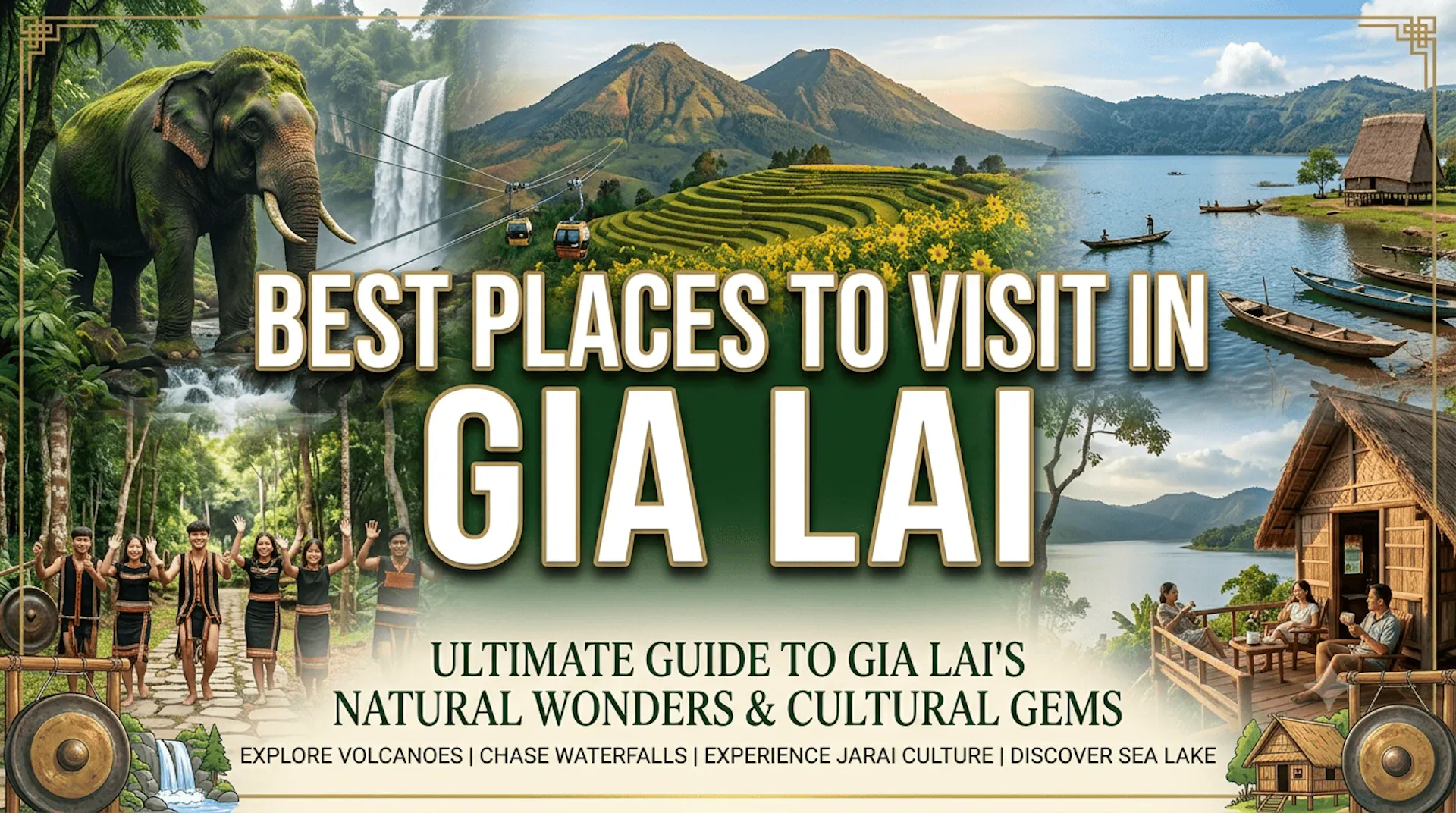
Gia Lai is a breathtaking destination in Vietnam's Central Highlands, known for its volcanic landscapes, pine forests, waterfalls, coffee plantations, and rich ethnic heritage. Visitors can explore Pleiku, admire the tranquil beauty of Bien Ho Lake, discover traditional villages, hike through stunning natural scenery, and experience authentic Highland culture. Whether you're seeking peaceful landscapes, outdoor adventures, or cultural discoveries, this guide highlights the best places to visit in Gia Lai for an unforgettable journey through one of Vietnam's most scenic highland provinces.
On this page
To ascend into Gia Lai is to move beyond the tourist-saturated circuits of the southern coast and enter a landscape defined by the raw, unvarnished power of the Central Highlands. Here, the topography is not merely scenic; it is a geologic narrative written in deep, iron-rich basaltic soil and volcanic formations that have been meticulously shaped by millennia of tectonic pressure and montane rain. For the journalist who has traversed these plateaus and the ecologist who has studied their fragile, high-altitude biodiversity, the province reveals itself as a land of profound contrasts. It is a region where the haunting, rhythmic beat of gongs echoes through misty Jrai and Bahnar villages, where dormant volcanoes provide the stage for agricultural life, and where the silence of the deep forest reserves remains the ultimate reward for the patient traveler. Identifying the best places to visit in gia lai requires a deliberate shift in tempo; it demands a willingness to engage with a frontier that prioritizes indigenous heritage and geological history over the convenience of urban infrastructure. This master guide is designed for the traveler who seeks deep immersion—a journey into a province that acts as a living monument to Vietnam’s diverse, ancient, and resilient highland soul.
The Volcanic & Natural Frontier: Exploring the Geological Heartland
The geological identity of the province is dominated by the remnants of ancient volcanic activity. These landscapes are the essential foundation of the region, providing the nutrient-dense soil that sustains the highland agricultural economy and the dramatic topography that defines its most iconic natural sites.
Biển Hồ (Sea Lake): The Volcanic Eye of Pleiku
Standing on the ridge overlooking Biển Hồ (Sea Lake) in the early hours of the day is a meditative experience that highlights the province's profound geological depth. Known locally as the "eye of Pleiku," this body of water occupies the crater of an ancient, extinct volcano, creating a perfectly circular basin that is fed by mountain springs rather than external rivers. The sensory experience of the lake is one of absolute stillness; the water is clear, expansive, and often shrouded in the persistent, cool highland mist that defines the plateaus. For the local Jrai and Bahnar communities, this lake is more than a natural feature—it is a spiritual landmark, a vital water source, and a site of cultural history that has sustained populations for generations. To observe the lake from the peripheral viewpoints is to witness the landscape in a state of prehistoric preservation. It is a site that demands silence, and the lack of commercial infrastructure on its immediate banks ensures that the visitor can truly contemplate the scale of the volcanic event that once defined this entire region.
Chư Đăng Ya: The Basaltic Mountain Odyssey
The dormant volcano of Chư Đăng Ya offers a singular, physical engagement with the province’s basaltic topography. Unlike a traditional mountain peak, this volcano is a gentle, sprawling crater that has been cultivated by local farmers for generations, creating a vibrant, multi-layered mosaic of green fields and earth-toned ridges. The hiking experience here is defined by the seasons: during the harvest, the slopes are a tapestry of agricultural production, while in the late autumn, the crater is ignited by the bright, yellow hue of wild sunflowers. The logistics of the ascent are straightforward but require physical stamina; the path is relatively exposed, making early morning the only authoritative window for a safe and comfortable climb. As you reach the rim, the panoramic view provides an essential, bird’s-eye perspective on the surrounding plateaus, illustrating the sheer reach of the ancient lava flows that settled the region. It is a hike that rewards the traveler not with jagged peaks, but with a profound understanding of how the highland population has successfully adapted to life on the slopes of an ancient geological titan.
The K50 Waterfall: A Deep Forest Expedition
For the traveler who prioritizes adventure over accessibility, the journey to the Thác K50 is a serious, deep-forest expedition. Located within the complex terrain of the Kon Chư Răng Nature Reserve, this waterfall is a testament to the raw, untamed power of the highland river systems. The path to the falls is not a casual stroll; it is a trek that requires navigating through thick, primary montane forest, where the humidity is constant and the vegetation is dense. This site represents the untamed core of the province, where ecological integrity is prioritized over mass accessibility. Professional hikers and nature enthusiasts must approach this area with a deep commitment to environmental responsibility, as the reserve protects a critical biodiversity corridor. Navigating these forest paths requires an authoritative guide who understands the seasonal water levels and the complex trail networks. It is a serious, multi-hour commitment that strips away the superficiality of modern travel, offering in its place the roar of the falls, the scent of damp earth, and the humbling realization of the forest's immense, untamed scale.
Cultural Heartbeat: Indigenous Traditions and Communal Architecture
The human geography of Gia Lai is as ancient and layered as its basaltic foundations. The province serves as a repository for the customs, architecture, and spiritual rituals of the Jrai and Bahnar people, whose cultures are defined by their deep, ancestral connection to the forest and the mountain plateaus.
The Architecture of the Nhà Rông
The Nhà Rông—the soaring, thatched-roof communal house—is the architectural and spiritual anchor of the highland village. These structures are instantly recognizable by their massive, steeply pitched roofs that can reach heights of over twenty meters, serving as both a visual beacon and a functional, social center for the entire village. Entering a Nhà Rông is an act of significant cultural weight. It is the primary site for village meetings, the resolution of local disputes, and the hosting of community festivals. Travelers interested in experiencing this architectural heritage must understand that they are entering a private, community-owned space. The most authoritative way to learn about these structures is to engage directly with village elders, perhaps through a local guide who can facilitate a respectful, honest conversation. It is an opportunity to learn about the intricate craftsmanship involved in the construction, the spiritual symbolism of the wooden totems adorning the posts, and the ongoing efforts of the local people to preserve these structures against the pressures of urbanization.
Preserving the Space of Gong Culture
The Cồng chiêng (Gong) culture of the Central Highlands is recognized by UNESCO as an Intangible Cultural Heritage of Humanity, and in Gia Lai, it is far more than a performative act. The gongs are viewed as a living, resonant bridge between the earthly realm and the divine spirits, and they are essential for marking the significant rites of passage in Jrai and Bahnar life. To witness a communal gong performance is to be enveloped by a soundscape that is both haunting and deeply rhythmic. Travelers should prioritize seeking out these rituals in their original, village-based context rather than in staged, downtown auditoriums. A respectful observation involves maintaining a discreet distance, avoiding disruptive photography, and understanding that the performance is a communal prayer rather than a public event. Engaging with the gong culture requires a willingness to sit, to listen, and to witness the importance of these rituals in maintaining the social fabric of the village, providing a rare and necessary window into the spiritual syncretism of the highland plateaus.
Authentic Village Immersion
Authentic village immersion is defined by the quality of the traveler’s interaction. Instead of seeking out commercialized "ethnic villages" near the main highways, one should venture toward the remote, interior wards where life remains dictated by the agricultural cycle. Here, the primary objective is observation and genuine, humble engagement. You might encounter artisans who are still weaving traditional textiles, farmers who are working the red-soil plots, or elders who are sharing the oral histories of their clans. The authoritative way to engage with these communities is to hire local guides—individuals who are themselves members of the Jrai or Bahnar communities and who can interpret the nuances of the customs and the linguistic landscape. Supporting community-led tourism means ensuring that your economic contribution stays within the village, whether by purchasing locally crafted basketry or by commissioning meals from local families. This model of tourism supports the preservation of heritage rather than its dilution, ensuring that your presence serves as an acknowledgement of the richness of these cultures rather than an intrusive, disruptive force.
The Highland Heartland: Pleiku and Beyond
Pleiku city functions as the administrative and cultural hub of the province, providing a necessary, modern counterpoint to the remote village life of the plateau. Yet, the city’s identity is firmly rooted in the surrounding volcanic plains, creating a unique urban atmosphere that feels distinctly "highland."
Exploring the Highland Capital
The city of Pleiku is an essential hub for any highland expedition, serving as the primary node for logistical support and cultural contextualization. The urban vibe here is characterized by a relaxed, high-altitude tempo. The coffee houses in Pleiku offer a sensory experience that differs significantly from their lowland counterparts; the brew is exceptionally bold, reflecting the high-grade, high-altitude robusta beans cultivated on the surrounding basaltic ridges. These cafes are the urban social hubs, where the history of the highlands is continuously discussed and reinterpreted. Exploring the city involves visiting the local markets, where the produce clearly signals the highland geography—wild tubers, forest-foraged greens, and the dense, dark soil clinging to the root vegetables. Pleiku is a city that bridges the historical and the modern, with its streets acting as the primary transit point for the movement of highland agricultural goods and the center for its evolving cultural expressions.
The Coffee and Pepper Landscape
The agricultural rhythm of Gia Lai is driven by the production of coffee and pepper, crops that require the specific nutritional profile of the basaltic plateaus. Driving through the countryside, you witness a landscape of endless rows of coffee bushes, their leaves dusted with the signature red-brown soil of the region. Visiting small-scale, sustainable plantations offers a deeper understanding of the labor involved in the highland economy. You can observe the intricate, manual harvesting processes and learn about the sustainable farming practices that are currently being integrated into the plateau’s agricultural output. The landscape here is a testament to the success of highland agriculture; it is a highly productive, meticulously managed terrain that remains the primary economic lifeline for the majority of the population. Engaging with the plantation owners provides a perspective on the economic realities of the plateau, showcasing the transformation of the region from a remote frontier into a global supplier of high-demand, high-quality agricultural commodities.
Spiritual Landmarks
Sites such as the Minh Thanh Pagoda serve as vital bridges between the region’s historical aesthetics and the modern, urban spiritual life of the plateau. The pagoda is characterized by its intricate, multi-tiered roof and a design language that draws inspiration from East Asian architectural tradition while remaining uniquely situated within the highland climate. It is not merely a place of worship; it is an architectural landmark that showcases the craftsmanship and the artistic evolution of the province. Visiting the pagoda provides a serene, contemplative counterpoint to the logistical activity of Pleiku city. The pagoda’s integration into the landscape—overlooking the plateau—creates an atmosphere of stillness that is central to the local spiritual life. It is an essential site for understanding how the highland population has built spaces that encourage introspection and provide a visual manifestation of their evolving relationship with Buddhist practice.
Practical Field Logistics and Travel Etiquette
Executing a seamless and highly authoritative expedition through Gia Lai requires a pragmatic approach to the logistics of a remote, highland frontier. Getting around the province is best managed by balancing the independence of self-driven transport with the logistical security provided by local expertise. While the main arterial roads in Pleiku are well-maintained, the true essence of the province—the remote Jrai villages and the volcanic crater trails—requires navigating unpaved, seasonal paths that can be treacherous. For independent explorers, a high-quality, mountain-ready motorbike is the ultimate tool. However, for those navigating these remote areas for the first time, hiring a local driver is the authoritative choice. A local driver who understands the seasonal road conditions and the specific linguistic nuances of the region provides a level of security and cultural accessibility that the independent traveler cannot achieve alone. They act as the essential bridge, facilitating interactions and ensuring that your transit through the province is conducted with the necessary level of caution and cultural respect.
The ethics of travel in Gia Lai are centered on the concept of respectful engagement. The highland regions are increasingly sensitive to the impacts of rapid, unmanaged tourism. "Leave No Trace" is not a suggestion—it is a mandatory ethic. When exploring the volcanic craters or the hidden forest waterfalls, you must carry every scrap of waste back out with you and avoid any behavior that might disrupt the local wildlife or the environmental balance of the plateaus. Furthermore, respect for the privacy and the cultural traditions of the indigenous villages is the mark of a seasoned, responsible traveler. Always request permission before entering a village or capturing images of community rituals. Be aware that these villages are not static historical sites; they are functioning, modern communities. Your presence should be characterized by humility, low-impact observation, and a commitment to ensuring that your travel supports, rather than degrades, the cultural and environmental heritage of the region.
Regarding seasonal planning, the province effectively operates on a two-season cycle: the dry season and the rainy season. The dry season—running roughly from November through April—is the authoritative window for volcanic hiking and remote trekking. The skies are clear, the basaltic roads are firm, and the festival schedule is the most active. However, the shoulder months, particularly at the very beginning of the rainy season, offer a lush, vibrant green landscape that provides a unique, contemplative beauty. By choosing your arrival window based on your specific goals—the dramatic, clear-sky volcanic hikes or the quiet, atmospheric cultural immersion—you maximize the logistical efficacy of your trip. The "Gia Lai way" of travel is one of intentionality, where the success of the journey is defined by the quality of your engagement with the land and its people, not just the number of sights you have visited.
Conclusion: Finalizing Your Journey Through the Highlands
Gia Lai stands as the most essential, unvarnished highland destination in Vietnam, offering a complex, textured landscape that rewards the inquisitive mind and the adventurous spirit. By prioritizing an itinerary that balances the physical challenge of the dormant volcanic craters with the meditative silence of the communal village houses, you ensure an expedition that is as deeply rewarding as it is visually arresting. The province does not merely offer sights to be seen; it offers a profound, complex cultural and geological tapestry to be decoded. As you consider your journey through these mountains, ask yourself where your priorities truly lie. Are you more drawn to the physical, dramatic challenge of the volcanic mountain ascent, or does the prospect of participating in the intimate, quiet cultural rituals of an indigenous highland village provide the primary motivation for your journey into the pristine heart of the Central Highlands? The highlands await, offering a depth that can only be discovered by those willing to seek it out with patience, humility, and a precise understanding of the seasonal and historical pulse of the land.
> Read more: Gia Lai Travel Guide

By Roy Trinh
Editor
Roy Trinh is a travel writer and destination expert at Go Visit Vietnam, dedicated to helping travelers discover the beauty, culture, and diversity of Vietnam. Through well-researched travel guides, practical itineraries, local insights, and authentic recommendations, Roy shares valuable information to inspire memorable journeys across the country. From vibrant cities and breathtaking landscapes to regional cuisine and cultural heritage, every guide is created to help visitors experience Vietnam with confidence and curiosity.
Frequently Asked Questions About the Best Places to Visit in Gia Lai
What are the best places to visit in Gia Lai?
Some of Gia Lai's top attractions include Pleiku, Bien Ho Lake (T'Nung Lake), Chu Dang Ya Volcano, Phu Cuong Waterfall, Kon Ka Kinh National Park, traditional ethnic villages, and scenic coffee plantations.
What is Gia Lai famous for?
Gia Lai is famous for its volcanic plateaus, beautiful lakes, waterfalls, coffee plantations, ethnic minority cultures, and the peaceful landscapes of Vietnam's Central Highlands.
How many days should I spend in Gia Lai?
A stay of three to four days is ideal for exploring Pleiku, visiting natural attractions, discovering ethnic villages, hiking volcanic landscapes, and experiencing the province's unique Highland culture.
Is Gia Lai suitable for nature lovers?
Absolutely. Gia Lai offers stunning lakes, forests, waterfalls, volcanoes, national parks, and mountain scenery, making it an excellent destination for hiking, photography, camping, and eco-tourism.
Can I visit Gia Lai throughout the year?
Yes. Gia Lai is a year-round destination. The dry season is perfect for sightseeing and outdoor activities, while the rainy season transforms the highlands into lush green landscapes with beautiful waterfalls and vibrant countryside scenery.
Advertising box