
Best Places to Visit in Ho Chi Minh City
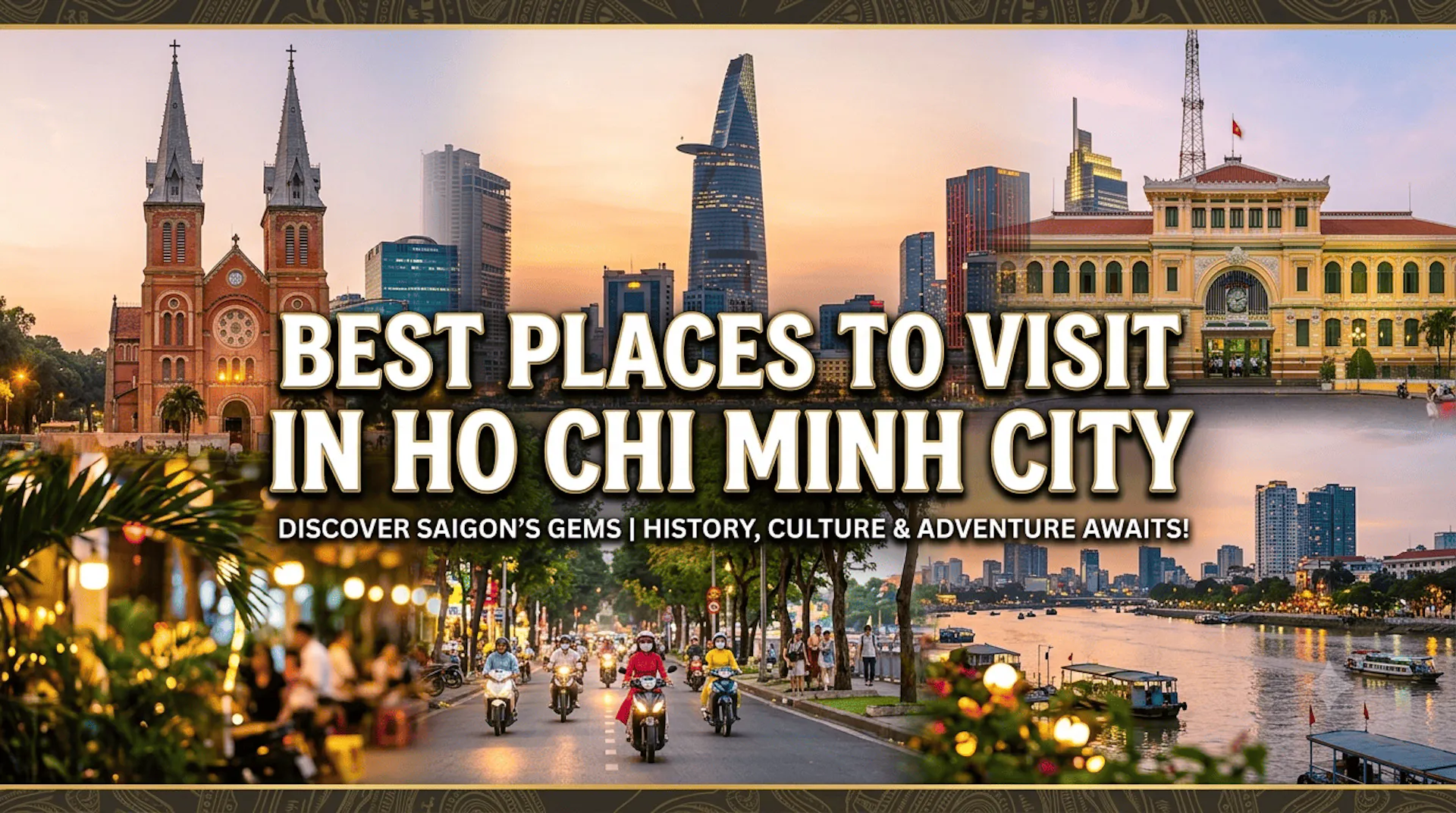
Ho Chi Minh City is Vietnam's dynamic economic and cultural hub, where historic landmarks blend seamlessly with modern skyscrapers and vibrant street life. Visitors can explore iconic attractions such as Ben Thanh Market, the War Remnants Museum, Notre-Dame Cathedral, and the Saigon Central Post Office while discovering hidden cafés, rooftop bars, and lively neighborhoods. Whether you're interested in history, culture, shopping, food, or nightlife, this guide highlights the best places to visit in Ho Chi Minh City for an unforgettable urban adventure.
On this page
To arrive in Ho Chi Minh City, colloquially and affectionately still known as Saigon, is to surrender oneself to a sensory landscape that operates on a frequency of unrelenting kinetic energy. This is a city that does not merely exist; it vibrates. For the seasoned urban explorer, the historian, and the traveler who seeks the marrow of a place rather than its surface, Saigon is a puzzle of layered identity. It is a metropolis where the rusted, ornate wrought iron of French colonial balconies leans precariously toward the sleek, mirrored glass of Southeast Asia's tallest skyscrapers. To identify the best places to visit in ho chi minh city is not a matter of checking boxes on a static itinerary, but an act of active participation. One must learn to navigate the labyrinthine hẻm (alleys) where the city’s true social narrative is written, absorb the cacophony of thousands of motorbikes weaving through the streets, and recognize that every bowl of Phở served on a plastic stool is as much a landmark as any marble monument. This master guide is designed to navigate you through these layers, providing the historical context and the practical, street-level logistics required to move beyond the superficial tourist experience. Whether you are seeking the colonial echoes of the city center, the atmospheric, incense-drenched quietude of the Chinese quarter, or the cutting-edge creative energy of the contemporary youth districts, Saigon demands a traveler who is present, observant, and ready to engage with a city that is perpetually in the process of becoming something new.
Echoes of the Past: Architectural and Historical Landmarks
The architectural footprint of Saigon is a dramatic testament to its volatile history, serving as a physical archive of colonial ambition, nationalist struggle, and the subsequent rush toward rapid, late-twentieth-century globalization. Understanding these sites requires an acknowledgment that the city’s built environment is a fusion, adapted specifically to the demands of a tropical climate.
The Colonial Legacy
The heart of District 1 remains dominated by the architectural remnants of French Indochina, though to view these merely as "colonial" is to miss their adaptation. The Saigon Central Post Office, designed by Alfred Foulhoux—and often mistakenly attributed to Gustave Eiffel—is a structural masterpiece that marries a Gothic, Renaissance, and French exterior with a functional, cast-iron interior. It remains a working postal hub, a rare endurance in a digital age. Adjacent to this, the Notre Dame Cathedral of Saigon, built entirely of materials imported from France, anchors the district with its twin bell towers. These structures were not simply transplanted; they were modified with high ceilings and wide apertures to encourage airflow, a silent admission of the French colonial masters to the crushing humidity of the Vietnamese tropics. The Saigon Opera House, with its flamboyant, ornate facade, completes this trio, serving as a visual centerpiece that once hosted the cultural elite of the colonial era and today functions as the primary venue for the city's performing arts. To visit these sites is to understand the imposition of European administrative aesthetics on an ancient, alluvial landscape.
The War Heritage
One cannot authentically interpret the modern Vietnamese psyche without engaging with the sites of the twentieth-century struggle. The War Remnants Museum presents a harrowing, visceral account of the Vietnam War, focused largely on the impact of the conflict on the civilian population. It is a site of profound gravity, requiring a sober, intellectual engagement rather than a casual stroll. Similarly, the Independence Palace—formerly the Norodom Palace and later the South Vietnamese presidential residence—stands as a frozen moment in history. The bunker systems, the command rooms, and the preserved decor of the 1970s provide an uncanny sense of the final, desperate days of the Republic of Vietnam. These sites are not about glorifying victory; they are about understanding the profound, structural changes that the conflict forced upon the city, creating the backdrop against which all modern development in Saigon is measured.
The Hidden Heritage of Cholon
Moving westward from the colonial center leads to the sensory intensity of Cholon, the city’s historic Chinese district. This is a landscape of profound contrast, where the air is thick with the scent of burning sandalwood incense from the Thien Hau Pagoda, a temple dedicated to the sea goddess that serves as a spiritual anchor for the local Chinese-Vietnamese community. The pagoda’s roof is a masterpiece of intricate dioramas made from glazed ceramic, depicting scenes from Chinese mythology that seem to defy the relentless erosion of the tropical rain. Nearby, Binh Tay Market functions as the district's commercial heart. Unlike the tourist-focused Bến Thành Market in District 1, Binh Tay is a wholesale, logistics-heavy labyrinth where the sheer volume of trade is dizzying. The architecture here is distinctly Chinese-influenced, with clock towers and sweeping, tiled roofs that contrast sharply with the French administrative style of the city center. Exploring this district is an exercise in cultural layering, revealing how the community has maintained its distinct linguistic and ritualistic traditions while operating as a vital part of the city’s economic machine.
Urban Pulse: Street Life and Modern Dynamics
The Saigon of the present is defined by its ability to synthesize tradition with a hyper-modern appetite for development. This is a city that lives in the streets, where the boundary between public space and private commerce is remarkably thin.
The Art of the "Hẻm" (Alleyway) Exploration
The true soul of Saigon is found in the hẻm, the sprawling, labyrinthine network of alleys that honeycomb the city. These are not merely service passages; they are the city’s living rooms, workshops, and kitchens. A hẻm can be as wide as a two-lane road or as narrow as a human shoulder. Within them, you will find multi-generational families sharing meals, local artisans crafting furniture, and the subtle, everyday trade that keeps the city running. To explore a hẻm is to witness the city's urban density at its most functional. You may walk past a grandmother shelling beans, a motorbike mechanic repairing a clutch, and a child finishing homework, all within a ten-meter span. For the traveler, these alleys are a goldmine of genuine urban sociology, but they must be navigated with profound respect. You are walking through the private space of thousands of residents; prioritize observation, avoid loud, disruptive behavior, and recognize that the hẻm is the foundation upon which the city’s social fabric is woven.
Saigon’s Modern Skyline and Lifestyle
Contrasting this deep-rooted urban density is the rapid ascent of districts like District 7 and the Landmark 81 precinct. This is the new Vietnam, a place of ambitious glass architecture and high-end commercial spaces that speak to the city’s contemporary intellectual and economic life. The youth of Saigon are driving a massive creative boom, evidenced by the rise of artisanal coffee shops that focus on local bean varieties and indie art galleries that showcase work by Vietnam’s rapidly emerging contemporary artists. These spaces are not mere imitators of Western trends; they are evolving, localized hubs where the youth reflect on their heritage through the lens of modern design. The social importance of these cafes—where students and young professionals sit for hours, deep in discussion—is the modern-day equivalent of the historical village square. It is a city that is actively engaged in its own transformation, a process that is as exhilarating to witness as it is difficult to pin down.
Street Food Culture as a Landmark
In Saigon, the street food stall is not just a place to eat; it is an institution. Places like the stalls frequented by the "Lunch Lady" or the iconic Bánh mì hubs that have been operated by the same families for fifty years are essential landmarks. These stalls are the testing grounds for the city’s culinary diversity, where the focus is entirely on the intensity of flavor and the speed of service. A bowl of Bún bò Huế or Bánh canh served on a small, blue plastic stool is an experience that cannot be replicated in a formal dining room. The quality of the food is monitored by the local crowd, who are notoriously demanding and loyal. When you see a stall where the turnover is constant and the local workers are packed shoulder-to-shoulder, you are seeing a masterclass in local commerce. These are the culinary landmarks of the city, where the quality of the broth, the freshness of the herbs, and the precision of the seasoning are the only credentials that matter.
Immersion: Beyond the Tourist Path
To truly comprehend the metropolitan area, one must look toward the spaces where the city breathes. The urban parks and the burgeoning creative districts serve as the release valves for a city that is otherwise defined by its immense density.
Green Sanctuaries and Urban Parks
Tao Dan Park is a rare, expansive sanctuary in the heart of the district, serving as the city’s primary green lung. During the early morning, the park is transformed into a hive of communal activity, with residents practicing Tai Chi, playing badminton, and gathering in small groups to socialize. For the traveler, this is an essential site for observing the social health of the city. Watching the morning rituals here provides a deep, understated look into how residents maintain communal harmony amidst the chaos of urban life. Similarly, the riverfront walkways along the Saigon River offer a space for the city to pause. As the sun sets, these areas become magnets for those looking to catch the evening breeze, reflecting a side of Saigon that is both relaxed and deeply observant, providing a necessary, atmospheric counterpoint to the relentless daytime roar of the motorbikes.
The Creative Scene
The creative district of District 2 and the various hidden galleries scattered throughout the city center reflect a thriving intellectual scene that remains largely invisible to the typical transit-tourist. These art cafes and indie spaces serve as incubators for contemporary Vietnamese identity, where art is used as a vehicle for discussing rapid urbanization, historical memory, and the future of the nation. Engaging with these spaces is an essential aspect of understanding the city’s current trajectory. These venues are not just places to view art; they are social hubs for the city’s writers, designers, and students, providing an intellectual depth that defines the contemporary Saigon mind. It is a scene that is constantly shifting, demanding a traveler who is curious enough to look for the less-obvious doors and engage with the people behind them.
Practical Logistics and Urban Etiquette
Navigating the logistical realities of Saigon requires a pragmatic, well-planned approach. The city's traffic, once an overwhelming spectacle, has become a predictable, fluid system to the locals. For the visitor, the primary rule for crossing the street is the "steady pace"—do not stop, do not retreat, and maintain a constant, visible movement so that the motorbikes can adjust their flow around you. It is a dance of mutual trust that takes time to master. For longer-distance travel, ride-hailing apps are the absolute gold standard for transit. They are efficient, cost-transparent, and eliminate the need for complicated linguistic negotiations, allowing you to reach any point in the city with minimal friction.
Cultural etiquette in Saigon is centered on the concepts of respect and modesty. When visiting any of the city’s temples or pagodas, ensure your shoulders and knees are covered; this is not just a policy, it is a marker of your respect for the spiritual life of the city. Beyond the dress code, the value of engagement cannot be overstated. Locals are generally incredibly warm and appreciative when they see a visitor who makes an effort to learn the basic, polite phrases of the language or shows a genuine interest in their work and history. The "Saigon way" of interacting is personal; it prioritizes eye contact, a nod of acknowledgment, and a willingness to sit and share a moment of conversation. By prioritizing this level of engagement, you shift your status from an anonymous consumer of sights to a participant in the city’s social life.
Timing is the final logistical piece. The city operates on a "two-act" cycle. The high-energy, morning act is when the streets are filled with the commerce, the market trade, and the intense, morning-rhythm activities of the city center. The evening act, particularly after the sun sets and the street lighting takes over, is when the city relaxes into its atmospheric, culinary-focused reality. Plan your heavy, architectural exploration for the morning and early afternoon, and save the late afternoon and evening for the street food markets and the riverfront strolls. This rhythm respects the city’s own internal pace and ensures you are always in the right place at the right time.
Conclusion: Finalizing Your Journey Through the Dynamic Metropolis
Ho Chi Minh City is a city that defies simple classification, standing as the essential, transformative heart of modern Vietnam. By refusing to conform to the narrow expectations of a historical site or a modern business hub, the city continues to carve out an identity that is fluid, resilient, and deeply evocative. From the colonial echoes of the central post office to the subterranean, communal energy of the alleyway stalls, every aspect of Saigon serves as a profound education in the history of the nation and the rapid, innovative spirit of its people. As you synthesize this guide to finalize your itinerary, ask yourself where your true interests lie. Are you more drawn to the historical, colonial gravity of the central architectural landmarks, or does the prospect of participating in the bustling, high-energy modern street life provide the primary motivation for your journey? Which aspect of the city—the echo of the past or the vibrant, unpredictable promise of the future—are you most excited to document first in your own Saigon expedition?
Read more: Ho Chi Minh Travel Guide

By Roy Trinh
Editor
Roy Trinh is a travel writer and destination expert at Go Visit Vietnam, dedicated to helping travelers discover the beauty, culture, and diversity of Vietnam. Through well-researched travel guides, practical itineraries, local insights, and authentic recommendations, Roy shares valuable information to inspire memorable journeys across the country. From vibrant cities and breathtaking landscapes to regional cuisine and cultural heritage, every guide is created to help visitors experience Vietnam with confidence and curiosity.
Frequently Asked Questions About the Best Places to Visit in Ho Chi Minh City
What are the best places to visit in Ho Chi Minh City?
Some of the city's top attractions include Ben Thanh Market, the War Remnants Museum, Notre-Dame Cathedral, Saigon Central Post Office, Independence Palace, Nguyen Hue Walking Street, Bitexco Financial Tower, and the Cu Chi Tunnels.
What is Ho Chi Minh City famous for?
Ho Chi Minh City is famous for its rich history, vibrant street food, French colonial architecture, bustling markets, modern skyline, lively nightlife, and its role as Vietnam's largest commercial and cultural center.
How many days should I spend in Ho Chi Minh City?
Three to four days are ideal for exploring the city's major attractions, enjoying local cuisine, visiting museums, shopping at traditional markets, experiencing nightlife, and taking day trips to destinations like the Cu Chi Tunnels or the Mekong Delta.
Is Ho Chi Minh City suitable for first-time visitors to Vietnam?
Absolutely. Ho Chi Minh City is one of the best starting points for first-time visitors thanks to its international airport, excellent accommodation, diverse attractions, vibrant food scene, and convenient transportation connections to the rest of Vietnam.
Can I explore Ho Chi Minh City without joining a tour?
Yes. Most attractions are easily accessible by taxi, ride-hailing apps, buses, or on foot. Independent travelers can comfortably explore museums, markets, historical sites, cafés, and local neighborhoods while enjoying the city's energetic atmosphere.
Advertising box