
Best Places to Visit in Hue
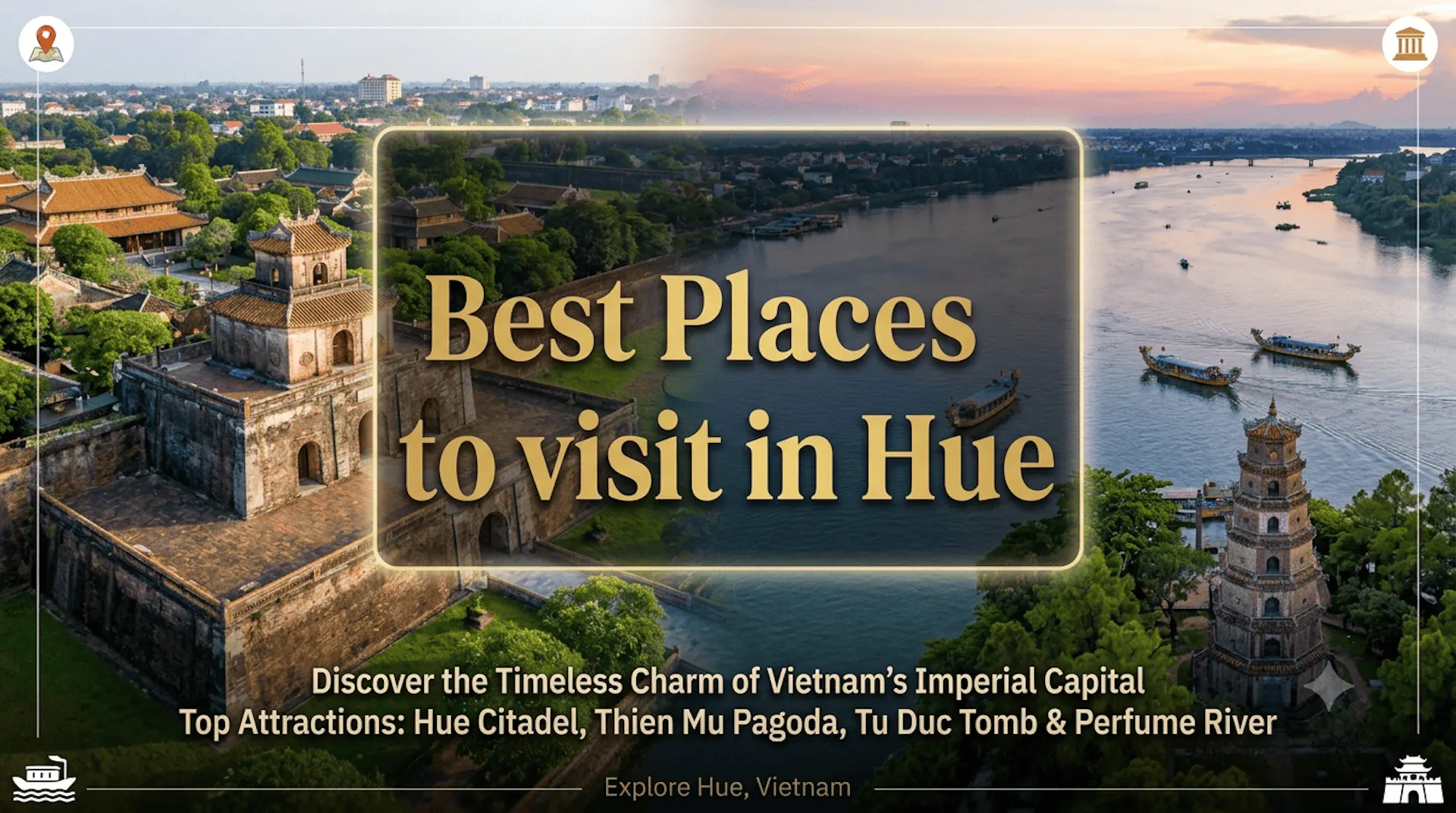
Hue, Vietnam's former imperial capital, is a destination rich in history, culture, and timeless beauty. Visitors can explore the UNESCO-listed Imperial City, magnificent royal tombs, ancient pagodas, traditional villages, and the peaceful Perfume River. The city also offers charming gardens, historic temples, vibrant local markets, and authentic Central Vietnamese cuisine. Whether you're passionate about heritage, architecture, photography, or cultural experiences, this guide highlights the best places to visit in Hue for an unforgettable journey through Vietnam's imperial past.
On this page
To step into Huế is to enter a meditative time-capsule, where the slow, poetic drift of the Perfume River mirrors the enduring, weathered elegance of the citadel walls. For the deliberate traveler, visiting Huế is more than a simple excursion; it is a journey into the heart of Vietnam’s imperial past, where every moss-covered monument and serene pagoda speaks to a legacy of dynastic aspiration and profound spirituality. As a historian who has spent years documenting the physical landscape of this Cố đô (Ancient Capital), I invite you to peel back the layers of this city, moving beyond the superficial to explore the best places to visit in Hue—a city where history is not merely preserved, but actively lived.
The Imperial Heart: Citadel and Monuments
The Kinh Thành (Imperial Citadel) serves as the terrestrial anchor for the Nguyen Dynasty, a sprawling fortress that once dictated the fate of the nation. Understanding the layout of this 520-hectare complex is essential for any historical appreciation, as it reflects the meticulous urban planning and architectural philosophy of the 19th century, heavily influenced by Eastern geomancy and the design of the Forbidden City in Beijing. Walking through the Ngo Mon (Meridian Gate) toward the Five-Phoenix Pavilion, one feels the weight of centuries. This gate, with its intricate Tali wood craftsmanship and mythical creature embellishments, was formerly reserved exclusively for the Emperor’s passage. Beyond it lies the Thai Hoa Palace, where 80 towering wooden pillars support a roof of three-layered glazed tiles, designed to minimize weight while maintaining a sense of immense, regal height. While the scars of 20th-century warfare remain visible, the ongoing, rigorous preservation efforts remind us that the Citadel is a fragile masterpiece, perpetually caught in a delicate balance between survival and decay.
The royal tombs (lăng tẩm) that dot the landscape beyond the city walls offer a vastly different, more intimate architectural experience. These are not merely mausoleums but carefully curated "landscapes of the afterlife" that reflect the specific temperaments of their entombed Emperors. The Tomb of Minh Mang is a triumph of Confucian symmetry, where forty monuments—temples, pavilions, and courtyards—are perfectly aligned along a single, harmonious axis. In contrast, the Tomb of Khai Dinh represents a startling departure into East-West fusion, where French colonial sensibilities intersect with traditional Vietnamese aesthetics, resulting in an ornate, glass-and-ceramic mosaic masterpiece that feels almost baroque in its intensity. Visiting these sites requires a commitment to slow movement; one must observe how the placement of each pavilion and pond is dictated by feng shui, ensuring that the Emperor’s resting place remains in eternal dialogue with the surrounding mountains and water.
Spiritual Landscapes and Riverside Zen
No exploration of Huế is complete without acknowledging the sentinel role of the Thien Mu Pagoda. Overlooking the Perfume River for over four centuries, this pagoda remains the quintessential symbol of the city. Legend credits its construction to Lord Nguyen Hoang, who fulfilled a prophecy regarding a "Heavenly Lady" appearing on the hill to bless the region. Today, its seven-story Phuoc Duyen tower, rising twenty-one meters, stands as a defining silhouette against the sky. Beyond the architectural grandeur, the temple grounds preserve significant national treasures, including the Great Bell and a massive stone stele, each reflecting the intense royal patronage that once fueled the growth of southern Vietnamese Buddhism.
To truly engage with the city’s spiritual culture, however, one must look beyond the most celebrated monuments. Huế is a city of hidden Zen monasticism, where smaller, less-frequented temples offer a profound silence that is rarely found in the bustling city center. Embracing "slow travel" here is not just a preference; it is a necessity for understanding the meditative practice that has defined the city’s intellectual and social history. Whether wandering through lotus-filled temple gardens or observing the quiet, daily life of monks, the goal is to align oneself with the city’s riverine pace—a rhythm that has been shaped by centuries of poetic reflection and spiritual discipline. The Perfume River itself acts as the city’s cultural lifeline, its quiet waters serving as the muse for generations of Vietnamese poets and the mirror of the city’s enduring, graceful identity.
Cultural Immersion: Beyond the Monuments
The spirit of the Nguyen era survives most vividly in the tradition of the Hue garden house (Nhà Rường). These residences of former mandarins are marvels of climate-adapted design, where low-slung wooden structures are integrated into lush, meticulously planned gardens that utilize feng shui to balance the harshness of the local climate. Walking through these gates is like stepping into a private domain of royal etiquette and natural harmony, where every element of the home is positioned to invite positive energy while providing shelter from the seasonal extremes. It is here that one can observe the true synthesis of imperial life: a blend of high-status architecture, refined aesthetic sensibility, and a deep-rooted, almost primal connection to the soil.
Authentic immersion continues in the workshops of local artisans who labor to preserve imperial-era crafts. From the creation of delicate lacquerware to the meticulous embroidery of royal robes, the city’s artisanal heritage is a living thread that links the past to the present. The Hue conical hat (nón lá), specifically, is a work of patience and devotion, often featuring subtle, "poem-layering" techniques where verses or images of the Perfume River are hidden between the layers of leaves, revealed only when held against the sun. Visitors should seek out workshops in traditional villages like Van The, where the rhythmic sewing and sun-drying of the Bodhi palm leaves remain a daily labor of love. These artisans are the keepers of Huế's poetic soul, and supporting their craft is an essential way to participate in the ongoing maintenance of the city's cultural identity. Finally, a stroll through the Dong Ba Market is the ultimate social experience. Here, amidst the clamor of trade and the distinct linguistic cadence of the local vendors, one can witness the convergence of all of Huế’s unique traditions, from the complexity of its court-influenced cuisine to the enduring vitality of its rural roots.
Practical Field Logistics and Travel Etiquette
Navigating Huế is best accomplished by shedding the reliance on motorized transport. The city’s geography, defined by its flat, meandering riverside paths and quiet residential lanes, invites the traveler to cycle or walk. This pace is not a suggestion; it is the superior method for soaking in the city’s atmospheric nuance. When entering sacred sites like the royal tombs or the pagodas, decorum is the foremost expectation. Modesty in dress—covering shoulders and knees—is a sign of respect for the site’s ongoing role as a place of spiritual reverence. Furthermore, when interacting with temple custodians or local craftspeople, silence and observation are preferred over intrusive questioning.
Seasonal planning is vital to the Hue experience. The city’s atmosphere shifts dramatically throughout the year, and a traveler’s choice of season will fundamentally alter the mood of their visit. The misty, cooler months offer a contemplative and meditative experience that aligns perfectly with the city’s historical gravity, while the brighter, summer months bring a vibrant energy that illuminates the brilliance of the imperial mosaics and the lushness of the riverine gardens. Regardless of the season, the best approach is one of quietude and preparation, ensuring that the exploration of the best places to visit in Hue remains an encounter characterized by respect and profound discovery.
As you conclude your research into this imperial capital, the choice remains yours: does your spirit resonate more with the grand, architectural ambition of the dynastic Citadel and the royal tombs, or are you drawn to the quiet, meditative grace of the riverside Zen gardens and the hidden craftsmanship of the garden houses? Whichever path you choose, remember that Huế is not a city to be rushed; it is a city to be savored, one monument and one quiet garden at a time. The Cố đô awaits those who are prepared to listen to the whispers of its past.
> Read more: Hue Travel Guide

By Roy Trinh
Editor
Roy Trinh is a travel writer and destination expert at Go Visit Vietnam, dedicated to helping travelers discover the beauty, culture, and diversity of Vietnam. Through well-researched travel guides, practical itineraries, local insights, and authentic recommendations, Roy shares valuable information to inspire memorable journeys across the country. From vibrant cities and breathtaking landscapes to regional cuisine and cultural heritage, every guide is created to help visitors experience Vietnam with confidence and curiosity.
Frequently Asked Questions About the Best Places to Visit in Hue
What are the best places to visit in Hue?
Some of Hue's top attractions include the Imperial City (Citadel), Thien Mu Pagoda, the royal tombs of Emperors Minh Mang, Khai Dinh, and Tu Duc, the Perfume River, Dong Ba Market, and nearby traditional villages.
What is Hue famous for?
Hue is famous for its rich imperial history, UNESCO World Heritage monuments, ancient royal architecture, traditional cuisine, peaceful riverside scenery, and its role as Vietnam's former imperial capital.
How many days should I spend in Hue?
Three to four days are ideal for exploring Hue's historical monuments, royal tombs, pagodas, museums, local markets, traditional craft villages, and enjoying the city's renowned cuisine.
Is Hue suitable for history and culture lovers?
Absolutely. Hue is one of Vietnam's most important cultural destinations, offering centuries-old palaces, temples, royal tombs, museums, and traditional performances that showcase the country's imperial heritage.
Can I combine Hue with other destinations?
Yes. Hue is conveniently located near Da Nang and Hoi An, making it easy to include all three destinations in one Central Vietnam itinerary featuring beaches, heritage sites, mountains, and outstanding local cuisine.
Advertising box