
Best Places to Visit in Khanh Hoa
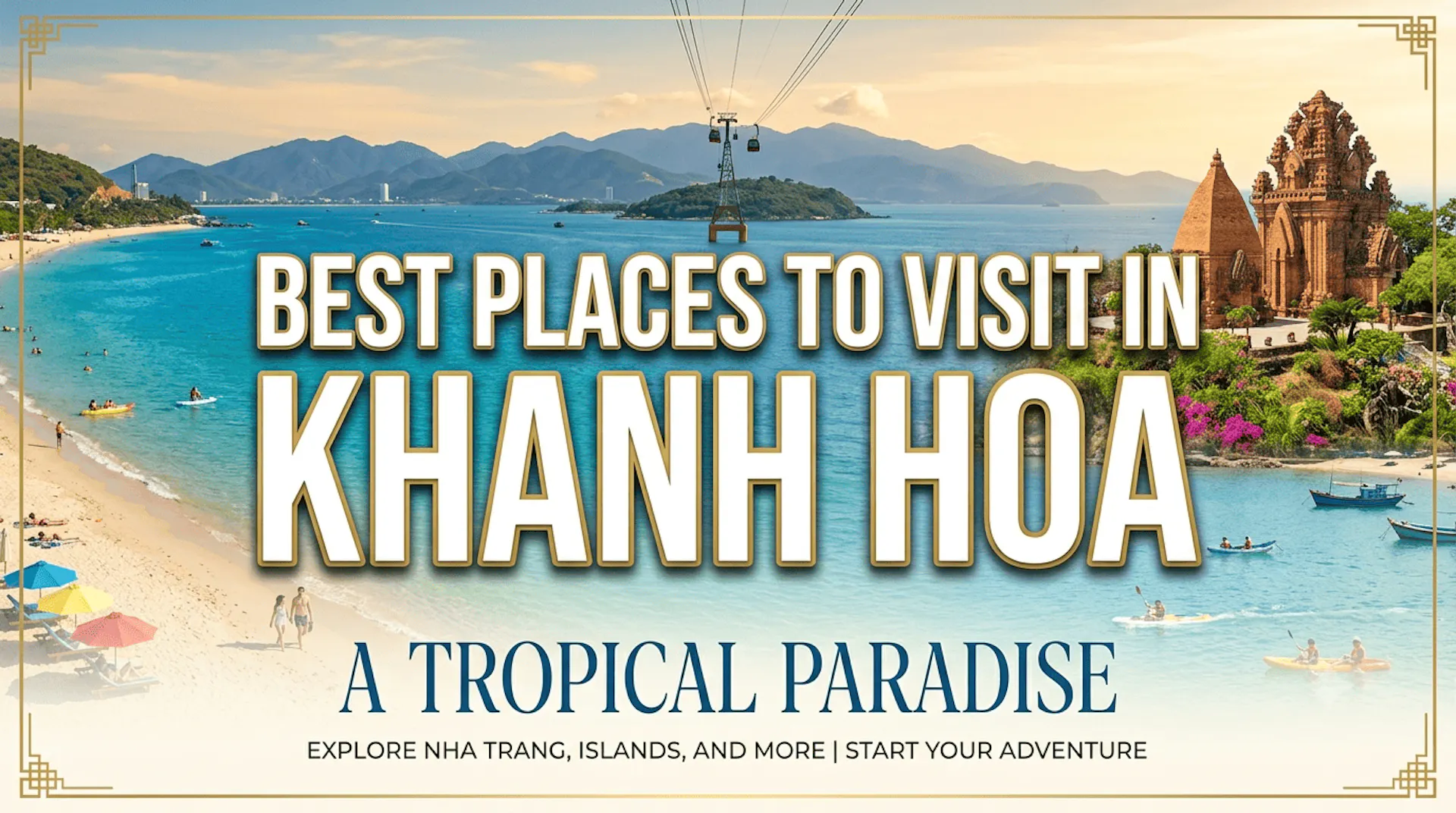
Khanh Hoa is one of Vietnam's premier coastal destinations, renowned for its crystal-clear beaches, tropical islands, coral reefs, waterfalls, and vibrant seaside culture. Visitors can explore the lively city of Nha Trang, relax on stunning beaches, discover ancient temples, enjoy island-hopping adventures, and experience world-class snorkeling and diving. Whether you're seeking relaxation, marine adventures, cultural landmarks, or scenic coastal landscapes, this guide highlights the best places to visit in Khanh Hoa for an unforgettable journey along Vietnam's spectacular south-central coast.
On this page
- Exploring the Best Places to Visit in Khanh Hoa: Coastal Wonders, Bays, and Islands
- Decoding the Best Places to Visit in Khanh Hoa: Historical and Cultural Heritage
- Beyond the Coastline: The Best Places to Visit in Khanh Hoa for Highland and Rural Escapes
- Executing Your Journey: Practical Field Logistics for the Best Places to Visit in Khanh Hoa
- Finalizing Your Expedition to the Best Places to Visit in Khanh Hoa
The dramatic coastal geomorphology of Vietnam reaches its absolute zenith within the boundaries of Khanh Hoa province. Here, the turquoise expanse of world-renowned marine basins collides sharply with towering, granite-veined mountains, creating a landscape that is both aggressively rugged and effortlessly serene. For the professional marine biologist, the cultural historian, and the veteran travel journalist, mapping the best places to visit in khanh hoa requires venturing far beyond the manicured beachfronts of the primary resort corridors. It demands a sophisticated understanding of a province defined by stark contrasts, where the opulent luxury of coastal developments yields abruptly to the raw, untamed biodiversity of outer island archipelagos and the profound, silent spirituality of ancient Champa ruins. This comprehensive Khanh Hoa travel guide serves as an authoritative manual for those who demand active participation in their exploration, prioritizing ecological integrity and historical context over superficial leisure. By diving deep into the intricate coral networks of its bays, tracing the aromatic lineage of its agarwood traditions, and navigating the winding paths of its highland waterfalls, you will uncover an authentic Khanh Hoa tourism experience that reveals the true, unvarnished identity of Vietnam’s most dynamic coastal frontier.
Exploring the Best Places to Visit in Khanh Hoa: Coastal Wonders, Bays, and Islands
Nha Trang Bay and Island Dynamics
The epicenter of the region’s marine biodiversity resides within the boundaries of Vịnh Nha Trang (Nha Trang Bay), a vast, sheltered basin that ranks among the most ecologically significant coastal zones in the world. To master Nha Trang island hopping, one must understand that each landmass within this archipelago serves a highly specific ecological and recreational purpose. The rugged, rocky underwater topography of Hon Mun Island provides the optimal substrate for the highest concentration of hard and soft coral species in Vietnam, making it an absolute necessity for those looking to engage in advanced scuba diving or high-visibility snorkeling. Conversely, the gentle, sloping shorelines and manicured tropical canopies of Hon Tam Island offer a starkly different dynamic, designed for therapeutic isolation and prolonged relaxation. By strategically selecting your islands based on these distinct environmental signatures, you elevate a standard boat tour into a highly calibrated marine expedition, ensuring that you interact with the specific marine habitats that align with your particular scientific or recreational interests. The nutrient-rich upwellings that circulate through these island channels sustain complex food webs, meaning that observant divers can document rare nudibranchs and seasonal pelagic species that migrate through this vital corridor.
The Pristine Beauty of Cam Ranh
Moving southward from the urban density of the provincial capital, the topography shifts dramatically as you enter the jurisdiction of Cam Ranh. This deep-water bay operates as a crucial logistical hub, yet it fiercely guards a collection of Cam Ranh hidden beaches that offer a profound sense of isolation. The coastal geomorphology here is defined by stark, undulating white sand dunes that act as natural barriers, shielding the intensely turquoise waters from the heavy, prevailing winds of the open ocean. To navigate these pristine coastal stretches is to experience a landscape that feels suspended in time, where the shallow, crystalline lagoons provide safe, tranquil swimming conditions, devoid of the aggressive undertows found on exposed coastlines. The juxtaposition of the blindingly white dunes against the vivid blue water creates a high-contrast visual environment that is unparalleled in the region, offering a serene, meditative alternative to the high-energy currents of the northern bays. Furthermore, the specialized vegetation that clings to the edges of these dunes demonstrates a remarkable resilience, illustrating the unique evolutionary adaptations required to survive in this hyper-saline, sun-baked microclimate.
Van Phong Bay and Dam Mon Peninsula
For the intrepid explorer seeking the ultimate coastal frontier, the journey northward to the isolated reaches of Van Phong Bay and the Đầm Môn peninsula is a mandatory undertaking. This is the raw, unpolished edge of the province, a vast, complex network of sheltered coves, deep-water channels, and scattered, uninhabited rocky outcrops. To traverse the Dam Mon peninsula is to actively remove yourself from the established tourist trail and enter a space governed entirely by the rhythms of the sea. The landscape here is fiercely untamed; dense, thorny coastal scrub yields to immaculate, completely empty stretches of sand that look out toward the open horizon. This environment attracts travelers who possess a deep reverence for silence and an appetite for rigorous, self-sustained exploration, proving that the true majesty of the local coastline is often found in the places where the asphalt definitively ends and the wild, unvarnished ocean begins. The sheer scale of this northern bay, combined with its relative lack of commercial development, ensures that its intricate marine ecosystems remain robust, offering a rare, untarnished window into the primordial state of the Vietnamese seaboard.
Decoding the Best Places to Visit in Khanh Hoa: Historical and Cultural Heritage
The Legacy of Ponagar
The historical narrative of this coastal province is anchored by the imposing, terracotta-brick structures of Tháp Bà Ponagar (Ponagar Cham Towers), which stand sentinel on a granite hill overlooking the Cai River estuary. To examine the Champa architectural legacy here is to witness a profound mastery of structural engineering and spiritual devotion. Built between the seventh and twelfth centuries, these towers dedicate themselves to Yan Po Nagar, the goddess of the country. The architectural ingenuity is staggering; the builders utilized a precise, mortarless brick-laying technique that has miraculously withstood a millennium of tropical typhoons and suffocating humidity. This complex is not merely a static archaeological ruin; it functions as an intensely active, living center of local faith. To observe the daily rituals performed by both ethnic Cham and Vietnamese worshippers is to understand how the spiritual resonance of the ancient Champa civilization continues to shape the contemporary Khanh Hoa coastal culture, providing a deep, historical counterweight to the modern resort developments below.
Agarwood Culture and Local Traditions
Beyond the coastal aesthetics, the province’s identity is intrinsically tied to its historical status as the premier source of trầm hương (agarwood). This highly coveted, resinous heartwood forms exclusively within specific trees as a defensive response to fungal infections, a complex biological process that occurs deep within the rugged interior mountains. Understanding the artisanal agarwood tradition is crucial for decoding the local economy. The intoxicating, woody fragrance of high-grade agarwood has dictated trade routes and imperial tributes for centuries. To explore the specialized agarwood boutiques and incense workshops in the city is to engage with a sophisticated, highly regulated commodity that commands astronomical prices on the global market. This fragrant legacy fundamentally differentiates the region from other coastal provinces, layering an atmosphere of mysticism and high-value artisanal commerce over the standard maritime economy.
Long Son Pagoda and Spiritual Architecture
The spiritual topography of the province is further defined by the monumental presence of Long Son Pagoda. Situated at the base of Trai Thuy Mountain, this site exemplifies the seamless integration of monumental religious architecture into the challenging, vertical landscape. To climb the hundreds of stone steps leading to the summit is a physical and meditative commitment, rewarding the traveler with the imposing sight of the giant white Buddha statue that watches over the urban sprawl. The architecture of the pagoda itself is a masterclass in Vietnamese Buddhist design, featuring intricate glass and ceramic mosaics depicting mythical dragons and sacred motifs. The atmosphere here is one of profound, heavy silence, broken only by the rhythmic chanting of resident monks and the hollow strike of a wooden block. This site offers a necessary, introspective retreat, allowing visitors to absorb the quiet, spiritual density that has long anchored the local population against the chaotic, high-energy environment of the coastal trading hubs.
Beyond the Coastline: The Best Places to Visit in Khanh Hoa for Highland and Rural Escapes
Yang Bay Waterfall and Highland Biodiversity
While the ocean commands the primary attention of visitors, a truly authoritative exploration requires you to turn your back to the sea and ascend into the interior mountain range. The journey to Yang Bay Waterfall represents a dramatic shift from the saline, sun-baked coast into a cool, dense, and hyper-humid tropical highland. This ecosystem plays a critical, often overlooked role in regulating the province's overall climate and supplying the freshwater necessary for the coastal estuaries. To navigate the dense forest paths surrounding the falls is to engage with a completely different facet of local biodiversity. The roaring, multi-tiered cascades of Yang Bay cut through heavy, ancient granite formations, creating localized microclimates that support specialized ferns, orchids, and diverse avian populations. This inland excursion provides essential context, demonstrating that the environmental health of the famous bays relies entirely upon the integrity of these rugged, forested watersheds. Furthermore, engaging with the Raglai ethnic minority groups who inhabit these higher elevations reveals a distinct, forest-dependent cultural identity that contrasts sharply with the ocean-centric lifestyle of the coastal Vietnamese, adding a vital layer of ethnographic depth to your journey.
Rural Coastal Villages
To comprehend the true, unvarnished socio-economic pulse of the province, one must actively seek out the authentic rural coastal villages that operate on the periphery of the major bays. These working fishing communities, often characterized by a chaotic flotilla of brightly painted wooden boats and the pungent, unmistakable aroma of drying seafood, are the undisputed engines of the local maritime economy. Here, you can witness the highly specialized, generational knowledge required to harvest Yến sào (edible bird's nests) from the treacherous coastal cliffs, a dangerous and highly lucrative industry unique to this specific stretch of coastline. To visit these resilient coastal enclaves requires a high degree of cultural humility and respect. Travelers must prioritize sustainable, community-supported tourism by purchasing directly from local fishermen and minimizing disruption to the frantic, early-morning logistics of the fish markets. By choosing to document the intricate net-mending techniques or the careful, methodical sorting of the daily catch, you acknowledge the profound expertise of these maritime communities. This form of respectful observation ensures that the traditional, artisanal methods of the coastal workforce are valued just as highly as the aesthetic beauty of the surrounding seascape.
Executing Your Journey: Practical Field Logistics for the Best Places to Visit in Khanh Hoa
Navigating the complex geographical layout of this province requires a strategic, highly informed approach to transportation. For the rugged, independent traveler, choosing to rent a high-displacement motorbike is the superior method for accessing the serpentine coastal roads that lead to the remote northern peninsulas or the southern deep-water bays. However, to truly penetrate the isolated island networks, negotiating private speedboat transfers or securing spots on specialized, small-group dive charters is a mandatory logistical step that ensures safety and access to the most pristine reef systems.
As a visitor to these highly sensitive marine environments, maintaining strict sustainable marine ethics is a non-negotiable obligation. The coral networks here face immense pressure from climate shifts and localized runoff. When you enter the aquatic environment, you must utilize reef-safe sunscreens, absolutely refuse to touch or stand on any living coral structure, and actively minimize your plastic footprint by carrying reusable hydration systems. True expertise in coastal travel is demonstrated by leaving the fragile marine habitat entirely undisturbed.
Finally, executing a flawless expedition requires precise seasonal timing. To avoid the aggressive, visibility-destroying storm swells of the monsoon, you must schedule your coastal exploration during the dry season, running roughly from January to August. This optimal window guarantees the placid, crystalline water conditions necessary for high-level underwater photography and safe, unhindered transit across the expansive bays, ensuring your maritime expedition operates at the highest possible standard of safety and visual clarity.
Finalizing Your Expedition to the Best Places to Visit in Khanh Hoa
This province stands as the definitive, undisputed coastal crown jewel of Central Vietnam, offering a complex, multi-layered landscape that ruthlessly exposes the inadequacy of standard, passive resort tourism. From the intricate, nutrient-dense coral architectures of its legendary bays to the heavy, incense-laden silence of its ancient Champa towers, the best places to visit in khanh hoa demand absolute engagement from those who traverse its borders. By mastering the environmental logistics and respecting the deep, ancestral heritage of the land, you unlock the true, wild essence of this maritime frontier. Which specific landscape—the vibrant, sun-soaked isolation of the outer archipelago bays, or the quiet, spiritual gravity of the mountain pagodas—appeals most intensely to your uncompromising sense of adventure?
> Read more: Khanh Hoa Travel Guide

By Roy Trinh
Editor
Roy Trinh is a travel writer and destination expert at Go Visit Vietnam, dedicated to helping travelers discover the beauty, culture, and diversity of Vietnam. Through well-researched travel guides, practical itineraries, local insights, and authentic recommendations, Roy shares valuable information to inspire memorable journeys across the country. From vibrant cities and breathtaking landscapes to regional cuisine and cultural heritage, every guide is created to help visitors experience Vietnam with confidence and curiosity.
Frequently Asked Questions About the Best Places to Visit in Khanh Hoa
What are the best places to visit in Khanh Hoa?
Top attractions include Nha Trang Beach, Hon Mun Marine Protected Area, Ponagar Cham Towers, Long Son Pagoda, Ba Ho Waterfalls, Doc Let Beach, Bai Dai Beach, and numerous islands ideal for snorkeling, diving, and boat tours.
What is Khanh Hoa famous for?
Khanh Hoa is famous for its beautiful coastline, white-sand beaches, tropical islands, coral reefs, seafood, diving opportunities, and the vibrant beach city of Nha Trang, one of Vietnam's most popular seaside destinations.
How many days should I spend in Khanh Hoa?
Three to five days are ideal for exploring Nha Trang, relaxing on the beaches, visiting nearby islands, enjoying water sports, discovering cultural landmarks, and experiencing the province's fresh seafood and coastal lifestyle.
Is island hopping worth doing in Khanh Hoa?
Absolutely. Island-hopping is one of the most popular experiences in Khanh Hoa. Visitors can explore coral reefs, enjoy snorkeling and diving, visit fishing villages, and relax on secluded beaches throughout Nha Trang Bay.
Can I visit Khanh Hoa throughout the year?
Yes. Khanh Hoa enjoys a warm tropical climate suitable for year-round travel. The dry season offers ideal beach conditions, while the wetter months still provide many opportunities to enjoy sightseeing, local cuisine, and coastal attractions.
Advertising box