
Best Places to Visit in Lai Chau
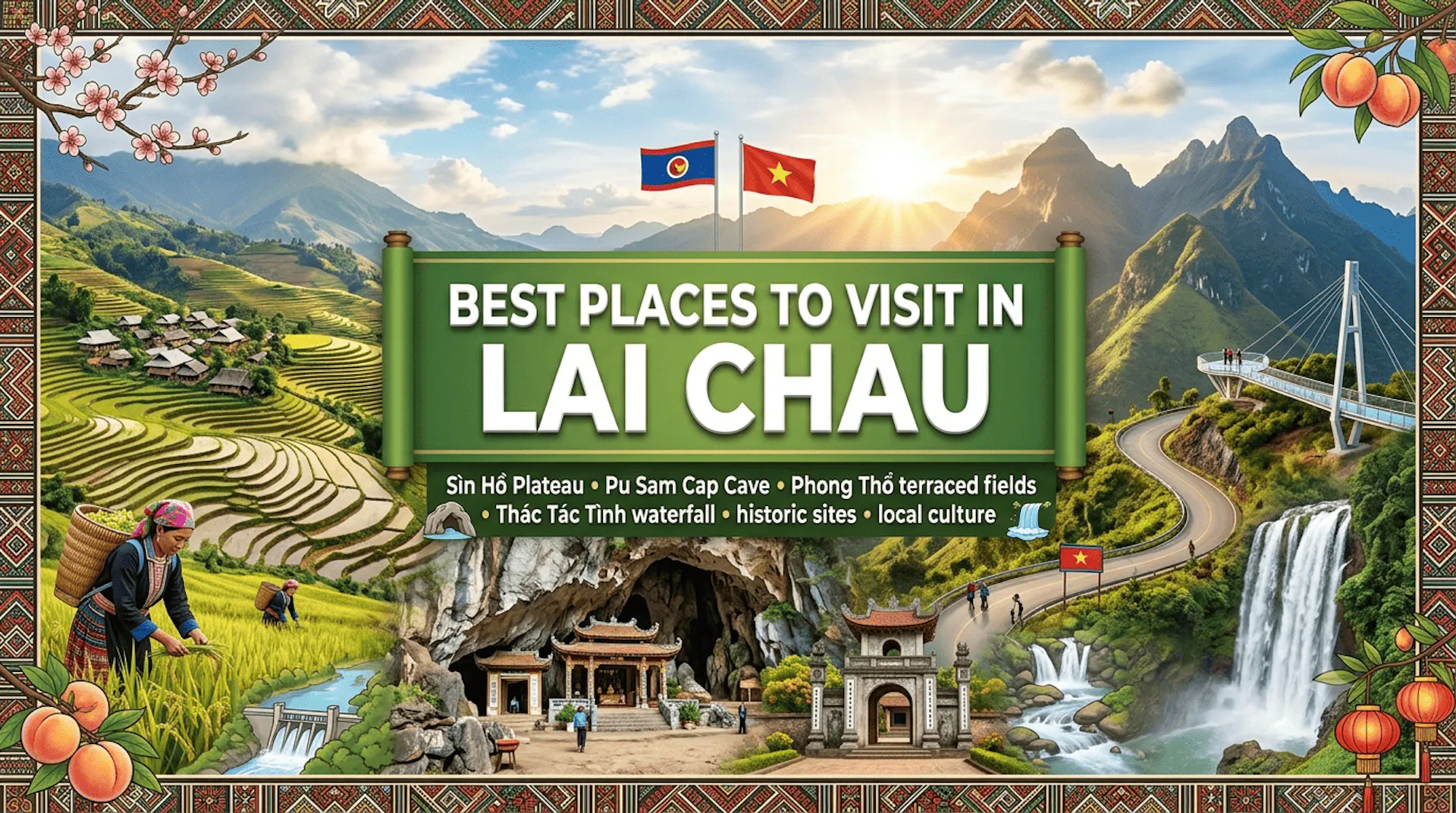
Lai Chau is one of Vietnam's most spectacular mountain provinces, offering dramatic peaks, winding mountain passes, colorful ethnic cultures, and untouched natural beauty. Visitors can conquer Pu Ta Leng, admire the breathtaking O Quy Ho Pass, explore peaceful Sin Ho Plateau, discover waterfalls and remote villages, and experience authentic northwest traditions. Whether you're seeking adventure, photography, or cultural exploration, this guide highlights the best places to visit in Lai Chau for an unforgettable journey through northern Vietnam.
On this page
- The Highland Frontiers: Discovering the Best Places to Visit in Lai Chau
- Remote Village Heritage: Trekking to the Best Places to Visit in Lai Chau
- The Ethno-Historical Corridor: Uncovering the Best Places to Visit in Lai Chau
- Field Logistics: Navigating to the Best Places to Visit in Lai Chau
- Conclusion: Finalizing Your Journey Through the Best Places to Visit in Lai Chau
Lai Chau province commands the northwestern edge of Vietnam, asserting itself as a formidable landscape where extreme tectonic forces have carved deep river valleys and thrust jagged limestone peaks into the cold northern sky. For the dedicated geographer and the uncompromising traveler, identifying the best places to visit in Lai Chau requires an acute understanding of extreme topography dynamics. This is not a destination for the passive observer; it is a rugged frontier requiring high-altitude mountain logistics and a genuine willingness to engage with profound indigenous heritage. As you consult this Lai Chau travel guide, you must discard lowland expectations. Here, ancient trade routes snake through the Hoang Lien Son range, connecting isolated plateaus with mist-covered valleys that remain untouched by commercial saturation. Discovering the top things to do in Lai Chau means balancing the physical demands of high-altitude navigation with deep cultural respect for the ethnic communities that steward these lands. The ultimate Northern Vietnam highland travel experience awaits those prepared to confront the climatic intensity of the winding mountain passes and the profound silence of the remote, high-altitude border corridors defining this majestic northern territory.
The Highland Frontiers: Discovering the Best Places to Visit in Lai Chau
O Quy Ho Pass: The King of Mountain Passes
Navigating the legendary Ô Quy Hồ pass is an initiation into the raw atmospheric power of the northwestern mountains. Stretching nearly fifty kilometers along the Hoang Lien Son range, this massive infrastructural marvel holds the title of Vietnam’s longest and highest mountain pass. As you ascend the winding asphalt, the sensory shift is immediate and dramatic. The dense, humid air of the lower valleys is violently replaced by sharp, freezing crosswinds that whip across the exposed ridges. For altitude enthusiasts, crossing this pass acts as the definitive gateway to the province, serving as a climatic barrier that historically isolated Lai Chau from the rest of the country. Standing at the summit, observers witness the aggressive collision of distinct weather systems, where thick, heavy clouds from the east are physically halted by the mountain spine, creating a perpetual sea of turbulent mist. This specific meteorological phenomenon solidifies its status as a critical geographical waypoint. Negotiating the endless serpentine curves that descend into the harsh, rocky interior requires an expert understanding of mountain driving techniques, making it a thrilling initiation for serious overlanders.
Sin Ho Plateau: The High-Altitude Market Hub
Deep within the interior, the Sìn Hồ plateau emerges as a crucial high-altitude sanctuary and a central focus for authentic Sin Ho tourism. Situated over one thousand five hundred meters above sea level, this isolated plateau is surrounded by primeval forests and sharp limestone monoliths. The plateau functions as the vital socio-economic anchor for the indigenous H’mong and Dao communities who inhabit the surrounding slopes. To explore the weekend market here is to witness an ancient, functional trade system rather than a staged cultural performance. Local women, draped in heavily embroidered indigo garments, converge on the central square to trade mountain-foraged herbs, forest honey, and robust livestock. Participating in this environment requires an understanding of sustainable market tourism; visitors must act as respectful observers, recognizing that this gathering is the fundamental lifeblood of the local agrarian economy. The heavy, persistent fog that often blankets the town square adds a deeply atmospheric quality to the exchange, highlighting the profound isolation and resilience of these highland populations who have thrived here for centuries.
Navigating Highland Topography
Understanding the extreme topography dynamics of the province is absolutely essential for anyone attempting to map out their journey. The sheer verticality of the terrain creates a hyper-localized ecosystem where conditions change rapidly from one kilometer to the next. Traversing the steep gradients demands a complete departure from conventional lowland travel mindsets. Here, sudden temperature plummets and rapid geological shifts dictate the pace of movement. Landslides are a natural, recurring feature of the environmental cycle, particularly along the winding river gorges of the Da River. Travelers must maintain acute environmental awareness, treating the landscape not merely as a scenic backdrop but as an active, powerful force that demands constant vigilance. This geographical reality fundamentally shapes the psychological experience of the journey, forcing visitors to adopt a posture of humility and extreme caution while negotiating the precipitous drops and sheer cliff faces that define the majestic, untamed character of this northwestern frontier.
Remote Village Heritage: Trekking to the Best Places to Visit in Lai Chau
Si Thau Chai Village: Preserving Ethnic Authenticity
Perched dramatically on a steep mountainside above the Tam Duong valley, Bản Sì Thâu Chải represents the gold standard for indigenous heritage preservation. This small community of over sixty Dao families has successfully pioneered a community-led tourism model that fiercely protects its traditional lifeways from the corrosive effects of modernization. As you walk the stone-paved paths connecting the traditional wooden houses, you immediately notice the immaculate integration of human settlement with the surrounding natural ecology. The villagers have meticulously maintained their distinctive architectural heritage, characterized by low, sturdy roofs designed to withstand the violent mountain squalls. This site establishes a crucial benchmark for cultural immersion, allowing visitors to engage with authentic agrarian practices without disrupting the social fabric of the village. The residents proudly cultivate ancient peach and plum orchards that burst into vivid color during the spring, creating a stark visual contrast against the dark, brooding mountains. Supporting this village means directly funding sustainable, resident-controlled economic development that prioritizes cultural dignity over mass commercialization, setting a standard for how tourism should operate in vulnerable regions.
Pu Ta Leng & High-Altitude Trekking
For the uncompromising adventurer, the brutal, vertical ascent of đỉnh Pu Ta Leng constitutes the ultimate physical and psychological challenge. Reaching an elevation of over three thousand meters, this peak is widely recognized as one of the most treacherous and physically demanding summits in Southeast Asia. Climbing the dense, vertical jungle trails requires extreme stamina, advanced high-altitude mountain logistics, and an unwavering commitment to safety. The route forces trekkers to navigate through dense, ancient rhododendron forests, cross aggressive alpine streams, and endure dramatic drops in temperature. Because this environment is so isolated, securing professional, localized guidance is absolutely non-negotiable. The local porters possess the ancestral knowledge required to read the volatile weather patterns and identify safe passage through the confusing, overgrown terrain. Conquering this formidable summit offers an unparalleled view of the undulating Hoang Lien Son range, rewarding only those who respect the immense, unforgiving power of the high-altitude wilderness and commit to rigorous physical preparation.
Ecological Stewardship
The remote zones of this province function as the last remaining sanctuaries for vital Northern Vietnamese ecosystems. The deep, primeval forests covering the slopes of these towering peaks are incredibly fragile environments, highly susceptible to the negative impacts of unmonitored human intrusion. Practicing rigorous ecological stewardship is not an optional ethical stance; it is an absolute necessity for anyone venturing into these pristine corridors. Visitors must implement strict leave-no-trace protocols, ensuring that the delicate flora and vital water sources remain entirely unpolluted. These protected reserves play a critical role in regulating the broader northern climate, capturing moisture, and preventing catastrophic soil erosion. By treating these high-altitude ecosystems with the utmost reverence, responsible trekkers ensure that the raw, biological diversity of the highland frontier remains intact for future generations of local inhabitants, sustaining the delicate environmental balance.
The Ethno-Historical Corridor: Uncovering the Best Places to Visit in Lai Chau
Exploring Ethnic Village Life
Deep engagement with Lai Chau ethnic culture is the intellectual cornerstone of any comprehensive expedition to the northwest. The province serves as a complex cultural mosaic, predominantly stewarded by the văn hóa dân tộc Mông/Dao (H'mong and Dao ethnic cultures), alongside vibrant Thai communities. To genuinely understand the social fabric of this region, one must intentionally seek out traditional homestays located far beyond the primary transit routes. In these quiet, fire-lit wooden dwellings, the true, unvarnished reality of mountain life is revealed. Travelers are highly encouraged to support traditional craft cooperatives, where indigenous women practice the intricate, time-consuming art of hemp weaving, indigo dyeing, and meticulous silver smithing. Purchasing these goods directly from the artisans provides critical financial autonomy and incentivizes the continued transmission of these irreplaceable heritage skills to the younger generation, actively combating the erasure of indigenous knowledge.
Historical Context of the Northern Borderlands
The cultural geography of this province is inextricably linked to its complex, often turbulent historical position along the international frontier. For centuries, these isolated valleys served as strategic buffer zones and heavily contested migration corridors. Learning the historical context of the northern borderlands adds profound, necessary depth to the modern traveler's experience. The ancestors of today’s mountain communities endured extreme hardship, navigating geopolitical shifts while simultaneously battling the harsh, unforgiving alpine climate. Recognizing this legacy of resilience fundamentally alters how a visitor perceives the landscape; the terraced fields and narrow mountain tracks are no longer just scenic backdrops, but monumental testaments to human endurance and localized engineering. Treating these communities with deep historical respect ensures that your interactions remain grounded in empathy and a genuine desire for cross-cultural understanding, bridging the gap between temporary visitors and permanent inhabitants.
Culinary Heritage as Cultural Education
The extreme elevation and severe climatic fluctuations of the province strictly dictate a dietary regime based on heavy preservation, wild foraging, and intense caloric density. The culinary heritage of the region serves as a masterclass in historical adaptation. To fully absorb this cultural education, travelers must deliberately consume regional mountain specialties at locally-owned, open-air market stalls. The heavy reliance on smoke-cured meats, highly fermented forest bamboo shoots, and wild, numbing spices perfectly reflects the necessity of surviving long, bitter winters where agricultural yields are nonexistent. These robust, aggressively seasoned dishes are designed to warm the body and sustain high-output physical labor in the freezing, oxygen-thin air. By actively participating in this local diet, you gain a visceral, sensory understanding of the profound resourcefulness that defines the enduring spirit of the northwestern highland populations.
Field Logistics: Navigating to the Best Places to Visit in Lai Chau
Navigation Strategies
Mastering sustainable highland navigation requires accepting the severe limitations of the provincial infrastructure. Attempting to traverse these precipitous, landslide-prone corridors on a rented scooter is highly discouraged for all but the most elite, technically proficient riders. The authoritative approach is to hire a professional private driver equipped with a specialized four-wheel-drive vehicle. Local drivers possess the critical, localized knowledge necessary to safely negotiate the blind corners, sheer drops, and sudden fog banks that characterize the extreme mountain passes, allowing you to fully absorb the surrounding geography without risking your physical safety on the deteriorating asphalt that frequently crumbles under the intense weight of the monsoon rains.
Responsible Tourism Ethics
Operating ethically within this frontier demands absolute, uncompromising adherence to responsible travel protocols. Travelers must aggressively minimize their plastic usage, as waste management infrastructure in these remote alpine zones is entirely non-existent. You must respect local community protocols by always seeking explicit verbal permission before photographing indigenous individuals or entering sacred, communal spaces. Furthermore, redirecting your economic footprint to support family-owned establishments, rather than external commercial developers, is the most effective method for ensuring your presence actively benefits the permanent residents of the province.
Seasonal Planning
Strategic seasonal planning dictates the ultimate success of your expedition. The optimal window for high-visibility mountain photography and safe, dry trekking occurs between October and March. During these months, the bitter cold suppresses the heavy monsoon rains, resulting in razor-sharp atmospheric clarity and the stunning, widespread blooming of wild azaleas across the high-altitude ridges. Conversely, the summer monsoon season brings catastrophic downpours that frequently obliterate the dirt mountain tracks, severely limiting mobility and obscuring the dramatic valley panoramas beneath impenetrable layers of heavy, grey moisture.
Conclusion: Finalizing Your Journey Through the Best Places to Visit in Lai Chau
Lai Chau remains the ultimate, untamed frontier of Northern Vietnam, demanding resilience, geographical awareness, and deep cultural reverence from anyone who dares to cross its borders. By mastering the extreme topography and demonstrating unwavering respect for the indigenous heritage, you unlock an intensely rewarding, uncommercialized highland experience. Understanding the best places to visit in Lai Chau means recognizing that the journey itself—battling the harsh mountain elements and bridging profound cultural divides—is the true destination. As you prepare to chart your course through this majestic, unforgiving territory, a critical decision awaits. Which challenging landscape—the legendary, winding asphalt of the high-altitude mountain passes, or the remote, mist-covered ethnic village corridors buried deep within the primeval forests—are you most prepared to explore first on your upcoming, definitive expedition into the rugged heart of the northwestern highlands?
Read more: Lai Chau Travel Guide

By Roy Trinh
Editor
Roy Trinh is a travel writer and destination expert at Go Visit Vietnam, dedicated to helping travelers discover the beauty, culture, and diversity of Vietnam. Through well-researched travel guides, practical itineraries, local insights, and authentic recommendations, Roy shares valuable information to inspire memorable journeys across the country. From vibrant cities and breathtaking landscapes to regional cuisine and cultural heritage, every guide is created to help visitors experience Vietnam with confidence and curiosity.
Frequently Asked Questions About the Best Places to Visit in Lai Chau
What are the best places to visit in Lai Chau?
Lai Chau's top attractions include Pu Ta Leng Mountain, O Quy Ho Pass, Sin Ho Plateau, Pu Sam Cap Caves, Bach Moc Luong Tu trekking routes, beautiful waterfalls, and traditional villages of the Thai, Dao, and H'Mong communities.
What is Lai Chau famous for?
Lai Chau is famous for its towering mountain ranges, challenging trekking routes, spectacular cloud-covered peaks, colorful ethnic cultures, scenic mountain passes, and some of Vietnam's most unspoiled natural landscapes.
Is Lai Chau suitable for trekking?
Yes. Lai Chau is one of Vietnam's premier trekking destinations, offering famous peaks such as Pu Ta Leng and Bach Moc Luong Tu, with trails suitable for experienced hikers seeking breathtaking mountain scenery.
How many days should I spend in Lai Chau?
A stay of three to five days allows visitors to explore the province's major attractions, experience ethnic villages, enjoy mountain landscapes, and complete shorter trekking adventures.
Can I combine Lai Chau with other destinations in northern Vietnam?
Absolutely. Lai Chau is often combined with Sapa, Dien Bien, Son La, or Ha Giang, creating an unforgettable journey through Vietnam's magnificent northwest mountains and cultural landscapes.
Advertising box