
Best Places to Visit in Lam Dong
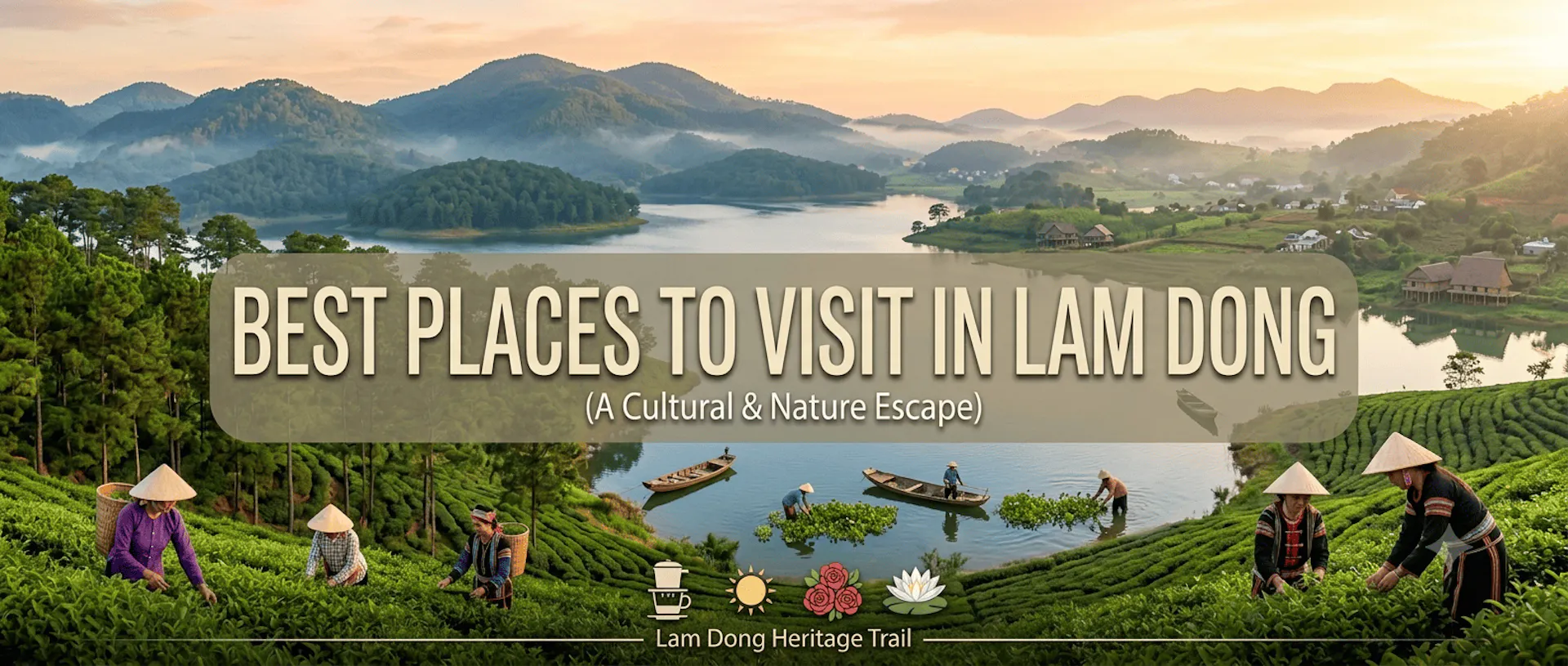
Lam Dong is one of Vietnam's most beautiful highland destinations, famous for cool weather, pine forests, waterfalls, flower gardens, and breathtaking mountain scenery. Visitors can explore Da Lat's charming landmarks, hike Lang Biang Mountain, admire spectacular waterfalls, discover tea and coffee plantations, and experience the peaceful atmosphere of the Central Highlands. Whether you're seeking adventure, nature, romance, or cultural experiences, this guide highlights the best places to visit in Lam Dong for an unforgettable journey through Vietnam's scenic highlands.
On this page
The topography of Lâm Đồng is a study in dramatic contrasts, where the cool, pine-scented air of the central plateaus yields abruptly to the raw, thundering power of montane waterfalls and the sun-drenched, rolling tea plantations of the lower reaches. For the traveler who seeks a journey beyond the superficial, Lâm Đồng offers far more than a single urban center; it is a sprawling collection of distinct ecological and cultural zones that define the Southern Highlands of Vietnam. To explore this province is to traverse a landscape where granite peaks pierce the clouds, ancient indigenous traditions endure within deep forest reserves, and the colonial-era architectural heritage lingers in the mist-covered valleys. Identifying the best places to visit in lam dong requires a willingness to move beyond the highly commercialized circuits, inviting you instead to immerse yourself in the quiet majesty of its natural and cultural depth. Whether you are navigating the winding mountain passes of the Di Linh Plateau or standing before the roaring curtain of a jungle cataract, Lâm Đồng reveals itself as a multifaceted destination for those who prioritize slow-paced discovery and genuine connection to the highland environment. This guide serves as an authoritative path through the region, providing the logistical context and evocative insight needed to navigate its intricate, elevation-driven geography.
The Highland Heart: Đà Lạt and the Northern Plateau
The northern expanse of Lâm Đồng is anchored by the high-altitude basin of Đà Lạt, a region that serves as the cultural and atmospheric focal point of the Southern Highlands. While the central hub is well-known, the true essence of this area lies in the surrounding montane ecosystems and the silent, evocative landscapes that remain shielded from the high-velocity tourist gaze.
Beyond the Tourist Trail
To experience the true character of the Đà Lạt periphery, one must venture toward the Tuyền Lâm Lake region at the earliest hours of the day. As the first light strikes the surface of the reservoir, the surrounding pine forests are draped in a heavy, ethereal mist that renders the landscape almost dreamlike. This is where the region's colonial-era architectural heritage finds its most serene expression, as secluded villas and quiet, lakeside retreats offer a glimpse into a bygone era of highland living. Cycling or trekking the periphery of the lake offers a profound sensory experience: the crisp, resinous scent of the pine canopy, the stillness of the water, and the distant, rhythmic sound of forest birds, all untouched by the commercial density of the city center. This area serves as a vital corridor for observing the natural balance between the introduced European-style aesthetics of the mid-twentieth century and the robust, indigenous growth of the highland forest.
The Lang Biang Summit Experience
Mount Lang Biang represents the spiritual and physical backbone of the region, rising as a dominant peak that holds profound historical significance for the local K’Ho ethnic minority. Reaching the summit is a journey of both endurance and discovery. As you ascend, the transition from the manicured slopes of the lower park to the windswept, granite-strewn ridges of the upper peaks is palpable. The K’Ho culture, deeply intertwined with the mountain’s lore, offers a narrative layer to the trek; the peaks themselves are named for the star-crossed lovers whose tragic history is the region's most enduring legend. Standing at the summit, you are confronted with a panoramic vista that encompasses the entirety of the Đà Lạt plateau—a vast, layered expanse of green that underscores the sheer scale of the highland wilderness. It is an essential site for those who wish to acknowledge the indigenous history of the highlands, reminding us that these mountains are not merely geographical features but the sacred, ancestral homes of the people who have stewarded them for centuries.
Architectural Heritage
The architectural narrative of the province is nowhere more visible than in the collection of heritage sites that punctuate the Đà Lạt landscape. Beyond the famous villas, the region’s pagodas, such as Linh Phước or the various Zen monasteries, reveal a sophisticated integration of East and West. These structures are not simply religious sites; they are masterclasses in regional craftsmanship. You will find intricate ceramic mosaics—often created from broken bottles and reclaimed porcelain—decorating the facades of pagodas with a level of detail that speaks to a history of resourcefulness and artistic devotion. Walking through these spaces offers a tangible understanding of how the highland population has synthesized global aesthetic influences into a style that is uniquely their own, creating an atmosphere of contemplative stillness that remains a fundamental aspect of the highland identity.
The Rugged Waterfalls and Tea Culture of Bảo Lộc
As one descends from the high plateaus toward the Bảo Lộc region, the climate shifts noticeably, becoming warmer and more humid, which fosters a completely different landscape defined by powerful water systems and vast, rolling tea plantations. This southern corridor of Lâm Đồng is where the province’s agricultural "Expertise" truly manifests.
The Majestic Waterfalls
The waterfalls of the Bảo Lộc area, most notably Dambri, represent the raw, untamed power of the highland river systems. Unlike the gentle springs of the high plateaus, these cataracts are thunderous, geological forces. Standing near the base of these falls, you are enveloped in the roar of the water and the bracing chill of the mist. The sheer force of the descent has carved deep, dramatic gorges into the granite topography, creating a landscape that feels significantly more wild and untamed than the gentle valleys of Đà Lạt. For the adventure-oriented traveler, the surrounding forest trails offer a demanding, muddy trek that rewards the effort with secluded vantage points where the power of the water can be witnessed in near-total solitude. It is a reminder that the Southern Highlands are a landscape of violent natural forces, constantly shaping and reshaping the earth beneath our feet.
Tea and Coffee Heartland
Bảo Lộc’s identity is inextricably linked to its role as a premier agricultural hub for tea and coffee. The rolling, perfectly manicured tea hills here create an almost hypnotic visual rhythm, with row upon row of vibrant green stretching toward the horizon. Engaging with this landscape involves more than just observation; it requires an appreciation for the artisan tea cultivation that defines the region’s economy. Many of the local plantations offer a narrative journey through the process of leaf plucking and traditional curing. Walking through these hills as the morning sun hits the dew-dampened leaves provides a deep understanding of the labor-intensive heritage that sustains the local community. It is a region where the pace of life is dictated by the harvest, a slow, methodical process that has elevated the local tea to a status of national renown, far exceeding the quality of mass-produced alternatives found elsewhere.
Spiritual Sanctuaries and Off-the-Beaten-Path Treasures
Beyond the primary mountain and agricultural corridors, Lâm Đồng hides a series of sites that serve as refuges for the mind. These locations are characterized by a sense of deep, profound silence and architectural minimalism that challenges the visitor to disconnect from the frantic pace of the lowlands.
Linh Quy Pháp Ấn Pagoda
The Linh Quy Pháp Ấn Pagoda has emerged as a beacon for those seeking a literal "gateway to the heavens." Perched atop a high, isolated mountain peak, the pagoda is famous for its minimalist Torii-style gates that frame the clouds, creating the sensation of walking directly into the sky. The beauty of this site is not just visual; it is spiritual. Visitors are drawn here to admire the sunrise, which casts a brilliant, ethereal light across the mist-filled valleys below. However, this is not a space for loud, performative travel. The environment demands silence, reflection, and an acknowledgment of the sanctity of the peak. It is a pilgrimage site in the truest sense, where the journey—a winding, high-slope road followed by a steep climb—is part of the process of shedding the distractions of the outside world, culminating in a panoramic view that brings a profound sense of perspective to the human experience.
Di Linh Plateau Exploration
The Di Linh Plateau offers a far more authentic, working-class highland experience. Here, the tourist-focused infrastructure of the north is largely absent, replaced by vast, sprawling coffee plantations and working villages. This region is ideal for travelers who want to see the "authentic Lâm Đồng"—the side of the highlands that doesn't cater to the weekend crowds. Exploring Di Linh involves navigating the red-dirt roads that cut through the coffee canopy, observing the seasonal harvest, and interacting with the ethnic minority villages that retain a high degree of their traditional lifestyle. It is a region of slow living, where the pace is set by the coffee cycle and the needs of the community rather than the schedules of visiting tour groups. For the traveler who values depth and reality over the convenience of a hotel lobby, Di Linh is an essential, eye-opening corner of the province.
Practical Field Logistics and Travel Etiquette
Navigating the winding, often treacherous mountain passes of Lâm Đồng requires both logistical foresight and a specific set of physical skills. While motorbikes are often touted as the ultimate tool for exploring these winding passes, they are a choice that demands a high degree of confidence and mechanical readiness. The highland roads can be narrow, fog-obscured, and subject to rapid shifts in weather, making them particularly daunting during the heavy rainy season. For those prioritizing safety and comfort, particularly if traveling with a group or during the unpredictable monsoon months, hiring a private car is the superior, most authoritative method. This grants the traveler the ability to explore the remote corners of Di Linh or the steep approaches to the Bảo Lộc falls with a level of security that the motorbike cannot match.
Environmental and cultural responsibility is the cornerstone of travel etiquette in this province. You are moving through a fragile, montane ecosystem that is increasingly threatened by rapid development and unmanaged tourism. "Leave No Trace" is not a suggestion—it is a mandatory ethic. When exploring the granite peaks or the hidden forest valleys, ensure that you carry every piece of waste back out with you and avoid disturbing the indigenous flora. Furthermore, when engaging with the diverse highland ethnic communities, your conduct must prioritize humility. Always request permission before entering village spaces or capturing images of local residents, and be mindful that your presence is a transient one. The quiet beauty of these sanctuaries is contingent upon the mutual respect between the host community and the guest. By approaching your travel with a commitment to these ethics, you become an active participant in the preservation of the landscape, ensuring that these regions remain vibrant, authentic hubs for the travelers who will follow you.
As for the timing of your visit, it is wise to avoid the peak holiday periods, such as the weeks surrounding the Lunar New Year. During these times, the highland roads become congested and the quiet spiritual sites are overrun, shattering the very essence of what makes these places significant. Instead, prioritize the shoulder seasons or the quiet midweek days when the mist still hangs low in the pine forests and the pagodas remain the domain of the monks and a few, deliberate pilgrims. Timing your trip with an eye for solitude will fundamentally change the nature of your experience, moving it from a standard, high-volume excursion into a profound, personal connection with the Southern Highlands.
Conclusion: Defining the Best Places to Visit in Lam Dong
Lâm Đồng stands as the most multifaceted highland destination in Vietnam, offering a complex, layered landscape that rewards the inquisitive mind and the adventurous spirit. It is a province where the geography—from the mist-laden pine forests of Đà Lạt to the thundering, wild waterfalls of Bảo Lộc—dictates the pace of the human soul. By prioritizing an itinerary that balances the physical challenge of the granite peaks with the spiritual silence of the high-altitude pagodas, you ensure an expedition that is as deeply rewarding as it is visually arresting. The region remains an essential, unvarnished treasure for those who prioritize the integrity of the natural world and the depth of cultural tradition over the convenience of standard tourist transit. As you consider your journey through these mountains, which landscape calls to you most urgently: the pine-covered, high-altitude peaks surrounding the ancient villas of Đà Lạt, or the rugged, tea-drenched valleys and wild waterfalls of the Bảo Lộc region? The highlands await, offering a depth that can only be discovered by those willing to seek it out with patience and respect.
> Read more: Lam Dong Travel Guide

By Roy Trinh
Editor
Roy Trinh is a travel writer and destination expert at Go Visit Vietnam, dedicated to helping travelers discover the beauty, culture, and diversity of Vietnam. Through well-researched travel guides, practical itineraries, local insights, and authentic recommendations, Roy shares valuable information to inspire memorable journeys across the country. From vibrant cities and breathtaking landscapes to regional cuisine and cultural heritage, every guide is created to help visitors experience Vietnam with confidence and curiosity.
Frequently Asked Questions About the Best Places to Visit in Lam Dong
What are the best places to visit in Lam Dong?
Lam Dong's top attractions include Da Lat, Lang Biang Mountain, Datanla Waterfall, Pongour Waterfall, Tuyen Lam Lake, tea plantations, flower gardens, pine forests, and charming villages throughout the Central Highlands.
What is Lam Dong famous for?
Lam Dong is famous for its cool mountain climate, Da Lat's romantic scenery, colorful flower gardens, coffee and tea plantations, waterfalls, pine forests, and fresh agricultural products grown in Vietnam's Central Highlands.
How many days should I spend in Lam Dong?
A three to four-day trip is ideal for exploring Da Lat and nearby attractions. Visitors can enjoy waterfalls, mountain viewpoints, local farms, cultural sites, outdoor activities, and the relaxing atmosphere of the highlands.
Is Lam Dong suitable for nature lovers?
Absolutely. Lam Dong offers hiking, camping, waterfall visits, pine forests, mountain trekking, lake activities, flower gardens, and national parks, making it one of Vietnam's best destinations for outdoor enthusiasts and nature lovers.
Can I visit Lam Dong throughout the year?
Yes. Lam Dong is a year-round destination thanks to its mild climate. Each season offers different experiences, from blooming flowers and green tea hills to cool mountain weather, making it suitable for travel in every month of the year.
Advertising box