
Best Places to Visit in Lang Son
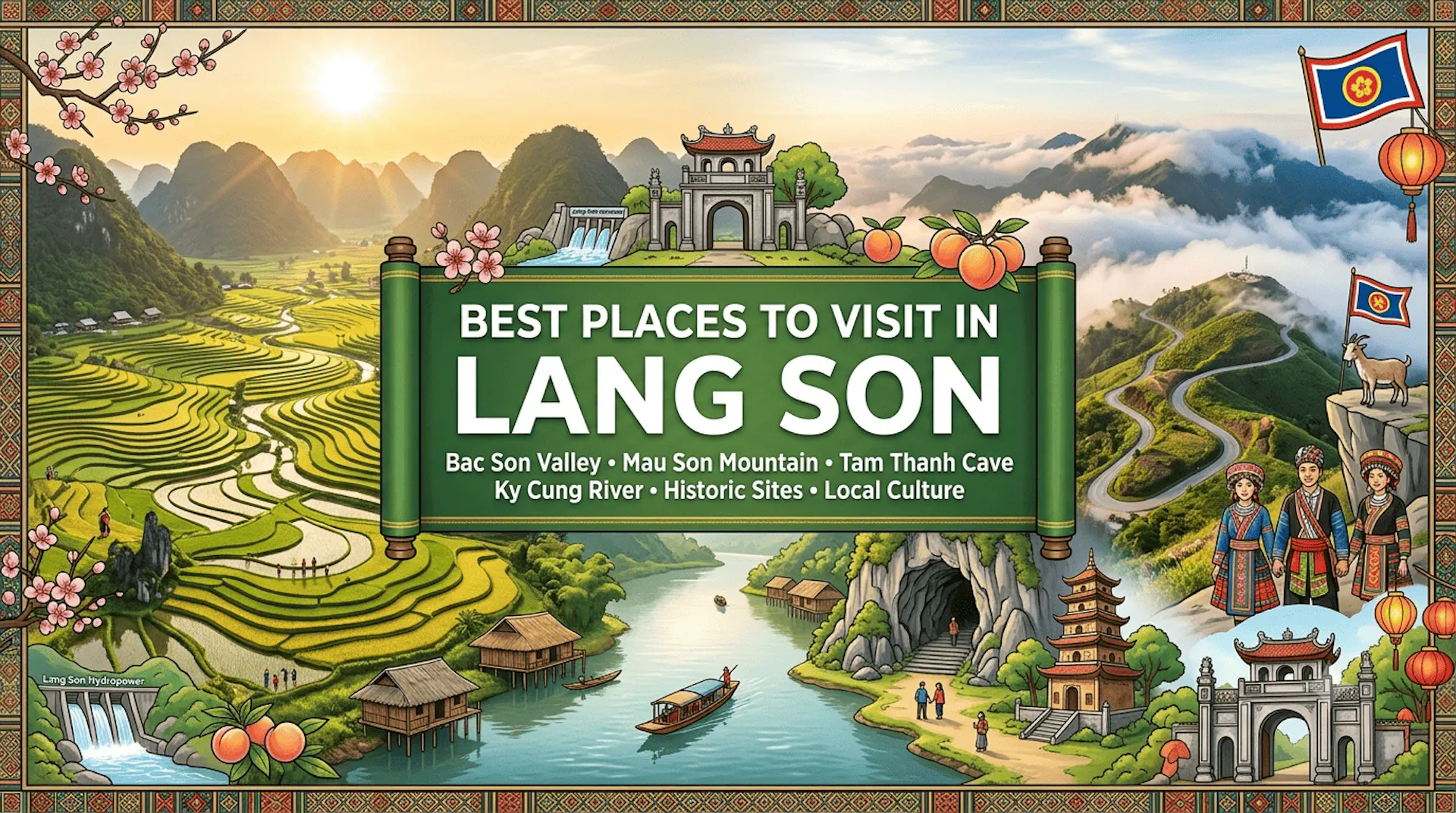
Lang Son is a fascinating destination in Vietnam's northeast, known for dramatic limestone mountains, historic caves, bustling border markets, and rich cultural heritage. Visitors can explore Mau Son Mountain, discover the ancient Tam Thanh and Nhi Thanh caves, experience the vibrant Ky Lua Market, and admire spectacular mountain scenery throughout the province. Lang Son also offers unique ethnic traditions, historical landmarks, and delicious regional cuisine. This guide highlights the best places to visit in Lang Son for an unforgettable journey through northern Vietnam.
On this page
Lạng Sơn province serves as the dramatic threshold where the rugged, limestone-veined topography of Northeast Vietnam meets the vibrant, historic intersection of border trade and ethnic tradition. Often mischaracterized as a transit point, this province possesses a layered landscape defined by centuries of defensive architectural stewardship and profound spiritual heritage. For the borderlands travel journalist and cultural historian documenting these karst-dominated frontiers, identifying the best places to visit in Lang Son requires a deliberate departure from the fleeting pace of high-volume travel. This is a region where the solemn, stone-hewn ramparts of ancient citadels exist in constant, intricate dialogue with the misty, alpine frontiers of the north. To visit Lạng Sơn is to commit to a mode of discovery that values the intellectual weight of military history, the subterranean mystery of karst geomorphology, and the environmental integrity of the wilderness. This guide is curated for the traveler who seeks authenticity—the kind found in the resonant, calligraphy-carved depths of spiritual grottoes and the wind-swept, alpine trails that have defended the nation’s northern periphery. By navigating this sprawling, historically charged landscape with respect and logistical precision, you will uncover a province that serves as a vital anchor of Northern Vietnam.
Historical Ramparts & Spiritual Sanctuaries
Lạng Sơn is fundamentally rooted in its strategic role as the nation's "Northern Gateway". Exploring this heritage requires an understanding that these sites are not static museum pieces but are active, historical anchors of the province's defensive and religious narrative.
The Mạc Dynasty Citadel: Ruins of Resilience
The Thành nhà Mạc (Mạc Dynasty Citadel) stands as a definitive, stone-hewn symbol of sixteenth-century military architecture. Situated in Tam Thanh Ward, this fortress was strategically constructed to lean against the protective embrace of three distinct mountains, utilizing the natural terrain to guard the primary access route toward the capital. To walk the remaining three-hundred-meter section of the ramparts is to witness a masterclass in defensive architectural stewardship. The walls, meticulously built from massive stone blocks bound with a traditional mortar of molasses and honey, offer a tangible connection to the turbulent period of the Southern and Northern Dynasties. As you traverse the straight, steep steps leading to the fortress gates, you obtain a panoramic perspective of Lạng Sơn City, a view that underscores the military necessity of this elevated, defensible position. This site is not merely a ruin; it is a monument to the strategic resilience of a dynasty that shaped the geopolitical reality of the borderlands.
The Tam Thanh Cave Complex: Nature’s Cathedral
The Động Tam Thanh (Tam Thanh Grotto) serves as a profound bridge between geological wonder and spiritual practice. Nestled within a limestone massif dating back nearly three hundred million years, this complex represents an ancient confluence of Taoist heritage, Buddhist veneration, and indigenous Mother Goddess worship. Within the main cave, the atmosphere is dictated by the cool, subterranean air and the striking, natural stalactites that have been venerated for centuries. A highlight of the complex is the Amitabha Buddha statue, intricately carved directly into the cliff face during the Le-Mac period, representing an artistic style that harmonizes religious iconography with the raw geology of the cavern. Stone steles preserved along the walls further elevate the site into a living museum, where centuries of calligraphy remain etched into the earth. This demands a meditative pace to appreciate how karst geomorphology dynamics are transformed into a site of cultural preservation.
Spiritual Veneration at Local Temples
Beyond the grottoes, the province is anchored by sacred sites such as the Ky Cung Temple, which venerates local deities of rain and wind. Historically, this temple has been a cornerstone of local worship, and its location near the Ky Cung wharf highlights the integration of spiritual practice with the essential riverine life of the border community. These temples remain vital for understanding the province's cultural roots, offering travelers a glimpse into the diverse religious tapestry that includes formalized Buddhism and the deeply ingrained folk beliefs of the Tày and Nùng communities. Visitors are encouraged to observe these rituals with humility, respecting the quietude of these sanctuaries as they serve as the enduring, intangible heart of Lạng Sơn's community life.
Highland Wilderness & Natural Majesty
As one moves away from the urban border center, the landscape transitions into a vast, rugged wilderness dominated by cold-weather agriculture, towering monoliths, and the mist-shrouded peaks of the Northeast. This terrain requires physical endurance and a deep respect for the ecological fragility of the high-altitude frontier.
Mau Son: The Alpine Frontier
Mẫu Sơn mountain functions as the definitive alpine frontier of the province, sitting at an altitude of over one thousand five hundred meters, creating a micro-climate completely distinct from the surrounding humid lowlands. This high-altitude peak is characterized by its bitterly cold winters—often dropping below zero to produce rare tropical frost—and its unique, French-influenced colonial history. To visit Mẫu Sơn is to engage with a wind-swept environment that historically served as a high-elevation retreat and a strategic observation point. The landscape here is a mosaic of primitive forest, rolling green hills, and traditional Dao ethnic villages that cling to the steep slopes. Sustainable alpine navigation is essential here; travelers are encouraged to explore the Long Dau stream and the surrounding trails with an awareness of the delicate balance of this high-altitude ecosystem, ensuring that the unspoiled beauty of the peak remains protected from the pressures of mass-scale tourism.
Karst Landscapes & Stewardship
The broader karst geomorphology dynamics create a terrain as fragile as it is majestic. From the jagged peaks surrounding the Chi Lang Pass to the expansive limestone cathedrals guarding the city, the landscape is increasingly vulnerable to the impact of modern infrastructure development. Stewardship is paramount. Whether you are trekking through the limestone-studded trails of the geopark corridors or visiting the dramatic rock formations that have acted as natural shields for the ancient citadel, you must prioritize minimal impact. This includes strict adherence to marked trails and the rigorous management of your plastic footprint, ensuring that these geological monuments remain for future generations to explore without degradation.
Navigating the Borderland Rivers
The rivers of Lạng Sơn, particularly the winding Ky Cung River, remain the historical lifeblood of the border communities. Unlike most rivers in Vietnam that flow out to the Eastern Sea, the Ky Cung uniquely flows northwest into China, a geographical quirk that perfectly mirrors the intertwined border culture of the region. These waterways have facilitated trade, agricultural irrigation, and community connection for centuries. While the rivers are less traveled by international tourists today, they represent an authoritative path for understanding the province's physical and logistical challenges. Safety is the primary priority, and those seeking to explore the riverine context should prioritize local, experienced guides who possess the ancestral knowledge of the currents and the historical significance of the riparian landscapes that define the borderland rhythm.
The Market Culture & Borderland Rhythm
Lạng Sơn is the premier border-region cultural preservation hub, where the intersection of immense commercial trade and resilient ethnic tradition creates a unique, sensory-rich experience that dictates the daily pace of the population.
The Dynamics of Border Markets
Markets such as the Chợ cửa khẩu Tân Thanh (Tan Thanh Border Market) and the historic Ky Lua night market are the definitive commercial anchors of the border culture. These markets offer far more than the exchange of consumer goods; they are the arenas where the diverse ethnic communities of the northern borderlands converge. Witnessing the trade of local specialties—from mountain-foraged herbs to the vibrant, handmade textiles of the Nùng and Tày people—provides the most authoritative view of the province's dietary foundations and daily lifestyle. The integration of cross-border logistics with traditional, village-scale bartering creates a dynamic unique to the northern frontier, offering a contemplative look at how the region balances its role as a global trade gateway with the preservation of indigenous identity.
Culinary Heritage as Cultural Identity
The culinary identity of the province is best understood through the lens of its signature specialties, particularly the celebrated vịt quay Lạng Sơn (roasted duck). The preparation of this dish is a culinary masterclass involving a meticulous multi-stage process: stuffing the duck with a fragrant mixture of cardamom, anise, and the local mắc mật (a unique, tangy highland leaf), coating the skin with a honey-based glaze, and roasting it over coal before a flash-fry finish. Seeking out this dish in a local, family-owned eatery is the essential way to experience the province's dietary heritage. Supporting these traditional establishments, which are the primary custodians of these regional recipes, is a fundamental way to contribute to the culinary heritage of the province, ensuring that the unique flavor profiles of the borderland are preserved for years to come.
Engaging with Traditional Crafts
Lạng Sơn's cultural soul is deeply expressed through traditional folk music, particularly the practice of Hát Then, accompanied by the resonant, gourd-bodied đàn tính lute. Witnessing a traditional performance—often held during communal festivals or within the context of cultural exchange in rural homestays—is essential for understanding the province's intangible heritage. These melodies, characterized by their rhythmic depth and lyrical storytelling, link the modern communities to their historical and spiritual roots, often serving as a medium for communicating with the divine. Travelers are encouraged to engage with cultural clubs and local artisan groups that actively work to preserve these traditions, as this support is vital for the continued viability of the border region's unique ethnic arts against the tide of modernization.
Practical Field Logistics & Travel Etiquette
Executing a seamless, authoritative expedition through Lạng Sơn requires a pragmatic approach to the logistics of a province that spans such a vast range of topographical and cultural zones. For the most effective travel experience, the use of private car transfers is highly recommended, particularly for moving between the city center, the bustling border markets, and the remote, high-altitude peaks of Mẫu Sơn. While independent motorcycle travel is a popular option, the challenging terrain, steep gradients, and unpredictable weather patterns of the mountain corridors necessitate both advanced riding experience and a high level of situational awareness.
Sustainable tourism ethics are centered on the concept of respect and minimal impact. Minimizing the plastic footprint is a mandatory expectation, especially when exploring the more remote limestone grottoes or the high-altitude alpine zones. Furthermore, respect the quietude of sacred sites; temples and ancestral communal caves are functional, deeply revered spaces, and your conduct should always prioritize humility. When interacting with local ethnic communities, prioritize support for locally-owned homestays and community-based artisan initiatives, as this direct engagement is the most effective way to sustain the livelihoods that underpin the province's cultural preservation.
Seasonal planning is the definitive logistical variable. Lạng Sơn experiences a distinct climatic shift; the winter months bring a unique chill to Mẫu Sơn, often accompanied by frost, which complicates transit but offers a singular photography window. Conversely, the spring and autumn periods offer the clearest visibility for exploring the ancient citadels and karst cave complexes. By aligning your visit with these seasonal realities, you ensure that your travel remains fluid, focused, and respectful of the region’s dramatic, mountain-carved life.
Conclusion: Finalizing Your Journey Through the Best Places to Visit in Lang Son
Lạng Sơn stands as the definitive, undisputed heart of the northern frontier, offering a complex, multi-layered landscape that rewards the inquisitive mind, the respectful observer, and the traveler who values historical depth over commercial convenience. From the heavy, stone-hewn silence of the Mạc Dynasty Citadel to the wild, mist-swept alpine peaks of Mẫu Sơn and the deep, calligraphy-etched limestone grottoes of Tam Thanh, the best places to visit in Lang Son demand absolute, high-level engagement from those who traverse its borders. Which specific landscape—the solemn, historical stone ramparts or the wild, mist-swept alpine peaks—are you most prepared to explore first on your journey?
Read more: Lang Son Travel Guide

By Roy Trinh
Editor
Roy Trinh is a travel writer and destination expert at Go Visit Vietnam, dedicated to helping travelers discover the beauty, culture, and diversity of Vietnam. Through well-researched travel guides, practical itineraries, local insights, and authentic recommendations, Roy shares valuable information to inspire memorable journeys across the country. From vibrant cities and breathtaking landscapes to regional cuisine and cultural heritage, every guide is created to help visitors experience Vietnam with confidence and curiosity.
Frequently Asked Questions About the Best Places to Visit in Lang Son
What are the best places to visit in Lang Son?
Lang Son's top attractions include Mau Son Mountain, Tam Thanh Cave, Nhi Thanh Cave, Ky Lua Market, To Thi Mountain, Mac Dynasty Citadel, and the scenic valleys and ethnic villages scattered throughout the province.
What is Lang Son famous for?
Lang Son is famous for its spectacular limestone mountains, ancient caves, cool climate at Mau Son Mountain, vibrant border markets, and the rich cultural traditions of the Tay, Nung, Dao, and other ethnic minority communities.
Is Mau Son Mountain worth visiting?
Yes. Mau Son Mountain is one of northern Vietnam's most unique mountain destinations, offering cool weather, panoramic viewpoints, cloud-covered peaks during winter, and beautiful natural scenery throughout the year.
How many days should I spend in Lang Son?
Two to three days are ideal for exploring Lang Son's main attractions, including Mau Son Mountain, Tam Thanh Cave, Nhi Thanh Cave, Ky Lua Market, historical sites, and nearby ethnic villages.
Can I combine Lang Son with other destinations in northern Vietnam?
Absolutely. Lang Son can easily be combined with Ha Noi, Cao Bang, Bac Kan, or Ha Giang, making it an excellent stop on a longer journey through Vietnam's northeastern mountains and cultural heritage sites.
Advertising box