
Best Places to Visit in Quang Ninh
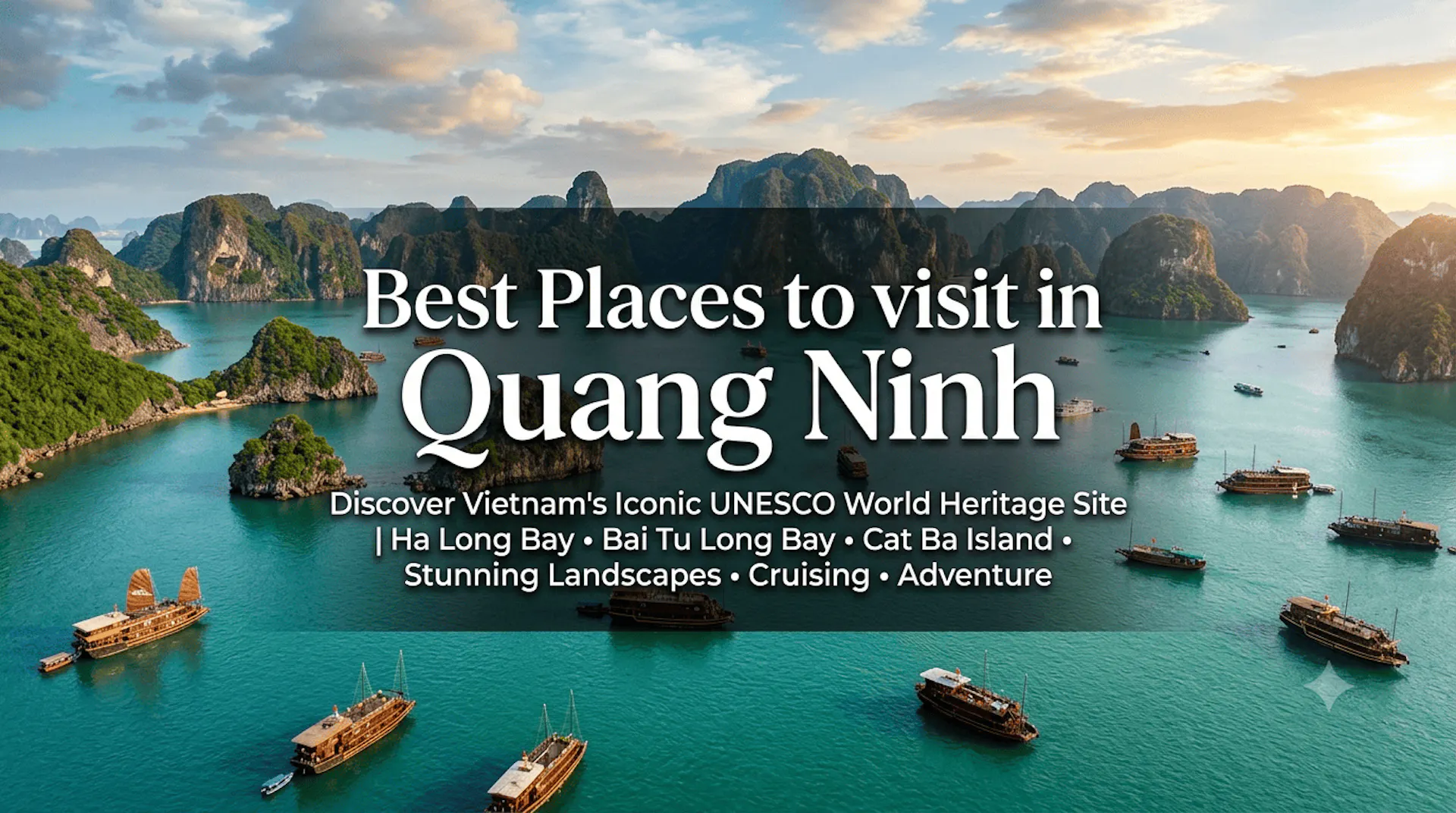
Quang Ninh is one of Vietnam's most spectacular destinations, famous for the UNESCO World Heritage Site of Ha Long Bay and its breathtaking limestone seascapes. Visitors can explore Bai Tu Long Bay, relax on Co To Island, discover magnificent caves, hike Yen Tu Mountain, and enjoy beautiful beaches, fishing villages, and cultural landmarks. The province also offers vibrant local cuisine, island adventures, and unforgettable cruises. This guide highlights the best places to visit in Quang Ninh for travelers seeking nature, culture, and world-class coastal scenery.
On this page
To journey into Quảng Ninh is to engage with the sheer, topographical expanse of one of Vietnam’s most dynamic provinces—a region that stretches from the emerald-hued, limestone-studded corridors of the Gulf of Tonkin to the jagged, mist-cloaked ridgelines of the northeastern mountains bordering China. For the veteran travel journalist, the marine cultural geographer, and the researcher who has documented the resilient character of this region for years, identifying the best places to visit in Quang Ninh requires a deliberate departure from the standard, high-volume tourist trajectory. This is a province defined by profound geographical contrasts; it is a region where the world-renowned maritime heritage of the UNESCO-listed bays exists in constant, intricate dialogue with the rugged, indigenous culture of the highland frontier. To visit Quảng Ninh is to commit to a mode of discovery that values the intellectual weight of spiritual history and the environmental integrity of the maritime and mountain ecosystems over the convenience of mass-market, resort-centric travel. This master guide is curated for the traveler who seeks authenticity—the kind found in the quiet, salt-sprayed coves of the outer islands and the resonant, wind-swept mountain trails that have defined the northern borderlands for centuries. By navigating this sprawling landscape with respect and logistical precision, you will uncover a province that serves as a vital, deep-rooted anchor of Northeast Vietnam, rewarding those who prioritize depth over surface-level sightseeing.
The Maritime Legacy & UNESCO Wonders: Foundations of the Coast
The identity of Quảng Ninh is fundamentally rooted in its maritime geomorphology, a landscape that has served as both a protective fortress and an economic gateway for the nation since antiquity. Exploring this legacy requires an understanding that these bays are not static aesthetics; they are active, evolving ecological systems.
Ha Long Bay: Understanding the Geomorphology
Vịnh Hạ Long (Ha Long Bay) functions as the definitive, global icon of the province, yet it is often misunderstood as a simple recreational space. To visit the bay with an expert lens is to observe the massive geological karst evolution that has occurred over millions of years. This UNESCO World Heritage site is characterized by thousands of limestone pillars and islets, each a testament to the slow, relentless sculpting power of water on carbonate rock. Understanding the geomorphology is essential for any responsible visitor; it frames the bay as a fragile, non-renewable asset. The current traveler experience must be centered on the principle of minimal impact, recognizing that the very pillars that define the aesthetic are prone to natural erosion. By choosing low-impact, sustainable boat operators and focusing on the quieter zones of the bay, you contribute to the ongoing efforts of cultural and environmental heritage stewardship. This is not a site to be consumed in a rush; it is a landscape that demands deep, deliberate observation, particularly as one notices how the sea levels and tidal rhythms continue to subtly redraw the outlines of the islets, providing a rare look at the ongoing, geological drama of the Gulf of Tonkin.
Bai Tu Long Bay: The Introspective Alternative
Vịnh Bái Tử Long (Bai Tu Long Bay) functions as the introspective, ecologically vital alternative to its more famous neighbor. For the researcher and the seasoned journalist, this bay is the true archive of the regional maritime ecosystem. Because it lacks the high-density traffic of the central tourist corridors, Bai Tu Long retains a level of environmental integrity that is essential for the preservation of its diverse marine life and its ancient, undisturbed mangrove forests. To navigate these waters is to engage with a landscape that remains relatively close to its pre-modern state. This bay offers the traveler the rare opportunity to observe the interaction between the limestone geology and the marine habitat without the presence of massive tourism infrastructure. It is the definitive location to witness the local fishing traditions—traditional floating villages that operate on a rhythm dictated by the tides and the sustainable harvest of the bay, providing a view into the maritime endurance that has sustained local families here for generations.
Co To Island: Remote Island Resilience
The Đảo Cô Tô (Co To Island) archipelago represents the outer, maritime frontier of the province. Reaching this remote cluster of islands requires a commitment to a multi-modal transit journey, which effectively filters the visitor demographic and preserves the islands' rugged character. Cô Tô is not a luxury resort destination; it is a symbol of maritime resilience, home to communities that have thrived in the face of the frequent, intense storm systems that define the Gulf of Tonkin. The biodiversity here, ranging from endemic coastal flora to the migratory avian corridors that cross the islands, is exemplary. To visit Cô Tô is to experience the raw, unvarnished beauty of the East Sea, where the winds are constant and the horizons are vast. Travelers must navigate the island’s logistics with respect for the local, community-driven economy, prioritizing locally-owned homestays and engaging with the maritime lifestyle that prioritizes the health of the sea as the primary economic and cultural engine of the population.
Spiritual Roots & Mountain Hinterlands: The Northern Frontier
As one moves northward away from the coast, the province undergoes a dramatic transformation into a rugged, high-altitude domain. This is the realm of the Đông Bắc (Northeast) mountains, where the cultural focus shifts from the maritime to the spiritual and the ethnic-indigenous.
Yen Tu Mountain: The Crucible of Vietnamese Zen
Yên Tử Mountain stands as the definitive, spiritual anchor of the northern mountain ranges. As the birthplace of the Trúc Lâm school of Vietnamese Zen Buddhism, this site carries an immense historical weight that transcends its status as a pilgrimage destination. The physical ascent—a rigorous, multi-hour journey up stone-laid pathways—serves as the primary rite of passage for the traveler seeking cultural understanding. To navigate these paths is to follow in the footsteps of the Trần Dynasty monarchs who turned their backs on imperial luxury to pursue enlightenment in the mist-shrouded peaks. The spiritual heritage stewardship practiced here is palpable, from the ancient, incense-infused pagodas to the contemplative silence of the resident monastic community. The ascent is not merely a trek; it is a meditative cycle. Whether one climbs the path by foot or utilizes the ropeway system, the act of reaching the summit pagoda—perched on the very ridge of the mountain—provides a perspective that is fundamentally different from any coastal experience, anchoring the visitor in the deep, philosophical roots of the Vietnamese cultural consciousness.
Binh Lieu: The Northern Frontier
Bình Liêu serves as the definitive northern frontier, a region where the terraced landscapes of the mountainous interior are inextricably linked to the cultures of the ethnic minority communities, including the Tày, Dao, and Sán Chỉ people. Unlike the southern mountainous regions of Vietnam, Bình Liêu remains relatively untouched by the rush of high-volume tourism, making it an essential site for those who value respectful engagement with indigenous cultures. The logistics of the region require a sophisticated approach to sustainable trekking navigation; this is a land of steep gradients, narrow, winding border roads, and high-altitude weather patterns that dictate the pace of movement. To traverse the mountain borderlands is to witness a unique coastal-mountain integration, where the cultural life of the highland communities is preserved through the traditional maintenance of terraced fields and the oral transmission of indigenous folklore. Your visit here must be characterized by an unwavering commitment to the integrity of these communities, ensuring that your presence provides a direct, positive incentive for the continued, robust protection of their heritage.
Mountain Cultural Stewardship
The stewardship of mountain culture in Quảng Ninh is an active, ongoing effort. Engaging with these communities requires more than just a passing interest; it demands a willingness to slow down and observe the cycles of trade, harvest, and festival that define the highland life. By prioritizing locally-owned lodges and engaging the services of regional guides who belong to the local ethnic groups, you ensure that your travel dollars directly support the maintenance of the indigenous social structure. This is a region where the history of the borderlands is written into the very topography—from the ancient defensive ramparts to the modern, village-based markets that facilitate cross-cultural exchange. Understanding the province requires this deep dive into the high-altitude reality, recognizing that Quảng Ninh is as much a mountain province as it is a maritime one, with a cultural complexity that is best appreciated through patient, long-duration exploration.
Urban Dynamics & Modern Coastal Life
While the bays and mountains represent the ancestral heart of the province, the coastal urban interface of Quảng Ninh is currently undergoing a period of rapid, infrastructure-driven transformation, shifting the province's tourism landscape.
Ha Long City: The Modern Coastal Interface
Hạ Long City serves as the definitive urban-coastal interface, functioning as the high-traffic gateway to the bay. The city is a study in modern coastal development, where the drive for rapid expansion meets the historical legacy of the port and mining industries. To navigate the urban dynamics of Hạ Long is to understand the modern struggle for coastal-mountain integration—how a city balances its role as a regional economic engine with the absolute necessity of maintaining the ecological health of the bay at its doorstep. As the city continues to densify, the traveler’s experience becomes increasingly tied to the urban infrastructure—high-end hotels, commercial ports, and modern transit hubs—that effectively manage the influx of regional and international visitors. Engaging with this modern interface requires an awareness of the changing urban aesthetic, where the traditional maritime history of the city is being rapidly reimagined for a globalized tourism sector.
Van Don: The Economic Gateway
Vân Đồn represents the emerging coastal frontier, a region where large-scale infrastructure projects are redefining the accessibility of the province’s outer islands and maritime corridors. This district is essential for the traveler who is interested in the macro-logistics of the Northeast region—where the development of deep-water ports and modernized transport links is shifting the economic weight of the province away from the historic bay centers. To visit Vân Đồn is to observe the province’s evolution into a major, international logistics hub. For the researcher, this is the prime location to study the impacts of modern infrastructure on historical maritime communities and the ways in which the province is attempting to attract a new, more integrated form of high-speed tourism. It provides a stark, modern counterpoint to the contemplative silence of the remote islands or the spiritual intensity of the mountain ranges, highlighting the diverse, multi-layered identity of contemporary Quảng Ninh.
Local Maritime Culinary Culture
The culinary identity of the province is best understood through the lens of its seafood traditions, which are a direct, seasonal reflection of the bay’s bounty. Supporting the local fishers—by patronizing small, family-run establishments in the coastal districts—is the most authoritative way to understand the province's food identity. The maritime culinary culture here is defined by the freshness of the catch, prepared with a simplicity that honors the labor of the local fishing fleets. Whether it is the celebrated chả mực (squid patties) of Hạ Long or the diverse shellfish harvest of the outer islands, the seafood here is not just a commercial product; it is the fundamental driver of the coastal economy and a symbol of the province's resilient maritime lifestyle. Engaging with the coastal foodways is an essential component of the traveler’s itinerary, providing a sensory-rich connection to the maritime heritage that has sustained the province through centuries of change.
Practical Field Logistics and Travel Etiquette
Executing a seamless, authoritative expedition through Quảng Ninh requires a pragmatic approach to the logistics of a province that spans such an extreme range of topographical and cultural zones. The most effective method for navigating these regions is a multi-modal strategy that combines the use of maritime transit—ferries, private boat hires, and island-hopping cruisers—with private road transport for the mountain hinterlands. The geography of the province is simply too expansive for a high-intensity, short-duration trip; therefore, the deliberate use of private transport allows the traveler to manage their time and energy, prioritizing the sites that offer the most significant historical and ecological depth.
Responsible tourism ethics in Quảng Ninh are centered on the concept of high-level environmental and spiritual stewardship. The province’s maritime biodiversity, particularly in the protected corridors of the UNESCO bays, is a precious and fragile resource. Minimizing the plastic footprint is a mandatory, non-negotiable expectation for any serious expedition. Travelers must ensure that every scrap of waste is managed, particularly when venturing into the interior highland villages or the remote islands. Furthermore, when engaging with the diverse ethnic communities, one must demonstrate an awareness of the local culture, showing respect for the customs of the village-dwellers, and favoring homestays that serve to circulate the economic benefit of your visit directly into the hands of the people who steward the land.
Finally, seasonal planning is the definitive logistical variable. Quảng Ninh is subject to intense, monsoon-driven meteorological events that typically reach their peak in the final months of the year, often resulting in significant coastal disruptions and the closure of high-altitude mountain passes. To guarantee the optimal conditions for mountainous photography, heritage site exploration, and maritime exploration, the traveler must focus their visit on the dry, stable window that typically spans from late spring through early autumn. This is the period when the landscape is at its most stable, allowing for a standard of safety and visual clarity that is essential for an authoritative, high-quality expedition. By aligning your visit with these climatic parameters, you ensure that your travel remains fluid, focused, and respectful of the region's seasonal realities.
Conclusion: Finalizing Your Journey Through the Best Places to Visit in Quang Ninh
Quảng Ninh stands as the definitive, undisputed heart of Northeast Vietnam, offering a complex, multi-layered landscape that ruthlessly exposes the inadequacy of standard, passive resort tourism. From the heavy, incense-laden silence of the Yen Tu mountains to the wild, biodiverse expanses of the northern frontier and the iconic, emerald-water karsts of the bay, the best places to visit in Quang Ninh demand absolute, high-level engagement from those who traverse its borders. By mastering the environmental logistics and respecting the deep, ancestral heritage of the land, you unlock the true, multifaceted essence of this coastal-mountain frontier. Which specific landscape—the iconic limestone bays or the wild, high-altitude border ranges—are you most prepared to document first in your own Quảng Ninh expedition? The heart of Northeast Vietnam awaits, but it requires a traveler who approaches it with patience, respect, and a precise understanding of the modern and historical pulse of the land.
Read more: Quang Ninh Travel Guide

By Roy Trinh
Editor
Roy Trinh is a travel writer and destination expert at Go Visit Vietnam, dedicated to helping travelers discover the beauty, culture, and diversity of Vietnam. Through well-researched travel guides, practical itineraries, local insights, and authentic recommendations, Roy shares valuable information to inspire memorable journeys across the country. From vibrant cities and breathtaking landscapes to regional cuisine and cultural heritage, every guide is created to help visitors experience Vietnam with confidence and curiosity.
Frequently Asked Questions About the Best Places to Visit in Quang Ninh
What are the best places to visit in Quang Ninh?
The top attractions include Ha Long Bay, Bai Tu Long Bay, Co To Island, Yen Tu Mountain, Sung Sot Cave, Ti Top Island, Quan Lan Island, and numerous beautiful beaches and fishing villages.
What is Quang Ninh famous for?
Quang Ninh is internationally known for Ha Long Bay, a UNESCO World Heritage Site famous for its dramatic limestone islands, emerald waters, caves, luxury cruises, and spectacular coastal scenery.
How many days should I spend in Quang Ninh?
Three to five days are ideal for enjoying a Ha Long Bay cruise, exploring nearby islands, visiting Yen Tu Mountain, relaxing on beaches, and experiencing local seafood and cultural attractions.
Is Bai Tu Long Bay worth visiting?
Absolutely. Bai Tu Long Bay offers scenery similar to Ha Long Bay but with fewer tourists, making it perfect for travelers seeking peaceful cruises, kayaking, pristine beaches, and untouched natural beauty.
Can I combine Quang Ninh with other destinations?
Yes. Quang Ninh pairs perfectly with Hanoi, Hai Phong, Ninh Binh, and Cat Ba Island, making it an excellent addition to a northern Vietnam travel itinerary.
Advertising box