
Best Places to Visit in Son La
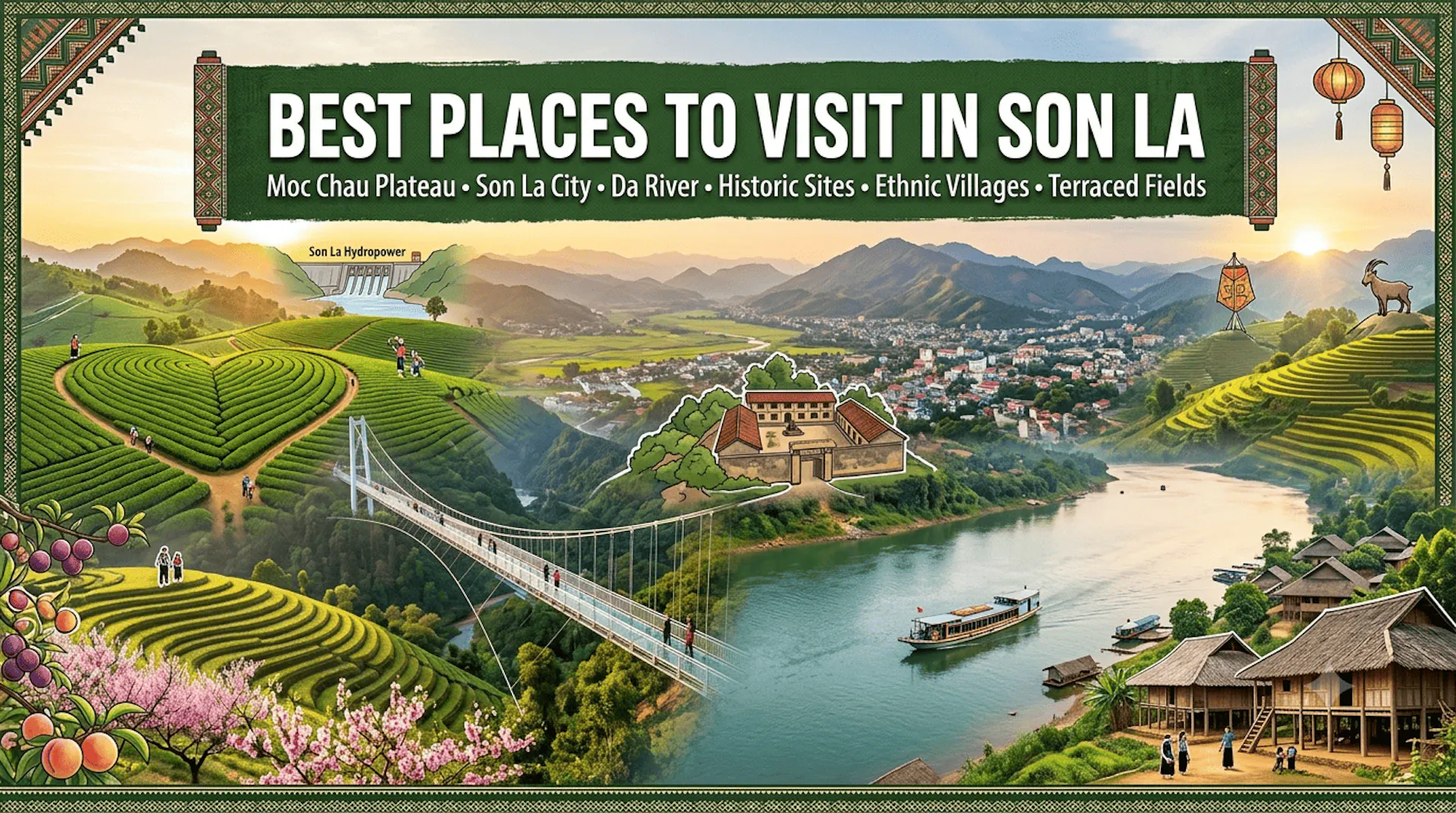
Son La is one of northern Vietnam's most captivating mountain destinations, famous for spectacular landscapes, cool highlands, ethnic culture, and outdoor adventures. Visitors can explore the scenic Moc Chau Plateau, chase clouds at Ta Xua, admire Dai Yem Waterfall, discover historic Son La Prison, and wander through vast tea plantations and flower fields. The province also offers caves, peaceful villages, and vibrant local traditions. This guide highlights the best places to visit in Son La for an unforgettable journey into Vietnam's beautiful northwest region.
On this page
Son La province is a rugged frontier where the tectonic shifts of the earth have sculpted a dramatic landscape of high-altitude plateaus, deep riverine valleys, and mist-shrouded peaks. For the veteran traveler and the cultural geographer, identifying the best places to visit in Son La is an exercise in navigating the intersection of rich agro-ecosystem dynamics and resilient highland traditions. This is a region that defies monolithic travel tropes, requiring a journey that spans both the structured, emerald-green tea plantations of the lower plateaus and the wild, introspective challenges of the cloud-hunting ranges. To visit Son La is to commit to a mode of exploration that values the intellectual weight of revolutionary history and the environmental integrity of the Northern Vietnamese highlands. This master guide is curated for the traveler who seeks authenticity—the kind found in the quiet, mist-covered mornings of Tà Xùa and the resonant, historical echoes of the Son La Prison. By navigating this sprawling landscape with respect and logistical precision, you will uncover a province that serves as a vital, deep-rooted anchor of the Northwest, rewarding those who prioritize depth over surface-level sightseeing.
The Highland Plateaus & Agricultural Rhythms
The identity of Son La is fundamentally rooted in its highlands, where the altitude creates a temperate micro-climate that has fostered a unique agricultural legacy. These regions are not merely landscapes; they are living, working environments where the rhythms of the earth dictate the daily life of the community.
Moc Chau: The Plateau’s Agricultural Legacy
Mộc Châu serves as the primary highland plateau, characterized by its rolling, verdant tea plantations and temperate climate that sits over 1,000 meters above sea level. The sensory experience of the tea hills—vast, symmetrical rows of Oolong and green tea that mirror the contours of the rolling landscape—is one of profound tranquility. Beyond the aesthetic appeal, Mộc Châu represents a significant highland agro-ecosystem dynamic. Visitors here engage with a landscape that has been carefully husbanded for generations, where the integration of dairy farming, fruit orchards, and specialty tea production supports a thriving rural population. It is essential for the traveler to recognize that these fields are active production zones; observing the harvest or learning about the processing of specialty tea at local facilities offers an authoritative perspective on the region's agricultural prowess. The plateau's cool, bracing air is a welcome respite from the lowlands, and wandering through the plum gardens or dairy pastures provides a rare insight into how altitude-driven farming sustains the local economy.
Dai Yem Waterfall & Karst Formations
The Dải Yếm (Dai Yem) waterfall represents the province's delicate hydrological beauty. Often referred to as the "Curtain Waterfall," it is a vital feature of the karst landscape, where water cascades over limestone formations, creating a vital ecological anchor for the surrounding forest. This site highlights the importance of water as a resource and a natural wonder within the highland environment. While the waterfall is a popular attraction, its geological importance—demonstrating the erosion patterns that characterize the limestone ranges—is often overlooked. Visitors should approach these water sources with environmental stewardship in mind, recognizing that these sites are essential for maintaining the local moisture-sensitive flora and fauna. The surrounding karst structures offer a tangible example of the province's geological evolution, providing a visceral connection to the land's structural history.
The Significance of Highland Plantations
The agricultural fields of Mộc Châu are more than scenery; they are the bedrock of the local community. Respectful engagement with these plantations is vital for the region's long-term sustainability. Travelers who engage with local farmers or purchase produce directly from family-run outlets contribute to a cycle of tourism that reinforces local identity rather than commodifying it. By choosing to cycle through the tea hills or hike along the orchard boundaries, you minimize your environmental impact and experience the plateau in its most authentic, slow-paced form. This level of engagement ensures that the highland agro-ecosystem remains a viable and respected component of the regional landscape for years to come.
The High-Altitude Frontiers
As one moves further from the plateaus, the landscape transitions into the raw, challenging terrain of the high-altitude ranges. This is the domain of the cloud-hunting phenomenon, where the physical demands of navigation are matched by the atmospheric intensity of the mountains.
Ta Xua: The Art of Cloud Hunting
Tà Xùa has become synonymous with the "sea of clouds" phenomenon, a delicate ecological and meteorological event where low-lying clouds settle into the valleys below the mountain peaks. Navigating these heights requires more than a casual visit; it demands an understanding of high-altitude logistics and a respect for the volatile nature of the Northern peaks. The cloud-hunting phenomenon is best viewed with professional guidance, ensuring that you choose vantage points that are both safe and minimally invasive to the local mountain environment. This delicate ecological event is not a guaranteed spectacle, and seasoned visitors prioritize the experience of the high-altitude environment itself, respecting the primeval forests and unique biodiversity that define the Tà Xùa landscape. As the area develops toward 2030, the emphasis remains on shifting toward sustainable eco-resort models that harmonize with the majestic Hoang Lien Son range, preserving the region's pristine identity while managing tourist flow.
Pha Din Pass: Navigating the Historical Spine
Đèo Pha Đin (Pha Din Pass) functions as a legendary historical spine, linking Son La and Dien Bien. Historically a vital artery for the Dien Bien Phu campaign, the pass is a testament to the courage and logistics of the resistance era. Today, the pass offers a panoramic perspective on the province’s rugged terrain. While the new road offers safer passage, the old pass route remains an invitation for the adventurous traveler to witness the same serpentine zigzags and deep gorges that defined the region's development. Whether navigating by car or motorbike, the pass is an authoritative path for understanding the physical challenges of the Northwest; one side is an upright cliff, the other a deep gulf, providing a humbling reminder of the terrain that the local ethnic communities have negotiated for centuries.
Biodiversity & Wildlife Stewardship
Beyond the popular viewpoints, the remote forest reserves of Son La serve as sanctuaries for a wealth of regional biodiversity. These protected zones are vital for the province’s environmental health, providing habitats for various rare species that are sensitive to human presence. The stewardship of these zones is a responsibility shared by the local authorities and the visiting public. Travelers who prioritize the protection of these remote, forested regions ensure that the delicate balance of the highland climate is maintained, contributing to a sustainable form of tourism that views the forest as a heritage asset rather than a recreational commodity.
The Cultural & Ethno-Historical Corridor
The cultural identity of Son La is a vibrant mosaic of over twelve ethnic minority groups, including the Thai, Hmong, Muong, and Dao, whose traditions and customs have been preserved through generations in the rugged isolation of the mountains.
Exploring Ethnic Village Life
Immersing in the life of ethnic villages offers a profound encounter with customs that are lived rather than performed. Whether it is witnessing the intricate weaving of brocade fabrics, the crafting of silver jewelry, or the preparation of communal meals, these villages provide an authentic view of a heritage that is deeply rooted in community values. Supporting local homestays is a crucial part of preserving this intangible heritage; it allows the traveler to engage directly with the people who are the keepers of these traditions. The hospitality of these communities is legendary, and their festivals—from the Hmong New Year to various community-based harvest rites—are essential experiences for those seeking a true connection to the highland spirit.
The Historical Legacy of Son La Prison
The Nhà tù Sơn La (Son La Prison) stands as a somber, fundamental pillar of the province's modern history. Built in the early 20th century by colonial authorities, the prison has been transformed into a national special relic, serving as a reminder of the tenacity of the Vietnamese spirit in the face of immense adversity. The cells, some as small as one square meter, and the underground conditions reflect the hardship endured by revolutionary figures. Visiting this site is an act of historical education; it provides a sobering perspective on the sacrifices that shaped modern Vietnam. The site also features a peach tree, famously tended by the patriot To Hieu, which has become a symbol of the unbreakable resistance spirit. A visit here is essential for anyone seeking to understand the deep-rooted resilience that characterizes the people of this northwestern region.
Culinary Heritage as Cultural Education
The highland diet is a direct expression of the climate and the resources of the Northwest. Seeking out regional specialties—whether it is local sticky rice prepared in bamboo, mountain-reared meats, or wild forest vegetables—in family-owned stalls offers a window into the nutritional traditions that have allowed these communities to thrive at high altitudes. Culinary tourism in Son La is not about luxury dining; it is about respecting the laborious preparation and the seasonal sourcing that define the diet. Engaging with the food culture of the local markets or small family eateries is the most honest way to experience the province's history, providing a sensory-rich context for the highland way of life.
Practical Field Logistics and Travel Etiquette
Executing a seamless expedition through Son La requires a pragmatic approach to the logistics of a province that spans such a vast and geographically diverse terrain. The most effective method for navigating these regions is the hire of a professional private driver, particularly for the mountainous transit routes where road conditions are as demanding as they are magnificent. While the main arterial highways are well-maintained, the narrow, winding tracks that lead to the high-altitude viewpoints or remote villages require both skill and an authoritative knowledge of the local road conditions. This level of logistical support ensures that your journey is safe, efficient, and focused on the sites that offer the most significant cultural and ecological resonance.
Responsible tourism ethics in Son La are centered on the concept of high-level environmental stewardship and cultural sensitivity. The province’s remote zones and ethnic communities are precious resources that require a proactive approach to conservation. Minimizing the plastic footprint is a mandatory, non-negotiable expectation for the responsible traveler, particularly when venturing into the high-altitude regions where waste management infrastructure is limited. Furthermore, when engaging with local community protocols, one must demonstrate an awareness of the local customs. Always prioritize humility, request permission before capturing images of residents or their private spaces, and support family-owned homestays to ensure your economic impact directly benefits the stewards of these highlands.
Seasonal planning is the definitive logistical variable in Son La. To guarantee the optimal conditions for high-altitude photography and cloud-hunting in Tà Xùa, one must focus their visit on the dry, cool months of autumn and early winter. Conversely, for the traveler interested in the vibrant, emerald-green tea harvests and the lush scenery of Mộc Châu, the late spring months provide a stunning contrast. By aligning your visit with these specific seasonal windows, you ensure that your travel remains fluid, focused, and respectful of the region’s climatic realities, allowing for a standard of experience that is authoritative, profound, and deeply connected to the heart of the Northwestern highlands.
Conclusion: Finalizing Your Journey Through the Best Places to Visit in Son La
Son La stands as the definitive, undisputed heart of the Northwest frontier, offering a complex, multi-layered landscape that rewards the inquisitive mind, the respectful observer, and the traveler who values historical depth over commercial convenience. From the heavy, stone-hewn silence of the Son La Prison to the wild, cloud-piercing summits of the Tà Xùa range and the structured, emerald-green elegance of the Mộc Châu tea plateaus, the best places to visit in Son La demand absolute, high-level engagement from those who traverse its borders. By mastering the environmental logistics and respecting the deep, ancestral heritage of the highland communities, you unlock the true, multifaceted essence of this mountain frontier. Which specific landscape—the verdant, structured tea hills or the wild, misty high-altitude peaks—are you most prepared to explore first in your own Son La expedition? The heart of the Northwest awaits, but it requires a traveler who approaches it with patience, respect, and a precise understanding of the modern and historical pulse of the land.
Read more: Son La Travel Guide

By Roy Trinh
Editor
Roy Trinh is a travel writer and destination expert at Go Visit Vietnam, dedicated to helping travelers discover the beauty, culture, and diversity of Vietnam. Through well-researched travel guides, practical itineraries, local insights, and authentic recommendations, Roy shares valuable information to inspire memorable journeys across the country. From vibrant cities and breathtaking landscapes to regional cuisine and cultural heritage, every guide is created to help visitors experience Vietnam with confidence and curiosity.
Frequently Asked Questions About the Best Places to Visit in Son La
What are the best places to visit in Son La?
The most popular attractions include Moc Chau Plateau, Ta Xua, Dai Yem Waterfall, Son La Prison Historical Site, Heart Tea Hill, Bach Long Glass Bridge, and traditional villages of the Thai, H'Mong, and Dao ethnic communities.
What is Son La famous for?
Son La is famous for its stunning mountain landscapes, tea plantations, cloud hunting at Ta Xua, ethnic minority culture, dairy farms in Moc Chau, and its cool climate throughout much of the year.
How many days should I spend in Son La?
A stay of three to four days is recommended to explore Moc Chau, visit Ta Xua, enjoy scenic viewpoints, experience local culture, and discover the province's waterfalls, caves, and historical sites.
Is Ta Xua worth visiting?
Absolutely. Ta Xua is one of Vietnam's most famous cloud-hunting destinations, attracting photographers and nature lovers with dramatic mountain ridges, sunrise viewpoints, and breathtaking sea-of-cloud landscapes.
Can I combine Son La with other destinations in northern Vietnam?
Yes. Son La is often combined with Mai Chau, Dien Bien, Lai Chau, Sapa, or Ha Giang, creating an unforgettable itinerary through Vietnam's spectacular northwest mountains and ethnic cultural regions.
Advertising box