
Best Places to Visit in Vinh Long
Vinh Long is one of the Mekong Delta's most charming destinations, famous for its peaceful rivers, fertile fruit orchards, traditional villages, and authentic local culture. Visitors can cruise through scenic waterways, explore picturesque river islands, enjoy tropical fruits straight from the gardens, visit ancient pagodas, and experience the relaxed lifestyle of the delta. Whether you're seeking nature, cultural experiences, river cruises, or local cuisine, this guide highlights the best places to visit in Vinh Long for an unforgettable journey.
On this page
- The Islet Sanctuary: An Binh and Binh Hoa Phuoc Among the Best Places to Visit in Vinh Long
- Riverside Spiritual and Cultural Landmarks: Essential Best Places to Visit in Vinh Long
- Deep Immersion: Craft Villages and Culinary Trails in the Best Places to Visit in Vinh Long
- Practical Vinh Long Travel Guide and Logistics for the Intrepid Explorer
- Conclusion: Defining the Best Places to Visit in Vinh Long
To step into the province of Vinh Long is to surrender to the elemental rhythm of the Mekong River. Positioned precisely in the center of the alluvial delta plains, this region is defined by a chaotic yet harmonious labyrinth of crisscrossing waterways, deep mangrove estuaries, and aggressively fertile soil. Here, the sensory atmosphere immediately envelops you: the relentless, low-pitched mechanical hum of wooden long-tail boats navigating the brown currents, the intoxicating, heavy scent of overripe tropical fruits fermenting in the equatorial heat, and the distinctly serene pace of life that dictates every human interaction on the isolated riverine islets. For the discerning traveler seeking to bypass the highly commercialized tourist traps of neighboring provinces, identifying the best places to visit in vinh long requires an understanding of its unique ethnographic landscape. This is not a destination for rapid sightseeing or manufactured attractions; it is the ultimate "slow travel" hub of Southern Vietnam. The true appeal lies in observing an authentic riverine lifestyle that has remained remarkably intact despite the rapid modernization of the surrounding country. By immersing yourself in the deeply rooted agricultural traditions, the complex architectural heritage, and the hyper-local culinary ecosystems, you will discover that the heart of the delta beats loudest in the quiet orchard pathways and muddy canals of this extraordinary province.
The Islet Sanctuary: An Binh and Binh Hoa Phuoc Among the Best Places to Visit in Vinh Long
The geographical defining feature of the province is its massive, fertile islands formed over millennia by the relentless deposition of silt from the Co Chien and Tien rivers. To truly grasp the ecological wealth of the region, dedicating significant time to these landmasses is a non-negotiable requirement for any comprehensive Vinh Long travel guide. The islets serve as the agricultural epicenter of the delta, producing a staggering volume of the nation's tropical fruit while maintaining a fiercely independent, village-centric social structure.
Exploring An Binh Islet (Cù lao An Bình)
The most culturally significant and accessible of these riverine sanctuaries is Cù lao An Bình (An Binh Islet). Reaching this sanctuary is an experience in itself; travelers must board the local passenger ferry departing from the central Vinh Long city pier. This brief, ten-minute crossing transports you from the chaotic urban mainland into an entirely different century. The quintessential method for exploring the dense, overgrown interior of An Binh is by renting a single-gear bicycle. Navigating the narrow, shaded concrete pathways that weave endlessly through the Miệt vườn (traditional Southern fruit orchards) allows you to intimately observe the daily mechanics of agricultural life. You will pedal past vast plantations of rambutan, longan, and the notoriously pungent durian, heavily shaded by towering coconut palms. The true value of this exploration lies in the unscripted interactions with the orchard owners, who frequently invite passing cyclists into their open-air courtyards to share heavily steeped green tea and freshly harvested produce. This spontaneous hospitality is the bedrock of the delta’s social fabric and remains one of the most compelling reasons to explore the islet’s interior.
Vinh Sang Ecotourism Farm
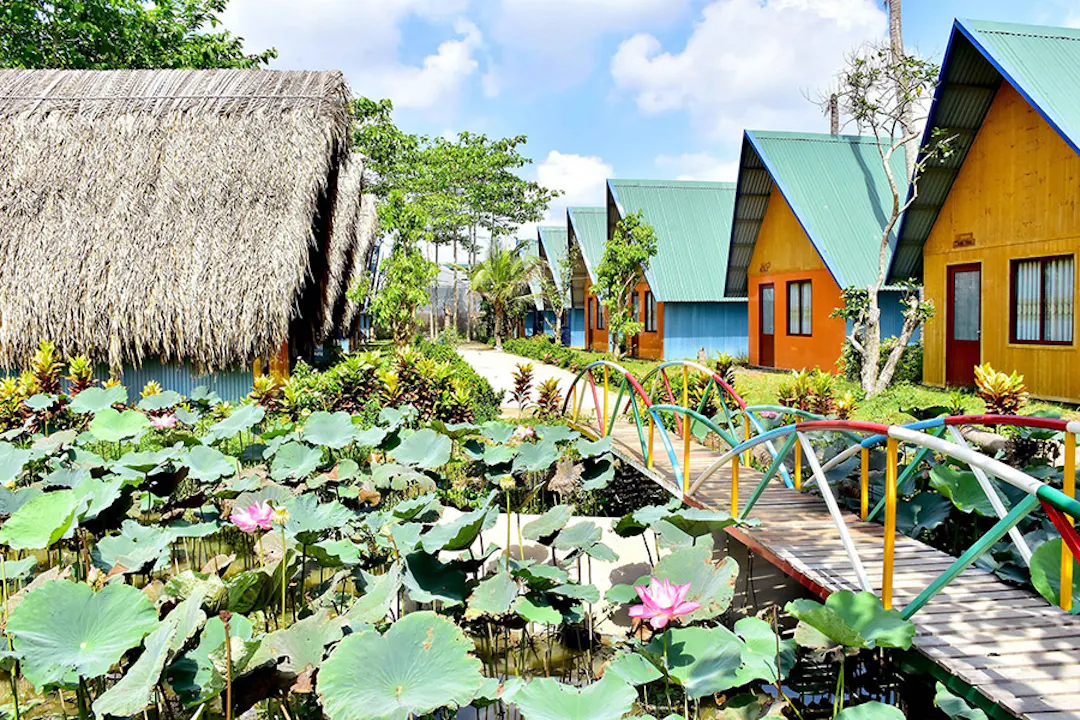
For those seeking a more concentrated, educational immersion into the region’s agricultural practices, the Vinh Sang Ecotourism Farm, located on the northern edge of An Binh Islet, provides a vital, interactive hub. This expansive facility transcends the typical petting-zoo aesthetic to offer a rigorous, hands-on education in traditional Mekong survival skills. Visitors are encouraged to don the traditional, loose-fitting brown pajama-style garments known as áo bà ba and wade directly into the muddy, shallow canals. Here, you learn the physically demanding art of traditional ditch fishing using hand-woven bamboo traps, a practice that requires immense patience and an understanding of the aquatic ecosystem. Beyond the physical labor, the farm operates as a living conservatory for the delta's botanical diversity, allowing guests to walk through meticulously cultivated gardens and sample a rotating calendar of highly seasonal, intensely flavored fruits directly from the branch, providing a visceral connection to the nutrient-dense alluvial soil.
Ancient Houses (Nhà cổ)
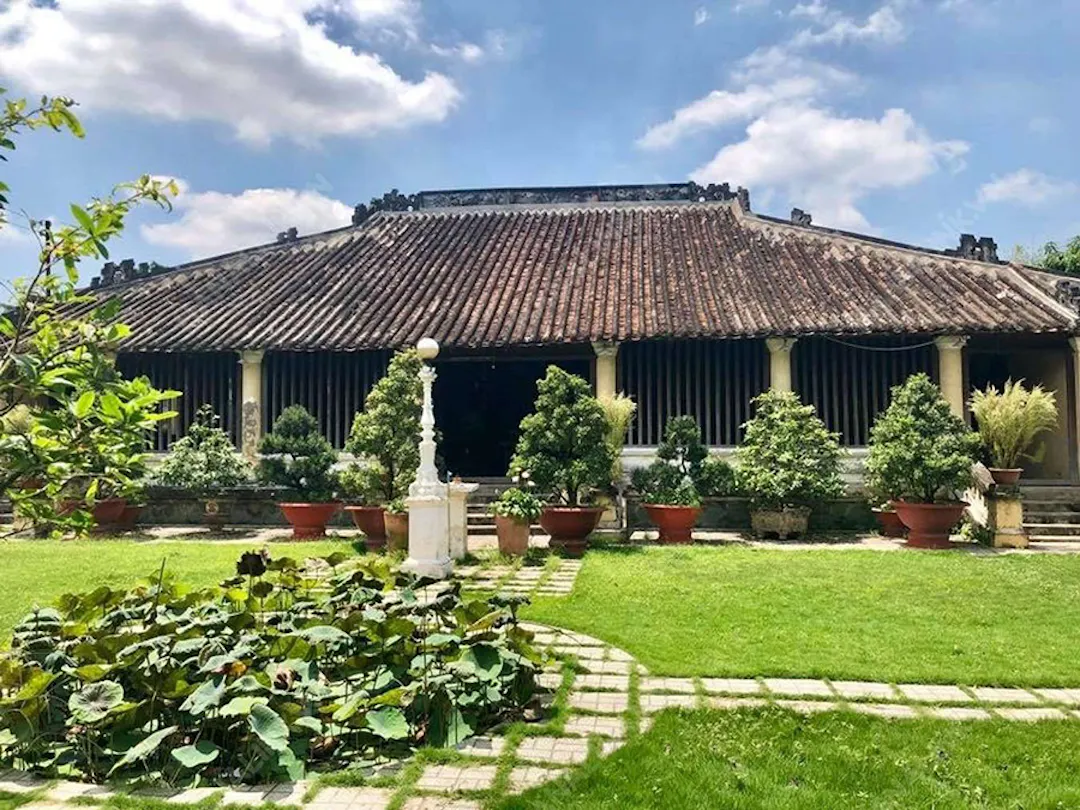
Scattered discretely throughout the dense foliage of the islets are the province's architectural crown jewels: the Nhà cổ (ancient houses). Structures such as the deeply revered Cai Cuong Ancient House and the exquisitely preserved Vinh Huy Ancient House represent a brilliant, highly specific architectural fusion that occurred during the late nineteenth and early twentieth centuries. These sprawling estates seamlessly blend the imposing, heavy masonry, arched porticos, and geometric floor tiles of French colonial design with the intricate, deeply symbolic wooden truss systems, meticulously carved mother-of-pearl inlay, and feng-shui-oriented spatial planning of traditional Southern Vietnamese architecture. Stepping into the cool, shadowed interiors of these homes reveals a tangible history of the wealthy land-owning class who once dominated the agricultural trade of the delta. The preservation of these estates is often managed by the direct descendants of the original builders, who frequently serve as impromptu historians, narrating the complex family lineages and the turbulent political shifts that have swept across the riverbanks over the past century.
Riverside Spiritual and Cultural Landmarks: Essential Best Places to Visit in Vinh Long
Beyond the agricultural dominance of the islets, the mainland of the province serves as a critical repository for the spiritual and intellectual heritage of the lower Mekong. The architectural landscape here is a testament to centuries of cultural convergence, reflecting the deep Confucian roots of the Vietnamese scholars, the Theravada Buddhist traditions of the indigenous Khmer population, and the monumental engineering ambitions of the modern era.
Temple of Literature (Văn Thánh Miếu)
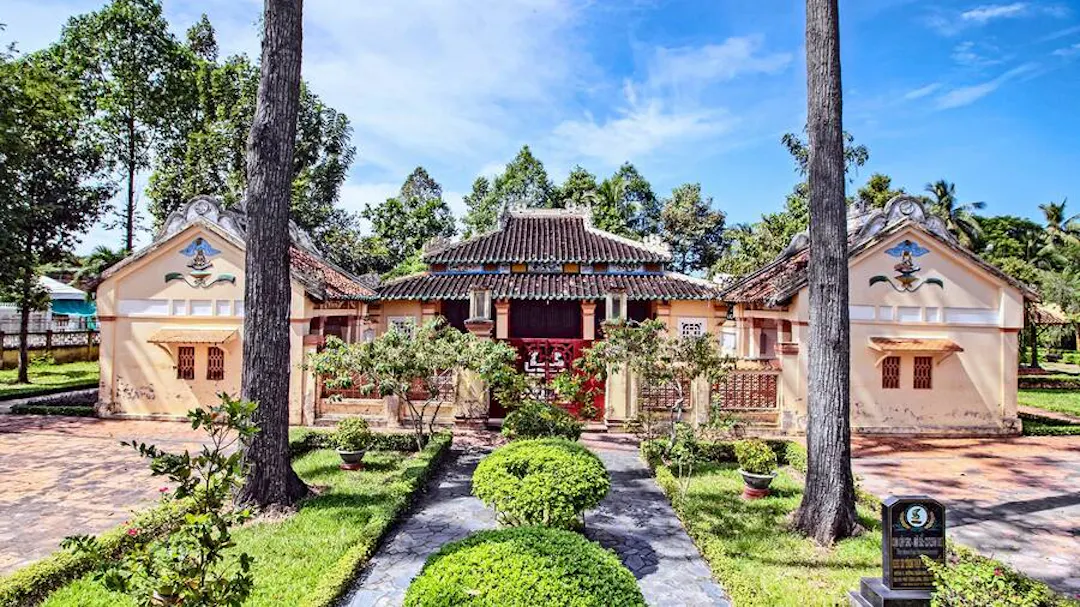
Standing as a solemn, dignified counterpoint to the bustling river trade is the Văn Thánh Miếu (Temple of Literature), located just outside the urban center of Vinh Long city. Constructed in the mid-nineteenth century, this sprawling, walled complex served as the absolute epicenter of Confucian scholarship and intellectual preservation in the deeply rural south. During a period of intense colonial expansion, local scholars funded and built this sanctuary not merely as a place of religious worship, but as a heavily fortified stronghold for traditional Vietnamese literature, ethics, and cultural identity. The architecture strictly adheres to classical proportions, featuring sweeping, low-slung tiled roofs, massive lacquered wooden pillars, and serene, meticulously manicured courtyards shaded by ancient frangipani trees. Walking through the quiet pavilions dedicated to Confucius and prominent local educators provides a profound, meditative space that starkly contrasts the chaotic energy of the nearby commercial markets. It is an indispensable stop for anyone attempting to understand the historical intellectual rigor that shaped the delta's leadership.
The Khmer Pagoda Experience
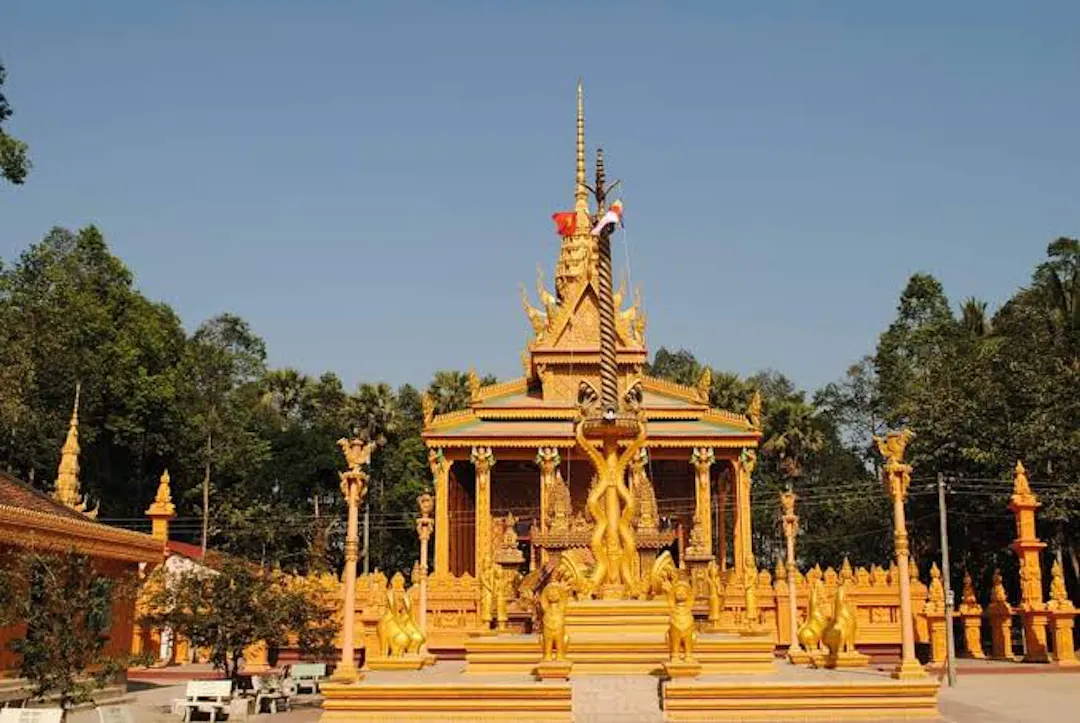
To fully comprehend the ethnographic complexity of the region, one must acknowledge the deep, enduring presence of the Khmer Krom minority population. This cultural influence is most visibly manifested in the striking Theravada Buddhist architecture of sanctuaries like the Phap Ton Pagoda or the Ky Son Pagoda. Unlike the Mahayana temples of the ethnic Kinh majority, which favor subdued colors and Chinese-influenced design, these Khmer pagodas are visual explosions of highly saturated gold, deep crimson, and vibrant ochre. The structures feature steep, multi-tiered roofs culminating in sharp, soaring spires, while the exterior walls and staircases are heavily guarded by intricately sculpted nagas (mythological serpents) and fearsome yaksha warriors. Visiting these compounds offers a rare opportunity to observe the distinctive monastic lifestyle of the Khmer monks, clad in their characteristic saffron robes, and to witness the rhythmic, deeply hypnotic Pali chanting that echoes across the courtyard during the early morning hours, representing a completely divergent spiritual lineage thriving within the heart of the delta.
The My Thuan Bridge Vantage Point
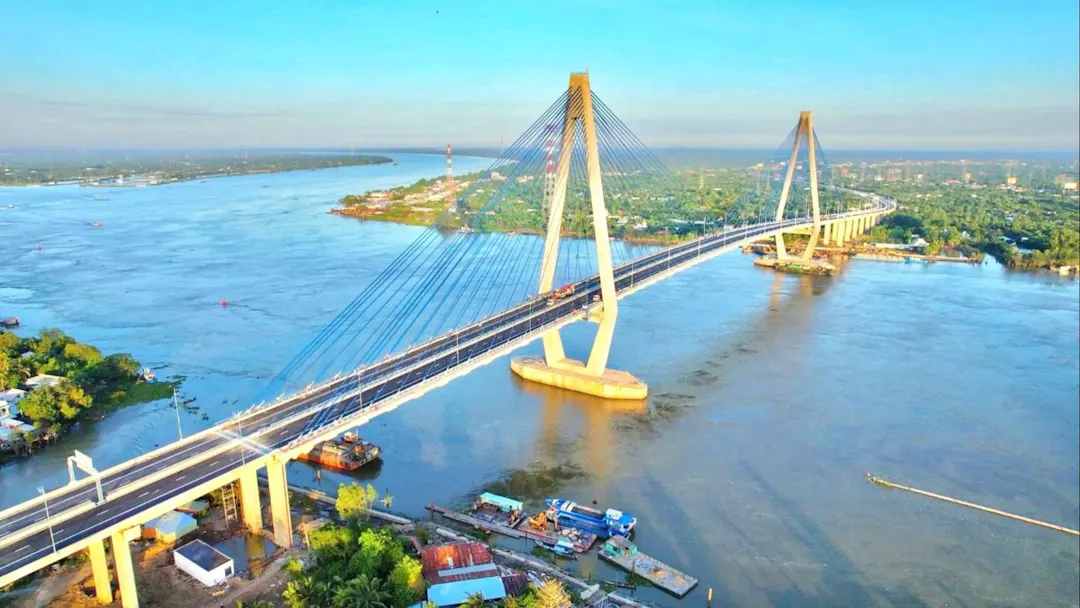
Transitioning from the ancient to the modern, the My Thuan Bridge stands as a colossal monument to contemporary engineering and a vital logistical artery for the entire region. As the very first cable-stayed bridge constructed in Vietnam, spanning the immense, turbulent width of the Tien River, its completion revolutionized the economic connectivity of the delta. However, beyond its utilitarian function, the bridge offers an unparalleled, sweeping panoramic vantage point. Travelers who walk or cycle along the designated pedestrian flanks of the bridge, particularly during the late afternoon as the intense equatorial sun begins to drop toward the horizon, are rewarded with a breathtaking, unobstructed view of the vast alluvial plains. From this elevated position, you can observe the intricate, almost capillary-like network of mangrove waterways, the massive, heavily laden sand-dredging barges battling the current, and the sheer, overwhelming scale of the Mekong River as it relentlessly carves its way toward the South China Sea.
Deep Immersion: Craft Villages and Culinary Trails in the Best Places to Visit in Vinh Long
The true ethnographic soul of the province is not found in static monuments, but in the blistering heat of its artisanal workshops and the chaotic, deeply pungent atmosphere of its riverside markets. Engaging with the grueling physical labor of local industries and the complex, heavily fermented flavor profiles of the regional cuisine is essential for achieving a complete understanding of the delta's human ecosystem.
The "Red Kingdom" of Brick Kilns
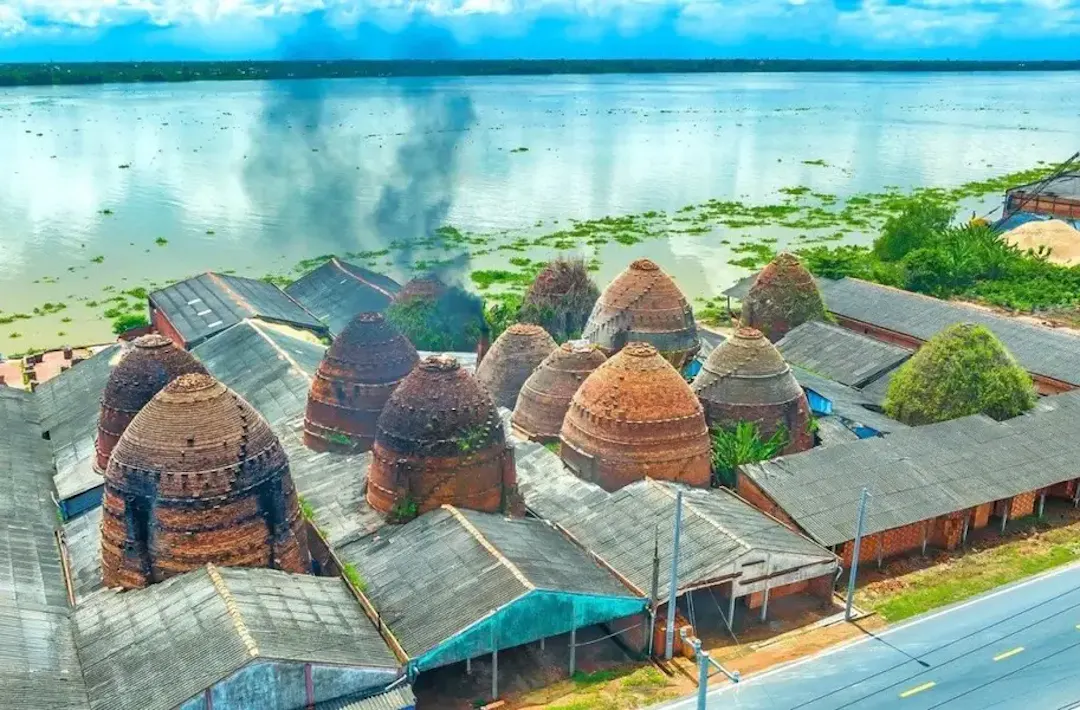
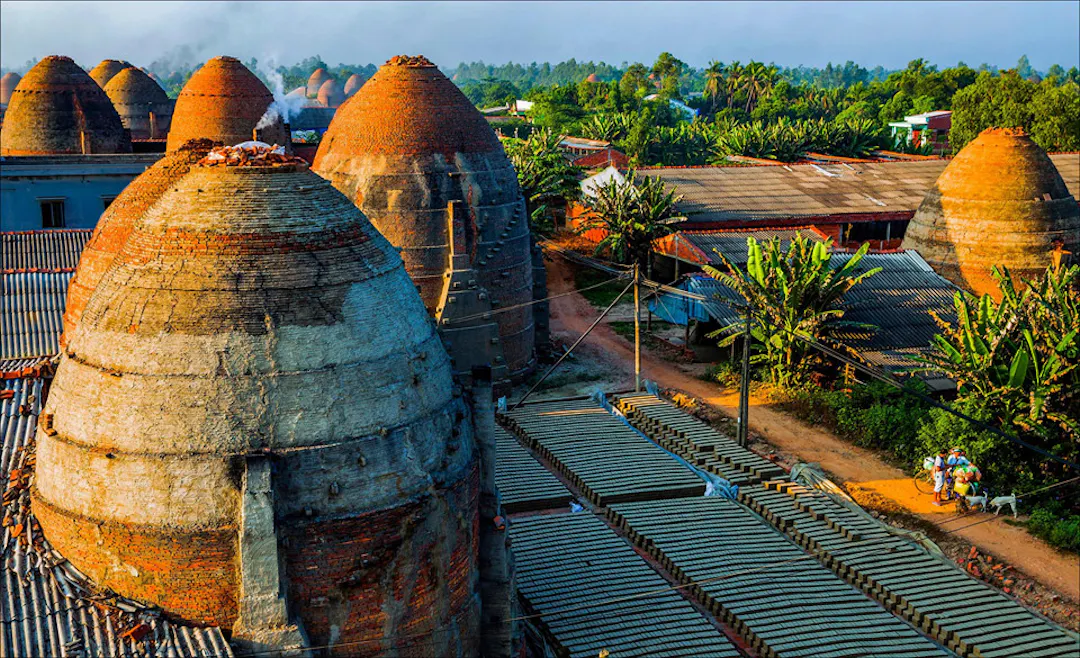
Perhaps the most surreal and visually arresting landscape in the entire Mekong Delta is the stretch of the Mang Thit River colloquially known as the "Red Kingdom." Over the course of several decades, the heavily clay-rich alluvial soil of this specific district birthed a massive, sprawling industry dedicated to the production of fired ceramics and terracotta bricks. For kilometers along the muddy banks, hundreds of massive, beehive-shaped brick kilns rise dramatically into the sky, constructed entirely from the very red clay they were built to bake. When the kilns are actively firing, thick plumes of white smoke fueled by burning rice husks blanket the river, creating an intensely atmospheric, almost post-apocalyptic aesthetic that draws architectural photographers and industrial historians from around the globe. Navigating a small wooden boat directly to the docking bays of these massive structures allows you to witness the incredibly demanding, highly skilled physical labor of the workers who manually load, fire, and unload millions of bricks in blistering, suffocating heat. This is not a polished tourist attraction; it is a raw, unvarnished look at a vital, brutal, and slowly fading local industry that literally built the foundations of the modern delta.
Authentic Culinary Trails
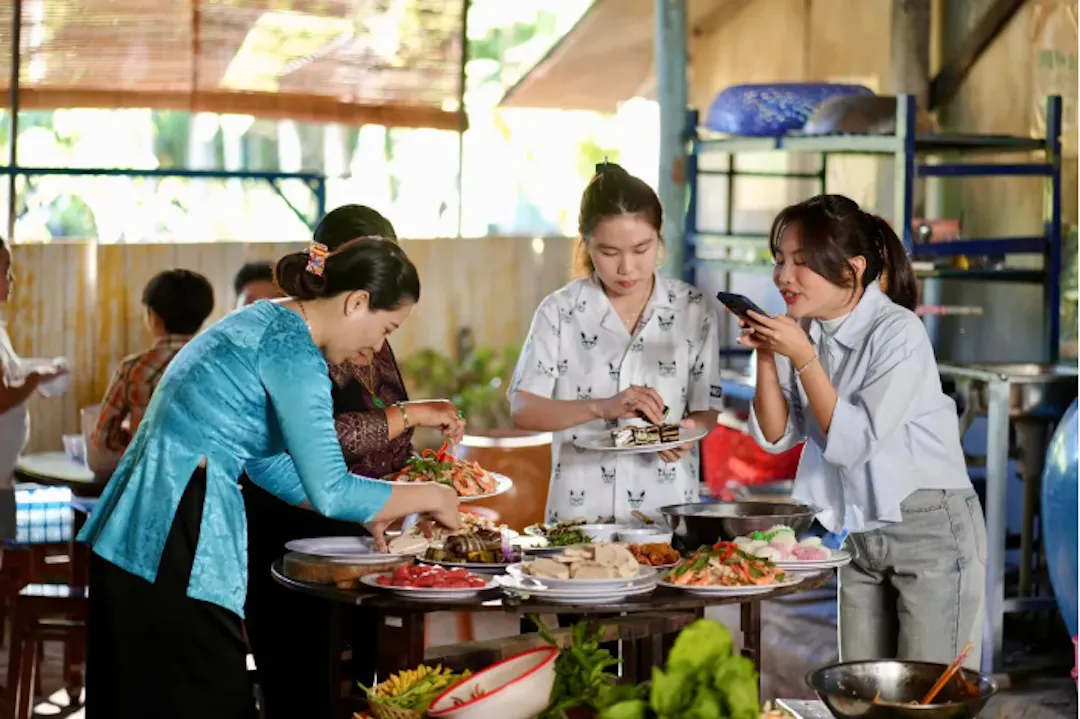
The culinary ecosystem of the province is dictated entirely by the river's daily harvest and the intense agricultural output of the surrounding orchards. To eat authentically here requires abandoning the sterile environments of hotel restaurants and plunging directly into the chaotic, humid atmosphere of the central market stalls and hidden riverside eateries. The absolute pinnacle of the region's culinary offering is the renowned cá tai tượng chiên xù (deep-fried elephant ear fish). This visually spectacular dish involves taking a massive, freshly caught river fish and plunging it whole into boiling oil until its scales stand entirely upright and shatter into a perfectly crisp, golden crust. The delicate, steaming white flesh is then meticulously peeled away, rolled tightly into translucent rice paper along with a massive handful of sharp, astringent local herbs and unripe starfruit, and dunked into a heavily fermented, intensely pungent tamarind and fish sauce dip. Furthermore, discerning culinary travelers must actively seek out the hyper-local Bánh xèo hến (clam-stuffed sizzling pancake). Unlike the pork and shrimp variations found in Ho Chi Minh City, the local chefs utilize the tiny, incredibly sweet baby clams harvested directly from the sandy riverbeds of the islets. The tiny clams impart a distinct, briny minerality to the rich, turmeric-laced coconut batter, creating a savory depth that perfectly encapsulates the harsh, rewarding reality of foraging within the mangrove waterways.
Practical Vinh Long Travel Guide and Logistics for the Intrepid Explorer
Executing a successful, deep-dive expedition into the heart of the delta requires discarding generic travel itineraries and embracing a highly flexible, culturally sensitive approach to navigation. Reaching the province from Ho Chi Minh City has been significantly expedited by the expansion of the southern highway network. Discard the concept of taking the slow, grueling local buses; instead, secure a seat on a modern, climate-controlled "limousine bus" operated by reputable companies like FUTA or Phuong Trang, which covers the 135-kilometer distance in roughly three hours, depositing you directly into the chaotic transit hub of Vinh Long city.
Once you arrive, the method of navigation dictates the quality of your experience. You must actively avoid the large, multi-decked motorized tourist boats that thunder down the main river channels, disrupting the ecosystem and isolating you from the environment. Instead, negotiate directly with the independent boatmen at the central pier to charter a small, non-motorized wooden rowboat (xuồng ba lá). Only these highly maneuverable, shallow-draft vessels can silently penetrate the deeply shadowed, heavily canopied narrow canals that weave through the interior of the islets, allowing you to observe the wildlife and the local residents without causing a massive, disruptive wake.
Finally, understanding the etiquette of the region is absolutely critical for maintaining an authentic and positive relationship with the intensely private, yet deeply hospitable, local population. The islet villagers operate on a solar clock, waking before dawn and retiring shortly after sunset. Travelers must respect this quiet, deliberate pace. Do not treat the ancient houses or the active brick kilns as mere backdrops for photography; always seek permission before entering a private courtyard, engage respectfully with the elders, and understand that you are a temporary guest traversing a fragile, deeply historical human ecosystem.
Conclusion: Defining the Best Places to Visit in Vinh Long
Vinh Long remains the most fiercely authentic, underrated gem in the entire Mekong Delta, actively resisting the commercial homogenization that plagues more accessible tourist circuits. By prioritizing a slow, deliberate immersion into its agrarian rhythms, from the shaded orchard pathways of An Binh to the blistering heat of the Mang Thit brick kilns, travelers are rewarded with an unvarnished, profoundly beautiful truth about life on the river. When planning your itinerary around the best places to visit in vinh long, the ultimate decision reflects your personal travel philosophy. Are you drawn more to the silent, meditative serenity of a private rowboat navigating the ancient, canopied canals of the fruit orchards, or does the architectural majesty and intense, smoky industrial labor of the towering red brick kilns compel you to explore the delta's raw, working heart?
> Read more: Vinh Long Travel Guide

By Roy Trinh
Editor
Roy Trinh is a travel writer and destination expert at Go Visit Vietnam, dedicated to helping travelers discover the beauty, culture, and diversity of Vietnam. Through well-researched travel guides, practical itineraries, local insights, and authentic recommendations, Roy shares valuable information to inspire memorable journeys across the country. From vibrant cities and breathtaking landscapes to regional cuisine and cultural heritage, every guide is created to help visitors experience Vietnam with confidence and curiosity.
Frequently Asked Questions About the Best Places to Visit in Vinh Long
What are the best places to visit in Vinh Long?
Some of Vinh Long's most popular attractions include An Binh Island, Binh Hoa Phuoc Island, Vinh Long Floating Market, traditional brick kilns, ancient pagodas, fruit orchards, and riverside villages where visitors can experience authentic Mekong Delta life.
What is Vinh Long famous for?
Vinh Long is famous for its fertile fruit orchards, peaceful canals, river islands, traditional handicrafts, and fresh local produce. It is one of the best destinations in the Mekong Delta for experiencing rural Vietnamese culture and river life.
How many days should I spend in Vinh Long?
A two-day trip is ideal for exploring Vinh Long's main attractions, taking boat tours, visiting fruit gardens, and enjoying local cuisine. Travelers looking for a slower pace can stay longer to experience homestays and nearby Mekong Delta destinations.
Is Vinh Long suitable for eco-tourism?
Yes. Vinh Long offers excellent eco-tourism opportunities, including cycling through villages, boat cruises along canals, orchard visits, birdwatching, and staying with local families to experience the region's traditional way of life.
Can I visit Vinh Long as a day trip from Ho Chi Minh City?
Yes. Vinh Long is approximately two to three hours by road from Ho Chi Minh City, making it a popular day-trip destination. However, staying overnight allows visitors to enjoy peaceful mornings on the river, local homestays, and a more authentic Mekong Delta experience.
Advertising box