
Best Things to Do in An Giang
An Giang offers unforgettable experiences that combine nature, culture, spirituality, and authentic Mekong Delta life. Cruise through the peaceful waterways of Tra Su Cajuput Forest, hike the scenic trails of Cam Mountain, visit the famous Ba Chua Xu Temple, explore Chau Doc's floating fish farms, and discover traditional Cham villages. From birdwatching and photography to cultural festivals and local cuisine, this guide highlights the best things to do in An Giang for travelers seeking unique adventures in Southern Vietnam.
On this page
- Waterways & Wilderness: The Best Things to Do in An Giang for Nature Lovers
- Spiritual Trails & Mountain Conquests: The Best Things to Do in An Giang's Sacred Highlands
- Cultural Immersion: Best Things to Do in An Giang's Multi-Ethnic Enclaves
- The An Giang Experiential Checklist
- Culinary Adventures: Eating Like an An Giang Local
- Final Reflections on the Best Things to Do in An Giang
The early morning light fracturing over the complex canal network of the Hau River reveals a landscape completely unique to Southern Vietnam. An Giang is an incredible frontier province where the massive floodplains of the lower Mekong Delta abruptly halt against the rugged granite peaks of the Thất Sơn (Seven Mountains) range. This geographic anomaly functions as a profound cultural borderland, a space where Kinh, Khmer, Cham, and Hoa civilizations have woven an intricate social tapestry over centuries of shared history.
For travelers seeking an authentic relationship with the deep delta, identifying the best things to do in an giang requires moving far past conventional highway routes and actively entering its swamp-and-mountain geography. An Giang is not a passive destination to be observed from a bus window; it is an interactive playground of ecological rhythms and deep spiritual traditions. The most rewarding experiences here involve stepping off the asphalt to fully immerse yourself in flooded cajuput ecosystems, remote highland spiritual trails, and bustling border-town markets. This master guide provides the strategic blueprint required to navigate this multi-ethnic frontier with the authority of a seasoned explorer.
Waterways & Wilderness: The Best Things to Do in An Giang for Nature Lovers
The ecological pulse of An Giang is dictated by the annual rise and fall of the Mekong river system. To truly understand the wilderness of this province, you must position yourself within its wetlands and elevated agricultural plains.
1. Glide Through the Neon-Green Carpet of Tra Su Cajuput Forest
Located at coordinates 10.5539° N, 105.1092° E in Tinh Bien District, the tra su cajuput forest represents the pinnacle of wetland conservation in Southern Vietnam. Booking a tra su forest boat tour is an essential activity, but the journey must be experienced in distinct, deliberate stages to appreciate its ecological depth.
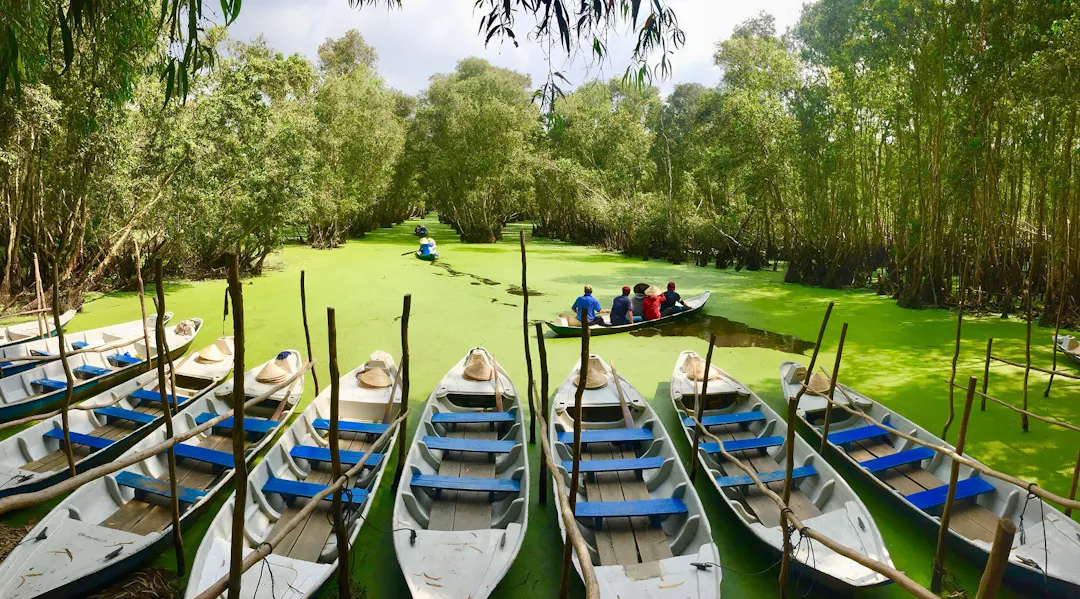
First, you board a high-speed motorized vessel known locally as a tắc ráng at the forest entrance pier. The specialized long-tail engine roars as you slice through the primary arterial canals, spraying alluvial water as you pass under a dense canopy of Melaleuca leucadendra trees. The real magic happens when you disembark at the inner floating station and transition to a silent, non-motorized xuồng ba lá (traditional three-plank rowboat).
As the boatman gently paddles forward, you enter a surreal world where the water surface is entirely blanketed by a thick, neon-green carpet of water lettuce (Pistia stratiotes) and duckweed. The movement of the boat cuts a temporary path through this living velvet layer, which seamlessly closes behind you. You must observe the giant water lilies fringing the channel edges and listen to the raucous vocalizations of nesting colonies of storks, egrets, and rare Oriental darters high in the branches.
The ultimate seasonal window for these iconic an giang travel experiences is strictly during Mùa nước nổi (the annual floating season from September to November). During these months, the rising waters submerge the forest floor completely, drawing massive schools of wild river fish, which in turn attract thousands of migratory birds. Visiting during the dry season exposes dry mud banks and significantly reduces bird populations, making seasonal timing critical.
2. Catch the Sunrise Over the Ta Pa Paddy Fields
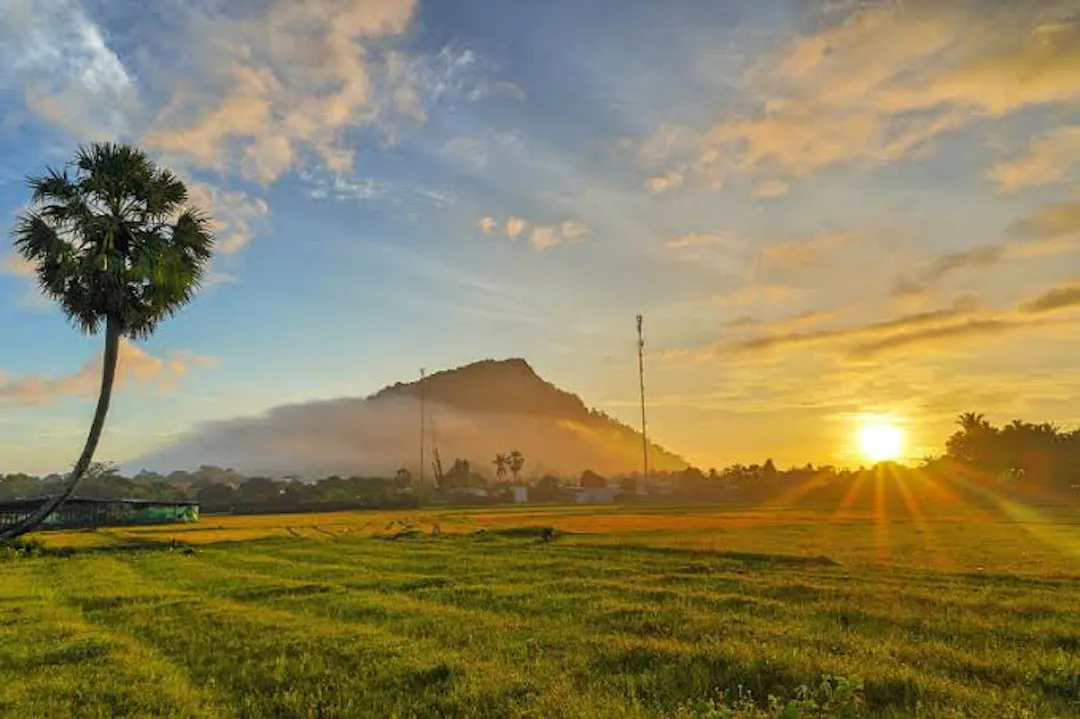
To witness the agricultural soul of the province, you must travel south to Tri Ton District (10.4131° N, 105.0044° E). Here, the Ta Pa Rice Fields stretch across a dramatic valley bordered by the stark silhouettes of the Co To and Ta Pa mountains. To execute this activity correctly, you must climb the winding limestone path up Ta Pa Hill well before dawn breaks.
As the sun clears the horizon, it illuminates a fascinating, multi-colored patchwork of fields cultivated by the local Khmer Krom community. Unlike the mechanized, industrial rice monocultures found in other parts of the Mekong Delta, the farmers here still utilize ancestral, staggered planting techniques. This means adjacent plots exist in entirely different growth phases simultaneously, creating a striking visual matrix of bright neon green, deep emerald, and rich harvest gold.
The landscape is punctuated by hundreds of iconic palmyra trees (cây thốt nốt), their fan-like fronds cutting sharp silhouettes against the morning mist. From your elevated vantage point on the hill, you can watch the farmers tend to their crops with water buffaloes and hand tools. After capturing the sunrise, walk a short distance behind the hill's peak to relax by the edge of Ta Pa Lake (Hồ Tà Pạ). This deep, crystal-clear reservoir fills an abandoned stone quarry, its mineral-heavy waters shifting from jade green to deep turquoise depending on the morning light.
Spiritual Trails & Mountain Conquests: The Best Things to Do in An Giang's Sacred Highlands
The rugged granite topography of the Seven Mountains serves as a powerful magnet for spiritual pilgrims and outdoor adventurers alike, offering a dramatic contrast to the surrounding water-logged lowlands.
1. Conquer the Sacred Peaks of Cam Mountain (Núi Cấm)
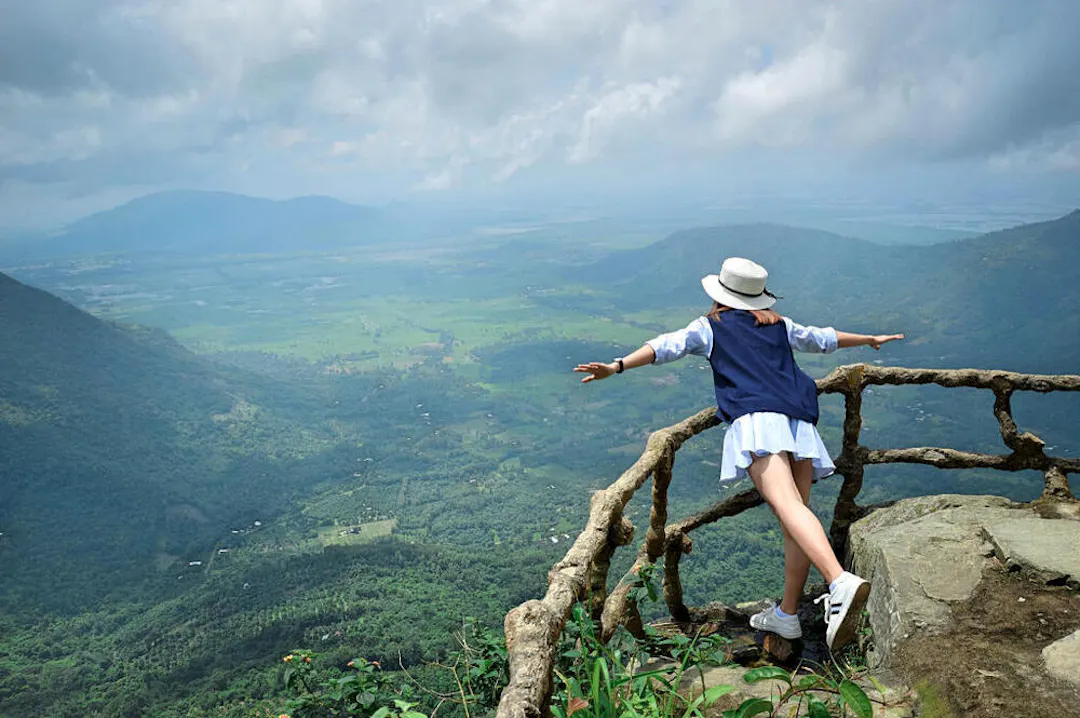
Rising to an impressive 710 meters above sea level in Tinh Bien District (10.4789° N, 105.0064° E), Cam Mountain is the highest peak in the Thất Sơn range and the undisputed center of highland mysticism. When deciding what to do in an giang's highland zones, climbing this mountain offers two distinct paths. Risk-averse travelers can board the modern, panoramic cable car system to glide smoothly over dense jungle canopies and plunging ravines.
However, for an authentic dose of local adrenaline, you should hire an authorized local motorbike taxi (xe ôm) at the mountain base. These specialized drivers navigate the incredibly steep, winding concrete tracks with absolute precision, clinging to the ridges as the valley falls away below you.
Once you reach the high summit plateau, the temperature drops noticeably, plunging you into a cool, refreshing microclimate often wrapped in dense mountain mist. Spend time exploring the massive, gleaming white Maitreya Buddha statue—standing 33.6 meters tall, it is recognized as the largest mountaintop Buddha structure in Asia. From there, stroll along the perimeter of the peaceful Thuy Liem Lake, checking out the ancient Van Linh Pagoda and the hidden grottoes where hermits and religious ascetics have meditated for centuries.
2. Uncover Pilgrimage Secrets and Sunset Views at Sam Mountain
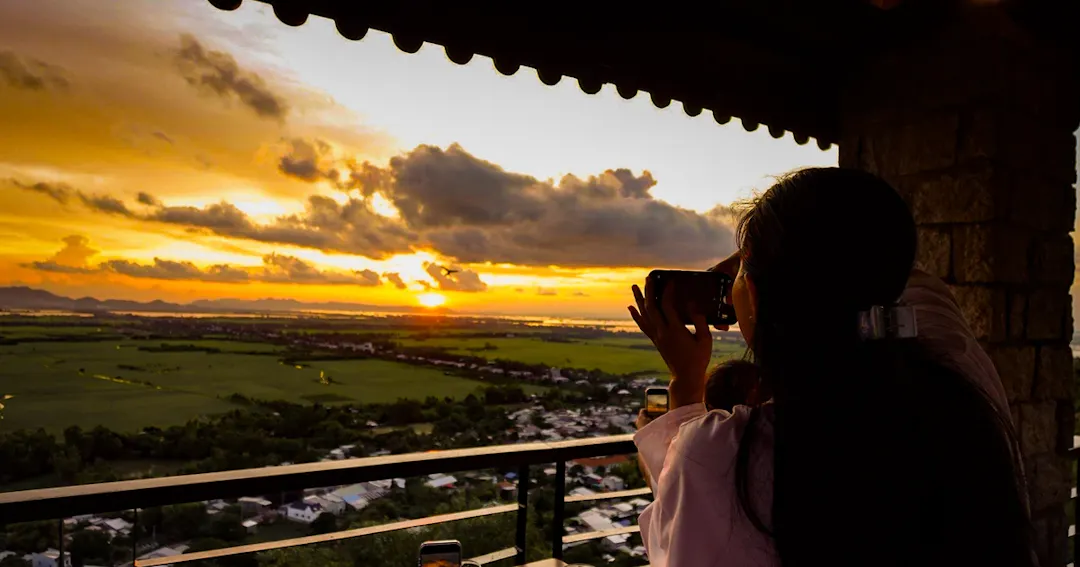
To explore sam mountain chau doc (10.7997° N, 105.1167° E), you must plunge into the spiritual heart of the province's Kinh and Hoa populations. Located just a few kilometers from the Cambodian border in Chau Doc City, the base of this isolated hill houses the legendary Ba Chua Xu Temple (Miếu Bà Chúa Xứ). This complex draws millions of domestic pilgrims annually who come to venerate the ancient, dark sandstone deity clothed in embroidered silk robes.
To maximize this experience while ensuring personal safety, you must execute your visit with strategic timing. Arrive at the temple complex in the late afternoon to avoid the intense midday heat and the worst of the tour-bus crowds. After paying your respects to the intricate architecture, ascend to the rocky summit of Sam Mountain via the winding road or hiking trail. From the top, you can witness a spectacular sunset over the vast border terrain. The view reveals a web of shimmering canals tracing straight lines across the border into Cambodia, with emerald rice fields extending as far as the eye can see.
A vital piece of local advice: when moving through the crowded bazaar surrounding the temple base, politely but firmly decline the aggressive street vendors. They will attempt to force unrequested fortune-telling services upon you, push overpriced incense bundles into your hands, or sell you caged birds for merit-release rituals. Keep your hands in your pockets, maintain a steady pace, and purchase any cultural items exclusively from established shops within the official temple boundary to avoid financial exploitation.
Cultural Immersion: Best Things to Do in An Giang's Multi-Ethnic Enclaves
An Giang’s true distinction lies in its human geography. Moving between the districts feels like crossing international borders as you transition between Khmer Buddhist landscapes and Islamic Cham river settlements.
1. Hunt for "Heaven's Gate" on the Khmer Pagoda Trail
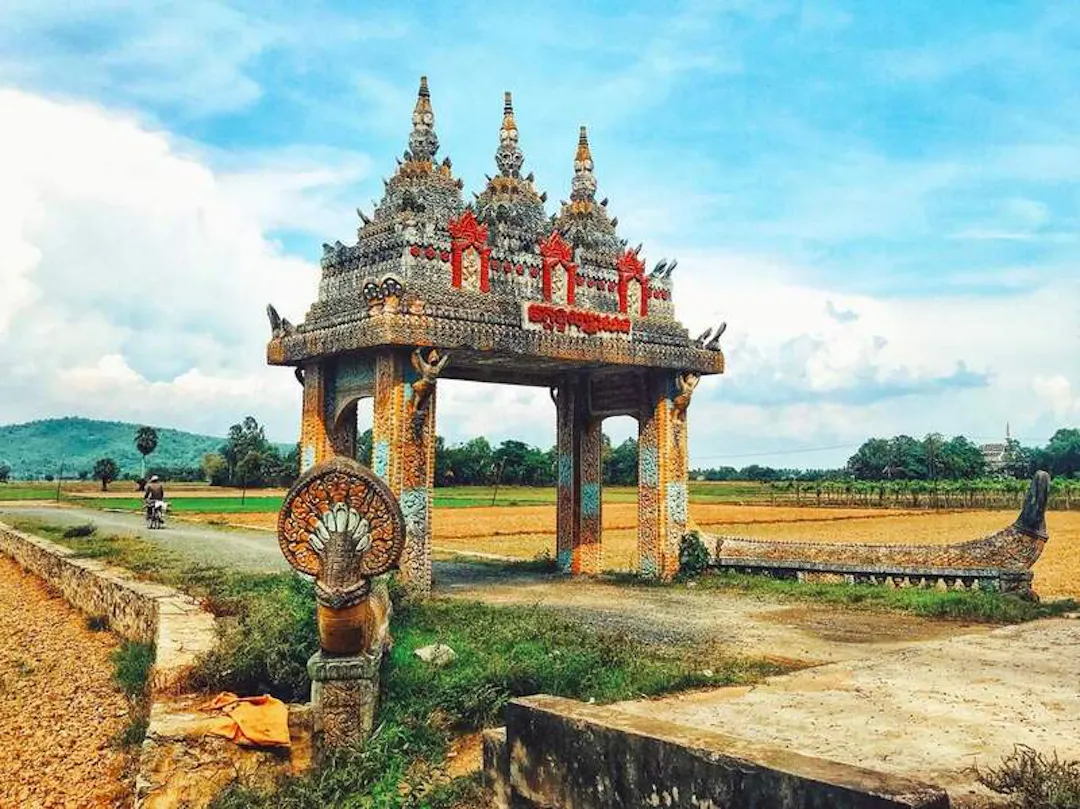
For travelers looking for independent, off-the-beaten-path exploration, renting a scooter and plotting a route through the Khmer-dominated heartlands of Tri Ton and Tinh Bien along Provincial Road 948 is an exceptional choice. The ultimate objective of this self-guided road trip is to locate the isolated entrance gate of Koh Kas Pagoda (Chùa Tual Prasat), known popularly as "Heaven's Gate."
This ancient, highly ornate brick portal stands entirely alone in the center of an expansive, windswept rice field, detached from the main temple complex which lies hundreds of meters away. To reach it, you must ride or walk down a narrow, unpaved dirt berm lined with towering palmyra palms. The juxtaposition of sophisticated Theravada architecture standing isolated against the raw agricultural landscape offers an incredible visual window into Khmer spirituality.
Continue your journey to visit Xay Ton Pagoda (Chùa Xà Tón) in the center of Tri Ton town. As the oldest Khmer temple in the province, its roofs feature dramatic, multi-tiered spires guarded by golden Naga serpent carvings. If you visit during the quiet midday hours, you can interact with the resident monks and examine their carefully preserved collection of ancient palm-leaf scriptures (sách lá buông), hand-etched with sacred Buddhist texts in ancient Khmer characters.
2. Cross the River to Explore Chau Phong Cham Village
To experience the unique Islamic heritage of the Mekong Delta, you must leave the main streets of Chau Doc behind. Head to the Chau Giang ferry terminal and board the local wooden car ferry to cross the powerful currents of the Hau River, landing in the island commune of Chau Phong (10.8064° N, 105.1325° E). The moment you step off the ferry ramp, the cultural landscape shifts completely.
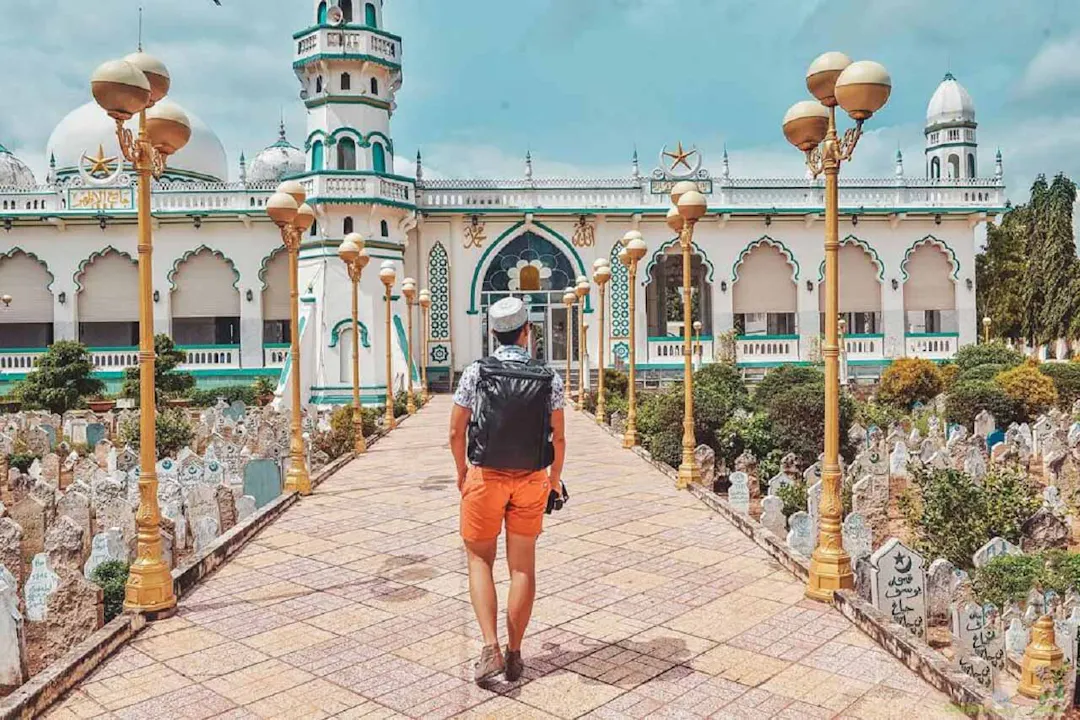
The bustling commercial noise of Vietnam disappears, replaced by the quiet rhythm of an Islamic river village. Walk down the narrow lanes flanked by traditional wooden stilt houses, engineered over generations to stay high above the seasonal floods of the Mekong. The architectural and social anchor of this community is the majestic Mubarak Mosque, whose striking white-and-green onion domes and crescent-moon minarets dominate the riverbank.
As you wander through the village, look underneath the elevated stilt homes to observe local Cham women operating heavy, ancestral wooden looms. They meticulously interlace fine silk threads dyed with natural tree barks and fruit resins to create beautiful, geometric brocade scarves and traditional sarongs. The weavers welcome polite observers, providing a rare opportunity to witness an endangered textile art form passed down from mother to daughter for generations.
The An Giang Experiential Checklist
To navigate your logistics efficiently without the formatting restrictions of a table, utilize this clear operational breakdown of the province’s primary activities:
Tra Su Forest Boat Tour (Tinh Bien District)
- Physical Intensity: Low
- Best Timing: 6:00 AM – 8:00 AM during the Flooding Season (September to November)
Ta Pa Sunrise Viewing (Ta Pa Hill, Tri Ton)
- Physical Intensity: Medium
- Best Timing: 5:15 AM – 6:30 AM during the Harvest Season (November)
Cam Mountain Moto-Ascent (Tinh Bien District)
- Physical Intensity: High (Adrenaline-focused)
- Best Timing: Morning hours during the Cool Dry Season (December to February)
Sam Mountain Sunset Trek (Chau Doc City)
- Physical Intensity: Medium
- Best Timing: 4:30 PM – 6:00 PM, accessible year-round
Khmer Pagoda Exploration (Tri Ton & Tinh Bien)
- Physical Intensity: Low
- Best Timing: 9:00 AM – 11:00 AM, accessible year-round
Chau Phong Village Walk (Tan Chau District)
- Physical Intensity: Low
- Best Timing: 2:00 PM – 4:00 PM (It is recommended to avoid the month of Ramadan for local dining options)
Chau Doc Market Food Tour (Chau Doc City Center)
- Physical Intensity: Low
- Best Timing: 6:30 AM – 9:00 AM for peak morning market activity
Culinary Adventures: Eating Like an An Giang Local
In An Giang, diving into the food scene is an active cultural experience rather than a passive meal break. To execute this correctly, you must enter the humid, chaotic wet-market section of the Chau Doc Market early in the morning. Find an open stall, sit on a low plastic stool, and order a steaming bowl of authentic Bún cá Châu Đốc.
This iconic turmeric fish noodle soup features a rich broth simmered with local wild snakehead fish, heavily seasoned with fresh turmeric root, lemongrass, and fermented shrimp paste. The dish is served piled high with fresh, crunchy river sesbania flowers (bông điên điển), a local delicacy harvested exclusively from the flooded waterways during the rainy season.
After finishing your noodles, explore the specialized market alleys dedicated entirely to the wholesale trade of Mắm (fermented fish paste). Stacked high in massive, dark wooden barrels, these intense, savory preserves represent the culinary signature of this border region. Finally, to cool down from the daytime heat, stop at an outdoor street cart to sip a glass of ice-cold palmyra juice (nước thốt nốt). The sweet, refreshing sap is harvested by local climbers who scale the tall palmyra trees twice daily to slice the flower stalks and collect the liquid nectar, offering a literal taste of the An Giang landscape.
Final Reflections on the Best Things to Do in An Giang
An Giang stands as a brilliant counterpoint to the standard travel routes of Southern Vietnam. It is a frontier province where physical adventure blends seamlessly with spiritual depth and multi-ethnic heritage. By focusing your itinerary on the best things to do in an giang—moving from the flooded cajuput canopies of the lowlands to the sacred granite ridges of the Seven Mountains—you gain access to the true soul of the deep Mekong Delta. These immersive activities ensure you leave the province not just with photographs, but with a profound understanding of how geography shapes culture and tradition.
Now that you have the complete strategic blueprint, are you ready to book your rowboat tour through the green waters of Tra Su, or will your journey begin by exploring the remote Khmer towers of Tri Ton?
> Read more: An Giang Travel Guide

By Roy Trinh
Editor
Roy Trinh is a travel writer and destination expert at Go Visit Vietnam, dedicated to helping travelers discover the beauty, culture, and diversity of Vietnam. Through well-researched travel guides, practical itineraries, local insights, and authentic recommendations, Roy shares valuable information to inspire memorable journeys across the country. From vibrant cities and breathtaking landscapes to regional cuisine and cultural heritage, every guide is created to help visitors experience Vietnam with confidence and curiosity.
Frequently Asked Questions About the Best Things to Do in An Giang
What are the best things to do in An Giang?
Some of the best activities include taking a boat tour through Tra Su Cajuput Forest, climbing Sam Mountain and Cam Mountain, visiting Ba Chua Xu Temple, exploring Chau Doc's floating fish farms, experiencing Cham cultural villages, and tasting authentic Mekong Delta cuisine.
Is An Giang suitable for outdoor activities?
Yes. Nature lovers can enjoy hiking, birdwatching, cycling, boating, photography, and exploring forests and mountain trails. Tra Su Forest and Cam Mountain are among the province's most popular outdoor destinations.
Can I experience local culture in An Giang?
Absolutely. An Giang is home to Kinh, Khmer, Cham, and Hoa communities, offering visitors opportunities to explore traditional villages, colorful markets, religious festivals, historic temples, and local handicrafts that reflect the province's rich cultural diversity.
How many days do I need to enjoy An Giang?
Two to three days are enough to visit An Giang's main attractions and experience its unique culture. Travelers who want to explore more remote villages, mountain landscapes, and nearby Mekong Delta destinations may consider staying four days or longer.
Is An Giang a good destination for families?
Yes. Families can enjoy relaxing boat rides, wildlife observation in Tra Su Forest, scenic viewpoints, temple visits, local markets, and easy nature walks. The province offers a peaceful atmosphere and a variety of activities suitable for visitors of all ages.
Advertising box