
Best Things to Do in Dak Lak
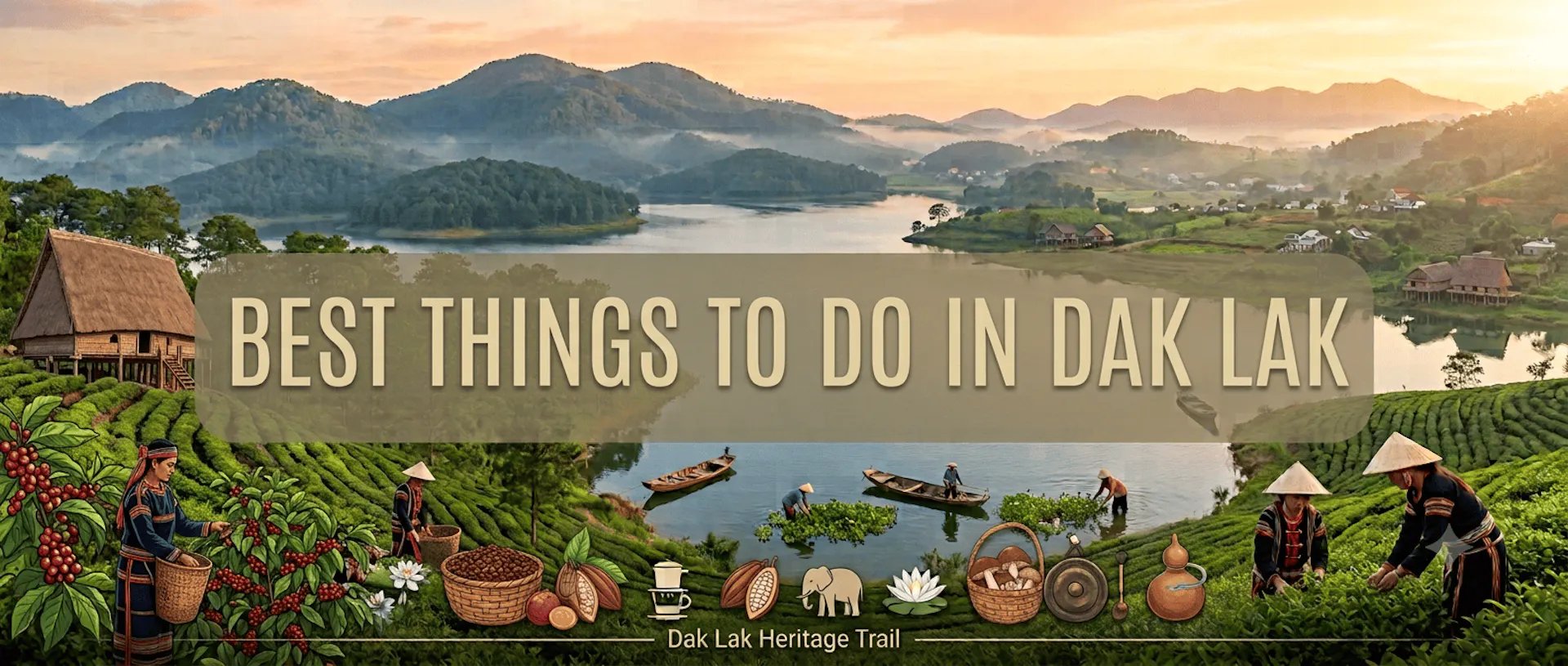
Dak Lak offers unforgettable adventures in the heart of Vietnam's Central Highlands. Explore world-famous coffee plantations, trek through Yok Don National Park, admire spectacular waterfalls, cruise across Lak Lake, and discover the rich traditions of local ethnic communities. Visitors can enjoy wildlife experiences, cycling, cultural performances, scenic viewpoints, and authentic Highland cuisine throughout the province. This guide highlights the best things to do in Dak Lak for travelers seeking nature, adventure, culture, and unforgettable experiences beyond Vietnam's popular tourist destinations.
On this page
To ascend into the province of Đắk Lắk is to leave behind the low-lying, sediment-heavy heat of the Southern delta and enter a realm defined by high-altitude plateaus, vast basaltic topography, and a climate that breathes with the rhythmic pulse of the Central Highlands. Here, the landscape is not merely a backdrop for tourism but a living, breathing history, where the intoxicating scent of coffee blossoms in the spring, the rhythmic, thunderous beat of gongs during tribal festivals, and the cooling, ethereal mist over Hồ Lắk define the very essence of the region. For the veteran traveler, the professional cultural researcher, and the journalist who has documented these frontiers for years, identifying the best things to do in dak lak requires a deliberate shift in perspective. This province is not a destination for those who seek the rapid-fire convenience of mass tourism; it is a profound immersion into a land where nature and ancient ethnic traditions remain intricately linked. Whether you are navigating the rugged, dry-forest trails of a national park or participating in the quiet, ritualized morning coffee culture of Buôn Ma Thuột, you are engaging with a highland legacy that is as resilient as it is magnificent. This master guide is curated specifically for travelers who prioritize cultural depth, outdoor challenges, and genuine connection with the indigenous Ede and M'nong communities over conventional, sanitized sightseeing.
Wild Frontier: Adventure and Nature
The geographical backbone of the province is defined by its dramatic forest reserves, and no expedition can claim to understand the highlands without physically engaging with its untamed ecosystems. Conquering these environments is a foundational component of all serious Đắk Lắk travel activities, demanding a commitment to physical exertion and a profound connection to the surrounding, often fragile, natural world.
Trekking the Dipterocarp Forests of Yok Don
The expedition into Vườn quốc gia Yok Đôn is an exercise in ecological observation. Unlike the dense, rain-soaked jungles of the south, this park protects a vast, unique dipterocarp forest—a landscape characterized by open canopies and light-dappled floors that shift in character with the seasons. Navigating this terrain is a primary experience for those who prioritize raw, natural immersion. To walk these trails is to observe the intricate web of life that defines the plateau, from the diverse bird species that inhabit the upper branches to the elusive wildlife that move silently through the undergrowth. For the serious nature enthusiast, the experience is best facilitated by hiring a local Ede ranger. These experts do not merely lead you along a path; they decode the forest, identifying track patterns, territorial vocalizations, and the subtle shifts in vegetation that indicate wildlife presence. Engaging a local guide is the only way to ensure your trek is both logistically safe and ecologically respectful, as the forest demands a level of awareness that is difficult to acquire without generational, site-specific expertise.
Navigating Lak Lake
Hồ Lắk stands as a serene, reflective sanctuary, acting as the largest freshwater lake in the region and a vital lifeline for the local M'nong community. The experience of the lake is best found in its quietude, and the choice of vessel matters significantly. While modern, motorized boats are available, the tactile sensation of exploring the water in a traditional M'nong dug-out canoe provides a radically different, low-impact perspective on the lake’s ecosystem. Gliding across the surface at dawn, when the mist still clings to the surrounding mountains, allows you to observe the traditional, sustainable fishing practices of the local community from a respectful, unobtrusive distance. This is not about the velocity of the movement; it is about the meditative pace of the water, where the mirror-like reflections of the clouds and the distant hills create a sense of profound, highland serenity. It is a vital, functional landscape where the rhythm of the water dictates the daily survival of the residents, and observing this symbiosis is a primary duty of the responsible traveler.
Highland Waterfall Expeditions
The waterfalls of the province, specifically the thunderous Dray Nur and Dray Sap, represent the raw, untamed power of the highland water systems. These are not gentle, decorative springs; they are massive, geological cataracts that plunge into volcanic basins, sending a constant, invigorating spray across the surrounding forest. The sensory immersion is total; standing near the base of these falls, you are enveloped in the deafening roar of the descent and the bracing, cool chill of the mist. These locations are essential landmarks for those who wish to connect with the untamed, unpredictable aspects of the highland environment. Beyond their visual appeal, these falls hold geological significance as markers of the intense tectonic and volcanic activity that formed the plateau. Exploring them requires a sturdy pair of boots and a willingness to navigate the slippery, rock-strewn paths, but the reward is a vantage point that illustrates the power of the water to shape the landscape itself.
Immersive Cultural Heritage
The human history of Đắk Lắk is inextricably linked to its ancestral architecture and the living traditions of its ethnic communities. To visit the villages is to step into a cultural syncretism that has evolved over centuries, blending the practical needs of highland life with deeply held spiritual beliefs.
The Living History of Buôn Đôn
The village of Buôn Đôn is steeped in a legacy of interaction between the highland communities and the landscape, most famously captured in its historical association with elephant culture. Today, the village has successfully transitioned toward sustainable eco-tourism, focusing on the preservation of its architectural heritage. The nhà dài (long houses) found here are architectural marvels, built on high stilts to accommodate both the multi-generational Ede family and the community gatherings that define village social life. Exploring these structures allows for a glimpse into a domestic existence centered on the communal hearth and the oral history of the village. The village serves as a living museum, where the transition from traditional, forest-based livelihoods to modern sustainability is actively navigated by the community elders. Travelers are encouraged to observe the architectural details—the intricate wood carvings that adorn the house pillars and the ceremonial gongs stored within—as symbols of a rich, complex cultural history that refuses to vanish in the face of modern development.
Witnessing Gong Culture Rituals
The Cồng chiêng (Gong) culture is not an abstract historical artifact in Đắk Lắk; it is a vital, audible presence. The rhythmic beat of the gongs, performed during communal ceremonies, serves as the heartbeat of the Ede and M'nong identity. For the visitor, observing these rituals requires a high degree of cultural decorum. These are not performances staged for the convenience of the tourist circuit; they are profound expressions of community cohesion, often marking the end of a harvest, the inauguration of a new long house, or the passage of a significant life event. The etiquette for participation is clear: maintain a respectful distance, refrain from intrusive photography, and prioritize the observation of the community’s interaction over your own desire to document the event. Witnessing the rhythmic, trance-like dancing that often accompanies the gongs is a lesson in cultural endurance, revealing the depth of the spiritual ties that bind the people to their ancestral land and to each other.
Culinary and Agricultural Discovery
The identity of the province is sealed not just by its festivals, but by the intense, highly specific agricultural rituals that define the local palate. Đắk Lắk functions as a powerhouse for coffee and forest-foraged ingredients, and engaging with this agricultural output is an essential activity for the culinary-focused traveler.
The Highland Coffee Ritual
To understand the agricultural expertise of the region, one must venture out of the urban center of Buôn Ma Thuột and into the surrounding, coffee-dominated plateaus. Unlike massive industrial operations, the small-scale, sustainable plantations provide an intimate look at the intensive labor involved in artisanal coffee cultivation. Walking through the rows of coffee bushes, observing the meticulous care required during the flowering and fruit-set stages, gives the visitor an appreciation for the specificity of the basaltic soil. The coffee culture here is an inclusive, egalitarian force, and the ritual of consuming the brew—slow-dripped through a traditional metal phin filter—is a practice that cannot be rushed. It is designed for conversation, for reflection, and for the slow, systematic start of the day. Finding a corner table in a bustling local coffee house, where the air is thick with the scent of roasted beans, is the most authentic way to observe the city’s social pace and personality.
Mastering Highland Staples
The local kitchens of the province prioritize the use of forest-foraged ingredients and traditional, hearth-cooked preparation. Dishes like cơm lam (bamboo-tube rice) and gà nướng bản đôn (grilled forest chicken) are central to the social life of the plateau. The preparation of the chicken, marinated in a complex, secret blend of local forest herbs and grilled over a traditional charcoal fire, imparts a smoky, tender flavor profile that is distinct from anything found in the lowlands. The bamboo-tube rice, cooked over a fire until the outer layer of the bamboo chars and the rice inside becomes fragrant and infused with the essence of the tube, is a triumph of simple, effective highland engineering. These meals, often shared communally, are central to the village social structure. Participating in these dining experiences—often in family-run, open-air eateries—is a primary duty of the traveler, providing a necessary, savory education in the diverse flavor architecture of the Central Highlands.
Practical Field Logistics and Sustainable Tourism
Executing a seamless, authoritative expedition through Đắk Lắk requires a pragmatic approach to both the environmental demands of the plateau and the cultural sensitivities of its people. Getting around the province is best managed by balancing the independence of self-driven transport with the local expertise of a hired driver. While the main arterial roads are well-maintained, the most rewarding experiences—the ones that take you into the remote tribal villages or the deep fringes of the national parks—often require navigating unpaved, seasonal tracks. Hiring a local driver who understands the seasonal road conditions is the most reliable way to avoid the logistical pitfalls of the monsoon, where even familiar roads can become impassable.
Ethical tourism in Đắk Lắk is centered on the principle of minimizing impact on the cultural and natural heritage of the highlands. When engaging with indigenous villages, your conduct must be guided by humility and awareness. This means prioritizing the privacy of the residents, observing the sanctity of community spaces, and ensuring that your economic contribution reaches the village level through the purchase of locally crafted goods or the support of community-led tours. Always be mindful of the seasonal context of your visit; harvest times are intensely busy for the farming communities, and visitors should adjust their expectations for hospitality accordingly, ensuring that their presence remains a support rather than a distraction. By practicing this level of restraint, you ensure that the delicate balance between the region’s growing popularity and its long-term ecological and cultural conservation remains stable.
Regarding the seasonal rhythm, the dry season—running roughly from December through April—remains the gold standard for outdoor exploration. The weather is stable, the trails are navigable, and the festival schedule is at its most vibrant. However, the shoulder months, particularly the transition period at the end of the rainy season, offer a lush, vibrant green landscape that provides a unique, contemplative beauty. Choosing your window based on these specific, weather-driven goals is the single most effective way to ensure a productive and authentic expedition. The Đắk Lắk way of travel is one of intentionality, where the success of the journey is defined by the quality of the engagement with the land and its people, not just the number of sights checked off a list.
Conclusion: Finalizing Your Journey Through the Highlands
Đắk Lắk stands as the most essential, multifaceted highland destination in Vietnam, offering a complex, textured landscape that rewards the inquisitive mind and the adventurous spirit. By prioritizing an itinerary that balances the strenuous, physical demands of the highland trails with the quiet, meditative atmosphere of the tribal longhouses and the bustling, social energy of the coffee house culture, you ensure an expedition that is as deeply rewarding as it is visually arresting. The province does not merely offer sights to be seen; it offers a profound cultural and geological tapestry to be decoded. As you synthesize this master guide to finalize your itinerary, ask yourself where your priorities truly lie. Are you more drawn to the raw, high-intensity challenge of the dipterocarp forest trek, or does the prospect of witnessing the ancient, ritualized heartbeat of a community gong performance provide the primary motivation for your journey into the soul of the Central Highlands? The red-soil plateau awaits, but it requires a traveler who approaches it with patience, humility, and a precise understanding of the seasonal pulse of the land.
Read more: Dak Lak Travel Guide

By Roy Trinh
Editor
Roy Trinh is a travel writer and destination expert at Go Visit Vietnam, dedicated to helping travelers discover the beauty, culture, and diversity of Vietnam. Through well-researched travel guides, practical itineraries, local insights, and authentic recommendations, Roy shares valuable information to inspire memorable journeys across the country. From vibrant cities and breathtaking landscapes to regional cuisine and cultural heritage, every guide is created to help visitors experience Vietnam with confidence and curiosity.
Frequently Asked Questions About the Best Things to Do in Dak Lak
What are the best things to do in Dak Lak?
Popular activities include visiting coffee plantations, exploring Yok Don National Park, cruising on Lak Lake, hiking to waterfalls, discovering ethnic minority villages, cycling through the countryside, and enjoying traditional Highland cuisine.
Can I visit coffee plantations in Dak Lak?
Yes. Dak Lak is Vietnam's largest coffee-producing region. Visitors can tour coffee farms, learn about coffee cultivation and roasting, join coffee tasting sessions, and experience the province's world-famous coffee culture.
Is Dak Lak good for outdoor adventures?
Absolutely. Dak Lak offers hiking, jungle trekking, cycling, kayaking, wildlife watching, waterfall exploration, and boat trips on Lak Lake, making it one of the best outdoor destinations in Vietnam's Central Highlands.
Can I experience local ethnic culture in Dak Lak?
Yes. Visitors can explore traditional villages, learn about the customs of the Ede and M'nong communities, enjoy cultural performances, visit longhouses, and discover the unique heritage of the Central Highlands
How many days should I spend in Dak Lak?
Three to four days are ideal for visiting Buon Ma Thuot, coffee plantations, Lak Lake, Yok Don National Park, waterfalls, and cultural villages while enjoying the diverse landscapes and experiences that Dak Lak has to offer.
Advertising box