
Best Things to Do in Dong Thap
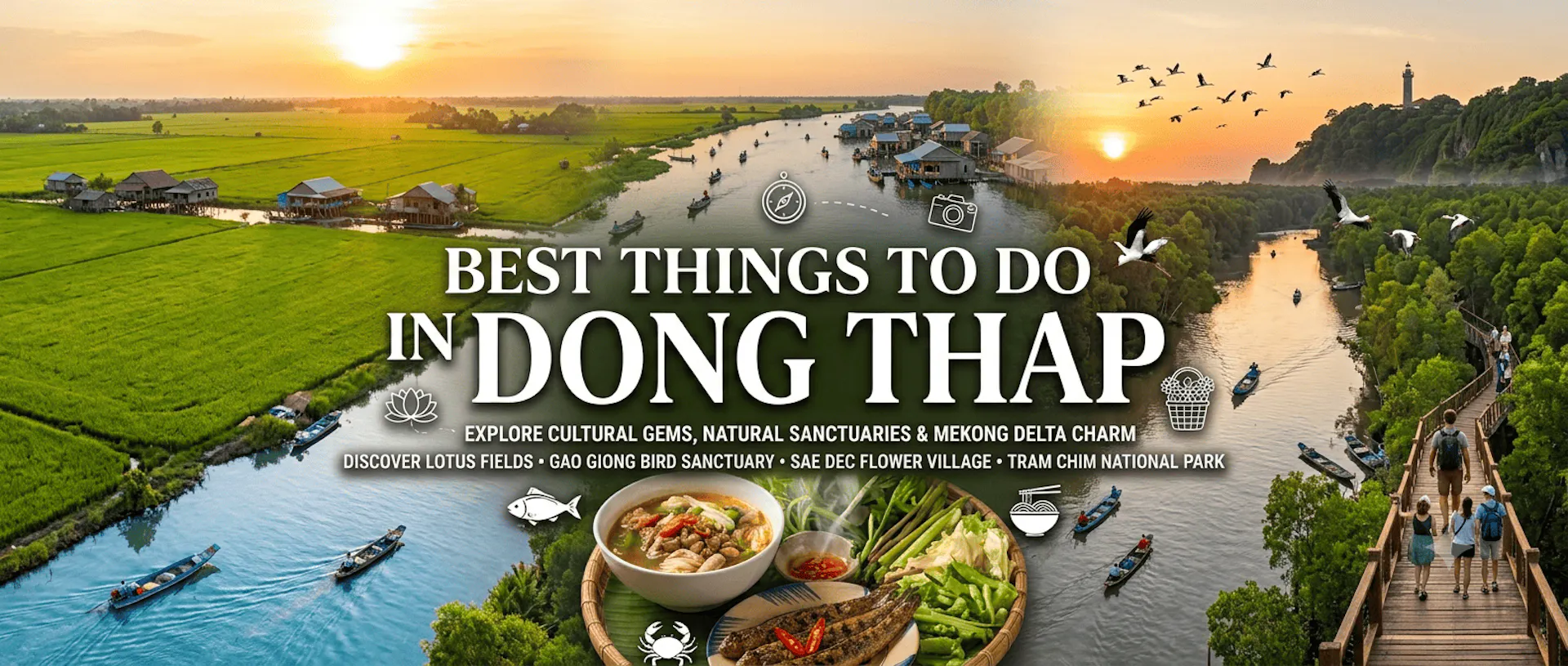
Dong Thap offers unforgettable experiences that celebrate the natural beauty and peaceful lifestyle of the Mekong Delta. Explore blooming lotus fields, discover the rich biodiversity of Tram Chim National Park, stroll through the colorful Sa Dec Flower Village, cycle along quiet countryside roads, and enjoy authentic local cuisine. Whether you're interested in eco-tourism, wildlife, photography, cultural experiences, or relaxing river adventures, this guide highlights the best things to do in Dong Thap for an authentic Southern Vietnam journey.
On this page
- Immersive Nature and Wetlands Adventures: Identifying the Best Things to Do in Dong Thap
- Cultural Immersion in Sa Dec: Architectural Best Things to Do in Dong Thap
- Culinary Exploration and Village Crafts: The Tastiest Best Things to Do in Dong Thap
- Practical Field Logistics and Travel Etiquette for Authentic Mekong Delta Travel
- Conclusion: Finalizing the Best Things to Do in Dong Thap
To step beyond the sprawling concrete boundaries of Ho Chi Minh City and enter the province of Đồng Tháp is to surrender to an entirely different, ancient rhythm of existence. Here, the heavy, humid air carries the deeply floral scent of the ubiquitous Sen hồng (pink lotus), and the vast, sprawling alluvial plains dictate a lifestyle that has remained beautifully resistant to modern acceleration. For the serious ethnographic researcher, the dedicated architectural observer, and the traveler seeking genuine cultural immersion, identifying the best things to do in dong thap requires a deliberate shift in perspective. This is not a landscape meant for rapid, high-speed sightseeing or superficial commercial excursions. Instead, it is a profoundly poetic territory that rewards immense patience, careful observation, and a willingness to engage directly with the muddy, fertile earth. This comprehensive master guide is curated specifically for those who value slow, meaningful tourism. By exploring the primeval wetland reserves, decoding the highly complex historical architecture of the colonial era, and participating in the grueling yet beautiful agrarian harvests, you will discover the true, unvarnished soul of the southern riverine frontier.
Immersive Nature and Wetlands Adventures: Identifying the Best Things to Do in Dong Thap
The undisputed ecological crown jewel of the province is the massive, heavily protected Ramsar site known as Tram Chim National Park. Engaging with this vast, untamed wilderness is an absolute priority for any serious nature enthusiast and consistently ranks among the most profound Tram Chim National Park experiences.
Navigating the Flooded Forests of Tram Chim
The true majesty of this ecosystem is revealed during the Mùa nước nổi (the flooding season), which typically spans from September through November. As the immense volume of the Mekong River spills over its banks, the dried plains are violently transformed into a hyper-saturated, brilliant emerald inland sea. To navigate this deeply flooded melaleuca forest, you must hire a local boatman to silently pole a highly unstable, narrow wooden skiff through the densely packed, floating vegetation. The ultimate reward for braving the equatorial heat and the aggressive insect population is the incredibly rare opportunity to spot the endangered Sarus Crane. Capturing the precise moment these towering, crimson-headed birds take flight against the early morning mist requires immense patience and superior optical hardware. Utilizing the highly sophisticated, physical two-stage manual shutter button and the precise autofocus tracking capabilities of a mobile device like the Sony Xperia 1 Mark VI allows you to flawlessly freeze their massive wingspans in mid-air, perfectly exposing the delicate gray plumage against the harsh, glaring reflection of the wetland waters without needing a cumbersome telephoto lens setup.
The Lotus Kingdom Experience
To understand the spiritual and aesthetic identity of this province, you must venture into the sprawling aquatic farms of the Thap Muoi district, universally recognized as the undisputed lotus kingdom of Vietnam. One of the most sensory-rich, deeply meditative Dong Thap travel activities involves chartering a small boat to row directly into the center of these seemingly endless, floating floral carpets. The lotus is a plant of staggering utilitarian and symbolic value, rising structurally perfect from the thick, anaerobic mud. Participating in the early morning harvest alongside local farmers is a physically demanding yet profoundly rewarding endeavor. You will learn to meticulously sever the thick, fibrous stems and carefully extract the heavy, emerald-green showerhead-like pods to harvest the nutrient-dense seeds within. This highly tactile process, performed while the air is still cool and heavily perfumed by millions of massive, unfolding pink petals, forces you to slow down and synchronize with the agrarian pulse of the region.
Xeo Quyt Jungle Trekking
Moving away from the open, sun-drenched floral plains, the dense, suffocatingly thick melaleuca canopy of the Xeo Quyt Relic Site offers a completely different, deeply somber historical immersion. This tangled, flooded forest once served as a highly secretive, nearly impenetrable revolutionary military base. While many visitors opt for a passive boat ride along the perimeter, the truly immersive way to experience Xeo Quyt is to physically trek the damp, moss-covered dirt pathways that weave endlessly into the dark, heavily shadowed interior. Exploring this site on foot allows you to intimately study the brilliant, highly utilitarian structural ingenuity of the wartime bunkers. Built directly into the wet earth and heavily camouflaged by the aggressive vegetation, these fortifications represent a fascinating, sobering display of early organic modernism, where human survival architecture completely abandoned aesthetic vanity and bowed entirely to the harsh dictates of the natural topography.
Cultural Immersion in Sa Dec: Architectural Best Things to Do in Dong Thap
Leaving the wild wetlands behind, the journey south leads to Sa Dec, a deeply romantic, historically wealthy riverine city that completely redefines the visual landscape. The undisputed economic engine of this urban center is the legendary flower village, and undertaking a comprehensive Sa Dec Flower Village tour is essential for understanding the local mastery of botany.
Exploring the Sa Dec Flower Village
Unlike standard terrestrial nurseries, the highly specialized cultivation techniques utilized here have been meticulously adapted to survive the relentless flooding cycles of the river. Local farmers construct massive, elevated bamboo trellises directly over the flooded fields, tending to millions of potted chrysanthemums and delicate roses while standing waist-deep in murky water. However, the true expertise is found in the meticulous art of ornamental tree shaping. Engaging directly with the master gardeners reveals a staggering level of generational knowledge regarding branch manipulation, root pruning, and spatial balance. Watching an elderly artisan carefully wire and bend the thick, stubborn branches of a decades-old apricot tree into a perfectly balanced, asymmetrical cascade is a profound testament to the human desire to sculpt and refine nature, transforming raw agricultural labor into a highly elevated, living art form.
Stepping into History at Huynh Thuy Le Ancient House
Nestled quietly along the chaotic urban riverfront stands the Huynh Thuy Le ancient house, an iconic structure immortalized by the French author Marguerite Duras in her semi-autobiographical novel, The Lover. Beyond its undeniable literary fame, critically examining the structure of this Nhà cổ (ancient house) is one of the most rewarding pursuits for architectural purists in the entire delta. The exterior facade is a brilliant, flawless execution of French Neo-classical design, prominently featuring imposing Romanesque arches, heavy masonry, and intricate Renaissance-style bas-reliefs that project immense colonial authority. Yet, stepping through the heavy wooden front doors reveals a deeply traditional, heavily ornamented Chinese interior. This brilliant, highly successful Indochinese architectural fusion serves as a prime, historical example of early tropical architectural adaptation. The original builders brilliantly utilized soaring, cavernous ceiling heights and deeply shaded, open-air interior courtyards to naturally cross-ventilate and cool the heavy, humid interior, perfectly mitigating the oppressive equatorial heat without relying on modern mechanical systems.
Spiritual Discovery at Kien An Cung Pagoda
Just a short, highly atmospheric walk from the ancient house lies the spectacular Kien An Cung Pagoda, a massive testament to the profound cultural and economic influence of the local Chinese immigrant community. Originally constructed by wealthy merchant families, the pagoda is an absolute masterclass in ornate, deeply symbolic design. The heavy, sweeping tile roofs are completely covered in miniature, brightly glazed ceramic dioramas depicting classic scenes from mythology. The spiritual atmosphere inside is intensely quiet, isolating, and deeply reverent, offering a stark meditative contrast to the chaotic commercial energy of the surrounding markets. The interior is perpetually thick with the heavy, sweet smoke of massive, crimson-coiled incense slowly burning from the blackened rafters. Examining the intricate, deeply carved wooden support beams provides invaluable, tangible insight into the incredibly diverse, multi-ethnic social mosaic that built the early commercial foundations of the province.
Culinary Exploration and Village Crafts: The Tastiest Best Things to Do in Dong Thap
The authentic, beating soul of the province is not found exclusively in its serene lotus plains or its highly ornamented architecture; it thrives vividly within the blistering heat of its local street kitchens. Engaging in Dong Thap culinary adventures provides the ultimate sensory connection to the alluvial earth.
The Sa Dec Noodle Ritual
Any serious gastronomic expedition must begin with the famous Hủ tiếu Sa Đéc (Sa Dec noodle soup). Unlike the sweeter variations found in the larger metropolitan areas, the local provincial chefs utilize a highly specific, slightly chewy, and intensely translucent rice noodle manufactured directly in the surrounding rural villages. The deeply savory broth is a masterclass in slow, patient, wood-fired preparation, simmering massive pork bones, dried indigenous river squid, and local radishes for grueling hours to achieve a perfectly clear, deeply sweet liquid. After consuming this intensely flavorful meal, exploring the local delta coffee culture offers a deeply necessary respite. The modern architectural footprint of the delta is frequently defined by sheer, uncompromising spatial efficiency. Seeking out a highly compact, meticulously designed local coffee shop—perhaps occupying a brilliantly utilized footprint of exactly thirty square meters—allows you to appreciate how local designers maximize limited real estate. Sitting in these intimate, precisely arranged spaces, sipping a potent, slow-dripped robusta coffee over crushed ice, provides the perfect vantage point to quietly observe the seamless, unhurried flow of delta commerce passing by the front door.
Engaging with Traditional Village Crafts
To fully appreciate the grueling industrial heritage and immense physical resilience of the Miệt vườn (orchard and village) lifestyle, travelers must purposefully seek out the deeply traditional craft villages operating just beyond the bustling city limits. The mass production of Bánh phồng tôm (shrimp crackers) is a highly tactile, deeply sensory experience. In these small, open-air family workshops, you can stand safely back and watch highly skilled artisans manually pound fresh, whole river shrimp with thick tapioca flour using massive wooden mallets, before laying the translucent disks out to cure under the brutal equatorial sun. Similarly, visiting the local, heavily perfumed incense-making villages provides a visually stunning tableau. Entire village courtyards are completely blanketed in thousands of freshly dyed, vibrant crimson-red and golden-yellow incense sticks, fanned out perfectly like massive geometric blooms to dry in the warm river wind. Watching the elderly artisans expertly and rapidly roll the intensely fragrant paste onto the thin bamboo cores is a profound testament to the enduring manual labor that silently sustains the rural southern economy.
Practical Field Logistics and Travel Etiquette for Authentic Mekong Delta Travel
Executing a highly successful, deep-dive ethnographic expedition into the absolute heart of this poetic province requires completely discarding rigid itineraries and fully embracing a highly flexible, culturally sensitive approach to riverine navigation.
When considering how to physically navigate the vast distances between the wetlands and the historic cities, hiring dedicated private transportation is vastly superior for the discerning traveler. A private, climate-controlled vehicle grants you the absolute freedom to spontaneously stop at unmarked, roadside lotus farms or hidden historical pagodas that commercial buses simply roar past. However, once you reach the specific districts, transitioning to local modes of transit is essential. Hiring a private, non-motorized wooden boat in Tram Chim or Thap Muoi allows you to dictate the pace of the day, linger in specific canals for photography, and access the shallower, heavily canopied waterways that large tour groups simply cannot reach.
Furthermore, strictly adhering to local, deeply ingrained cultural etiquette is absolutely non-negotiable for anyone pursuing authentic Mekong Delta travel. The local way dictates a strict protocol of absolute humility, immense patience, and slow-paced engagement. When wading carefully into private, family-owned lotus fields or stepping respectfully over the high, carved wooden thresholds of the ancient colonial houses, always ask for clear, explicit verbal or gestured permission before photographing local farmers engaged in their grueling daily labor. Tread incredibly lightly upon the fragile wetland pathways, ensuring that these incredibly delicate, historically vital ecosystems are meticulously preserved for future generations of travelers.
Conclusion: Finalizing the Best Things to Do in Dong Thap
This incredibly fertile, intensely beautiful province remains the most profoundly poetic, historically rich, and ecologically vital territory in the entire Mekong Delta, actively resisting the sterile commercial homogenization found elsewhere in the region. By intentionally prioritizing a slow, highly deliberate immersion into its specific agrarian and architectural rhythms, travelers are ultimately rewarded with a beautifully unvarnished, profoundly honest truth about life on the river. As you finalize your master itinerary, the ultimate decision reflects your own deeply personal travel philosophy. Which of the best things to do in dong thap appeals most to your soul: witnessing a serene, silent sunrise among the flooded pink lotus fields, or spending a historic afternoon decoding the tragic, cross-cultural architecture of Sa Dec?
> Read more: Dong Thap Travel Guide

By Roy Trinh
Editor
Roy Trinh is a travel writer and destination expert at Go Visit Vietnam, dedicated to helping travelers discover the beauty, culture, and diversity of Vietnam. Through well-researched travel guides, practical itineraries, local insights, and authentic recommendations, Roy shares valuable information to inspire memorable journeys across the country. From vibrant cities and breathtaking landscapes to regional cuisine and cultural heritage, every guide is created to help visitors experience Vietnam with confidence and curiosity.
Frequently Asked Questions About the Best Things to Do in Dong Thap
What are the best things to do in Dong Thap?
Popular activities include exploring Tram Chim National Park, visiting Sa Dec Flower Village, boating through wetlands, cycling around lotus fields, discovering Xeo Quyt Historical Site, enjoying local cuisine, and experiencing the peaceful countryside of the Mekong Delta.
Is Dong Thap a good destination for nature lovers?
Yes. Dong Thap is well known for its wetlands, bird sanctuaries, lotus ponds, and eco-tourism parks. Visitors can enjoy birdwatching, wildlife photography, boat tours, and peaceful walks through natural landscapes.
Can I visit the lotus fields all year round?
Lotus can be seen throughout much of the year, but the most beautiful blooming season is usually from May to August. During this period, visitors can enjoy vibrant lotus ponds, local lotus products, and picturesque countryside scenery.
Is Dong Thap suitable for family travel?
Absolutely. Families can enjoy relaxing boat rides, flower gardens, nature reserves, cycling routes, local markets, and educational visits to ecological parks. The province offers a safe and peaceful atmosphere suitable for visitors of all ages.
How many days should I spend in Dong Thap?
Two to three days are ideal for exploring Dong Thap's major attractions, enjoying local food, experiencing eco-tourism activities, and discovering the province's unique combination of wetlands, flower villages, and authentic Mekong Delta culture.
Advertising box