
Best Things to Do in Gia Lai
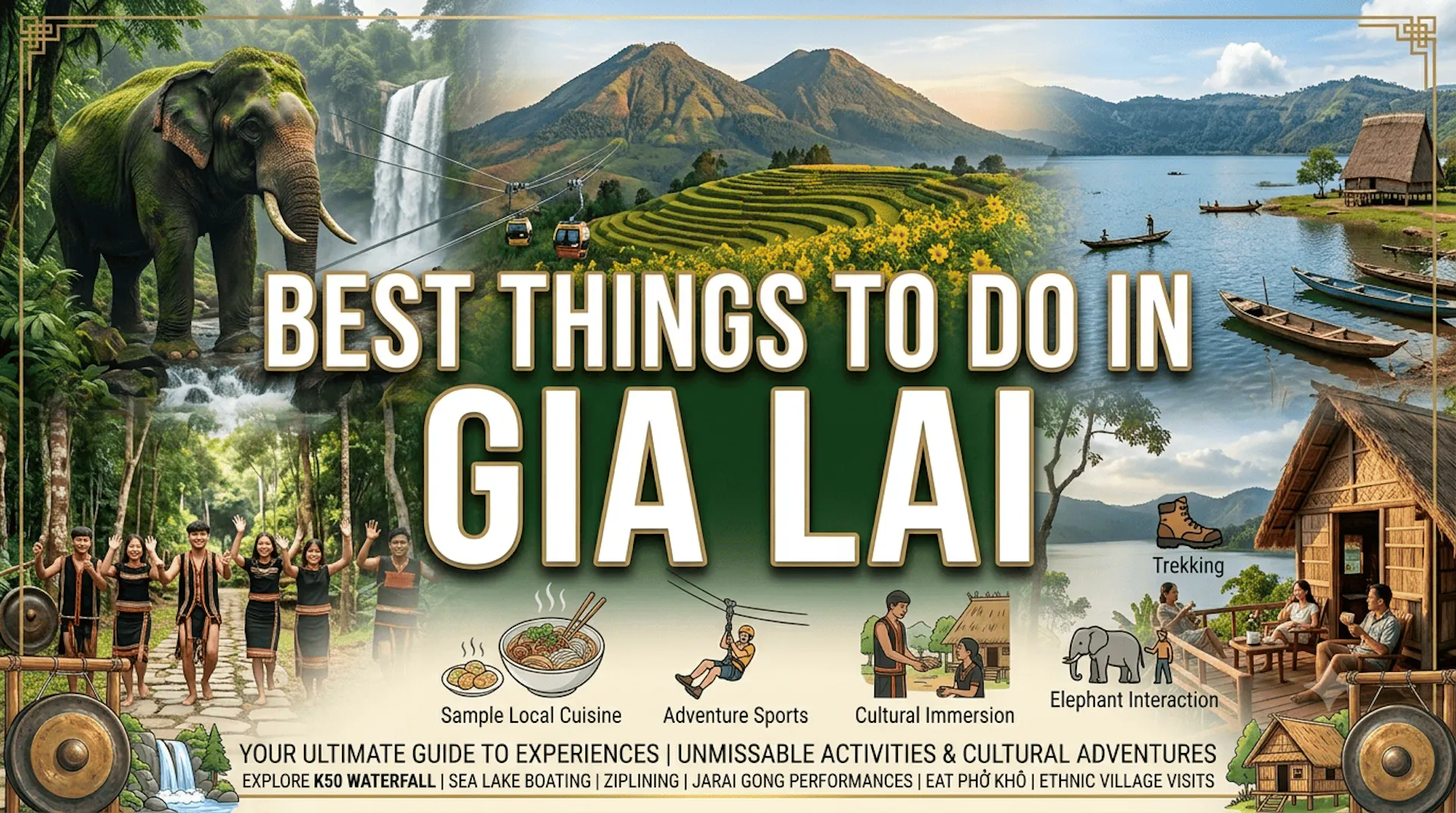
Gia Lai offers unforgettable experiences for travelers seeking nature, culture, and adventure in Vietnam's Central Highlands. Explore the breathtaking Chu Dang Ya Volcano, admire the peaceful beauty of Bien Ho Lake, visit spectacular waterfalls, discover traditional ethnic villages, and tour scenic coffee plantations. Visitors can also enjoy hiking, camping, photography, local markets, and authentic Highland cuisine. This guide highlights the best things to do in Gia Lai for an inspiring journey through one of Vietnam's most beautiful and culturally rich Highland destinations.
On this page
To ascend into the province of Gia Lai is to abandon the sediment-heavy heat of the southern delta and enter a realm defined by the raw, geologic pulse of the Central Highlands. Here, the landscape is not merely a setting for leisure; it is a profound, basaltic topography where dormant volcanic craters support lush agricultural mosaics and ancient indigenous traditions remain deeply woven into the daily rhythm of the forest. For the veteran traveler, the professional ecologist, and the journalist who has spent years documenting the rugged beauty of these plateaus, determining the best things to do in gia lai requires a deliberate shift in perspective. This is a region that demands active participation—a land where the haunting, rhythmic beat of gongs in a Jrai village holds as much historical gravity as the steep, lung-burning ascent of a volcanic rim. This exhaustive guide is curated for those who prioritize cultural depth, outdoor endurance, and genuine connection with indigenous heritage over the conventional, sanitized tourist circuits. Whether you are navigating the dense, secondary-growth trails toward a hidden cataract or participating in the solemn, communal silence of an ancestral ritual within a Nhà Rông, you are engaging with an authentic, unvarnished highland reality that few visitors ever truly comprehend.
Wild Frontiers: Nature and Volcanic Adventure
The geological identity of Gia Lai is dominated by its history of tectonic and volcanic violence, a narrative that has shaped the plateaus into a series of elevated, nutrient-dense basins. Engaging with these natural landmarks is the foundational activity for any traveler who wishes to understand the environmental pressures that have dictated the settlement patterns of the Jrai and Bahnar peoples.
Trekking the Chư Đăng Ya Volcano
The ascent of the Chư Đăng Ya volcano is a rite of passage for those seeking to understand the volcanic crater ecosystem of the province. Unlike the jagged, apex-focused peaks found in other mountain ranges, this dormant volcano presents a broad, sprawling crater that has been cultivated by local farmers for centuries. The experience changes dramatically with the seasonal cycle: during the early dry season, the slopes are a vibrant, agricultural tapestry of maize and sweet potatoes, while the late autumn witnesses an explosive, monochrome transition into the yellow-gold hue of wild sunflowers. The physical activity of the ascent is moderate but requires sturdy, high-traction footwear to navigate the loose, iron-rich basalt soil. For the serious nature enthusiast, the logistics of the climb are best managed in the early morning hours, allowing the traveler to bypass the midday sun and reach the rim as the highland mist begins to dissipate. It is a site of immense botanical diversity, offering a unique opportunity to document how human agricultural practice has successfully integrated with the geological legacy of the crater, creating a landscape that is both utilitarian and aesthetically striking.
Navigating the K50 Waterfall
The expedition to Thác K50 is a serious, deep-forest endeavor that represents the raw, untamed essence of the highland river systems. Located within the protected interior of the Kon Chư Răng Nature Reserve, this waterfall is a massive, geological force that cuts through the primary montane forest, plunging over granite cliffs into a basin of swirling, ice-cold water. Navigating the forest paths to the base of the falls is a demanding, technical challenge that requires an authoritative commitment to ecological responsibility and physical preparation. This is not a casual destination; it is an adventure for those who possess the navigational expertise to respect the forest’s density and the stamina to endure the humidity of the deep jungle. Engaging local guides is an absolute necessity, as they provide the only authoritative knowledge regarding the seasonal shifts in current speed and trail stability. Standing before the K50, one is forced to recognize the scale of the highland wilderness, where the roar of the water serves as a constant reminder of the geological and hydraulic power that has carved the province’s basins over thousands of years.
The Biển Hồ (Sea Lake) Ecosystem
The Biển Hồ—the Sea Lake of Pleiku—functions as the province’s primary volcanic eye. Occupying the crater of an ancient volcano, this lake is not fed by rivers, but by mountain springs that have filled the depression over millennia. The sensory experience of the lake is one of absolute stillness, particularly when the morning mist hangs low over the surface, obscuring the horizon. For the eco-conscious traveler, this site offers a critical look at how the highland population has managed their water resources in harmony with the local geology. It is a location for quiet reflection and meticulous observation; the silence of the lake is essential for bird-watching and documenting the diverse, high-altitude flora that thrives along the crater’s rim. Visitors are encouraged to maintain a low-impact presence, avoiding any activities that might disrupt the lake’s sensitive, spring-fed water quality. By standing on the periphery and observing the subtle movements of the highland wildlife, one gains a profound appreciation for the volcanic crater ecosystem that provides the indispensable hydration for the surrounding plateaus.
Deep Cultural and Ancestral Immersion
The human geography of Gia Lai is as ancient and layered as its basaltic foundations. The province serves as a primary repository for the customs, architecture, and spiritual rituals of the Jrai and Bahnar people, whose cultures are defined by their deep, ancestral connection to the forest and the mountain plateaus.
The Architecture of the Nhà Rông
The Nhà Rông—the soaring, thatched-roof communal house—is the architectural and spiritual anchor of the highland village. These structures are instantly recognizable by their massive, steeply pitched roofs that can reach heights of over twenty meters, serving as a beacon of communal identity and a functional hub for village life. Entering a Nhà Rông is an act of significant cultural weight. It is the primary site for village meetings, the resolution of local disputes, and the hosting of community festivals that bind the Jrai and Bahnar clans together. Travelers interested in experiencing this architectural heritage must understand that they are entering a private, community-owned space. The most authoritative way to learn about these structures is to engage directly with village elders, perhaps through a local guide who can facilitate a respectful, honest conversation. It is an opportunity to learn about the intricate craftsmanship involved in the construction, the spiritual symbolism of the wooden totems adorning the posts, and the ongoing efforts of the local people to preserve these structures against the pressures of urbanization.
Witnessing Gong Culture Rituals
The Cồng chiêng (Gong) culture is not a static museum piece in Gia Lai; it is a vital, audible presence that continues to function as the heartbeat of highland identity. The resonance of the gongs, performed during communal ceremonies, serves as a bridge between the earthly realm and the divine spirits, essential for marking the significant rites of passage in Jrai and Bahnar life. For the traveler, witnessing a communal ritual is a profound exercise in observation. These performances are not staged for the convenience of the tourist circuit; they are intense, authentic expressions of community cohesion, often marking the end of a harvest, the inauguration of a new long house, or a significant life transition. To observe the Space of Gong Culture with the necessary expertise, one must prioritize discretion, refrain from intrusive photography, and understand that the performance is a communal prayer rather than a public event. It is a lesson in cultural endurance, revealing the depth of the spiritual ties that bind the indigenous clans to their ancestral land.
Jrai and Bahnar Handicraft Workshops
The preservation of highland identity is perhaps most visible in the traditional handicrafts produced within the villages, from intricate, hand-loomed textiles to detailed wood-carving that adorns the communal spaces. These workshops are essential sites for understanding how the indigenous communities utilize forest-sourced materials—bamboo, rattan, and natural dyes—to maintain their material culture. Supporting these artisans is one of the most effective ways to contribute to the preservation of the Jrai and Bahnar customs. When you observe the weaving process or the methodical work of a carver, you are witnessing a skill set that has evolved over generations, demonstrating a sophisticated, localized knowledge of the forest’s botanical resources. Engaging with these artisans provides a tangible, high-quality perspective on the highland aesthetic, and purchasing directly from the source ensures that your economic contribution remains within the community, incentivizing the continuation of these essential, time-honored crafts in the face of cheaper, mass-produced imports.
Highland Agricultural and Culinary Rhythms
The plateaus of Gia Lai are defined by the labor-intensive cultivation of coffee and pepper, crops that require the specific, nutrient-dense profile of the local soil. These agricultural rhythms are not just economic drivers; they are the foundations of the highland culinary identity, dictating the dietary habits and the social life of the communities.
The Coffee and Pepper Ritual
The agricultural expertise required to sustain Gia Lai’s coffee production is a narrative of careful, sustainable management within the high-altitude climate. Visiting a small-scale, sustainable plantation offers an essential look at the labor involved in cultivating highland beans, which are known for their bold, earthy profiles. Unlike industrial-scale farms, these smaller, family-managed operations provide a sensory look at how the highland environment impacts the bean—the shade trees, the specific volcanic soil density, and the manual harvesting cycles all contribute to the profile of the highland brew. Participating in a coffee tasting, where you learn to identify the subtle, dark-chocolate or nutty notes of the local variety, is a high-expertise activity that connects the traveler to the plateau’s primary economic reality. The same care is applied to the pepper industry, where the careful drying and sorting of the peppercorns demonstrate the meticulous agricultural rhythm that has made the highlands a global leader in high-quality spice production.
Mastering Highland Staples
The local highland cuisine is defined by its reliance on forest-foraged ingredients and traditional, hearth-cooked preparation. Dishes such as cơm lam (bamboo-tube rice) and various preparations involving smoked meats or wild-foraged leaves are central to the social life of the Jrai and Bahnar. The preparation methods are inherently communal—often involving the use of bamboo as a natural, heat-retaining cooking vessel—which infuses the food with a delicate, grassy essence. The culinary philosophy here is based on the intelligent exploitation of the environment, where the bitterness of forest greens or the smoky profile of forest-game meat is balanced through fermentation and careful, slow-cooking over open fires. To eat these staples is to understand the highland appetite: it is robust, deeply satisfying, and grounded in the availability of the plateau’s wild bounty. Seeking out authentic, family-run eateries in Pleiku or within the village wards allows the traveler to experience this culinary syncretism, revealing a flavor architecture that remains entirely unique to the highlands.
Practical Field Logistics and Travel Etiquette
Executing a seamless and highly authoritative expedition through Gia Lai requires a pragmatic, well-planned approach to the logistics of a remote, highland frontier. Getting around the province is best managed by balancing the independence of self-driven transport with the logistical security provided by local expertise. While the arterial roads connecting Pleiku to the outlying wards are well-maintained, the true essence of the province—the remote ethnic villages and the volcanic crater trails—requires navigating unpaved, seasonal paths that can be treacherous during the monsoon. For the independent explorer, a high-quality, mountain-ready motorbike is the ultimate tool. However, for those navigating these remote areas for the first time, hiring a local driver is the authoritative choice. A local driver who understands the seasonal road conditions and the specific linguistic nuances of the Jrai and Bahnar communities provides a level of security and cultural accessibility that the independent traveler cannot achieve alone. They act as the essential bridge, facilitating respectful interactions and ensuring that your transit through the province is conducted with the necessary level of caution and cultural nuance.
The ethics of travel in Gia Lai are centered on the concept of respectful, low-impact engagement. The highland regions are increasingly sensitive to the impacts of rapid, unmanaged tourism. "Leave No Trace" is not a suggestion—it is a mandatory ethic. When exploring the volcanic craters or the hidden forest waterfalls, you must carry every scrap of waste back out with you and avoid any behavior that might disrupt the local wildlife or the environmental balance of the plateaus. Furthermore, respect for the privacy and the cultural traditions of the indigenous villages is the mark of a seasoned, responsible traveler. Always request permission before entering a village or capturing images of community rituals. Be aware that these villages are not static historical sites; they are functioning, modern communities. Your presence should be characterized by humility, low-impact observation, and a commitment to ensuring that your travel supports, rather than degrades, the cultural and environmental heritage of the region.
Regarding seasonal planning, the province effectively operates on a two-season cycle: the dry season and the rainy season. The dry season—running roughly from November through April—is the authoritative window for volcanic hiking and remote trekking. The skies are clear, the basaltic roads are firm, and the festival schedule is the most active. However, the shoulder months, particularly at the very beginning of the rainy season, offer a lush, vibrant green landscape that provides a unique, contemplative beauty. By choosing your arrival window based on your specific goals—the dramatic, clear-sky volcanic hikes or the quiet, atmospheric cultural immersion—you maximize the logistical efficacy of your trip. The "Gia Lai way" of travel is one of intentionality, where the success of the journey is defined by the quality of the engagement with the land and its people, not just the number of sights you have visited.
Conclusion: Finalizing Your Journey Through the Highlands
Gia Lai stands as the most essential, unvarnished highland destination in Vietnam, offering a complex, textured landscape that rewards the inquisitive mind and the adventurous spirit. By prioritizing an itinerary that balances the strenuous, physical demands of the volcanic crater ascents with the quiet, meditative atmosphere of the communal village houses, you ensure an expedition that is as deeply rewarding as it is visually arresting. The province does not merely offer sights to be seen; it offers a profound, complex cultural and geological tapestry to be decoded. As you consider your journey through these mountains, ask yourself where your priorities truly lie. Are you more drawn to the physical, dramatic challenge of the remote volcanic trek, or does the prospect of participating in the intimate, quiet cultural rituals of an indigenous highland village provide the primary motivation for your journey into the pristine heart of the Central Highlands? The highlands await, offering a depth that can only be discovered by those willing to seek it out with patience, humility, and a precise understanding of the seasonal and historical pulse of the land.
> Read more: Gia Lai Travel Guide

By Roy Trinh
Editor
Roy Trinh is a travel writer and destination expert at Go Visit Vietnam, dedicated to helping travelers discover the beauty, culture, and diversity of Vietnam. Through well-researched travel guides, practical itineraries, local insights, and authentic recommendations, Roy shares valuable information to inspire memorable journeys across the country. From vibrant cities and breathtaking landscapes to regional cuisine and cultural heritage, every guide is created to help visitors experience Vietnam with confidence and curiosity.
Frequently Asked Questions About the Best Things to Do in Gia Lai
What are the best things to do in Gia Lai?
Popular activities include visiting Bien Ho Lake, hiking Chu Dang Ya Volcano, exploring waterfalls, touring coffee plantations, visiting ethnic minority villages, camping, enjoying local cuisine, and discovering the natural beauty of Vietnam's Central Highlands.
Can I hike Chu Dang Ya Volcano?
Yes. Chu Dang Ya Volcano is one of Gia Lai's most famous natural attractions. Visitors can hike to the summit for panoramic views, especially during the wild sunflower blooming season when the landscape becomes particularly spectacular.
Is Gia Lai a good destination for cultural experiences?
Absolutely. Gia Lai is home to several ethnic minority communities, including the Jrai and Bahnar people. Visitors can learn about traditional customs, architecture, music, festivals, and local crafts in authentic Highland villages.
Can I visit coffee plantations in Gia Lai?
Yes. Gia Lai is one of Vietnam's major coffee-producing provinces. Travelers can visit coffee farms, learn about cultivation and processing, taste locally grown coffee, and enjoy beautiful Highland scenery.
How many days should I spend in Gia Lai?
Three to four days are recommended to fully explore Pleiku, volcanic landscapes, lakes, waterfalls, coffee plantations, and cultural villages while experiencing the relaxed atmosphere of Vietnam's Central Highlands.
Advertising box