
Best Things to Do in Ho Chi Minh City
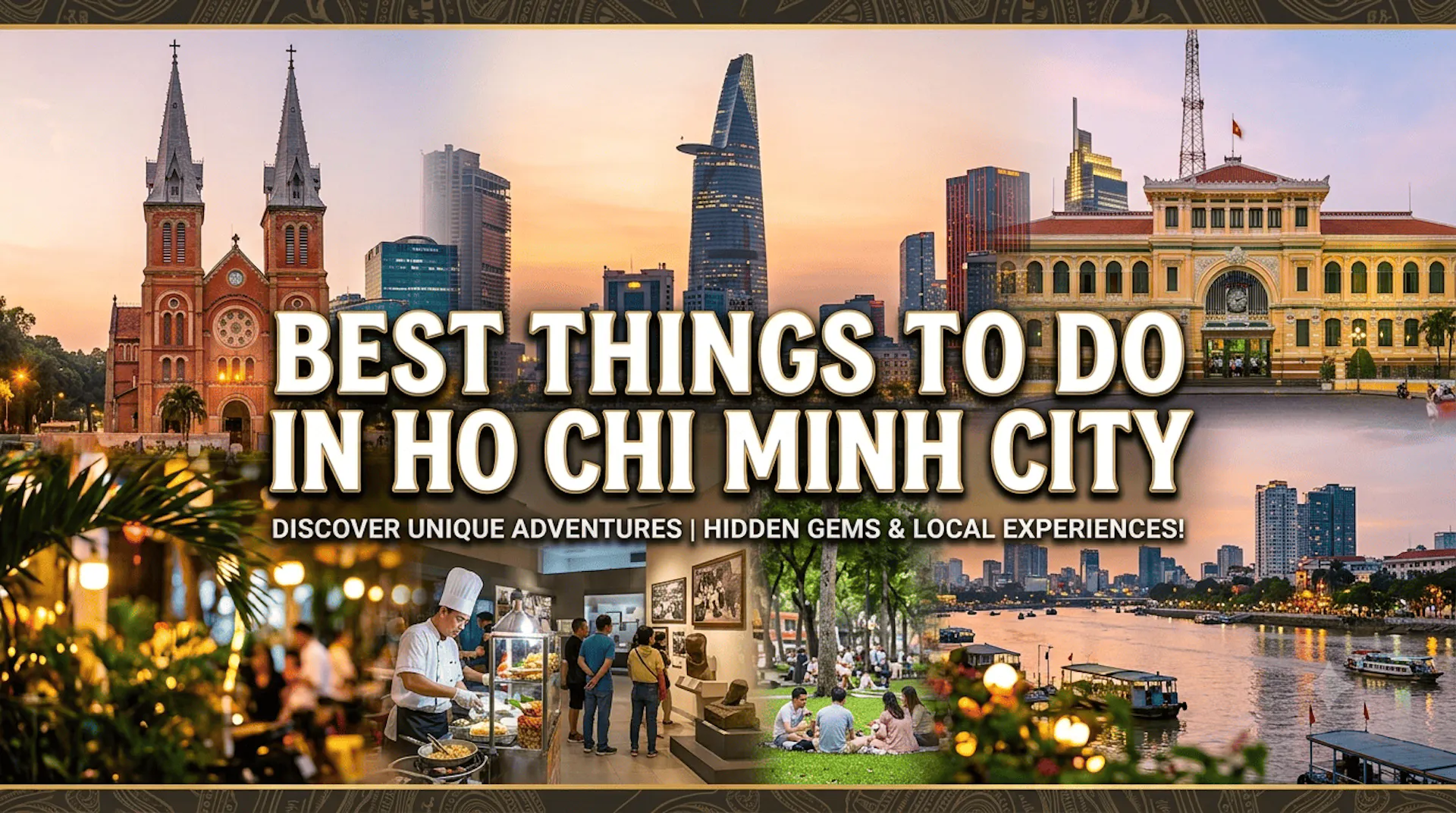
Ho Chi Minh City offers an exciting mix of history, culture, cuisine, shopping, and nightlife. Explore iconic landmarks, sample world-famous Vietnamese street food, cruise along the Saigon River, visit fascinating museums, discover bustling local markets, and enjoy spectacular skyline views from rooftop bars. Travelers can also experience vibrant nightlife, hidden cafés, and nearby historical sites such as the Cu Chi Tunnels. This guide highlights the best things to do in Ho Chi Minh City for an unforgettable journey through Vietnam's largest and most energetic metropolis.
On this page
To step onto the pavement of Vietnam’s southern metropolis is to surrender to a sensory tidal wave. The high-velocity streetscape envelops you instantly: the unrelenting roar of the motorbike tide, the dense, charcoal-scented smoke billowing from curbside grills pressing seasoned pork into warm baguettes, and the silent, imposing dignity of French colonial architecture standing resolute amidst the tropical thermal dynamics. Discovering the best things to do in ho chi minh requires a fundamental shift in travel philosophy. This is not a city designed for passive observation or sterile, air-conditioned bus tours. It is a vibrating, relentlessly forward-moving urban ecosystem that demands active participation. As a veteran urban researcher navigating these chaotic, alluvial streets for years, I present this curated master guide for travelers who prioritize cultural depth, architectural context, and the authentic urban rhythm over standard sightseeing checklists. Whether you are exploring historic monuments or plunging into the subterranean alleyway culture, Ho Chi Minh City—still universally referred to as Saigon by those who intimately know its pulse—will strip away your preconceptions and reward you with the most visceral, layered urban experience available in Southeast Asia.
Decoding the City’s Layers: The Best Things to Do in Ho Chi Minh
The Architecture of Ambiguity
The architectural narrative of Saigon represents a fascinating timeline of imperial ambition, wartime pragmatism, and unbridled modern capitalism. Standing before the Nhà thờ Đức Bà or the Central Post Office, one observes a distinct colonial architectural fusion. These structures are not merely European replicas; they were modified to withstand tropical humidity, incorporating louvers and wide corridors. Directly juxtaposed against these ornate facades are the functionalist apartment blocks of the socialist era and the sleek, glass-clad monoliths of contemporary finance. To truly comprehend the city, you must analyze these structures not as mere photo opportunities, but as historical anchors. The physical layout of District 1 reflects a city constantly wrestling with its own identity, tearing down the old to forge the new, yet inadvertently preserving its complex past in the shadows of high-rises. Engaging with this architectural ambiguity is essential for understanding the psychological fabric of the local population.
Navigating the "Hẻm" Culture
Moving away from the broad boulevards, the true essence of Saigon resides within the labyrinthine network of its alleyways. Engaging in HCMC alleyway exploration offers an unvarnished window into the working-class soul of the metropolis. These narrow corridors function as the city’s extended living rooms, communal kitchens, and informal workshops. To step into a hẻm is to transition from the anonymous roar of the main thoroughfare into an intimate, highly structured micro-community. Here, multi-generational families cook meals on the pavement, neighbors exchange local intelligence over tiny plastic tables, and the boundary between private residence and public space dissolves entirely. Wandering these subterranean arteries constitutes one of the most vital Ho Chi Minh City travel activities. It demands a respectful, observant posture, recognizing that you are traversing the domestic epicenter of the local workforce. The alleys are the resilient, beating heart of the urban geography, sheltering the authentic spirit of Saigon from the rapid gentrification occurring just streets away.
The War Heritage: Contextualizing the Narrative
No exploration of this city is complete without confronting the heavy, indelible scars of the twentieth century. The War Remnants Museum and the Independence Palace stand as monumental pillars of memory, anchoring the darkest chapters of the nation’s history. Visiting these historic sites in HCMC requires a mindful, intellectually rigorous approach to fully grasp Vietnam’s modern trajectory. The Independence Palace remains frozen in a mid-century modern aesthetic, its preserved telecommunications bunkers and reception halls echoing the final, tense hours of the previous regime. Meanwhile, the War Remnants Museum delivers a stark, uncompromising documentation of conflict, forcing visitors to confront historical truths from an alternative perspective. These spaces do not exist to provide light entertainment; they demand serious contemplation. By engaging with these historical repositories, travelers gain the necessary context to appreciate the fierce resilience and rapid economic ascension of the contemporary population. This historical grounding transforms the city from a chaotic backdrop into a profound narrative of survival and reinvention.
Urban Sensory Immersions: The Best Things to Do in Ho Chi Minh
The Street Food Pilgrimage
Participating in the legendary Saigon street life experiences requires a complete surrender to the local culinary theater. The street food culture here transcends mere sustenance; it is a high-octane performance of heat, steel, and intensely orchestrated chaos. You do not just eat; you participate in the cooking process visually and auditorily. The clatter of metal ladles striking giant aluminum vats, the fierce hiss of pork fat hitting blazing charcoal, and the aromatic clouds of star anise and toasted cinnamon rising from boiling broth create a multi-sensory symphony. Sitting on low, brightly colored plastic stools on a crowded sidewalk is an essential rite of passage. This democratic dining space erases socioeconomic boundaries, forcing executives and laborers to share narrow tables and converse over steaming bowls of soup. The etiquette is fluid but fast-paced: order quickly, eat enthusiastically, and embrace the surrounding urban noise. This culinary immersion teaches you more about the city’s industrious nature than any museum ever could. To locate the most authentic vendors, you must abandon the polished tourist avenues and venture deep into the residential zones. Follow the concentrated crowds and the unmistakable plumes of aromatic smoke. When you taste the explosive combination of fresh herbs, fermented fish sauce, and scorched chili, you are digesting the very essence of the alluvial delta. Authentic street gastronomy remains the most accessible, visceral gateway to understanding the profound hospitality of the Vietnamese people.
Coffee as a Social Catalyst
To understand the social mechanics of the metropolis, one must examine the local coffee culture. Coffee is not simply a caffeinated beverage in Vietnam; it functions as the primary social glue, the undisputed engine of urban communication. The historical tradition of cà phê bệt—literally translated as flat on the ground coffee—involves youths sitting on newspapers spread across park pavements, sipping dark, robusta brews mixed with thick condensed milk. This egalitarian practice thrives in the shaded parks framing the cathedral, offering a relaxed counterpoint to the relentless traffic. Simultaneously, a massive explosion of modern, design-driven coffee shops has transformed the city into a global specialty coffee capital. These sleek, architecturally innovative cafes serve as the incubation chambers for the city’s burgeoning creative class. By spending an afternoon observing the dynamics within these contrasting spaces, you witness the generational bridge between the old-world street lingering and the ambitious, laptop-lit hustle of modern Saigon. Coffee houses dictate the true tempo of the city. Whether you are sipping a slow-drip filter in a peeling, colonial-era apartment block converted into an indie cafe, or grabbing a rapid iced coffee from a roaming metal cart, the ritual remains sacred. The dark, bitter notes of the locally grown beans perfectly counteract the heavy, humid atmosphere. It is an indispensable daily ceremony that fuels the relentless commercial ambition and enduring intellectual discourse of this rapidly expanding Southeast Asian powerhouse.
Beyond the Core: The Best Things to Do in Ho Chi Minh
Cholon: The Chinese District
Leaving the manicured boulevards of District 1 and plunging into District 5 reveals an entirely different metropolitan frequency. Cholon, the city’s vast historical Chinese district, is a dense, mercantile labyrinth that demands exploration. The architectural shift is immediate: French neoclassical facades are replaced by faded pastel shophouses featuring ornate, tiled roofs and hanging red lanterns. The culinary landscape also pivots, shifting toward roasted duck stalls, herbal medicine apothecaries, and dim sum vendors. At the spiritual epicenter of this district sits the Thien Hau Pagoda, dedicated to the sea goddess. Walking through its heavy wooden doors, you are immediately struck by the sensory weight of thick, spiraling incense coils suspended from the ceiling, dropping fragrant ash onto the stone courtyards below. This space provides a crucial, silent refuge from the wholesale commerce raging outside in Chợ Bến Thành and Binh Tay Market. Engaging in authentic Saigon tours requires you to navigate this specific district, acknowledging the centuries-old heritage that forms a critical pillar of the city’s economic and cultural foundation. The sheer volume of goods moving through these narrow streets is staggering, reflecting a merchant tradition that predates the colonial era. To document the intricate diorama sculptures on the pagoda roofs is to witness a community fiercely guarding its ancestral rituals amidst the relentless modernization of the surrounding metropolis.
Riverside Rhythms
The eastern edge of the city is defined by the winding, silt-heavy currents of the Saigon River. Historically a working waterway clogged with cargo barges, the riverbanks are currently undergoing a massive, rapid transformation. Strolling along the newly developed promenades offers a striking vantage point to witness the city's future. Here, luxury infrastructure, towering residential monoliths, and manicured parks stand in stark contrast to the traditional, water-based commerce that still stubbornly persists. Small wooden fishing boats and heavily loaded coconut barges continue to navigate the currents in the shadow of multi-million-dollar yachts. To truly grasp the scale of this ongoing evolution, you must book a sunset river cruise or a public waterbus ticket. Watching the neon skyline ignite against the twilight sky from the vantage point of the water reveals the relentless, unyielding momentum of urban progress. The river is the original artery of the city, and it remains the ultimate stage upon which Saigon’s fierce modern ambitions are prominently displayed. The thermal dynamics of the city also shift along the water, offering a cooling breeze that sweeps through the concrete canyons. This geographical transition provides a necessary psychological breathing space. You can physically feel the tension dissolve as you sit by the river, sipping a cold local beer.
Practical Field Logistics and Etiquette
Executing a truly seamless and highly authoritative exploration of this high-velocity streetscape requires a pragmatic approach to urban logistics. The most infamous hurdle for any new visitor is the subtle art of crossing the street. You must abandon hesitation entirely. Step off the curb with a slow, steady, and predictable pace. Do not make sudden movements, and never step backward. The incoming wave of motorbikes will naturally part and flow around you; maintaining eye contact ensures safe passage.
Understanding the seasonal timing is equally critical. The city operates in two distinct thermal realities. During the dry season, the high-energy mornings are ideal for heavy exploration, necessitating mid-day retreats to escape the punishing sun. Conversely, the wet season brings dramatic, torrential afternoon downpours. These sudden deluges transform the urban rhythm, washing the streets clean and ushering in rain-soaked, introspective afternoons perfect for museum visits or extended cafe sessions.
Finally, navigating the city demands strict adherence to cultural etiquette. While the metropolis is aggressively modernizing, deep-rooted conservative values persist. When you visit sacred temples or quiet residential alleys, you must observe local life with profound humility. Dress modestly, covering shoulders and knees when entering spiritual spaces. Avoid intrusive, aggressive photography in the narrow alleys, recognizing these areas as private domestic spheres. By demonstrating genuine respect and a willingness to adapt to the local tempo, you elevate your presence from a transient tourist to an honored, welcomed guest within the city.
Conclusion: Final Thoughts on the Best Things to Do in Ho Chi Minh
Ho Chi Minh City stands as the ultimate destination for travelers seeking to decode the spirit of modern Vietnam. From deciphering the imposing legacy of colonial architecture to fully engaging with the fast-paced, culinary-driven street life in the narrow alleyways, every moment here demands your full attention. The best things to do in ho chi minh require an open mind and a willingness to embrace urban chaos. Which aspect appeals more to your sense of adventure—the silent, enduring historical heritage or the bustling, hyper-modern street-level life?
> Read more: Ho Chi Minh Travel Guide

By Roy Trinh
Editor
Roy Trinh is a travel writer and destination expert at Go Visit Vietnam, dedicated to helping travelers discover the beauty, culture, and diversity of Vietnam. Through well-researched travel guides, practical itineraries, local insights, and authentic recommendations, Roy shares valuable information to inspire memorable journeys across the country. From vibrant cities and breathtaking landscapes to regional cuisine and cultural heritage, every guide is created to help visitors experience Vietnam with confidence and curiosity.
Frequently Asked Questions About the Best Things to Do in Ho Chi Minh City
What are the best things to do in Ho Chi Minh City?
Popular activities include visiting the War Remnants Museum, exploring Ben Thanh Market, taking a Saigon River cruise, joining a street food tour, visiting Independence Palace, enjoying rooftop bars, and discovering the city's vibrant cafés and nightlife.
Is Ho Chi Minh City good for food lovers?
Absolutely. Ho Chi Minh City is one of Vietnam's best food destinations. Visitors can enjoy authentic street food, traditional Southern Vietnamese dishes, international cuisine, local markets, and modern restaurants throughout the city.
Can I visit the Cu Chi Tunnels from Ho Chi Minh City?
Yes. The Cu Chi Tunnels are one of the most popular day trips from Ho Chi Minh City. Located about 70 kilometers from the city center, they provide fascinating insight into Vietnam's wartime history and underground tunnel network.
What can I do in Ho Chi Minh City at night?
The city offers vibrant nightlife, including rooftop bars, live music venues, night markets, riverside cafés, Nguyen Hue Walking Street, fine dining, and evening river cruises along the Saigon River.
How many days should I spend in Ho Chi Minh City?
Three to four days are ideal for exploring the city's historical landmarks, museums, local markets, street food scene, shopping districts, and nearby attractions while experiencing the unique energy of Vietnam's largest city.
Advertising box