
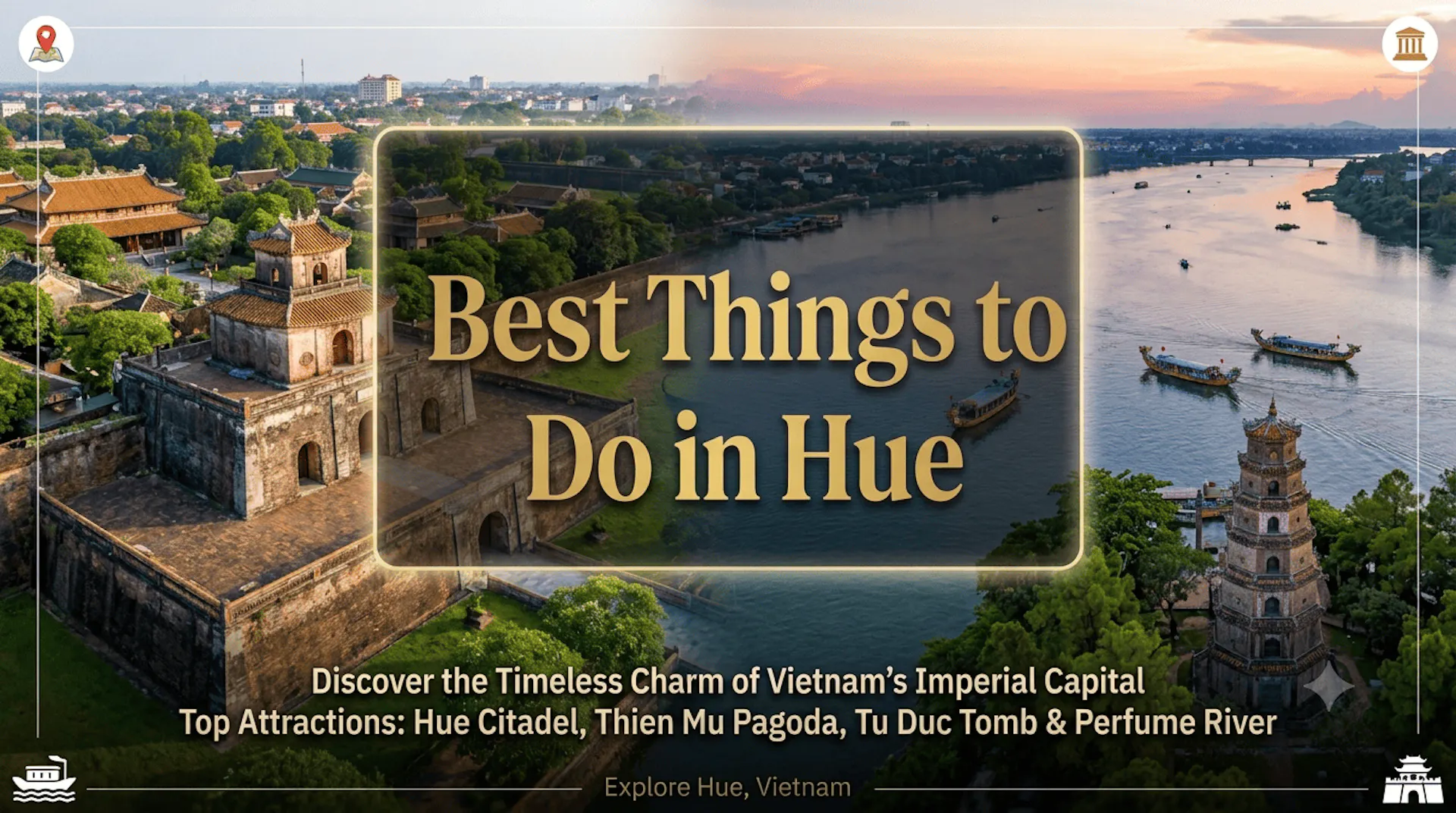
Best Things to Do in Hue
Hue offers unforgettable experiences that blend history, culture, and natural beauty. Explore the magnificent Imperial City, visit royal tombs, cruise along the Perfume River, discover ancient pagodas, sample Hue's famous cuisine, and wander through traditional villages. Visitors can also enjoy cultural performances, cycling tours, local markets, and nearby lagoons and beaches. This guide highlights the best things to do in Hue for travelers seeking authentic cultural experiences, imperial history, scenic landscapes, and the timeless charm of Vietnam's former royal capital.
On this page
To arrive in Huế is to cross the threshold into a meditative time-capsule, where the slow, poetic drift of the Perfume River mirrors the enduring, weathered elegance of the citadel walls. For the veteran travel journalist, the cultural researcher, and the expert who has spent years documenting the spiritual and physical landscape of this Cố đô (Ancient Capital), identifying the best things to do in Hue requires a deliberate shift in perspective. This is a city that rejects the frantic, high-velocity tourism of modern commercial hubs, demanding instead a traveler who prioritizes historical depth, meditative quietude, and a genuine, tactile connection with the remnants of the Nguyen Dynasty. The city is a living monument to dynastic aspiration, where every monument, pagoda, and garden house serves as a deliberate articulation of feng shui, royal etiquette, and spiritual devotion. This master guide is curated specifically for those who seek to decode the complex narrative of Vietnam’s imperial past, moving beyond the superficial to explore the sites and rituals that have maintained Huế’s identity as the country’s definitive center of tradition. Whether you are navigating the labyrinthine, stone-hewn gates of the Forbidden Purple City or participating in the silent, incense-laden rituals of a riverfront temple, you are engaging with a legacy that transcends conventional sightseeing, offering an authentic encounter with a landscape where nature, architecture, and spirituality remain inextricably linked.
The Imperial & Architectural Odyssey: Decoding the Dynastic Legacy
The architectural identity of Huế is defined by the meticulous, geomantic planning of the Nguyen Dynasty, a narrative that is physically etched into the landscape of the Citadel and the surrounding royal tombs. To engage with these sites effectively is to accept the responsibility of an observer who understands the architectural philosophy of a bygone era.
Decoding the Imperial Citadel (Kinh Thành)
The Kinh Thành (Imperial Citadel) serves as the terrestrial anchor of the Nguyen Dynasty, a sprawling, 520-hectare fortress that remains the most authoritative site for understanding Vietnamese dynastic architectural philosophy. To truly explore the citadel, one must move past the exterior gates and navigate the internal labyrinth of pavilions, courtyards, and inner sanctuaries. The spatial philosophy here is a study in Confucian hierarchy; as one moves from the outer fortifications toward the Forbidden Purple City, the architectural language shifts from defensive utility to refined, royal aesthetics. Expert advice dictates that the visitor should prioritize the early morning hours, allowing for a structured, quadrant-by-quadrant exploration that avoids the midday heat and the mid-afternoon crush. Walking through the Five-Phoenix Pavilion, one should observe the delicate, intricate wood-carving and the multi-layered roof tiles that serve as markers of high imperial status. Understanding the layout—the deliberate alignment of the palaces with the central axis of the city—is crucial for historical appreciation, as it reveals how the Nguyen emperors utilized architecture to reinforce their perceived role as the bridge between heaven and the terrestrial realm.
The Royal Tombs: A Landscape of Reflection
The royal tombs (Lăng tẩm) that dot the surrounding hillsides are not merely mortuary sites; they are meticulously curated "landscapes of the afterlife" that reflect the individual temperaments of the emperors who commissioned them. The Tomb of Minh Mang, for instance, is a triumph of rigorous, Confucian symmetry, where forty distinct structures are aligned along a single, harmonious axis, designed to bridge the gap between human governance and the natural environment. In stark contrast, the Tomb of Khai Dinh represents a radical, idiosyncratic departure into East-West architectural syncretism, where traditional Vietnamese forms collide with French colonial aesthetics, resulting in an ornate, glass-and-ceramic mosaic masterpiece that feels almost baroque in its intensity. Visiting these sites requires a commitment to slow movement; one must observe how the placement of each pavilion, bridge, and lake is dictated by geomancy, ensuring that the emperor’s final resting place remains in eternal, quiet dialogue with the surrounding mountains and water. To maximize the experience, travelers should arrive at the opening hour to ensure a meditative, solitary connection with the landscape, allowing the silence of the site to speak more clearly than any guidebook.
Restoration and Preservation Insights
The imperial preservation ethics currently applied in Huế represent a critical, ongoing dialogue between historical integrity and the unavoidable decay of tropical time. Preservation in this city is a multi-decade labor, involving the stabilization of fragile, Tali wood structures against the dual pressures of intense monsoon humidity and the structural degradation caused by the passage of centuries. Discussing these efforts adds an authoritative depth to the travel experience, as it highlights the immense, scientific "Expertise" required to keep Huế’s history alive. When you see scaffolding or restoration workers painstakingly reapplying lacquer to the weathered, imperial-era beams, you are witnessing the preservation of an entire artisanal heritage. This effort is not merely cosmetic; it is a structural and philosophical endeavor to maintain the architectural vocabulary of the Nguyen era for future generations. Recognizing this context allows the traveler to view the Citadel not as a static museum piece, but as a dynamic, evolving site of memory that is constantly being reclaimed from the encroaching, humid reality of the landscape.
Spiritual & Meditative Immersion: The Zen Monastic Integration
Beyond the royal monuments, the spiritual pulse of the city is articulated through its Zen monastic integration, where pagodas serve as meditative anchors that have sustained the intellectual and social history of the region for centuries.
Riverside Zen: The Thien Mu Pagoda Experience
The Thiên Mụ Pagoda remains the quintessential spiritual sentinel of the city, overlooking the Perfume River (Sông Hương) for over four centuries. Legend credits its construction to Lord Nguyen Hoang, who fulfilled a prophecy regarding a "Heavenly Lady" appearing on the hill to bless the region. Arriving at this site via a traditional boat along the river is a meditative ritual that mimics the path of the imperial processions of the past. Once on the hill, the seven-story Phuoc Duyen tower stands as a defining silhouette, its presence an invitation to slow, introspective movement. Beyond the visual grandeur, the pagoda serves as a site of profound national significance, housing treasures like the Great Bell and the antique stone stele, each reflecting the intense royal patronage that once fueled the Buddhist growth in the region. To visit Thien Mu is to witness the city's spiritual anchor, a place where the movement of the river below is mirrored by the quiet, disciplined motion of the resident monastic community.
The Tradition of Garden Houses (Nhà Rường)
The Nhà Rường (traditional garden house) tradition represents one of the most intimate, architectural expressions of Huế’s identity. These residences, once occupied by mandarins and royal relatives, are marvels of climate-adapted design, where low-slung, wooden structures are integrated into lush, meticulously planned gardens that prioritize feng shui and local comfort. Walking through these gates is an entry into a private, highly disciplined world of etiquette and natural harmony, where every element—from the ornamental bonsai to the positioning of the main hall—is intended to invite positive energy. Engaging with the owners of these houses, many of whom have maintained their family heritage for five generations, offers a rare opportunity to discuss the historical and social significance of this architecture. It is an experience that provides a synthesis of high-status imperial history and the practical, daily realities of living within a climate that demands constant, thoughtful adaptation.
Zen Monastic Life
Engaging with the Zen monastic life of Huế requires a departure from the high-traffic monuments in favor of the less-crowded, forest-hidden temples. These sites are the repositories of the city’s quietest, most disciplined traditions. Observing the daily life of the monastics—the rhythmic chanting, the intentional, slow motion of the walking meditation, and the communal preparation of simple meals—is a powerful counterpoint to the busy, urban reality of the city. This is an invitation to engage in "slow travel," where the primary goal is not to "see" a landmark but to occupy a space of silence and reflection. Participating respectfully in a visit to these sites involves maintaining a demeanor of quietude, recognizing that these are functional, active spaces of spiritual practice rather than tourist attractions. It is here that the traveler can truly begin to understand the meditative, introspective culture that has allowed Huế to remain a bastion of traditional Vietnamese thought.
Cultural & Culinary Traditions: Preserving the Imperial Narrative
The history of the Nguyen era is preserved not only in stone, but in the living rituals of court music, the precision of imperial cuisine, and the enduring craft of the local artisan. These traditions are the threads that connect the modern visitor to the sophisticated, historical identity of the region.
Understanding Royal Court Music (Nhã nhạc)
Attending a performance of Nhã nhạc cung đình (Royal Court Music) is an essential, UNESCO-recognized experience that provides a crucial, auditory link to the imperial court. This form of music was not merely entertainment; it was a highly formalized, liturgical act performed during the rituals of the Nguyen emperors to signal the harmony of the universe and the stability of the state. To sit and witness these performances, typically held in restored royal theater spaces, is to understand the aesthetic complexity of a music form that utilizes specific, traditional instruments and vocal techniques that have been meticulously maintained. The historical context provided by the performers allows the traveler to understand how music served as a core component of the imperial identity, providing a sensory, sonic manifestation of the dynastic world.
The Aesthetics of Hue Cuisine
The culinary landscape of Huế is legendary, reflecting a deep, royal-influenced aesthetic that emphasizes small, precise portions, delicate spice profiles, and the art of seasonal vegetable usage. The tradition of Cơm chay (royal-style vegetarian food) is a particularly significant aspect of the local culinary identity, born from the requirement for Buddhist fasting and the imperial preference for elegant, meat-free feasts. To engage with this food culture, one must look beyond the generic restaurants and seek out the traditional, home-style eateries where the history behind every ingredient is known. The aesthetics of the cuisine—the way a flower is shaped out of a carrot, the precise, balanced seasoning of a mung bean cake—reveal a culture that valued beauty, discipline, and the art of the presentation as highly as the flavor itself. Supporting the families who are the custodians of these traditional recipes is a primary way to engage with the living history of the city.
Artisanal Heritage Workshops
The survival of Huế’s artisanal heritage—the creation of lacquerware, the delicate embroidery of royal-style fabrics, and the painstaking construction of the conical hat—is a testament to the city's commitment to its dynastic roots. Visiting the workshops where these crafts are practiced allows the traveler to witness the methods that were once the primary domain of the royal artisans. The use of forest-sourced materials, the adherence to age-old, natural-dye techniques, and the patience required for traditional lacquer application are skills that define the region. Supporting these masters is an essential part of the "Experience" in Hue; it acknowledges that these crafts are not relics to be sold in mass-production centers, but are essential components of the city’s ongoing cultural narrative.
Practical Field Logistics and Travel Etiquette
Executing a seamless and highly authoritative heritage tour through Huế requires a pragmatic approach to the logistics of a historic city. Getting around the region is best managed by balancing the independence of self-driven transit with the logistical security of local, informed navigation. While the city center is manageable by motorized transport, the most evocative way to traverse the riverside and the Citadel perimeter is by bicycle or by walking, a pace that allows for the necessary atmospheric absorption. The geography of the city, which is defined by its meandering riverbanks and quiet, residential lanes, invites the traveler to slow down and observe the details.
The ethics of travel in Huế are centered on the principle of respectful, low-impact engagement. When entering sacred spaces like the imperial tombs or the various pagodas, decorum is the foremost expectation. This involves modest dress, a commitment to quietude, and a recognition that your presence is a transient one in a space that is defined by long-standing spiritual practice. Respectful interaction with local custodians, who are often the stewards of the site’s historical memory, is the sign of an expert traveler.
Finally, seasonal planning is vital to the Huế experience. The city’s atmosphere shifts dramatically throughout the year, and the traveler’s choice of season will fundamentally alter the mood of their visit. The misty, cooler months offer a contemplative and meditative experience that aligns perfectly with the city’s historical gravity, while the brighter, summer months bring a vibrant energy that illuminates the brilliance of the imperial mosaics and the lushness of the riverine gardens. Regardless of the season, the best approach is one of quietude and preparation, ensuring that the exploration of the best things to do in Hue remains an encounter characterized by respect, authoritative knowledge, and profound discovery.
Conclusion: Finalizing Your Journey to the Imperial Capital
Hue stands as the definitive, undisputed destination for understanding Vietnam’s dynastic soul, offering a complex, multi-layered landscape that ruthlessly exposes the inadequacy of standard, passive resort tourism. From the intricate, wood-hewn architecture of the royal Citadel to the heavy, incense-laden silence of the riverside garden houses, the best things to do in Hue demand absolute engagement from those who traverse its borders. By mastering the environmental logistics and respecting the deep, ancestral heritage of the land, you unlock the true, wild essence of this imperial frontier. Which specific aspect of this history—the grand, architectural ambition of the dynastic Citadel or the quiet, meditative grace of the riverside garden houses—are you most prepared to explore? The imperial capital awaits, but it requires a traveler who approaches it with patience, respect, and a precise understanding of the seasonal and historical pulse of the land.
> Read more: Hue Travel Guide

By Roy Trinh
Editor
Roy Trinh is a travel writer and destination expert at Go Visit Vietnam, dedicated to helping travelers discover the beauty, culture, and diversity of Vietnam. Through well-researched travel guides, practical itineraries, local insights, and authentic recommendations, Roy shares valuable information to inspire memorable journeys across the country. From vibrant cities and breathtaking landscapes to regional cuisine and cultural heritage, every guide is created to help visitors experience Vietnam with confidence and curiosity.
Frequently Asked Questions About the Best Things to Do in Hue
What are the best things to do in Hue?
Top activities include exploring the Imperial City, visiting royal tombs, taking a boat cruise on the Perfume River, visiting Thien Mu Pagoda, tasting Hue's famous cuisine, cycling through traditional villages, and enjoying cultural performances.
Can I explore Hue's Imperial City in one day?
Yes. Most visitors spend half a day to a full day exploring the Imperial City, although history enthusiasts may wish to spend more time visiting museums, exhibitions, and nearby royal sites.
Is a Perfume River cruise worth it?
Absolutely. A cruise along the Perfume River is one of Hue's signature experiences, offering beautiful scenery, access to riverside attractions, and a peaceful way to appreciate the city's historic atmosphere.
Is Hue a good destination for cultural experiences?
Yes. Hue is one of Vietnam's cultural capitals, offering imperial architecture, traditional music performances, ancient temples, royal ceremonies, handicraft villages, and authentic Central Vietnamese cuisine.
How many days should I spend in Hue?
Three to four days are ideal for exploring Hue's historical monuments, enjoying local food, taking river cruises, visiting nearby villages, and discovering the city's unique blend of history, culture, and natural beauty.
Advertising box