
Best Things to Do in Khanh Hoa
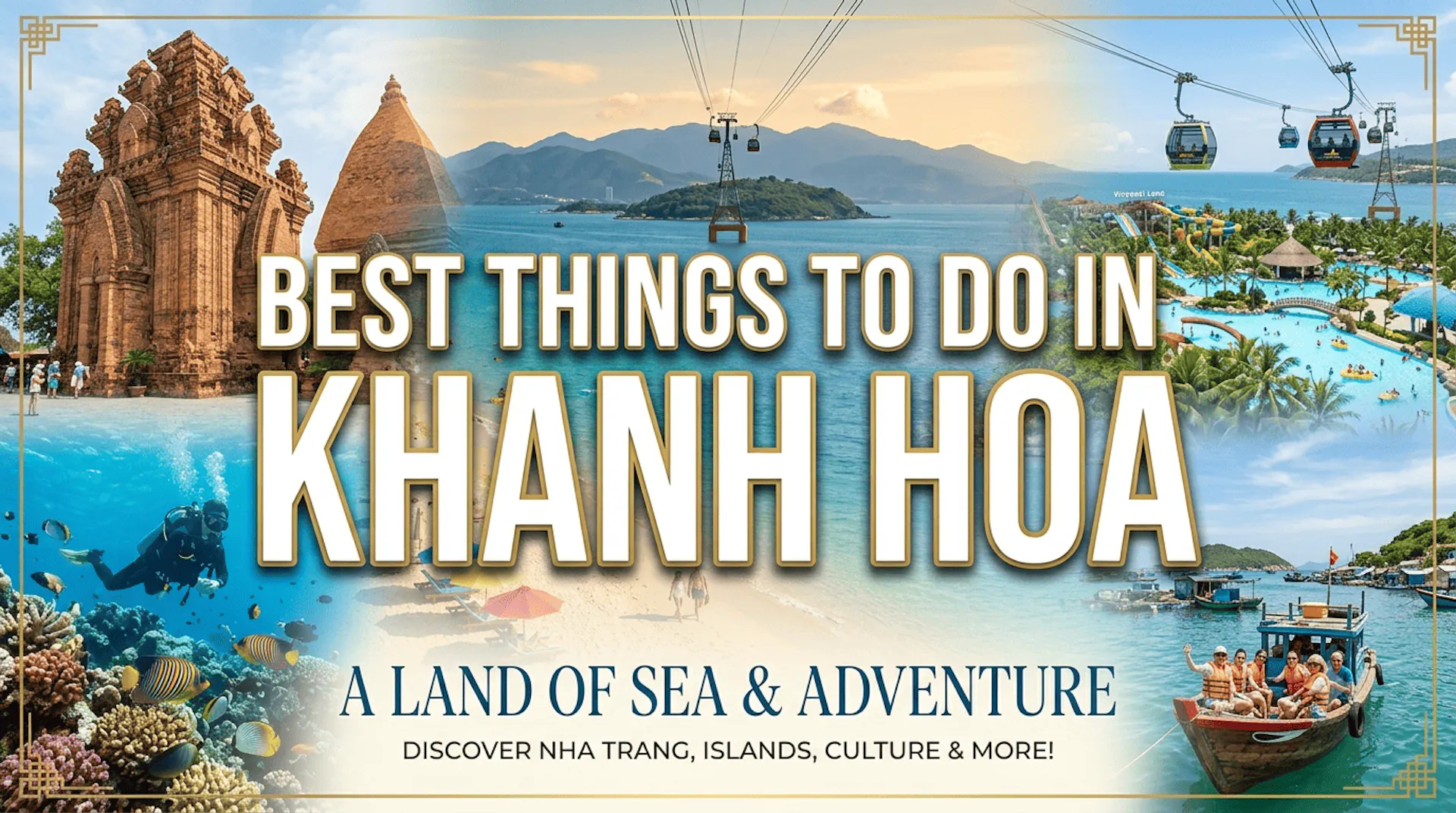
Khanh Hoa offers endless adventures along Vietnam's stunning south-central coast. Cruise through Nha Trang Bay, snorkel over colorful coral reefs, relax on beautiful beaches, visit ancient temples, discover hidden waterfalls, and enjoy fresh seafood by the sea. Travelers can also experience diving, island hopping, mud baths, scenic coastal drives, and vibrant nightlife throughout the province. This guide highlights the best things to do in Khanh Hoa for visitors seeking relaxation, adventure, culture, and unforgettable coastal experiences in one of Vietnam's top beach destinations.
On this page
To step into the province of Khánh Hòa is to enter a coastal landscape where the turquoise expanse of the South China Sea collides aggressively with the granite-veined mountains of the Central Highlands. For the veteran traveler, the professional marine ecologist, and the journalist who has spent years documenting the seasonal shifts of this littoral frontier, identifying the best things to do in khanh hoa requires a deliberate move away from the sterilized, mass-market resort corridors. The province is defined by a fierce, evocative rhythm: the rhythmic crashing of swells against the isolated peninsulas of Đầm Môn, the lingering, resinous scent of trầm hương (agarwood) emanating from mountain-side workshops, and the silent, stone-hewn grandeur of ancient Champa ruins. This master guide is curated specifically for those who prioritize cultural immersion, ecological responsibility, and the raw, unvarnished beauty of a land where nature and history remain inextricably linked. Whether you are navigating the complex, biodiverse coral networks of the outer islands or participating in the quiet, meditative rituals of an ancient pagoda overlooking the sea, you are engaging with a legacy that transcends the standard coastal itinerary. This is a journey through a land of profound contrasts, offering an authentic encounter with a province that serves as the definitive guardian of Vietnam’s central maritime spirit.
Coastal and Marine Expeditions: Navigating the Blue Frontier
The geographical reality of Khánh Hòa is dictated by its intricate coastal geomorphology, a landscape of sheltered bays, hidden archipelagos, and deep-water channels. To engage with the province effectively is to accept the sea as the primary driver of the local economy, history, and ecological future.
Island Hopping in Nha Trang Bay
The Vịnh Nha Trang (Nha Trang Bay) functions as the province’s primary marine circulatory system, hosting a complex mosaic of island ecosystems that demand specific, informed approaches. To treat these islands as interchangeable beach stops is a logistical failure; each island offers a distinct environmental signature that rewards the specialized visitor. The rugged, submerged basaltic rocks surrounding Hòn Mun Island provide the optimal substrate for the highest concentration of hard and soft coral species in the region, making it the non-negotiable destination for serious snorkeling and diving. Here, the marine biodiversity remains robust, provided the visitor adheres to strict, non-contact protocols. In contrast, the protected, shallow-water corridors of Hòn Tằm are engineered for leisure, where the focus shifts toward low-impact recreational activities that allow for prolonged exposure to the tranquil, sun-drenched atmosphere of the bay. By calibrating your island-hopping itinerary to these specific environmental signatures, you transform a casual boat ride into a highly calibrated marine expedition, ensuring that your interaction with the archipelago is both scientifically interesting and recreatively satisfying.
Adventuring in Cam Ranh and Van Phong Bays
For the traveler seeking to push beyond the urban density of the provincial capital, the expedition into Cam Ranh and Vịnh Vân Phong reveals a far more rugged, wind-swept coastal reality. These bays are defined by their sheer scale and their relative isolation from the high-velocity tourist circuits. Exploring these regions requires a willingness to navigate the unvarnished edge of the province, where the landscape is sculpted by the raw power of the open ocean. The peninsular reaches of the Đầm Môn area, in particular, offer a stark, dramatic beauty, with sand dunes that shift under the prevailing seasonal winds and deep-water coves that remain entirely empty of infrastructure. This is the ultimate playground for the traveler who prioritizes solitude and environmental observation over the convenience of a hotel lobby. It is a place to witness the coastal environment in a state of near-primordial simplicity, where the water is clearer, the marine life is less disturbed, and the sound of the ocean is the only persistent presence.
Diving and Snorkeling Logistics
Engaging with the marine environment requires more than just a mask and fins; it necessitates a high degree of technical awareness. The seasonal fluctuations in ocean visibility, dictated by the regional monsoon cycles, are the primary variable in the success of any underwater expedition. To coordinate your marine exploration with the periods of maximum clarity, one must avoid the height of the storm season, typically late autumn, when the sediment load in the water column significantly reduces light penetration. Furthermore, exploring the coral reef systems respectfully—maintaining neutral buoyancy, utilizing only biodegradable, reef-safe sun protection, and strictly observing the "no-touch" mandate—is the hallmark of an expert-level diver. These reefs are fragile biological architectures, and the marine biodiversity they sustain is currently under immense pressure. By acting as a responsible, low-impact presence beneath the waves, you contribute to the long-term viability of these ecosystems, ensuring that the underwater complexity remains a vibrant feature of the province for future generations.
Immersive Cultural and Historical Rituals
While the sea captures the immediate attention of the traveler, the historical and spiritual soul of the province is etched into the stone and incense-heavy air of its inland and hillside sites. These are the locations that ground the coastal experience in a deeper, more permanent narrative of indigenous faith and artistic endurance.
Unveiling the Cham Heritage
The historical narrative of this province is physically anchored by the Tháp Bà Ponagar (Po Nagar Cham Towers), an architectural masterpiece that serves as the definitive center of the Champa architectural legacy. These ancient, brick-built structures were not intended merely as monuments; they were, and remain, sites of living, ongoing spiritual practice. To stand before these towers is to confront a sophisticated mastery of structural engineering that defies the erosive power of the tropical climate. The builders utilized a mortarless, interlocking brick-lay technique that has endured for a millennium, surviving both the elements and the upheaval of colonial expansion. The site is a vibrant, chaotic collision of the past and the present, where the rhythmic chanting of the devotees mingles with the scent of burning incense, providing a sensory experience that feels entirely detached from the modern resort world nearby. Travelers must approach this space not as passive observers, but as respectful witnesses to a faith that has anchored the local population since the seventh century.
The Agarwood Experience
The province has long been recognized as the "land of agarwood," a status that has fundamentally shaped its cultural and economic identity. The trầm hương (agarwood) artisanal tradition is a meticulous, highly guarded craft, involving the extraction of a rare, resinous substance from the heartwood of specific highland trees—a biological defensive response that takes decades to manifest. Visiting an agarwood workshop provides an essential, sensory-rich perspective on the province’s unique history. You are not just smelling a fragrance; you are participating in a tradition that once drew merchant fleets from across the maritime trade routes of the East. The artisans who carve and distill the wood demonstrate a level of patience and focus that is rarely seen in the rapid-paced world of modern commerce. This artisanal culture provides an atmosphere of quiet, meditative intensity, and engaging with it reveals the sophisticated, luxury-focused history of the region that exists beneath the surface of the coastal beach culture.
Spiritual Sanctuaries
The integration of spiritual architecture into the provincial landscape is perhaps best exemplified by the Long Son Pagoda. This site, located at the base of Trai Thuy Mountain, utilizes the steep, vertical topography to create a sense of transition from the chaotic, low-lying coastal bustle to the quiet, rarified atmosphere of the highland spirit. The climb to the giant, seated white Buddha—which watches over the entire city—is a physical and meditative commitment. Along the way, you encounter intricate ceramic and glass mosaics that represent the dedication of the local practitioners. Standing on the summit, surrounded by the heavy, humid air and the distant, constant hum of the port, one finds a vantage point for reflection. It is an essential site for understanding how the local population reconciles the rapid, high-speed pace of their modern maritime economy with the ancient, enduring demands of Buddhist practice, offering a rare, vertical perspective on the city’s complex, evolving personality.
Highland and Rural Discovery: The Untamed Hinterlands
The true geographical depth of the province is revealed only when you venture inland, turning your back on the ocean to explore the highland hinterlands. The transition from the saline, coastal air to the cool, forest-thickened atmosphere of the mountain ranges provides the necessary ecological context for understanding the province's overall environmental health.
Exploring the Hinterlands
The journey to the Yang Bay Waterfall and the surrounding mountain ranges represents a dramatic shift in your expedition. This is a region where the forests provide the essential, unseen services—regulating the water table and preventing erosion—that allow the coastal ecosystem to flourish. To navigate the dense forest paths of the interior is to witness the sheer, untamed biological complexity of the highland watersheds. The cascades of Yang Bay, which tumble over ancient, moss-slicked granite formations, create localized microclimates that support diverse fern species, wild orchids, and dense avian populations. This inland excursion is a mandatory component of the journey, as it demonstrates that the beauty of the coast is fundamentally dependent upon the integrity of the highland canopy. The Raglai people, who have traditionally inhabited these higher, forest-dependent elevations, offer a completely different cultural paradigm, emphasizing a relationship with the forest that is rooted in ancestral protection rather than maritime commerce, providing a vital ethnographic counterpoint to the coastal experience.
Supporting Local Fishing Traditions
The coastal identity is not found solely in the luxury developments; it is forged within the working fishing communities that dot the coastline. These are the individuals who maintain the traditional, sustainable methods of the sea, often operating from small, hand-crafted boats that are as vibrant and weathered as the people who pilot them. Engaging with these communities requires a deliberate, community-supported approach to tourism. Rather than viewing their labor as a picturesque backdrop, the traveler should seek to support the local fishing economy directly by purchasing local products or engaging in community-led boat experiences that respect the historical, sustainable methods of the maritime workforce. To witness the dawn sorting of the daily catch or the intricate, repetitive process of net-mending is to observe the true, foundational labor of the province. By participating in the local maritime commerce with respect and restraint, you ensure that the traditional, small-scale life of the coastline remains a vibrant, functional part of the province’s future.
Practical Field Logistics and Travel Etiquette
Executing a seamless, authoritative expedition through this coastal province requires a pragmatic adherence to both the logistical realities of the terrain and a commitment to responsible, low-impact travel. Getting around the province is best managed by balancing the independence of self-driven transport with the local expertise of a hired driver or a specialized boat captain. While the main arterial coastal roads are well-maintained and perfect for those exploring the shoreline by motorbike, the most rewarding experiences—the ones that take you into the remote island coves or the hidden highland cataracts—often require navigating seasonal tracks or hiring a private, community-owned boat. Securing a boat charter through a reputable, locally managed cooperative is the most reliable way to access the restricted marine zones, ensuring that your expedition is both safe and respectful of the local maritime regulations.
Ethical tourism in this province is centered on the principle of minimizing impact on the cultural and natural heritage of the coastal zone. When visiting the coral networks, prioritize the use of reef-safe materials, avoid any contact with the underwater structures, and ensure that your presence is one of passive observation. The fragility of the marine environment, combined with the sensitive cultural nature of the Champa ruins, means that the responsibility of the traveler is paramount. "Leave No Trace" is the only acceptable code of conduct. Whether you are traversing the high-mountain trails or lounging on an isolated island beach, the integrity of the landscape must remain entirely undisturbed by your passage.
Finally, the timing of your visit is the ultimate logistical lever. The regional weather is influenced by seasonal maritime patterns; to guarantee the best possible conditions for underwater exploration and safe transit between the islands, you should schedule your coastal exploration to avoid the peak storm months of late autumn. By choosing to travel during the dry, stable months, you maximize the safety and the clarity of your coastal journey, ensuring that your exploration of the province’s diverse, multi-layered environment remains a high-quality, authoritative experience.
Conclusion: Finalizing Your Expedition to Khanh Hoa
This province stands as the definitive, undisputed coastal crown jewel of Central Vietnam, offering a complex, multi-layered landscape that relentlessly exposes the inadequacy of standard, passive resort tourism. From the intricate, nutrient-dense coral architectures of its legendary bays to the heavy, incense-laden silence of its ancient Champa towers, the best things to do in khanh hoa demand absolute engagement from those who traverse its borders. By mastering the environmental logistics and respecting the deep, ancestral heritage of the land, you unlock the true, wild essence of this maritime frontier. Which specific activity—the strenuous, high-visibility dive into the pristine coral networks or the quiet, spiritual gravity of the Champa towers—appeals most intensely to your uncompromising sense of adventure?
> Read more: Khanh Hoa Travel Guide

By Roy Trinh
Editor
Roy Trinh is a travel writer and destination expert at Go Visit Vietnam, dedicated to helping travelers discover the beauty, culture, and diversity of Vietnam. Through well-researched travel guides, practical itineraries, local insights, and authentic recommendations, Roy shares valuable information to inspire memorable journeys across the country. From vibrant cities and breathtaking landscapes to regional cuisine and cultural heritage, every guide is created to help visitors experience Vietnam with confidence and curiosity.
Frequently Asked Questions About the Best Things to Do in Khanh Hoa
What are the best things to do in Khanh Hoa?
Popular activities include island hopping in Nha Trang Bay, snorkeling and diving, relaxing on beautiful beaches, visiting Ponagar Cham Towers, enjoying mud baths, exploring waterfalls, tasting fresh seafood, and experiencing the city's vibrant nightlife.
Is snorkeling and diving popular in Khanh Hoa?
Yes. Khanh Hoa is one of Vietnam's top destinations for snorkeling and scuba diving. Hon Mun Marine Protected Area is especially famous for its colorful coral reefs, diverse marine life, and excellent underwater visibility.
Can I take an island-hopping tour in Khanh Hoa?
Absolutely. Island-hopping tours are among the most popular activities in Khanh Hoa. Visitors can explore tropical islands, swim in crystal-clear waters, snorkel over coral reefs, visit fishing villages, and enjoy fresh seafood.
Are there family-friendly activities in Khanh Hoa?
Yes. Families can enjoy beach activities, cable car rides, amusement parks, aquariums, mud baths, boat tours, cultural attractions, and island excursions suitable for travelers of all ages.
How many days should I spend in Khanh Hoa?
A stay of three to five days is ideal for enjoying beaches, island tours, cultural landmarks, water sports, seafood, and nearby natural attractions while experiencing the relaxed coastal lifestyle of Khanh Hoa.
Advertising box