
Best Things to Do in Lam Dong
Lam Dong offers countless experiences for travelers seeking nature, adventure, and relaxation in Vietnam's Central Highlands. Hike Lang Biang Mountain, explore Da Lat's charming streets, visit spectacular waterfalls, stroll through colorful flower gardens, and discover coffee and tea plantations surrounded by breathtaking scenery. Visitors can also enjoy camping, cycling, canyoning, local markets, and authentic Highland cuisine. This guide highlights the best things to do in Lam Dong for an unforgettable journey filled with fresh mountain air and spectacular landscapes.
On this page
To ascend into the province of Lâm Đồng is to leave behind the low-lying, sediment-heavy heat of the delta and enter a realm defined by high-altitude mist, granite ridges, and a climate that breathes with the rhythm of the Southern Highlands. This province is not merely a collection of scenic lookouts; it is a sprawling, complex montane ecosystem that acts as the primary hydrological and cultural water tower for Southern Vietnam. For the dedicated ethnographic researcher, the professional photographer, and the traveler who prioritizes slow-paced immersion over the frantic pace of modern urban transit, identifying the best things to do in lam dong requires a willingness to move beyond the high-traffic hubs of Đà Lạt and venture into the rugged, tea-drenched valleys of Bảo Lộc and the wild, untamed plateaus of Di Linh. This is a landscape where the ancient traditions of the K’Ho and Chu Ru people remain woven into the fabric of daily agrarian life, and where the geography itself—an intricate series of mountain passes and pine-covered ridges—commands both respect and physical endurance. This master guide is curated specifically for those who seek to engage with the province not as casual observers, but as active, respectful participants in a highland legacy that is as fragile as it is magnificent. Whether you are scaling a granite summit before dawn or participating in the ritualized sounds of traditional gongs in a village courtyard, you are engaging with an authentic, unvarnished highlands reality that few visitors ever truly comprehend.
Conquering the Highland Peaks: The High-Altitude Expedition
The geographical backbone of the province is defined by its dramatic elevation changes, and no expedition can claim to understand the highlands without physically engaging with its peaks. Conquering these heights is a foundational component of all serious Lâm Đồng travel activities, demanding a commitment to physical exertion and a profound connection to the surrounding alpine environment.
Trekking the Lang Biang Plateau
The ascent of the Lang Biang summit is a rite of passage for the serious hiker. While the base of the mountain is often saturated with casual day-trippers, the true essence of the mountain is revealed only on the upper, wind-battered trails that lead toward the highest ridge. This trek is a grueling, technically demanding exercise that requires a baseline of cardiovascular fitness and an intimate respect for the volatile montane climate. As you navigate the steep, root-strewn paths, the vegetation shifts from the broad-leaved tropical growth of the lower elevations to the hardy, resinous pine forests that define the high-altitude zone. The K’Ho ethnic minority holds this mountain in deep mythological reverence, regarding it as the site of ancient romantic legends and communal spiritual pacts. Reaching the summit is not simply a matter of hitting a coordinate; it is an experience of perspective. From the top, you are confronted with a sprawling vista of the Cao nguyên Lâm Viên (Lam Vien Plateau), where the rolling, pine-covered hills stretch endlessly, punctuated only by the occasional shimmering glint of a hidden reservoir. It is the most authentic high-altitude perspective of the province, and the physical labor required to get there provides the only proper introduction to the sheer scale of the highland wilderness.
The Art of Highland Exploration
Traversing the winding, serpentine mountain passes of Lâm Đồng by motorbike or specialized four-wheel drive is a logistical necessity for the dedicated explorer. The art of this travel lies in the pace; you must allow the geography to dictate your movement. When you choose to travel along the remote mountain passes that connect the small highland villages, you are witnessing the province as it functions between the tourist-heavy districts. This is where you find the unvarnished reality of the highlands: small, family-owned coffee processing centers, drying yards for local specialty peppers, and the occasional, sudden apparition of a mountain stream tumbling directly across the asphalt. The "art" of exploration here involves a commitment to stopping—stopping to observe the shifting light over the valley, stopping to engage with a local farmer, and stopping to navigate the lesser-known, off-trail paths that lead toward the interior. Hiring a local, site-specific guide is an authoritative move for those venturing off-trail; it ensures that your route is both technically safe and ecologically respectful, as the mountain tracks can become treacherous with surprising speed, particularly when the afternoon mist begins to roll in and obscure the path.
High-Altitude Conservation
Respecting the fragile, high-altitude ecosystems of the province is a non-negotiable obligation for any traveler. The highlands are a delicately balanced environment where the soil is thin and the floral diversity is susceptible to human-induced erosion. Practicing strict "Leave No Trace" principles—carrying out every scrap of waste, avoiding the trampling of non-designated trails, and refraining from the removal of any local flora—is the only way to ensure these summits remain viable for future generations. This commitment to ecological preservation is what separates the serious travel enthusiast from the casual tourist. By choosing to camp in designated areas, by refusing to engage with commercial souvenir vendors who sell forest-foraged goods, and by acting as an observant, low-impact presence in the wilderness, you contribute to the ongoing, essential work of protecting these peaks. It is a form of active engagement that adds a necessary layer of expertise to your travel, turning a standard trek into a meaningful act of environmental stewardship.
Immersive Cultural and Agricultural Rituals
The cultural depth of Lâm Đồng is best explored through its intense, labor-intensive agrarian traditions and the ritualized heritage of its indigenous populations. These experiences require the visitor to move away from the urban centers and participate in the rhythmic cycles of the village life that define the highland economy.
Witnessing Highland Tea and Coffee Culture
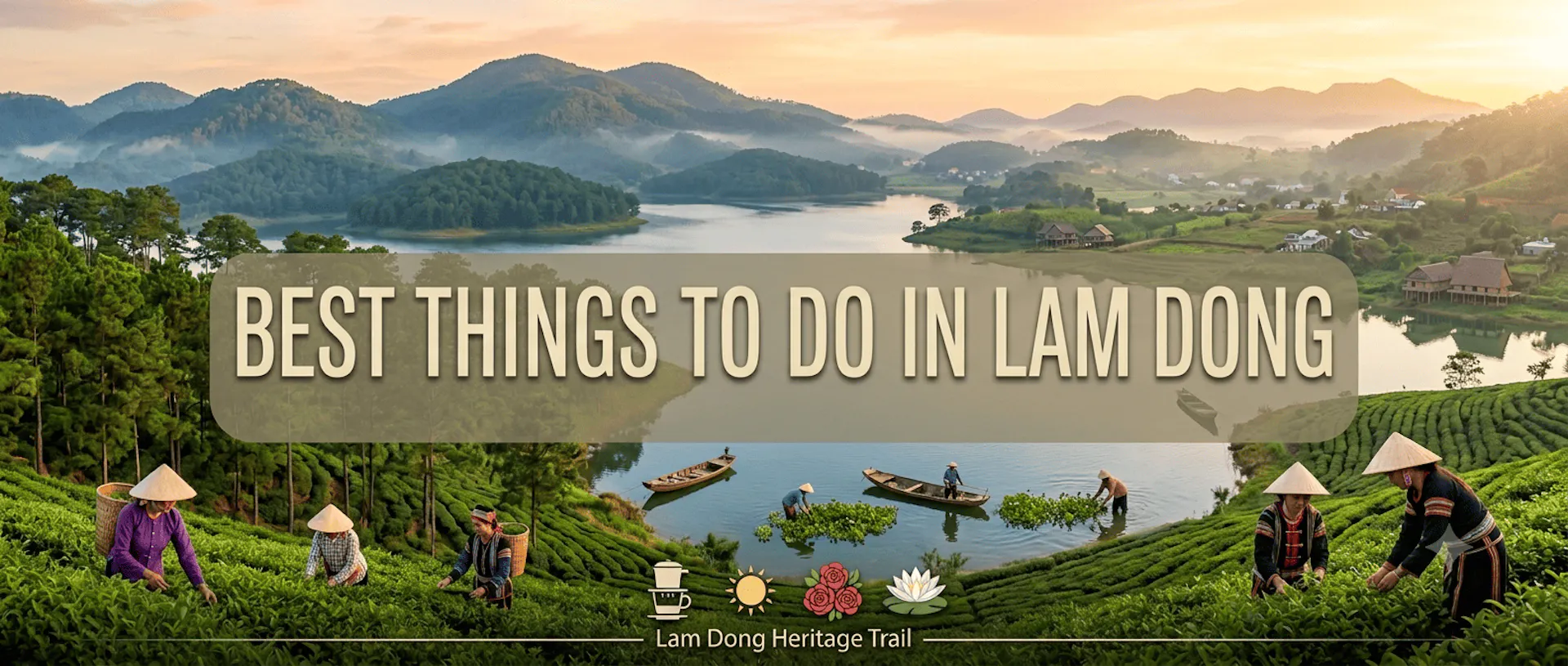
The Bảo Lộc region is a vast, rolling landscape of artisan tea cultivation that demands a deliberate, sensory exploration. The hills here are meticulously terraced, a testament to the decades of agricultural expertise required to coax high-quality tea leaves from the highland soil. Engaging with this culture is far more than a simple factory tour; it involves walking the rows of the plantations during the early morning hours, observing the precise, manual technique of plucking the two-leaf-and-a-bud harvest. The tea-making process is an act of extreme precision—withering, rolling, and firing the leaves in a delicate, time-sensitive operation that transforms the raw product into the final, fragrant staple. Participating in an artisanal tea-tasting session, where you learn to identify the nuances of the regional brew, is a high-expertise culinary activity that provides a tangible link to the agricultural backbone of the province. Similarly, exploring the Di Linh coffee plantations offers insight into the labor-intensive reality of coffee production, where the harvest and the drying processes are the heartbeat of the local community’s survival.
Cultural Immersion with Indigenous Communities
Engaging respectfully with the K’Ho and Chu Ru peoples is one of the most vital things to do in lam dong for a traveler seeking cultural depth. This engagement should never be transactional; it must be predicated on genuine interest and slow-paced observation. The most profound cultural experience is the communal Cồng chiêng Tây Nguyên (Central Highlands Gong Performance), a practice that holds deep, UNESCO-recognized spiritual weight. Rather than seeking out staged, costume-heavy performances in the city, the astute traveler makes the effort to reach rural villages, where the gongs are played as a part of real life—marking harvests, community rites, or social gatherings. Participating in or observing these events requires an immense amount of social grace; you must understand the etiquette of sitting, the importance of silence during the performance, and the humility required to receive an invitation into these community spaces. It is an act of engagement that bridges the gap between the visitor and the host, and it is the most honest, authentic way to acknowledge the indigenous history of the Southern Highlands.
Natural Escapes and Water Wonders
While the mountain peaks define the horizon, the water systems of Lâm Đồng dictate the region’s topography. The province’s waterfalls are not mere aesthetic features; they are massive, geological forces that have carved the land into its current, jagged state.
Chasing the Hidden Waterfalls
The waterfalls of the Bảo Lộc area, including the famous Dambri, are expressions of the raw, untamed energy of the highland water systems. These are not gentle, decorative streams; they are thunderous, geological cataracts that plunge into granite basins, sending a constant, invigorating spray across the surrounding forest. Navigating the trails to these sites is a sensory immersion. You feel the temperature drop as you approach the basin, you hear the absolute, crushing roar of the water, and you see the power of the hydraulic erosion that has shaped the granite topography over thousands of years. The experience of standing before these falls provides a deep, intuitive understanding of the region's physical evolution. These sites are essential landmarks for those who wish to connect with the untamed, unpredictable aspects of the highland environment, provided they approach the slick, moss-covered trails with the extreme caution that such power demands.
Finding Silence in Hillside Pagodas
The spiritual life of the province is perfectly represented by sites like the Linh Quy Pháp Ấn pagoda, a sanctuary that has become a destination for those seeking profound silence. The pagoda is perched atop a high, isolated peak, surrounded by a natural amphitheater of tea hills and cloud-filled valleys. The architecture—specifically the minimalist, Torii-inspired gates that frame the horizon—has become iconic, but the true experience is the atmosphere of quietude. Arriving during the early, predawn hours, when the entire world is still held in a shroud of low-hanging mountain mist, allows you to hear the subtle, rhythmic breathing of the forest. This is a space that demands decorum; it is not a venue for loud photography or high-energy tourism. It is a site of meditative intensity where the integration of human architecture into the natural topography reaches a state of near-perfection. To visit here is to recognize the highland tradition of building spaces that serve as vantage points for the spirit, allowing the visitor to look out over the mist-covered valleys and find a rare, fleeting sense of internal stillness.
Practical Field Logistics and Sustainable Travel
Executing a seamless tour through the highlands requires both logistical foresight and a commitment to the "Lâm Đồng way" of responsible travel. Getting around the province is a logistical challenge defined by its geography; while private drivers offer the most consistent, reliable service for those managing tight, multi-district schedules, the motorbike remains the superior tool for the traveler who possesses the necessary experience. A motorbike grants you the absolute freedom to navigate the serpentine village roads, stop to document an artisanal tea-drying yard, or venture down a sudden, unpaved path that leads to a waterfall. However, this transit mode is only as good as your safety awareness; you must be prepared for the reality that highland weather is wildly unpredictable, and the winding mountain passes require your full, undivided attention at all times.
Ethical tourism in this province is centered on the principle of minimal impact. The highland ecosystem is fragile, particularly the high-altitude forests that are prone to soil compaction and erosion. When visiting sensitive zones or religious sites, you must prioritize the preservation of the landscape above your own immediate convenience. This means adhering to established trails, choosing locally-owned eco-lodges that prioritize sustainability over expansion, and ensuring that your economic support goes directly to the village-level artisans and small-scale farmers who steward the land. This approach transforms your travel from a standard, extractive tourist experience into a contribution toward the long-term viability of the highland culture.
Finally, the timing of your visit is the ultimate logistical lever. While the province is accessible year-round, timing your trip to avoid the peak domestic holiday crowds—such as the massive surges during the Lunar New Year—is essential if your goal is an authentic connection to the highland reality. By choosing to travel during the quiet, shoulder-season months, you ensure that your presence in the villages and on the trekking paths remains a low-impact, contemplative experience. This commitment to visiting during the "quiet" periods is the mark of a traveler who understands that the soul of the highlands is best communicated in the silence, not in the noise of the masses.
Conclusion: Finalizing Your Journey Through the Southern Highlands
Lâm Đồng stands as the most essential, multi-faceted highland destination in Vietnam, offering a complex, textured landscape that rewards the inquisitive mind and the adventurous spirit. By prioritizing an itinerary that balances the strenuous, physical demands of the granite peaks with the quiet, meditative atmosphere of the highland pagodas and tea villages, you ensure an expedition that is as deeply rewarding as it is visually arresting. The province does not merely offer sights to be seen; it offers a profound cultural and ecological tapestry to be decoded. As you synthesize this master guide to finalize your itinerary, ask yourself which experience calls to you most urgently: the high-altitude, sweat-drenched physical labor of conquering a mountain summit, or the quiet, observant cultural immersion of a morning ritual in a misty tea village? The highlands are waiting, but they require a traveler who approaches them with patience, humility, and a commitment to the wilder side of the Southern frontier.
Read more: Lam Dong Travel Guide

By Roy Trinh
Editor
Roy Trinh is a travel writer and destination expert at Go Visit Vietnam, dedicated to helping travelers discover the beauty, culture, and diversity of Vietnam. Through well-researched travel guides, practical itineraries, local insights, and authentic recommendations, Roy shares valuable information to inspire memorable journeys across the country. From vibrant cities and breathtaking landscapes to regional cuisine and cultural heritage, every guide is created to help visitors experience Vietnam with confidence and curiosity.
Frequently Asked Questions About the Best Things to Do in Lam Dong
What are the best things to do in Lam Dong?
Popular activities include hiking Lang Biang Mountain, exploring Da Lat, visiting waterfalls, touring coffee and tea plantations, strolling through flower gardens, cycling around lakes, camping, canyoning, and enjoying the cool Highland climate.
Is Lam Dong a good destination for outdoor activities?
Yes. Lam Dong is one of Vietnam's top destinations for outdoor adventures. Visitors can hike, mountain bike, camp, kayak, go canyoning, explore waterfalls, and enjoy scenic drives through forests and mountain landscapes.
Can I visit coffee and tea plantations in Lam Dong?
Absolutely. Lam Dong is home to many coffee farms and tea plantations where visitors can learn about cultivation, enjoy fresh local products, and admire the beautiful rolling hills of Vietnam's Central Highlands.
Is Lam Dong suitable for family travel?
Yes. Families can enjoy flower gardens, lakes, farms, cable cars, waterfalls, light hiking trails, and cultural attractions. Da Lat and surrounding areas offer a relaxing atmosphere with activities suitable for visitors of all ages.
How many days should I spend in Lam Dong?
Three to four days are recommended to fully experience Lam Dong's highlights, including Da Lat, Lang Biang Mountain, waterfalls, tea plantations, local markets, and outdoor adventures while enjoying the region's pleasant climate.
Advertising box