
Best Things to Do in Quang Ngai
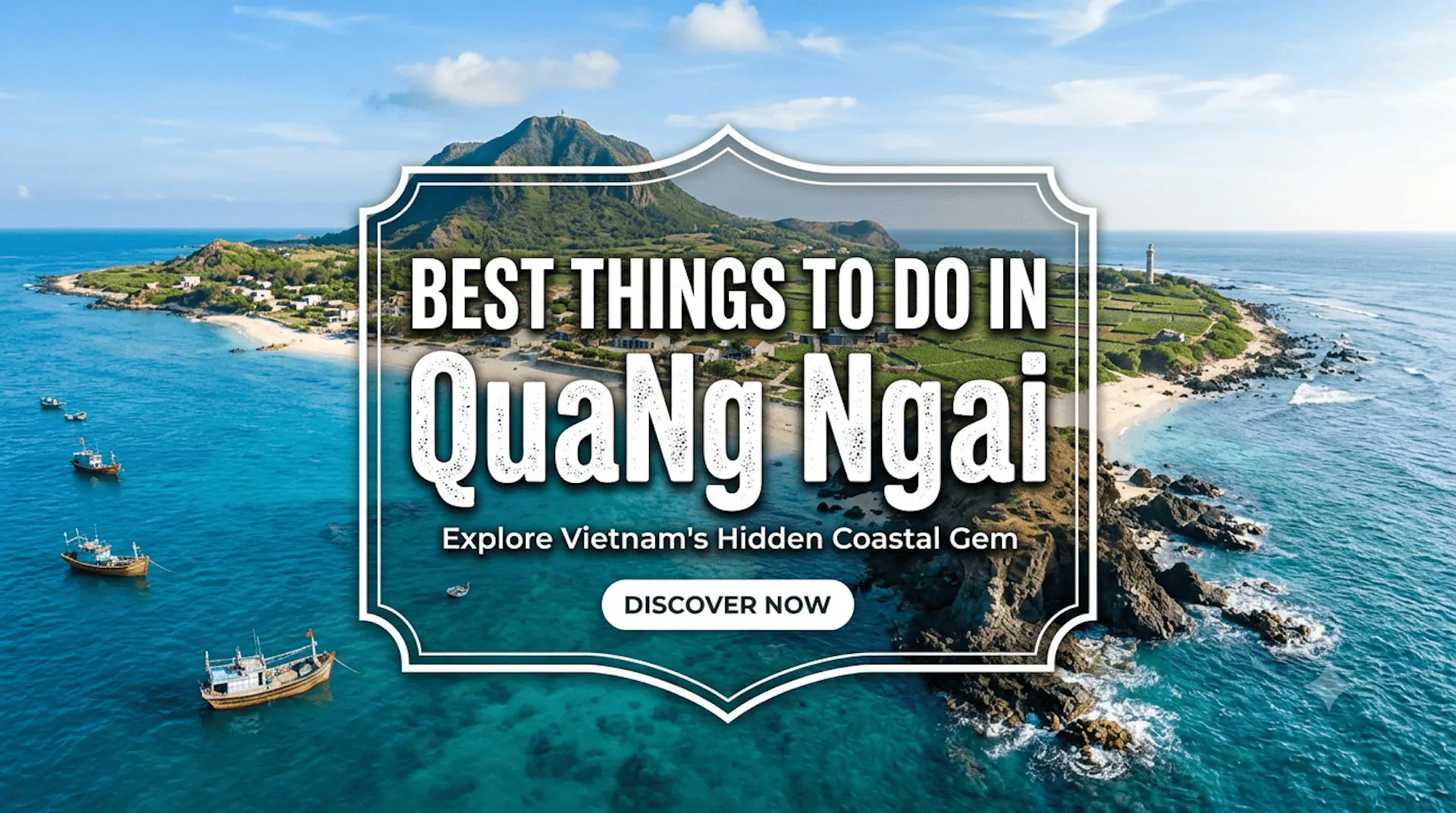
Quang Ngai offers a wonderful mix of island adventures, coastal scenery, history, and authentic local culture. Explore the volcanic landscapes of Ly Son Island, relax on quiet beaches, visit traditional fishing villages, hike scenic viewpoints, discover historical landmarks, and enjoy some of Vietnam's freshest seafood. Travelers can also experience snorkeling, boat trips, local markets, and peaceful countryside throughout the province. This guide highlights the best things to do in Quang Ngai for visitors seeking unforgettable experiences along Vietnam's beautiful central coast.
On this page
To step into the province of Quảng Ngãi is to move beyond the superficial, resort-dominated periphery of the Central Coast and into a landscape shaped by the raw, tectonic volatility of the ancient past. For the professional geologist, the dedicated cultural researcher, and the veteran travel journalist who has traversed these basaltic plains and maritime passages for years, determining the best things to do in quang ngai requires a deliberate shift in perspective. This province is not merely a coastal transit point; it is a profound repository of geological and human history, where the black, volcanic ridges of offshore archipelagos collide with the silent, unearthed secrets of the prehistoric Sa Huỳnh civilization. The sensory reality here is immediate: the sharp, brine-heavy air of the maritime trade routes, the meditative, rhythmic clatter of salt pans under the unrelenting coastal sun, and the hushed, spiritual dignity of pagoda-topped hills. This master guide is curated specifically for the traveler who prioritizes intellectual engagement, ecological sensitivity, and the authentic, unvarnished encounter with the regional heritage. Whether you are navigating the intricate, coral-fringed volcanic vents of an offshore island or documenting the artisanal salt-making traditions of the southern shoreline, you are engaging with a legacy that demands patience, respect, and an authoritative grasp of the local rhythm.
Wild Frontiers: Volcanic and Maritime Expeditions
The geological identity of Quảng Ngãi is dominated by its history of tectonic displacement and volcanic outflow. Engaging with these natural landmarks is the foundational activity for any traveler who wishes to grasp the environmental pressures that have dictated the maritime economy and settlement patterns of the provincial coast for millennia.
Island Hopping to Lý Sơn
The expedition to Đảo Lý Sơn (Lý Sơn Island) is a rite of passage for those seeking to understand the volcanic crater ecosystem of the province. Unlike standard, tourism-engineered beach destinations, Lý Sơn is a geological laboratory formed by the violent collapse of volcanic vents. The island’s surface is a mosaic of fertile, dark-red volcanic soil—perfectly adapted for the cultivation of the island's famous garlic—and jagged, obsidian-colored basalt cliffs that plunge into the churning currents of the South China Sea. To explore the island effectively, one must move past the shoreline and venture into the craters themselves, such as the Thới Lới caldera, which now serves as a high-altitude water reservoir. Expert-level navigation requires timing your ferry transit to coincide with stable wind conditions, avoiding the unpredictable swells of the transition seasons. When you circumnavigate the island’s basaltic coastline, you are witness to a geological narrative that is both utilitarian and aesthetically arresting. Travelers are encouraged to observe the traditional methods of agricultural terracing within the craters and visit the Chùa Hang (Cave Pagoda), where spiritual practice has been etched directly into the porous, volcanic rock faces, providing a visceral connection between the geological formation and the human search for transcendence.
Exploring the Coastal Cliffs of Sa Huỳnh
Moving south toward the border with Bình Định province, the maritime geography shifts toward the pristine, rugged coastline of Sa Huỳnh, a region defined by its ancient, maritime-focused geography and its long-standing artisanal salt-making tradition. The coastal cliffs here are composed of massive, weathered rock formations that have been sculpted by the relentless, erosive energy of the sea. Engaging with this landscape involves tracing the shoreline where the salt fields—vast, shallow, and glistening under the intense coastal sun—dominate the low-lying plains. Observing the artisanal salt-making tradition is a primary activity for the culturally curious; the methods rely on the natural evaporation of seawater within carefully managed, rectangular paddies, a technique that has remained largely unchanged for generations. These fields are not merely industrial sites; they are a vital cultural element that shapes the visual and economic rhythm of the coast. To visit Sa Huỳnh is to witness the transition between the bustling maritime trade centers of the north and the quiet, agricultural tenacity of the southern reaches. It is a place for the contemplative observer, where the simplicity of the landscape masks a deep, sophisticated history of salt production and coastal survival.
Marine Conservation and Diving
Engaging with the marine environment requires more than just recreational intent; it necessitates a high degree of technical awareness regarding the health of the local reefs. The volcanic shoals and the submerged basaltic reefs surrounding the province's islands represent a vital corridor of biodiversity. To explore the underwater complexity of these habitats, one must commit to non-invasive diving practices. This means maintaining neutral buoyancy to protect delicate gorgonian fans, avoiding any physical contact with the benthic organisms, and refusing to participate in any tours that monetize the removal of marine life. The expertise required to navigate these reefs safely—understanding the seasonal shifts in current speed and the sudden turbidity caused by monsoon runoff—is the hallmark of the responsible traveler. By prioritizing community-supported, education-focused diving charters, you ensure that your presence acts as a support system for marine conservation rather than an intrusive, degenerative force. The marine biodiversity found here, from the dense coral thickets to the migratory pelagic species, is a fragile architecture that requires the utmost humility and rigorous adherence to the global standards of ethical marine tourism.
Immersive Cultural and Historical Rituals
The human history of Quảng Ngãi is as layered as the sediment that preserved its ancient inhabitants. To explore the cultural landmarks of the province is to engage with a history that predates the modern geopolitical borders of the country, revealing a sophisticated maritime civilization.
The Sa Huỳnh Archaeological Legacy
The Văn hóa Sa Huỳnh (Sa Huỳnh Culture) archaeological site stands as one of the most critical repositories of ancient maritime history in Southeast Asia. This civilization, which flourished during the Iron Age, is best known for its unique burial traditions and the elaborate, trade-heavy artifacts that have been excavated from the local soil. The archaeological ingenuity of this ancient civilization—demonstrated through their sophisticated trade networks and their masterful use of local materials—remains a vital center of local identity. To visit the museum and the adjacent excavation sites is to gain a profound appreciation for the maritime sophistication of the ancestors who once occupied these coastal plains. The Sa Huỳnh legacy is not simply a list of pottery shards; it is the fundamental evidence of an ancient, sea-faring people who were integrated into the broader, Indian Ocean trade routes, providing a vital, deep-historical context for the province’s current maritime identity. Engaging with the curators and researchers at these sites allows the visitor to understand the material culture—the jade jewelry, the clay burial jars—that defined a people who viewed the sea not as a barrier, but as an essential highway for trade and cultural exchange.
Spiritual Architecture at Thiên Ấn Mountain
The Núi Thiên Ấn functions as the spiritual beacon of the province, its peak crowned by a pagoda that serves as a site of profound, meditative experience. The pagoda is meticulously integrated into the local landscape, perched upon a basaltic spur that offers a commanding, panoramic view over the alluvial plains of the Trà Khúc river. The architecture of the site—featuring intricate, traditional wooden carvings and a design that emphasizes harmony with the surrounding forest canopy—is a masterpiece of highland spiritual architecture. To visit Thiên Ấn is to step away from the bustle of the coastal trade routes and into a site of profound, architectural stillness. It is an essential landmark for those who wish to understand the role of spiritual architecture in anchoring the community’s identity, providing a reflective, contemplative counterpoint to the high-energy reality of the fishing ports below. Walking the stone paths and observing the quiet dedication of the resident monks provides a rare window into the syncretic nature of local Buddhism, where historical memory, environmental respect, and spiritual practice converge upon a single, sacred elevation.
Authentic Rural Fishing Traditions
To comprehend the true, unvarnished socio-economic pulse of the province, one must actively engage with the authentic rural fishing communities that operate on the periphery of the major estuaries. These working communities, often characterized by a chaotic flotilla of brightly painted wooden boats and the pungent, unmistakable aroma of drying seafood, are the undisputed engines of the local maritime economy. To visit these resilient coastal enclaves requires a high degree of cultural humility and respect. Travelers must prioritize sustainable, community-supported tourism by purchasing directly from local artisans and minimizing disruption to the frantic, early-morning logistics of the local fishing ports. By choosing to document the intricate net-mending techniques or the careful, methodical sorting of the daily catch, you acknowledge the profound expertise of these maritime communities. This form of respectful observation ensures that the traditional, artisanal methods of the coastal workforce are valued just as highly as the aesthetic beauty of the surrounding seascape, providing a necessary, savory education in the diverse flavor architecture of the Central Coast.
Highland and River Discovery: The Untamed Hinterlands
The province offers a interior landscape that contrasts sharply with the maritime focus of the coastal plains, necessitating a shift toward the interior mountain ranges. These forests and riverine systems are the source of the province's ecological balance and provide the essential context for the coastal identity.
Trà Khúc River Rhythms
The Trà Khúc river serves as the literal and figurative lifeblood of the province’s rural identity, its basin providing the fertile sediment that has sustained local agriculture for centuries. The cultural and economic importance of the river is reflected in the numerous, small-scale farming and fishing villages that line its banks, each practicing traditional livelihoods that remain largely unimpacted by the rush toward rapid industrialization. Exploring the river involves observing the interplay between the water’s flow and the daily activities of the rural population—the net-casting, the small-scale fruit orchards, and the movement of river-based commerce. The river acts as a connector, bridging the mountainous interior with the coastal plains, and its history is deeply intertwined with the development of the province’s rural identity. To witness the river is to see the province in its most functional, pragmatic state, where the water’s seasonal rise and fall dictate the rhythm of the life on the banks. Taking a local boat trip or simply walking the riverine paths offers an essential look at the provincial economy, where the river serves as both an agricultural highway and a site of spiritual reflection.
Supporting Local Artisanal Traditions
Supporting the preservation of local craft is a primary duty for the responsible traveler, as these traditions are the essential guardians of the province's cultural identity. From the highly skilled weavers who maintain the traditional textile patterns to the artisans who are dedicated to the preservation of the salt-making process, these communities are the living memory of the province. To support these crafts, one should prioritize purchasing directly from the family-run workshops, ensuring that the economic benefit remains within the community. Engaging with these artisans provides a tangible, high-quality perspective on the provincial aesthetic, demonstrating that even in a world defined by mass production, there is an enduring, vital place for the slow, labor-intensive work of the traditional maker. By commissioning a piece of local craft or simply observing the methodical, heritage-based production process, you ensure that these essential, time-honored techniques are valued as high-status cultural accomplishments rather than vanishing relics of the past.
Practical Field Logistics and Travel Etiquette
Executing a seamless, authoritative expedition through this coastal province requires a pragmatic approach to both the environmental demands of the province and a commitment to responsible, sustainable travel. Your choice of gear must be as fluid as the landscape itself. For the adventurous explorer, choosing to rent a high-displacement motorbike is the superior method for accessing the serpentine, cliffside roads that lead to the remote northern peninsulas or the southern, salt-field coast. However, to truly penetrate the isolated island networks, negotiating private speedboat transfers or securing spots on specialized, small-group maritime charters is a mandatory logistical step that ensures safety and reliable access to the most pristine reef systems.
As a visitor to these highly sensitive marine environments, maintaining strict sustainable marine ethics is a non-negotiable obligation. The coral networks here face immense pressure from climate shifts and localized human impact. When you enter the aquatic environment, you must utilize reef-safe sunscreens, absolutely refuse to touch or stand on any living coral structure, and actively minimize your plastic footprint by carrying reusable hydration systems. True expertise in coastal travel is demonstrated by leaving the fragile marine habitat entirely undisturbed. By choosing to participate in community-supported maritime excursions that emphasize education over mass-volume transit, you contribute to the ongoing, essential work of protecting the coastal biodiversity.
Finally, executing a flawless expedition requires precise seasonal timing. To avoid the aggressive, visibility-destroying storm swells of the monsoon, you must schedule your coastal exploration to occur during the dry, stable window that typically spans from late spring through the early autumn months. This optimal window guarantees the placid, crystalline water conditions necessary for high-level underwater photography and safe, unhindered transit across the expansive bays, ensuring your maritime expedition operates at the highest possible standard of safety and visual clarity.
Conclusion: Finalizing Your Journey Through the Best Things to Do in Quang Ngai
This province stands as the definitive, undisputed maritime sentinel of Central Vietnam, offering a complex, multi-layered landscape that ruthlessly exposes the inadequacy of standard, passive resort tourism. From the intricate, nutrient-dense coral architectures of its volcanic archipelagos to the heavy, incense-laden silence of its ancient Sa Huỳnh excavation sites, the best things to do in quang ngai demand absolute engagement from those who traverse its borders. By mastering the environmental logistics and respecting the deep, ancestral heritage of the land, you unlock the true, wild essence of this maritime frontier. Which specific activity—the vibrant, sun-soaked exploration of the volcanic islands, or the quiet, spiritual gravity of the river-bank pagodas—appeals most intensely to your uncompromising sense of adventure? The maritime frontier awaits, but it requires a traveler who approaches it with patience, respect, and a precise understanding of the seasonal and historical pulse of the land.
> Read more: Quang Ngai Travel Guide

By Roy Trinh
Editor
Roy Trinh is a travel writer and destination expert at Go Visit Vietnam, dedicated to helping travelers discover the beauty, culture, and diversity of Vietnam. Through well-researched travel guides, practical itineraries, local insights, and authentic recommendations, Roy shares valuable information to inspire memorable journeys across the country. From vibrant cities and breathtaking landscapes to regional cuisine and cultural heritage, every guide is created to help visitors experience Vietnam with confidence and curiosity.
Frequently Asked Questions About the Best Things to Do in Quang Ngai
What are the best things to do in Quang Ngai?
Popular activities include exploring Ly Son Island, hiking volcanic cliffs, relaxing on beautiful beaches, visiting traditional fishing villages, discovering historical sites, snorkeling, enjoying fresh seafood, and experiencing local culture.
Can I explore Ly Son Island in one day?
Yes, but staying overnight is recommended. A day trip allows you to visit major attractions, while an overnight stay gives you more time to enjoy sunrise, beaches, seafood, and the island's peaceful atmosphere.
Is Quang Ngai suitable for outdoor adventures?
Absolutely. Visitors can hike volcanic landscapes, explore coastal cliffs, snorkel in clear waters, cycle around Ly Son Island, take boat tours, and enjoy scenic drives along the province's beautiful coastline.
Can I experience local culture in Quang Ngai?
Yes. Quang Ngai offers authentic cultural experiences through its fishing villages, local markets, traditional festivals, temples, historical sites, and the daily life of coastal communities and Ly Son Island residents.
How many days should I spend in Quang Ngai?
Three to four days are ideal for visiting Ly Son Island, exploring beaches and cultural attractions, enjoying outdoor activities, and experiencing the relaxed coastal lifestyle that makes Quang Ngai one of Central Vietnam's hidden gems.
Advertising box