
Best Things to Do in Tay Ninh
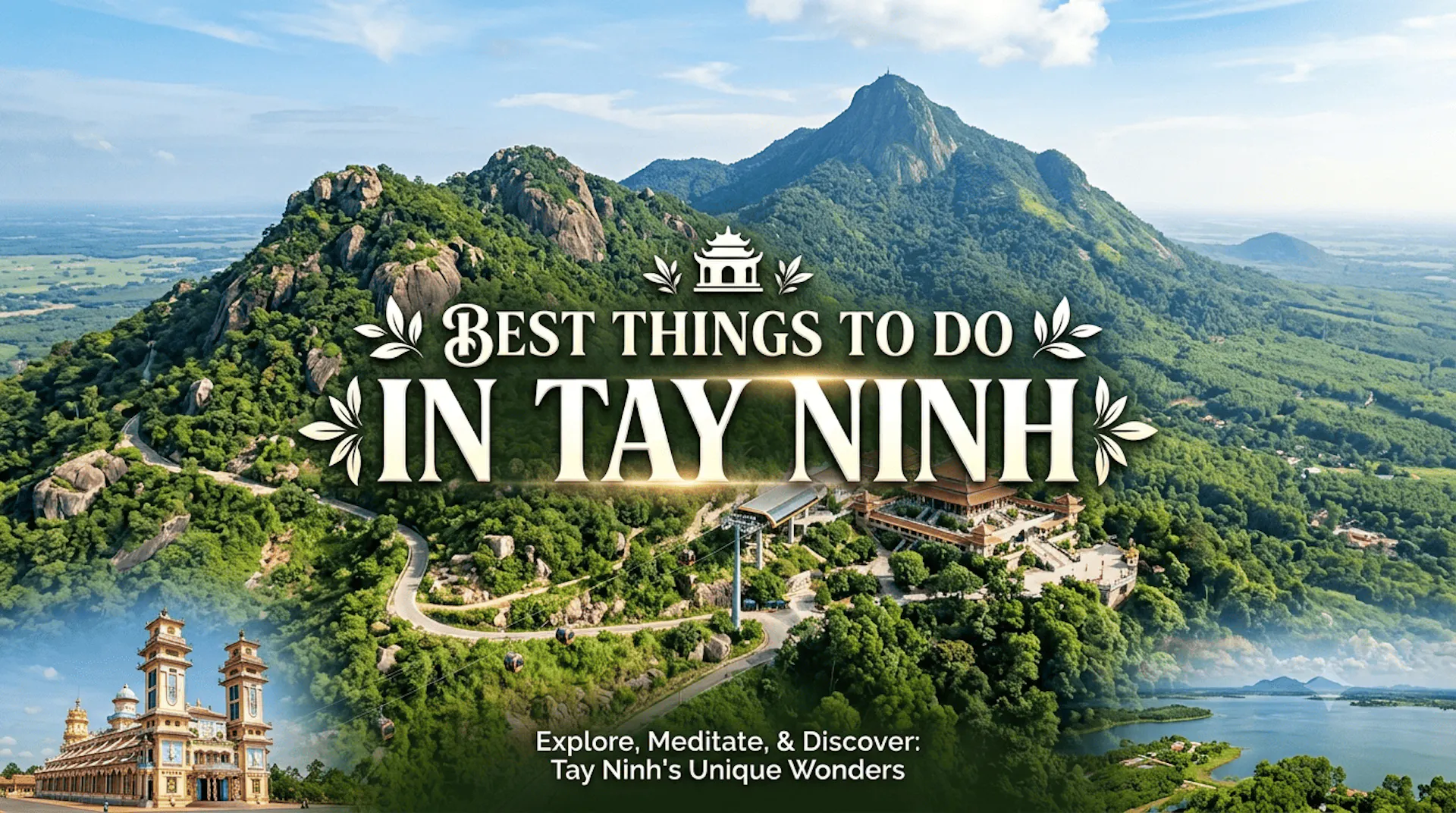
Tay Ninh offers an exciting mix of outdoor adventures, spiritual landmarks, and authentic cultural experiences. Ride the cable car or hike to the summit of Ba Den Mountain, admire the remarkable architecture of the Cao Dai Holy See, relax by Dau Tieng Lake, and explore peaceful countryside landscapes. Visitors can also enjoy local cuisine, discover nearby national parks, and experience traditional festivals. This guide highlights the best things to do in Tay Ninh for an unforgettable journey through Southern Vietnam.
On this page
To travel north from the chaotic, rapidly expanding sprawl of Ho Chi Minh City into the province of Tây Ninh is to witness a profound geological and cultural metamorphosis. Here, the flat, sediment-heavy plains of the Mekong Delta finally give way to a rugged, granite-strewn landscape that serves as the symbolic rampart between the southern wetlands and the wilder, more mountainous frontiers of the Cambodian border. Identifying the best things to do in tay ninh is an exercise in seeking balance; the province exists in a rare, compelling state of duality, where the high-altitude physical intensity of its mountain ranges perfectly mirrors the deep, contemplative silence of its syncretic religious centers. For the traveler who prioritizes slow tourism, ethnographic depth, and the raw, unvarnished beauty of the Vietnamese interior, Tây Ninh is not a destination to be rushed. It is a place where every summit climb is imbued with devotional significance and every architectural marvel is a testament to the resilience and creative ingenuity of early Southern settlers. This master guide is designed to navigate you through these multifaceted experiences, moving beyond the superficial surface of mainstream tourism to provide an authoritative, field-tested understanding of what makes this province a mandatory stop for anyone wishing to comprehend the authentic spirit of the south.
Conquering the Heights: Mount Bà Đen (Núi Bà Đen)
The massive, monolithic presence of Mount Bà Đen—the Black Virgin Mountain—is the unquestionable, gravity-defying centerpiece of the Tây Ninh skyline. Reaching an elevation of nearly one thousand meters, this volcanic granite remnant is not merely a mountain; it is the ultimate high-altitude pilgrimage site for the Southern Vietnamese population. The experience of ascending its slopes is fundamentally transformative, offering a stark, sensory shift from the sticky, low-altitude humidity of the plains to the cool, bracing, and often cloud-shrouded environment of the summit.
The Summit Expedition
The expedition to the top of Mount Bà Đen is an experience defined by your preferred mode of transit, though both paths offer distinct, evocative rewards. For those who choose the modern efficiency of the cable car system, the journey provides a spectacular, aerial perspective of the surrounding agricultural mosaic, where the vibrant green paddies of the delta transition into the rugged, dark-grey volcanic rocks of the mountain base. As the car climbs higher, the air noticeably cools, and you are frequently engulfed by swirling, impenetrable mountain mists that create a ghostly, ethereal atmosphere. Upon reaching the summit plateau, you encounter the massive, shimmering bronze statue of the Bodhisattva—a modern monument that serves as a focal point for thousands of visitors who come to offer prayers and seek mental clarity. For the trekker, however, the summit is a prize earned through sweat and technical endurance. The granite trails winding through the primary forest are steep, boulder-strewn, and technically demanding, requiring both cardiovascular fitness and an innate sense of balance. Navigating this terrain allows you to witness the mountain’s micro-climate firsthand, observing rare orchids and tropical ferns that thrive in the nutrient-poor, rocky soil, far removed from the manicured gardens of the lower pagoda levels.
Pilgrimage at the Pagoda Complex
While the summit serves as the peak of physical endeavor, the intermediate slopes of the mountain are home to an intricate, deeply layered pagoda complex that represents the true, beating heart of local spirituality. This is where the best things to do in tay ninh for the ethnographer converge: the daily ritual of the pagoda pilgrimage. The architecture here is masterfully integrated into the jagged, natural topography, with altars tucked into cave mouths and prayer halls perched precariously on stone shelves overlooking the vast plains below. To truly appreciate this space, you must arrive during the early hours of the morning, long before the sun reaches its zenith and the mountain becomes crowded with weekend visitors. In the dawn light, the pagodas are enveloped in a profound, heavy silence, broken only by the rhythmic, metallic clinking of incense burners and the distant, melodic chanting of resident monks. It is an experience that demands humility; as you walk past the weathered stone shrines dedicated to Linh Sơn Thánh Mẫu, you observe devotees meticulously arranging offerings of fresh lotus blossoms and seasonal fruit. This is not a performative act of tourism, but a window into a centuries-old tradition that connects the modern inhabitant of the delta back to the ancient, mystical lore of the mountain itself.
Immersive Cultural Discovery in the Spiritual Heartland
Tây Ninh is perhaps globally synonymous with its unique theological landscape, centered on the magnificent Cao Dai Holy See. To engage with this site is to step into a world where aesthetics and philosophy are inextricably linked, providing a profound, immersive lesson in the syncretic nature of Southern Vietnamese history.
Witnessing the Cao Dai Rituals
The mid-day prayer service at the Tòa Thánh (Cao Dai Holy See) is a visual and auditory symphony that defies easy description, yet witnessing it remains one of the most intellectually stimulating Tay Ninh travel activities. The temple’s architecture is a bold, prismatic explosion of color, utilizing primary hues and stylized dragon motifs that reflect the faith’s synthesis of Buddhism, Taoism, Confucianism, and elements of Roman Catholicism. As you approach the entrance, you are struck by the massive, glowing "All-Seeing Eye"—the central symbol of the Cao Dai religion—which watches from above the main facade. The etiquette of entry is strict and non-negotiable; visitors are required to dress modestly, maintain an absolute, respectful silence, and view the proceedings from the designated observation balconies. When the service begins, the nave is filled with hundreds of practitioners dressed in flowing, vibrant robes of white, yellow, blue, and red, representing the various branches of the faith. The resulting music—a haunting, cyclical symphony of traditional percussion and stringed instruments—creates a trance-like state that permeates the entire hall. It is a deeply deliberate, highly choreographed display of communal discipline that serves as a powerful reminder of the intense spiritual devotion that continues to flourish in the heart of the borderlands.
Exploring Tay Ninh’s Heritage
Beyond the Holy See, the province hides a wealth of historical nuance that often evades the casual observer. The heritage of Tây Ninh is defined by the early pioneers who established outposts in what was then a wild, largely unconquered border frontier. Taking the time to visit local workshops and preserved historical houses allows you to uncover the lineage of these early settlers. You may find small, family-run ateliers where artisans are still practicing traditional crafts—such as the creation of incense or the fine-tuning of traditional Southern music instruments—that reflect the province’s diverse ethnic makeup. Walking through the quiet, timber-frame hallways of the older estates, you observe a fusion of French colonial masonry and robust, indigenous woodwork that speaks to the complex, often tragic, and inherently innovative history of the border region. These encounters are rarely listed in standard guidebooks, yet they provide the essential texture required to understand how a seemingly isolated frontier province evolved into a vibrant, multi-ethnic mosaic.
Natural Escapes and Adventure: The Untamed Frontier
The northern reaches of the province, dominated by the massive water-holding capacity of the reservoirs and the sheer walls of the valley networks, provide a necessary, high-octane contrast to the spiritual density of the Holy See. For those who prioritize landscape photography, rugged trekking, or the pure, solitary pursuit of the outdoors, these sites are absolutely essential.
Sunset at Dầu Tiếng Lake
Dầu Tiếng Lake is not merely a reservoir; it is a sprawling, inland sea of such immense scale that it creates its own local weather patterns. As one of the most important water management structures in Southern Vietnam, it plays a vital role in the irrigation of the delta, yet its aesthetic appeal to the adventurous traveler is undeniable. The best way to engage with the Hồ Dầu Tiếng is to arrive during the late afternoon, just as the sun begins to dip behind the hazy, distant mountain silhouettes. The mirror-like surface of the reservoir captures the entire spectrum of the evening sky, turning the water into a molten, reflective landscape that is a dream for landscape photographers. Whether you are boating on the calm waters or simply finding a quiet, grassy bank to watch the local fishing boats return to their moorings, the reservoir offers a rare sense of profound, horizontal serenity that is increasingly difficult to find in the rapidly developing southern provinces.
The Ma Thiên Lãnh Valley Adventure
If Mount Bà Đen is the province’s crown, the Ma Thiên Lãnh Valley is its hidden, rugged spine. Often referred to by locals as a "Ha Long Bay on land," the valley is characterized by deep, narrow limestone gorges, thick primary forest growth, and a terrain that feels remarkably wild and isolated compared to the managed agricultural fields of the lowlands. Hiking through this terrain is the definitive, off-the-beaten-path experience for those who possess the navigational skills and the physical stamina required to handle steep, often unmapped trails. The valley is a testament to the geological diversity of Tây Ninh; here, the heat of the plains is trapped and magnified by the valley walls, yet the lush, dense canopy provides a constant, refreshing shade. Engaging in a trek through Ma Thiên Lãnh requires an ethical, "leave-no-trace" mindset, as the valley remains one of the few places in the south where you can find a genuine sense of being completely untethered from the modern world. It is a landscape that encourages silence, observation, and a deep, appreciative reverence for the unmanicured, geological history of the Earth.
Practical Field Logistics and Travel Etiquette
Executing a truly successful, seamless trip to Tây Ninh requires moving past the standard tourist logistical frameworks. The primary route from Ho Chi Minh City is well-serviced by various transport options, ranging from larger, public buses to more localized, private vehicle charters. For those prioritizing both time efficiency and the ability to spontaneously navigate between the Holy See, the reservoir, and the mountain base, hiring a private driver for the day is the most sophisticated and effective strategy. It eliminates the logistical headache of navigating regional transit schedules and grants you the absolute, necessary freedom to adjust your plans based on the prevailing weather or the timing of specific religious ceremonies.
Regarding the timing of your visit, the seasonal rhythm of the southern climate dictates your success. The dry season—spanning from late November to April—is the undisputed, golden window for hiking the mountain granite trails and engaging in outdoor landscape photography, as the lack of humidity and rain provides the clear, sharp visibility required for summit-level views. During the monsoon months, the granite becomes dangerously slick, and the mist can obscure the summit for days, significantly diminishing the mountain experience.
Perhaps the most critical aspect of your trip is the adoption of a rigorous, respectful code of cultural conduct. Tây Ninh is a region defined by its religious and traditional heritage, and your behavior must mirror that gravity. Whether you are walking through the ornate, prismatic halls of the Cao Dai Holy See or exploring the moss-covered, sacred slopes of the pagoda complex, you must prioritize modest dress and a demeanor of quiet, observational reflection. The "best things to do" in this province are not about consumption or rapid transit; they are about participating in a culture of respect, patience, and deep, historical connection. By honoring these social protocols, you transform your visit from a standard tourist excursion into a journey that is welcomed, remembered, and deeply rewarding.
Conclusion: Finalizing Your Journey Through Tay Ninh
Tây Ninh is a destination that demands your full presence, rewarding the intentional traveler with a multifaceted experience that spans from the strenuous, adrenaline-filled heights of Mount Bà Đen to the silent, prismatic beauty of the Cao Dai rituals. It is a multifaceted province that deserves a dedicated, substantial spot on any serious Vietnam itinerary, offering a level of spiritual and geographical depth that remains remarkably authentic. As you synthesize this master guide to finalize your itinerary, ask yourself where your priorities truly lie. Are you more drawn to the physical, granite-gripping labor of conquering the mountain summit, or does the prospect of standing in the prismatic, haunting silence of the Cao Dai midday prayer provide the primary reason for your pilgrimage to the spiritual heart of the south?
Read more: Tay Ninh Travel Guide

By Roy Trinh
Editor
Roy Trinh is a travel writer and destination expert at Go Visit Vietnam, dedicated to helping travelers discover the beauty, culture, and diversity of Vietnam. Through well-researched travel guides, practical itineraries, local insights, and authentic recommendations, Roy shares valuable information to inspire memorable journeys across the country. From vibrant cities and breathtaking landscapes to regional cuisine and cultural heritage, every guide is created to help visitors experience Vietnam with confidence and curiosity.
Frequently Asked Questions About the Best Things to Do in Tay Ninh
What are the best things to do in Tay Ninh?
Top activities include hiking or taking the cable car to Ba Den Mountain, visiting the Cao Dai Holy See, relaxing at Dau Tieng Lake, exploring Lo Go–Xa Mat National Park, tasting local specialties, and discovering the peaceful countryside.
Is Ba Den Mountain worth visiting?
Absolutely. Ba Den Mountain is the highest peak in Southern Vietnam and offers breathtaking panoramic views, scenic hiking trails, modern cable car rides, impressive temples, and one of the country's tallest Buddha statues.
Can I visit the Cao Dai Holy See?
Yes. Visitors are welcome to explore the Cao Dai Holy See and observe its unique architecture. You can also attend daily religious ceremonies, where colorful robes, traditional music, and spiritual rituals create a memorable cultural experience.
Is Tay Ninh suitable for nature lovers?
Yes. Nature enthusiasts can enjoy mountain landscapes, forests, lakes, hiking trails, cycling routes, and wildlife in Lo Go–Xa Mat National Park. The province offers a perfect combination of outdoor recreation and peaceful natural scenery.
How many days should I spend in Tay Ninh?
Two to three days are ideal for exploring Tay Ninh's main attractions, including Ba Den Mountain, the Cao Dai Holy See, Dau Tieng Lake, and nearby natural areas. An overnight stay also allows visitors to enjoy sunrise or sunset views from the mountain.
Advertising box