
Best Time to Visit Can Tho
Can Tho is a year-round destination where visitors can experience the vibrant culture and natural beauty of the Mekong Delta. The dry season offers comfortable weather for floating market tours, river cruises, and sightseeing, while the rainy season brings lush orchards, abundant tropical fruits, and picturesque waterways. Every season offers unique experiences, from local festivals to authentic countryside adventures. This guide helps you choose the best time to visit Can Tho based on weather, seasonal highlights, and unforgettable Mekong Delta activities.
On this page
To step into Cần Thơ is to enter the pulsating, aquatic circulatory system of the Mekong Delta, a landscape where the rhythm of life is dictated not by the rigid ticking of a clock, but by the relentless, seasonal flow of the Hau River. For the seasoned traveler, the ecological researcher, and the journalist who has documented the alluvial waterways for years, the question of the best time to visit can tho is never merely about avoiding a stray afternoon shower. It is a strategic, deeply rewarding choice that aligns your expedition with the Delta’s most profound transitions. The province is defined by a binary existence: the sun-drenched, stable months of the dry season, which offer clear access to every hidden canal, and the mysterious, water-rich allure of the flooding season, which transforms the entire region into a vast, navigable inland sea. Choosing your arrival window is essentially choosing the lens through which you wish to view the soul of the Mekong, whether it be the high-energy commerce of the dawn markets or the serene, contemplative life of the orchard-lined banks. This guide will navigate you through these seasonal cycles, ensuring that your arrival synchronizes perfectly with the harvest of the orchards, the peak of riverine trade, and the atmospheric moods that define the Delta’s eternal character.
The Three Pillars of Cần Thơ’s Seasonal Rhythm
To master the timing of your expedition, one must first deconstruct the province’s seasonal calendar into three distinct, highly predictable pillars. Each pillar offers a fundamentally different vision of the Delta, dictating everything from your choice of footwear to the specific cultural experiences accessible during your stay.
The Dry Season (December – April) - The River Explorer’s Window
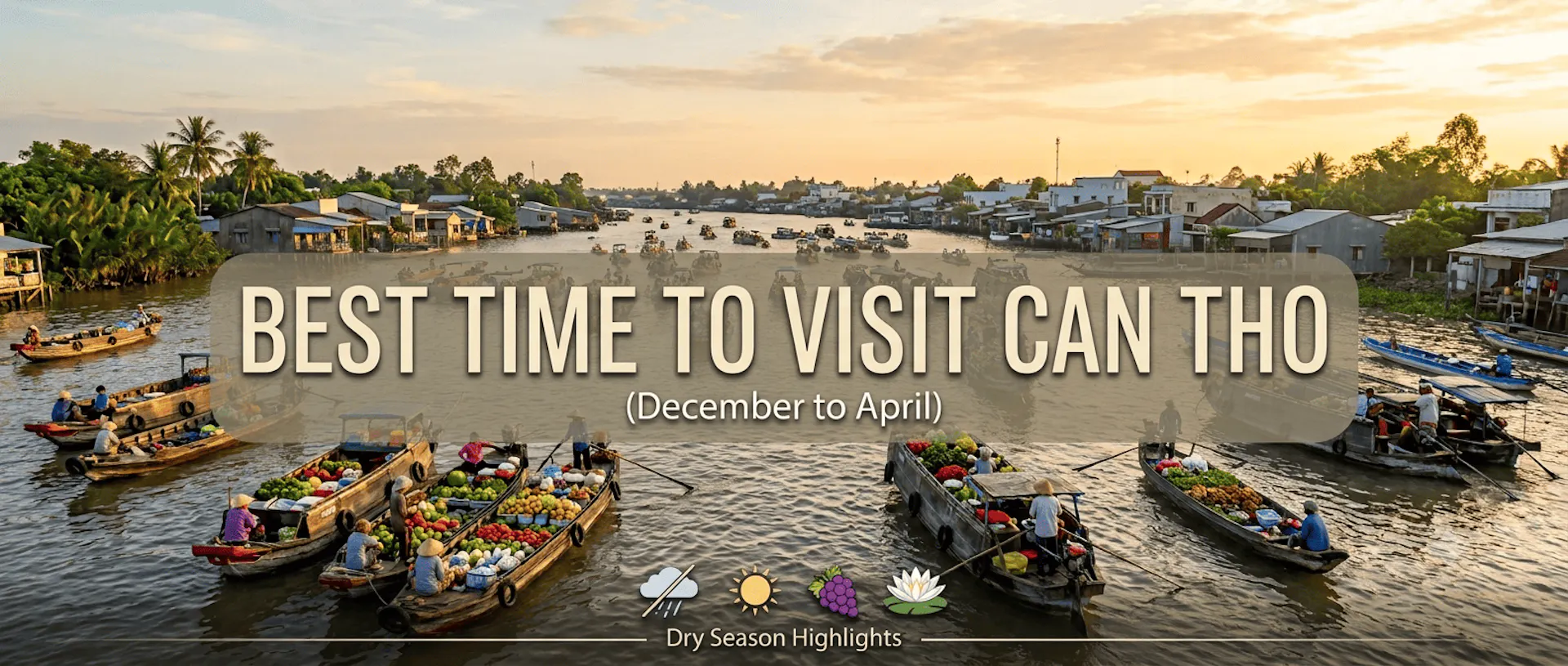
For the traveler who prioritizes physical mobility, logistical reliability, and the pursuit of expansive, unobstructed exploration, the dry season spanning from December through April serves as the definitive explorer’s window. This period is governed by the northeast monsoon, which brings low atmospheric humidity, consistent sunshine, and an almost total absence of localized, road-washing storms. For those planning an exhaustive study of the Chợ nổi Cái Răng (Cai Rang Floating Market) or seeking to cycle through the remote village orchards of the Phong Dien district, these months are beyond reproach. The alluvial waterways are at their most predictable, and the lack of excessive rainfall ensures that your logistics—whether by motorized boat or local ferry—remain entirely unhindered. This window provides the highest degree of atmospheric clarity. When traversing the wider distributaries of the Hau River, the lack of suspended moisture and dust allows for breathtaking, expansive views that create the ideal conditions for landscape photography. The temperature remains warm, consistent with the Delta’s tropical reality, but the lack of oppressive, suffocating moisture makes the physical labor of exploring the city’s peripheral canals significantly more sustainable for those unaccustomed to the equatorial heat.
The Fruit Harvest Season (May – August) - The Gastronomic Window
As the heat intensifies toward the middle of the year, the province undergoes a dramatic, sensory-rich transformation known as the peak fruit harvest season. From May through August, the Delta’s Miệt vườn (fruit orchards) reach their absolute, unvarnished zenith of productivity. This is the ultimate window for travelers who wish to engage in "farm-to-table" experiences that are entirely unavailable during other times of the year. The region is heavy with the scent of ripening durian, rambutan, mangosteen, and longan. Walking through the shaded orchard pathways during these months is an exercise in excess; the fruit is so abundant that the very air feels sticky and sweet. This is the prime period for those interested in the culinary identity of Cần Thơ, as the seasonal harvest dictates the menu of every local eatery. Whether you are seeking the freshest possible produce or hoping to witness the intense, competitive logistics of fruit collection that drive the regional economy, the mid-year months offer a visceral connection to the Delta’s primary industry. It is a time of high energy, vibrant color, and an almost overwhelming sensory density that perfectly encapsulates the agricultural prowess of the Southern plains.
The Flooding Season (September – November) - The Cultural Immersion Window
In sharp contrast, the final quarter of the year brings the unique, hydrological phenomenon of Mùa nước nổi (the flooding season). Triggered by the immense volume of water surging down the Mekong River, the landscape undergoes a metamorphosis that is as culturally significant as it is visually arresting. The river breaches its standard banks, flooding the low-lying rice paddies and weaving through the irrigation canals to create an entirely navigable, water-based world. While the uninitiated might view the flooding as an inconvenience, the veteran traveler recognizes this as the most authentic time to witness the Delta’s resilience. The pace of life slows, commerce adapts, and the community retreats into a deeply introspective, water-centric rhythm. This is the ultimate window for eco-adventurers and landscape photographers who want to capture the Delta in its most fluid, unpredictable state. Navigating the canals during the flooding season requires an appreciation for the "Delta Way"—a life that flows with the water rather than fighting against it. It is a period of quiet, reflective beauty where the focus shifts from the frenetic commercial pace of the dry season to a softer, more contemplative exploration of the river-dwelling community’s adaptability.
Month-by-Month Logistical Navigation
To execute a flawless itinerary, one must abandon generalized notions of seasonal travel and embrace the incremental, month-by-month changes that dictate the provincial experience. The year begins with the early months, from January through April, serving as the definitive "cultural peak." During this period, the receding waters leave behind a fresh, nutrient-dense layer of silt, and the ambient temperature remains pleasant, particularly during the early morning hours when the floating markets are at their most active. This stable, dry weather creates the perfect conditions for engaging in rigorous cultural exploration, from visiting ancient houses to walking the quiet grounds of pagodas, without the constant threat of tropical downpours. It is the most logistical-friendly window, where transport schedules are reliable and the city’s urban core is easily navigated on foot or by local bike.
As the calendar transitions into the mid-year cycle of May through August, the province rapidly morphs into the "orchard exploration phase." The temperatures climb, and the humidity becomes a physical presence, but this is the essential trade-off for the botanical abundance of the season. This is when the canal-based orchard tourism is at its most vibrant; the boats are filled with fruit, the air is fragrant, and the entire logistical network of the Delta is geared toward the distribution of the harvest. It is a time of immense, noisy, and colorful activity that defines the Delta’s agricultural pride. Travelers visiting during these months should prioritize early-day orchard visits to avoid the intensity of the midday sun, utilizing the afternoon for indoor culinary classes or architectural tours of the city’s heritage estates.
Finally, the year concludes with the "reflective period," spanning from September through December. As the water levels stabilize, the landscape shifts from the high-energy growth of the mid-year harvest to a state of calm. This is an excellent time for those who prefer a slower, more deliberate pace. The water-based lifestyle takes center stage, and the tourist crowds of the early-year peak have largely thinned, leaving the canals and the floating market peripheries much quieter. It is an ideal window for photographers seeking to capture the reflection of the clouds on the calm, swollen waterways, and for travelers who value the opportunity to interact with local families in a more relaxed, unhurried setting.
Timing for Niche Experiences
True expertise in travel planning lies in the ability to synchronize your arrival with the specific, micro-seasonal phenomena that occur sporadically throughout the year. The timing of the Chợ nổi Cái Răng (Cai Rang Floating Market) is a prime example of why arrival precision matters; while the market operates daily, the most authentic logistical flow occurs between 5:30 AM and 7:00 AM. Arriving after 8:00 AM means catching only the tail end of the professional wholesale activity, and arriving too late in the day often means witnessing only the tourist-focused remnants of the morning's intense trade. To truly decode the market, one must be on the water while the sun is still struggling to clear the horizon, observing the transition from wholesale bulk distribution to the small-scale retail trade that serves the breakfast needs of the local boatmen.
The photography windows are similarly governed by the angle of the sun and the presence of atmospheric moisture. During the dry season, the lack of cloud cover creates harsh, high-contrast lighting that is perfect for capturing the deep colors of the fruit-laden boats. Conversely, the transition months, particularly during the onset of the rains in late April and May, provide a softer, more diffused light that is ideal for photographing the lush, emerald green of the orchard canals. This soft light minimizes the harsh shadows of the tropical sun, allowing the texture of the flora and the vibrant colors of the river-bank dwellings to emerge with greater clarity.
Furthermore, the timing of local festivals and religious ceremonies offers a rare window into the syncretic spiritual traditions of the region. Many of these events are held according to the lunar calendar, which means their dates fluctuate annually. A veteran traveler researches these dates months in advance, knowing that witnessing a local river-based festival provides an ethnographic layer of understanding that a standard river cruise simply cannot match. Aligning your trip with these spiritual milestones—which are often celebrated with intense communal cooking and river-processions—can turn a standard visit into a profound, once-in-a-lifetime cultural immersion.
Practical Field Logistics
Executing a seamless, authoritative expedition through Cần Thơ requires a pragmatic adherence to both the environmental demands of the province and a commitment to responsible, sustainable travel. Your choice of gear must adapt to the seasonal rhythm; lightweight, moisture-wicking fabrics are an absolute necessity during the sweltering heat of the mid-year months to prevent heat exhaustion. During the flooding season, however, your focus must shift toward versatile, rain-proof gear and waterproof storage for sensitive camera and travel equipment, as you will be spending significant time on water-borne vessels.
Transit nuances are equally dictated by the hydrological state of the land. Throughout the dry months, land-based transport—specifically local motorbikes or small, hired cars—is the ideal tool for exploring the scattered, interior orchard districts. However, as the floodwaters rise and the canals swell, the boat becomes your only viable logistical partner. Hiring a private, locally operated sampan is the most reliable method for accessing remote sites, regardless of the season, but you must be prepared to negotiate directly with operators who adhere to the relaxed, traditional tempo of the river.
Finally, seasonal shifts impact local customs, and respecting them is the mark of a seasoned traveler. During the harvest season, orchard families are incredibly busy and under significant pressure to move their product; your presence should be one of quiet observation and support. Conversely, during the flooding season, the community’s resilience is on display, and this is a time to show particular care in how you navigate the waterways, ensuring that your boat does not disrupt the daily, flood-adapted work of the local residents. By respecting the private, canal-side lives of the people who steward these lands, you ensure that the Delta’s hospitable spirit remains intact for future generations.
Conclusion: Finalizing Your Journey to Can Tho
Cần Thơ is a destination that demands your full presence, rewarding the intentional traveler with a multifaceted experience that spans from the strenuous, high-energy commerce of the dawn floating markets to the silent, meditative serenity of the flooded orchard canals. The province does not bend to the convenience of the traveler; rather, it invites the traveler to adapt to its ancient, rhythmic order. As you synthesize this master guide to finalize your itinerary, ask yourself where your true interests lie. Are you more drawn to the raw, high-velocity commerce of the river-based floating markets, or does the meditative, land-based heritage of the harvest season provide the primary motivation for your journey into the vibrant heart of the Mekong? Which of the Delta’s seasonal faces—the golden, productive intensity of the dry months or the mysterious, water-rich allure of the flooding season—will define your authentic Cần Thơ experience?
> Read more: Can Tho Travel Guide

By Roy Trinh
Editor
Roy Trinh is a travel writer and destination expert at Go Visit Vietnam, dedicated to helping travelers discover the beauty, culture, and diversity of Vietnam. Through well-researched travel guides, practical itineraries, local insights, and authentic recommendations, Roy shares valuable information to inspire memorable journeys across the country. From vibrant cities and breathtaking landscapes to regional cuisine and cultural heritage, every guide is created to help visitors experience Vietnam with confidence and curiosity.
Frequently Asked Questions About the Best Time to Visit Can Tho
What is the best time to visit Can Tho?
The best time to visit Can Tho is during the dry season from December to April, when the weather is sunny and comfortable. These months are ideal for visiting Cai Rang Floating Market, taking river cruises, and exploring the city's outdoor attractions.
Is the rainy season a good time to visit Can Tho?
Yes. The rainy season, generally from May to November, brings lush green landscapes, full waterways, and abundant tropical fruits. Rain showers are usually brief, allowing visitors to continue sightseeing and enjoy authentic Mekong Delta experiences.
When is the best time to visit Cai Rang Floating Market?
Cai Rang Floating Market can be visited throughout the year, but the best experience is during the dry season. Regardless of the season, visitors should arrive early in the morning between 5:30 AM and 8:00 AM when trading activity is at its busiest.
When is fruit season in Can Tho?
The main fruit season typically runs from May to August, when orchards produce fresh durian, rambutan, mangosteen, mangoes, and many other tropical fruits. This is one of the best times to visit local fruit gardens.
Can I travel to Can Tho all year round?
Absolutely. Can Tho is a year-round destination. The dry season offers pleasant weather for sightseeing and boat tours, while the rainy season showcases lush countryside, vibrant floating markets, and seasonal fruits, making every visit to the Mekong Delta unique.
Advertising box