
Best Time to Visit Dong Thap
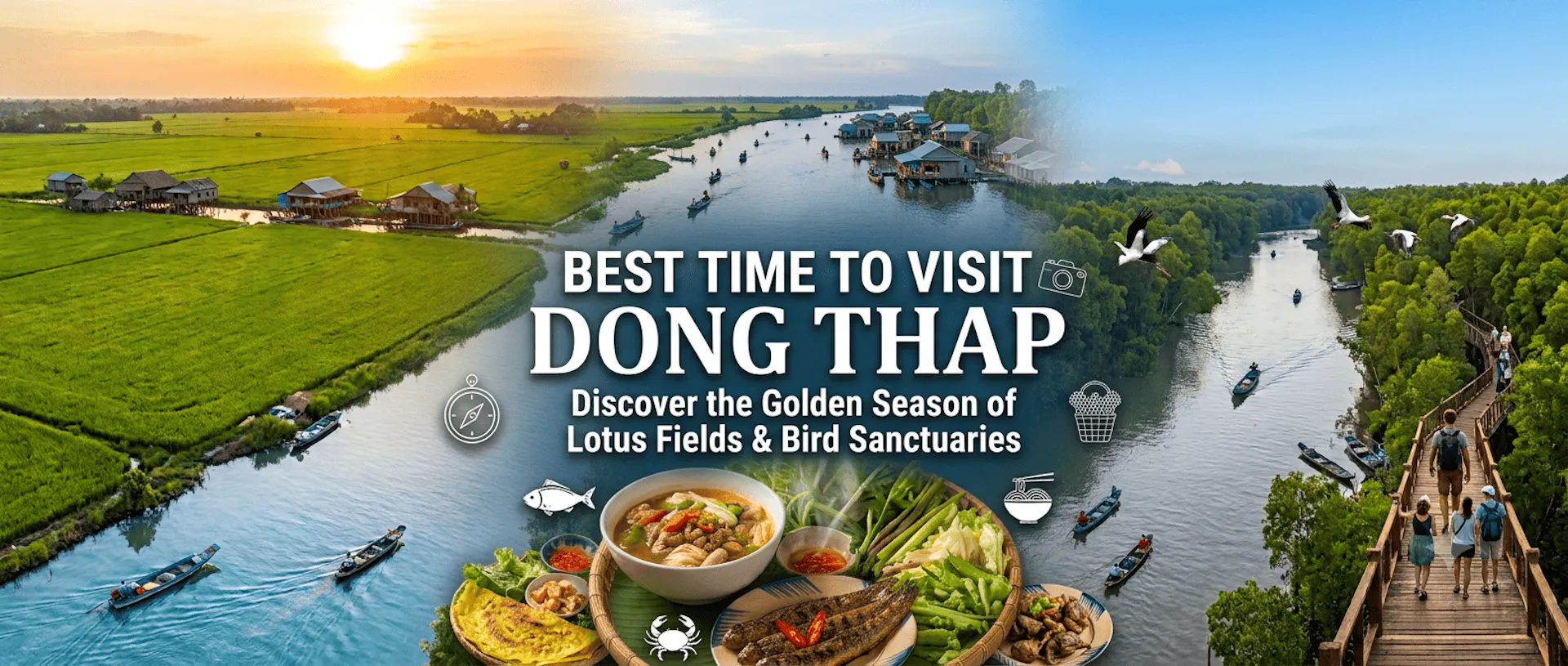
Dong Thap is a beautiful destination throughout the year, with each season offering its own unique charm. The dry season provides ideal conditions for exploring flower villages and national parks, while the rainy season brings blooming lotus fields and thriving wetlands filled with birdlife. Visitors can enjoy eco-tourism, cultural festivals, scenic river landscapes, and authentic Mekong Delta experiences regardless of the season. This guide helps you choose the best time to visit Dong Thap based on weather, seasonal attractions, and local events.
On this page
To traverse the Đồng Tháp province is to step into an environment defined not by the rigid ticking of a clock, but by the relentless, seasonal pulse of the Mekong River. As the southernmost part of the historic Đồng Tháp Mười region, this province serves as the natural reservoir of the Mekong Delta, a vast expanse of alluvial plains that undergo a dramatic, structural transformation twice every year. Deciding on the best time to visit dong thap is a deliberate act of synchronization; you are not merely selecting a travel window, but aligning your journey with the biological and hydrological cycles that govern the land’s fruit harvests, avian migrations, and architectural access. The province oscillates between the sun-baked, arid stability of the dry months and the vibrant, water-rich upheaval of the annual flood, a phenomenon that redraws the province's maps and fundamentally alters the modes of human transit. This exhaustive master guide, rooted in years of ethnographic research and hydrological observation, provides the necessary expertise to navigate these seasonal transitions. Whether you are an eco-adventurer seeking the raw majesty of the flooded wetlands, a structural observer drawn to the historic colonial architecture of Sa Dec, or a culinary enthusiast tracking the precise harvest cycle of the pink lotus, understanding the environmental mechanics of Đồng Tháp is essential for a transformative and authentic experience.
The Three Pillars of Dong Thap’s Seasonal Rhythm
To master the timing of your expedition, one must first deconstruct the province’s seasonal calendar into three distinct, highly predictable pillars. Each pillar offers a fundamentally different vision of the delta, dictating everything from your choice of footwear to the specific cultural experiences accessible during your stay.
The Lotus and Harvest Season (May – August)
For travelers motivated by the visceral beauty of the landscape and the intense, sugary bounty of the agricultural cycle, the absolute best time to visit dong thap is the vibrant, sun-drenched season spanning from May through August. As the early monsoon rains break the heavy heat of the preceding dry months, the province experiences an explosive surge in biological productivity. This is the definitive window for witnessing the lotus fields of Thap Muoi at their most spectacular and structurally perfect stage. During these months, the vast, aquatic plains are blanketed in a sea of Sen hồng (pink lotus), creating a sensory experience of unrivaled visual intensity. The humidity is high, the air is perennially thick with floral fragrance, and the orchards are hyper-saturated with ripening tropical fruits. This period is the premier choice for those seeking "farm-to-table" immersion, as the local agrarian communities are in a state of constant, frenetic motion. Engaging with the harvest during this time provides a rare, unvarnished look at the grueling manual labor and intricate, traditional processing methods required to bring the lotus from the anaerobic mud to the regional marketplace.
The Flooding Season (September – November)
As the seasonal deluge of the Mekong River reaches its absolute zenith, the province enters the period known locally as Mùa nước nổi, or the flooding season. From September through November, the landscape undergoes a complete, mesmerizing hydrological transition. The rising alluvial overflow from the upper Mekong effectively claims the lower-lying agricultural plains, transforming the province into a vast, navigable inland sea. This is not a time for terrestrial cycling or traditional walking tours; rather, it is the ultimate, non-negotiable window for the dedicated eco-adventurer. The rising waters allow small, wooden rowboats to penetrate deeply into the heart of the primeval wetlands, accessing regions of the province that are physically impossible to reach during the arid months. This season is synonymous with the vibrant, avian activity at the national parks, as the flooded plains provide a massive, nutrient-dense buffet for migratory species. It is a period of quiet, reflective beauty where the focus of the province shifts entirely from land-based labor to aquatic navigation and traditional, flood-adapted fishing techniques.
The Cultural and Floral Window (December – April)
Following the gradual retreat of the floodwaters, the region enters the arid, breezy, and highly stable window of December through April. This season is defined by clear, cerulean skies, significantly lower humidity, and hardened, dusty paths that allow for unfettered movement across the rural districts. This is the period of cultural preparation and historical reflection. It is the most comfortable time for the architectural exploration of the province's 19th-century colonial homes, as the interior halls remain cool and the courtyards are accessible. More importantly, this window culminates in the frantic, highly vibrant period leading up to the Lunar New Year (Tet). This is when the Làng hoa Sa Đéc (Sa Dec Flower Village) becomes a global focal point of horticultural excellence. The sheer intensity of the floral cultivation during these months is staggering, as farmers work in a race against the clock to ensure millions of potted blooms are ready for the festive markets. Visiting during the pre-Tet rush provides a front-row seat to the region's immense logistical and botanical mastery, serving as a powerful, evocative masterclass in traditional, community-based agricultural effort.
Month-by-Month Logistical Navigation of Dong Thap
To execute a flawless itinerary, one must abandon generalized notions of seasonal weather and embrace the incremental, month-by-month changes that dictate the provincial experience. The year begins with a cultural and historical window throughout January and April, which represents the calm, dry relief following the intense annual flood. During these months, the ground is solid, and the light is soft, making it the premier window for structural observation. You can spend your days meticulously studying the hybrid Indochinese architectural fusion of the Huynh Thuy Le house and the intricate stonework of local pagodas without the interference of mud or intense tropical downpours. This stability allows for a level of ethnographic precision that is impossible during the more volatile, water-heavy months.
As the calendar transitions into the mid-year cycle of May through August, the province fundamentally pivots to become a gastronomic and floral window. The rising heat and humidity are significant challenges, yet they are the essential catalysts for the agricultural crescendo. This is when the lotus harvest reaches its absolute height, transforming the landscape into an intense, fragrant botanical dream. For the serious photographer or the culinary researcher, this is the most vibrant and visually demanding period of the year. You must be prepared to endure the heat, as the reward is witnessing the harvest cycles at their absolute, most productive zenith, providing a visceral connection to the nutrient-dense alluvial soil that has sustained the province for generations.
The final quarter of the year, spanning from September through December, emerges as the definitive wilderness-immersion window. As the Mekong’s overflow reaches the province, the landscape shifts from an agrarian factory to a thriving, aquatic wildland. The focus of your expedition must necessarily abandon the road in favor of the water. This is the season where the delta truly earns its reputation as a water-based civilization, as the rising currents dictate every logistical choice, from the hiring of specialized boatmen to the routing of your daily excursions. It is a time of profound ecological significance, where the landscape is redefined by the water, offering a unique opportunity to explore the primeval, flooded forests that represent the original, untouched face of the Mekong Delta.
Timing for Niche Experiences in Dong Thap
True expertise in travel planning lies in the ability to synchronize your arrival not just with the broad seasonal shifts, but with the specific, micro-agricultural cycles that define the province's niche experiences. The most sought-after activity—photographing or harvesting the lotus—is entirely contingent upon precise seasonal flowering cycles. While the fields are vibrant during the peak summer months, the most photogenic stage—when the petals are beginning to unfurl and the seeds are firm but not yet woody—is a fleeting window that shifts annually based on early-season rainfall. To secure the absolute best experience, engaging in a direct, pre-trip dialogue with local orchard or lotus field hosts is essential. These hosts possess the deep, intuitive knowledge required to identify exactly when the fields will reach their maximum saturation of pink blossoms, ensuring that your arrival is perfectly calibrated for the best possible lighting and harvesting conditions.
The situation surrounding the Sa Dec Flower Rush is similarly governed by precise logistical timing. If your primary goal is to witness the sheer, industrial scale of the flower preparation for the Lunar New Year, you must arrive in the final weeks of December and early January. During this period, the intensity of the village is palpable; millions of plants are being tagged, packed, and moved onto massive, river-bound barges in a chaotic, highly choreographed logistics operation. Conversely, if you prefer a meditative, quiet exploration of the nurseries without the crushing pressure of the pre-holiday rush, targeting the months of November or early December provides the perfect balance. The flowers are in various stages of maturity, the nursery owners have the time and the patience to engage in long, meaningful conversations about their cultivation techniques, and the village atmosphere is one of steady, purposeful work rather than frantic, last-minute commercial demand.
Finally, for the ornithological researcher, the bird migration window at the national parks is a highly rigid, biologically mandated calendar. The rare Sarus Crane, the undisputed star of the wetland ecosystem, typically arrives in the park during the depths of the dry season, when the shallow, marshy feeding grounds provide the most accessible habitat for their specific dietary needs. Tracking these birds is not a recreational activity; it is a serious, early-morning commitment that requires local guides who know the specific, isolated corners of the wetlands where the cranes prefer to roost. Attempting to witness this migration outside of the narrow window from January to March is largely futile, as the birds remain dispersed within the vast, hidden reaches of the delta, highlighting the necessity of aligning your schedule with these long-standing, migratory biological imperatives.
Practical Field Logistics and Travel Etiquette
Executing a seamless, seasonal trip requires a highly pragmatic approach to the material and logistical realities of the delta. Your selection of gear must be as fluid as the landscape itself. During the sweltering, humid summer months, your wardrobe must prioritize extreme breathability and moisture-wicking capabilities. The equatorial heat, combined with the dense canopy of the lotus fields or flower nurseries, can lead to severe heat exhaustion if you are wearing heavy, non-breathable synthetics. Conversely, for the flooding season, your logistical preparation must shift toward protection from the elements. Lightweight, rapidly deployable waterproof gear is absolutely essential, as you will be navigating the waterways in small, open-air wooden boats where a sudden, violent afternoon squall can leave you completely drenched in seconds. Furthermore, ensure all sensitive optical and recording equipment is stored in heavy-duty, marine-grade dry bags, as the combination of high humidity and occasional spray from the water surface is a constant threat to modern hardware.
Transit nuances are equally dictated by the hydrological state of the land. Throughout the dry months, the motorbike is the undisputed tool of choice. It provides the necessary agility to navigate the narrow, hardened village roads and the ability to spontaneously diverge from the main transit arteries to investigate hidden brick kilns or small, family-run fruit nurseries. However, as the seasonal floodwaters rise, the motorbike becomes a liability. The transition to the boat is not optional; it is a fundamental shift in your logistical reality. Hiring private, small-scale boat operators—who possess the specialized, localized knowledge to navigate the deeply flooded, vine-choked canals—is the only way to effectively reach the most remote, pristine corners of the wetlands. This shift requires a degree of logistical patience; you must be prepared to negotiate rates directly with boatmen who do not operate on a commercial, industrialized schedule, but rather on the more relaxed, traditional tempo of the river. Adhering to these nuanced logistical shifts ensures that you are not merely a visitor passing through, but an active, responsive participant in the rhythmic life of the province.
Conclusion: Finalizing Your Dong Thap Seasonal Journey
The ultimate verdict on the best time to visit dong thap is a deeply personal one, driven by the specific nature of your travel ambition. The summer months offer the undisputed, vibrant glory of the lotus harvest and the intense agricultural vitality of the orchards, providing the most visually saturated and gastronomically rewarding experience. The autumn flooding season is the absolute requirement for the eco-adventurer, offering a rare, immersive look at the primeval face of the Mekong as it reclaims the land. The spring months serve as the perfect cultural and historical window for those who seek to navigate the intricate, colonial architecture and the complex, rhythmic life of the flower villages in comfort. Đồng Tháp is a province that demands you align your expectations with the natural order of the river. As you prepare to navigate the intertwined canals and flooded forests of this poetic, historically rich frontier, you must ask yourself: are you drawn to the sweet, sun-drenched harvest of the lotus fields, or does the mysterious, water-rich silence of the flooding season hold the primary key to your Mekong journey?
> Read more: Dong Thap Travel Guide

By Roy Trinh
Editor
Roy Trinh is a travel writer and destination expert at Go Visit Vietnam, dedicated to helping travelers discover the beauty, culture, and diversity of Vietnam. Through well-researched travel guides, practical itineraries, local insights, and authentic recommendations, Roy shares valuable information to inspire memorable journeys across the country. From vibrant cities and breathtaking landscapes to regional cuisine and cultural heritage, every guide is created to help visitors experience Vietnam with confidence and curiosity.
Frequently Asked Questions About the Best Time to Visit Dong Thap
What is the best time to visit Dong Thap?
The best time to visit Dong Thap is during the dry season from December to April, when the weather is sunny, comfortable, and ideal for exploring flower villages, wetlands, temples, and riverside attractions.
When is the lotus season in Dong Thap?
The lotus season usually peaks between May and August, when ponds and wetlands are covered with blooming lotus flowers. This is one of the most beautiful times for photography, sightseeing, and experiencing the province's iconic landscapes.
Is the rainy season a good time to visit Dong Thap?
Yes. The rainy season, which generally lasts from May to November, brings lush green scenery, abundant birdlife, and thriving wetlands. It is an excellent time for eco-tourism, nature photography, and wildlife observation.
What is the best time for birdwatching in Dong Thap?
Birdwatching is especially rewarding during the flood season from July to November, when water levels rise and attract many species of waterbirds to places such as Tram Chim National Park and other wetland areas.
Can I travel to Dong Thap throughout the year?
Absolutely. Dong Thap offers enjoyable experiences year-round. The dry season is perfect for sightseeing and outdoor activities, while the rainy season showcases blooming lotus fields, vibrant wetlands, seasonal fruits, and excellent opportunities for eco-tourism and photography.
Advertising box