
Best Time to Visit Gia Lai
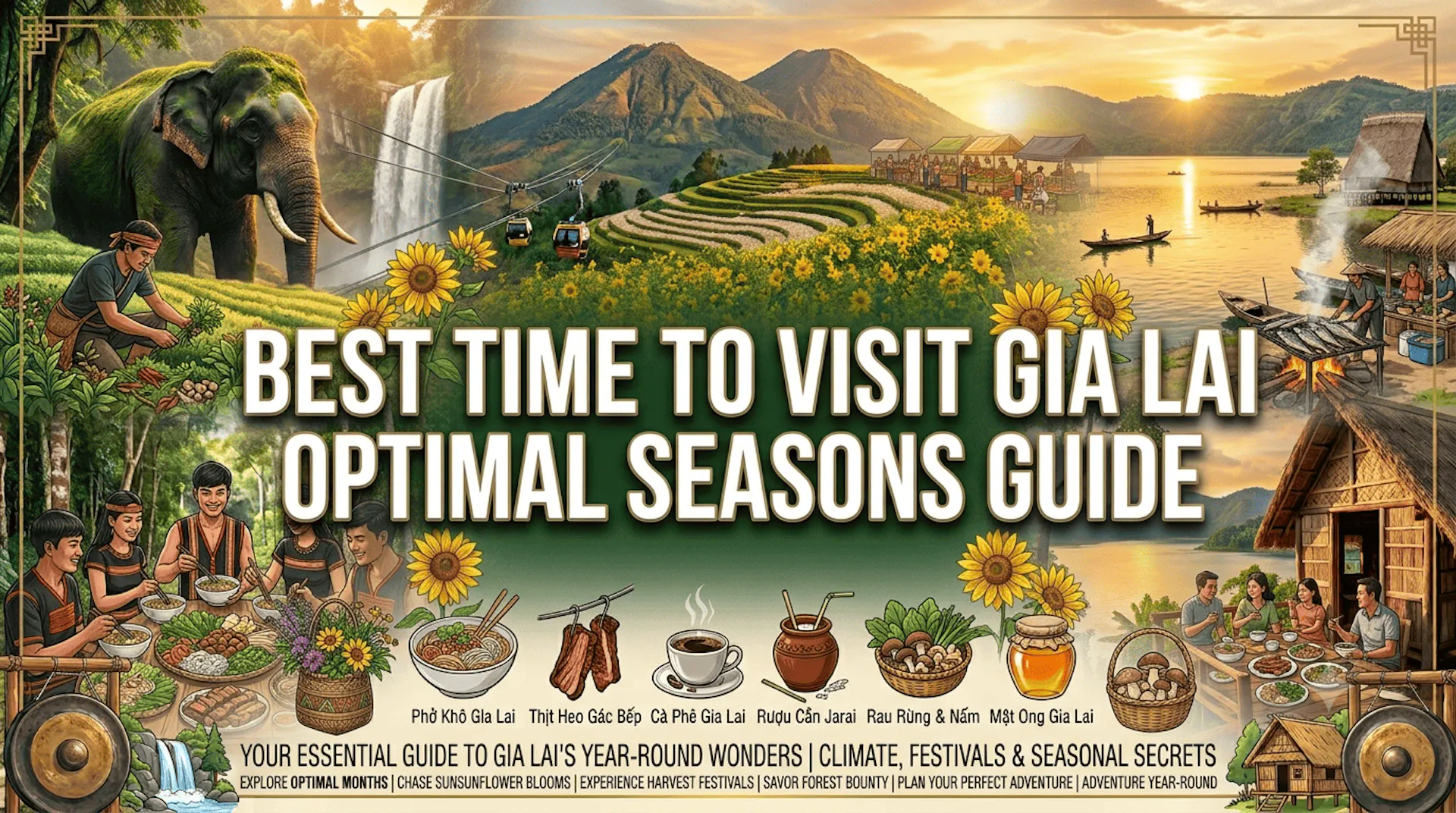
Gia Lai is a year-round destination celebrated for its cool Highland climate, volcanic landscapes, coffee plantations, waterfalls, and rich ethnic culture. The dry season provides ideal conditions for sightseeing, hiking, and exploring natural attractions, while the rainy season transforms forests and mountains into lush green landscapes. Visitors can also experience coffee harvests, seasonal wildflowers, and traditional festivals throughout the year. This guide helps you choose the best time to visit Gia Lai based on weather, seasonal highlights, and unforgettable Central Highlands experiences.
On this page
To ascend into the province of Gia Lai is to abandon the sediment-heavy heat of the low-lying plains and enter a realm defined by the raw, geologic pulse of the Central Highlands. Here, the landscape is not merely a setting; it is a profound, basaltic plateau where the rhythm of life is dictated by the dramatic interplay between the monsoon and the dry wind. For the veteran traveler, the professional ecologist, and the journalist who has spent years documenting these highlands, determining the best time to visit gia lai is a strategic decision that aligns your expedition with the province’s specific ecological and cultural cycles. Gia Lai does not experience weather in the passive sense; it undergoes radical, seasonal transformations that dictate the accessibility of its dormant volcanic craters, the vibrant activity of its coffee harvest, and the timing of its profound communal rituals. Whether you seek the intense, sun-drenched days of the dry season for volcanic trekking, or the atmospheric, rain-washed quietude of the highland forests, timing your arrival is the most effective way to ensure an experience that is authentic, rewarding, and logistically sound. This master guide provides the authoritative framework necessary to navigate the complexities of this highland frontier, ensuring your journey reflects the province’s diverse and enduring spirit.
The Two Engines of Gia Lai’s Climate
To master the timing of your expedition, one must first deconstruct the province’s seasonal calendar into two primary, powerful engines: the dry season and the monsoon. Each offers a fundamentally different framework for exploration, dictating everything from your choice of technical gear to the specific cultural experiences accessible during your stay.
The Dry Season (November – April) - The Explorer’s Window
For the traveler who prioritizes physical mobility, logistical reliability, and the pursuit of expansive, unobstructed exploration, the dry season spanning from November through April serves as the definitive explorer’s window. This period is governed by the northeast monsoon, which brings low atmospheric humidity, consistent sunshine, and an almost total absence of localized, road-washing storms. For those planning an expedition into the heart of the basaltic plateaus or seeking to traverse the rugged, unpaved trails leading toward the Chư Đăng Ya volcano, these months are beyond reproach. The volcanic red soil, which can become a challenging, semi-viscous matrix of clay during the monsoon, solidifies during the dry months, providing the essential stability required for long-distance trekking and independent motorbike transit across the province’s network of village roads. Furthermore, this period offers the highest degree of atmospheric clarity. When standing on the windswept ridgelines or capturing the expanse of the valley floors, the lack of suspended moisture and dust allows for sharp, expansive vistas that are essential for high-quality landscape photography. The temperature remains cool and bracing, particularly at higher altitudes during the evenings, creating an environment where the physical labor of highland trekking is significantly more sustainable than during the humid, stifling months of the transition period.
The Rainy Season (May – October) - The Atmospheric Transition
In sharp contrast, the onset of the southwest monsoon in May marks the beginning of a profound, verdant transformation. From May through October, the province is subjected to frequent, often torrential afternoon squalls that wash the landscape and rejuvenate the montane ecosystems. While generic travel advice often discourages visiting during the monsoon, the ecologically minded traveler recognizes this as a time of supreme botanical vitality. The region does not merely survive the rain; it responds with an explosive surge in growth, turning the entire plateau into a hyper-saturated, brilliant emerald landscape. Navigating during this time requires an advanced degree of logistical flexibility, as the secondary mountain roads may become saturated and require local, motorized transport rather than on-foot exploration. However, the reward is a landscape that feels primal and alive. For the photographer, the dramatic, bruised-purple storm clouds rolling over the ridges provide a level of visual gravitas that the clear-sky months simply cannot replicate, turning the valleys into a moody, high-contrast spectacle of geological power and seasonal intensity. The rain-filled months provide a unique window for observing the local flora, as the highlands transition into a lush, vibrant, and incredibly active ecological zone.
Micro-Climate Dynamics
A crucial, EEAT-level insight often overlooked by superficial travel resources is the distinct altitudinal temperature gradient present across the Gia Lai plateau. The province is not a singular climatic zone; the high-altitude volcanic ridgelines, the mid-elevation coffee plantation belts, and the hidden, riparian valleys exist within their own distinct thermal envelopes. The high-altitude peaks, in particular, remain subject to fast-moving cloud banks and rapid temperature drops that can occur regardless of the official season. Travelers must prepare for this highland volatility by packing versatile, technical layers that can be adjusted as you navigate from the warm, valley-level plantations up to the cold, windswept ridgelines of the dormant craters. This altitudinal shift also impacts the immersion experience at sites such as remote Jrai villages; the communal houses located on the slopes remain sheltered by the thick forest canopy, maintaining a cool, damp atmosphere that contrasts starkly with the sun-exposed, basaltic plains, necessitating a strategic approach to your daily itinerary and gear selection.
Aligning Travel with the Cultural and Agricultural Calendar
To extract the maximum value from your expedition, you must synchronize your arrival not just with the broad seasonal shifts, but with the specific, micro-agricultural and cultural cycles that define the province's character. The annual rhythm is defined by events that provide a rare, authentic look at the highland way of life.
The Wild Sunflower Season
The early months of the dry season, specifically November, represent the most iconic visual window for the province. As the rains retreat, the slopes of the volcanic mountains and the sides of the winding highland roads are blanketed in a vibrant, yellow tide of wild sunflowers. This is the Mùa hoa dã quỳ (wild sunflower season), and it serves as the definitive highlight for any traveler who prioritizes landscape photography and the documentation of the highland’s seasonal floral peak. During these weeks, the plateau feels as though it has been ignited, with the golden flowers providing a striking, high-contrast visual against the dark, volcanic red of the basaltic earth. Planning your trip during this window allows you to witness the landscape at its absolute most photogenic, though it also necessitates early planning, as the popularity of this season among regional travelers is immense.
Coffee Harvest and Cultural Energy
As the dry season solidifies toward the end of the year, the province undergoes a dramatic economic and social shift. This is the Mùa cà phê (coffee harvest season), and it is the most industrially and culturally charged period in the highland calendar. The landscape becomes a hub of frantic activity, with local families and seasonal laborers harvesting the ripe, red cherries that will eventually be processed into the region’s world-renowned highland brew. For the traveler, this is an unmatched opportunity to witness the plateau’s primary economic engine in motion. Social life during this period peaks, with village gatherings and market activity increasing in intensity to match the labor demands of the fields. While the energy is infectious, the traveler should remain mindful of the intense labor schedules of the local communities and approach their visit with a sense of respect for the critical, economic nature of the season.
Festival Timing
Finally, the calendar is marked by the traditional Jrai and Bahnar festivals, which are often tethered to the completion of the harvest cycle. These events, centered on the Lễ hội cồng chiêng (Gong Culture festivals), represent the spiritual heart of the region. Witnessing these communal rituals is an experience of profound cultural syncretism, where the ancient, bronze-hewn sound of the gongs resonates through the communal halls, marking the passage of the year and the honoring of ancestral spirits. These festivals are not spectacles for mass consumption; they are intimate, vital expressions of community cohesion. Travelers seeking to witness these rituals must do so with the utmost humility, prioritizing observation over participation and ensuring that their presence respects the sanctity of the communal space and the privacy of the indigenous families.
Timing for Niche Highland Experiences
True expertise in travel planning lies in the ability to synchronize your arrival with the specific, niche experiences that define the highland identity. For the trekking enthusiast, timing is a matter of safety and accessibility. Tackling the dormant volcanic craters like Chư Đăng Ya is fundamentally safer and more enjoyable during the stable months of the dry season, when the basaltic paths are firm and the morning air is clear enough to offer unobstructed, panoramic views of the plateau. Early morning starts are not a suggestion; they are a mandatory logistical requirement for anyone hoping to photograph the terrain with the correct, low-angle light and avoid the cumulative heat of the basalt-baked afternoons.
For those prioritizing photography, the seasonal changes in atmospheric moisture and the angle of the sun are the primary variables. The most evocative imagery of the communal Nhà Rông architecture is often captured during the late afternoon "golden hour" of the dry season, when the low-slung, warm light highlights the intricate, hand-hewn wood carvings and the steep, thatched geometry of the roofs. This specific lighting condition provides a level of architectural depth that the harsh, direct sun of the midday hours cannot capture. By aligning your documentation of these spiritual and cultural landmarks with these precise lighting windows, you produce visual work that reflects the true, atmospheric weight of the highland heritage.
For the traveler seeking deep village immersion, the shoulder months—the transitional weeks at the beginning or end of the monsoon—provide a rare, contemplative window. During these weeks, the peak tourist traffic has subsided, and the villages return to their natural, pragmatic rhythm. Visiting during these non-festival months allows you to connect with local elders and craftsmen on a more personal level, as the community is not preoccupied with the logistical demands of a major festival. This is the ultimate time for the traveler who values depth over spectacle, providing the perfect setting for an unhurried exploration of the local woodcarving, weaving, and traditional agricultural techniques that form the bedrock of the Jrai and Bahnar identity.
Practical Field Logistics and Travel Etiquette
Executing a seamless, authoritative expedition through Gia Lai requires a pragmatic adherence to both the environmental demands of the province and a commitment to responsible, sustainable travel. Your choice of gear must be as fluid as the highland landscape itself. During the dry season, you require sturdy, breathable hiking gear that can withstand the abrasive nature of volcanic trekking and the high UV index of the highland peaks. However, if you are planning to traverse the region during the transition or rainy months, you must prioritize versatile, rain-ready gear that can handle sudden squalls. The highland weather is famously volatile, and being caught on an exposed volcanic rim during an afternoon shower without proper, protective layers is an avoidable logistical failure.
Transit nuances are equally dictated by the geographical layout of the plateau. While private, climate-controlled vehicles remain the gold standard for reliably traversing the distances between Pleiku and the remote, forest-buffered zones, independent motorbike exploration remains the ultimate tool for those who possess the navigational confidence to handle the unpaved, basaltic tracks. A motorbike grants you the absolute freedom to navigate the serpentine village roads, stop to document an agricultural cycle, or venture toward a distant, forest-hidden waterfall. However, this transit mode is only as good as your safety awareness; you must be prepared for the reality that highland roads can be narrow, subject to rapid shifts in weather, and require your full, undivided attention at all times.
Ethical tourism in this province is centered on the principle of minimal impact and deep cultural respect. You are navigating through a fragile, montane ecosystem that is increasingly sensitive to human-induced erosion. "Leave No Trace" is not a suggestion—it is a mandatory ethic. When exploring the volcanic craters or the hidden forest valleys, ensure that you carry every piece of waste back out with you and avoid disturbing the indigenous flora. Furthermore, when engaging with the diverse Jrai and Bahnar ethnic communities, your conduct must prioritize humility. Always request permission before entering village spaces or capturing images of community elders, and be mindful that your presence is a transient one. The quiet, profound beauty of these highlands is contingent upon the mutual respect between the host community and the guest. By approaching your travel with a commitment to these ethics, you become an active participant in the preservation of the landscape, ensuring that these regions remain vibrant, authentic hubs for the travelers who will follow you.
Conclusion: Finalizing Your Journey Through the Highlands
Gia Lai stands as the most essential, multifaceted highland destination in Vietnam, offering a complex, textured landscape that rewards the inquisitive mind and the adventurous spirit. By prioritizing an itinerary that balances the strenuous, physical demands of the volcanic mountain ascents with the quiet, meditative atmosphere of the indigenous communal halls, you ensure an expedition that is as deeply rewarding as it is visually arresting. The province does not merely offer sights to be seen; it offers a profound, complex cultural and geological tapestry to be decoded. As you synthesize this master guide to finalize your itinerary, ask yourself where your priorities truly lie. Are you more drawn to the high-energy, sun-drenched physical labor of conquering a dormant volcanic rim, or does the prospect of witnessing the quiet, observant cultural immersion of a communal highland village provide the primary motivation for your journey into the pristine heart of the Central Highlands? The highlands await, offering a depth that can only be discovered by those willing to seek it out with patience, humility, and a precise understanding of the seasonal and historical pulse of the land.
> Read more: Gia Lai Travel Guide

By Roy Trinh
Editor
Roy Trinh is a travel writer and destination expert at Go Visit Vietnam, dedicated to helping travelers discover the beauty, culture, and diversity of Vietnam. Through well-researched travel guides, practical itineraries, local insights, and authentic recommendations, Roy shares valuable information to inspire memorable journeys across the country. From vibrant cities and breathtaking landscapes to regional cuisine and cultural heritage, every guide is created to help visitors experience Vietnam with confidence and curiosity.
Frequently Asked Questions About the Best Time to Visit Gia Lai
What is the best time to visit Gia Lai?
The best time to visit Gia Lai is during the dry season from November to April, when the weather is cool, sunny, and ideal for sightseeing, hiking, visiting waterfalls, and exploring the province's volcanic landscapes.
When is coffee harvest season in Gia Lai?
Coffee harvest season usually takes place from November to January. This is a wonderful time to visit coffee plantations, observe harvesting activities, enjoy fresh Highland coffee, and experience local agricultural life.
Is the rainy season a good time to visit Gia Lai?
Yes. The rainy season, generally from May to October, brings lush forests, greener landscapes, and fuller waterfalls. While occasional rain showers occur, travelers can still enjoy nature, cultural sites, and local cuisine.
When can I see wildflowers in Gia Lai?
Wildflowers, especially around Chu Dang Ya Volcano, typically bloom from late October to early December, creating spectacular golden landscapes that attract photographers and nature lovers from across Vietnam.
Can I visit Gia Lai throughout the year?
Absolutely. Gia Lai offers unique experiences in every season. The dry months are best for outdoor adventures and sightseeing, while the rainy season showcases lush Highland scenery, beautiful waterfalls, and vibrant natural landscapes.
Advertising box