
Best Time to Visit Ho Chi Minh City
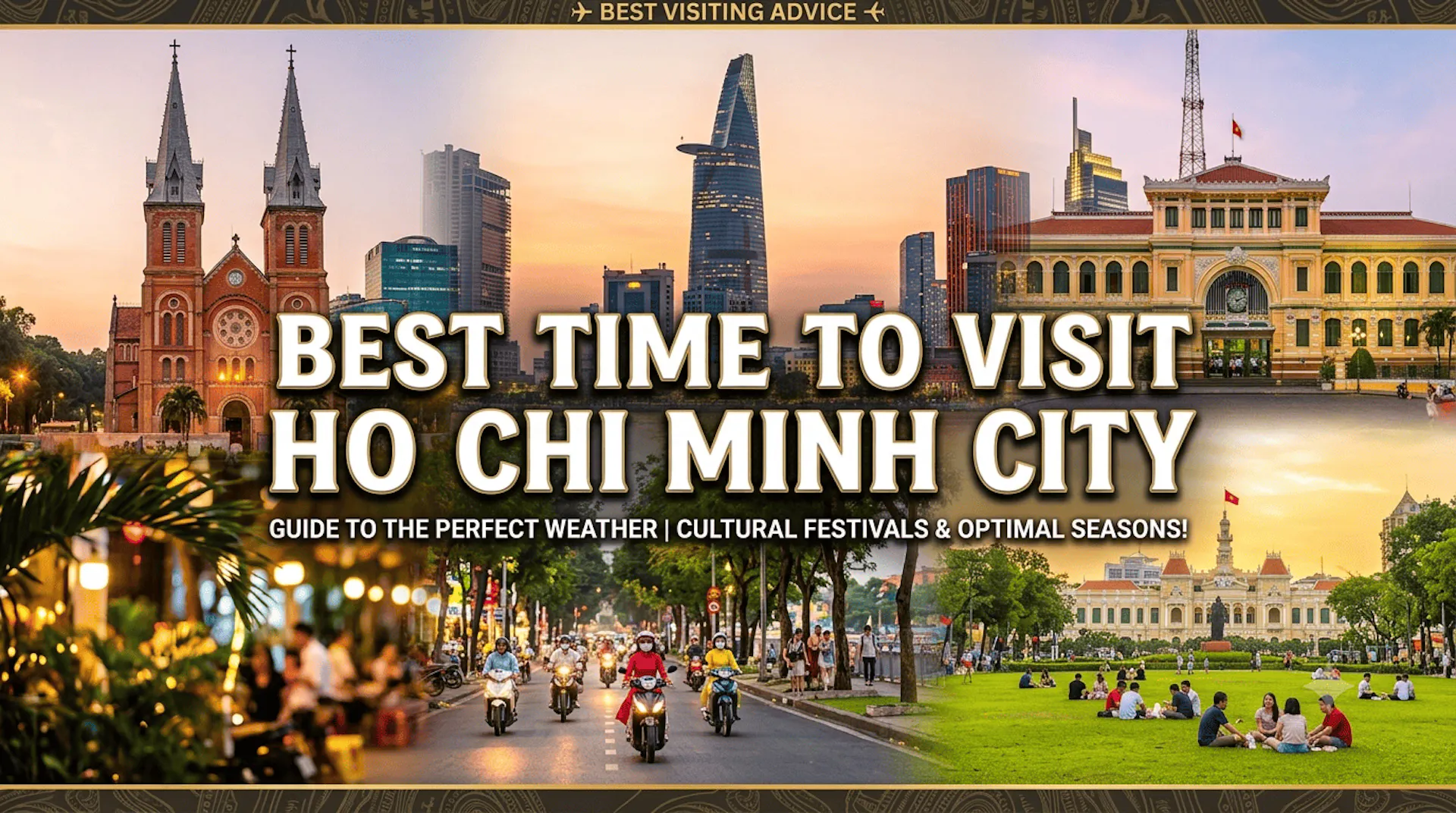
Ho Chi Minh City is a vibrant destination that welcomes travelers throughout the year. The dry season offers sunny weather ideal for sightseeing, food tours, shopping, and exploring historic landmarks, while the rainy season brings lush greenery and refreshing afternoon showers that rarely disrupt travel plans. Visitors can also experience colorful festivals, lively markets, and exciting nightlife in every season. This guide helps you choose the best time to visit Ho Chi Minh City based on weather, seasonal events, and unforgettable urban experiences.
On this page
- Determining the Best Time to Visit Ho Chi Minh: The Two Engines of Saigon’s Climate
- The Best Time to Visit Ho Chi Minh: Aligning Travel with the Cultural Calendar
- The Best Time to Visit Ho Chi Minh: Timing for Niche Experiences
- The Best Time to Visit Ho Chi Minh: Practical Field Logistics
- Conclusion: Finalizing the Best Time to Visit Ho Chi Minh
o stand on the pavement of Vietnam’s southern metropolis is to feel the undeniable pulse of a city in constant, kinetic motion. However, the rhythm of Sài Gòn is not static; it transforms dramatically with the shifting skies. There is a profound contrast between the vibrant, sun-drenched street life of the dry months, where the asphalt radiates urban heat, and the cooling, dramatic downpours of the monsoon that wash the colonial avenues clean. Deciding on the best time to visit ho chi minh is an exercise in strategic planning. It is not merely a logistical question of avoiding rain or seeking sunshine; rather, it is about deliberately aligning your trip with the pulse of the city’s major festivities, food harvests, and raw urban energy. Whether you wish to navigate the relentless, high-velocity commerce of the open-air markets or prefer to seek refuge in the city's sophisticated, atmospheric cafe culture during a sudden deluge, this comprehensive Ho Chi Minh City seasonal travel guide will equip you with the essential knowledge to master your arrival. The optimal timing dictates the absolute quality of your metropolitan experience.
Determining the Best Time to Visit Ho Chi Minh: The Two Engines of Saigon’s Climate
To accurately pinpoint your arrival window, one must first understand the fundamental duality of the local weather patterns. The city operates primarily on two distinct climatic engines, each offering a fundamentally different framework for urban exploration.
The Dry Season (December – April) - The Urban Explorer’s Window
For the traveler who prioritizes uninterrupted physical mobility and the pursuit of expansive, outdoor exploration, the Mùa khô (dry season) serves as the definitive explorer’s window. Spanning from late November through April, this period is characterized by predictably clear skies and a significant drop in relative humidity, particularly during the early months of December and January. This is undeniably the best season to visit Saigon if your itinerary leans heavily on navigating the sprawling, open-air commerce of Chợ Bến Thành or embarking on exhaustive walking tours through the colonial grid of District 1. The lack of suspended atmospheric moisture provides exceptional clarity, making it the premier window for architectural photography. The facades of the Central Post Office and the intricate tile work of the surrounding heritage buildings are bathed in a sharp, high-contrast light that perfectly highlights the city’s French colonial architectural heritage. During these months, the pavement becomes a sprawling stage for the city's relentless street life, allowing you to walk the boulevards for hours without the constant threat of a tropical deluge disrupting your transit.
The Rainy Season (May – November) - The Atmospheric Window
In sharp contrast, the onset of the Mùa mưa (rainy season) in May marks the beginning of a profound, atmospheric transformation. Often misunderstood by standard travel brochures that advise complete avoidance, the Saigon monsoon is rarely a continuous, day-long event. Instead, the urban thermal dynamics dictate that intense, localized downpours typically erupt in the late afternoon, washing the streets clean and rapidly dropping the ambient temperature. For the culturally attuned traveler, this provides a unique, refreshing respite from the midday heat. It is during these sudden squalls that the city’s highly sophisticated indoor culture truly thrives. As the rain hammers against the pavement, you can retreat into independent art galleries or seek shelter inside specialized coffee roasteries hidden deep within historic apartment blocks. This season invites a "slow-travel" pace, encouraging deep, introspective conversations over dripping phin filters while the tropical streetscape transforms into a moody, cinematic tableau outside the window.
The Micro-Climate Nuances
Understanding HCMC weather by month requires acknowledging the intense micro-climate nuances that bridge these two primary seasons. The most critical period to navigate is the "heat peak," which aggressively asserts itself between late March and the end of April. During this transitional phase, the urban heat island effect amplifies the equatorial sun, pushing temperatures well above comfortable limits. Travelers arriving during this window must adapt their schedules, adopting the local rhythm of early morning exploration followed by a mandatory midday retreat into climate-controlled museums or shaded sanctuaries. By acknowledging these micro-climatic shifts, you ensure your physical stamina remains intact to fully engage with the city’s demanding, high-energy environment once the sun sets.
The Best Time to Visit Ho Chi Minh: Aligning Travel with the Cultural Calendar
Beyond the meteorological fluctuations, the best time to visit ho chi minh is heavily dictated by the city’s deeply rooted cultural and civic schedule. To truly master the Saigon cultural festival calendar, one must observe how the shifting seasons influence the social behavior and the economic rhythm of the metropolis.
The year effectively begins with the highly charged, frenetic build-up to the Lunar New Year, known locally as Tết. Falling late in January or early February, the weeks preceding this monumental holiday represent the most visually spectacular time to occupy the city. The boulevards explode with vibrant commerce as millions of yellow apricot blossoms are transported down the Saigon River and loaded onto the chaotic, buzzing streets. The energy is palpable; it is a time of intense preparation, aggressive haggling, and deep ancestral reverence. However, the seasoned traveler knows that planning for the actual holiday requires strategic foresight. During the core days of Tết, the relentless engine of the city momentarily halts. The migrant workforce returns to the provinces, leaving the typically gridlocked avenues eerily silent and serene. While a beautiful phenomenon to witness, you must secure your dining reservations and transit logistics well in advance, as countless independent vendors and heritage stalls completely shut down to observe the familial rites.
As the calendar pushes into the mid-year cycle of June through August, the cultural tempo shifts toward a modern, high-energy frequency. This period coincides with the university breaks and the height of the rainy season, fostering an explosion of indoor creative events. The city’s youth culture dominates this window, manifesting in underground music festivals, contemporary art exhibitions, and experimental culinary pop-ups located in the repurposed industrial warehouses of District 4 and District 2. The mid-year energy is fiercely forward-looking, demonstrating a metropolis that is aggressively shedding its historical constraints and embracing its status as a leading Southeast Asian creative hub. If you wish to document the modern zeitgeist of the Vietnamese youth, this is the definitive period to embed yourself in the city's alternative scenes.
Finally, the transition into the final quarter of the year, spanning October through December, offers the ultimate temporal window for the contemplative urbanist. As the monsoon rains gradually taper off, the air becomes slightly crisper, and the oppressive humidity momentarily breaks. This is an era of atmospheric transition where the light softens, offering unparalleled opportunities for street photography. The city begins to quietly prepare for the Western holiday season and the subsequent Lunar New Year cycle, bridging the gap between historical tradition and global integration. Exploring the colonial districts during these late-year months, you will encounter a softer, more reflective Saigon, providing the perfect climatic balance for extended, unhurried exploration of the intricate, hidden alleyway networks that form the true residential core of the city.
The Best Time to Visit Ho Chi Minh: Timing for Niche Experiences
When determining when to travel to Ho Chi Minh, the specific nature of your personal interests should heavily influence your arrival window. The city does not yield its secrets easily; you must synchronize your daily movements with the highly specific operational hours of its niche communities. Here, identifying the best time to visit ho chi minh requires a granular understanding of the urban clock.
Street Food Timing
The street food culture of Saigon operates on a remarkably rigid logistical schedule, independent of the broader seasonal shifts. To capture the genuine logistical flow of the legendary street vendors without being consumed by the mass-tourist peak, you must adjust your internal clock to match the local workforce. The ultimate window for authentic culinary observation occurs precisely between 5:30 AM and 7:00 AM. During these early hours, the intense heat of the day has yet to materialize, and the sidewalks are claimed entirely by the neighborhood regulars. This is the optimal moment to sit on a plastic stool and watch the meticulous, high-velocity assembly of a traditional breakfast broth. Conversely, the evening street food scene does not truly ignite until after 8:00 PM, when the commuter traffic subsides, allowing the smoke from the charcoal grills to dominate the humid night air.
Photography Windows
For the visual artist or the architectural historian, understanding the urban lighting conditions is paramount. The dense, high-rise topography of the city creates deep concrete canyons that manipulate the equatorial sun. The softest, most highly coveted sunlight for capturing the textured, peeling paint of the colonial districts occurs during the brief, forty-five-minute window immediately following dawn during the dry season. During the wet season months of July and August, the lighting dynamics shift entirely; the most compelling photography window emerges immediately after a torrential afternoon downpour, when the saturated, slick asphalt reflects the neon glow of the street signs and the air is violently purged of its suspended particulate matter.
Festival Participation
Engaging with the city’s spiritual and community traditions demands careful alignment with the lunar calendar. Beyond the overwhelming scale of the Lunar New Year, observing the local river festivals or the intricate religious ceremonies in the Cholon district provides a rare, unvarnished window into the city's ancestral soul. The Mid-Autumn Festival, typically landing in September, transforms the Chinese quarters into a luminous, densely packed labyrinth of paper lanterns and ceremonial dragon dances. To participate in these spiritual milestones, you must anticipate the shifting lunar dates, recognizing that these celebrations are deeply communal affairs designed for local spiritual adherence rather than international tourism.
The Best Time to Visit Ho Chi Minh: Practical Field Logistics
Executing a seamless, authoritative expedition through the southern metropolis requires a pragmatic approach to both the environmental demands and the social fabric of the city. Regardless of when you establish the best time to visit ho chi minh, your packing strategy must be as fluid as the local climate. During the searing heat of the dry season, the necessity of lightweight, highly breathable linen or moisture-wicking fabrics cannot be overstated, as the urban thermal dynamics trap heat at the pavement level. Conversely, if you arrive during the height of the monsoon, heavy western raincoats are entirely useless; you must procure a lightweight, local poncho that allows for essential airflow while repelling the sudden, torrential seasonal showers.
Transit nuances are equally dictated by the shifting weather patterns. During the clear, dry months, engaging in comprehensive walking tours or navigating the district boundaries via a local motorbike taxi allows for an intimate, tactile connection with the streetscape. However, as the monsoon rains flood the lower-elevation wards, your transit strategy must aggressively pivot. Utilizing digital ride-hailing applications to secure a closed, climate-controlled vehicle becomes the most consistent, reliable method to traverse the gridlocked avenues without arriving at your destination completely saturated.
Finally, seasonal changes subtly impact local customs and urban etiquette. During major holidays like the Lunar New Year, the standard, frantic pace of the city slows to a halt, demanding a highly respectful, patient demeanor from visitors who must navigate closed businesses and reduced services. On standard, quiet workdays during the rainy season, the city retreats indoors, and you are expected to moderate your volume and match the introspective, relaxed tempo of the cafe culture. By keenly observing these seasonal behavioral shifts, you transition from a transient outsider into a respectful participant within the city’s complex social ecosystem.
Conclusion: Finalizing the Best Time to Visit Ho Chi Minh
Ultimately, determining the best time to visit ho chi minh is a reflection of your own travel philosophy and your willingness to adapt to the environmental realities of the tropics. If you demand the uninterrupted freedom of a classic, sun-drenched street tour, the dry season will provide the brilliant clarity and logistical stability required to map the sprawling boulevards without hesitation. Yet, if you possess the spirit of an urban intellectual who finds beauty in atmospheric, rain-soaked cafes and thriving underground art scenes, the monsoon months will reveal a deeply contemplative, highly romantic side of the metropolis that few casual tourists ever witness. The dynamic rhythm of the city waits for no one, relentlessly surging forward regardless of the weather. Which seasonal experience—the high-velocity, sunlit architectural trek or the moody, caffeine-fueled monsoon retreat—are you most prepared to command on your journey?
> Read more: Ho Chi Minh Travel Guide

By Roy Trinh
Editor
Roy Trinh is a travel writer and destination expert at Go Visit Vietnam, dedicated to helping travelers discover the beauty, culture, and diversity of Vietnam. Through well-researched travel guides, practical itineraries, local insights, and authentic recommendations, Roy shares valuable information to inspire memorable journeys across the country. From vibrant cities and breathtaking landscapes to regional cuisine and cultural heritage, every guide is created to help visitors experience Vietnam with confidence and curiosity.
Frequently Asked Questions About the Best Time to Visit Ho Chi Minh City
What is the best time to visit Ho Chi Minh City?
The best time to visit Ho Chi Minh City is during the dry season from December to April, when temperatures are warm, rainfall is minimal, and conditions are ideal for sightseeing, walking tours, and outdoor activities.
Is the rainy season a good time to visit Ho Chi Minh City?
Yes. The rainy season, generally from May to November, usually brings short afternoon showers rather than all-day rain. Many travelers still enjoy museums, cafés, markets, and food tours, while the city becomes greener and less crowded.
Which month has the best weather in Ho Chi Minh City?
December, January, and February are considered the most pleasant months thanks to lower humidity, comfortable temperatures, and plenty of sunshine. These months are perfect for exploring the city's landmarks and nearby attractions.
When is the best time to experience local festivals in Ho Chi Minh City?
The period around Lunar New Year (Tet), usually in late January or February, is one of the most festive times to visit. The city is beautifully decorated, and visitors can experience traditional celebrations, flower streets, and cultural events.
Can I visit Ho Chi Minh City all year round?
Absolutely. Ho Chi Minh City is a year-round destination. Whether you visit during the dry or rainy season, you'll find excellent food, vibrant nightlife, historical attractions, shopping, and cultural experiences that make every trip enjoyable.
Advertising box