
Best Time to Visit Lai Chau
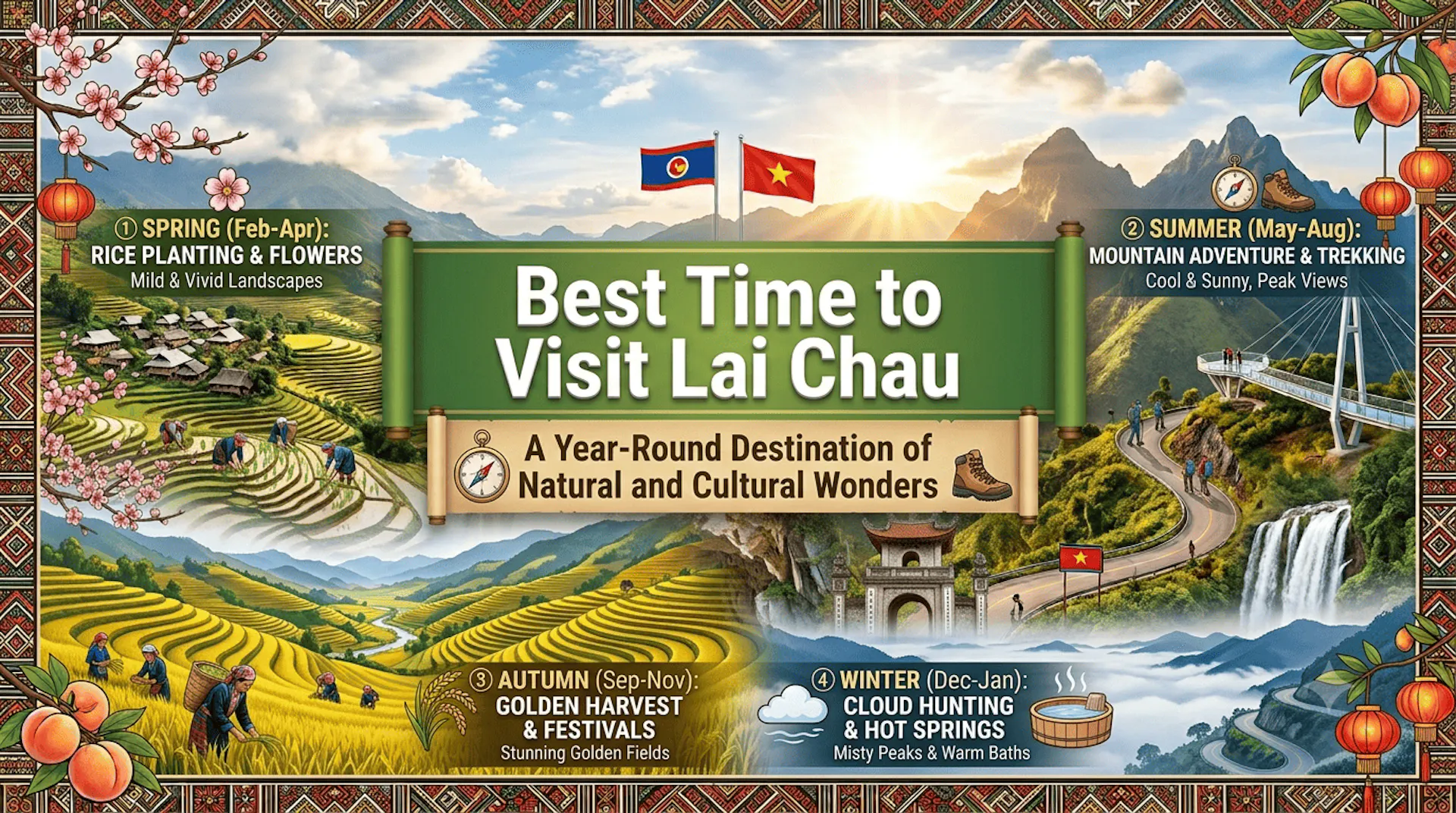
Lai Chau is a spectacular mountain destination that offers unique experiences throughout the year. Spring brings blooming flowers and mild temperatures, summer showcases lush green valleys, autumn offers cool weather and golden rice terraces, while winter is perfect for cloud hunting and panoramic mountain views. Whether you're planning challenging treks, scenic road trips, or cultural experiences in ethnic villages, this guide helps you choose the best time to visit Lai Chau based on weather, seasonal highlights, and outdoor activities.
On this page
- Decoding the Highland and Alpine Climate to Determine the Best Time to Visit Lai Chau
- Aligning Travel with the Cultural and Ecological Calendar for the Best Time to Visit Lai Chau
- Timing Niche Experiences: Pinpointing the Best Time to Visit Lai Chau
- Practical Field Logistics & Travel Etiquette for Lai Chau
- Conclusion: Finalizing the Best Time to Visit Lai Chau
Lai Chau commands the northwestern edge of Vietnam, asserting itself as a formidable landscape where extreme tectonic forces have thrust the highest mountain ranges into the cold northern sky, creating a highly complex, segmented climate. For the dedicated climatologist and the uncompromising travel journalist, selecting the best time to visit Lai Chau is a rigorous strategic decision that fundamentally balances the physical desire for optimal visibility on legendary mountain passes like Ô Quy Hồ, the physiological comfort required for grueling high-altitude trekking, and the strict necessity of safely navigating the province’s distinct highland environmental rhythms. When deeply planning a trip to Lai Chau, standard lowland meteorological forecasts become entirely obsolete. The sheer verticality of the terrain generates hyper-localized weather systems, dictating that your specific arrival window strictly controls the absolute reality of your expedition. You must deliberately weigh the intense, saturated energy of the spring agricultural cycles against the stark, freezing isolation of the autumn and winter trekking seasons. By mastering the high-altitude meteorological dynamics detailed within this comprehensive Lai Chau weather guide, you ensure a scientifically informed, deeply evocative journey through one of Southeast Asia's most unforgiving, majestic frontier territories. This Lai Chau seasonal travel manual provides the exact logistical intelligence required to securely conquer this rugged, vertical domain.
Decoding the Highland and Alpine Climate to Determine the Best Time to Visit Lai Chau
The Vernal Bloom & Cultural Spring (February – April)
Targeting ethnic villages during the period from February through April reveals the premier window for ethnographic immersion and experiencing traditional highland festivals. The vernal equinox introduces a stabilized atmospheric pressure system that systematically strips away the persistent, freezing winter fog, gifting landscape photographers with unparalleled atmospheric clarity across the jagged limestone ridges. This mild, post-winter climate adds a critical layer of visual clarity to deep landscape photography, allowing the intricate details of the plateau agro-ecological cycles to emerge from the thawing soil. This is the absolute ideal time for cultural engagement, granting travelers the ability to interact with indigenous communities without facing the severe intensity of the peak summer rain squalls that routinely obliterate the dirt access roads. The warming soil triggers the massive blooming of wild peach and plum orchards across the Sìn Hồ plateau, establishing a dramatic, vibrant contrast against the dark, primeval forests that dominate the extreme northern horizon.
The Alpine Summer Window (May – August)
Detailed analysis of the highland summer completely dispels the lowland myth of an impassable, miserable rainy season. Instead, the extreme elevation of the Lai Chau frontier provides a vital, cooling escape from the oppressive, suffocating heat that aggressively blankets the Red River Delta. As the summer monsoons sweep across the steep mountain gradients, they trigger an explosive surge of biological vitality. The sensory experience of the high-altitude tea harvesting season is heavily magnified by the daily afternoon downpours, which instantly wash the atmospheric dust from the air and leave the vibrant, lush forest canopy saturated and intensely fragrant. The torrential rains heavily feed the massive hydroelectric reservoirs and the deep river gorges, creating thunderous, dramatic waterfalls that cut violently through the dense jungle architecture. Navigating the alpine valleys during these months requires immense flexibility, as sudden barometric drops can trigger localized flash floods, demanding that visitors maintain acute environmental awareness and secure highly experienced, localized logistical support to safely enjoy the dramatic, rain-washed landscape.
The Trekking & Cloud-Hunting Season (September – December)
For the professional mountaineer and the extreme alpine endurance athlete, the late autumn and early winter months provide the absolute, undisputed window for conquering the legendary đỉnh Pu Ta Leng and Bach Moc Luong Tu peaks. The meteorological necessity of the post-monsoon clearing is the primary defining factor for safe, high-visibility exploration along these treacherous, knife-edge ridges. As September transitions into October, the heavy summer rains abruptly cease, giving way to the highly anticipated mùa lúa chín (golden rice harvest season) in the lower valleys, which quickly transitions into the legendary mùa mây (cloud-hunting season) at the extreme elevations. During these freezing months, heavy temperature inversions trap the moisture deep within the valleys, allowing trekkers who successfully ascend above the two-thousand-meter mark to walk above a seemingly infinite, solid ocean of blinding white clouds. This precise climatic alignment establishes the most authoritative time for professional-grade mountain trekking, where clear, freezing skies provide unobstructed panoramas of the entire Hoang Lien Son mountain spine, rewarding only those prepared to endure sub-zero overnight temperatures.
Aligning Travel with the Cultural and Ecological Calendar for the Best Time to Visit Lai Chau
Peak Season & Festival Energy
The intricate Lai Chau festival calendar is heavily dictated by the lunar cycles, completely transforming the quiet mountain villages into explosive, sensory-rich epicenters of communal identity. The peak spring months unleash a massive wave of cultural energy, as the H'mong, Dao, and Thai communities host elaborate agrarian rituals designed to appease the mountain deities and guarantee a prosperous harvest. For the deeply engaged ethnographic traveler, participating in these rare communal spirits provides unparalleled access to authentic, uncommercialized indigenous heritage. However, this period requires strategic, hyper-calculated advice: those who wish to actively participate in the local communal spirit must secure their accommodations and transport months in advance, as the fragile provincial infrastructure becomes rapidly overwhelmed. Conversely, travelers who explicitly prefer to avoid the intense crowds to ensure a quiet, contemplative experience must strictly avoid the immediate lunar new year windows, opting instead to navigate the remote border communes during the quieter, intervening weeks of early March.
The Shoulder Season (January & November)
The heavily overlooked shoulder months of January and November offer an incredibly unique, deeply moody aesthetic specifically tailored for those interested in solitary mountain research and authentic, low-impact local interactions. During these colder, exceptionally quiet months, the massive domestic tourist crowds have entirely vanished, leaving the remote villages and the winding mountain passes completely deserted. The freezing, sharp air forces the local ethnic populations to gather tightly around indoor, wood-fired hearths, providing the respectful visitor with highly intimate, authentic opportunities to engage in quiet domestic observations. The absolute silence of the mountain passes during these transitional periods allows the introspective heritage cycles of the province to fully resonate. This is the ultimate, authoritative timeframe for the introverted scholar who demands undisturbed, profound connections with the isolated geography, free from the chaotic, loud distractions of peak-season commercial tourism.
Ecological Transitions
To truly comprehend the biological wealth of the northwest, one must intentionally observe the seasonal rhythms of the northern frontier forests during the rapid ecological transitions of late autumn. As the intense summer heat completely dissipates, the broadleaf canopies of the lower elevations undergo a massive, systemic color shift, creating a highly textured, visually complex landscape of deep golds, burnt oranges, and fading greens. This specific timeframe adds a critical layer of scientific depth to the reader’s understanding of the province’s fragile biodiversity. The shifting temperatures aggressively trigger the migration patterns of rare, high-altitude avian species and dictate the frantic, last-minute foraging behaviors of the local wildlife preparing for the brutal winter freeze. Documenting these rapid biological shifts requires immense patience and a deep, practiced understanding of the localized, seasonal thermal variations that control the life cycles of the remote, primeval forests.
Timing Niche Experiences: Pinpointing the Best Time to Visit Lai Chau
Mountain Pass Logistics
When specifically evaluating the best season for O Quy Ho pass, the severe logistical realities of high-altitude vehicular transit must heavily dictate your final itinerary. The absolute best months for safely crossing the legendary mountain passes are October and November, when the asphalt is completely dry and the dangerous, low-lying fogs have been temporarily eradicated by the sharp autumn winds. Even during these optimal months, executing early morning passages is strictly essential for avoiding the thick, blinding mist that predictably rolls over the ridges by mid-afternoon, severely crippling visibility. To navigate the steep, winding mountain terrain requires total concentration, as the sheer, unprotected drops on the western edge of the pass offer zero margin for driver error. Coordinating your transit to align with these specific, high-visibility meteorological windows ensures optimal safety and guarantees the ability to fully comprehend the massive, tectonic scale of the geological formations surrounding the pass.
Optimal Photography Windows
For the professional visual documentarian, capturing the monumental scale of Lai Chau absolutely requires precise, scientifically calculated alignment with the shifting, seasonal solar angles. The lighting conditions for the plunging terraced rice fields and the jagged limestone karst ranges reach their absolute zenith during the late September harvest. During this precise window, the golden hour—the brief, highly coveted moments immediately following dawn and preceding dusk—provides the most dramatic, saturated contrast against the lingering highland mist. To photograph the golden harvest during this specific week is to witness the terraced valleys glowing with an intense, almost radioactive luminescence. The low-angled autumn sun systematically highlights the intricate, aggressive geometry of the agricultural engineering, casting deep, highly defined shadows across the plunging ravines and rendering the majestic landscape in stunning, three-dimensional clarity that simply cannot be replicated during the harsh, washed-out glare of the humid summer months.
Contemplative Cultural Visits
Executing contemplative, highly respectful cultural visits to the isolated, sacred heritage sites scattered throughout the province requires strategic, intentional scheduling. The deeply researched traveler must deliberately visit historical or sacred heritage sites during the off-peak, mid-week hours of the shoulder seasons to allow for a deep, completely undisturbed connection with the region’s long-standing ethnic history. Standing silently within the ancient, wooden architecture of a remote Dao village, entirely free from the intrusive, disruptive presence of mass tourist groups, allows the sheer historical gravity of the location to fully permeate the experience. This calculated avoidance of peak visitation hours guarantees that your presence remains completely unobtrusive, fostering an environment of mutual respect and allowing the authentic, daily rhythms of the indigenous populations to unfold naturally, completely uncorrupted by external observation.
Practical Field Logistics & Travel Etiquette for Lai Chau
Preparing for an expedition into the heart of the northern frontier demands rigorous, uncompromising attention to your physical equipment and your logistical transit strategy. Your clothing and gear selection must remain entirely fluid, aggressively adapting to the violent, unpredictable highland weather systems. For those planning to conquer the summer plateau treks, utilizing advanced, UV-protective, highly breathable gear is strictly necessary to prevent severe heat exhaustion and combat the intense, high-altitude solar radiation. Conversely, engaging in the unpredictable highland autumn and winter expeditions absolutely mandates multi-layered, wind-resistant technical gear, including heavy thermal base layers and waterproof outer shells capable of withstanding the sub-zero wind chills that relentlessly batter the exposed alpine ridges. Attempting to navigate this brutal environment with inadequate, lowland-appropriate clothing is a massive, potentially lethal logistical failure.
Regarding transit nuances, you must completely abandon the concept of relying on standard, low-clearance passenger vehicles. Because the vast geography requires significant, multi-hour travel time between the modernized town centers and the deeply remote border zones, securing professional, private four-wheel-drive transport is the only reliable way to navigate Lai Chau’s challenging passes. A heavily modified, high-clearance vehicle, operated by a seasoned local driver who intimately understands the degrading asphalt and the sudden landslide zones, provides the mandatory safety buffer required to survive the treacherous, heavily eroded mountain corridors.
Furthermore, your cultural conduct directly determines the ethical validity of your entire expedition. You must consistently observe strict respect at all ethnic community sites, explicitly recognizing that these remote villages are fully functional, sacred living spaces, not staged theatrical backdrops. Emphasizing the absolute need for humility when interacting with the deep history and traditions of the region requires requesting explicit, verbal permission before documenting local residents, speaking in hushed, respectful tones near ancestral shrines, and ensuring that your economic footprint directly benefits the family-owned establishments that struggle to survive in this isolated, unforgiving frontier.
Conclusion: Finalizing the Best Time to Visit Lai Chau
Ultimately, finalizing the best time to visit Lai Chau relies entirely on identifying your specific, uncompromising expeditionary goals within this formidable northern frontier. The mild, heavily atmospheric spring remains the undisputed choice for the dedicated cultural pilgrim seeking profound ethnographic immersion. The vibrant, rain-washed summer provides the ultimate, cooling sanctuary for the plateau explorer investigating the deep agricultural cycles. Finally, the freezing, crystal-clear atmospheric windows of the autumn and winter months provide the absolute, necessary conditions for the elite, high-altitude trekker pursuing the legendary sea of clouds. Which specific, challenging seasonal style—the vibrant, festival-driven cultural immersion of the spring valleys or the raw, freezing, high-altitude trekking adventure across the winter peaks—are you most prepared to physically and mentally explore first?
Read more: Lai Chau Travel Guide

By Roy Trinh
Editor
Roy Trinh is a travel writer and destination expert at Go Visit Vietnam, dedicated to helping travelers discover the beauty, culture, and diversity of Vietnam. Through well-researched travel guides, practical itineraries, local insights, and authentic recommendations, Roy shares valuable information to inspire memorable journeys across the country. From vibrant cities and breathtaking landscapes to regional cuisine and cultural heritage, every guide is created to help visitors experience Vietnam with confidence and curiosity.
Frequently Asked Questions About the Best Time to Visit Lai Chau
What is the best time to visit Lai Chau?
The best time to visit Lai Chau is from March to May and September to November, when the weather is cool, skies are generally clear, and conditions are ideal for trekking, sightseeing, and exploring mountain landscapes.
When is the best season for trekking in Lai Chau?
The ideal trekking season is from October to April, when temperatures are comfortable, humidity is lower, and mountain trails are generally safer and more enjoyable for hikers.
When are the rice terraces most beautiful in Lai Chau?
The rice terraces are at their most spectacular from late September to early October, when they turn brilliant shades of gold before the harvest, creating breathtaking scenery across the mountain valleys.
Is winter a good time to visit Lai Chau?
Yes. Winter offers cool mountain weather, clear skies, and excellent opportunities for cloud hunting on high peaks such as Pu Ta Leng. Visitors should bring warm clothing, especially when traveling to higher elevations.
Can I visit Lai Chau all year round?
Absolutely. Each season offers something unique—from spring blossoms and cultural festivals to summer greenery, autumn harvest landscapes, and winter mountain panoramas—making Lai Chau an attractive destination throughout the year.
Advertising box