
Best Time to Visit Lang Son
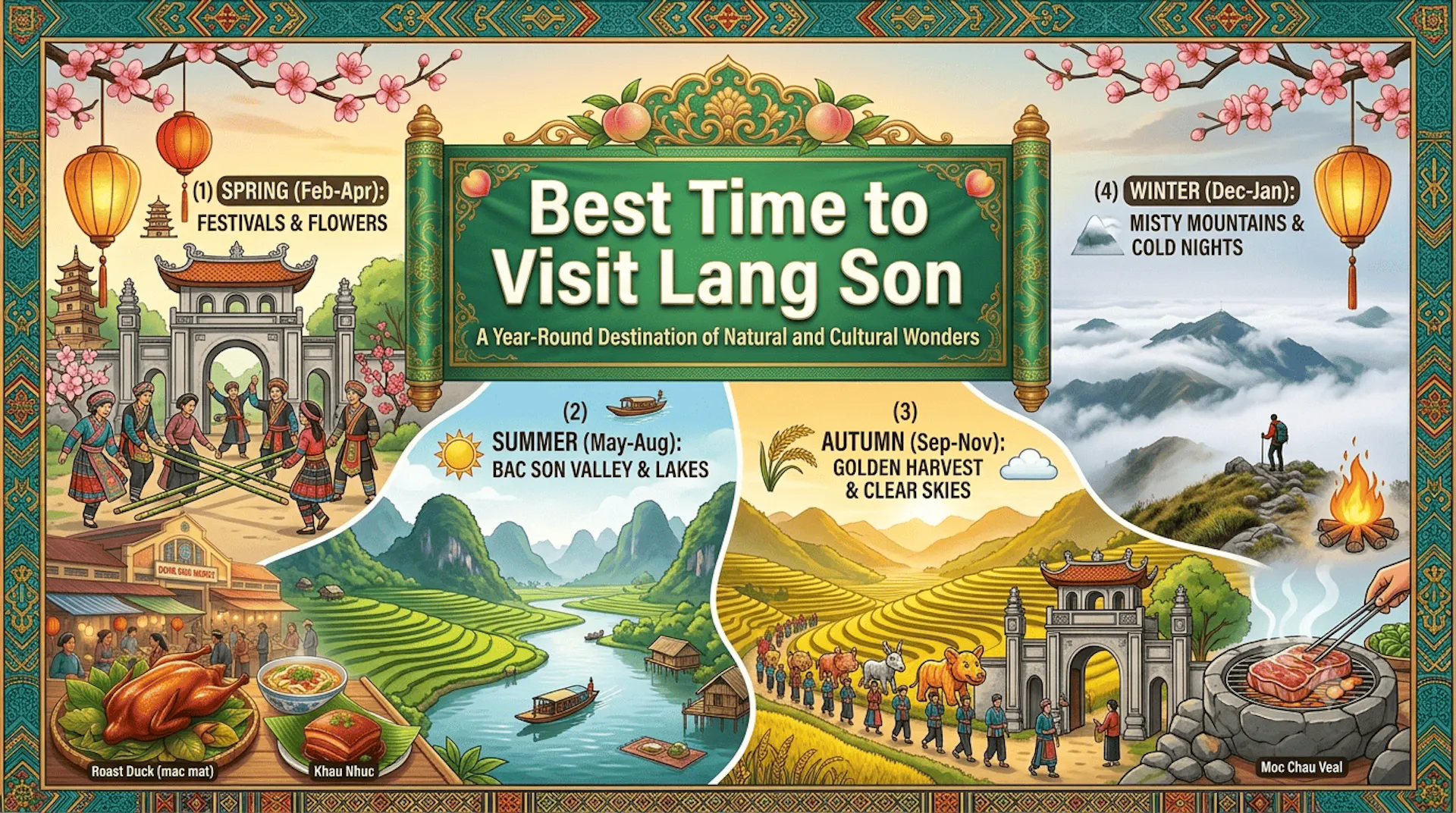
Lang Son is a year-round destination where each season offers a unique travel experience. Spring brings pleasant weather and vibrant festivals, summer showcases lush mountain landscapes, autumn provides cool temperatures perfect for sightseeing and trekking, while winter transforms Mau Son Mountain into one of Vietnam's rare places to experience frost and occasional snowfall. Whether you're visiting for cultural exploration, mountain adventures, or local cuisine, this guide helps you choose the best time to visit Lang Son based on weather, seasonal highlights, and travel preferences.
On this page
- Decoding the Frontier Climate: The Best Time to Visit Lang Son
- Aligning Travel with the Cultural & Ecological Calendar: The Best Time to Visit Lang Son
- Timing for Niche Experiences: The Best Time to Visit Lang Son
- Practical Field Logistics & Travel Etiquette
- Finalizing Your Frontier Expedition: The Best Time to Visit Lang Son
To cross the geographic threshold into the "Northern Gateway" of Vietnam is to expose oneself to the dramatic frontier meteorological dynamics of Lạng Sơn province. This is a highly complex borderland territory where the violent collision of brutal northern cold fronts and humid, low-altitude valley air dictates a distinct, exceptionally moody highland atmosphere throughout the calendar year. Identifying the best time to visit Lang Son requires far more than casually consulting a generic regional forecast; it demands a strategic, highly informed decision that effectively balances the physical desire for optimal trekking conditions on the high-altitude peaks, the necessity of comfortable weather for introspective heritage exploration, and the logistical reality of navigating the province’s unique borderland environmental rhythms. When planning a trip to Lang Son, the sophisticated traveler must understand that this specific region absolutely refuses to accommodate a static, inflexible itinerary. The landscape dictates the experience. Whether you specifically seek the frost-covered, alpine isolation of a severe winter expedition or the vibrant, blossom-filled valleys that characterize the spring festival season, your timing determines the absolute depth of your ethnographic and ecological immersion. This master guide provides the definitive meteorological and cultural framework required to expertly master this formidable, historically charged northern frontier.
Decoding the Frontier Climate: The Best Time to Visit Lang Son
The Festival Spring (February – April) - The Cultural Prime
For the professional travel journalist and the cultural anthropologist, the period spanning from February through April functions as the undisputed cultural prime of the province. This specific season is completely characterized by the Lễ hội xuân (spring festival) cycle, a temporal window defined by a persistently mild, damp climate. The traditional mưa phùn (drizzling spring rain) blankets the vast limestone valleys in a heavy, lingering mist, creating a saturated, deeply evocative atmospheric condition that perfectly accentuates the lush, newly germinated landscape. This is the premier window for visiting local temples and witnessing traditional music performances, particularly the highly revered, UNESCO-recognized Hát Then rituals performed by the indigenous Tày and Nùng ethnic communities. The damp chill of the spring air forces communal gatherings indoors around wood-fired hearths, providing the most authentic, unfiltered time to interact with ethnic communities. The heavy humidity actively enhances the olfactory landscape of the border towns, carrying the rich scent of roasting meats and burning incense across the ancient temple courtyards, establishing a sensory environment that is profoundly tied to the ancestral, spiritual rhythms of the borderland.
The Stable Summer & Harvest (May – August)
As the persistent spring moisture finally recedes, the province officially enters the stable summer harvest cycle. While the lowlands of Vietnam often suffer under oppressive, inescapable thermal loads during these months, the significant elevation of the northeastern frontier provides a necessary, scientifically measurable relief. Detailed Lang Son weather guide metrics indicate that the higher altitudes of the province maintain a remarkably temperate profile, offering an ideal escape from the suffocating urban heat of the capital. Rather than viewing this period as an off-season, the informed traveler recognizes the summer as the definitive period of maximum ecological vitality. The forests undergo aggressive, rapid growth, transforming the skeletal karst ridges into impenetrable walls of dense green canopy. This period aligns perfectly with the Mùa mận (plum season) and other vital regional fruit harvests that define the agricultural economy of the border zones. To explore the agricultural corridors during this harvest is to deeply engage with the economic lifeblood of the province, observing exactly how the local populations harvest regional fruits and skillfully navigate the intense, high-energy cycles of summer border trade under clear, sun-drenched skies.
The Winter Peak (November – January) - The Mau Son Alpine Window
The arrival of the winter monsoon forces a dramatic, severe transformation across the northern frontier, definitively establishing the best season for Mau Son mountain exploration. Between November and January, the province is subjected to intense, punishing cold fronts pushing directly down from the Asian landmass, establishing the Mùa đông giá rét (bitterly cold winter). For the alpine adventurer and the climate researcher, this meteorological severity is not a deterrent but a primary, highly sought-after objective. The famous "Mau Son Frost" phenomenon occurs strictly when high humidity converges with sub-zero temperatures at elevations exceeding 1,500 meters, coating the ancient French colonial ruins and the surrounding pine forests in a thick, crystalline layer of ice. Understanding the absolute meteorological necessity of this specific climatic window is crucial for those seeking a dramatic, alpine landscape experience that is exceptionally rare in a tropical nation. While the low-altitude valleys remain cold and stark, scaling the frosted peaks offers a singular, visually authoritative environment. This specific season demands absolute physical preparedness and deeply rewards the traveler who prioritizes stark, monumental scenery over conventional climate comfort, solidifying the winter peak as the definitive period for rugged, high-altitude border exploration.
Aligning Travel with the Cultural & Ecological Calendar: The Best Time to Visit Lang Son
Pilgrimage & Festival Energy
The annual Lang Son festival calendar heavily dictates the social and spiritual pulse of the province, demanding precise, calculated alignment from the culturally motivated traveler. The spring months unleash a massive wave of pilgrimage energy, transforming normally quiet historical sites into bustling, chaotic epicenters of veneration and communal identity. Elaborate folk festivals, such as the famous Ky Lua Festival, heavily influence the logistical reality of the province, occupying public spaces and straining local accommodations. For travelers who actively wish to participate in communal traditions and absorb the intense, collective energy of the border communities, aligning your itinerary with these specific lunar calendar events is absolutely essential. Conversely, for the historian who requires silent, introspective study, it is a strategic necessity to intentionally avoid these peak dates. To investigate the Mac Dynasty Citadel or the deeply spiritual Tam Thanh Cave complex without the severe interference of massive crowds, one must carefully calculate the lunar calendar, ensuring an isolated, profound experience amidst the ancient stone fortifications and calligraphy-carved grottoes.
The Shoulder Season (September & October)
The brief, highly coveted shoulder season of September and October operates as the ultimate, best-kept secret for advanced Lang Son seasonal travel. Following the recession of the heavy summer rains and preceding the violent onset of the winter cold fronts, this transitional autumn period provides incredibly stable, moderate temperatures. The atmospheric clarity during these specific months is unparalleled, stripping away the heavy, obscuring humidity to reveal the stark, jagged geometry of the limestone karst topography in razor-sharp detail. This precise meteorological balance provides the ultimate conditions for travelers who need to seamlessly move between border markets and remote historical sites without facing any extreme weather interference. The roads dry out completely, ensuring significantly safer vehicular transit through the steep, treacherous mountain passes, and the comfortable ambient temperature allows for extended, multi-hour trekking expeditions across the provincial ridges without the risk of severe thermal exhaustion.
Ecological Events
To truly master the regional geography, one must deliberately synchronize their expedition with the specific ecological events that dictate the seasonal rhythms of the northern frontier forests. As the cool autumn takes hold, the dense foliage of the provincial borderlands begins to undergo a subtle but remarkably beautiful transition, slowly shifting from the aggressive, saturated greens of summer to a much more muted, highly textured palette of golds, deep reds, and browns. To observe seasonal ecological shifts during this specific window is to add a critical layer of scientific and botanical depth to your overall understanding of the province's biodiversity. The changing climate directly signals the migration of specific avian species across the international border corridors and strictly dictates the foraging patterns of the local ethnic communities who depend entirely on the forest for medicinal herbs and vital winter food reserves.
Timing for Niche Experiences: The Best Time to Visit Lang Son
Borderland Navigation Logistics
For the economic historian or the ethnographic journalist, mastering borderland navigation logistics requires an acute, highly researched awareness of the provincial trading calendar. The most authoritative time to visit the Tân Thanh border market and other critical international trade hubs is precisely during the late autumn and early winter months, right before the massive, overwhelming surge of the Lunar New Year cross-border commerce officially begins. During this specific window, the expansive markets are fully stocked with a vast, chaotic array of regional goods, agricultural products, and international imports, yet the trade volume has not yet reached the unmanageable, frenetic peak of the immediate pre-holiday rush. Furthermore, the dry environmental conditions of these months guarantee optimal road integrity, which is absolutely vital when successfully coordinating private transfers and heavy vehicular movement along the steep, winding supply routes that connect the lowland city centers directly to the mountainous international border gates.
Optimal Photography Windows
The rigorous pursuit of high-level landscape documentation in Lạng Sơn relies entirely on successfully exploiting specific, elevation-influenced lighting conditions. The complex karst mountains and the weathered, historical stone ramparts of the province absolutely require the soft, directional light of the transitional seasons to fully reveal their true textural depth. The golden hour during the autumn months—specifically the short, highly fleeting window immediately following dawn and just prior to dusk—provides an extraordinarily dramatic contrast against the lingering provincial mist that routinely settles deep in the valleys. To photograph the ancient citadels during this exact temporal window is to effectively capture the stark, imposing geometry of the military architecture cutting through the atmospheric haze, resulting in visual documentation that possesses true, professional-grade gravitas and historical weight.
Contemplative Heritage Visits
For the dedicated scholar requiring completely undisturbed access to the province’s profound defensive history, timing is largely a matter of strict, calculated avoidance. The absolute optimal strategy is to deliberately conduct contemplative heritage visits during the off-peak, mid-week hours of the deep winter or late summer months. By actively avoiding the massive weekend tourist surges and the chaotic national holiday periods, you successfully secure solitary, deep connections with the region’s long-standing military history. Standing completely alone upon the battle-scarred remnants of the Chi Lang Pass or slowly walking the deserted, echoing corridors of the border fortresses without any modern distraction allows the sheer historical weight of the ancestral sacrifices and the strategic brilliance of the northern defense networks to truly, deeply resonate within the silent landscape.
Practical Field Logistics & Travel Etiquette
Executing a seamless and authoritative expedition through this incredibly rugged frontier demands rigorous, uncompromising preparation regarding both physical equipment and deep cultural intelligence. Your clothing strategy must remain entirely adaptable to the severe, highly unpredictable frontier meteorological dynamics. For those bold travelers planning to conquer the Mau Son peaks during the brutal winter freeze, technical, multi-layered winter gear—including heavy thermal insulation, windproof outer shells, and high-traction alpine footwear—is absolutely mandatory to prevent severe hypothermia in the sub-zero wind chill. Conversely, successfully navigating the humid, densely packed temple grounds during the spring festival transitions absolutely requires light, highly breathable layers that can effectively manage persistent moisture and sudden, uncomfortable thermal shifts.
Regarding transit nuances, heavily relying on local public transportation for deep, comprehensive provincial exploration is a significant logistical error. To efficiently navigate Lang Son’s diverse geography, securing professional, private vehicle transport is the only truly reliable method available. A dedicated, highly experienced local driver safely bridges the massive geographical gap between the bustling, low-altitude city trade hubs and the isolated, treacherous northern alpine zones, ensuring absolute safety on the steep, unpredictable mountain passes that frequently succumb to sudden landslides or heavy, blinding fogs.
Finally, your cultural conduct directly dictates the ultimate success of your ethnographic integration into the region. You must observe strict solemnity when entering spiritual sites or silently observing daily border rituals. The historical temples and the communal spaces of the ethnic minorities are fully functional, deeply sacred environments; speaking in respectfully hushed tones, dressing conservatively, and always requesting explicit permission before photographing local residents or private religious ceremonies are absolute, non-negotiable requirements for any respectful traveler operating within these historically charged, highly traditional border communities.
Finalizing Your Frontier Expedition: The Best Time to Visit Lang Son
Ultimately, successfully selecting the best time to visit Lang Son hinges entirely on your specific ethnographic, historical, and geographical objectives. The deeply atmospheric, damp spring months offer unparalleled cultural immersion for the dedicated historical pilgrim, while the brutal, freezing winter peak provides the ultimate, frost-covered challenge for the highly resilient alpine adventurer. By intimately understanding these incredibly complex meteorological and cultural rhythms, you secure a profound, deeply authoritative experience along Vietnam’s northernmost threshold. Which unique seasonal style—the vibrant, festival-driven cultural trek through the humid valleys or the moody, ice-laden mountain expedition across the frozen peaks—are you most prepared to explore first on your upcoming, definitive borderland journey?
Read more: Lang Son Travel Guide

By Roy Trinh
Editor
Roy Trinh is a travel writer and destination expert at Go Visit Vietnam, dedicated to helping travelers discover the beauty, culture, and diversity of Vietnam. Through well-researched travel guides, practical itineraries, local insights, and authentic recommendations, Roy shares valuable information to inspire memorable journeys across the country. From vibrant cities and breathtaking landscapes to regional cuisine and cultural heritage, every guide is created to help visitors experience Vietnam with confidence and curiosity.
Frequently Asked Questions About the Best Time to Visit Lang Son
What is the best time to visit Lang Son?
The best time to visit Lang Son is from September to November and March to May, when temperatures are mild, rainfall is limited, and the weather is ideal for sightseeing, hiking, and exploring the province's natural and historical attractions.
When is the best time to visit Mau Son Mountain?
Mau Son Mountain is especially beautiful from late autumn to winter (November–February). During the coldest months, visitors may experience frost and, on rare occasions, snowfall—making it one of the few places in Vietnam where this phenomenon occurs.
Is summer a good time to visit Lang Son?
Yes. Summer brings lush green landscapes, vibrant mountain scenery, and refreshing highland weather in elevated areas. Although occasional rain showers are common, it remains a great season for nature lovers and photographers.
Can I visit Lang Son during winter?
Absolutely. Winter offers cool temperatures, misty mountain views, and unique seasonal experiences at Mau Son Mountain. Visitors should bring warm clothing, especially if planning to explore higher elevations.
Can I visit Lang Son all year round?
Yes. Lang Son is a year-round destination, with each season offering different experiences—from spring festivals and blooming landscapes to cool autumn hikes and memorable winter mountain scenery.
Advertising box