
Best Time to Visit Vinh Long
Vinh Long is a year-round destination where every season offers a different perspective of the Mekong Delta. The dry season provides ideal weather for river cruises, cycling, and sightseeing, while the rainy season transforms fruit orchards into lush green landscapes filled with seasonal produce. Visitors can enjoy tropical fruit harvests, cultural festivals, peaceful waterways, and authentic countryside experiences throughout the year. This guide helps you choose the best time to visit Vinh Long based on weather, seasonal activities, and local events.
On this page
- Decoding the Mekong’s Seasonal Rhythm for the Best Time to Visit Vinh Long
- A Month-by-Month Logistical Guide to the Best Time to Visit Vinh Long
- Timing Niche Experiences During the Best Time to Visit Vinh Long
- Practical Field Logistics for the Best Time to Visit Vinh Long
- Final Verdict on the Best Time to Visit Vinh Long
The Mekong Delta operates on a biological and hydrological clock that fundamentally ignores the rigid constraints of a standard calendar year, demanding instead that travelers adapt to its shifting, elemental rhythms. This immense, sprawling network of alluvial plains and deep mangrove estuaries is in a perpetual state of environmental transition, oscillating dramatically between the dry, golden, sun-baked months and the vibrant, overwhelmingly water-rich flooding season. Deciding on the best time to visit Vinh Long is not merely a matter of consulting a meteorological chart to avoid afternoon rain showers; it is a profound strategic decision about aligning your expedition with the very pulse of the Mekong’s agricultural harvests and seasonal aquatic cycles. Positioned exactly at the heart of the delta, this province is completely dictated by the unpredictable whims of the Co Chien and Tien rivers. To experience this region authentically requires a deep understanding of its ecology. Whether you are an ethnographic researcher looking to document the archaic riverine lifestyle, a culinary anthropologist tracking the ripening of endemic tropical fruits, or a structural observer fascinated by the climate-responsive architecture of the deeply rural south, choosing your arrival window dictates the entirety of your experience. This exhaustive master guide will decode the complex environmental mechanics of the province, ensuring your journey perfectly synchronizes with the natural phenomena you wish to witness.
Decoding the Mekong’s Seasonal Rhythm for the Best Time to Visit Vinh Long
To fully comprehend the logistical realities of traversing the delta, one must first dissect the two massive, opposing climatic forces that govern the region: the southwest monsoon, which drives the intense summer rains, and the northeast monsoon, which brings a prolonged, arid stability. Understanding these hydrological shifts is the foundational key to unlocking the true potential of the province.
The Peak Orchard Season (Summer: May – August)
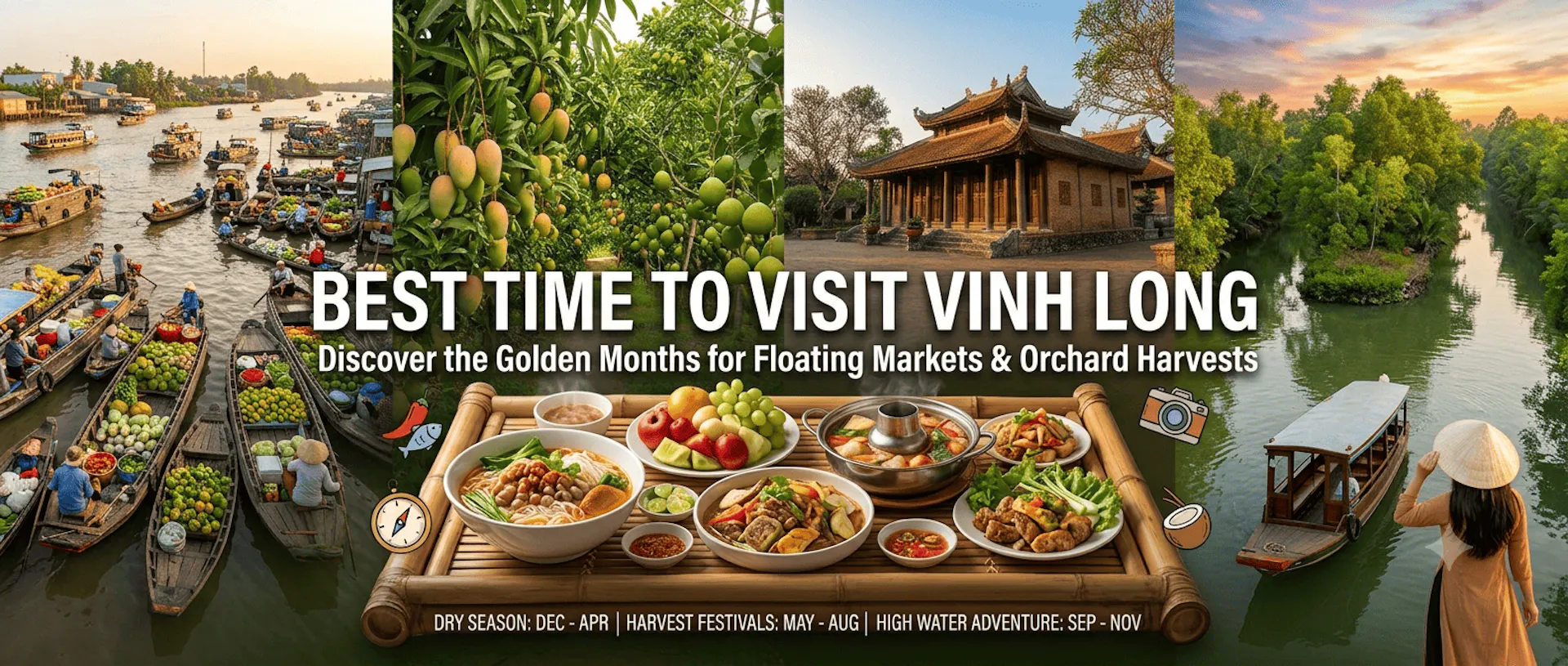
For travelers entirely motivated by gastronomy and agricultural abundance, the undisputed best season for Vinh Long orchards occurs during the sweltering, humid summer months spanning from May to August. During this period, the localized tropical ecosystem undergoes a massive, aggressive biological explosion, fueled by the onset of the monsoon rains and the relentless equatorial heat. This specific window is famously known among locals as the season of Trái cây mùa hè (summer fruits). The deeply fertile, silt-heavy soils of the Cù lao (riverine islets), particularly the renowned An Binh islet, become incredibly heavily laden with a staggering variety of ripening produce. The sprawling, shaded orchards transform into hyper-active agricultural zones as farmers work frantically to harvest massive yields of spiky rambutans, giant green-skinned pomelos, and the notoriously pungent, highly lucrative durian. The atmosphere is intensely humid, and the air hangs thick with the intoxicating, fermenting scent of fallen fruit. This is the premier time for travelers who want to engage in genuine, unvarnished farm-to-table experiences, as you can walk directly beneath the heavy tropical canopy and consume intensely sweet, sun-warmed fruit mere seconds after it has been severed from the branch.
The Flooding Season (September – November)
As the summer draws to a close, the province undergoes a dramatic, mesmerizing hydrological transformation known locally as Mùa nước nổi, which translates to the "floating water season." From September through November, the monumental volume of glacial meltwater surging down from the distant Tibetan plateau finally collides with the accumulated regional monsoon rains, causing the Mekong River to violently breach its standard banks. Vinh Long flooding season travel is absolutely not for the faint of heart or those seeking sterile, dry-land comfort; rather, it is the ultimate, unparalleled temporal window for hardcore eco-adventurers and landscape photographers seeking to capture the authentic, water-based lifestyle of the southern frontier. The rising alluvial overflow completely inundates the lower agricultural plains, transforming the landscape into a vast, navigable inland sea that glows with a brilliant, hyper-saturated green hue due to the sudden, explosive bloom of water hyacinths and duckweed. Navigating the province during these months requires entirely abandoning terrestrial transit in favor of small wooden rowboats, allowing you to glide silently through deeply flooded forests and observe a unique, temporary ecosystem where aquatic life thrives and the local population seamlessly adapts their daily routines to the rising tides.
The Dry and Breezy Months (December – April)
Following the chaotic retreat of the floodwaters, the region settles into a prolonged period of meteorological stability driven by the dry northeast monsoon. Spanning from late December through the end of April, these months offer the most logistically comfortable environment for exhaustive physical exploration. The skies clear into a brilliant, piercing blue, the oppressive humidity drops to a highly manageable level, and the muddy, impassable rural pathways harden into solid dirt tracks. This arid, breezy window is unquestionably the best period for undertaking extensive cycling tours across the sprawling networks of the islets. Furthermore, it is the optimal season for architectural exploration. Without the constant threat of torrential downpours, visitors can spend hours meticulously studying the intricate spatial planning of the region's ancient historical homes. These fascinating structures are brilliant case studies in environmental adaptation, beautifully showcasing a localized architectural fusion where imposing, rigid Neo-classical French colonnades are seamlessly integrated with deeply traditional, naturally ventilated Tropical timber truss systems, demonstrating an early, highly successful iteration of organic modernism adapted specifically for the extreme delta climate.
A Month-by-Month Logistical Guide to the Best Time to Visit Vinh Long
Because the delta completely rejects the concept of a static landscape, plotting an itinerary requires abandoning generalized assumptions and embracing a highly specific, chronological approach to travel planning. By analyzing the nuanced shifts in the Vinh Long weather by month, you can perfectly align your physical transit methods and cultural expectations with the realities of the ground.
The early months of the year, spanning from January to April, serve as the definitive cultural and historical window for the province. During this period, the receding waters leave behind a fresh, nutrient-dense layer of alluvial silt, and the ambient temperature remains surprisingly cool, particularly in the early mornings and late evenings. This stable, dry weather creates the absolute perfect conditions for engaging in rigorous terrestrial exploration without the immediate threat of heat exhaustion. Travelers can comfortably spend entire days cycling across the sprawling island networks, visiting deeply ornate Theravada Buddhist temples, and examining the complex timber joinery of the ancient land-owning estates. The lack of atmospheric haze during these months also provides unparalleled optical clarity, making it an exceptional time for structural observation and historical documentation, allowing you to truly appreciate the intricate, mother-of-pearl inlay work and the heavy masonry that define the region's historical wealth.
As the calendar transitions into the mid-year cycle, stretching from May to August, the province rapidly morphs into an intense, hyper-active gastronomic window. The temperatures skyrocket, the humidity becomes an almost physical weight upon the chest, and the skies darken rapidly in the mid-afternoon to deliver violent, incredibly brief torrential thunderstorms. However, this aggressive climatic shift is precisely what triggers the crescendo of the agricultural harvest, making it the busiest, most vibrant, and most economically vital time for orchard tourism. The narrow, concrete paths of the islets become completely choked with heavy motorbikes transporting massive woven baskets of freshly harvested tropical fruits toward the mainland wholesale markets. To travel during this window is to accept the sweat and the rain in exchange for the unparalleled sensory experience of consuming the delta's absolute finest, most flavorful produce directly at the source of its cultivation.
Finally, the year concludes with the profound nature-immersion window, occupying the months from September to December. This is the period of dramatic hydrological transition, where the rising waters of the Mekong River completely rewrite the topography of the province. The focus of daily life fundamentally shifts from land-based agriculture to aquatic survival and harvesting. The hardened cycling paths of the dry season are frequently submerged, rendering bicycles temporarily useless and elevating the traditional wooden rowboat to the status of absolute necessity. This is a time of quiet, reflective beauty, where the chaotic energy of the summer harvest is replaced by the slow, deliberate rhythm of fishermen casting massive, circular nets into the swollen, silt-heavy currents, capturing the essence of an environment that has learned to thrive in a state of perpetual inundation.
Timing Niche Experiences During the Best Time to Visit Vinh Long
To elevate your expedition from a standard tourist visit to a profound ethnographic and sensory immersion, you must synchronize your specific personal interests with the highly localized, micro-seasonal phenomena that occur sporadically throughout the year across the province.
Timing Your Orchard Immersion
If your primary objective is to engage with the legendary agricultural output of the Miệt vườn, you must treat the fruit cycles with the same rigorous scrutiny a meteorologist applies to tracking a storm front. The fruiting seasons in the delta are incredibly specific and highly susceptible to slight temperature fluctuations. For example, the highly coveted, aggressively tart Năm Roi pomelo operates on a specific harvest schedule that requires direct communication with local hosts to ensure you arrive during the peak picking weeks. The most culturally immersive way to experience this is to secure a vantage point that allows you to quietly observe the chaotic logistics of the harvest. Imagine sitting in a meticulously designed, highly optimized thirty-square-meter open-air riverside cafe, sipping a potent, slow-dripped robusta coffee over crushed ice, while watching dozens of wooden transport boats being rapidly loaded to the brim with bright green citrus under the scorching midday sun. This level of authentic engagement requires traveling exactly during the peak summer months of June and July, when the sheer volume of agricultural output completely overtakes the daily routine of the local population.
Photography and the Golden Hour
For travelers dedicated to capturing the visual essence of the delta, the seasonal changes in atmospheric humidity and the shifting angle of the equatorial sunlight drastically impact the quality of photography across the islets. During the dry months of February and March, the air is frequently filled with a fine, agricultural dust, creating a heavy, atmospheric haze that diffuses the sunlight and casts a muted, sepia-toned glow over the ancient brick kilns and historical homes. Conversely, the summer months offer moments of staggering, razor-sharp optical clarity immediately following a violent afternoon thunderstorm, when the rain washes the atmosphere entirely clean. To truly capture the fleeting, highly volatile golden hour as the sun sinks rapidly into the vast expanse of the Co Chien river, relying on advanced mobile hardware is essential. Utilizing the highly sophisticated, physical two-stage manual exposure controls and the expansive dynamic range of a device like the Sony Xperia 1 Mark VI allows you to flawlessly freeze the chaotic motion of the water and perfectly expose the deep, shadowed silhouettes of the mangrove roots against the brilliant, metallic sheen of the sunset, achieving professional-grade environmental documentation without the burden of heavy DSLR equipment.
Avoiding the Peak Rush
Achieving a state of authentic, unvarnished interaction with the local villagers requires a highly strategic approach to avoiding the crushing waves of domestic tourism that periodically flood the province. You must exercise extreme caution when planning around major national holidays, specifically the deeply chaotic Lunar New Year (Tet) in late January or early February, and the consecutive public holidays surrounding Reunification Day on April 30th. During these specific windows, the quiet, meditative atmosphere of the islets is completely shattered by massive influxes of urban travelers seeking a brief rural escape. Local transit networks become severely overwhelmed, the finest accommodations are booked months in advance, and the genuine, slow-paced hospitality of the orchard owners is replaced by a frantic, highly commercialized rush. To guarantee a deeply personal, observational experience where you can engage in long, meaningful conversations with local artisans and farmers, it is absolutely critical to schedule your field excursions strictly during the mid-week days of the shoulder seasons, actively avoiding any overlap with the national vacation calendar.
Practical Field Logistics for the Best Time to Visit Vinh Long
Translating your seasonal knowledge into a functional, comfortable reality on the ground requires adhering to a strict set of Mekong Delta travel tips specifically tailored to the harsh, unforgiving environmental conditions of the extreme south. Your wardrobe and your chosen mode of transit must dynamically adapt to the specific month of your arrival.
If you choose to brave the intense humidity and the staggering agricultural wealth of the summer harvest season, your packing strategy must prioritize extreme thermal regulation. The equatorial heat trapped beneath the dense tropical canopy is oppressive; therefore, wearing loose-fitting, highly breathable fabrics such as pure linen or advanced moisture-wicking synthetics is an absolute necessity to prevent severe heat exhaustion. Conversely, if you arrive during the mesmerizing, water-logged months of the flooding season, your focus must instantly shift toward waterproofing. Carrying lightweight, rapidly deployable rain gear and securing all sensitive electronic equipment within heavily sealed dry bags is critical, as you will be spending the vast majority of your time sitting inches above the waterline in small, highly unstable wooden rowboats.
The nuances of local transit are equally dictated by the calendar. During the arid, breezy months of the dry season, the single-gear bicycle reigns supreme as the undisputed king of transport, allowing you to silently and efficiently navigate the sprawling, hardened concrete pathways that weave endlessly through the isolated interiors of the riverine islets. However, as the autumn floodwaters rise and completely submerge these terrestrial routes, you must abandon the bicycle and rely entirely on the localized expertise of the xuồng ba lá boatmen. These shallow-draft vessels become the only viable method for penetrating the deeply flooded mangrove forests and accessing the isolated, stilted homes that suddenly find themselves completely surrounded by the relentless, expanding currents of the Mekong.
Final Verdict on the Best Time to Visit Vinh Long
Ultimately, determining the best time to visit Vinh Long is a highly subjective decision that hinges entirely upon your specific threshold for environmental intensity and your primary travel objectives. If your ultimate goal is to consume the staggering, unparalleled bounty of the tropical fruit harvest, you must submit to the intense, suffocating heat of the summer months. If you are a dedicated eco-adventurer seeking the surreal, hyper-saturated landscapes of a deeply flooded wilderness, the autumn high-water season is your absolute mandatory window. However, if your journey is driven by a desire for slow, comfortable cultural exploration and architectural study under clear, breezy skies, the dry spring months offer the perfect sanctuary. The Mekong Delta makes no apologies for its extreme seasonal shifts; it merely waits for you to decide how you wish to engage with its power. What will be the primary driver of your expedition into the heart of the south: the chaotic, sweet-scented frenzy of the summer orchard harvest, or the silent, mesmerizing navigation of the vast, muddy waters during the peak of the flooding season?
> Read more: Vinh Long Travel Guide

By Roy Trinh
Editor
Roy Trinh is a travel writer and destination expert at Go Visit Vietnam, dedicated to helping travelers discover the beauty, culture, and diversity of Vietnam. Through well-researched travel guides, practical itineraries, local insights, and authentic recommendations, Roy shares valuable information to inspire memorable journeys across the country. From vibrant cities and breathtaking landscapes to regional cuisine and cultural heritage, every guide is created to help visitors experience Vietnam with confidence and curiosity.
Frequently Asked Questions About the Best Time to Visit Vinh Long
What is the best time to visit Vinh Long?
The best time to visit Vinh Long is during the dry season from December to April, when the weather is sunny and comfortable for river cruises, cycling, orchard visits, and sightseeing throughout the Mekong Delta.
When is the best season to visit Vinh Long's fruit orchards?
Fruit orchards are most vibrant from May to August, when many tropical fruits such as rambutan, mangosteen, longan, and durian are in season. Visitors can enjoy fruit-picking experiences directly at local gardens.
Does Vinh Long have a rainy season?
Yes. The rainy season generally lasts from May to November, bringing short tropical showers that help nourish the province's orchards and rivers. Rain rarely lasts all day, so sightseeing and outdoor activities are still possible.
Is Vinh Long suitable for travel all year round?
Absolutely. Vinh Long offers enjoyable experiences throughout the year. The dry season is ideal for outdoor activities and boat tours, while the rainy season provides lush landscapes, seasonal fruits, and fewer tourists.
What activities are best during the dry season in Vinh Long?
The dry season is perfect for taking boat trips along the Mekong River, cycling through peaceful villages, exploring river islands, visiting traditional craft workshops, enjoying riverside cafés, and staying at local homestays while experiencing authentic Mekong Delta life.
Advertising box