
An Giang Food Guide
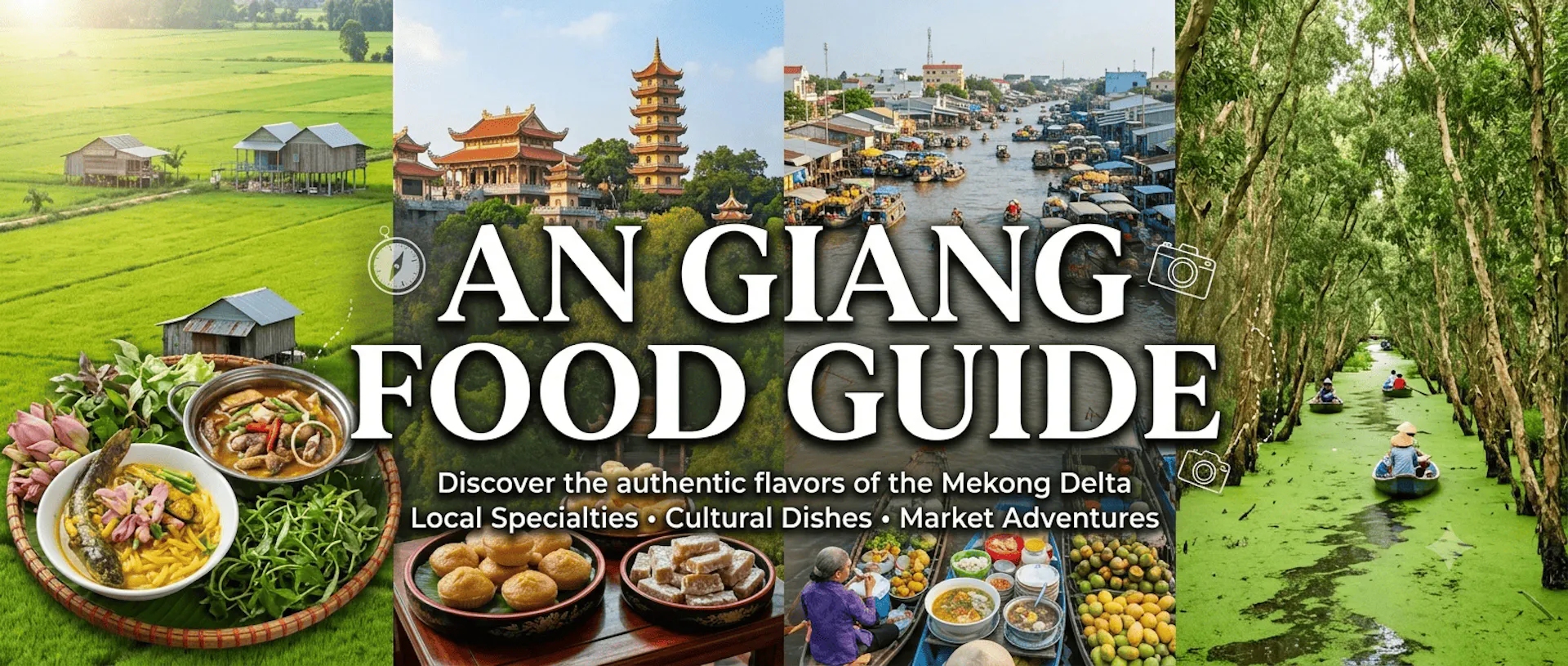
An Giang is one of the Mekong Delta's most exciting culinary destinations, where Vietnamese, Khmer, and Cham traditions come together to create distinctive local flavors. From famous fish hotpots and fermented fish specialties to palm sugar desserts, fresh river seafood, and vibrant street food, the province offers unforgettable dining experiences. Whether you're exploring local markets in Chau Doc or enjoying traditional family-run restaurants, this An Giang Food Guide introduces the must-try dishes and authentic tastes that define the region's rich culinary heritage.
On this page
The morning markets of An Giang do not merely open; they erupt in a sensory cacophony of aromatic intensity. As the sun crests the granite peaks of the Thất Sơn (Seven Mountains), the air fills with the sharp, citrus-forward aroma of crushed trái chúc leaves, the sweet, earthy scent of steaming bánh bò thốt nốt, and the unmistakable, pungent depth of seasoned mắm simmering in clay pots. An Giang is fundamentally distinct from the alluvial homogeneity found elsewhere in the Mekong Delta. Its cuisine is a vibrant, multi-layered tapestry woven from the river-dependent lifestyle of the Kinh, the rugged mountain-agricultural traditions of the Khmer, and the distinct, spice-rich culinary heritage of the Islamic Cham.
To follow this an giang food guide is to understand the geography of the borderland itself. Here, every dish acts as a historical artifact, reflecting centuries of trade, migration, and adaptation. Whether you are navigating the chaotic, narrow arteries of the Chau Doc market or seeking the smoky, rustic charcoal-grilled specialties of the Tri Ton highlands, you are participating in a living culture. This is not a guide for the faint of heart; it is a masterwork designed for the serious epicurean willing to look beyond tourist-friendly cafes and embrace the raw, bold, and complex flavors that define the true culinary identity of An Giang.
The Flavor Anchors: An Giang's Unique Native Ingredients
The foundational elements of the An Giang palate are intrinsically linked to the province’s topographical diversity. To grasp the region's cuisine, one must first understand its three primary ecological pillars.
1. The Kingdom of Mắm (Fermented Fish Paste)
Chau Doc is universally recognized as the "Kingdom of Mắm" in Vietnam. The annual Mùa nước nổi (the flooding season) serves as the catalyst for this craft, providing a massive, seasonal bounty of fresh river fish such as cá linh (Siamese mud carp) and cá sặc (snakeskin gourami). Local artisans clean these fish, layer them with high-quality sea salt in heavy ceramic jars, and leave them to ferment in dark, cool conditions for months. The resulting mắm is not merely a condiment; it is a pungent, deeply savory concentrate that provides the backbone for the province’s most iconic soups and dipping sauces.
2. The Palmyra Tree (Cây Thốt Nốt)
The cây thốt nốt (palmyra tree) is the silent, ubiquitous witness to An Giang’s rural landscape, particularly in the Tri Ton and Tinh Bien districts. Its influence on the local palate is absolute. From the fresh, translucent, jelly-like fruit often served in sweetened coconut milk to the thick, caramel-colored palm sugar rendered from the tree's sap, the palmyra provides the primary sweetening agent for local desserts and beverages. Unlike refined white sugar, palm sugar offers a complex, slightly smoky molasses profile.
3. Trái Chúc (Kaffir Lime of Bay Nui)
The trái chúc is a specialized citrus variety native to the harsh, mineral-rich soils of the Seven Mountains. With its intensely bumpy, thick rind and highly aromatic leaves, this citrus variety creates a flavor profile that renders standard limes obsolete. The essential oils extracted from the skin are incredibly potent, providing a sharp, acidic, and floral brightness that cuts through the fattiness of the region's abundant poultry and grilled meat dishes.
Legendary Local Dishes You Must Try
To navigate the best food in an giang, one must prioritize dishes that represent the harmonious friction between lowland river resources and highland agricultural practices.
1. Bún Cá Châu Đốc (Chau Doc Fish Noodle Soup)
This dish is a masterclass in regional balance. The golden, translucent broth is achieved by simmering the bones of wild snakehead fish with fresh turmeric root, which imparts both a vibrant hue and an earthy, warming character. The key protein is the expertly deboned snakehead fish, pan-seared to maintain structural integrity. Crucially, it must be served with bông điên điển (river sesbania flowers) and bông súng (water lilies), which provide a textural crunch and a delicate, slightly bitter counterpoint to the rich, savory broth. It is best enjoyed in the early morning hours near the Chau Doc market.
2. Gà Đốt Ô Thum (O Thum Burnt Chicken)
A celebrated Khmer specialty originating from the O Thum region of Tri Ton district, this dish is a testament to primitive, highly effective cooking techniques. Local free-range hill chicken is marinated in a mixture of garlic, lemongrass, and the essential oils of shredded lá chúc (kaffir lime leaves). The bird is placed in a heavy, sealed cast-iron pot and buried within a mound of hot charcoal. The slow-roasting process creates a perfectly caramelized, crispy skin while the interior meat remains succulent and deeply infused with the herbal aromatics of the mountain forest.
3. Bò Bảy Món Núi Sam (Sam Mountain Seven-Course Beef)
The cattle in the Seven Mountains region graze on rugged, wild terrain, resulting in meat that is significantly leaner and more flavorful than industrial beef. The Bò Bảy Món tradition highlights the versatility of this protein. A typical session includes seven distinct preparations: beef porridge, beef dipped in vinegar, grilled beef on tiles, beef wrapped in lá lốt (wild betel leaves), steamed beef meatballs, beef salad with raw vegetables, and beef stew. Each course serves to showcase a different texture and temperature profile of the beef.
4. Bánh Bò Thốt Nốt (Palmyra Sponge Cake)
This airy, bright-yellow sponge cake is the definitive An Giang sweet. It is crafted from a precise mixture of fermented rice flour, fresh coconut milk, and a generous portion of palm sugar extracted from the local cây thốt nốt. The cakes are traditionally steamed in individual portions wrapped in banana leaves, which imparts a subtle, herbal aroma. The resulting texture is honeycomb-like, spongy, and deeply aromatic, with the palm sugar providing a persistent, caramel-toned sweetness.
Cultural Crosscurrents: Cham and Khmer Comfort Foods
An Giang's cuisine is enriched by the unique culinary habits of its ethnic minority enclaves. These dishes reveal the true depth of the province's cultural diversity.
1. Tung Lò Mò (Cham Beef Sausage)
The Islamic Cham villages of Chau Phong produce this unique, Halal-compliant sausage. Tung Lò Mò is crafted from a precise ratio of lean beef, beef fat, and a proprietary blend of local spices, all stuffed into clean, small intestines. The sausages are sun-dried for a single day to firm the texture and then grilled over hot, smokeless coals. The resulting bite is delightfully tangy and savory, often served alongside fresh herbs and a dipping sauce infused with fermented soy.
2. Bánh Xèo Bông Điên Điển (Khmer-style Crispy Crepe)
While the standard Vietnamese bánh xèo is well-known, the An Giang version is uniquely tethered to the flooding season. The crepe batter, tinted with turmeric and coconut milk, is poured into a blistering-hot skillet and filled with pork belly, shrimp, and a massive handful of bông điên điển. These flowers, which only bloom during the peak of the high water, add a unique, herbaceous floral note that contrasts beautifully with the salty, crispy edges of the crepe.
The Strategic An Giang Gastronomic Matrix
Use the following breakdown to plan your culinary trajectory through the province:
- Bún Cá Châu Đốc (Kinh): Turmeric-forward, savory, floral | Chau Doc Market
- Gà Đốt Ô Thum (Khmer): Smokey, crispy-skinned, citrusy | O Thum, Tri Ton
- Bò Bảy Món Núi Sam (Kinh/Hoa): Tender, varied texture, savory | Sam Mountain, Chau Doc
- Bánh Bò Thốt Nốt (Khmer): Airy, caramel-sweet, aromatic | Tri Ton District
- Tung Lò Mò (Cham): Tangy, smoky, savory | Chau Phong Village
- Bánh Xèo Bông Điên Điển (Khmer): Crispy, floral, fatty | Tri Ton District
- Mắm Thái (Kinh): Pungent, sweet, spicy | Chau Doc Market
Food Safety & Market Navigation Tips
Navigating the Chau Doc market—the nerve center of the provincial food scene—requires both curiosity and common sense. The market is a sensory overload of pungent odors and frantic activity. When approaching the mắm stalls, accept that the aroma is part of the experience; it is the scent of deep fermentation, not spoilage.
If you are intimidated by language barriers, avoid the stalls with printed menus. Instead, seek out vendors with a single, bubbling pot of soup—this is a sign of high-turnover specialization. When ordering, simply point to the fresh ingredients displayed in glass cases (such as fresh herbs, raw fish, or vegetables). For hygiene, look for stalls with high local patronage and clean preparation surfaces. Always prioritize hot, freshly cooked items over pre-plated cold dishes, and carry your own portable sanitizer for pre-meal cleanliness.
Conclusion: An Giang as a Culinary Destination
Eating through An Giang is not a mere biological requirement; it is a profound cultural journey into the heart of the Mekong Delta. By exploring the vibrant intersections of Kinh, Khmer, and Cham culinary traditions, you gain a perspective on this border province that few standard itineraries allow. From the deep, savory complexity of mắm to the bright, citrusy notes of the Seven Mountains, this an giang food guide highlights a landscape defined by its flavors. Are you brave enough to dive into the deep, pungent world of the Chau Doc Kingdom of Mắm, or does the smoky, aromatic crunch of the O Thum Burnt Chicken call to your appetite?
> Read more: An Giang Travel Guide

By Roy Trinh
Editor
Roy Trinh is a travel writer and destination expert at Go Visit Vietnam, dedicated to helping travelers discover the beauty, culture, and diversity of Vietnam. Through well-researched travel guides, practical itineraries, local insights, and authentic recommendations, Roy shares valuable information to inspire memorable journeys across the country. From vibrant cities and breathtaking landscapes to regional cuisine and cultural heritage, every guide is created to help visitors experience Vietnam with confidence and curiosity.
Frequently Asked Questions About An Giang Food Guide
What food is An Giang famous for?
An Giang is famous for its rich Mekong Delta cuisine, including bun ca Chau Doc (fish noodle soup), lau mam (fermented fish hotpot), grilled freshwater fish, palm sugar desserts, and a variety of dishes influenced by Khmer and Cham culinary traditions.
Where can I try authentic local food in An Giang?
The best places to enjoy local food include Chau Doc City, Long Xuyen City, traditional markets, riverside restaurants, and family-owned eateries. These locations offer freshly prepared regional specialties using ingredients sourced from the Mekong Delta.
Are there halal food options in An Giang?
Yes. Thanks to the province's Cham Muslim community, An Giang offers a number of halal restaurants and food stalls, particularly around Chau Doc and Cham villages, serving traditional Cham dishes and halal-certified meals.
What is the best souvenir food from An Giang?
Popular edible souvenirs include palm sugar products, dried fish, fermented fish paste (mam), local rice products, traditional cakes, and regional spices. Many visitors also purchase local specialties from Chau Doc Market to take home.
Is An Giang a good destination for food lovers?
Absolutely. An Giang offers one of the Mekong Delta's most diverse culinary scenes, blending Vietnamese, Khmer, and Cham influences. From bustling street food markets to traditional home-style cooking and unique regional specialties, food lovers will find plenty of authentic flavors to explore throughout the province.
Advertising box