
Bot Chien Recipe: How to Make Vietnamese Fried Rice Cakes
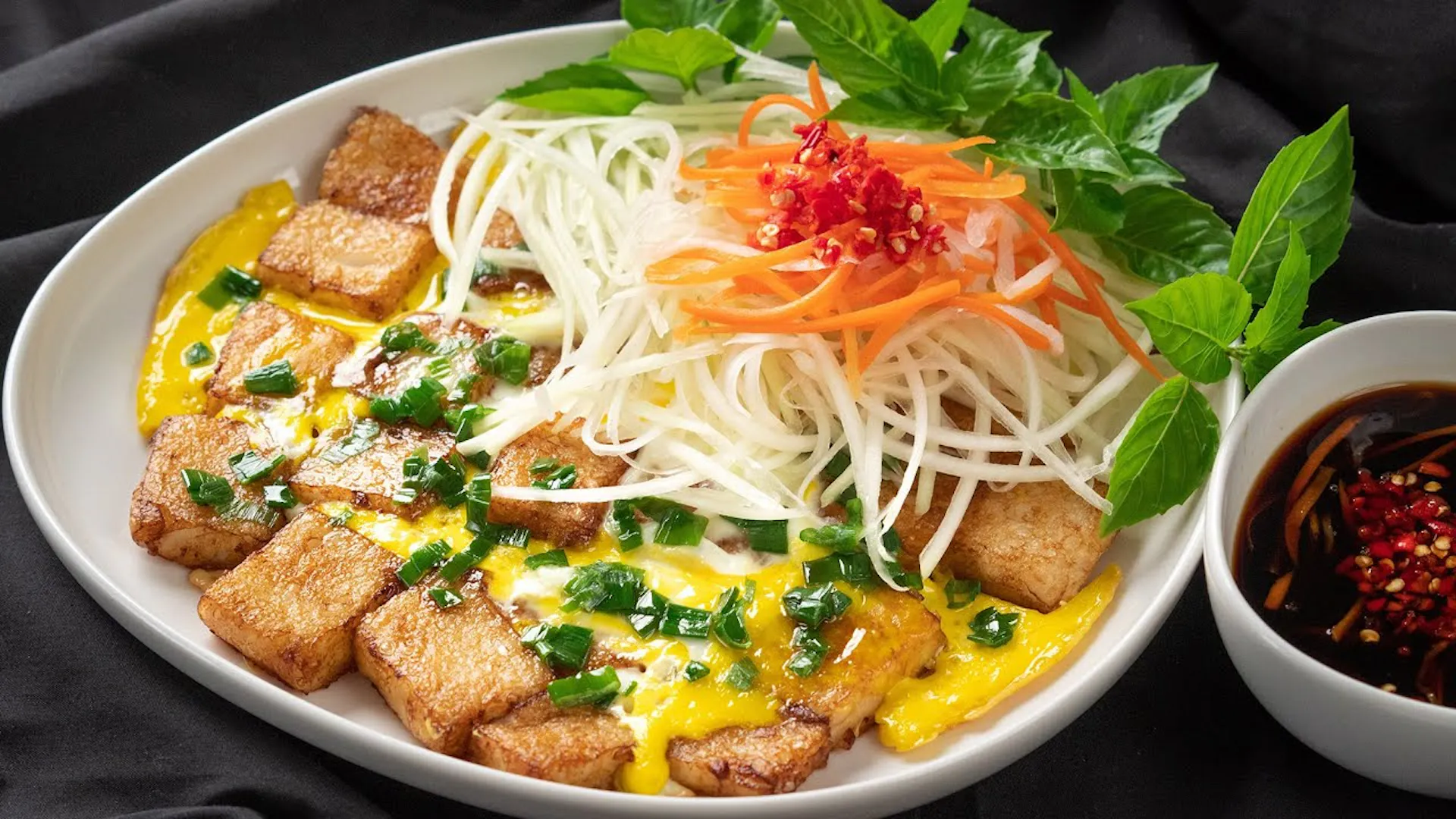
Bot Chien is a popular Vietnamese street food made from steamed rice flour cakes, fried until golden and crispy, then cooked with eggs and scallions. Served with tangy pickled green papaya and a savory soy dipping sauce, this Saigon favorite combines crispy edges, soft rice cakes, rich egg, and refreshing acidity. This easy Bot Chien recipe explains how to prepare the rice cake from scratch, fry it to perfection, and recreate the flavors of Vietnamese street food at home.
On this page
Bot Chien (bột chiên) is a beloved Vietnamese street food made from steamed rice flour cakes that are cut into bite-sized pieces, fried until golden and crispy, then cooked with eggs and scallions. Served with tangy pickled vegetables and a savory-sweet dipping sauce, this popular Saigon snack combines crispy edges, soft rice cakes, rich egg, and refreshing acidity.
This Bot Chien recipe shows you how to make the rice cakes from scratch, fry them until crisp, add eggs and scallions, and prepare the classic dipping sauce at home.
Quick Recipe
- Prep time: 20 minutes
- Chilling time: 4 hours
- Cook time: 15 minutes
- Total time: About 4 hours 35 minutes
- Servings: 2–3
- Cuisine: Vietnamese
- Course: Street food / Snack
Tip: The steamed rice cake needs to cool and firm up in the refrigerator for at least 4 hours. For the best texture, prepare it the day before.
What Is Bot Chien?
Bot Chien is a popular Vietnamese fried rice cake dish, especially associated with Ho Chi Minh City and southern Vietnamese street food culture.
The dish starts with a steamed mixture of rice flour, tapioca starch, water, and salt. Once chilled, the firm rice cake is cut into small cubes and fried in a hot skillet with oil until the outside becomes golden and crisp.
Eggs and chopped scallions are then added to the pan. The eggs cook around the crispy rice cakes, creating a savory layer that binds everything together.
Bot Chien is traditionally served with pickled green papaya and a sweet, salty, tangy dipping sauce. The combination of textures is what makes the dish so appealing: crispy on the outside, soft and chewy inside, rich from the egg, and bright from the pickles.
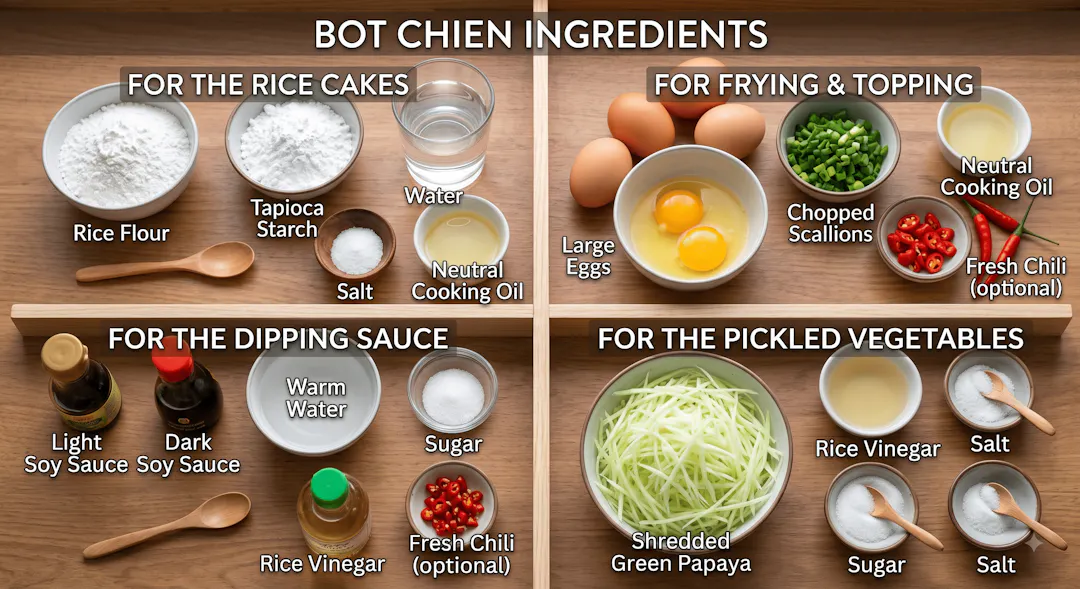
Bot Chien Ingredients
For the Rice Cakes
- 200 g rice flour
- 30 g tapioca starch
- 450 ml water
- ½ teaspoon salt
- 1 tablespoon neutral cooking oil
For Frying and Topping
- 2–3 large eggs
- ½ cup finely chopped scallions
- 2–3 tablespoons neutral cooking oil
- Fresh chili, optional
For the Dipping Sauce
- 3 tablespoons light soy sauce
- 1 tablespoon dark soy sauce
- 4 tablespoons warm water
- 1½ tablespoons sugar
- 1 tablespoon rice vinegar
- Fresh chili, optional
For the Pickled Vegetables
- 1 cup shredded green papaya
- 2 tablespoons rice vinegar
- 1 tablespoon sugar
- A small pinch of salt
How to Make Bot Chien
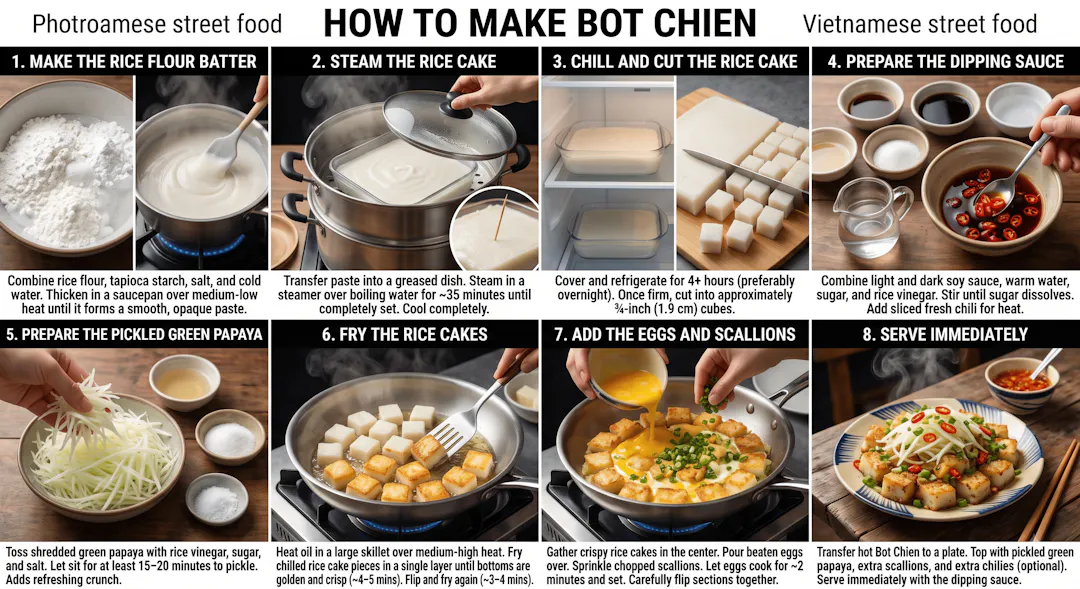
1. Make the Rice Flour Batter
Combine the rice flour, tapioca starch, salt, and cold water in a bowl. Whisk thoroughly until the mixture is smooth and free of lumps.
Pour the mixture into a saucepan and place it over medium-low heat.
Stir constantly with a spatula for about 3–5 minutes. The mixture will gradually thicken into a smooth, opaque paste.
Do not cook it until completely firm at this stage. The goal is to partially thicken the starch so the ingredients remain evenly distributed during steaming.
2. Steam the Rice Cake
Lightly grease an approximately 8-inch square heatproof dish with cooking oil.
Transfer the thickened rice flour mixture into the dish and smooth the surface.
Place the dish in a steamer over boiling water. Cover and steam for approximately 35 minutes, or until the cake is completely set.
Insert a toothpick or skewer into the center. It should come out without wet batter.
Remove the cake from the steamer and allow it to cool completely.
3. Chill and Cut the Rice Cake
Cover the cooled rice cake and refrigerate it for at least 4 hours, preferably overnight.
This step is important because chilled rice cake becomes firmer and easier to cut and fry.
Once cold, remove it from the dish and cut it into approximately ¾-inch cubes or rectangular pieces.
Try to keep the pieces similar in size so they cook evenly.
4. Prepare the Dipping Sauce
While the rice cake chills, prepare the dipping sauce.
Combine:
- light soy sauce
- dark soy sauce
- warm water
- sugar
- rice vinegar
Stir until the sugar completely dissolves.
Add sliced fresh chili if you enjoy spicy food.
The finished sauce should taste savory, slightly sweet, and pleasantly tangy. Adjust the sugar, vinegar, or soy sauce according to taste.
5. Prepare the Pickled Green Papaya
Place shredded green papaya in a bowl.
Add rice vinegar, sugar, and a small pinch of salt. Toss well and let the mixture sit for at least 15–20 minutes.
The pickled papaya adds a refreshing crunch and acidity that balances the fried rice cakes and eggs.
If green papaya is unavailable, shredded carrot or daikon can be used as an alternative.
6. Fry the Rice Cakes
Heat 2–3 tablespoons of neutral cooking oil in a large skillet over medium-high heat.
Once the oil is hot, arrange the chilled rice cake pieces in a single layer.
Avoid overcrowding the pan.
Fry the pieces for about 4–5 minutes, without moving them too much, until the bottoms become golden and crisp.
Turn the pieces and continue frying for another 3–4 minutes.
The outside should develop a golden crust while the center remains soft and chewy.
7. Add the Eggs and Scallions
Once the rice cakes are crispy, push them together in the center of the pan.
Beat 2–3 eggs in a small bowl and pour them over the fried rice cakes.
Immediately sprinkle the chopped scallions over the eggs.
Let the eggs cook for approximately 2 minutes, allowing them to set around the rice cakes.
For a more traditional street-food presentation, carefully flip sections of the rice cakes and egg together so the bottom becomes lightly browned.
Cook for another minute, then remove from the heat.
8. Serve Immediately
Transfer the hot Bot Chien to a serving plate.
Top with pickled green papaya and extra scallions.
Serve immediately with the soy-based dipping sauce.
For extra heat, add sliced fresh chili or chili sauce.
The best bite combines:
crispy rice cake + soft egg + scallions + pickled papaya + dipping sauce.
How to Make Crispy Bot Chien
Getting the rice cakes crispy is the most important part of the recipe.
Chill the rice cake thoroughly
Warm rice cake is soft and difficult to cut. Refrigerating it allows the starch structure to firm up.
Dry the rice cake before frying
If the surface is wet, carefully pat the pieces dry with paper towels before placing them in the skillet. This also reduces oil splattering.
Use enough heat
The pan should be properly heated before adding the rice cakes. If the skillet is too cool, the cakes can absorb excessive oil instead of developing a crisp crust.
Don't overcrowd the pan
Give each piece enough room to contact the hot surface. If necessary, fry in batches.
Don't flip too early
Allow the first side to develop a golden crust before turning the pieces.
Serve immediately
Bot Chien gradually loses its crispness as it cools, so it is best eaten straight from the skillet.
Common Bot Chien Mistakes
Why is my Bot Chien soggy?
The pan may not have been hot enough, or too many rice cake pieces may have been added at once. Overcrowding lowers the cooking temperature and prevents proper browning.
Why does my rice cake fall apart?
The cake may not have been steamed long enough or chilled sufficiently. Make sure it is completely set and refrigerated before cutting.
Why is my Bot Chien too chewy?
Too much tapioca starch can produce an overly elastic texture. Keep the tapioca starch at a relatively low proportion compared with the rice flour.
Why won't my rice cakes become crispy?
Make sure the rice cake pieces are cold and relatively dry before frying. Also allow the skillet to heat properly before adding them.
What Does Bot Chien Taste Like?
Bot Chien has a satisfying combination of savory, crispy, soft, rich, and tangy flavors. The fried rice cakes provide a mild, slightly chewy base with crisp golden edges. Eggs add richness and a soft texture, while scallions contribute a fresh aromatic flavor.
The pickled green papaya provides crunch and acidity, while the soy dipping sauce adds saltiness, sweetness, and umami. The result is a dish that is rich without tasting overwhelmingly heavy.
Ingredient Substitutions
You can adapt the recipe depending on what is available.
Rice flour
Use regular white rice flour rather than glutinous rice flour. Glutinous rice flour creates a much stickier texture and is not the traditional choice for Bot Chien.
Tapioca starch
Tapioca starch gives the rice cake some elasticity and helps it hold together during frying.
Green papaya
If you cannot find green papaya, shredded carrot, daikon, or a combination of both can be pickled instead.
Scallions
Scallions are traditional, but finely chopped Chinese chives can provide a similar aromatic element.
Soy sauce
Light soy sauce provides the main seasoning, while dark soy sauce contributes deeper color and flavor. You can reduce the dark soy sauce if you prefer a lighter dipping sauce.
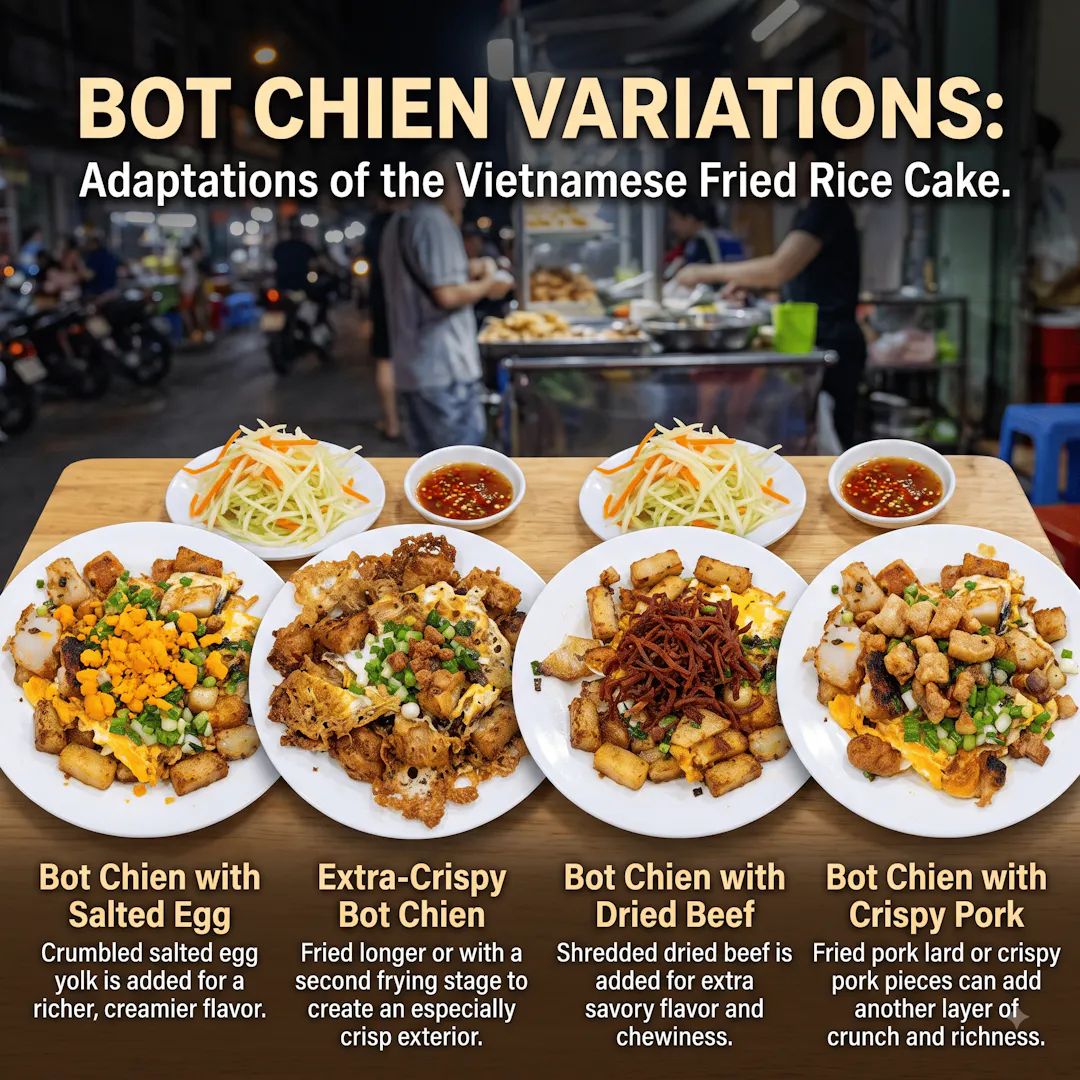
Bot Chien Variations
Although the classic version focuses on rice cakes, eggs, scallions, and pickled vegetables, modern Vietnamese street vendors offer many variations.
Bot Chien with Salted Egg
Crumbled salted egg yolk can be added to the fried rice cakes for a richer, creamier flavor.
Extra-Crispy Bot Chien
Some vendors fry the rice cakes longer or use a second frying stage to create an especially crisp exterior.
Bot Chien with Dried Beef
Shredded dried beef can be added for extra savory flavor and chewiness.
Bot Chien with Crispy Pork
Fried pork lard or crispy pork pieces can add another layer of crunch and richness. These variations are not necessary for a classic preparation, but they show how adaptable Vietnamese street food can be.
The Story Behind Bot Chien
Bot Chien is closely associated with the street-food culture of Saigon, now Ho Chi Minh City, particularly the food traditions of southern Vietnam.
The dish is also connected to the culinary influence of Chinese-Vietnamese communities in Chợ Lớn, the historic Chinatown area of Ho Chi Minh City. Similar fried rice cake dishes can be found in southern Chinese and Southeast Asian food traditions, while Vietnamese cooks developed their own version with local ingredients and flavors.
Over time, Bot Chien became a familiar sidewalk food enjoyed by students, workers, families, and late-night diners. Its appeal is simple: inexpensive ingredients are transformed through frying, eggs, pickles, and a flavorful dipping sauce into a satisfying meal or snack.
Today, Bot Chien remains one of the dishes worth trying when exploring Ho Chi Minh City street food.
How to Eat Bot Chien
Bot Chien is best eaten while the rice cakes are still hot and crisp. Use chopsticks or a fork to pick up a piece of rice cake with some egg and scallions. Add a little pickled papaya and dip the bite into the soy sauce.
For a traditional Vietnamese street-food experience, adjust the dipping sauce with fresh chili according to your preferred level of heat. The contrast between the hot fried cake and cool, crunchy pickle is an important part of the dish.
Final Thoughts
This Bot Chien recipe turns simple rice flour into one of Vietnam's most satisfying street-food snacks. The key is preparing a firm steamed rice cake, chilling it thoroughly, frying it until golden and crisp, and finishing it with eggs and scallions.
Serve it with crunchy pickled green papaya and a savory-sweet soy dipping sauce for the classic combination of crispy, chewy, rich, salty, sweet, and tangy flavors.
If you're exploring Vietnamese food at home, Bot Chien is an excellent recipe to try—and a delicious introduction to the vibrant street-food culture of Ho Chi Minh City.
Read more: Bột Chiên: Vietnam's Crispy Fried Rice Cake

By Roy Trinh
Editor
Roy Trinh is a travel writer and destination expert at Go Visit Vietnam, dedicated to helping travelers discover the beauty, culture, and diversity of Vietnam. Through well-researched travel guides, practical itineraries, local insights, and authentic recommendations, Roy shares valuable information to inspire memorable journeys across the country. From vibrant cities and breathtaking landscapes to regional cuisine and cultural heritage, every guide is created to help visitors experience Vietnam with confidence and curiosity.
Frequently Asked Questions
What is Bot Chien?
Bot Chien is a Vietnamese street food made from steamed rice flour cakes that are cut into pieces, fried until crispy, and cooked with eggs and scallions. It is commonly served with pickled vegetables and a savory-sweet dipping sauce.
What is Bot Chien made of?
The main ingredients are rice flour, tapioca starch, water, eggs, scallions, cooking oil, and seasonings. Pickled green papaya and soy dipping sauce are commonly served alongside it.
Is Bot Chien crispy?
Yes. Properly cooked Bot Chien should have golden, crispy edges while remaining soft and slightly chewy inside.
Can I make Bot Chien ahead of time?
You can prepare and steam the rice cake a day ahead. Keep it refrigerated, then cut and fry it when ready to serve.
How long does homemade Bot Chien last?
For the best texture, eat Bot Chien immediately after frying. The steamed rice cake can be refrigerated for several days, but its texture is best when freshly prepared and properly chilled before frying.
Can I make Bot Chien without eggs?
Yes. Simply omit the eggs and fry the rice cakes with scallions. The result will be less rich but still enjoyable.
Is Bot Chien vegetarian?
The basic rice cake can be vegetarian, but the traditional dish is often served with egg and may use sauces containing animal-derived ingredients. For a vegetarian version, use vegetarian soy sauce and omit the egg if desired.
Advertising box