
Can Tho Food Guide
Can Tho is one of Vietnam's finest culinary destinations, offering authentic Mekong Delta flavors, fresh river seafood, tropical fruits, and vibrant street food. Visitors can enjoy local specialties at floating markets, bustling riverside restaurants, traditional family-run eateries, and lively night markets throughout the city. From iconic noodle soups and grilled dishes to fresh fruit harvested from nearby orchards, every meal reflects the rich agricultural heritage of the Mekong Delta. This Can Tho Food Guide introduces the city's must-try dishes and unforgettable local flavors.
On this page
To step into the city of Cần Thơ is to enter the living, breathing heart of the Mekong Delta, a place where the landscape is defined by the constant, silt-heavy motion of the Hau River and the culinary heritage is shaped by the relentless fertility of the alluvial plains. For the professional food critic, the culinary anthropologist, and the dedicated traveler, navigating this region requires far more than a cursory interest in local ingredients; it demands a deep, respectful immersion into a food culture that is fundamentally tied to the river's daily rhythms. The sensory reality of the city is immediate: the sharp, metallic tang of the early morning river mist, the intoxicating, deep-seated aroma of fermented fish broths simmering in charcoal-fired clay pots, and the vibrant, visual explosion of tropical fruits being offloaded at the dawn markets. This definitive can tho food guide serves as an ethnographic map to a cuisine that represents the absolute purest iteration of Delta gastronomy. Unlike the rapidly commercialized dining hubs of the north, Cần Thơ maintains a culinary identity that is honest, patient, and deeply rooted in the seasonal harvests of the river and the orchard. Every dish here is a testament to the ingenuity of the river-dwellers who transformed simple, locally available resources into a complex, umami-rich repertoire of flavors that remains the envy of the entire country.
The Iconic River Flavors: Staples of the Delta
The gastronomic identity of the region is anchored in a set of foundational dishes that reflect the historical necessity of river-based survival. These meals are not simply sustenance; they are carefully refined traditions that utilize the intense, highly specific flavor profiles provided by the Mekong’s unique ecological intersection.
The Mastery of Bún Mắm (Fermented Fish Noodle Soup)
The undisputed sovereign of the local palate is Bún mắm, a noodle soup that serves as a concentrated, liquid history of the Delta. The complexity of this broth is achieved through a process of prolonged, umami-rich fermentation using local freshwater mudfish (cá linh or cá sặc). This resulting paste is not merely added to water; it is carefully simmered with bone marrow, lemongrass, and aromatic ginger to create a dark, murky, and incredibly potent liquid that immediately commands the attention of the senses. This soup is the absolute benchmark of Delta cuisine, requiring a masterful balance between the aggressive funk of the fermented fish and the bright, natural sweetness of river-harvested seafood. It is served with an armada of freshly foraged wetland greens—including water lily stems, bitter melon, and yellow velvetleaf—which are designed to be submerged briefly into the boiling broth, absorbing the heavy, savory depth of the liquid while retaining their own clean, crisp texture. To consume a bowl of Bún mắm at a family-run stall in Cần Thơ is to engage with the very soul of the region, understanding that the pungency of the fermentation is the essential flavor of the Delta’s resilience.
Bánh Cống: The Crispy Soul of the Delta
The Bánh cống is a dish that highlights the region's ability to manipulate texture and heat in the service of deep, savory satisfaction. These small, cup-shaped cakes are constructed from a thick, seasoned batter of rice flour and wheat flour, which is poured into a metal mold and packed with savory fillings of minced pork, mung beans, and whole, river-caught shrimp. The molds are plunged into bubbling oil, resulting in a exterior that is shatteringly crisp and golden-brown, while the interior remains dense, moist, and deeply fragrant. The sensory pleasure of this dish is derived entirely from the contrast between the exterior’s brittle shell and the soft, savory center. However, the experience remains incomplete without the essential accompaniment of the region's signature greens. The cakes are meant to be broken into manageable pieces and wrapped tightly within large, fresh lettuce and mustard leaves, along with a handful of sharp, astringent herbs, and then dipped into a pungent, garlic-laced fish sauce. This combination provides a masterclass in regional balance, where the oiliness of the fried cake is cut by the freshness of the greens, creating a bite that is both decadent and surprisingly light.
Bánh Xèo: The Sizzling Heritage
While the Southern-style crepe is encountered throughout the lower Mekong, the Cần Thơ variation of Bánh xèo is a towering, oversized spectacle that speaks to the agricultural abundance of the surrounding islets. The batter, enriched with a precise ratio of coconut milk and turmeric, is poured into a massive, flaming-hot cast-iron skillet, where it instantly sizzles and spreads into an impossibly thin, golden disc. The center is filled with a bounty of pork belly, shrimp, and bean sprouts, creating a dish that is meant for a communal, slow-paced dining experience. The Cần Thơ version is distinct for its sheer scale and the sheer variety of local, foraged herbs provided on the side, ranging from the common mint and cilantro to the more obscure, wild riverbank perennials that impart a subtle, peppery finish. This is the definition of "slow food" in a Southern context; there is no rush when eating a Bánh xèo, as the process of rolling, dipping, and savoring each bite is a deliberate act that celebrates the seasonal availability of the river’s vegetation.
Culinary Life at the Floating Market
The floating market is the logistical nerve center of the province, and it provides an environment for dining that is entirely unique to the Mekong Delta. Engaging with the market as a culinary destination requires a fundamental shift in how one perceives the act of eating.
Breakfast on the Water
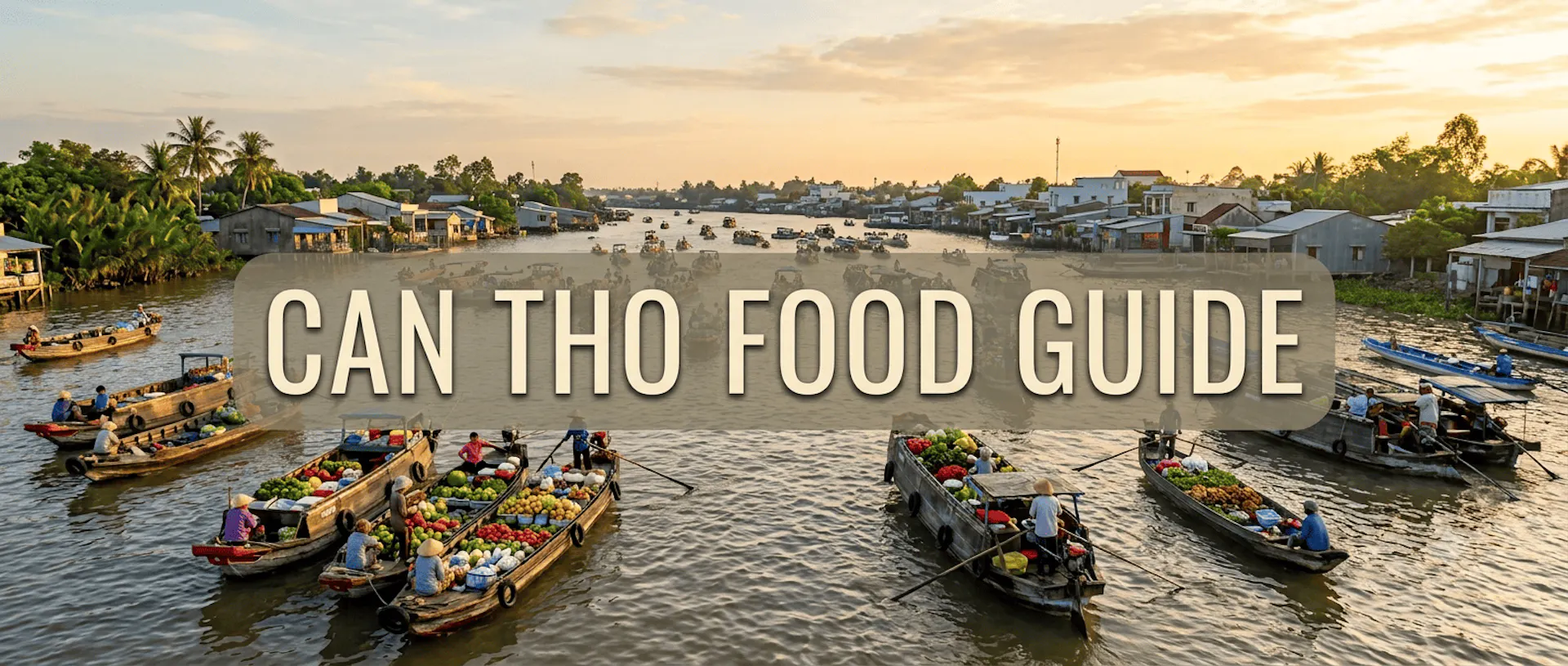
The experience of consuming a steaming bowl of Bún riêu or a dark, thick coffee while seated on a swaying sampan boat at the Chợ nổi Cái Răng is a definitive Cần Thơ moment. The environment itself—the swirling river mist, the dense, low-hanging clouds of tropical humidity, and the gentle, persistent motion of the river beneath you—fundamentally alters the way the palate registers flavor. The broth in this context seems to possess a sharper, more restorative quality; it is a meal of necessity and comfort, prepared by vendors who manage to cook incredibly complex dishes in spaces no larger than a few square meters on the deck of a moving vessel. Observing the preparation of these meals provides a profound appreciation for the expertise required to manage a kitchen in such a fluid, unstable environment. The vendors’ ability to balance a bubbling pot of stock while navigating the swirling currents and the dense traffic of other boats is a logistical performance of the highest order, and the food produced under these conditions carries a specific, smoky intensity that is difficult to replicate in an urban kitchen.
The Logistical Brilliance of River Vending
The vendors of the floating market are the true custodians of the region's culinary logistics. They function as a dispersed, highly efficient network that brings the raw produce of the upstream orchards and the fresh catch of the downstream river networks directly to the consumer. This requires a level of culinary foresight that is astounding; vendors often specialize in a single, perfectly executed dish, ensuring that their limited inventory is always optimized for freshness and rapid turnover. When you purchase a meal from a vendor at the Chợ nổi Cái Răng, you are not just buying a bowl of noodles; you are participating in a trade network that has adapted to the challenges of the river for centuries. The resilience and skill required to maintain this system, ensuring that thousands of bowls are served daily in a dynamic, open-air environment, is a testament to the community’s commitment to their culinary traditions despite the creeping pressures of modern, land-based convenience.
Orchard-to-Table and Hidden Street Gems
Away from the main river channels, the city and its surrounding islet districts offer a more intimate, reflective style of dining. The Miệt vườn (fruit orchard) zones of Cần Thơ serve as a reservoir for the most authentic "orchard-to-table" experiences in Southern Vietnam, where the boundary between the farm and the kitchen is virtually non-existent.
The Miệt Vườn Experience
Guided tours to the small, family-run fruit orchards on the islets are an essential component of the Cần Thơ culinary landscape. These orchards are the source of the region's most iconic indigenous fruit varieties, from the sweet, teardrop-shaped longan to the complex, tart pomelo and the decadent durian. The "slow food" ethos is fully realized here; visitors are encouraged to wander through the shaded canopy, learn about the grafting and irrigation techniques that define the region's horticultural expertise, and eventually sit down to a meal that incorporates the harvest of the morning. Many of these family kitchens prepare dishes that are entirely seasonal, utilizing the fruit as an aromatic ingredient in savory soups or salads, which provides a level of freshness that is impossible for standard retail markets to match. This style of dining is deeply rooted in gratitude; it is a meal that honors the physical labor of the farming family, and it provides the visitor with a tangible, direct connection to the alluvial soil and the seasonal cycles that nourish the entire delta.
Night Markets and Street Food Exploration
As the sun sets over the Sông Hậu, the urban center of Cần Thơ undergoes a dramatic shift, with the streets and markets becoming the social heart of the city. Wandering through the evening food scenes offers a completely different, high-energy contrast to the meditative calm of the orchards. This is where the city’s culinary diversity shines, with stalls offering everything from grilled street snacks, such as skewered river fish and savory, charcoal-grilled rice crackers, to more substantial, communal meals. The best approach is to follow the crowds, identifying the stalls where families and local workers gather after their day of labor. These spots frequently serve the most vibrant, freshly prepared dishes, and they provide a front-row seat to the local social dynamics. Participating in the evening street food culture is a communal, noisy, and deeply enjoyable experience that perfectly captures the city's modern, bustling reality while remaining anchored to the traditional flavors that have been perfected by local cooks for generations.
Practical Culinary Logistics and Etiquette
Executing a seamless, authoritative culinary tour of Cần Thơ requires a shift in expectation from the high-speed transit of the north to the more organic, family-oriented logistics of the Delta. When finding the best stalls, rely on the "high-turnover" principle; any stall that is consistently crowded with locals is an immediate, high-authority indicator of quality and freshness. These are the vendors who have built their reputations on the consistent delivery of traditional flavors, and their high rate of turnover ensures that every ingredient—from the fresh herbs to the river-harvested seafood—is at its absolute peak of viability.
Regarding etiquette, dining in Cần Thơ is an act of shared, communal participation. Street-side dining, in particular, is frequently conducted on tiny, primary-colored plastic stools where the proximity to your neighbors is part of the experience. It is a space that demands a sense of ease and a lack of pretension. Whether you are in a bustling street stall or a quiet orchard garden, the protocol remains consistent: show patience, respect the "slow food" preparation of the local cooks, and always express genuine gratitude. The artisans who preserve these recipes are the custodians of the region's historical identity, and they take immense pride in the labor they invest into their traditional hearth-cooked broths and carefully assembled crepes. By approaching every meal with an appreciation for this investment of time and skill, you ensure that your culinary journey is not just a collection of meals, but a respectful engagement with the living, enduring culture of the Mekong Delta.
Conclusion: Finalizing the Best Places to Visit in Can Tho
Cần Thơ remains the most vital, authentic, and historically dense destination for those who wish to understand the true pulse of the Mekong Delta. By moving beyond the high-speed transit hubs and prioritizing the slow, deliberate pace of the river—from the dawn rituals of the floating market to the shaded tranquility of the ancient orchard homes—travelers are rewarded with a profoundly beautiful truth about the resilience and the ingenuity of Southern riverine life. As you synthesize this can tho food guide to finalize your itinerary, ask yourself where your true interests lie. Are you more drawn to the raw, high-velocity commerce of the floating market’s breakfast rituals, or does the meditative, land-based historical heritage of the orchard-to-table experience provide the primary motivation for your journey into the vibrant heart of the Mekong? Which of the Delta’s iconic, river-based dishes—the complex, fermented depth of the Bún mắm or the crisp, golden snap of the Bánh xèo—are you most eager to document first?
> Read more: Can Tho Travel Guide

By Roy Trinh
Editor
Roy Trinh is a travel writer and destination expert at Go Visit Vietnam, dedicated to helping travelers discover the beauty, culture, and diversity of Vietnam. Through well-researched travel guides, practical itineraries, local insights, and authentic recommendations, Roy shares valuable information to inspire memorable journeys across the country. From vibrant cities and breathtaking landscapes to regional cuisine and cultural heritage, every guide is created to help visitors experience Vietnam with confidence and curiosity.
Frequently Asked Questions About Can Tho Food Guide
What food is Can Tho famous for?
Can Tho is famous for its fresh river fish, hu tieu noodle dishes, grilled seafood, banh xeo, tropical fruits, and authentic Mekong Delta specialties. The city's cuisine reflects the abundance of local rivers, farms, and orchards.
Where can I try authentic local food in Can Tho?
Visitors can enjoy authentic cuisine at Cai Rang Floating Market, Ninh Kieu Wharf, local night markets, traditional restaurants, riverside eateries, and family-run food stalls serving freshly prepared Mekong Delta dishes.
What should I eat at Cai Rang Floating Market?
Floating market vendors serve delicious local breakfasts such as hu tieu, bun rieu, banh mi, sticky rice, fresh tropical fruits, Vietnamese coffee, and refreshing drinks directly from boats on the river.
Is Can Tho a good destination for food lovers?
Absolutely. Can Tho is considered one of the culinary capitals of the Mekong Delta. Visitors can enjoy traditional Vietnamese dishes, regional specialties, floating market food, fresh seafood, tropical fruits, and vibrant street food throughout the city.
What food souvenirs should I buy in Can Tho?
Popular food souvenirs include dried fruits, coconut candies, rice crackers, local fish sauce, tropical fruit products, traditional sweets, and packaged Mekong Delta specialties available at local markets and specialty stores.
Advertising box