
Dak Lak Food Guide
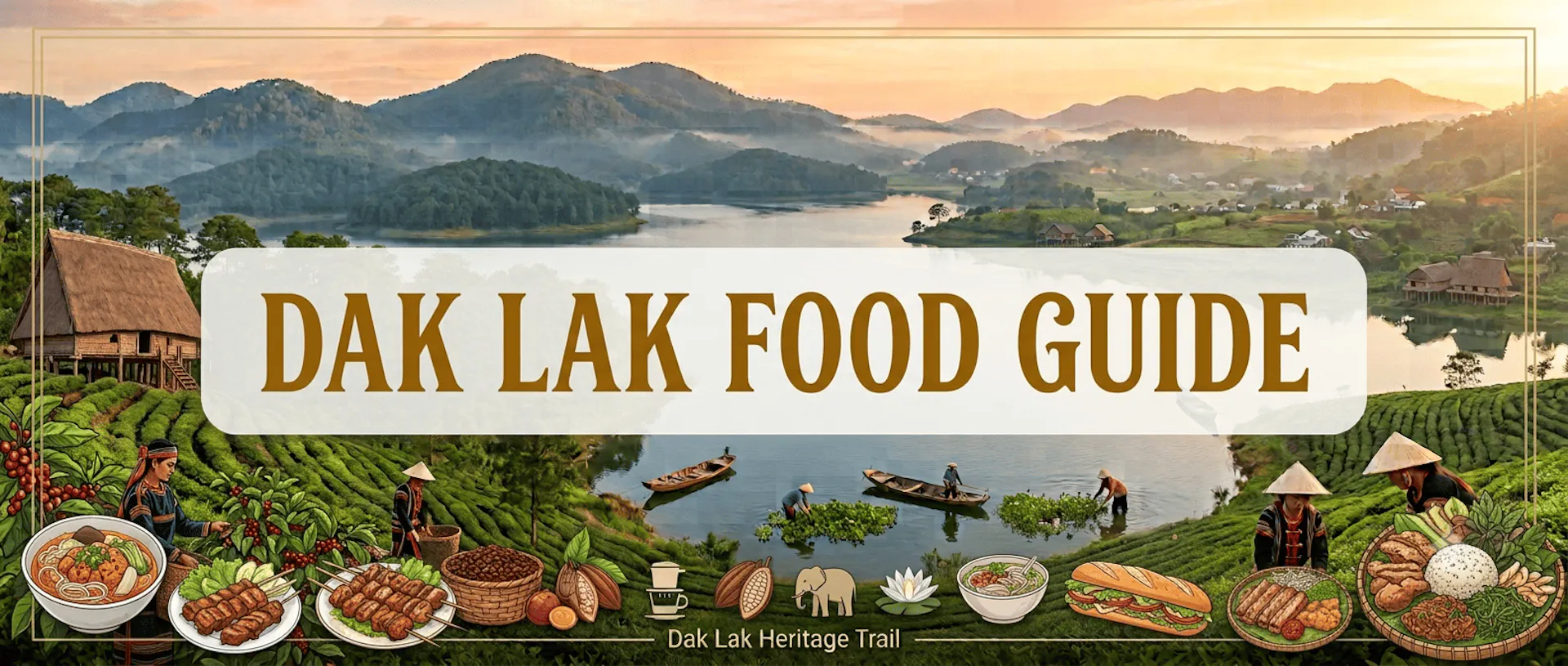
Dak Lak offers a unique culinary journey inspired by the traditions of Vietnam's Central Highlands. Visitors can enjoy world-famous Buon Ma Thuot coffee, grilled specialties, ethnic minority dishes, fresh local produce, forest ingredients, and authentic regional cuisine. From lively local markets to traditional restaurants and countryside eateries, every meal reflects the rich cultural diversity of the province. This Dak Lak Food Guide introduces the region's must-try dishes, local flavors, and unforgettable food experiences that make every visit to the Central Highlands truly memorable.
On this page
To ascend into the province of Đắk Lắk is to enter a culinary landscape shaped by elevation, where the crisp, cool air of the Central Highlands directly dictates the character of every meal. For the professional culinary anthropologist, the seasoned food critic, and the intrepid traveler, this region represents far more than a source of world-class coffee; it is a gastronomic frontier where rugged, forest-foraged traditions meet the refined, artisanal practices of high-altitude agriculture. The sensory reality of the plateau is immediate: the sharp, metallic tang of the early morning mountain mist, the intoxicating, deep-seated aroma of slow-burning charcoal grills in village squares, and the bold, lingering profile of robusta beans roasted to perfection. This exhaustive dak lak food guide serves as a definitive ethnographic map to a cuisine that rejects the homogenization of modern industrial food in favor of honest, communal preparation. Every dish found here—from the smoldering, bamboo-infused grains of the village hearth to the fermented, earthy broths of the highland refectories—reflects a sophisticated understanding of the local land. By navigating the smoky, wood-fired rituals of the Buôn Ma Thuột street-side stalls and the quiet, family-run kitchens tucked into the red-soil valleys, you will uncover a culinary heritage built upon the gifts of the basaltic plateau. This is a cuisine of resilience, complex flavor architecture, and a profound respect for the ingredients provided by the jungle and the farm alike.
The Iconic Highland Flavors: Rituals of the Hearth
The gastronomic identity of the province is defined by a rigorous set of dishes that have adapted perfectly to the highland lifestyle. These staples are not merely items on a menu; they are rigorous cultural artifacts, demanding specific environmental conditions, highly specialized labor, and a commitment to quality that has remained largely impervious to the pressures of rapid modernization.
Gà Nướng Bản Đôn: The Art of Highland BBQ
The absolute pinnacle of the local street-food repertoire is Gà nướng Bản Đôn, a dish that represents the raw, untamed spirit of the Central Highlands. The secret to this preparation lies in the absolute freshness of the free-range chickens, which are raised in the vast, open spaces of the plateau, feeding on a natural diet of corn, grains, and forest insects. Unlike the mass-produced, industrial poultry found in lowland urban markets, these birds possess a lean, firm muscle structure and a clean, natural sweetness. The grilling process is a masterclass in elemental cooking: the chicken is butterfly-cut, rubbed with a potent paste of wild forest herbs—including lemongrass, wild ginger, and local chili—and then secured between bamboo slats. It is then grilled slowly over a wood-fired charcoal hearth, allowing the heat to render the fat and infuse the meat with the specific, aromatic smoke of the local hardwoods. This process is the antithesis of modern culinary shortcuts; it requires the cook’s constant attention, a deep understanding of fire management, and a refusal to rush the searing of the bird. The resulting flavor is one of deep, savory complexity, where the smokiness of the charcoal, the zest of the forest aromatics, and the honest, gamey quality of the chicken coalesce into a meal that is both primal and deeply satisfying.
Cơm Lam: The Bamboo-Tube Legacy
The Cơm lam (bamboo-tube rice) is a dish that connects the modern traveler to the nomadic, forest-dwelling history of the Ede and M’nong people. This is essentially a portable, high-energy meal engineered for the rugged life of the plateau. Locally grown, sticky rice—often harvested from the small, hillside plots that dot the red-soil landscape—is stuffed into young, green bamboo tubes along with a touch of coconut water or salt. The tubes are then sealed with leaves and roasted over a fire until the outer layer of the bamboo chars completely. This high-heat, enclosed roasting process performs a culinary miracle: the moisture from the bamboo steams the rice from the inside, while the subtle, woody fragrance of the bamboo casing infuses every grain with a delicate, grassy sweetness. Peeling back the charred outer husk reveals a perfectly cooked, dense cylinder of rice that is both aromatic and satisfyingly chewy. Historically, this was the primary ration for hunters and travelers traversing the dense jungle; today, it remains a central component of the social meal, where it is broken open and shared at the communal hearth, emphasizing the cooperative, collaborative nature of highland dining.
Canh Bồi: The Wisdom of Ancestral Foraging
The Canh bồi (Bồi soup) serves as a profound reflection of highland agricultural wisdom, showcasing how local communities identified and utilized indigenous flora to sustain life during the harshest cycles of the year. This soup is a nutritional powerhouse, thickened not with commercial starches, but with traditional grains and a variety of wild-foraged vegetables that change according to the season. The base of the broth is typically built from simple, local ingredients—perhaps dried forest mushrooms or a small portion of smoked meat—but the true essence of the dish comes from the addition of highland leaves and tubers, which are identified by their unique bitter or sweet profiles. These greens provide a depth of nutrition and flavor that is entirely absent in lowland soups. The preparation involves a slow, patient simmering process that allows the starch to release into the broth, giving the soup a creamy, hearty body that is both deeply comforting and surprisingly complex. Canh bồi is a dish that requires a deep, encyclopedic knowledge of the forest and the farm, representing a lineage of cooking where nothing is wasted and every ingredient is utilized to balance the overall nutritional needs of the household.
Coffee Culture: The Soul of Buôn Ma Thuột
To speak of Đắk Lắk without addressing the coffee culture is to miss the fundamental economic and social engine of the province. Buôn Ma Thuột is not merely a regional hub; it is a global landmark for robusta production, and the local consumption of this coffee is a ritualized, deeply atmospheric experience that shapes the day-to-day life of every plateau resident.
The Craft of Robusta
The global significance of the coffee grown in the basaltic soil of Đắk Lắk cannot be overstated. The soil here, rich in minerals and deeply fertile, provides the ideal foundation for the robusta bean, which thrives in the high-altitude climate. The expertise of the highland coffee artisan lies in the roasting process. Unlike the lighter, more acidic roasts prevalent in modern, globalized coffee houses, the highland style is bold, thick, and characterized by a dark, intense chocolate profile that can cut through the heavy heat of the day. The beans are typically roasted with a touch of butter or traditional additives to enhance the body, creating a brew that is visually dark, aromatically potent, and incredibly dense on the palate. Brewing this coffee in the traditional, individual metal phin filter is an act of patience; one watches the dark, oily liquid drip slowly, one drop at a time, into a glass often already prepared with a base of sweet, condensed milk. It is a slow, methodical ritual that reflects the pace of highland life, where the process of extraction is just as important as the final, concentrated result.
The Social Life of Coffee Houses
In the plateau, the coffee house is the primary social interface. It is the site where business negotiations occur, where ancestral stories are swapped between village elders, and where the youth gather to debate the shifting dynamics of the highlands. These spaces are often open-air, allowing the cool, morning mist to drift through as the sound of a thousand dripping phin filters creates a steady, rhythmic background noise. The cultural importance of these spaces is immense; they act as a neutral ground where the diversity of the province—from the ethnic minority farmers to the urban traders—converges to share a common, morning ritual. It is a space where the intensity of the coffee acts as a catalyst for social cohesion. To sit in a corner of a busy, local Buôn Ma Thuột coffee house, watching the slow motion of the city begin its day, is to understand that the "liquid gold" of the plateau is the essential force behind the social fabric of the highlands. It is an egalitarian, deeply democratic ritual, and participating in it is the most effective way to gauge the authentic pulse of the region.
Indigenous Traditions and Foraged Delicacies
Beyond the coffee and the staples lies a deeply guarded, traditional culinary world based on indigenous fermentation and the intelligent exploitation of the jungle’s diversity. These culinary traditions remain the most authentic, yet they are the most inaccessible for the casual, tourist-focused visitor.
Rượu Cần: The Communal Connection
The communal consumption of Rượu cần (jar wine) is the centerpiece of the region's social and spiritual identity. This is not a casual drink; it is an artisanal fermentation created from a complex mix of wild forest herbs, rice, and, crucially, a specific "yeast" made from the bark of indigenous trees. The wine is fermented for weeks in massive, often antique, ceramic jars, and when it is finally ready, it is drunk by multiple people at once through long, thin bamboo reeds. The etiquette surrounding this communal ritual is complex: it involves the presence of a host, the sharing of ancestral narratives, and a structured, cyclical process of drinking that binds the participants to the event, the host, and each other. The wine itself is sweet, slightly sour, and has a mild, earthy effervescence that reflects the wild yeast used in its creation. To be invited into a longhouse to share a jar of Rượu cần is to be granted a level of trust that is earned through patience and respect; it is an experience that underscores the essential nature of communal survival in the Central Highlands.
Forest-Foraged Ingredients
The plateau provides an incredible array of foraged ingredients that find their way into the everyday diet. From the harvest of wild, spicy bamboo shoots to the collection of specific, high-protein insects and forest-dwelling crustaceans, the local kitchen is constantly expanding its inventory through the jungle. The culinary expertise here is the ability to identify ingredients that are not just safe, but highly beneficial in their nutritional profile. These ingredients are prepared through traditional methods—such as smoking, fermenting, or rapid stir-frying—that preserve their unique flavor profiles. For example, bamboo shoots are often braised until they are tender, losing their natural acidity and absorbing the smoky, savory flavors of the fire. The use of wild, peppery leaves in soups and salads creates a flavor architecture that is found nowhere else in Vietnam. This culinary heritage is a masterclass in the utilization of the environment, showing that the highland kitchen is an extension of the plateau’s biodiversity itself.
Practical Culinary Logistics and Etiquette
Executing a successful, authoritative culinary expedition through Đắk Lắk requires a fundamental shift in expectation from the rapid, consumer-focused dining of the urban centers to the family-oriented, traditional pace of the highlands. When seeking out the best stalls, rely on the "high-turnover" principle; any stall that is consistently crowded with local highland workers—and where the air is thick with the scent of charcoal and wood-smoke—is an immediate, high-authority indicator of quality. These are the vendors who have built their reputations on the consistent delivery of traditional, hearth-cooked flavors, and their high rate of turnover ensures that every ingredient is sourced from that morning’s market or harvest.
In terms of etiquette, dining in these communal, often modest highland settings is an act of participation. Whether you are in a small street stall or an open-air village eatery, the protocol remains consistent: show patience, respect the "slow food" preparation of the local cooks, and always express genuine gratitude. The artisans who preserve these recipes are the custodians of the plateau’s culinary history, and they take immense pride in the time they invest in their labor-intensive, wood-fired recipes. By approaching your meals with an appreciation for this investment of time and skill, you ensure that your culinary journey is not just a collection of meals, but a respectful engagement with the living, enduring traditions of the highlands.
Conclusion: Finalizing Your Journey Through the Flavors of Dak Lak
Đắk Lắk offers one of the most authentic, diverse, and intellectually satisfying culinary landscapes in Vietnam. By actively refusing to conform to the commercial pressures of the broader tourist circuit, the province has successfully guarded the integrity of its highland-specific foodways, from the intricate, bamboo-infused ritual of the Cơm lam to the bold, intense aroma of the world-renowned robusta coffee. Every meal in this province serves as a profound education in environmental endurance and regional ingenuity. As you conclude your reading of this definitive dak lak food guide, consider the depth of the gastronomic history you are about to encounter. Are you most eager to experience the smoky, charcoal-infused intensity of the highland grills, or does the prospect of participating in the meditative, ritualized consumption of communal jar wine provide the primary motivation for your journey into the soul of the Central Highlands? Which regional delicacy—the aromatic, bamboo-roasted rice or the legendary, high-altitude coffee—are you most excited to document first in your own highland culinary experience?
Read more: Dak Lak Travel Guide

By Roy Trinh
Editor
Roy Trinh is a travel writer and destination expert at Go Visit Vietnam, dedicated to helping travelers discover the beauty, culture, and diversity of Vietnam. Through well-researched travel guides, practical itineraries, local insights, and authentic recommendations, Roy shares valuable information to inspire memorable journeys across the country. From vibrant cities and breathtaking landscapes to regional cuisine and cultural heritage, every guide is created to help visitors experience Vietnam with confidence and curiosity.
Frequently Asked Questions About Dak Lak Food Guide
What food is Dak Lak famous for?
Dak Lak is famous for Buon Ma Thuot coffee, grilled meats, bamboo tube rice (com lam), ethnic minority specialties, fresh forest ingredients, local noodle dishes, and flavorful Central Highlands cuisine.
Where can I try authentic local food in Dak Lak?
Visitors can enjoy authentic cuisine at traditional restaurants in Buon Ma Thuot, local markets, ethnic minority villages, roadside eateries, and family-run restaurants serving fresh regional dishes and Highland specialties.
Is Buon Ma Thuot coffee worth trying?
Absolutely. Buon Ma Thuot is internationally recognized as Vietnam's coffee capital. Visitors can enjoy premium Robusta coffee, visit coffee farms, learn about roasting techniques, and taste freshly brewed local coffee.
Is Dak Lak a good destination for food lovers?
Yes. Dak Lak combines traditional Vietnamese cuisine with the unique culinary traditions of the Central Highlands. Travelers can enjoy authentic ethnic dishes, fresh local ingredients, specialty coffee, and distinctive regional flavors.
What food souvenirs should I buy in Dak Lak?
Popular food souvenirs include Buon Ma Thuot coffee, pepper, dried fruits, local honey, herbal tea, macadamia nuts, traditional snacks, and Highland specialty products available in local markets and specialty stores.
Advertising box