
Dong Nai Food Guide
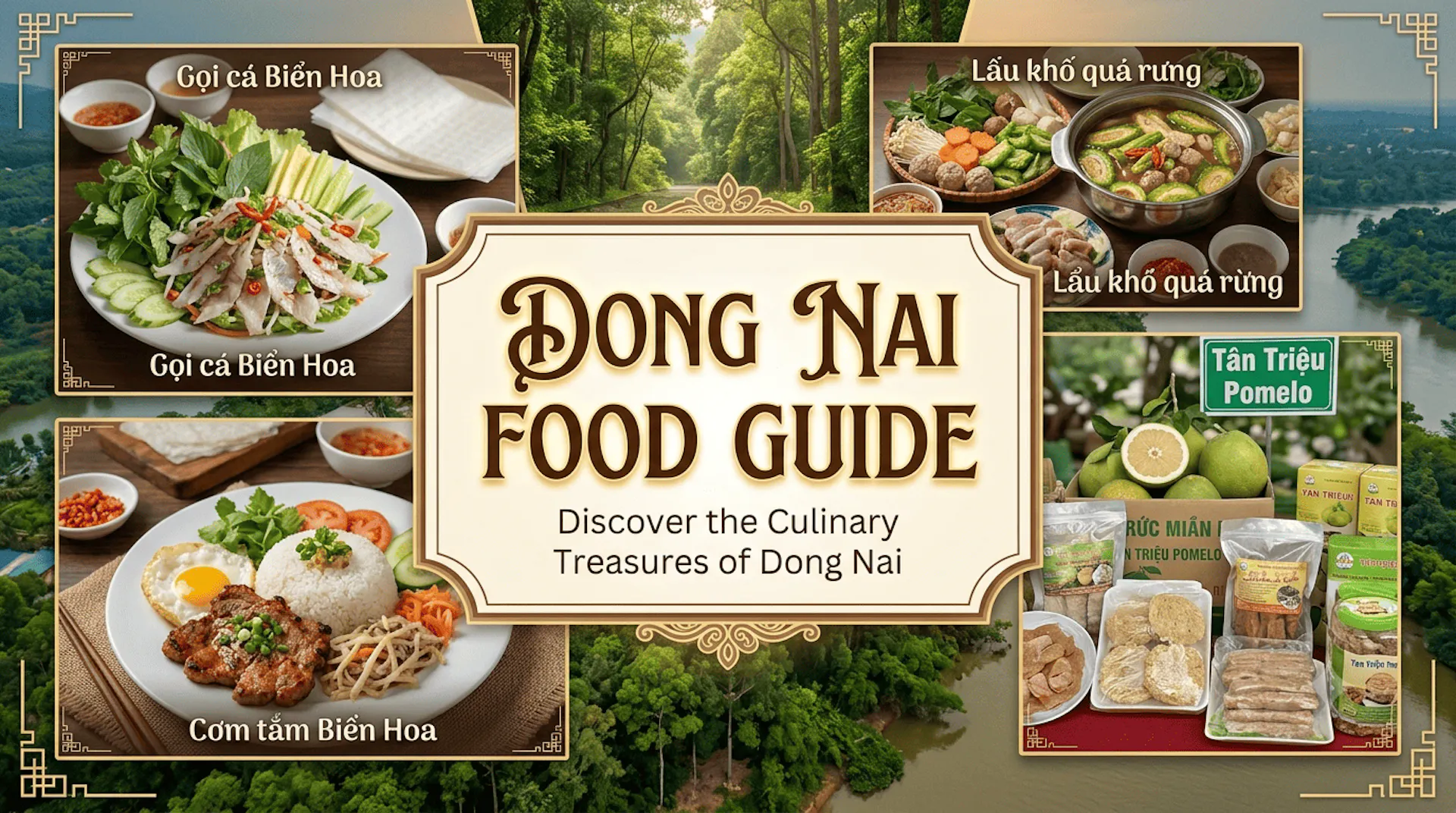
Dong Nai offers a diverse culinary scene shaped by fertile farmland, rivers, and the cultural influences of Southern Vietnam. Visitors can enjoy fresh river fish, grilled specialties, tropical fruits, traditional Vietnamese dishes, and delicious local street food throughout the province. From bustling markets and family-run eateries to countryside restaurants, Dong Nai provides authentic dining experiences for every traveler. This Dong Nai Food Guide introduces the province's must-try specialties, regional flavors, and unforgettable local food experiences that reflect its rich culinary heritage.
On this page
To step into the province of Đồng Nai is to immerse oneself in a culinary landscape that is as geographically diverse as its dramatic terrain, which oscillates between the sediment-heavy plains of the Mekong Delta and the rugged, forested foothills of the Southern Highlands. For the discerning culinary anthropologist, the professional food critic, and the dedicated traveler, the region is far more than an industrial thoroughfare connecting the southern metropolis to the highland interior. It is a gastronomic frontier where rural ingenuity, riverine bounty, and ancient forest-foraging traditions coalesce into a dining culture that is refreshingly unvarnished and deeply tethered to the land. This exhaustive dong thap food guide—or more precisely, this definitive manual for the province of Đồng Nai—serves as an ethnographic roadmap to a cuisine that rejects the homogenization of mass tourism in favor of authentic, slow-paced preparation. Every dish here tells a precise, historical story—a narrative of pioneering farmers who harnessed the unique alluvial silt of the river islands, and of forest communities who mastered the edible diversity of the wild. By navigating the smoky, wood-fired hearths of the village kitchens and the shaded, meditative tranquility of the pomelo orchards, you will uncover a culinary heritage built upon the raw, honest ingredients of the Southern Gateway.
The Orchard Bounty: Tan Trieu Pomelo Gastronomy
The definitive culinary crown jewel of the province, and the centerpiece of any serious investigation into regional produce, is the Bưởi Tân Triều (Tan Trieu pomelo). This citrus variety is not merely a fruit; it is a cultural institution. Grown on a fertile islet completely encircled by the Đồng Nai River, the pomelo trees here thrive in a specific, mineral-rich micro-climate that imbues the fruit with a sweetness and aromatic intensity that remains largely unreplicable in other regions.
The Art of Pomelo-Based Dining
Local chefs demonstrate an extraordinary level of technical precision in their utilization of the pomelo, moving far beyond the simple act of peeling the fruit for dessert. The signature dish, Gỏi bưởi (pomelo salad), is a masterclass in balance. The firm, juicy vesicles of the pomelo are meticulously separated and tossed with succulent, steamed river prawns, thinly sliced pork, and a vibrant, citrus-infused vinaigrette that utilizes the fruit's own natural oils. The salad is finished with a generous dusting of roasted peanuts and fresh, peppery herbs, creating a textural profile that is simultaneously crisp, tender, and refreshing. Beyond the salad, local artisans have developed complex pomelo-infused fried rice, where the rind and the fruit's essence are integrated into the cooking process, imparting a subtle, sophisticated brightness to the savory grains. This orchard-to-table practice is a testament to the region’s agricultural heritage; it honors the pomelo by integrating it into every stage of the meal, demonstrating that the terroir of Tân Triều can elevate even the most fundamental of starches.
Pomelo Wine and Teas
The versatility of the Tân Triều harvest extends into the realm of traditional craft fermentation. Local artisans have perfected the art of infusing and fermenting pomelo to create a range of refined, citrus-forward beverages. Pomelo wine is produced through patient, small-batch fermentation, resulting in a drink that is light, aromatic, and carries a clean, floral finish—a stark departure from the heavy, grain-based spirits found elsewhere in the delta. These beverages are frequently enjoyed within the cool, dappled light of the orchard gardens themselves, providing a meditative, cooling respite from the intense equatorial heat. This craft, preserved over decades by village elders, emphasizes the importance of utilizing the entire harvest, ensuring that even the overripe or imperfect fruits are transformed into artisanal products that honor the farm’s year-long labor.
The Cultural Significance of the Orchard
Eating within the Tân Triều orchards is not merely an act of consumption; it is a ritual of slow-travel that connects the diner directly to the historical identity of the province. The orchard garden serves as a living, breathing library of regional agricultural expertise. When you dine beneath the heavy, fruit-laden branches, you are participating in a tradition of land stewardship that has survived rapid urban expansion and industrial pressure. The orchard owners frequently serve as the primary narrators of their own history, sharing stories of how their ancestors navigated the complex river currents to settle the islet and establish the pomelo groves. This connection—between the plate, the fruit-laden tree above, and the generational story of the farmer—is the core essence of Đồng Nai’s culinary appeal, emphasizing that authenticity is rooted in the physical and historical landscape of the orchard itself.
The River and Forest Bounty: Lake and Jungle Flavors
As you push northward from the orchards, the culinary profile shifts to reflect the untamed interior of the province, specifically the expansive reservoirs and the rugged, wild-foraged ingredients of the highland forests. Here, the cuisine moves away from the refined elegance of the orchard and toward the primal, high-protein reality of the riverine and jungle environment.
The Treasures of Trị An Lake
Hồ Trị An (Trị An Lake) is a vast, man-made reservoir that has become the primary source of freshwater seafood for the province. The most highly prized catch is the cá kìm (needle fish), a slender, silvery freshwater species that is celebrated for its incredibly delicate, sweet flesh and lack of heavy, muddy undertones. Traditional preparation of this fish is minimalist, often involving simple, quick-charcoal grilling or light, clear broths infused with local river herbs. This approach highlights the freshness of the catch, allowing the subtle, freshwater umami to take center stage. Consuming a freshly grilled needle fish on the quiet, windswept shores of the lake, accompanied by a simple side of chili-salt and lime, is a humbling reminder of the delta’s dependence on the river’s daily harvest. The local fishing communities, who live on the margins of the lake, have perfected a cuisine that requires nothing more than a boat, a net, and an open fire, creating a dining experience that is as pure and honest as the waters from which it is drawn.
Rustic Forest-Foraged Delicacies
The highland influence brings a completely different dimension to the provincial pantry, rooted in the tradition of foraging from the surrounding jungles and grasslands. The most notorious, yet highly revered, delicacy is the dế cơm (rice cricket). These insects are harvested during the wet season, when they are at their most robust, and are traditionally prepared by being fried in a hot wok with pungent lemongrass, bird's eye chilies, and a savory, aromatic fish sauce glaze. The cricket meat is surprisingly dense, with a texture similar to tender game meat and a nutty, earthy flavor profile that is deeply satisfying. Consuming these insects is a high-protein, deeply sustainable culinary tradition that reflects the region’s ability to find nourishment in every corner of the landscape. For the adventurous diner, it is an essential experience that demonstrates the historical and ecological depth of the province's foodways, turning the humble harvest of the rice paddies into a highly sought-after, unique regional delicacy.
Everyday Eats: Street Food and Local Kitchens
The true culinary energy of the province is concentrated in the early morning and late evening market rituals of urban centers like Biên Hòa or Trảng Bom, where the street food scene functions as a vital hub for the local working community. Navigating these hubs provides a window into the province’s real-time culinary evolution.
The Morning Market Ritual
The gastronomic day in Đồng Nai begins long before the urban rush, making the morning market ritual an absolutely mandatory component of any serious inquiry. The air in these marketplaces is thick with the competing aromas of strong, slow-dripped coffee and the rich, vaporous steam rising from massive aluminum stockpots. The definitive local breakfast is a steaming, restorative bowl of Bánh canh, a noodle soup characterized by thick, hand-pressed rice noodles that possess a distinct, chewy snap. The broth is usually a clear, deeply fragrant liquid simmered with local river crabs or pork, offering a clean, bright, and intensely refreshing flavor profile designed to awaken the palate. These markets are the primary sites where the province’s culinary traditions are kept alive, as local vendors, often operating out of incredibly small, hyper-efficient stalls, continue to prepare recipes that have remained fundamentally unchanged for decades.
The Craft of Rural Preparation
The soul of the local kitchen scene lies not just in the complex recipes, but in the archaic, uncompromising methods of preparation. In the rural kitchens of Đồng Nai, the prevalence of traditional charcoal hearths and heavy, seasoned clay pots remains remarkably high. This method of cooking is incredibly labor-intensive, requiring the cook to manually manage the fuel to maintain a constant, slow simmer or a precise, high-heat searing process. The payoff, however, is a depth of flavor that is unattainable through modern appliances. When a savory, slow-braised fish or a long-simmered vegetable stew is subjected to this heat, it acquires a specific, smoky, and deeply integrated flavor profile that is the hallmark of the region’s culinary expertise. It is a form of cooking that prioritizes patience, tactile sensation, and a deep, intuitive understanding of heat and timing, showcasing a level of skill that is increasingly rare in the era of industrial food production.
Practical Culinary Logistics and Etiquette
Executing a successful, deep-dive culinary expedition in Đồng Nai requires stripping away the expectations of standard commercial hospitality and embracing a highly observational, culturally sensitive approach. When scouting for the best stalls in the market or along the provincial transit routes, you must develop an eye for "high-turnover" density. Do not be misled by bright, polished signage or comfortable seating; these are frequently the hallmarks of mass-market, tourist-optimized establishments. Instead, seek out the stalls that are densely packed with local residents, particularly those that exhibit the signs of an active, bustling, and long-standing operation. These high-turnover venues guarantee that the volatile, highly perishable river ingredients are constantly rotating and inherently fresh, completely eliminating the risk of consuming stagnant, potentially dangerous seafood. By choosing these stalls, you are not only ensuring the highest quality of the perishable local ingredients, but you are also engaging in the most authentic, shared social experience available in the province.
Furthermore, when you transition from the intense street stalls to the quiet, family-run orchard kitchens, your conduct must mirror the deliberate, patient nature of the food preparation. The concept of "fast food" or demanding rapid service is deeply misplaced in this environment. You are entering a culinary space where the cooking is done over traditional hearths that require immense physical effort to manage. Embrace the philosophy of the "slow food" process. While the matriarch of the family meticulously prepares the fresh catches or harvests the pomelos, utilize this forced pause to observe the intricate agricultural systems of the orchard and appreciate the intense quiet of the riverine landscape. When the food is finally presented, it is absolutely vital to express genuine, visible gratitude to the host families before taking your first bite, acknowledging the immense effort required to bring the raw ecosystem of the delta directly to your table.
Conclusion: Finalizing Your Journey Through the Flavors of Dong Nai
Đồng Nai offers one of the most underrated, fiercely authentic, and intellectually satisfying culinary landscapes in Southern Vietnam. By actively refusing to conform to the commercial pressures of the broader tourist circuits, the province has successfully preserved a deeply historical gastronomic identity that bridges the gap between the delta’s riverine harvest and the rugged, foraged bounty of the highland forest. From the complex, tactile ritual of the Tân Triều pomelo salad to the smoky, hearth-cooked broths that define the local morning market, every single meal in this province serves as a profound education in environmental endurance and regional ingenuity. As you conclude your reading of this definitive dong thap food guide—your key to unlocking the culinary spirit of Đồng Nai—consider the depth of the gastronomic history you are about to encounter. Are you most eager to explore the refined, citrus-infused elegance of the pomelo orchards, or are you prepared to plunge your palate into the deep, uncompromising, and historic savory depths of the wild-foraged lake and forest catches that define the raw, wild heart of the Southern Gateway?
Read more: Dong Nai Travel Guide

By Roy Trinh
Editor
Roy Trinh is a travel writer and destination expert at Go Visit Vietnam, dedicated to helping travelers discover the beauty, culture, and diversity of Vietnam. Through well-researched travel guides, practical itineraries, local insights, and authentic recommendations, Roy shares valuable information to inspire memorable journeys across the country. From vibrant cities and breathtaking landscapes to regional cuisine and cultural heritage, every guide is created to help visitors experience Vietnam with confidence and curiosity.
Frequently Asked Questions About Dong Nai Food Guide
What food is Dong Nai famous for?
Dong Nai is known for its fresh river fish, grilled dishes, free-range chicken, tropical fruits, traditional Vietnamese specialties, and rustic countryside cuisine. The province's fertile farmland and rivers provide fresh ingredients that define its local food culture.
Where can I try authentic local food in Dong Nai?
Visitors can enjoy authentic meals at traditional restaurants in Bien Hoa City, riverside eateries, local markets, fruit orchards, and family-run restaurants throughout the province. Many rural dining spots specialize in fresh local ingredients and regional recipes.
What fruits should I try in Dong Nai?
Dong Nai is famous for tropical fruits such as durian, rambutan, mangosteen, jackfruit, pomelo, and mango. Visiting local orchards during harvest season allows travelers to taste freshly picked fruit directly from the farms.
Is Dong Nai a good destination for food lovers?
Absolutely. Dong Nai combines traditional Southern Vietnamese cuisine with fresh agricultural products and local specialties. Travelers can enjoy authentic street food, countryside dishes, seafood, and unique regional flavors throughout the province.
What food souvenirs can I buy in Dong Nai?
Popular food souvenirs include dried fruits, fresh tropical fruit products, local snacks, traditional sweets, honey, coffee, and regional specialties sold at local markets and specialty stores. These products make excellent gifts and are easy to bring home.
Advertising box