
Dong Thap Food Guide
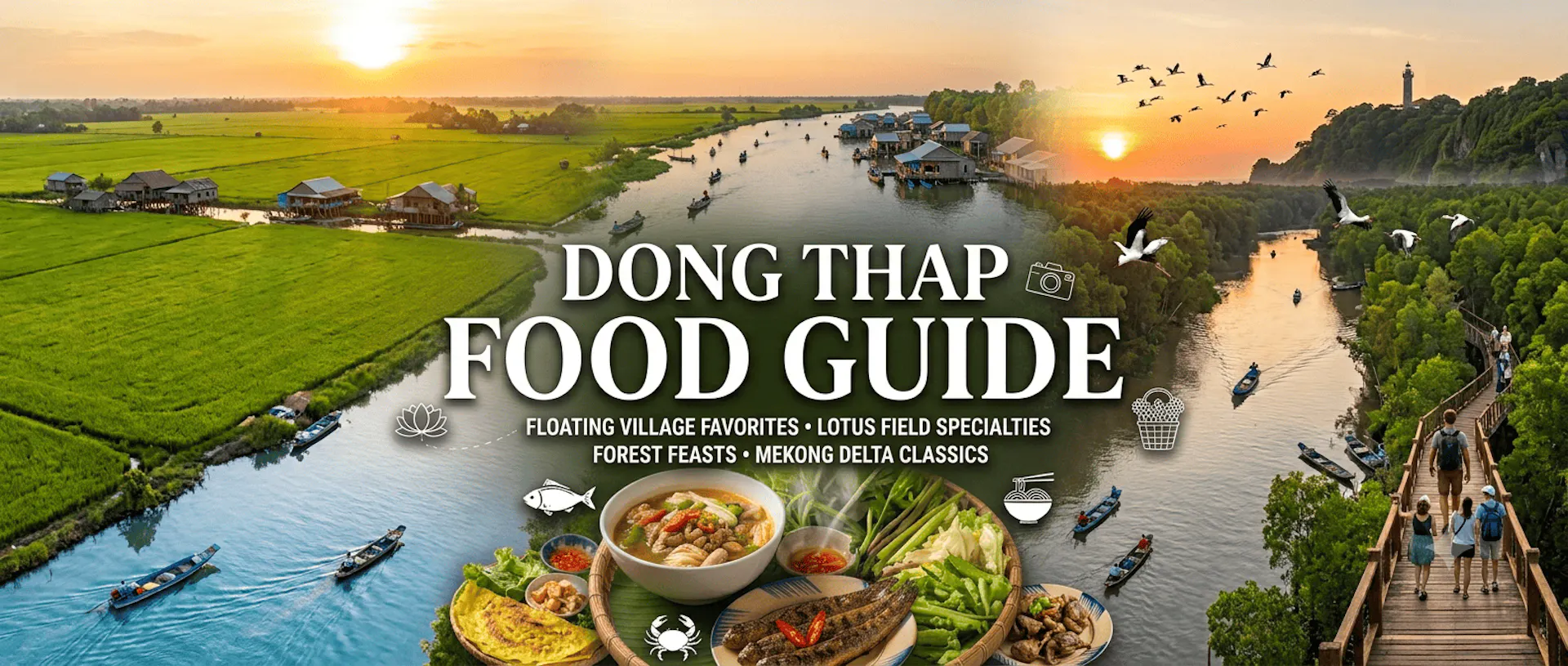
Dong Thap is a culinary destination where the flavors of the Mekong Delta meet the province's famous lotus heritage. From fresh river fish and rustic countryside dishes to unique lotus-inspired cuisine and seasonal tropical fruits, every meal reflects the region's agricultural abundance. Visitors can enjoy authentic specialties at local markets, riverside restaurants, and family-run eateries while discovering the warm hospitality of Southern Vietnam. This Dong Thap Food Guide introduces the must-try dishes and unforgettable flavors that define the province's rich culinary traditions.
On this page
- The Lotus Symphony: A Core Chapter of Our Dong Thap Food Guide
- The Wild Flavors of the Flooding Season in the Dong Thap Food Guide
- Sa Dec and the Legacy of Noodle Culture in the Dong Thap Food Guide
- Practical Culinary Logistics for Your Dong Thap Food Guide
- Finalizing Your Dong Thap Food Guide Experience
To step into the heart of the Mekong Delta is to immediately surrender to an intoxicating, deeply pervasive sensory atmosphere. Long before the morning sun burns off the heavy river mist, the humid equatorial air of the province grows thick with the deeply floral, aquatic scent of blooming lotus flowers, intertwined with the sharp, aggressive wood smoke billowing from rustic, open-air kitchens. Here, the rich, umami-packed aromas of slowly simmering bone broths and intensely fermented fish pastes announce the beginning of the culinary day. For the discerning culinary anthropologist, the professional food critic, and the intrepid traveler seeking an uncompromising gastronomic education, navigating this deeply complex terrain requires a definitive, expertly curated dong thap food guide. This specific region does not rely on manufactured, high-gloss dining experiences; instead, it offers a raw, honest, and profoundly traditional reflection of the delta’s staggering fertility and the sheer resilience of its pioneer ancestors. When considering what to eat in Dong Thap, one must understand that every single dish is a living historical record—a culinary heritage built meticulously from the unpredictable gifts of the annual flood season and the profound, survival-driven creativity of the local people. This exhaustive masterwork will serve as your compass, guiding you past the sterile tourist buffets and deep into the authentic, smoke-filled village hearths to uncover the true, unvarnished soul of southern riverine gastronomy.
The Lotus Symphony: A Core Chapter of Our Dong Thap Food Guide
To truly understand the complex cultural, spiritual, and culinary identity of this province, one must first deeply understand the lotus. This towering, resilient plant serves as the undisputed culinary icon of the region, and exploring the highly refined lotus-based dishes Dong Thap offers is an absolute priority for any serious gastronomic expedition. The lotus is not merely a garnish here; it is an entire culinary ecosystem.
The Art of Lotus-Based Dining
The local cooks exhibit a profound, almost reverent mastery over every single anatomical component of the Sen hồng (pink lotus). The culinary utilization begins deep within the muddy water with the young, tender lotus stems. These crisp, porous shoots are expertly harvested, thoroughly cleansed of alluvial silt, and transformed into the iconic gỏi ngó sen (lotus stem salad). The stems act as a perfect, crunchy sponge, eagerly absorbing a vibrant, violently acidic, and aggressively sweet dressing of chili, lime, and local fish sauce, typically tossed with freshly caught river prawns and slivers of fatty pork. Moving upward to the blossoms, the massive, water-repellent leaves are utilized to craft the visually stunning and intensely aromatic cơm sen (lotus rice). In this meticulous preparation, highly fragrant jasmine rice is steamed flawlessly with a rich mixture of diced local sausage, dried shrimp, and freshly shelled lotus seeds. The entire mixture is tightly swaddled within the broad lotus leaf, which, when subjected to the intense heat of the steamer, naturally imparts a subtle, deeply earthy, and slightly grassy lotus-leaf infusion into the hot starches. This dish is not only a triumph of flavor but a nutritional powerhouse, representing the absolute, uncorrupted purity of the alluvial plains.
Roasted Lotus Seeds
The true textural marvel of this botanical gastronomy is found in the fresh lotus seeds. Harvesting these seeds requires immense manual labor, as workers must navigate the flooded fields to extract the heavy, emerald-green showerhead-like pods. The experience of tasting fresh, raw lotus seeds reveals a delicate, milky sweetness and a crisp, snappy texture. However, the true depth of flavor is unlocked through traditional roasting techniques that have been meticulously preserved for generations. Local artisans slowly roast the seeds over low, smoldering charcoal fires, a process that draws out the natural sugars and creates a deeply comforting, nutty, and highly complex flavor profile. Documenting the intricate, blistered textures of these roasted seeds requires highly capable optical hardware. Utilizing the highly sophisticated, physical two-stage manual exposure controls and the precise macro-focusing capabilities of a high-end mobile device, such as the Japanese market variant of the Sony Xperia 1 Mark VI series, allows a culinary researcher to flawlessly capture the warm, golden-brown hues and the delicate, crackling surface of the seeds against the dark, smoky backdrop of the village hearth.
The Cultural Significance of Lotus Cuisine
Explaining the prevalence of lotus in the local diet requires acknowledging that eating these specific dishes is not simply about pursuing unique flavors; it is a profound, daily act of honoring the local identity. The people of this province view the lotus—a plant that rises immaculately clean and structurally perfect from the darkest, thickest, and most anaerobic delta mud—as a living symbol of their own historical endurance against harsh monsoons and devastating historical conflicts. To consume the lotus is to internally absorb the resilience of the landscape, making these specific culinary traditions some of the most emotionally and culturally significant Dong Thap specialties.
The Wild Flavors of the Flooding Season in the Dong Thap Food Guide
As the scorching summer transitions into autumn, the region undergoes a dramatic, mesmerizing hydrological transformation. The vast, untamed wetland ecosystem dictates an entirely different culinary reality, birthing a menu composed of rustic, wild catches that define the absolute highest echelon of authentic Mekong Delta food.
The Legend of Cá Linh (River Fish)
The culinary gold of the region arrives precisely with the onset of the Mùa nước nổi (the floating water season). As the immense volume of the Mekong River spills violently over its banks, it brings with it massive, teeming schools of Cá linh, a tiny, incredibly sweet freshwater fish that practically dissolves on the tongue. The arrival of these fish triggers a frantic, joyous harvesting season. To consume Cá linh at its absolute, unvarnished peak, one must seek out a boiling, steaming pot of lẩu cá linh bông điên điển (river fish and river hemp flower hotpot). The broth for this iconic dish is aggressively soured with fresh tamarind, creating a bright, sharp liquid that perfectly cuts through the rich, fatty sweetness of the fish. The dish is always served with a massive, overflowing basket of vibrant yellow bông điên điển (river hemp flowers), which bloom exclusively during the flood season. The slight, astringent bitterness of these bright yellow flowers provides a masterful, highly sophisticated counterbalance to the rich, umami-heavy broth, resulting in a perfectly harmonized taste of the flooded wilderness.
Rustic Delicacies: The Truth About Field Mice (Chuột đồng)
Venturing deeper into the rural culinary traditions requires shedding modern, urban gastronomic prejudices and embracing the highly sustainable, deeply historical consumption of Chuột đồng (field mice). For the professional food critic and the cultural anthropologist, treating this ingredient with immense culinary respect is paramount. The cultural history behind consuming field mice stems from the harsh realities of agricultural survival; they were a vital, highly accessible, and incredibly protein-dense resource harvested directly from the pristine, pesticide-free rice paddies immediately following the grain harvest. Because these specific animals feed exclusively on fresh rice grains and sweet local tubers, their meat is extraordinarily clean, possessing a flavor profile and structural tenderness frequently compared to high-end, farm-reared quail or tender wild game. When meticulously cleaned, heavily marinated in a highly fragrant paste of pounded lemongrass, garlic, and fiery chili, and then aggressively roasted over a snapping, open wood fire until the skin completely renders and blisters into a shatteringly crisp shell, Chuột đồng reveals a rich, incredibly savory depth that stands as one of the most daring, rewarding, and undeniably authentic culinary experiences in the entire delta.
Sa Dec and the Legacy of Noodle Culture in the Dong Thap Food Guide
Leaving the wild, unkempt wetlands behind, the culinary journey transitions into the bustling, historically wealthy riverine city of Sa Dec. This urban center offers a completely different, highly refined gastronomic landscape that heavily anchors any comprehensive dong thap food guide. The culinary ecosystem here is fiercely dominated by a deeply ingrained, generations-old noodle culture.
The Sa Dec Noodle Ritual
The undisputed monarch of the local street food scene is the legendary Hủ tiếu Sa Đéc (Sa Dec noodle soup). While variations of this dish exist across the entire southern region, the hyper-local iteration is globally revered for its uncompromising quality. The unique story of this dish begins with the noodle itself—a highly specific, meticulously crafted rice noodle utilizing a proprietary blend of local rice varieties. This specific blend, combined with the pristine, mineral-rich water of the local river, yields a slightly thicker, intensely translucent, and incredibly chewy strand that refuses to become mushy, even when submerged in boiling liquid. The broth is a testament to immense culinary patience; massive pork bones and dried local seafood are subjected to a gentle, rolling simmer for grueling hours to achieve a perfectly clear, deeply sweet, and aggressively savory base. However, the absolute secret behind the local obsession lies in the accompanying dry sauce. When ordered khô (dry), the noodles are aggressively tossed in a thick, sticky, and deeply complex sauce of reduced soy, oyster extract, fried shallot oil, and a proprietary blend of local spices, creating a violently flavorful, umami-rich coating that brilliantly highlights the diverse culinary influences of the local Chinese and Vietnamese pioneer communities.
Street Food Immersion
To truly comprehend the depth of Sa Dec street food, one must plunge directly into the chaotic, humid, and blindingly vibrant atmosphere of the central morning market. Walking through these narrow, crowded stalls is an intense, full-body sensory experience. Local artisans, frequently operating out of incredibly tight, highly efficient spaces, utilize massive, ancient cast-iron pans to fry local snacks, while the heavy, sweet scent of boiling coconut milk hangs in the air. Furthermore, an astute observer of architectural design will immediately appreciate the sheer, uncompromising spatial efficiency of the local delta cafe culture. After consuming a heavy bowl of noodles, it is customary to seek out a highly compact, meticulously designed local coffee shop—frequently occupying a brilliantly utilized, highly optimized footprint of exactly thirty square meters. Sitting in these intimate, precisely arranged spaces, which often feature a brilliant, utilitarian execution of organic modernism that seamlessly blends the indoor seating with the lush, overhanging tropical foliage of the riverbank, allows you to sip a potent, slow-dripped robusta coffee over crushed ice. This specific architectural and culinary pairing provides the perfect, quiet vantage point to observe the relentless, fascinating flow of urban delta commerce. Furthermore, no exploration of local crafts is complete without witnessing the production of Bánh phồng tôm (shrimp crackers), where artisans manually pound fresh river shrimp and tapioca flour, laying the translucent disks out to cure under the brutal equatorial sun.
Practical Culinary Logistics for Your Dong Thap Food Guide
Executing a flawless, deeply authentic culinary expedition into the heart of the Mekong Delta requires stripping away the expectations of standard Western hospitality and fully embracing a highly observational, culturally sensitive approach to dining. Understanding the subtle, unspoken logistics of finding exceptional food and respecting the unwritten rules of rural engagement will instantly elevate your journey from a superficial tasting tour to a profound ethnographic immersion.
Finding the Best Stalls
When attempting to identify the absolute best, most authentic stalls in the chaotic urban markets or along the dusty, unpaved provincial highways, visual aesthetics mean absolutely nothing. Discard any reliance on modern, brightly lit signage, English-translated menus, or comfortable, climate-controlled seating. Instead, you must become an astute, patient observer of local human traffic. The ultimate, foolproof indicator of superior culinary quality is the presence of a "high-turnover" stall heavily patronized by the local working class. If you see a dilapidated, unmarked awning sheltering dozens of parked motorbikes and a dense, noisy crowd of local residents aggressively hunched over tiny, primary-colored plastic stools, you have successfully found the epicenter of regional flavor. These high-turnover environments absolutely guarantee that the volatile, highly perishable river ingredients—such as the delicate Cá linh or the fresh lotus stems—are constantly rotating and inherently fresh, completely eliminating the risk of consuming stagnant food and ensuring you taste the vibrant, living energy of the delta's daily harvest.
Cultural Etiquette
Furthermore, when you transition from the intense, fast-paced street stalls to the quiet, family-run orchard kitchens of the rural districts, you must radically shift your understanding of dining etiquette. The modern concept of "fast food" or demanding rapid, highly synchronized service is deeply offensive and entirely misplaced in this specific environment. You are not entering a commercial restaurant; you are being granted intimate access to a private, multi-generational family compound. The preparation of these complex, highly traditional dishes frequently requires utilizing traditional wood-fired hearths and demands immense physical labor and an abundance of time. Embrace the philosophy of the "slow food" process. While the matriarch of the family meticulously prepares the fresh catches, utilize this forced pause to observe the structural layout of the kitchens, which often blend seamlessly with the outdoor orchards in a rustic execution of organic modernism. When the food is finally presented, it is absolutely vital to express genuine, highly visible gratitude to the host families before taking your first bite, acknowledging the immense, unseen effort required to preserve these ancient recipes and bring the raw, untamed ecosystem of the river directly to your table.
Finalizing Your Dong Thap Food Guide Experience
Đồng Tháp unquestionably offers the most fiercely authentic, unvarnished, and ecologically driven culinary landscape in the entire Mekong Delta. By actively resisting the sterile, mass-market commercial homogenization that plagues more accessible tourist circuits, the province has successfully preserved a deeply historical gastronomic identity. From the delicate, culturally revered lotus harvests of the flooded plains to the bustling, heavily spiced noodle stalls of the historic river cities, every single meal serves as a profound education in environmental endurance and regional ingenuity. As you conclude your reading of this definitive dong thap food guide, the ultimate decision regarding your upcoming expedition reflects your own personal culinary courage. Are you most eager to explore the refined, highly aesthetic preparations of the famous pink lotus, or are you prepared to plunge your palate into the deep, unapologetic, and fiercely rustic flavors of a wood-fired field mouse roast and a boiling, sour river fish hotpot?
> Read more: Dong Thap Travel Guide
Frequently Asked Questions About Dong Thap Food Guide
What food is Dong Thap famous for?
Dong Thap is famous for its lotus-inspired cuisine, fresh river fish, grilled snakehead fish, hotpots, fermented fish dishes, and a wide variety of tropical fruits. Many specialties highlight ingredients harvested from the province's fertile wetlands and rivers.
What lotus dishes should I try in Dong Thap?
Visitors should try lotus seed sweet soup, lotus stem salad, steamed rice wrapped in lotus leaves, fried lotus roots, lotus tea, and many other creative dishes made from different parts of the lotus plant, which is considered the symbol of Dong Thap.
Where can I enjoy authentic local food in Dong Thap?
Authentic local dishes can be found at traditional markets, family-run restaurants, riverside eateries, and food stalls throughout Cao Lanh, Sa Dec, and nearby rural communities. Many eco-tourism sites also serve regional specialties prepared with fresh local ingredients.
Is Dong Thap a good destination for food lovers?
Absolutely. Dong Thap offers a rich culinary experience centered around fresh produce, river seafood, traditional Mekong Delta recipes, and unique lotus-based specialties. It is an excellent destination for travelers looking to explore authentic Southern Vietnamese cuisine.
Can I buy local food products as souvenirs in Dong Thap?
Yes. Popular food souvenirs include lotus tea, dried lotus seeds, lotus snacks, fermented fish products, dried seafood, tropical fruit specialties, and handmade local delicacies. These products are widely available at local markets and specialty shops throughout the province.
Advertising box