
Ho Chi Minh City Food Guide
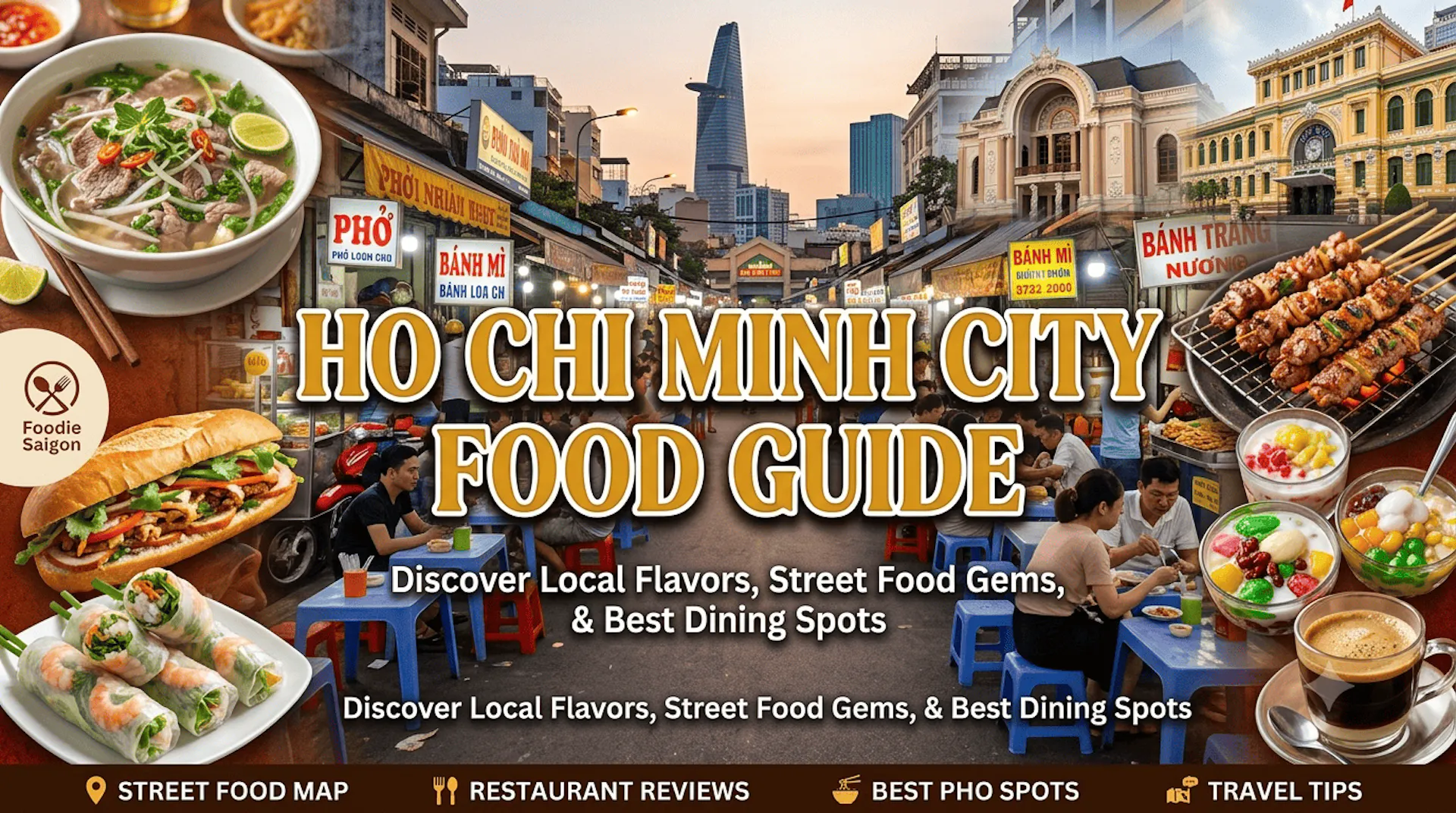
Ho Chi Minh City is one of Asia's most exciting food destinations, offering everything from world-famous Vietnamese street food to modern fine dining. Visitors can enjoy pho, banh mi, com tam, hu tieu, fresh seafood, delicious desserts, and countless local specialties across bustling markets and hidden neighborhood eateries. The city's diverse culinary scene reflects both traditional Southern Vietnamese flavors and international influences. This Ho Chi Minh City Food Guide introduces the must-try dishes, local favorites, and unforgettable food experiences that define vibrant Saigon.
On this page
- The Foundations of Saigon Cuisine: Core Pillars of our Ho Chi Minh Food Guide
- The Art of the "Hẻm": Navigating the Subterranean Ho Chi Minh Food Guide
- Regional Diversity and Modern Evolution in our Ho Chi Minh Food Guide
- Practical Culinary Logistics: Executing the Ho Chi Minh Food Guide
- Conclusion: Embracing Our Ho Chi Minh Food Guide
To step onto the vibrating pavement of Vietnam’s southern metropolis is to instantly succumb to a profound, multi-sensory culinary assault. The atmosphere is thick with the rhythmic clatter of metal spoons against ceramic bowls, the fierce hiss of pork fat rendering over searing charcoal grills, and the complex, deeply savory scent of fermented fish sauce drifting through narrow, labyrinthine corridors. Crafting an authoritative ho chi minh food guide requires recognizing that this sprawling urban expanse is not merely a city, but a relentless, high-velocity gastronomic laboratory. Here, traditional ancestral recipes do not just survive; they evolve through generations of fiercely dedicated cooks, cementing the metropolis as one of the most vibrant and fiercely competitive food capitals in the world. Determining what to eat in Ho Chi Minh City means participating in an ongoing historical dialogue between indigenous tropical ingredients and centuries of global trade. The cuisine reflects an unparalleled culinary syncretism, where the legacy of French colonialism, Chinese mercantile migration, and deep southern agricultural roots collide on a single, vividly colored plastic stool. Prepare to immerse yourself in an evocative dining landscape that rewards curiosity, patience, and a willingness to embrace the chaotic symphony of the tropical streetscape.
The Foundations of Saigon Cuisine: Core Pillars of our Ho Chi Minh Food Guide
The Phở Legacy: Beyond the Bowl
No discussion of authentic Vietnamese cuisine HCMC can begin without addressing the towering cultural monolith of Phở. However, the southern iteration found in the humid streets of Saigon is a distinct, flamboyant departure from its austere, minimalist northern ancestor. The broth here is an exercise in umami-rich fermentation and robust sweetness, often simmered with roasted charred ginger, star anise, cardamom, and heavily caramelized onions, balanced by the addition of rock sugar to counter the intense tropical heat. What truly defines the southern bowl is the mandatory, towering plate of fresh, locally foraged aromatics served alongside it. Diners are expected to actively participate in the flavor architecture, tearing jagged leaves of ngò gai (sawtooth coriander), húng quế (Thai basil), and ngò ôm (rice paddy herb) directly into the steaming liquid. The crunch of raw bean sprouts and the acidic bite of fresh lime complete a complex, interactive ritual that exemplifies the city’s inherent openness to diverse, maximalist flavor profiles.
Cơm Tấm: The Heart of the Street
If noodle soup is the internationally recognized ambassador, then Cơm tấm—literally translated as broken rice—is the undisputed, blue-collar heartbeat of the city. Originally born out of sheer economic necessity as a humble meal for laborers utilizing fractured, unsellable rice grains, this dish has undergone a dramatic evolution into one of the most revered Saigon culinary landmarks. The defining characteristic of the modern plate is the sườn bì chả: an aggressively marinated pork chop, infused with lemongrass and shallot, caramelized over a smoky wood-fired grill until the edges are beautifully charred and glistening with rendered fat. This smoky protein rests atop the uniquely textured, nutty broken grains, accompanied by shredded pork skin dusted in toasted rice powder (bì) and a steamed egg meatloaf (chả). The entire composition is unified by the liberal application of nước chấm, a highly seasoned, sweet-and-sour fish sauce concoction that cuts through the rich, heavy fats and elevates the humble ingredients into a masterclass of textural contrast and bold, savory satisfaction.
Bánh Mì: The French-Vietnamese Symbiosis
The global phenomenon of the Vietnamese sandwich finds its absolute pinnacle within the chaotic thoroughfares of this metropolis. The Saigon Bánh mì represents the ultimate triumph of culinary syncretism, transforming the heavy, dense French baguette into an airy, shatteringly crisp vessel perfectly engineered for the tropics. The structural integrity of the bread is crucial; it must audibly crack upon the first bite, yielding to a pillowy, hollow interior designed to hold a staggering array of contrasting fillings. The architecture of the sandwich typically involves a foundation of rich, artisanal pork liver pâté and a generous smear of homemade egg yolk mayonnaise. This luxurious base is then layered with an assortment of cold cuts, roasted pork belly, or densely spiced sausage. Yet, it is the sharp, acidic intervention of pickled daikon and carrots (đồ chua), raw cucumber spears, fresh cilantro, and the sudden, fiery spike of sliced bird’s eye chilies that truly balances the richness. This portable feast is the quintessential embodiment of HCMC food culture, delivering a meticulously engineered explosion of fat, acid, crunch, and heat that was born on the streets and perfected by generations of fiercely independent street vendors.
The Art of the "Hẻm": Navigating the Subterranean Ho Chi Minh Food Guide
Dining in the Urban Labyrinth
To strictly remain on the broad, heavily trafficked commercial boulevards is to completely miss the subterranean culinary heartbeat of the city. The absolute best Saigon street food is inevitably located deep within the labyrinthine network of narrow alleyways known locally as the hẻm. These confined, concrete corridors function as the city’s extended kitchens, dining rooms, and social clubs, operating with a fierce, localized independence away from the glare of mainstream tourist traffic. Entering a food-centric hẻm is an exercise in sensory overload. You must navigate past parked motorbikes, low-hanging electrical wires, and the intense, localized heat radiating from massive, bubbling aluminum stockpots. The dining aesthetic is aggressively functional, entirely devoid of the polished, clinical veneer of Western fine dining. The social etiquette here dictates that patrons sit shoulder-to-shoulder on tiny, primary-colored plastic stools, sharing cramped metal tables laden with jars of fermented garlic and bruised chilies. This stark lack of pretense is precisely the hallmark of genuine, unvarnished quality. The focus is exclusively on the integrity of the dish, creating a hyper-democratic environment where wealthy executives and blue-collar mechanics dine side-by-side, united entirely by their unwavering devotion to a perfectly executed bowl of noodles.
Iconic Alleyway Stalls
The most respected culinary institutions within these micro-communities do not rely on aggressive online marketing or flashy signage to ensure their survival. Instead, these historical food stalls thrive entirely on the unforgiving, highly critical word-of-mouth recommendations of the local neighborhood. Many of these legendary vendors have occupied the exact same square meter of concrete for decades, passing down fiercely guarded, ancestral spice profiles from generation to generation. When you encounter a dark, humid alleyway where a queue of patient locals snakes around the corner at dawn, you have discovered a verified institution. These vendors typically specialize in singular, hyper-focused preparations. You might find an elderly matriarch who has dedicated fifty years of her life to perfecting a singular recipe for Bánh canh cua, a thick, viscous tapioca noodle soup deeply fortified with the sweet, briny essence of local mud crab. Or you might stumble upon a perpetually crowded, makeshift charcoal grill radiating the intoxicating aroma of Bò lá lốt, minced beef seasoned with fragrant spices, tightly rolled in wild betel leaves, and roasted over a glowing wood fire. The authority of these stalls within the local food hierarchy is absolute, functioning as living museums of regional gastronomy that aggressively resist the homogenization of modern urban development.
Regional Diversity and Modern Evolution in our Ho Chi Minh Food Guide
The Influence of Cholon
The sheer depth of the city's culinary repertoire cannot be understood without embarking on a deep, investigative foray into Chợ Lớn (Cholon), the sprawling historical Chinese district that anchors the western edge of the metropolis. This heavily populated enclave serves as a profound testament to the culinary syncretism that has continuously shaped the broader urban palate over centuries. The streets here are enveloped in the heavy, medicinal fragrance of roasted herbs and the rich, savory steam rising from bamboo baskets. Cholon’s influence is perhaps most famously represented by Hủ tiếu Nam Vang, a multifaceted noodle dish that beautifully illustrates the intersection of Cambodian, Chinese, and Vietnamese culinary traditions. The dish features a deeply savory, pork-bone and dried-squid infused broth, poured over chewy tapioca noodles, and aggressively garnished with minced pork, quail eggs, poached shrimp, and a liberal scattering of fried garlic and Chinese celery. Beyond the noodle soups, the district is an absolute haven for diverse dumpling variations, from delicately pleated Há cảo (steamed shrimp dumplings) to dense, pan-fried buns bursting with peppery pork and ginger. To dine in Cholon is to experience a powerful, ancestral flavor architecture that has fundamentally expanded the definition of southern Vietnamese gastronomy.
The Modern Foodie Revolution
While the street-level heritage remains fiercely protected, the city is simultaneously undergoing a profound and highly sophisticated gastronomic renaissance. A new generation of dynamic, internationally trained chefs is actively returning to the metropolis, intent on reinventing local flavors without compromising the foundational integrity of the cuisine. This modern culinary movement is rapidly transforming forgotten, decaying colonial villas and brutalist apartment blocks into cutting-edge dining spaces that rival those of Tokyo or Paris. These culinary innovators are aggressively championing a highly localized farm-to-table philosophy, forging direct relationships with organic farmers in the central highlands and artisanal fishermen along the southern coast to source exceptionally high-quality indigenous ingredients. We are witnessing the rise of modern fusion concepts where the deep, umami-rich fermentation techniques of the Mekong Delta are applied to premium, imported proteins, or where ancestral spice profiles are deconstructed and presented with exacting, molecular precision. Yet, the most successful of these modern establishments demonstrate a profound, underlying respect for the ancestral roots of the dishes. They recognize that true innovation in this city requires a deep, unwavering understanding of the traditional, charcoal-infused heritage that serves as the undisputed bedrock of the local culinary identity.
Practical Culinary Logistics: Executing the Ho Chi Minh Food Guide
To seamlessly navigate this chaotic, high-velocity gastronomic environment, an intrepid traveler must develop a highly attuned sense of urban intuition. When identifying authentic eateries, one must completely ignore conventional western metrics of dining quality, such as polished interior decor, English-translated menus, or aggressive street-side solicitation. Instead, you must become a student of local crowd dynamics. The absolute, unshakeable rule of thumb in this metropolis is to seek out the high-turnover stalls. Whether you are navigating the chaotic, neon-lit arteries of District 1 or exploring the deep, residential grids of the outer boroughs, look for the unassuming stalls that are practically vibrating with local activity. A dense cluster of parked motorbikes, a line of impatient delivery drivers, and a frantic, fast-moving service rhythm are the undisputed indicators of supreme freshness and ancestral culinary authority. High turnover ensures that highly perishable ingredients—such as fresh river herbs, raw seafood, and delicate rice noodles—are constantly replenished, virtually eliminating the risk of foodborne illness while guaranteeing peak flavor intensity.
Equally critical is mastering the unspoken cultural etiquette that governs the bustling, highly communal atmosphere of the street food stall. Eating on the pavement in this city is inherently a shared, intimate experience. You will routinely be asked to share cramped, wobbly tables with complete strangers; you must embrace this lack of personal space with grace and an open demeanor. Patience is a mandatory virtue. The cooks are engaging in a highly choreographed, high-heat performance, and demanding rapid, customized service is considered deeply disrespectful to their craft. Allow the vendor to dictate the pace of the meal. Furthermore, always utilize the array of condiments provided on the table—the bruised chilies, the fermented garlic vinegar, the sharp lime wedges—to customize your bowl, as this interactive seasoning process is expected and encouraged by the chefs. Finally, take a brief moment to express genuine, visible appreciation to the vendors upon departure. These exhausted, fiercely dedicated men and women are the true, uncompromising guardians of Saigon’s flavors, working grueling hours in oppressive tropical heat to preserve the culinary heritage of the nation.
Conclusion: Embracing Our Ho Chi Minh Food Guide
Ho Chi Minh City offers arguably the most dynamic, relentless, and intellectually satisfying food scene in Vietnam, if not the entire Asian continent. It is an urban environment where the deep respect for ancestral, slow-cooked culinary traditions perfectly intersects with a fierce, forward-looking entrepreneurial spirit. By actively shedding your preconceptions, abandoning the sterile confines of hotel dining rooms, and bravely plunging into the chaotic, smoke-filled labyrinth of the local alleyways, you will be rewarded with a profound, visceral understanding of the city's true soul. This definitive ho chi minh food guide serves as your compass. Which legendary dish—the smoky, intensely comforting classic broken rice or the complex, aromatically sophisticated beef noodle soup—are you most excited to seek out and devour first?
> Read more: Ho Chi Minh Travel Guide

By Roy Trinh
Editor
Roy Trinh is a travel writer and destination expert at Go Visit Vietnam, dedicated to helping travelers discover the beauty, culture, and diversity of Vietnam. Through well-researched travel guides, practical itineraries, local insights, and authentic recommendations, Roy shares valuable information to inspire memorable journeys across the country. From vibrant cities and breathtaking landscapes to regional cuisine and cultural heritage, every guide is created to help visitors experience Vietnam with confidence and curiosity.
Frequently Asked Questions About Ho Chi Minh City Food Guide
What food is Ho Chi Minh City famous for?
Ho Chi Minh City is famous for banh mi, com tam, hu tieu, pho, fresh seafood, Southern Vietnamese specialties, vibrant street food, and an incredible variety of local and international cuisine.
Where can I find the best street food in Ho Chi Minh City?
Excellent street food can be found around Ben Thanh Market, District 1, District 3, District 5 (Chinatown), Nguyen Thuong Hien Street, Vinh Khanh Street, and many neighborhood food markets throughout the city.
Is Ho Chi Minh City a good destination for food lovers?
Absolutely. Ho Chi Minh City is considered one of Southeast Asia's top food destinations, offering everything from traditional Vietnamese dishes and street food to modern restaurants, cafés, rooftop dining, and international cuisine.
What local dishes should I try in Ho Chi Minh City?
Must-try dishes include com tam (broken rice), banh mi, hu tieu, bun thit nuong, banh xeo, goi cuon (fresh spring rolls), bo kho (beef stew), and a wide variety of fresh tropical desserts and beverages.
What food souvenirs should I buy in Ho Chi Minh City?
Popular food souvenirs include Vietnamese coffee, dried fruits, cashew nuts, traditional sweets, local spices, fish sauce, instant Vietnamese coffee, and packaged snacks available at specialty stores, supermarkets, and traditional markets.
Advertising box