
Lai Chau Food Guide
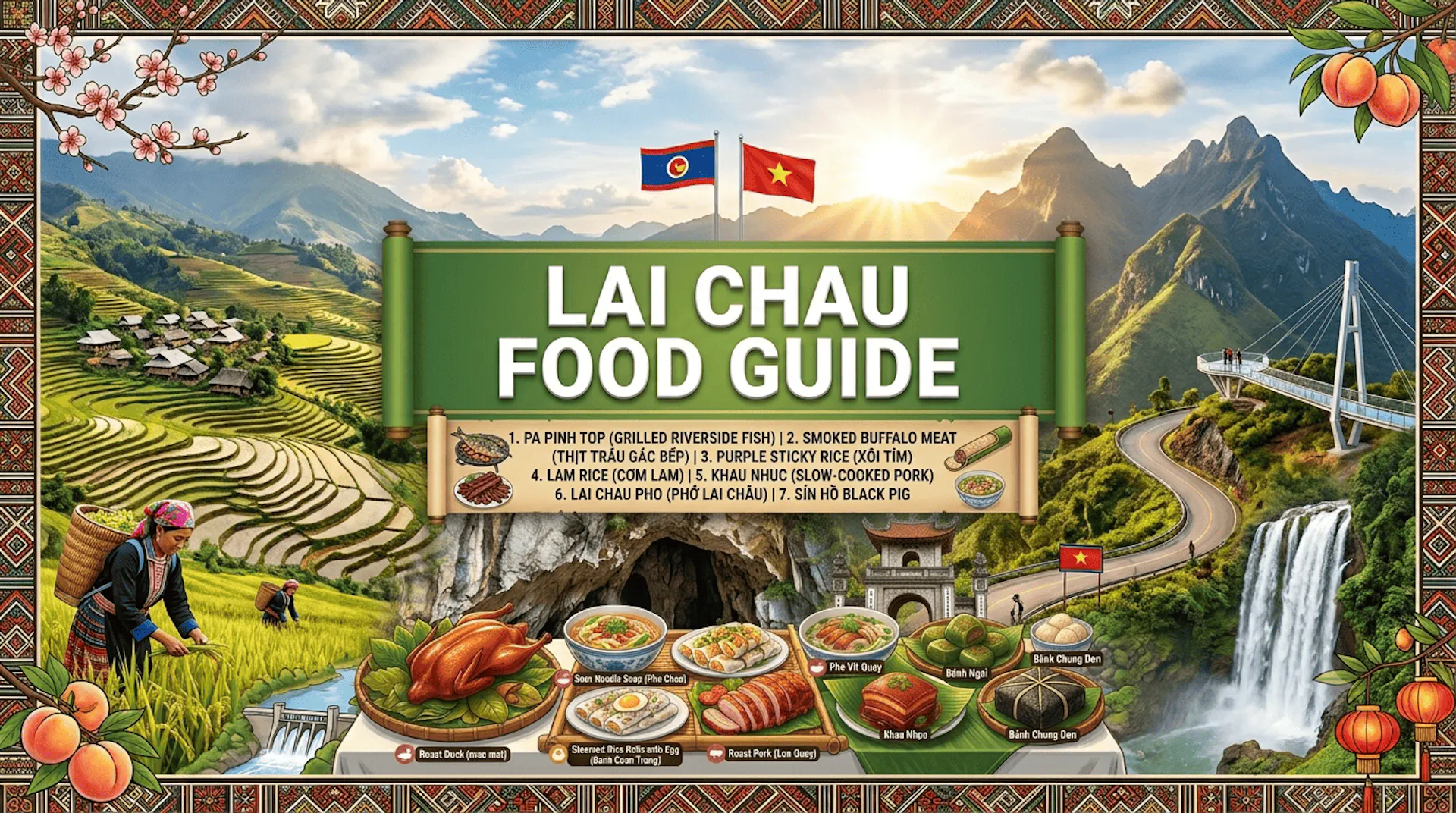
Lai Chau's cuisine reflects the rich cultural traditions of Vietnam's northwest ethnic communities, featuring fresh mountain ingredients and distinctive regional flavors. Visitors can enjoy smoked buffalo meat, sticky rice, grilled stream fish, wild vegetables, mountain herbs, and traditional dishes prepared using time-honored recipes. From local markets to village kitchens and family-run restaurants, every meal offers an authentic taste of the region's heritage. This Lai Chau Food Guide introduces the province's must-try dishes and unforgettable culinary experiences.
On this page
To cross the geographic threshold into the northwestern frontier of Vietnam is to immerse oneself in a sensory landscape defined by the pungent aroma of wild-foraged herbs, the smoky depth of meats dried over highland hearths, and the crisp taste of aquatic ingredients sourced directly from mountain streams. For the culinary anthropologist investigating these terroir-driven flavor architectures, this isolated province represents a profound archive of human resilience. This exhaustive lai chau food guide serves as a definitive map for the traveler, moving beyond the superficiality of transit-stop dining to uncover the exact flavor profiles that have defined this borderland for generations. The Lai Chau culinary scene is a living record of mountain adaptation, where severe geography dictates ingredient availability and ancestral wisdom has refined a robust, highly sophisticated gastronomic identity. By navigating the smoky rituals of highland village kitchens, you engage with a resourceful food culture demanding meticulous ethnographic documentation.
The Iconic Highland Delicacies
The gastronomic identity of the region is anchored by historical delicacies reflecting the stark necessity and aesthetic ambition of the northern borderlands. These meals are cultural artifacts that demand a rigorous commitment to traditional roasting integrity, texture, and preparation methodology, representing the highest evolution of the regional palate and providing the definitive answer to what to eat in Lai Chau. These meticulous recipes showcase a deep understanding of thermal dynamics and organic chemistry passed down through centuries of isolation.
Pa Pỉnh Tộp: The Culinary Pride of the Thai People
Pa Pỉnh Tộp (grilled folded fish) is the culinary sovereign of the Thai ethnic community, acting as a narrative vessel for the province unique riverine geography. The expertise involved is nothing short of artisanal. The process begins with selecting local fish, prized for firm texture, caught from fast-flowing streams. The craft involves butterfly-cutting the fish along the spine and stuffing the cavity with a guarded, potent blend of wild forest aromatics, most notably mắc khén (the wild mountain pepper), alongside garlic, ginger, and wild herbs. The cook performs a specific, ritualized folding technique, folding the fish inside out and securing it with split bamboo, before grilling it slowly over a hardwood charcoal fire. This ensures heat penetrates the flesh evenly, resulting in a crackling, charred skin, while the interior remains remarkably tender and heavily infused with the citrus-like, numbing high notes of the forest spices.
Thịt Gác Bếp: The Art of Highland Preservation
Complementing the grilled fish is the revered Thịt gác bếp (smoke-dried meat), a testament to the resourcefulness and preservation management required in traditional borderland cooking. This delicacy is crafted by selecting lean cuts of buffalo or pork, meticulously cleaning the meat, and rubbing it densely with mắc khén, chili, and indigenous spices. The meat is hung in the rafters directly above the perpetual kitchen hearth. Traditional hearth curing transforms the local livestock into a provincial staple characterized by extreme textural contrast. The choice of hardwood and drying duration are critical to the flavor profile, ensuring the exterior cures into a hard crust while the interior muscle fibers absorb deep, aromatic wood smoke. This ancient method serves as a sophisticated culinary technique and a cultural heritage marker, reflecting the historical necessity of food security in freezing, high-altitude environments.
Cá Suối Nướng: The Mountain Stream Bounty
Cá suối nướng (grilled stream fish) represents another essential pillar of authentic Lai Chau delicacies, acting as a direct reflection of the pristine alpine hydrology. Unlike the muddy, bottom-feeding species of the lowlands, these fish thrive in freezing, crystal-clear currents, resulting in meat that is incredibly sweet, firm, and devoid of any earthy aftertaste. The traditional cooking techniques prioritize absolute minimal intervention to preserve this natural, delicate sweetness. The fish are typically skewered whole on fresh bamboo and roasted directly over open flames, utilizing only a faint dusting of forest salt and local chili. Eating these freshly caught stream fish provides a visceral, sensory experience that directly connects the diner to the rugged ecology of the province, demonstrating unparalleled aquatic resourcefulness.
Forest Treasures and Ethnic Flavors
As the culinary investigator moves away from the river basins toward the dense, high-altitude alpine canopies, the foodways transition into a realm dominated by ancestral foraging techniques and terroir-driven produce. Here, the necessity of surviving the cold, oxygen-thin climate has birthed a complex tradition of forest-based staples that define traditional Lai Chau cuisine.
Rêu Đá: The Forest’s Hidden Umami
Rêu đá (edible rock moss) serves as one of the most fascinating examples of ethnic culinary biodiversity in the entire northwestern frontier. Harvesting this moss from the submerged rocks of fast-flowing mountain streams is an arduous, physically demanding task that requires deep ecological knowledge. The moss must be meticulously washed to remove sand and river debris before it can be processed. The traditional preparation methods, frequently involving stir-frying with wild garlic or tightly wrapping the moss in banana leaves for grilling over charcoal, transform this simple aquatic plant into a hallmark of highland resourcefulness. The resulting dish provides a primary source of indigenous umami, offering a complex, deeply savory flavor profile that perfectly complements the robust, heavy meats of the mountain diet. It is a true culinary revelation for the intrepid traveler.
Forest-Foraged Greens and Bamboo Shoots
The daily diet of the province relies heavily on the intelligent, traditional use of rural ingredients that are gathered directly from the surrounding ecosystem rather than purchased. The foragers of the region possess an encyclopedic knowledge of the high-altitude canopy, utilizing an incredible diversity of wild greens, medicinal roots, and bitter bamboo shoots. Ethnic communities actively utilize these potent ingredients to fundamentally balance the caloric density of their diet. The sharp, vibrant acidity of these forest-foraged greens, often lightly blanched or incorporated into complex broths, is absolutely essential for achieving the clean, vibrant flavor profiles celebrated in the local culture. Exploring the highland food culture of Lai Chau requires an appreciation for these terroir-driven foraging methodologies, which elevate seemingly mundane plants into crucial, flavor-defining components of the provincial culinary identity.
Traditional Highland Fermentation
The diverse ethnic groups of Lai Chau, particularly the H'mong and Dao communities, utilize highly sophisticated, indigenous fermentation techniques to preserve their harvest and dramatically enhance their flavor profiles. These methodologies manifest in a variety of traditional sauces, fermented bamboo shoots, and aged soy pastes that serve as the structural backbone for almost every meal in the highland interior. The fermentation process is a slow-maturation methodology requiring months of careful monitoring in the cold mountain air, resulting in products significantly more complex and aromatic than their industrial counterparts. These ferments provide the essential, umami-rich foundation for the province’s most famous stews and dipping sauces, serving as the sensory anchor that connects every highland kitchen to the vibrant, ecological history of the forest. Understanding these fermentation practices provides a vital window into the ancestral survival strategies of the borderland.
The Market Landscape and Culinary Geography
To grasp the true culinary pulse of the province, one must look directly at the bustling market landscape, where the daily trade of ingredients provides the most authoritative evidence of the provincial palate and the seasonal availability of the forest bounty.
Navigating Highland Markets
The highland market, whether it be the massive, high-volume activity of the central Lai Chau city market or the remote, fog-shrouded weekend gatherings in Sin Ho and Dao San, is the primary ethnographic research site for any serious student of the provincial diet. These spaces operate on a rhythm dictated by the first light of dawn and the immense logistical challenges of mountain transit. Navigating these stalls requires a willingness to observe the mundane, transactional reality of the province. You will witness vendors sorting through piles of freshly gathered, forest-foraged greens, bartering over the price of the morning's livestock, and measuring out mounds of local spices. By observing the flow of these ingredients, you gain an immediate, visceral understanding of the dietary foundations of the area. It is exactly here that you find the herbs forming the base of the morning broths, the tubers utilized in the evening porridges, and the pungent chili pastes defining the province's character. The market is a living, breathing archive of the regional diet, providing a vivid, sensory-heavy context for the provincial culinary philosophy: a steadfast commitment to strict seasonality, localized regional sourcing, and the creative utilization of the entire available mountain ecosystem.
The Custodians of Taste
The genuine culinary heritage of the borderlands is strictly maintained by family-run stalls and household kitchens serving as the primary venues for experiencing the best Lai Chau dishes. These intimate venues are the absolute custodians of regional flavors, frequently operating in the same wooden structures for decades and utilizing recipes refined by multiple generations of the same family. To eat at these local stalls is to enter a space of immense cultural importance; the cook is not merely a provider of calories but a fierce protector of ancestral memory. The consistency of their menus, the extreme specificity of the ingredients used, and their rigid adherence to traditional preparation methods are the definitive markers of these custodians. By patronizing these small, family-owned operations rather than modern, commercialized tourist dining establishments, the traveler contributes directly to the continued sustainability of the provincial culinary identity, ensuring that the labor-intensive recipes are passed on rather than permanently replaced by industrial alternatives.
Practical Culinary Logistics and Etiquette
Executing a highly successful, intellectually grounded food tour across this province requires a pragmatic adherence to local schedules and a sophisticated understanding of regional social dynamics.
Identifying Authentic Eateries
When attempting to distinguish true, heritage-based establishments from modern commercial adaptations, you must rely entirely on the demographic composition of the patrons and the visual cues of long-term operational history. Seek out heavily weathered signs listing only one or two specific preparations, a roasting hearth fired by actual hardwood charcoal rather than industrial gas, and a clientele composed exclusively of local ethnic families. Authentic vendors base their menus strictly on seasonal menu variety, demonstrating a fierce dedication to traditional ingredient sourcing. They procure their Rượu ngô (corn wine) and mountain pork from specific, trusted highland farmers whom they have maintained business relationships with for decades. This traceability is the absolute hallmark of genuine culinary quality and deep local engagement, ensuring that every single dish accurately reflects the true, uncompromised essence of the rugged mountain terrain and the resilient people who inhabit it year after year.
Cultural Etiquette
Dining in the northern border regions is inherently a communal, deeply social activity. The dining culture is frequently conducted in spaces that are humble, focusing entirely on the freshness and quality of the communal platter. Whether you are sitting on a low stool in a bustling market stall or sharing a meal inside a traditional wooden stilt house, protocol remains rigidly consistent: you must show immense respect for the labor-intensive cooking methods and engage politely with the local hosts who act as the primary stewards of the region's history, recognizing that your participation in their ancestral foodways is a profound privilege that actively bridges vast cultural and geographical divides.
Conclusion
Lai Chau arguably offers one of the most honest, intellectually stimulating, and environmentally reflective culinary scenes in Northern Vietnam. By actively refusing to dilute its robust flavor profiles for the comfort of the mass market, the province has successfully guarded the integrity of its regional foodways. As you conclude your reading of this definitive lai chau food guide, you must pause to carefully consider the immense depth of the authentic gastronomic history you are about to encounter on your upcoming expedition. Which unique regional specialty, the iconic grilled stream fish or the traditional smoke-cured buffalo, are you most excited to taste and document first?
Read more: Lai Chau Travel Guide

By Roy Trinh
Editor
Roy Trinh is a travel writer and destination expert at Go Visit Vietnam, dedicated to helping travelers discover the beauty, culture, and diversity of Vietnam. Through well-researched travel guides, practical itineraries, local insights, and authentic recommendations, Roy shares valuable information to inspire memorable journeys across the country. From vibrant cities and breathtaking landscapes to regional cuisine and cultural heritage, every guide is created to help visitors experience Vietnam with confidence and curiosity.
Frequently Asked Questions About Lai Chau Food Guide
What food is Lai Chau famous for?
Lai Chau is famous for mountain specialties such as smoked buffalo meat (thịt trâu gác bếp), bamboo-tube rice (cơm lam), grilled stream fish, sticky rice, wild vegetables, hill chicken, and dishes seasoned with traditional mountain herbs and spices.
Where can I try authentic local food in Lai Chau?
Visitors can enjoy authentic cuisine at local markets, family-run restaurants, village homestays, and eateries in Lai Chau City, Sin Ho, and ethnic minority communities throughout the province.
Is Lai Chau a good destination for food lovers?
Yes. Lai Chau offers a unique culinary experience shaped by the traditions of the Thai, Dao, H'Mong, and other ethnic groups, with fresh mountain ingredients and recipes passed down through generations.
What local specialties should I try in Lai Chau?
Must-try specialties include smoked buffalo meat, bamboo-tube rice, grilled pork, sticky rice, freshwater fish, mountain vegetables, wild mushrooms, herbal dishes, and locally produced teas.
What food souvenirs should I buy in Lai Chau?
Popular souvenirs include smoked buffalo meat, mountain tea, dried bamboo shoots, wild honey, medicinal herbs, local spices, traditional rice products, and handcrafted foods produced by ethnic communities.
Advertising box