
Nghe An Food Guide
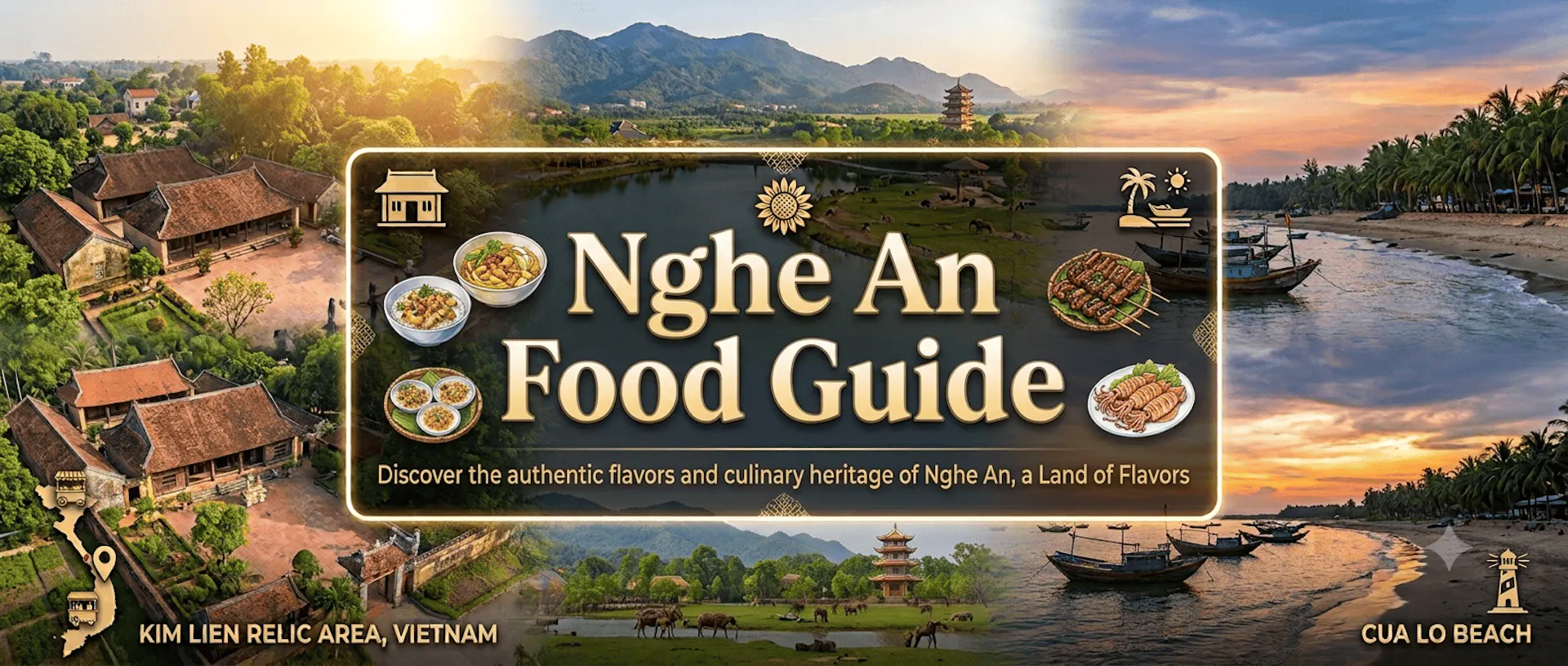
Nghe An offers a rich culinary tradition that combines fresh coastal seafood with hearty north-central Vietnamese flavors. Visitors can enjoy eel porridge, eel soup, grilled seafood, traditional rice dishes, local noodles, and a variety of regional specialties prepared using time-honored recipes. From bustling markets and seaside restaurants to family-run eateries, every meal reflects the province's culture and agricultural heritage. This Nghe An Food Guide introduces the must-try dishes, authentic local flavors, and memorable dining experiences waiting throughout this diverse province.
On this page
- Unveiling the Eel Culinary Legacy within this Nghe An Food Guide
- Rustic Mountain and Field Flavors in the Nghe An Food Guide
- The Coastal and Maritime Bounty Highlighted by the Nghe An Food Guide
- Practical Culinary Logistics and Etiquette for the Nghe An Food Guide
- Conclusion: Mastering the Nghe An Food Guide
To cross the geographic threshold into the province of Nghe An is to enter a distinct micro-climate and cultural territory traditionally known as Xứ Nghệ. Here, the landscape is defined by a dramatic convergence of natural forces, where the steep, rain-shadowed slopes of the Truong Son mountain range drop sharply into the sun-bleached alluvial plains of the Lam River before dissolving into the expansive waters of the East Sea. For the professional culinary anthropologist, the specialized food critic, and the cultural advocate, investigating the gastronomic systems of this territory requires a deep understanding of human adaptation and environmental resilience. The regional cuisine does not mirror the delicate, royal-influenced subtlety of the imperial north or the hyper-sweet profiles of the modern south. Instead, it presents a bold, robust flavor architecture characterized by intense spices, deep localized fermentations, and a rustic simplicity that elevates humble ingredients into markers of profound provincial pride. By presenting this comprehensive nghe an food guide, we aim to decode the historical and environmental factors that have shaped the local palate. From the pungent aroma of double-fermented soybean paste to the silky, wood-fired sheets of steamed rice batter, the foodways of Nghe An serve as a living archive of survival and creativity, transforming the yields of unpredictable soil and sea into a highly sophisticated, unvarnished gastronomic identity that defines the resilient spirit of Central Vietnam.
Unveiling the Eel Culinary Legacy within this Nghe An Food Guide
The absolute pinnacle of the regional food system is anchored by the complex manipulation of the swamp eel, an ingredient that has ceased to be a mere source of protein and has instead evolved into the definitive culinary sovereign of the province. To truly understand the baseline flavors of the region, one must investigate the rigorous artisanal processes that transform this field-harvested creature into a high-status gastronomic asset.
The Craft of Eel Preparation
The swamp eel, known locally as Lươn Nghệ An, represents the gold standard of freshwater protein across the domestic Vietnamese landscape. Unlike the large, thick-skinned farmed varieties that dominate the commercial markets of the metropolitan deltas, the wild swamp eels harvested from the muddy, nutrient-dense rice paddies of Yen Thanh, Do Luong, and Dien Chau are structurally and chemically distinct. These wild specimens are smaller, characterized by a firm, muscular flesh and a highly concentrated natural sweetness that is a direct result of their active foraging within the native clay soils. The artisanal methodology required to clean and process these eels is incredibly labor-intensive, demanding an advanced degree of manual dexterity to preserve the integrity of the muscle tissue. Traditional cooks reject the use of modern iron knives, which induce rapid oxidation and compromise the delicate iron-rich flavor profiles of the blood. Instead, the eels are cleaned using natural abrasives such as wood ash, lime juice, or rough banana leaves to strip the external mucilage without damaging the skin. The flesh is then systematically separated from the spine using sharp, hand-carved bamboo splints. This traditional preparation integrity ensures that the eel remains entirely free of any off-odors, retaining its clean, sweet, and distinctly earthy character before it ever comes into contact with the heat of the hearth.
Variations of Eel Dishes
The execution of Lươn Nghệ An across the local street stalls is divided into three primary liquid architectures: Bún lươn (eel noodle soup), Súp lươn (eel soup), and Cháo lươn (eel porridge). Each dish relies on a foundational broth constructed by simmering the crushed, roasted vertebrae and heads of the eels with charred ginger and local shallots for hours, yielding a light, mineral-heavy stock that forms the canvas for intense local seasoning. The eel meat itself is flash-fried in a dense reduction of annatto oil, turmeric paste, and an abundance of small, highly capsaicin-dense local red chilies. This process creates a vibrant, sunset-orange glaze that seals the moisture inside the flesh while imbuing it with a fiery, aromatic depth. When compiling data on what to eat in Nghe An, the structural differences between these variations become paramount. The Súp lươn is an intense, concentrated bowl of spiced broth and tender eel strips, traditionally served alongside crusty, wood-fired baguettes or sheets of steamed rice pastry to absorb the fiery liquid. In contrast, the Cháo lươn utilizes whole-grain rice simmered slowly until the kernels completely fracture, creating a silky, starch-rich matrix that mellows the intense heat of the chili oil. The absolute, non-negotiable finishing element across all variations is the inclusion of Lá hành tăm (chive leaves), an indigenous botanical infusion that possesses a sharp, allium-forward pungency essential for neutralizing the lingering gamey notes of the swamp proteins.
The Cultural Significance of Eel
To observe the consumption of eel dishes in Vinh City or the rural communes is to witness a profound social ritual that anchors the daily life of Xứ Nghệ. This is not a cuisine designed for solitary convenience; it is a highly communal experience that serves as the primary vector for local hospitality and familial gathering. The local Nghe An street food culture dictates that the morning begins at the communal table, where residents from all socio-economic strata sit side-by-side on low stools, navigating the intense heat and spice of the early morning soup while discussing the agricultural or commercial logistics of the day. To present a guest with a bowl of perfectly prepared, fiery eel soup is the highest expression of local respect, signaling a willingness to share the hard-won wealth of the local fields. The dish functions as an environmental metaphor for the people themselves: bold, uncompromising, and deeply tied to the clay and water of the home soil, making the eel stalls the true centers of cultural endurance within the modernizing provincial landscape.
Rustic Mountain and Field Flavors in the Nghe An Food Guide
As the culinary investigator moves away from the river systems toward the foothills of the interior, the foodways transition into a realm dominated by ancestral preservation techniques. Here, the necessity of surviving seasonal droughts and intense monsoon cycles has birthed a complex tradition of fermentation that defines the everyday palate.
Nhút Thanh Chương: The Art of Fermentation
The definitive symbol of agricultural resourcefulness in the interior districts is Nhút Thanh Chương, a traditional pickled condiment that represents the ultimate triumph of culinary resilience over environmental adversity. Born in the mountainous district of Thanh Chương, where the harsh Lao winds historically parched the soil and limited crop diversity, this dish utilizes the immature, green jackfruit that would otherwise fail to mature. The green jackfruit is harvested, stripped of its spiky outer rind, and its fibrous white flesh is meticulously shredded into thin, uniform ribbons using heavy, traditional cleavers. These strips are then aggressively massaged with local sea salt, packed tightly into heavy earthenware jars alongside crushed ginger, chili, and sugarcane pieces, and weighted down with smooth river stones to undergo a lactic acid fermentation process. The resulting product is a complex, deeply umami-rich condiment that possesses a crunchy, fibrous texture and a sharp, lactic acidity that cuts through the winter dampness. Nhút Thanh Chương is integrated into the daily diet in numerous ways: squeezed dry and stir-fried with local pork belly, simmered in rustic fish soups, or served completely raw as a pungent companion to simple boiled vegetables, proving that the local population can transform a basic, unripened fruit into a high-status pillar of regional identity.
Tương Nam Đàn: The Liquid Heritage
No serious investigation of traditional Nghe An cuisine can proceed without an authoritative analysis of Tương Nam Đàn, a double-fermented soybean paste that serves as the structural baseline for nearly every savory recipe in the province. Unlike the smooth, dark soy pastes of the northern delta, the version crafted in the historic commune of Nam Dan is defined by its visible texture, its bright golden-amber hue, and its unique layering of raw ingredients. The production process requires months of meticulous environmental management, beginning with the roasting and grinding of local non-GMO soybeans, which are then mixed with water and allowed to ferment naturally in the open air. Simultaneously, sticky rice or corn is steamed, inoculated with specialized native molds, and dried to create the fermentation starter. These two elements are combined in massive ceramic jars and left to mature under the intense summer sun, requiring the master fermenter to stir the mixture daily at specific solar intervals. The final product features distinct fragments of softened soy cotyledons suspended in a thick, intensely sweet and salty liquid that delivers a robust umami profile unmatched by industrialized soy sauces. It is the essential dipping medium for local goat meats, the base for slow-braised river fish, and the sensory anchor that connects every modern Nghe An kitchen to its ancestral agrarian roots.
Bánh Mướt: The Daily Essential
Serving as the clean, starch-rich canvas for these intense mountain ferments and fiery eel soups is Bánh mướt, the quintessential steamed rice roll that represents the absolute everyman food of the region. The production of Bánh mướt is a nocturnal ritual practiced by specialized families across the province, utilizing aged, low-gluten rice varieties soaked in cold well water for twelve hours before being ground into a smooth, watery batter. This batter is ladled with extreme precision onto a tightly stretched fabric screen suspended over a roaring, wood-fired cauldron, where it steams for a matter of seconds into a translucent, micro-thin sheet. The cook then lifts the delicate membrane using a long bamboo dowel, swiftly rolls it into a tight cylinder, and brushes the exterior with a light coating of shallot-infused oil. The structural hallmark of authentic Bánh mướt is its physical property: it must be extraordinarily pliable, silky to the tongue, yet possess a distinct elastic chew that resists tearing. Served hot alongside crispy fried shallots, it is dipped into pure fish sauce spiked with local lime juice and bird’s eye chilies, or utilized as the primary wrap for grilled pork skewers, serving as the baseline carbohydrate that fuels the physical labor of the province.
The Coastal and Maritime Bounty Highlighted by the Nghe An Food Guide
The eastern boundary of Xứ Nghệ is defined by an expansive coastline that introduces a completely different, high-velocity element into the regional food system. Here, the focus shifts from the long, slow processes of fermentation to the absolute, uncompromising immediacy of the maritime harvest.
Mực Nháy Cửa Lò: The Sea's Freshness
The absolute pinnacle of coastal luxury within the province is defined by the consumption of Mực nháy Cửa Lò, a term that translates literally to "dancing squid" and represents the absolute highest threshold of marine freshness achievable in contemporary gastronomy. These small, specialized squid are captured during the dark hours of the night by local fishers utilizing low-impact luring lights and hand-nets just off the coast of Cua Lo beach. The defining characteristic of these authentic Nghe An delicacies is their physical state at the moment of consumption: the squids must be alive, their translucent skin actively flashing with iridescence and shifting colors as their chromatophores react to the external environment. To experience Mực nháy Cửa Lò properly, one must dine directly on the floating wooden rafts anchored near the shore, where the squid are transferred from the net straight into a boiling cauldron of water infused with local lemongrass, green scallions, and a dash of rice vinegar for a mere ninety seconds. The resulting texture is a revelation—the meat is incredibly crisp, popping slightly under the teeth, while the interior yields a clean, sweet fluid that tastes purely of the open ocean, entirely free of the soft, rubbery degradation that occurs even hours after a standard commercial landing.
Coastal Seafood Traditions
Beyond the immediate theater of the dancing squid, the broader best Nghe An dishes derived from the maritime shelf are characterized by a profound respect for pristine marine proteins. In the coastal fishing enclaves of Dien Chau and Quynh Luu, the local culinary philosophy dictates a total reduction of complex seasoning to allow the natural quality of the catch to dominate the plate. Mackerel, red snapper, and massive tiger prawns are landed at dawn and immediately prepared using simple, fire-directed methods—either seared raw over white-hot hardwood charcoal or packed into heavy aluminum pots with wild sea salt and steamed in their own juices. The local fishers reject the heavy, sugar-laden marinades of the urban tourist hubs, preferring to serve their seafood alongside simple dipping plates of sea salt mixed with crushed green peppercons and a squeeze of sour lime juice. This rigid adherence to simplicity ensures that the true, mineral-heavy flavor profiles of the East Sea are preserved, providing an authoritative education in the baseline purity of central maritime cuisine.
Market Dynamics
To truly witness the intersection of the province's diverse ecological zones, the culinary investigator must enter the cavernous interior of Chợ Vinh (Vinh Market) during the early hours of the morning. This market is not a manicured space for casual consumption; it is a high-density commercial nexus where the yields of the deep Truong Son forests collide directly with the wet harvest of the coastal fishing vessels. In the seafood quadrant, massive stone slabs are piled high with glistening arrays of skate, blue crab, and silver hairtail, while just a few meters away, upland traders display baskets of wild-foraged forest greens, dried medicinal barks, and jars of mountain honey. The air is thick with the competing aromas of crushed lemongrass, damp clay, and the pervasive brine of the fish-sauce barrels. Observing the transactions between these diverse regional suppliers provides the most authoritative view of the province's dietary foundations, illustrating how the scarcity of the mountains and the abundance of the sea have been synthesized into a single, cohesive, and highly resilient marketplace that feeds the provincial capital daily.
Practical Culinary Logistics and Etiquette for the Nghe An Food Guide
Executing a highly successful, intellectually grounded food tour across this sprawling central province requires a pragmatic adherence to local schedules and a sophisticated understanding of regional street dynamics. The absolute rule for locating the finest nodes of traditional Nghe An cuisine is to operate on the native timeline, which is strictly dictated by the intense thermal realities of the Central Coast.
The most authoritative eel stalls and steamed rice roll vendors open their doors precisely at 5:30 AM and are completely depleted of their morning batches by 8:30 AM, as the local population seeks to consume these hot, highly spiced dishes before the mid-day heat saturates the atmosphere. When attempting to distinguish between authentic, family-run establishments and modern tourist venues, look for the visual cues of long-term operational history: a single, heavily weathered wooden sign listing only one or two specific preparations, a hearth fired by charcoal or rice husks rather than industrial gas, and a clientele composed entirely of multi-generational local families speaking the dense, low-toned dialect of Xứ Nghệ. These venues are typically located within the deep, residential alleyways of Vinh City or along the primary rural highways connecting the agricultural districts, far removed from the manicured promenades of the beach resorts.
Regarding cultural decorum, street dining in Nghe An is fundamentally rooted in an ethic of communal respect and an acknowledgment of intensive manual labor. The street food stalls operate as highly shared spaces; customers are expected to occupy small, low tables efficiently, clearing their spaces promptly once the meal is concluded to allow the high-turnover crowds access to the benches. When interacting with the stall owners, who frequently function as the direct, multi-generational custodians of family recipes handed down over decades, the traveler must exhibit patience and humility. Avoid the urge to demand modifications to the spice levels or ingredient components; the dishes are served as a definitive expression of regional balance, and to ask for a reduction in chili or a removal of the Lá hành tăm is to misunderstand the environmental logic of the food. Express appreciation directly and observe the intense, physical labor of the cooks with the respect it commands, ensuring that your gastronomic engagement remains a meaningful cultural dialogue rather than a passive act of tourism consumption.
Conclusion: Mastering the Nghe An Food Guide
Ultimately, the territory of Nghe An presents one of the most honest, intellectually stimulating, and environmentally reflective culinary landscapes in the entire Indochinese peninsula. By actively refusing to dilute its robust flavor profiles for the comfort of the international market, the province has successfully maintained the absolute purity of its ancestral foodways, ensuring that every bowl of spiced swamp eel, pickled jackfruit, and flash-steamed coastal squid remains a direct articulation of local history and geographic survival. As you utilize this definitive nghe an food guide to structure your independent exploration of this central heartland, you are invited to transition from a casual consumer into a dedicated student of regional gastronomy. Which specific dimension of this resilient flavor architecture are you most prepared to explore first—the intense, turmeric-fired heat of the iconic Súp lươn in the morning stalls, or the deep, complex, and sun-matured depth of the rustic Nhút Thanh Chương served at the rural family table?
> Read more: Nghe An Travel Guide

By Roy Trinh
Editor
Roy Trinh is a travel writer and destination expert at Go Visit Vietnam, dedicated to helping travelers discover the beauty, culture, and diversity of Vietnam. Through well-researched travel guides, practical itineraries, local insights, and authentic recommendations, Roy shares valuable information to inspire memorable journeys across the country. From vibrant cities and breathtaking landscapes to regional cuisine and cultural heritage, every guide is created to help visitors experience Vietnam with confidence and curiosity.
Frequently Asked Questions About Nghe An Food Guide
What food is Nghe An famous for?
Nghe An is famous for cháo lươn (eel porridge), súp lươn (eel soup), eel vermicelli, Cua Lo seafood, grilled specialties, traditional rice dishes, and flavorful recipes unique to north-central Vietnam.
Where can I try authentic local food in Nghe An?
Visitors can enjoy authentic cuisine at local markets, traditional restaurants in Vinh City, seafood restaurants in Cua Lo, family-run eateries, and neighborhood food stalls throughout the province.
Is seafood worth trying in Nghe An?
Absolutely. Cua Lo Beach is one of Vietnam's best seafood destinations, offering freshly caught shrimp, squid, crab, oysters, clams, fish, and many seasonal specialties prepared by local restaurants.
Is Nghe An a good destination for food lovers?
Yes. Nghe An offers a diverse culinary scene that combines mountain ingredients, coastal seafood, and traditional recipes, making it an excellent destination for travelers interested in authentic Vietnamese cuisine.
What food souvenirs should I buy in Nghe An?
Popular food souvenirs include dried seafood, fish sauce, local tea, sesame sweets, traditional rice cakes, chili products, and regional specialties that can be found in local markets and specialty stores across Nghe An.
Advertising box
Read More About Nghe An
Explore more of Nghe An with our complete travel guides. Discover Cua Lo Beach, Pu Mat National Park, President Ho Chi Minh's hometown, waterfalls, traditional villages, local cuisine, suggested itineraries, seasonal travel tips, and practical advice to help you experience one of Vietnam's largest and most culturally rich provinces.
Best Places to Visit in Nghe An
Nghe An is a diverse destination in north-central Vietnam, offering beautiful beaches, national parks, historical landmarks, waterfalls, and rich cultural heritage. Visitors can relax at Cua Lo Beach, explore the forests of Pu Mat National Park, visit President Ho Chi Minh's hometown, discover traditional villages, and enjoy authentic local cuisine. Whether you're seeking nature, history, culture, or coastal relaxation, this guide highlights the best places to visit in Nghe An for an unforgettable journey through one of Vietnam's largest and most fascinating provinces.

Best Things to Do in Nghe An
Nghe An offers a perfect combination of nature, history, culture, and coastal adventures. Relax on Cua Lo Beach, explore the forests of Pu Mat National Park, visit President Ho Chi Minh's hometown, hike to beautiful waterfalls, discover traditional villages, and enjoy authentic local cuisine. Visitors can also experience eco-tourism, river cruises, cultural festivals, and scenic mountain landscapes. This guide highlights the best things to do in Nghe An for travelers seeking unforgettable outdoor adventures, historical discoveries, and authentic experiences in north-central Vietnam.

Best Time to Visit Nghe An
Nghe An is a year-round destination offering scenic beaches, lush national parks, historical landmarks, and authentic cultural experiences. The dry season is perfect for enjoying Cua Lo Beach, exploring Pu Mat National Park, and visiting outdoor attractions, while the rainy season brings cooler temperatures and vibrant green landscapes. Visitors can also experience local festivals, traditional cuisine, and peaceful countryside throughout the year. This guide helps you choose the best time to visit Nghe An based on weather, seasonal highlights, and your travel preferences.

How to Get to Nghe An
Planning a trip to Nghe An? This transportation guide explains how to reach the province by flight, train, bus, or car. Learn about Vinh International Airport, Vinh Railway Station, major routes from Hanoi and Ho Chi Minh City, typical travel times, transportation options, and practical booking tips. Whether you want the fastest journey, the most affordable option, or a scenic road or rail experience, discover the best way to get to Nghe An and start exploring its beaches, mountains, cultural sites, and historic destinations.