
Quang Ngai Food Guide
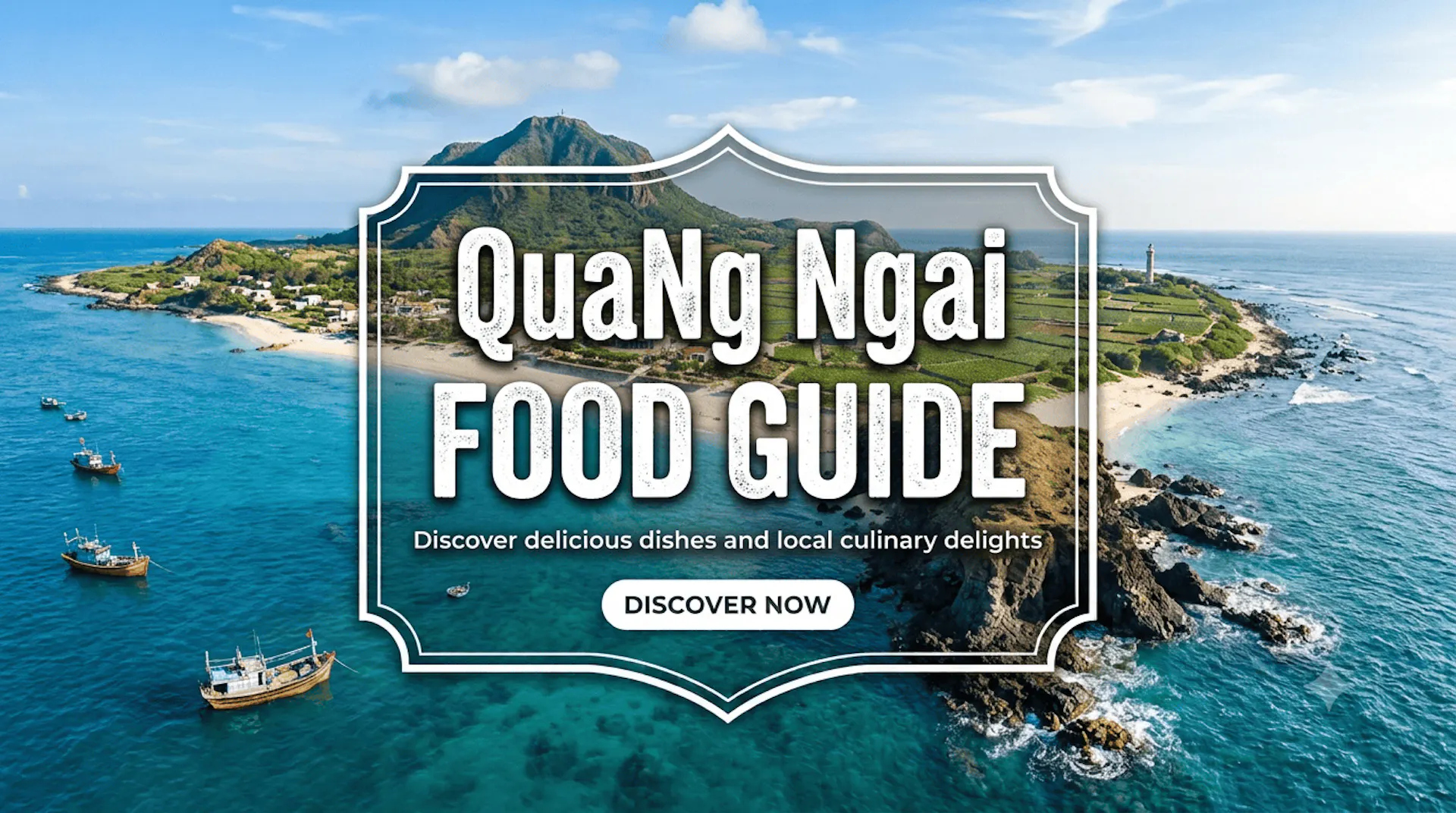
Quang Ngai offers a rich culinary experience inspired by Vietnam's central coastline and the famous Ly Son Island. Visitors can enjoy freshly caught seafood, garlic-infused specialties, fish noodle soup, grilled shellfish, traditional rice dishes, and authentic local recipes passed down through generations. From lively seafood markets to family-run restaurants and island eateries, every meal reflects the province's maritime heritage. This Quang Ngai Food Guide introduces the must-try dishes, local specialties, and unforgettable flavors that define one of Central Vietnam's most rewarding food destinations.
On this page
- The Soul of the River and Coast: Foundations of the Quang Ngai Food Guide
- The Art of Rustic Delicacies: Texture and Sugar Traditions
- Indigenous Flavors and Market Culture: The Social Life of the Table
- Practical Culinary Logistics and Etiquette for the Quang Ngai Food Guide
- Conclusion: Finalizing Your Journey Through the Flavors of Quang Ngai
To arrive in the province of Quảng Ngãi is to step into a landscape where the culinary identity is inextricably linked to the seasonal rhythms of the Trà Khúc River and the unpredictable bounty of the East Sea. For the professional culinary anthropologist, the specialized food critic, and the local expert who has spent years investigating the subtle nuances of this coastal frontier, Quảng Ngãi represents a profound, untouched archive of Vietnamese maritime heritage. This is not a province that curates its food for the convenience of modern, high-volume tourism; it is a region that demands curiosity, patience, and a willingness to engage with the raw, earthy, and deeply aromatic reality of its foodways. Every dish found here—from the infinitesimal, riverine umami of the Trà Khúc fish braises to the delicate, crystalline sweetness of artisanal rock sugar—tells a story of human resilience and geological adaptation. This exhaustive quang ngai food guide serves as a definitive map to a province where the culinary scene is a reflection of its coastal geography, offering a sophisticated intersection of river-born delicacies and refined, royal-influenced culinary traditions. By navigating the smoky, hearth-cooked rituals of the rural fishing villages and the bustling, early-morning activity of the provincial markets, you will uncover a gastronomic landscape that honors the ancestral recipes of the Central Coast.
The Soul of the River and Coast: Foundations of the Quang Ngai Food Guide
The gastronomic identity of the province is defined by its two primary life-giving forces: the silt-rich Trà Khúc River and the expansive, mineral-heavy waters of the East Sea. These natural boundaries have dictated the availability of ingredients, the methods of preparation, and the communal habits of the population for centuries.
Cá Bống Sông Trà: The River’s Gold
The culinary signature of the province is undeniably the Cá bống sông Trà, a tiny, translucent species of goby fish harvested exclusively from the lower reaches of the Trà Khúc River. The preparation of this dish is a masterclass in the patience required for traditional highland and riverine cooking. The fish are meticulously cleaned and then braised in small, heavy-bottomed clay pots with a precise, reduction-based mixture of fish sauce, black peppercorns, caramelized sugar, and a hint of garlic. The goal of this process is not merely to cook the fish, but to achieve a state of complete flavor impregnation, where the delicate, oceanic sweetness of the Cá bống is enhanced by the intense, savory-sweet profile of the reduction. When served, the fish remains firm yet incredibly tender, and the sauce is a thick, dark, and highly aromatic glaze that demands to be enjoyed with steaming, hot white rice. To taste this braise is to understand the regional philosophy toward flavor: a refusal to mask the ingredient, instead focusing on an artisanal process of concentration that elevates a humble, riverine catch into a highly coveted, provincial delicacy.
Don: The Hidden Essence of the Estuary
Perhaps no dish serves as a more authentic marker of provincial identity than Don, a type of small, local clam harvested from the sandy, estuarine beds where the Trà Khúc river meets the sea. This is not a dish that travels well beyond the province’s borders, nor is it a food intended for the casual observer. The Don clam is exceedingly small and labor-intensive to harvest, requiring a keen eye to spot within the silt-heavy estuary. The preparation is deceptively simple: the clams are boiled to create a broth that is inherently light, clean, and possesses an intense, briny depth that reflects the estuarine flavor balance. The clams themselves are removed from their shells and served in the warm, milky broth alongside a handful of fresh herbs, diced scallions, and a side of crispy, toasted rice paper (bánh tráng). The ritual of eating this dish involves crumbling the rice paper directly into the broth, creating a textural shift between the crisp, toasted starch and the soft, oceanic sweetness of the clam meat. It is a meal that captures the quiet, understated elegance of the coastal life, demanding a traveler who values the subtle complexity of a dish that relies entirely on the immediacy of its ingredients.
Fresh Seafood Harvest
Proximity to the East Sea dictates the rhythm of the daily market, where the morning landings determine the menu for the coastal towns. The seafood of Quảng Ngãi is characterized by a specific, maritime umami profile derived from the rapid transition from boat to kitchen. In towns like Sa Huỳnh, the focus is on the freshest possible preparation of local squid, snapper, and grouper. The hallmark of an authentic coastal eatery is the presence of an open-air display where the day's catch is presented on beds of ice, allowing the patron to select their protein before it is immediately grilled, steamed, or sautéed. The preparation is intentionally minimalist, often limited to a light brush of scallion oil or a quick sear over charcoal to preserve the texture of the white, flakey flesh. The quality of the local seafood is a direct result of the bay’s biodiversity and the lack of industrial-scale pollution in the coastal corridors, ensuring that the flavors remain clean, assertive, and unmistakably indicative of the Central Coast.
The Art of Rustic Delicacies: Texture and Sugar Traditions
The province's culinary character is further defined by its ability to manipulate texture and its historical role as a primary center for artisanal sugar production. These delicacies serve as the social glue of the region, providing the flavor profiles that are expected in every communal setting.
Bánh Tráng and Ram Bắp: The Craft of Texture
The Bánh tráng (rice paper) of this region is legendary for its structural strength and its ability to act as the primary delivery mechanism for almost every provincial meal. The production of this paper is a labor-intensive craft, where rice is ground into a fine paste, spread thinly on bamboo mats, and dried under the intense coastal sun until it achieves a perfect, translucent finish. It is the vessel for the Ram bắp, a local variation of the spring roll filled with a mixture of corn, minced pork, and traditional spices. The corn provides a surprising, sweet crunch that contrasts with the savory depth of the meat, and when wrapped in the freshly grilled or toasted Bánh tráng and dipped into a tangy, herb-infused fish sauce, the resulting experience is one of multi-layered texture. The social ritual of wrapping and dipping is the quintessential social activity of the region, emphasizing the communal nature of the meal. To watch a local master wrap these rolls is to observe a technique born of necessity and refined through centuries of daily practice, where the goal is to create a bite that is simultaneously crisp, cool, aromatic, and deeply savory.
Traditional Sugar Traditions
Quảng Ngãi has historically functioned as one of the most significant centers for artisanal sugar production in Vietnam, a legacy that is still evident in the pervasive use of Đường phèn (rock sugar) and molasses in both confectionery and everyday savory cooking. The traditional method of processing sugarcane involves a slow, wood-fired boil that concentrates the natural sugars, creating a flavor profile that is far more nuanced and deeply complex than the chemically processed alternatives. This artisanal sugar serves as the backbone of the province’s culinary infrastructure, influencing everything from the base of the fish braises to the delicate, sugar-crusted snacks sold in the markets. The expertise required to reach the correct consistency in the boiling stage is a highly guarded, ancestral skill, and the prevalence of this high-quality product is why even simple, rural dishes in Quảng Ngãi possess a subtle, lingering sweetness that feels both deliberate and incredibly sophisticated. It is a culinary markers that speaks to the province’s historical role as a primary agricultural node for the Central Coast, where the mastery of the harvest has allowed for a culinary culture that prioritizes the slow, methodical refinement of ingredients.
Indigenous Flavors and Market Culture: The Social Life of the Table
To understand the dietary foundations of the province, one must immerse themselves in the local market culture, where the trade of ingredients provides the most direct evidence of the regional palate and the seasonal availability of forest and river-sourced products.
Navigating the Local Markets
The morning market is the heartbeat of the provincial urban centers. To walk through a traditional market in Quảng Ngãi is to undergo a sensory audit of the entire province’s productive capacity. You are met with the vivid, primary colors of fresh vegetables, the metallic scent of the fish-landing area, and the earthy, robust aroma of forest greens and herbs that have been brought down from the interior mountain ranges. The market is not merely a place of commerce; it is an archive of the regional diet. By observing what is being traded—the specific varieties of chilies, the seasonal fruit, the local herbs—one gains an immediate understanding of the dietary foundations of the area. It is here that one encounters the ingredients that will eventually be transformed into the daily family meals, and the market provides an essential context for the province's culinary philosophy: a commitment to seasonality, regional sourcing, and the utilization of the entire available ecosystem.
Foraged Flavors and Seasonal Eating
The everyday cooking of the province is heavily reliant on the intelligent, traditional use of highland forest greens and wild-foraged herbs. The Expertise required to identify, process, and neutralize the bitterness of certain wild greens is a marker of the provincial culinary culture, where local cooks possess a deep, encyclopedic knowledge of the forest canopy. These greens, often sautéed with a touch of garlic or added to the local clam broths, provide a crucial, healthy counterpoint to the salt-rich maritime diet. This practice of "seasonal eating" is not a modern, foodie affectation; it is an ancestral necessity that has ensured the health and sustainability of the highland and coastal populations. When you consume a seasonal herb or a foraged green in a home-style kitchen, you are participating in a cycle that is entirely dictated by the highland geography. It is a flavor profile that is intensely local, characterized by its bitterness, its medicinal aroma, and its stark, clean interaction with the more savory, protein-heavy elements of the coastal diet.
Practical Culinary Logistics and Etiquette for the Quang Ngai Food Guide
Executing a seamless and highly authoritative exploration of this provincial food scene requires a pragmatic approach to the logistics of a coastal frontier. When seeking out the most authentic eateries, rely on the "high-turnover" principle; any stall that is consistently crowded with locals—and where the air is thick with the scent of charcoal and river-fish braise—is an immediate, high-authority indicator of quality. These are the vendors who have built their reputations on the consistent delivery of traditional, family-held recipes, and their high rate of turnover ensures that every ingredient is sourced from that morning’s boat landing or river catch. These establishments often lack the polished veneer of modern, tourist-focused venues, but they possess an authenticity that is grounded in the direct, daily relationship between the cook and the ingredient source.
In terms of etiquette, dining in these communal, often modest coastal settings is an act of participation. Whether you are in a small street stall or a more refined, family-run eatery, the protocol remains consistent: show patience, respect the "slow food" nature of the mountain and river-based cooking, and always express genuine, visible gratitude. The artisans who maintain these recipes are the custodians of the province’s culinary history, and they take immense pride in the labor they invest in their traditional, hearth-cooked broths and their careful, artisanal preparations. By approaching your meals with an appreciation for this investment of time and skill, you ensure that your culinary journey is not just a collection of meals, but a respectful engagement with the living, enduring traditions of the Central Coast. This is the "Quang Ngai way" of dining, where the quality of the food is inseparable from the respect shown to the environment, the harvest, and the cook who provides the meal.
Conclusion: Finalizing Your Journey Through the Flavors of Quang Ngai
Quảng Ngãi offers one of the most raw, authentic, and intellectually satisfying culinary landscapes in Vietnam. By actively refusing to conform to the commercial pressures of the broader tourist circuit, the province has successfully guarded the integrity of its coastal-specific foodways, from the intricate, slow-braised ritual of the river goby to the bold, intense aroma of the seaside clam broths. Every meal in this province serves as a profound education in environmental endurance and regional ingenuity. As you conclude your reading of this definitive quang ngai food guide, consider the depth of the gastronomic history you are about to encounter. Are you most eager to experience the smoky, charcoal-infused intensity of the river-fish braises, or does the prospect of participating in the meditative, ritualized consumption of the delicate clam broth provide the primary motivation for your journey into the soul of the Central Coast? Which regional delicacy—the iconic river-fish braise or the delicate, clam-based morning broth—are you most excited to document first in your own coastal culinary experience?
> Read more: Quang Ngai Travel Guide

By Roy Trinh
Editor
Roy Trinh is a travel writer and destination expert at Go Visit Vietnam, dedicated to helping travelers discover the beauty, culture, and diversity of Vietnam. Through well-researched travel guides, practical itineraries, local insights, and authentic recommendations, Roy shares valuable information to inspire memorable journeys across the country. From vibrant cities and breathtaking landscapes to regional cuisine and cultural heritage, every guide is created to help visitors experience Vietnam with confidence and curiosity.
Frequently Asked Questions About Quang Ngai Food Guide
What food is Quang Ngai famous for?
Quang Ngai is famous for Ly Son garlic, fresh seafood, fish noodle soup, grilled shellfish, rice dishes, traditional coastal specialties, and local recipes prepared with ingredients harvested from both the sea and surrounding countryside.
Where can I try authentic local food in Quang Ngai?
Visitors can enjoy authentic cuisine at local seafood restaurants, traditional markets, fishing villages, family-run eateries, and restaurants on Ly Son Island that specialize in fresh regional ingredients.
Is seafood worth trying in Quang Ngai?
Absolutely. Quang Ngai's coastal waters provide an abundance of fresh fish, squid, lobster, crabs, clams, oysters, and sea urchins, making seafood one of the highlights of every visit.
Why is Ly Son garlic so famous?
Ly Son Island's volcanic soil and coastal climate produce garlic with a distinctive aroma and flavor. Often called the "Kingdom of Garlic," Ly Son is one of Vietnam's most celebrated agricultural regions.
What food souvenirs should I buy in Quang Ngai?
Popular food souvenirs include Ly Son garlic, dried seafood, fish sauce, local seafood snacks, traditional sweets, herbal products, and regional specialties available in local markets and specialty stores throughout Quang Ngai.
Advertising box